| Global Defense, OSINT & Geopolitics Wire

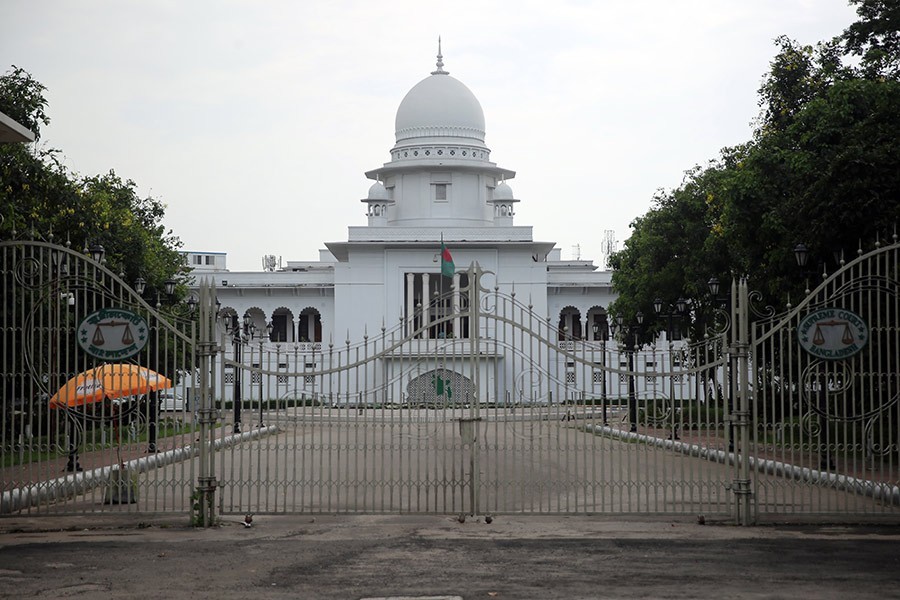
[🇧🇩] Judiciary of Bangladesh.

[🇧🇩] Judiciary of Bangladesh.
81
5K
More threads by Saif

G Bangladesh Defense

Minimum age for elevation of SC judges should be flexible
29 December, 2024, 00:00

THE law ministry has prepared a draft based on two drafts of an ordinance that the Supreme Court and the judiciary reforms commission, which the government set up on October 3 for it to submit the report in 90 days, have separately worked out to ensure transparency and meritocracy in the judiciary. The draft of the Supreme Court has proposed 50 years as the minimum age for the appointment of judges at the High Court and 60 years for the appointment of judges at the Appellate Division. The judiciary reforms commission in its draft has not, however, proposed any age limit of judges for their elevation to the High Court or the Appellate Division but has suggested 10 years’ professional experience keeping to the constitutional requirements. But the draft that the law ministry has prepared proposes 45 years as the minimum age for judges to be elevated to the High Court although it has not proposed any minimum age for the appointment of judges to the Appellate Division. The Supreme Court’s draft also seeks the establishment of a judicial appointment council, with nine members headed by the chief justice, for the appointment of the judges. The reforms commission, however, seeks the establishment of a Supreme Court judges’ appointment commission, with eight members headed by the chief justice, for the task.

The law adviser to the interim government says that the drafts of the ordinance that the Supreme Court and the judiciary reforms commission have prepared are significantly similar with some minor differences. The fifth amendment to the constitution in 1978 added an article, provisioning for the qualification of Supreme Court judges to be set by a law. But successive governments have been unwilling to enact such a law presumably to provision for the appointment of judges on political considerations or by way of nepotism. In such a situation, the legislation at hand that would be forthcoming could resolve many of the issues that have always remained prickly in the appointment of judges at the Supreme Court. But the minimum age of 50 years for the elevation of judges to the High Court and 60 years for the elevation to the Appellate Division that the Supreme Court has proposed does not sound right. Considering that there could be candidates adequately trained in law, having a strong legal background, proven impartiality and loyalty to the law, the provision for the minimum age that the Supreme Court draft suggests would discriminate against such candidates and deny the judiciary some brilliant minds. Considering that the Supreme Court judges retire at the age of 67, the minimum age for the appointment of the judges, a probable tenure of seven years for Appellate Division judges and 17 years for the High Court judges appears inadequate if the judiciary means to champion meritocracy.

While the legislation envisaged should resolve the issues of the appointment of judges to the Supreme Court, thereby ending controversies that have almost always surfaced during such appointment, it should keep the minimum age for the appointment of Supreme Court judges, both for the High Court and the Appellate Division, lower and 40 years of age appears a good solution.​
 

Competent judges must be appointed to High Court, says Advisor Asif Nazrul
Published :
Dec 28, 2024 23:54
Updated :
Dec 28, 2024 23:54

1735432676212.webp


Law Advisor Asif Nazrul has said appointing competent judges to the High Court is crucial for ensuring justice in Bangladesh reports bdnews24.com.

"These judges hear cases related to all fundamental rights of the citizens. They decide cases on violations of the rights of over 160 million people,” he said during a discussion titled the "Supreme Court Judges Appointment Ordinance, 2024” at the Judicial Administration Training Institute, or JATI, on Saturday.

Nazrul explained that the High Court judges also serve as appellate judges and, under Article 102 of the Constitution, can intervene in non-fundamental matters if they are convinced of the need to do so.

He reminded that the Constitution grants judges significant power, warning that if this institution is compromised, it would provide any repressive government with the opportunity to muzzle human rights.

“This is exactly what has happened over the last 15 years. The High Court has been turned into a tool for rights violations and the persecution of people,” said the advisor.

He referred to the case of Khadijatul Kubra, a political science student at Jagannath University, to highlight some of the failures of the judicial system.

“Such incidents have occurred, where the Appellate Division delayed her bail petition just to keep her in jail longer. Horrible things have happened.”

Nazrul criticised irregularities in judicial appointments, citing instances where those who had failed judicial exams or lacked practical experience were appointed to high judicial positions.

"I have witnessed the least attentive, politically biased people, with low moral standards, claim to be High Court judges. It’s astonishing," he said.

Nazrul called for addressing these issues in judicial appointments, saying: "We need to act. We must address this through the law. We need to see how we can make this process more constitutional and efficient.

“The main objective is clear—appoint more honest, qualified, and dedicated judges to the High Court."

He continued, “We will prepare a final draft and check for any constitutional conflicts. We will not allow a 54-year-old Constitution to hold us back.”

Nazrul pointed out that the irregularities are not limited to appointments to the High Court, but extend to the appointment of judges to the Appellate Division, bench allocation, the selection of the Chief Justice, and elevation to the Appellate Division.

"We will try to address each of these issues step by step," he said, adding: "We are extremely fortunate to have a reform-minded chief justice.

“Everyone should come together to make meaningful reforms, introduce good laws, and ensure better appointments."​
 
A historic moment
Five female justices appointed to HC Division of SC

View attachment 9583

For the first time in Bangladesh's history, five female lawyers have been appointed as justices in the High Court Division of the Supreme Court.

This landmark decision was announced on October 8, when 23 new judges were appointed to the High Court Division, five of whom are women. They were sworn in by Chief Justice Syed Refaat Ahmed the next day.

This marks a new era in the country's judiciary and represents a significant step forward in promoting women's empowerment within the legal profession.

The newly appointed justices are Mubina Asaf, Nasreen Akhtar, Ainunnahar Siddika, Tamanna Rahman, and Sathika Hossain.

Legal experts have praised the appointments as a recognition of the vital contributions women are making to the legal profession.

Five out of 23 judges being women is certainly great news. We must continue to increase the number of women in the judiciary. I would have been even happier if it were more than 10.— Nazmun Ara Sultana First female justice in HC, Appellate Division.

They believe that the inclusion of five women in the High Court Division will serve as an inspiration for future generations, encouraging more women to pursue careers in law.

Nazmun Ara Sultana, Bangladesh's first female justice in both the High Court and Appellate Division, welcomed the move.

"Five out of 23 judges being women is certainly great news. It's a hopeful sign, but we must continue to increase the number of women in the judiciary. I would have been even happier if it were more than 10," she said.

Sultana further said women are excelling in the legal field, often outperforming their male colleagues.

Barrister Jyotirmoy Barua also praised the decision, noting that it reflects a shift from past tokenism toward merit-based appointments of women.

He added that more women are entering the legal profession, breaking barriers, and excelling despite challenges. At universities, female students are performing as well as their male counterparts, and with specialised law studies, the chance of producing quality lawyers is growing.

"If senior lawyers create opportunities, we will get good lawyers, and good lawyers lead to good judges," he said.​

Wow - Bangladesh is always ahead of the rest of South Asia in these respects. Props for these reforms!

The number of women at the Indian Supreme Court is now 2 out of 33.

 
Last edited:

Ending executive's power over judiciary
FE
Published :
Oct 29, 2024 21:48
Updated :
Oct 29, 2024 21:48

View attachment 10159

It is urgent that the top court is empowered to conduct its business of disciplining the lower court, making appointments, transfer of the judges and do other related functions transparently and effectively without being stymied by the influence of the executive branch of the state

In a welcome development, the Chief Justice (CJ) is reported to have sent a proposal recently to the Ministry of Law, Justice and Parliamentary Affairs for setting up a separate secretariat for the judiciary. Understandably, the objective of the proposal is to ensure independence of the judiciary. It may be recalled at this point that the landmark verdict handed down on December 2, 1999 by the Appellate Division in the famous Masdar Hossain case opened the door for separating the judiciary as it established (through the verdict) that the service of the judges of the country's subordinate courts was not the same as that of the members of the civil service. Thanks to the non-cooperation of the successive governments in the past that the verdict of the Masdar Hossain case could not be implemented for realisation of the spirit of the Article 22 of the Constitution. The effort of the 2007's caretaker government, which established a separate judicial service commission by amending the Code of Criminal Procedure and enacting the Judicial Service Rules, 2007, to this end did not also see the light of day. That is because, once in power, every elected government since the 1990s conveniently forgot to make good on their pre-election promise of separating the powers of the executive and the judiciary. The experience of the past, especially of the last one and a half decade, has amply demonstrated what price a nation has to pay if the power of the executive is not counterbalanced by an independent judiciary.

However, the July-August revolution led by students with overwhelming support of the masses that ended the autocratic rule of Hasina has opened up the rare opportunity to complete the unfinished task. As things stand at the moment, the law ministry acts as the secretariat of the judiciary and hence can interfere in the affairs of recruitment, transfer and promotion of judges of the subordinate courts. Once the apex court regains its full authority, the discretionary power of high governments officials exercised before on other organs of the state would be over. To this end, the CJ's proposal sent to the law ministry does, as reported, include a concept paper that explains the necessity and objectives of a separate secretariat for the judiciary under the Supreme Court by abolishing the existing system of joint authority of the apex court and the law ministry on the matter.

Also, the need for a separate secretariat for the judiciary emerges from the development that has taken place over the years in terms of a phenomenal rise in the number of lawsuits, administrative proceedings of the apex court as well as an increase in the number of judges in the subordinate courts. Against this backdrop, it is urgent that the top court is empowered to conduct its business of disciplining the lower court, making appointments, transfer of the judges and do other related functions transparently and effectively without being stymied by the influence of the executive branch of the state. This is also the basic condition for democracy to take hold in a modern state where the rule of law and constitutional obligations matter.

Now that the apex court has done its part by way of providing the necessary roadmap for making the judiciary truly independent, it is up to the law ministry to do its bit by vesting it (the apex court) with the necessary authority to that end.​

This is 2024 - and I still cannot believe we don't have an independent judiciary. Corrupt political parties always like to keep judges in their pockets. Even other South Asian countries are reverting back to this state of affairs.
 
This is 2024 - and I still cannot believe we don't have an independent judiciary. Corrupt political parties always like to keep judges in their pockets. Even other South Asian countries are reverting back to this state of affairs.
Bilal bhai, before we separate judiciary from executive, we need to reform our judiciary system to make it corruption free and accountable. Hope you agree with me.