| Global Defense, OSINT & Geopolitics Wire

Wars 2023 10/08 Monitoring the Israel and Lebanon War

Wars 2023 10/08 Monitoring the Israel and Lebanon War
271
16K
More threads by Saif

G War Archive

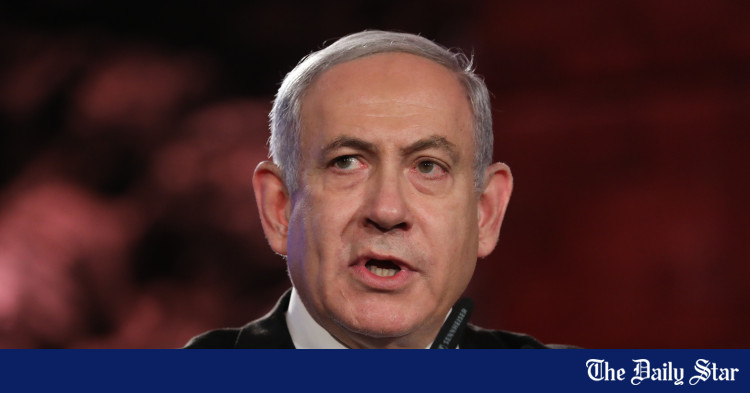
Israel PM confirms he okayed Lebanon pager attacks that killed 40

1731282874304.webp

Photo: Collected

Israeli Prime Minister Benjamin Netanyahu today said, in a first public disclosure, that he had okayed a September attack on Hezbollah in which hundreds of communication devices exploded across Lebanon.

"Netanyahu confirmed Sunday that he greenlighted the pager operation in Lebanon," his spokesman Omer Dostri told AFP of the attacks that killed nearly 40 people and wounded nearly 3,000, and preceded Israel's ongoing military operation in Lebanon.​
 

20 killed in Israeli strike north of Beirut
Says Lebanon; three children among dead

1731284677915.png

Palestinians gather to receive meals cooked by a charity kitchen, amid the ongoing Israeli offensive, in Deir Al-Balah in the central Gaza Strip yesterday. PHOTO: REUTERS

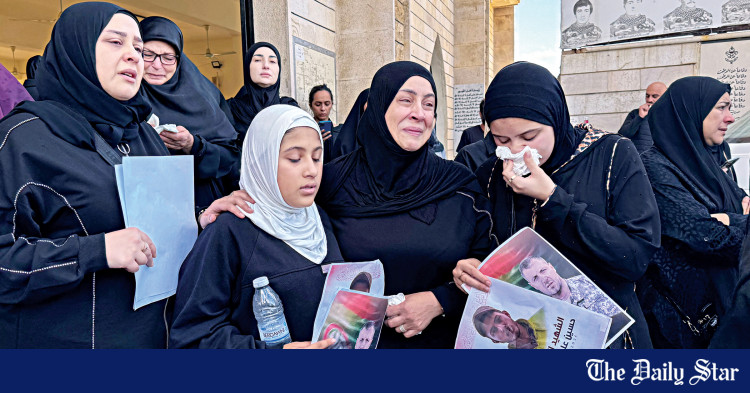
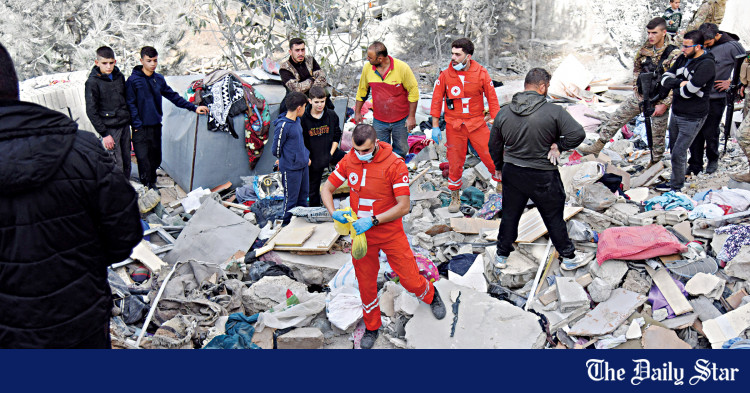
Lebanon's health ministry said an Israeli strike yesterday killed 20 people including three children in the village of Almat, north of the capital Beirut.

The Shia Muslim majority village of Almat is located in a mostly Christian region. It is outside Hezbollah's traditional strongholds of south Beirut and south and east Lebanon which Israel has heavily bombed since late September in its war against the Iran-backed movement.

"The Israeli enemy strike on Almat in the Jbeil district killed 20 people including three children and injured six, in an updated toll," the health ministry said in a statement.

The ministry also said Israeli strikes killed three Hezbollah-affiliated rescuers in the south.

Earlier, Lebanese official media reported an Israeli strike on a house in the main eastern city of Baalbek, which was not preceded by an Israeli army evacuation warning.

"Enemy aircraft launched a strike on a house in the Al-Laqees neighbourhood" of the city, the state-run National News Agency said.

Overnight and yesterday morning, Israel conducted a series of air strikes on southern and eastern villages and locations, NNA said.

On Saturday, Israeli strikes killed 20 people in eastern Lebanon and 13 in the south, according to health ministry figures.

Israel intensified its air campaign mainly targeting Hezbollah bastions in Lebanon on September 23 and a week later sent in ground troops.​
 

Israel cites progress on Lebanon truce
Says Russia can help; Hezbollah says no official proposal received yet

1731370188849.webp


Israel said yesterday there was progress in talks about a ceasefire in Lebanon and indicated Russia could play a part by stopping Hezbollah from rearming via Syria, although the Iran-backed group said it had not received any truce proposals yet.

Israeli Foreign Minister Gideon Saar said the main challenge would be enforcing any ceasefire agreement, and that Israel was working with the United States on the diplomatic efforts.

"I think there is a certain progress," Saar told a press conference in Jerusalem. "We are working with the Americans on the issue."

"We will be ready to be there if we know, first of all that Hezbollah is not on our border, is north of the Litani river and that Hezbollah will not be able to arm again with new weapons systems."

Israel has been waging a major offensive against Hezbollah in Lebanon since late September, pounding its strongholds in Beirut's southern suburbs, southern Lebanon and the Bekaa Valley and sending troops into areas near the border.

The Litani river runs across southern Lebanon some 30 km (20 miles) north of the Lebanese-Israeli border.

In Beirut, a Hezbollah official indicated an intensification of diplomatic efforts was under way but said that neither the group nor the Lebanese state had received any new proposals.

"There is a great movement between Washington and Moscow and Tehran and a number of capitals," Mohammad Afif said in a televised news conference.

"I believe that we are still in the phase of testing the waters and presenting initial ideas and proactive discussions, but so far there is nothing actual yet," he added.

Israel Hayom reported on Sunday that substantial progress has been made in diplomatic negotiations over a proposed Lebanon ceasefire that would require Hezbollah to withdraw north of the Litani River, barring its military presence near the Israeli border, while the IDF would return to the international border.

Israel's offensive has forced more than 1 million people to flee their homes in Lebanon in the last seven weeks.

Since the eruption of hostilities a year ago, Israeli attacks have killed more than 3,189 people in Lebanon, the vast majority of them since late September, according to health ministry figures, which do not distinguish between civilians and combatants.​
 

Israeli army unable to occupy any Lebanese villages: Hezbollah
Agence France-Presse . Beirut, Lebanon 12 November, 2024, 01:40

1731371928170.webp

AFP photo

Hezbollah said on Monday that the Israeli military has been incapable of occupying even a single village in Lebanon since launching cross-border ground operations six weeks ago.

Israeli troops on September 30 began what the military called ‘localised and targeted raids’ against Hezbollah in Lebanon’s southern border area, a week after escalating air strikes on Hezbollah targets in Lebanon.

‘After 45 days of bloody fighting, the enemy is still unable to occupy a single Lebanese village,’ Hezbollah spokesman Mohammad Afif told a news conference in south Beirut, a stronghold of the movement and a repeated target of Israeli air raids.

Hezbollah, armed and financed by Iran, had on October 23 issued a similar statement that said Israel’s army ‘has not been able to fully establish its control or completely occupy any village’ in southern Lebanon.

Israel has said its aim is to make its northern border safe for the return of tens of thousands of Israelis displaced when Hezbollah began cross-border fire, which it described as support for Hamas Palestinian militants in Gaza, more than a year ago.

On November 3, Israeli prime minister Benjamin Netanyahu told troops at the Lebanon border that the operation aimed to push Hezbollah back over the Litani River.

He said a second goal was to stop any attempt to rearm and the third was ‘to respond firmly to any action taken against us’, according to his office.

On Monday Hezbollah spokesman Afif said the group’s fighters had repulsed Israeli troops in Khiam, about six kilometres from the border.

He added that the Israelis also failed in attempts ‘to penetrate on several fronts at Bint Jbeil’, about 17 kilometres southwest of Khiam.

Footage verified by AFP last week showed massive detonations in the village of Mais al-Jabal, between Bint Jbeil and Khiam. Similar aerial scenes have been captured from several border villages since Israel sent in ground troops.

Hezbollah accuses Israel of seeking to create a ‘no man’s land’ on the frontier.

Afif denied that Israeli strikes on Lebanon had diminished the group’s missile stock.

He asked how that could be the case ‘when we targeted the suburbs of Tel Aviv several days ago’ and employed for the first time Fateh missiles.

The group announced on November 6 that it had begun to use Fateh-110 Iranian-made surface-to-surface guided missiles.

In a March report, the Centre for Strategic and International Studies described Hezbollah as ‘probably the most heavily armed non-state group in the world’, with an estimated 1,20,000-2,00,000 rockets and missiles.

Asked about ceasefire prospects, Afif said that since the election of Donald Trump last week to the United States presidency, there were ‘contacts between Washington, Moscow, Tehran and other capitals’.

But he said, ‘according to my information nothing official has reached Hezbollah or the Lebanese state.’

Israeli strikes killed Hezbollah chief Hassan Nasrallah and other commanders but Afif said the group remains ‘ready for a long war’.

Meanwhile, Saudi Arabia’s de facto ruler called for immediate ceasefires in Gaza and Lebanon at a joint Arab League and Organisation of Islamic Cooperation summit that will renew calls for a Palestinian state on Monday.

Arab and Muslim leaders gathered in Riyadh, more than a year into the Israel-Hamas war and regional escalation, in what is seen as a chance to send a message to Trump.

Opening the summit, Crown Prince Mohammed bin Salman said the international community must “immediately halt the Israeli actions against our brothers in Palestine and Lebanon”, condemning Israel’s campaign in Gaza as “genocide”.

Saudi Arabia “affirms its support for the brothers in Palestine and Lebanon to overcome the disastrous humanitarian consequences of the on-going Israeli aggression,” he said.

A draft resolution for the summit stresses ‘firm support’ for “national rights” for the Palestinian people, ‘foremost among which is their right to freedom and to an independent, sovereign state’.

Just hours earlier, newly appointed Israeli foreign minister Gideon Saar said it was not “realistic” to establish a Palestinian state, dismissing it as a ‘Hamas state’.

‘I don’t think this position is realistic today and we must be realistic,’ Saar said in Jerusalem.

Prince Mohammed also called on Israel not to attack Iran, highlighting improving ties between Saudi Arabia and its former regional rival.

Meanwhile, Lebanon’s prime minister Najib Mikati warned that the country was suffering an ‘existential’ crisis and hit out at countries meddling in its internal affairs — a thinly veiled swipe at Iran.

Countries should stop ‘interfering in its internal affairs by supporting this or that group, but rather support Lebanon as a state and entity’, Mikati said.​
 

Israeli air strikes hit Beirut suburbs
15 buildings destroyed; drone from Lebanon hits kindergarten yard in Israel

1731456497583.webp


The Israeli military pounded Beirut's southern suburbs with airstrikes yesterday, mounting one of its heaviest daytime attacks yet on the Hezbollah-controlled area after the defence minister ruled out a ceasefire until Israeli goals were met.

Smoke billowed over Beirut as around a dozen strikes hit the southern suburbs from mid-morning. They followed an Israeli army warning identifying 12 sites in the area and saying it would take action against them soon. The warning, posted on social media, told residents they were near Hezbollah facilities.

In northern Israel, people were forced to take shelter as attack drones were launched from Lebanon, the military said. One hit the yard of a kindergarten in a Haifa suburb, where the children had been rushed into a shelter, meaning none were hurt, rescue workers said. TV footage showed damage to the building.

There were no immediate reports of casualties in Beirut.

Residents have largely fled the southern suburbs since Israel began bombing it in September. Footage of one strike shared on social media showed two missiles slamming into a building of around 10 storeys, demolishing it and sending up clouds of debris. Yesterday's strikes destroyed 15 buildings in the southern suburbs, security sources said.

Meeting with Israel's general staff for the first time, Israel's newly appointed Defence Minister Israel Katz said on Monday there would be no ceasefire in Lebanon until Israel achieves its goals.

Israeli Foreign Minister Gideon Saar said earlier on Monday there had been "a certain progress" in ceasefire talks, whilst adding the war was not yet over. The main challenge facing any ceasefire deal would be enforcement, he said.

Despite the blows it has suffered, Hezbollah has said it is ready for a long war against Israel.

Israel's offensive has driven more than 1 million people from their homes in Lebanon, causing a humanitarian crisis.

Hezbollah rocket fire into northern Israel has forced tens of thousands of people to evacuate the area over the last year.​