| Global Defense, OSINT & Geopolitics Wire

Wars 2026 02/28 Israel-Iran War 3.0

Wars 2026 02/28 Israel-Iran War 3.0
383
11K
More threads by RayKalm

G War Archive

Iran discusses Hormuz with Oman, KSA
Agence France-Presse . Tehran, Iran 28 July, 2026, 23:54
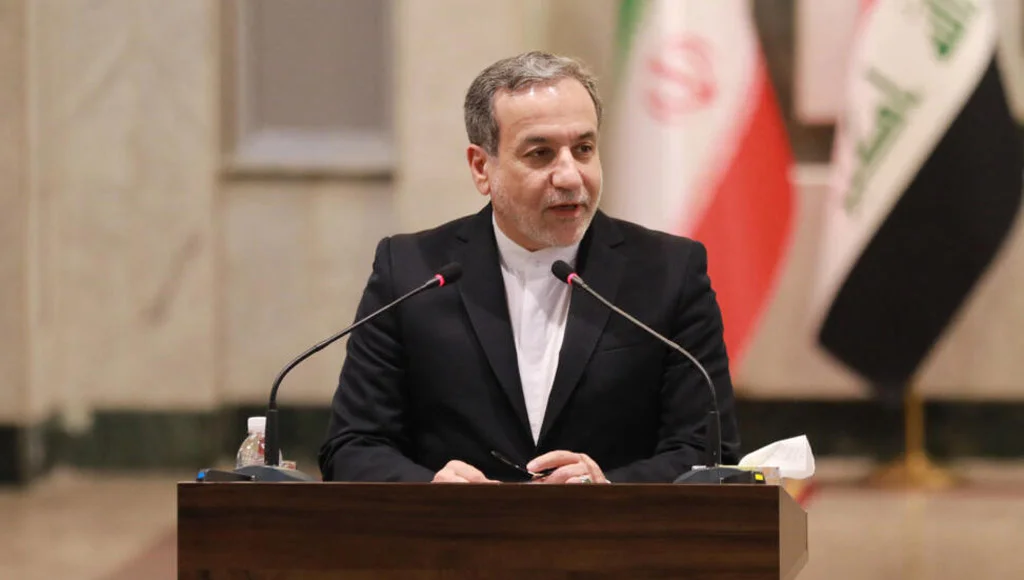
1785282463276.webp

Iranian foreign minister Abbas Araghchi. | File photo

Iranian foreign minister Abbas Araghchi held separate phone calls on the Strait of Hormuz with his Omani and Saudi counterparts Badr Al-Busaidi and Faisal bin Farhan, state TV said Tuesday.

During the calls, ‘they stressed the need to strengthen cooperation and advance joint diplomatic efforts to establish stability in the region and eliminate the insecurity imposed on the Strait of Hormuz due to the aggressive actions of the United States,’ the state broadcaster added.

Iran has maintained control over the strait since the start of the Middle East war on February 28, disrupting shipping through the vital conduit.

In recent weeks, fighting has also spread to involve Saudi Arabia and the Iran-backed Houthi rebels in Yemen.

The last few days have nonetheless seen a lull in hostilities in the region.

Israeli defence minister Israel Katz on Tuesday said that American warplanes used Israeli bases during their attacks on Iran, reiterating that his country was prepared to retaliate if targeted.

Fighting between the US and Iran has been paused since Friday after 13 nights of US strikes on the Islamic republic, after an April ceasefire collapsed.

Israel has not taken part in the latest round of hostilities in the war that began in late February with a wave of US-Israeli strikes on Iran.

‘The fact is that, at the moment — and this could change within an hour — the Iranians are firing at everything in the region except one country: the State of Israel,’ Katz told Israel’s right-wing Channel 14.

‘They know that American aircraft are taking off from here to carry out strikes,’ he added.

‘This does not mean we know what will happen tomorrow, it means we know what our response will be. I announced it, the prime minister announced it, and we made it absolutely clear: if Israel comes under fire, we will strike back with full force,’ Katz said.

US president Donald Trump on Monday voiced optimism at the prospects for a negotiated peace deal with Iran, as the two sides held their fire for a third consecutive day.

Fighting between the long-time foes has been paused since Friday after 13 nights of renewed US strikes on the Islamic republic sparked by a breakdown in diplomacy over Iran’s blockade of the Strait of Hormuz.

But the US leader expressed hope that renewed diplomacy could bring an end to the war that began in late February with a wave of US-Israeli strikes, rattling both the region and the global economy.

‘I have a lot of patience... We’ll see what happens,’ he said aboard Air Force One. ‘I think there is a good chance that something could happen.’

Tehran had earlier denied that there were any talks with the US to end the conflict.

‘Mediators may convey messages from the American side to us regarding current developments in the region. But at present, we are not engaged in any negotiations with the United States,’ said Iranian foreign ministry spokesman Esmaeil Baqaei.

But Trump insisted during a speech in Michigan that ‘right now, they’re talking to us about making a deal’.

Aboard Air Force One, the US president had earlier said that if the new efforts failed, ‘we go back to doing what we were doing’ before the pause in fighting.

On that subject, he dismissed concerns that US ammunition stockpiles were running low nearly five months after the war began.

‘We have a lot of ammunition. We have a lot of the mid-level stuff too, more than we could ever use no matter what,’ he said.​
 

Iran attacks US bases in Jordan
Agence France-Presse . Tehran, Iran 30 July, 2026, 00:34

President Donald Trump vowed to hit back hard at Iran after it attacked US bases in Jordan on Wednesday, as the Middle East war reignited and once again drew in the Islamic republic’s proxies.

The warning came after a short lull in the fighting that had spurred hopes of a return to negotiations appeared to draw to an end, sending oil prices jumping five per cent over fears of disruptions to global supplies.

On Wednesday, Saudi Arabia and the United States announced strikes on militant bases in Iraq, while US ally Israel accused Iran-backed Hezbollah of a truce violation.

For two days, the world’s biggest oil exporter Saudi Arabia has reported drone attacks targeting crude facilities that it blamed on Iraqi armed groups allied with Tehran.

Iran meanwhile launched missiles at US ally Jordan, with state media later reporting an American attack near the Islamic republic’s border with Iraq.

‘We’ll be hitting them hard. They’re going to get a beating,’ Fox News’s correspondent quoted Trump as saying, adding that the US president used swear words to emphasise his point: ‘We are going to beat the ‘effing s’ out of them.’

A Saudi security analyst and researcher, Hesham Alghannam, said: ‘Tehran is now using its proxy network to sustain leverage while the diplomatic track absorbs international attention.

‘The proxy war is the continuation of the direct war by other means, and it is being run with considerable strategic coherence.’

Iranian state television, meanwhile, reported a US strike in its territory.

‘A few minutes ago, an area in the Piranshahr border area was attacked by American enemy airstrikes,’ it said, after the Fars news agency quoted an official in West Azerbaijan province as saying a missile hit an uninhabited area, leaving no casualties.

Earlier, Jordan’s army said it had intercepted five Iranian missiles, with Iran’s Revolutionary Guards saying they had targeted US bases there.

‘As long as the threats against the Islamic Republic of Iran continue the resistance will continue,’ they added.

On another front, US ally Israel accused Hezbollah of firing a drone at an Israeli vehicle inside Lebanese territory, in what it called a violation of their truce.

‘Overnight, Hezbollah launched an explosive drone toward an IDF engineering vehicle in the area of Ali al-Taher Ridge within the Security Zone,’ the military said in a statement, calling the incident ‘a blatant violation of the ceasefire’.

Israel fought alongside the US in the first weeks of war against Iran, while battling Hezbollah in Lebanon, but it has yet to join the latest round of strikes against the Islamic republic.

In Iraq, a joint US-Saudi air operation followed attacks by what Riyadh called ‘terrorist militias loyal to Iran’ on its oil facilities.

The US military said logistics and weapons sites belonging to an Iran-aligned group were targeted in the strikes.

According to Iraq’s Hashed al-Shaabi alliance, the attacks killed at least 20 of its members across seven provinces, including Baghdad.

It denounced a ‘dangerous escalation’ against an ‘official security institution’.

The Hashed al-Shaabi alliance, also known as the Popular Mobilisation Forces, was created in 2014 to fight jihadists before it was formally integrated into the armed forces.

It includes brigades belonging to Iran-backed groups reputed for acting unilaterally.

The Iraqi presidency, without naming the US and Saudi Arabia, denounced the strikes on the Hashed al-Shaabi as ‘an unacceptable attack and a blatant violation of Iraq’s sovereignty’.

According to Fox News, however, Trump said the strikes were ‘coordinated with the Iraqi government’.

The strikes follow growing US pressure on Iraq to disarm pro-Iran groups there. Earlier this month, prime minister Ali al-Zaidi visited both the United States and Iran.

The US had said the days-long cessation in fighting was aimed at kickstarting a new round of negotiations, including over the Strait of Hormuz, which Iran has blockaded throughout much of the Middle East war.

The Revolutionary Guards said that they had attacked and stopped three tankers in the strait, insisting Iran has ‘full control’ of the waterway, which was open and free to transit before the war.

Tehran has insisted it will retain control of the crucial conduit for energy shipments going forward, and has also announced plans to collect fees for passage — a stance Washington vehemently opposes.

The Hormuz closure has only lent greater significance to the Red Sea, the only other maritime route for oil shipments from global heavyweight Saudi Arabia.

Yemen’s Houthi rebels, another Iran proxy, have so far insisted their blockade applies only to Saudi ports and vessels in the sea, but they have previously demonstrated an ability to make passage through the waterway an unacceptable risk, with their campaign against shipping during the Gaza war.

A minister in Yemen’s internationally-recognised government accused the Houthis of working under Iranian guidance to establish a system to impose fees for ships transiting the Red Sea and the Bab al-Mandab Strait at its southern tip.

The latest developments came as prime minister Benjamin Netanyahu of Israel visited Washington to meet with Trump as the pair seek to patch over public disagreements on the war.

Both sides described the meeting as positive, with Netanyahu saying it touched on ‘our common goal: ensuring that Iran does not obtain nuclear weapons’.

Meanwhile, nearly half of Americans think that the US should carry out the International Criminal Court’s arrest warrant for Netanyahu if he enters the country, new polling finds, outnumbering those who say the US shouldn’t arrest him by nearly two to one, reports Truthout (an American non-profit news organisation).

Polling conducted by The Economist/YouGov ahead of Netanyahu’s visit to the White House on Tuesday finds that 49 per cent of US adults say that the US should arrest Netanyahu. This includes 68 per cent of Democrats and 55 per cent of independents.​
 

US military says it hit dozens of Iran's IRGC targets

1785453393187.webp

Rescuers clear rubble to search for victims following a strike in Qeshm, Iran, in this still image taken from video released on July 30, 2026. — IRIB/via Reuters TV/Handout via REUTERS

The US military said it struck dozens of Islamic Revolutionary Guard targets in Iran, including military command centres and drone facilities, in a two-hour operation launched after Tehran fired ballistic missiles at US forces in the Middle East.

The operation began ‌at 0000 GMT and ended at 0200 GMT on Thursday, US Central Command (CENTCOM) said.

"The strikes aimed to further diminish threats posed by Iran and its proxies to American forces, commercial shipping, and neighbouring Gulf countries," CENTCOM said in a statement.

Iran's state media reported that three people were killed in US strikes on Qeshm Island.

Jordan's armed forces said on Thursday that they had thwarted an Iranian attempt to target the kingdom, intercepting five missiles.

The US strikes came after Iran confirmed on Wednesday that it had fired ballistic missiles at US troops in Jordan. CENTCOM said all of the missiles were intercepted. US bases in Jordan have lately become primary Iranian targets.

Earlier on Wednesday, US and Saudi forces launched strikes against Iran-aligned groups in eastern Iraq, in retaliation for drone attacks on ⁠Saudi oil targets launched from Iraq. The joint attack marked the first time Riyadh has publicly joined strikes alongside Washington.

In Egypt, a drone hit a US-owned gas storage tanker at Egypt's Mediterranean port of Damietta, British maritime security firm Ambrey said in an initial assessment on Wednesday.

A statement from Egypt's Petroleum Ministry confirmed a fire at the port but made no mention of a drone attack. It was not immediately clear who was responsible.

The latest strikes in Iraq and Egypt threatened to draw more Middle Eastern countries into the conflict, after the Iran-aligned Houthis in Yemen declared a naval blockade last week on Saudi Arabia.

The war began in February, when the US and Israel launched a bombing campaign in Iran that Trump said would last only a few weeks. A temporary ceasefire agreement in June collapsed amid renewed fighting over the Strait of Hormuz, a crucial waterway that Iran says it now controls.

Trump said he would hit Iran hard for firing missiles at US forces, but that Washington was also still seeking a peace deal to end a conflict that has roiled global energy and finance markets with the choking of the Strait of Hormuz.

The waterway — which carried a fifth of global oil and liquefied natural ‌gas before the ⁠war on Iran — lies between Oman and Iran, linking the Gulf north of it with the Gulf of Oman to the south and the Arabian Sea beyond.

The strait has become the main hurdle in peace talks and a flashpoint for repeated escalations in the conflict.

Iran said on Wednesday that it struck three tankers attempting to transit through the strait along an unauthorised route and that it controls the strait.

Oman has presented Iran with a plan backed by Gulf states to manage the Strait of Hormuz, including collecting voluntary fees for using it, a Gulf source and a Western diplomat told Reuters on Tuesday. But Iran has rejected the Omani proposal.

Oil prices shot up on Wednesday in one of the sharpest ⁠spikes of the five-month war. Brent crude futures rose more than 8 per cent to push the benchmark well above $90 a barrel, reversing much of a plunge earlier this week when Trump had unexpectedly halted US strikes. On Thursday prices retreated slightly.

'DEATH TO AMERICA' SHOUTED IN IRAQ

Iraq's Popular Mobilisation Forces, powerful Iran-backed paramilitary groups incorporated into the Iraqi security forces, said at least 20 members were killed and 32 wounded in US-Saudi strikes targeting several bases across Iraq.

Iraqi ⁠men shouted "Death to America!" as they carried the bodies of slain fighters in body bags.

The Iraqi presidency denounced the strikes on the paramilitaries as "an unacceptable attack and a flagrant violation of Iraq's sovereignty", while also calling for a halt to attacks by armed groups against Iraq's neighbours.

Though Iran denies its forces have directed strikes from Iraqi territory, Iranian newspaper Hamshahri reported that four of Iran's Revolutionary Guards advisers ⁠had been killed in the strikes on Iraq.

After the joint attacks, Saudi Arabia's defence minister met Vice President JD Vance in Washington on Wednesday to urge the Trump administration not to escalate the conflict further by attacking Yemen's Houthis and carrying out more strikes against Iran-aligned militias in Iraq, two sources told Reuters.

One of the sources added that such escalation would open the door to "major unknown risks." The White House and Saudi embassy in Washington did not immediately respond to a request for comment.​
 

US-escorted tankers struck in Hormuz: Iran
Agence France-Presse . Tehran, Iran 01 August, 2026, 01:13

1785543206366.webp

Strait of Hormuz. | File photo

Iran’s Revolutionary Guards said Friday that they had struck two tankers attempting to pass though the strategic Strait of Hormuz under the ‘air escort’ of the US military.

The IRGC said the ‘non-compliant oil tankers were struck and brought to a halt, while four other oil tankers quickly changed course and returned to their previous positions’.

The Guards said the tankers had attempted to pass the strait via ‘an undeclared route’, the US-backed alternative to Tehran’s designated waterway closer to its own shores.

Iran has effectively maintained control over navigation through Hormuz since the outbreak of the war on February 28, requiring vessels to obtain permission and pay transit fees before using the waterway.

On Thursday, the Guards said two oil tankers attempting to transit the Strait had turned back after one caught fire.

Iran’s military said on Friday it launched drone strikes targeting US military facilities in Kuwait, as fighting resumed between Washington and Tehran in the Middle East war after a nearly week-long lull.

The army said in a statement it targeted ‘fighter aircraft shelters, satellite communications systems and equipment storage facilities at Ahmad al-Jaber Air Base in Kuwait’.

There was no immediate comment from the US Central Command.

The Iranian army said the strikes came ‘in response to the recent aggression by the terrorist US military against our country and its brutal attack on a residential home on Qeshm Island’.

Local media reported on Thursday that three members of a family were killed in US strikes on Qeshm Island in the Strait of Hormuz waterway crucial for oil and gas trade.

The trade route normally carries around 20 per cent of global oil shipments and has been effectively closed by Iran since the outbreak of the war on February 28.

The US has carried out repeated strikes on Iran’s southern coastal provinces as it seeks to weaken Tehran’s control over the waterway.

Iranian state media said on Friday that the bodies of five members of the Islamic Revolutionary

Guard Corps killed in joint US-Saudi strikes in Iraq this week had been returned.

‘The bodies of five IRGC members killed in the recent US-Saudi attacks on Iraq were brought into the country through the Mehran border crossing,’ in western Ilam province, the IRNA state news agency reported.

The United States and Saudi Arabia said on Wednesday they had struck Iran-backed militants in Iraq in response to recent attacks on the Gulf kingdom.

The strikes targeted positions belonging to the Hashed al-Shaabi, an Iraqi armed coalition that includes several powerful pro-Iran groups, killing at least 20 militants, including the five Iranians.

The IRGC’s Quds Force oversees Iran’s operations abroad, and Guards members killed outside Iran are often affiliated with the unit. The United States killed the Quds Force’s commander Qasem Soleimani in an airstrike in Baghdad in 2020, along with Hashed al-Shaabi deputy leader Abu Mahdi al-Muhandis.​
 

Iran accuses US of escalating tensions
Agence France-Presse . Tehran, Iran 02 August, 2026, 01:11

1785632658451.webp

File photo

Iran’s military accused the United States of ‘escalating tensions’ in the Middle East on Saturday and warned countries in the region against cooperating with Washington during the ongoing conflict.

‘The United States is rapidly moving down the path of escalating tensions in the region,’ said Ali Abdollahi, head of Iran’s military central command.

‘Any country serving as defensive shield for criminal and aggressive America will be engulfed by the flames of war,’ he said in a statement read on state television.

The remarks came after US president Donald Trump reiterated threats to hit Iran ‘very hard’.

US media reported he was considering renewed heavy attacks as soon as this weekend, including against energy infrastructure targets.

This week, Iran and the US resumed overnight exchanges of fire after a days-long lull in fighting although there were no reported strikes overnight Friday to Saturday.

Meanwhile, US embassies in several Middle Eastern capitals warned American citizens to beware an ‘unforeseen escalation’ in the regional conflict and urged them to be ready to leave.

‘Americans in the region should consider departing, or be prepared to depart should there be escalation,’ said a security alert, versions of which were posted on social media by the US missions in Amman, Jerusalem, Muscat, Baghdad and Beirut.

The messages urged citizens to check flight details and to follow safety advice from local authorities.

‘Americans currently in the Middle East should exercise caution and heightened vigilance and should be prepared for flight cancellations, periodic airspace closures, and potential travel disruptions,’ it said.

Americans in Jordan were told not to visit US military bases there, which have recently come under Iranian missile attack, and in Israel they were urged to seek the location of the nearest bomb shelter.

‘The Iranian regime is unpredictable, as seen by its recent decisions to attack areas in the region without warning or provocations as well as to expand attacks to areas not previously targeted [such as Egypt],’ said a post on the US embassy Jerusalem site.

The US embassy in Beirut said that the mission remained on ‘ordered departure status’, meaning that non-emergency US government personnel were still relocated outside of Lebanon.

On Wednesday, a drone struck a US-owned gas vessel moored in an Egyptian port, causing a fire. Egypt is investigating but has not yet accused any group of launching the attack.

The Middle East war broke out on February 28 when the United States and Israel launched strikes on Iran, which has retaliated with missile and drone strikes across the region.​