 Bangladesh Defense
More options
Manage feed entries
Saif
Senior Member
- Joined
- Jan 24, 2024
- Messages
- 22,417
- Likes
- 9,875
- Nation

- Axis Group


Measures against piracy on high seas
Regardless of what the official line may be, the MV Abdullah hijacking incident has been widely reported internationally and the conclusion is that a US$ 5.0 million ransom had been paid for the safe release of the crew and the ship. Notwithstanding the horrifying trauma experienced by all those on
Measures against piracy on high seas
SYED MANSUR HASHIM
Published :
Apr 16, 2024 21:42
Updated :
Apr 16, 2024 21:42
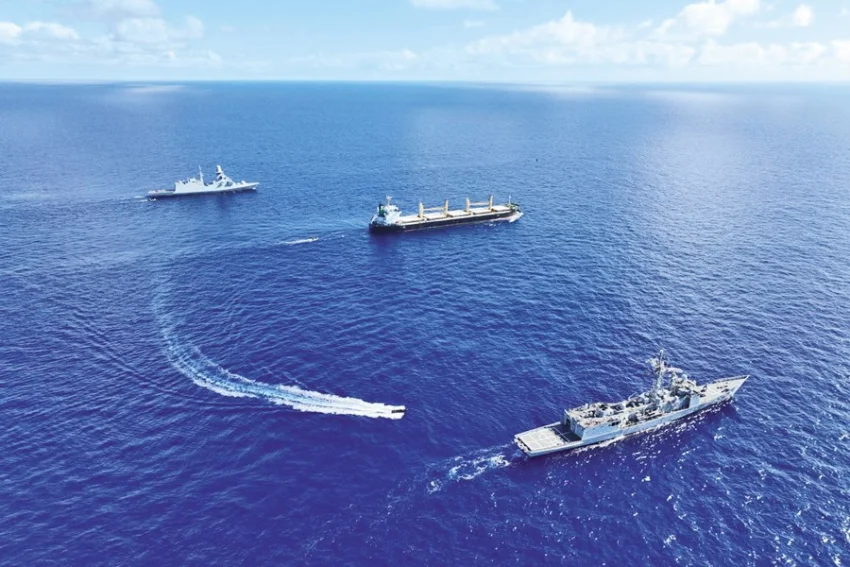
Regardless of what the official line may be, the MV Abdullah hijacking incident has been widely reported internationally and the conclusion is that a US$ 5.0 million ransom had been paid for the safe release of the crew and the ship. Notwithstanding the horrifying trauma experienced by all those on board the ship, one wonders what has been achieved by making denials to the contrary that a king's ransom has been paid to the pirates. The Somali pirates have been very successful over the decades to take full advantage of taking hostage ships belonging to those countries that do not have their own naval forces to protect them or are perceived to be easier prey.
Reportedly, the pirates held up their part of the bargain on release of both ship and crew on payment of the stated sum of money on successful completion of negotiations. While the owners of the vessels remain mum on the issue and an official statement by the minister of the ministry concerned categorically denied having paid anything, such denials will have little impact either on Somali pirates or continued danger of future hijacking of Bangladeshi vessels.
Bangladeshi merchant ship owners and the country would really benefit if arrangements were made to beef up security on ships as a deterrence to hijacking. That time has arrived and merely attempting to brush the incident under the carpet stating that what was in the aftermath of the hijacking was some slick camerawork and editing to make the country look bad, is akin to sticking one's head in the sand hoping the danger will pass. Rather, it is time to take proactive measures to make our ships much tougher to hijack in the first place - a move like that would safeguard the nation's maritime interests more constructively.
There are several ways to do this. One would be to make arrangements with friendly nations that do have military assets in the area, i.e. naval presence including ships, helicopters, marines that are part of the international rapid response team specifically deployed to counter Somali pirates. That would require bilateral / multilateral arrangements between or among states. While this is an arrangement that works some of the time, the ocean being vast and different vessels belonging to various nations ply the seas on different sea routes, it is difficult to provide blanket security to individual vessels.
Some merchant ship companies have taken things into their own hands. Sea-going vessels have been retrofitted with defensive kits to make it overly difficult for pirates to throw grappling hooks onboard so they can climb onboard. There are now specialized companies that will install all sorts of equipment ranging from non-lethal high-powered water jets to physically deter people from boarding, to physical barriers that will make it that much harder for any unauthorised personnel from climbing on board.
The third option has proven to be the most effective, i.e. having armed personnel on board with machine guns. Now, Bangladesh has its own armed forces whose members can be retrained to face such crises on the high seas. Small teams can be made available for deployment on merchant ships. Naturally this will entail a cost for maintenance of personnel and their upkeep. But the cost will be a pittance when compared to the ransom demanded by pirates. This option should definitely be explored by both policymakers and the merchant companies because at the end of the day, it makes sense for Bangladesh to use its own resources to defend the sea lanes on which it is heavily dependent for trade and commerce.
SYED MANSUR HASHIM
Published :
Apr 16, 2024 21:42
Updated :
Apr 16, 2024 21:42
Regardless of what the official line may be, the MV Abdullah hijacking incident has been widely reported internationally and the conclusion is that a US$ 5.0 million ransom had been paid for the safe release of the crew and the ship. Notwithstanding the horrifying trauma experienced by all those on board the ship, one wonders what has been achieved by making denials to the contrary that a king's ransom has been paid to the pirates. The Somali pirates have been very successful over the decades to take full advantage of taking hostage ships belonging to those countries that do not have their own naval forces to protect them or are perceived to be easier prey.
Reportedly, the pirates held up their part of the bargain on release of both ship and crew on payment of the stated sum of money on successful completion of negotiations. While the owners of the vessels remain mum on the issue and an official statement by the minister of the ministry concerned categorically denied having paid anything, such denials will have little impact either on Somali pirates or continued danger of future hijacking of Bangladeshi vessels.
Bangladeshi merchant ship owners and the country would really benefit if arrangements were made to beef up security on ships as a deterrence to hijacking. That time has arrived and merely attempting to brush the incident under the carpet stating that what was in the aftermath of the hijacking was some slick camerawork and editing to make the country look bad, is akin to sticking one's head in the sand hoping the danger will pass. Rather, it is time to take proactive measures to make our ships much tougher to hijack in the first place - a move like that would safeguard the nation's maritime interests more constructively.
There are several ways to do this. One would be to make arrangements with friendly nations that do have military assets in the area, i.e. naval presence including ships, helicopters, marines that are part of the international rapid response team specifically deployed to counter Somali pirates. That would require bilateral / multilateral arrangements between or among states. While this is an arrangement that works some of the time, the ocean being vast and different vessels belonging to various nations ply the seas on different sea routes, it is difficult to provide blanket security to individual vessels.
Some merchant ship companies have taken things into their own hands. Sea-going vessels have been retrofitted with defensive kits to make it overly difficult for pirates to throw grappling hooks onboard so they can climb onboard. There are now specialized companies that will install all sorts of equipment ranging from non-lethal high-powered water jets to physically deter people from boarding, to physical barriers that will make it that much harder for any unauthorised personnel from climbing on board.
The third option has proven to be the most effective, i.e. having armed personnel on board with machine guns. Now, Bangladesh has its own armed forces whose members can be retrained to face such crises on the high seas. Small teams can be made available for deployment on merchant ships. Naturally this will entail a cost for maintenance of personnel and their upkeep. But the cost will be a pittance when compared to the ransom demanded by pirates. This option should definitely be explored by both policymakers and the merchant companies because at the end of the day, it makes sense for Bangladesh to use its own resources to defend the sea lanes on which it is heavily dependent for trade and commerce.
Saif
Senior Member
- Joined
- Jan 24, 2024
- Messages
- 22,417
- Likes
- 9,875
- Nation
- Axis Group

Corruption has run deep into society: Home Advisor
Corruption has spread into every spehre of society, says Home Advisor Md Jahangir Alam Chowdhury. During a meeting with senior officials and sailors at the Coast Guard Headquarters in Dhaka’s Agargaon on Monday, he called for increased efforts to combat the smuggling of fertiliser and Hilsa
Corruption has run deep into society: Home Advisor
Published :
Sep 16, 2024 19:42
Updated :
Sep 16, 2024 19:42
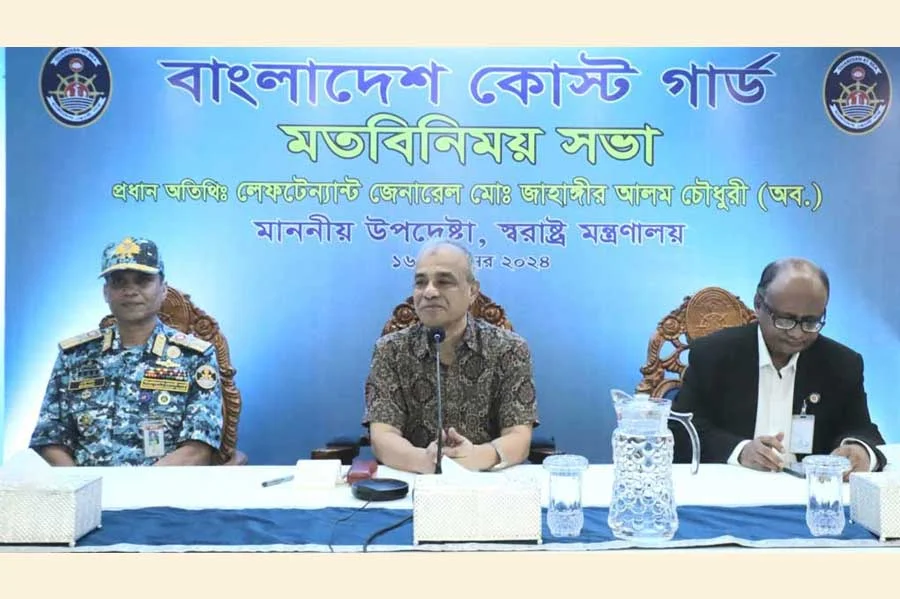
Corruption has spread into every spehre of society, says Home Advisor Md Jahangir Alam Chowdhury.
During a meeting with senior officials and sailors at the Coast Guard Headquarters in Dhaka’s Agargaon on Monday, he called for increased efforts to combat the smuggling of fertiliser and Hilsa fish.
Advisor Jahangir urged the coastguards to uphold their anti-corruption stance, preserve their heritage and honour, and ensure transparency in the procurement of arms and other supplies, reports bdnews24.com.
He added that the interim government is not exporting Hilsa fish to India this year due to domestic needs and the ongoing dollar crisis.
Despite the ongoing dollar shortage, the caretaker administration has ensured a steady supply of fertiliser through imports, he added.
The advisor highlighted the risk of smuggling Hilsa fish and fertiliser across borders and stressed that the Coast Guard’s primary responsibility is to focus on halting such smuggling activities via sea and waterways.
Jahangir expressed gratitude to the coastguards, praising them for maintaining high ethical standards and performing their duties effectively, in contrast to other law-enforcing agencies facing moral decline.
Published :
Sep 16, 2024 19:42
Updated :
Sep 16, 2024 19:42
Corruption has spread into every spehre of society, says Home Advisor Md Jahangir Alam Chowdhury.
During a meeting with senior officials and sailors at the Coast Guard Headquarters in Dhaka’s Agargaon on Monday, he called for increased efforts to combat the smuggling of fertiliser and Hilsa fish.
Advisor Jahangir urged the coastguards to uphold their anti-corruption stance, preserve their heritage and honour, and ensure transparency in the procurement of arms and other supplies, reports bdnews24.com.
He added that the interim government is not exporting Hilsa fish to India this year due to domestic needs and the ongoing dollar crisis.
Despite the ongoing dollar shortage, the caretaker administration has ensured a steady supply of fertiliser through imports, he added.
The advisor highlighted the risk of smuggling Hilsa fish and fertiliser across borders and stressed that the Coast Guard’s primary responsibility is to focus on halting such smuggling activities via sea and waterways.
Jahangir expressed gratitude to the coastguards, praising them for maintaining high ethical standards and performing their duties effectively, in contrast to other law-enforcing agencies facing moral decline.
Saif
Senior Member
- Joined
- Jan 24, 2024
- Messages
- 22,417
- Likes
- 9,875
- Nation
- Axis Group
‘We had no idea that we would be trapped’
Captain of FV Layla-2, which was captured with the crew, on Dec 9 by Indian coast guard recounts the ordeal
‘We had no idea that we would be trapped’
Captain of FV Layla-2, which was captured with the crew, on Dec 9 by Indian coast guard recounts the ordeal
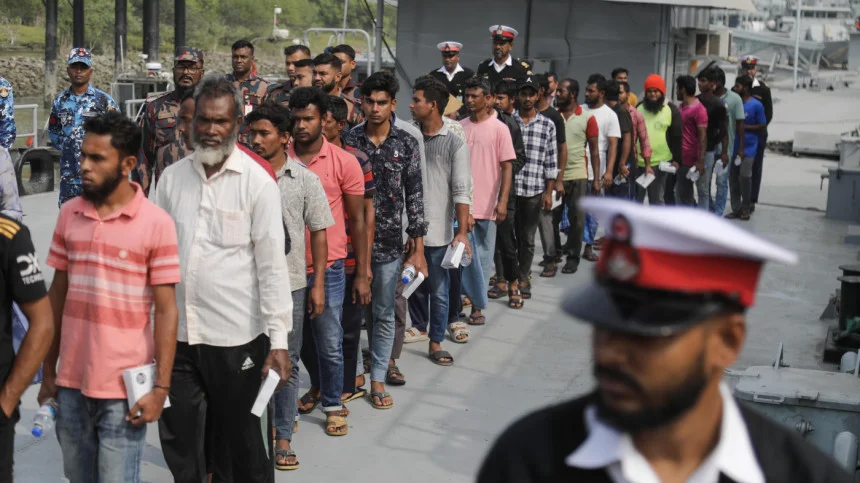
Photo: Rajib Raihan
"After two hours of thorough search, the Indian Coast Guard members got off our trawler and allowed us to go. Around half an hour later, they again called us back saying they left some devices on our boat. We went to them in good faith. We had no idea that we would be trapped."
Rajib Chandra Shil, captain of FV Layla-2 -one of the two Bangladeshi fishing trawlers that were detained by the Indian Coast Guard last month, was recounting the ordeal to the Daily Star this morning
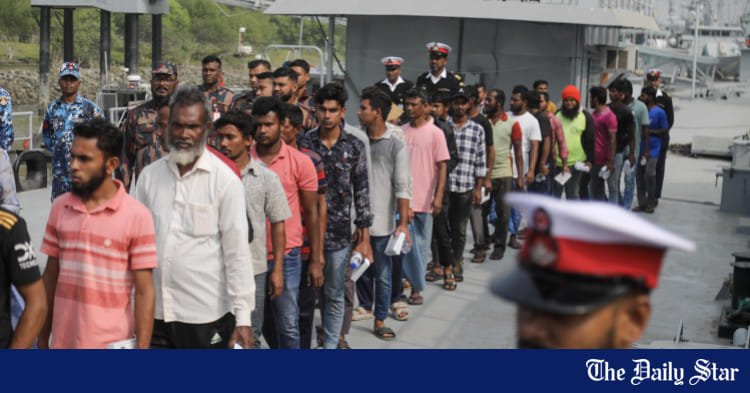
The Bangladesh Coast Guard today handed over 90 Bangladeshi fishermen and sailors to their families at a Coast Guard Jetty at Patenga.
The crewmen, detained by Indian Cost Guards on December 9, were handed over to Bangladesh Coast Guard by Indian authorities during a prison exchange programme on January 5 and brought to Chattogram last night.
After weeks of anxious wait, the family members finally reunited with the crew. Some couldn't hold back tears of joy.
On December 9 last year, the Indian Coast Guard detained the two trawlers FV Layla-2 and FV Meghna-5 along with 78 fishermen and sailors for alleged unauthorised fishing in Indian waters and took them to Paradip port in Odisha of India.
Rajib said a patrol vessel of the Indian Coast Guard asked them to halt around 7:00am that day when they were fishing in Bangladesh waters at the Swatch of No Ground (SoNG), around 30 km from the Dublar Char Islands in the Sundarbans.
"In the vast sea, there is no clear boundary line. We were very close to Bangladesh maritime boundary, "Rajib said.
He, however, said that while fishing in that region, trawlers sometimes mistakenly cross the boundary due to strong currents.
Then the Indians got on board his trawler and carried out a thorough search for around two hours and allowed them to go, said the captain.
The Indians then searched another trawler nearby, FV Megna-5.
"Around half an hour later, they directed an officer of Mghna-5 to call us back, saying that they left some devices here during the search. They also assured us that they would let us go after that," Rajib said, adding that they obeyed the order.
When they reached there, they were captured.
After taking them to Paradip port, the Indian Maritime Police checked them at its office and later allowed them to go back to the trawlers.
"They said no cases will be filed against us," Rajib recalled.
Since then, several officials of the Indian Coast Guard kept telling them that they would be released only after the Bangladesh authority freed 95 Indian fishermen detained here in Bangladesh, claimed the captain.
Earlier in October last year, the Bangladesh Coast Guard and Bangladesh Navy separately detained six Indian fishing trawlers with those 95 Indian fishermen for fishing illegally in Bangladeshi waters.
On September 12, Indian Coast Guard rescued 12 Bangladeshi fishermen after their fishing boat FV Koushik capsized near the Bangladesh-India International Maritime Boundary Line (IMBL), according to an official of Bangladesh Coast Guard. The 12 were detained and taken to Haldia Port in Kolkata.
Bangladesh Coast Guard East Zone Zonal Commander Captain Zahirul Hoque told the journalists yesterday that the exchange of detained fishermen and crew were done as part of a bilateral agreement between the two countries.
The 95 Indian fishermen and six boats were handed over to the Indian Coast Guard under the supervision of the Bangladesh Coast Guard at the IMBL, he said.
Simultaneously, India handed over 90 Bangladeshi fishermen and two fishing boats, he added.
A Coast Guard patrol boat escorted the two fishing trawlers from Khulna to Chattogram last night and the fishermen and crew were handed over to their families through police this morning, he informed.
Captain of FV Layla-2, which was captured with the crew, on Dec 9 by Indian coast guard recounts the ordeal
Photo: Rajib Raihan
"After two hours of thorough search, the Indian Coast Guard members got off our trawler and allowed us to go. Around half an hour later, they again called us back saying they left some devices on our boat. We went to them in good faith. We had no idea that we would be trapped."
Rajib Chandra Shil, captain of FV Layla-2 -one of the two Bangladeshi fishing trawlers that were detained by the Indian Coast Guard last month, was recounting the ordeal to the Daily Star this morning
The Bangladesh Coast Guard today handed over 90 Bangladeshi fishermen and sailors to their families at a Coast Guard Jetty at Patenga.
The crewmen, detained by Indian Cost Guards on December 9, were handed over to Bangladesh Coast Guard by Indian authorities during a prison exchange programme on January 5 and brought to Chattogram last night.
After weeks of anxious wait, the family members finally reunited with the crew. Some couldn't hold back tears of joy.
On December 9 last year, the Indian Coast Guard detained the two trawlers FV Layla-2 and FV Meghna-5 along with 78 fishermen and sailors for alleged unauthorised fishing in Indian waters and took them to Paradip port in Odisha of India.
Rajib said a patrol vessel of the Indian Coast Guard asked them to halt around 7:00am that day when they were fishing in Bangladesh waters at the Swatch of No Ground (SoNG), around 30 km from the Dublar Char Islands in the Sundarbans.
"In the vast sea, there is no clear boundary line. We were very close to Bangladesh maritime boundary, "Rajib said.
He, however, said that while fishing in that region, trawlers sometimes mistakenly cross the boundary due to strong currents.
Then the Indians got on board his trawler and carried out a thorough search for around two hours and allowed them to go, said the captain.
The Indians then searched another trawler nearby, FV Megna-5.
"Around half an hour later, they directed an officer of Mghna-5 to call us back, saying that they left some devices here during the search. They also assured us that they would let us go after that," Rajib said, adding that they obeyed the order.
When they reached there, they were captured.
After taking them to Paradip port, the Indian Maritime Police checked them at its office and later allowed them to go back to the trawlers.
"They said no cases will be filed against us," Rajib recalled.
Since then, several officials of the Indian Coast Guard kept telling them that they would be released only after the Bangladesh authority freed 95 Indian fishermen detained here in Bangladesh, claimed the captain.
Earlier in October last year, the Bangladesh Coast Guard and Bangladesh Navy separately detained six Indian fishing trawlers with those 95 Indian fishermen for fishing illegally in Bangladeshi waters.
On September 12, Indian Coast Guard rescued 12 Bangladeshi fishermen after their fishing boat FV Koushik capsized near the Bangladesh-India International Maritime Boundary Line (IMBL), according to an official of Bangladesh Coast Guard. The 12 were detained and taken to Haldia Port in Kolkata.
Bangladesh Coast Guard East Zone Zonal Commander Captain Zahirul Hoque told the journalists yesterday that the exchange of detained fishermen and crew were done as part of a bilateral agreement between the two countries.
The 95 Indian fishermen and six boats were handed over to the Indian Coast Guard under the supervision of the Bangladesh Coast Guard at the IMBL, he said.
Simultaneously, India handed over 90 Bangladeshi fishermen and two fishing boats, he added.
A Coast Guard patrol boat escorted the two fishing trawlers from Khulna to Chattogram last night and the fishermen and crew were handed over to their families through police this morning, he informed.
