| Global Defense, OSINT & Geopolitics Wire

[đŸ‡§đŸ‡©] Bangladesh Police and Rapid Action Battalion

[đŸ‡§đŸ‡©] Bangladesh Police and Rapid Action Battalion
205
11K
More threads by Saif

G Bangladesh Defense

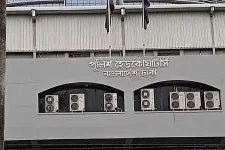
Police Headquarters clarifies IGP’s ‘crossfire’ remarks


Police Headquarters has clarified that Inspector General of Police Ali Hossain Fakir did not mean extrajudicial killings when he used the term “crossfire” while discussing law and order.

The explanation came in a statement on Monday evening amid criticism of the police chief’s remarks, made at the opening of the Community Islamic Bank System in Dhaka’s Chawkbazar earlier in the day.

“Our responsibility is to apply the law wherever and whenever necessary. If crossfire is needed and the government allows it, we will do that,” the IGP said.

Political parties and organisations criticised the statement and demanded its withdrawal.

In its response, police headquarters said the IGP had been expressing his commitment to taking effective action against drug traders, terrorists, extortionists and criminals threatening public safety.

“He used the word ‘crossfire’ in its literal sense to convey firmness in law enforcement. He did not use it to mean extrajudicial killings or punishment outside the judicial process,” the statement said.

Citing attacks on police, the statement said officers had faced 176 attacks in the first 10 months of this year while maintaining law and order, arresting criminals, preventing illegal activities and performing official duties. Four officers were killed and 370 seriously injured.

Police said officers sometimes faced direct resistance and attacks from criminals, organised assailants and lawbreakers.

It cited the Penal Code 1860, Code of Criminal Procedure 1898 and Police Act 1861 as laws recognising police officers’ right to self-defence.

At the bank event, the IGP also expressed frustration with journalists’ criticism of police.

“If we use batons, you call us fascist police. If we remain silent, you call us weak police. You have to give us an environment to work. You have to empower us,” he said.

Some journalists’ leaders also criticised those remarks.

Police Headquarters said the IGP had not intended to make sweeping comments about journalists and that his words had been inadvertent.

The statement said Bangladesh Police remained committed to protecting lives and property and upholding the rule of law professionally and impartially, while respecting human rights.​
 

Attachments

  • 1793061304614.webp
    1793061304614.webp
    55.8 KB · Views: 17

Police Headquarters clarifies IGP’s ‘crossfire’ remarks


1793061511887.webp


Police Headquarters has clarified that Inspector General of Police Ali Hossain Fakir did not mean extrajudicial killings when he used the term “crossfire” while discussing law and order.

The explanation came in a statement on Monday evening amid criticism of the police chief’s remarks, made at the opening of the Community Islamic Bank System in Dhaka’s Chawkbazar earlier in the day.

“Our responsibility is to apply the law wherever and whenever necessary. If crossfire is needed and the government allows it, we will do that,” the IGP said.

Political parties and organisations criticised the statement and demanded its withdrawal.

In its response, police headquarters said the IGP had been expressing his commitment to taking effective action against drug traders, terrorists, extortionists and criminals threatening public safety.

“He used the word ‘crossfire’ in its literal sense to convey firmness in law enforcement. He did not use it to mean extrajudicial killings or punishment outside the judicial process,” the statement said.

Citing attacks on police, the statement said officers had faced 176 attacks in the first 10 months of this year while maintaining law and order, arresting criminals, preventing illegal activities and performing official duties. Four officers were killed and 370 seriously injured.

Police said officers sometimes faced direct resistance and attacks from criminals, organised assailants and lawbreakers.

It cited the Penal Code 1860, Code of Criminal Procedure 1898 and Police Act 1861 as laws recognising police officers’ right to self-defence.

At the bank event, the IGP also expressed frustration with journalists’ criticism of police.

“If we use batons, you call us fascist police. If we remain silent, you call us weak police. You have to give us an environment to work. You have to empower us,” he said.

Some journalists’ leaders also criticised those remarks.

Police Headquarters said the IGP had not intended to make sweeping comments about journalists and that his words had been inadvertent.

The statement said Bangladesh Police remained committed to protecting lives and property and upholding the rule of law professionally and impartially, while respecting human rights.​
 

Police service association defends IGP’s remarks on use of force


1793143580158.webp


The Bangladesh Police Service Association has defended Inspector General of Police Ali Hossain Fakir’s remarks that police would not hesitate to carry out “crossfire” operations if the government authorised them.

The association described the police chief’s comments as a timely call for enforcing the law firmly while remaining within legal boundaries.

“The main significance of his remarks is to ensure appropriate action according to the circumstances within the limits of the law, and to strengthen police officers’ professional confidence and ability to perform their duties,” the organisation said in a statement.

Fakir made the remarks on Monday at an event in Dhaka’s Chawkbazar.

He said police would act in accordance with the law and constitution wherever necessary, adding that they would carry out crossfire operations if required and permitted by the government.

He also criticised what he described as contradictory public expectations of police, saying officers were labelled authoritarian when they used force and weak when they remained restrained.

The association said hesitation in exercising lawful powers could encourage criminals and undermine public safety.

It added that firm, impartial and professional policing within the law was essential to maintaining public trust.

The statement also noted challenges arising from changes in the law and order situation, mob violence and the period following Aug 5, 2024.

Asked why the association’s statement defended the IGP without directly using the term “crossfire”, its General Secretary and Dhaka District Police chief Shamima Parveen said the statement covered the relevant issues.

“We are working to make police people-friendly. There is no reason to consider them an adversary,” she said.​
 

Zero tolerance for 'crossfire', IGP’s remarks were inappropriate: Home Minister

Special Correspondent

1793144859771.webp

Home Minister Salahuddin Ahmed File Photo

Home Minister Salahuddin Ahmed has directly rejected Inspector General of Police (IGP) Md Ali Hossain Fakir’s remarks on “crossfire”, saying the government does not want such incidents and has a zero-tolerance policy towards them.

“The government does not want crossfire; rather, it has zero tolerance for crossfire,” the home minister said. Describing the IGP’s remarks as inadvertent, he added, “That was not right. He should not have said that.”

At an event in Chawkbazar in Old Dhaka on Monday, IGP Md Ali Hossain Fakir said the police would resort to “crossfire” if necessary, provided the government gave permission.

He said that when the police used force, one side called them fascists, while when they remained inactive, they were branded weak.

The police must be given an appropriate environment to carry out their duties and maintain law and order, he added.

Asked about the remarks on Tuesday evening, Home Minister Salahuddin Ahmed told Prothom Alo, “He (the IGP) is a straightforward person. While speaking about the strict enforcement of the law, he made the remark inadvertently. That was not right. He should not have said that.”

The home minister firmly reiterated that the government did not want crossfire and maintained a zero-tolerance policy towards it. He said the government would not allow extrajudicial killings and would take an extremely firm stance on the issue. The government would not tolerate extrajudicial killings or custodial deaths, he added.

Salahuddin Ahmed said the rule of law was the government’s principal objective, while improving law and order was its top priority. No deaths in crossfire or in custody had occurred so far, he said. However, the government would take all necessary measures to curb crime and ensure the proper enforcement of the law.

Earlier on Tuesday afternoon, BNP Acting Secretary General and Prime Minister’s Political Adviser Ruhul Kabir Rizvi commented on the issue at a programme marking the 48th founding anniversary of Jubo Dal, the party’s youth wing. The event, held in front of the BNP’s central office, was organised to inaugurate a free medical service.

Rizvi described the IGP’s remarks on crossfire as embarrassing for the government.

He said the comments had raised concerns because the BNP had long fought against enforced disappearances and extrajudicial killings, making it troubling to hear the police chief speak of crossfire while a BNP-led government was in power.

Immediately after the IGP’s remarks on Monday that the police would resort to crossfire if necessary with government permission, several political parties—including Jamaat-e-Islami, the National Citizen Party (NCP), Islami Andolan Bangladesh and the Amar Bangladesh (AB) Party—as well as various human rights organisations, expressed strong reactions and outrage.

Amid criticism of the IGP’s remarks, the Police Headquarters issued a clarification on Monday evening. It said the IGP had not used the term “crossfire” to mean extrajudicial killings or punishment outside the judicial process. Rather, the statement said, he had used the term to convey a tough approach to law enforcement against criminals.​
 

Former DB chief Harun-or-Rashid, seven other police officers dismissed

Staff Correspondent


1793489704384.webp

Former DB chief Mohammad Harun or Rashid File photo


Mohammad Harun-or-Rashid, former additional commissioner (crime and operations) of Dhaka Metropolitan Police (DMP), has been dismissed from service for remaining absent from his workplace for an extended period without permission. The dismissal will take effect from 6 August 2024.

The home ministry announced his dismissal in a gazette issued on Saturday. It said the charge of absconding against him had been proved beyond reasonable doubt, prompting the disciplinary action under the Government Servants (Discipline and Appeal) Rules, 2018.

According to the gazette, Harun-or-Rashid has been absent from his workplace since 6 August 2024. His dismissal will be effective from that date. He had been under suspension until now.

The gazette said Harun-or-Rashid, a deputy inspector general (DIG)-rank officer, was serving as an additional commissioner at DMP when he remained absent from his workplace without permission from the authority. Several attempts were made to contact him at his present and permanent addresses and through email, but he did not return to work.


In connection with the matter, the police headquarters sent a letter to the home ministry requesting departmental action against him. Subsequently, departmental proceedings were initiated against him on 15 April this year. He was served a show-cause notice seeking an explanation of the allegations but did not submit a written reply or request additional time to respond.

Given the gravity of the allegations, an inquiry officer was appointed on 22 June. The inquiry report, submitted on 6 August, concluded that the charge of abandoning his workplace had been established under Rule 3(c) of the Government Servants (Discipline and Appeal) Rules, 2018.

A second show-cause notice was issued to him on 20 August, but Harun-or-Rashid did not respond to that either.

The government sought the opinion of the Bangladesh Public Service Commission (PSC) on imposing the major penalty of dismissal from service. On 1 October, the commission recommended his dismissal.

The gazette said the decision was taken after reviewing the records of the departmental proceedings, the inquiry report and the PSC's opinion, which established the allegations against him. The president approved the decision on 25 October.

Meanwhile, six other police officers have also been dismissed from service for reasons similar to those cited in Harun-or-Rashid's case. They are former DIG of Rajshahi Range Md Anisur Rahman; former additional DIG of Tourist Police Shyamal Kumar Mukherjee; former superintendent of police in Lakshmipur Tarek Bin Rashid; additional superintendent of police SM Jahangir Hasan; DMP assistant police commissioner Md Moniruzzaman Sarkar; and DMP Traffic Division assistant police commissioner Farhana Taskin.

The gazette cited unauthorised absence from duty, misconduct and failure to return to their workplaces after travelling abroad as grounds for dismissal.

In addition, Kazi Mizanur Rahman, former assistant commissioner of DMP's Tejgaon Division, has been sent into compulsory retirement. An allegation that he had an extramarital relationship was found to be proven, which the notification described as misconduct.​