| Global Defense, OSINT & Geopolitics Wire

[🇧🇩] Budget For 2026-2027

[🇧🇩] Budget For 2026-2027
100
3K
More threads by Saif

G Bangladesh Defense

Market opens upbeat ahead of national budget announcement

FE ONLINE REPORT

Published :
Jun 11, 2026 11:46
Updated :
Jun 11, 2026 11:46
1781157624616.webp


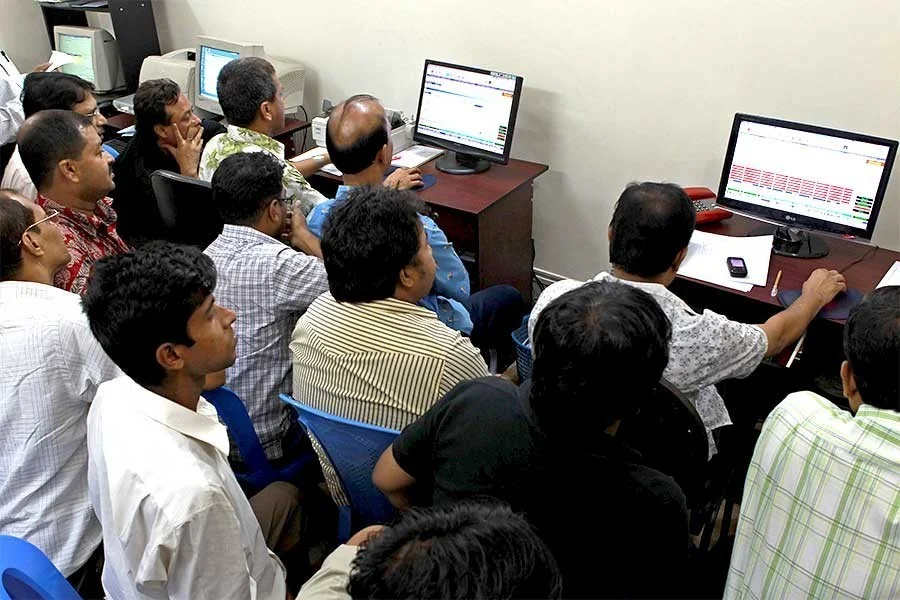
Stocks opened higher on Thursday, extending the market's recent rally as investors positioned themselves ahead of the national budget announcement, amid expectations of market-friendly measures and regulatory reforms.

Finance Minister Amir Khosru Mahmud Chowdhury is scheduled to unveil the FY2026-27 national budget in parliament later in the day, with investors closely watching for initiatives aimed at revitalising the capital market and supporting broader economic growth.

Investor sentiment also received a boost as the newly reconstituted Bangladesh Securities and Exchange Commission (BSEC) recently lifted the floor price restrictions on Beximco and Islami Bank Bangladesh PLC, bringing an end to a controversial market intervention that had remained in place for nearly four years.

The benchmark DSEX index of the Dhaka Stock Exchange (DSE) advanced 19 points, or 0.34 per cent, to 5,535 by 11:00 am.

Although Beximco shares hit the lower circuit breaker for a third straight session, Islami Bank rebounded sharply at the opening after two days of correction following the withdrawal of the floor price. Their impact on the broader market remained limited.

Beximco was excluded from the benchmark index in the latest annual rebalancing, while around 88 per cent of Islami Bank's shares are held by sponsor-directors, reducing the stocks' influence on overall market movements.

Market operators said investors are increasingly hopeful that the reconstituted BSEC will prioritise transparency, strengthen corporate governance and restore confidence in the capital market. Repeated government assurances regarding stock market development have also encouraged investors to increase their exposure to equities.

Turnover on the premier bourse reached Tk 3.20 billion within the first hour of trading, indicating strong investor participation.

Market breadth remained positive, with 207 issues advancing, 107 declining and 70 remaining unchanged.

Far East Knitting emerged as the day's most actively traded stock by turnover, with shares worth Tk 148 million changing hands by 11:00 am.

The Chittagong Stock Exchange (CSE) also witnessed a positive trend. The CASPI gained 42 points to 15,290, while the CSCX rose 23 points to 9,389 by 11:00 am.​
 

Budget today in tough times
Khosru walks tightrope in making ends meet

Jasim Uddin Haroon

Published :
Jun 11, 2026 00:18
Updated :
Jun 11, 2026 00:18

1781157893249.webp


Amir Khosru walks a tightrope in making ends meet as he presents today his maiden national budget suiting the BNP-led government's economic priorities amid persistent inflationary pressure, sluggish private investment and weak employment generation.

The fiscal 2026-27 budget also happens to be the first of the BNP-led administration that assumed office following the February-12th general election held against the backdrop of political upheavals and uprising.

The Finance and Planning Minister, Amir Khosru Mahmud Chowdhury, is set to place in parliament at 3:00pm the national budget with a record-high outlay.

It will also be the party's 17th budget since fiscal year 1976-77 and Bangladesh's 55th since independence.

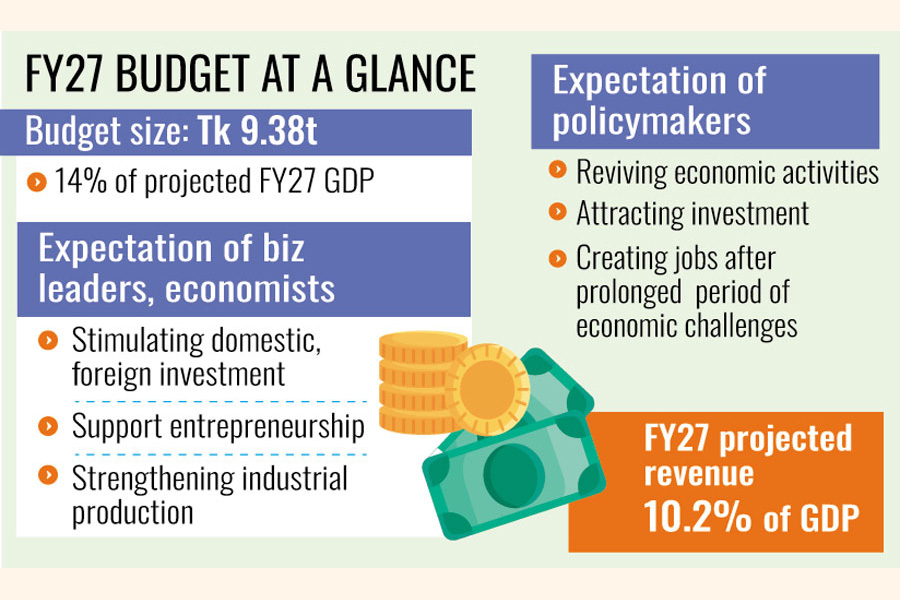
The proposed budget is estimated at Tk 9.38 trillion which is equivalent to around 14 per cent of the country's projected gross domestic product (GDP) for FY2027.

Policymakers are expected to use the budget as key instrument for reviving economic activity, attracting investment and generating employment following a prolonged period of economic challenges from within and without.

The BNP government has repeatedly pledged to restore business confidence by addressing structural bottlenecks and reviving closed industrial units and creating a more investment-friendly environment.

The budget is, therefore, expected to contain a range of fiscal and policy incentives aimed at encouraging both new and existing private-sector enterprises.

Business leaders and economists are closely watching the budget for measures that could stimulate domestic and foreign investment, support entrepreneurship and strengthen industrial production.

Many expect tax incentives, regulatory reforms and sector-specific support programmes to feature prominently in the budget proposals.

At the same time, the government faces a difficult fiscal challenge.

The revenue target for FY2027 is projected at around 10.2 per cent of the GDP, a level many economists believe will be difficult to achieve given the country's historically low tax-to-GDP ratio.

Economists argue that broadening the tax base and revamping tax administration could help increase revenue collection.

However, they caution that achieving a significant jump in revenue within a single fiscal year may prove difficult without comprehensive reforms.

"To my mind, the tax picture might be some brighter once the tax base is widened," says Dr Zahid Hussain, an independent economist.

He also says that borrowing from the banking sector might lead to higher interest rate and crowding-out effect.

While policy measures aim at easing supply-side constraints could help boost investment and employment, "the benefits are unlikely to materialise immediately".

Structural reforms often require time before translating into higher private-sector activity, stronger job creation and sustainable economic growth.

"The budget's broader significance lies in whether it can balance the government's growth ambitions with the need to contain inflation, maintain macroeconomic stability and strengthen public finances," he notes.

The leading economists also say the effectiveness of the proposed measures, rather than their scale alone, will determine whether the government succeeds in reviving business confidence and accelerating economic recovery.​
 

BNP govt set to unveil ambitious budget built around big targets

For the first time, the finance minister may also publish a Citizens’ Budget booklet, designed to present budget information in a simplified format for the general public. The Ministry of Finance believes this initiative will make the budget more accessible and easier to understand.

Fakhrul Islam


1781158373607.webp

Probable budget of FY2026-27 at a glance Infograph prepared by Asad/Prothom Alo

The Bangladesh Nationalist Party (BNP) government is placing strong emphasis on fulfilling its election manifesto commitments, boosting investment and employment, and reviving a troubled economy through its first national budget.

The budget also sets highly ambitious revenue targets. As the budget expands in size, so too does the fiscal deficit, necessitating increased borrowing to bridge the gap.

Finance and Planning Minister Amir Khasru Mahmud Chowdhury is set to present a Tk 9.3 trillion (938,000 crore) budget for the next fiscal year in Parliament today, Thursday. It will be the first budget of his career as finance minister and the first budget of the BNP government formed following the national election held in February.

The finance minister has repeatedly said he wants the benefits of the budget to reach grassroots communities. As part of that objective, allocations for social protection programmes could rise to nearly Tk 1.5 trillion (150,000 crore). At least eight new schemes, including the Family Card programme, are expected to be introduced.

The minister also aims to promote the creative economy and improve the ease of doing business.

He has repeatedly spoken of the need for the “democratisation of the economy” and has pledged to reflect that vision in the budget. He has also indicated that he intends to pursue extensive deregulation, reducing government controls wherever possible.

Despite fiscal pressures, the budget may include a partial implementation of a new pay scale for government employees in the coming fiscal year.

The finance minister has repeatedly said he wants the benefits of the budget to reach grassroots communities. As part of that objective, allocations for social protection programmes could rise to nearly Tk 1.5 trillion (150,000 crore).
For the first time, the finance minister may also publish a Citizens’ Budget booklet, designed to present budget information in a simplified format for the general public. The Ministry of Finance believes this initiative will make the budget more accessible and easier to understand.

The original budget for the current fiscal year stood at Tk 7.9 trillion (790,000 crore). The proposed budget is Tk 1.48 trillion ( 148,000 crore) bigger, representing an increase of nearly 19 per cent.

The finance minister has repeatedly defended the larger budget, arguing that higher public spending would support economic growth.

Speaking at a consultation meeting organised by the Federation of Bangladesh Chambers of Commerce and Industry (FBCCI), he openly stated that the economy could not move forward without increased expenditure.

According to Finance Division sources, the government is targeting GDP growth of 6.5 per cent in the next fiscal year, while inflation is projected at 7.5 per cent. Inflation currently remains above 9 per cent.

Revenue collection is expected to be targeted at Tk 6.95 trillion (695,000 crore). Including anticipated grants of Tk 61.5 billion (6,150 crore), total government income is projected to exceed Tk 7 trillion (700,000 crore).

Significant pressure on revenue collection and the reality

Of the total revenue target, more than Tk 6 trillion (600,000 crore) will need to be collected by the National Board of Revenue (NBR) alone.

The central question is how much of the budget can actually be implemented. Is such a large increase in revenue collection achievable within a single year?------Zahid Hussain, former Lead Economist at the World Bank’s Dhaka office.

The NBR collected Tk 3.7 trillion (370,000 crore) in FY 2024–25. Under the revised budget for the current fiscal year, its collection target was set at Tk 5.03 trillion (503,000 crore). However, during the first 10 months of the fiscal year, from July to April, revenue collection fell short by Tk 697.82 billion (69,782 crore). Collections during the period amounted to nearly Tk 3.27 trillion (326,928 crore).

The government is also projecting Tk 250 billion (25,000 crore) in non-NBR revenue for the next fiscal year, compared with Tk 81.92 billion (8,192 crore) collected in FY 2024–25.

Non-tax revenue (NTR) is expected to generate Tk 660 billion (66,000 crore). Although the original target for the current fiscal year was Tk 460 billion (46,000 crore), the revised budget raised that figure to Tk 650 billion (65,000 crore).

More borrowing, lower interest allocation

More than Tk 1.27 trillion (127,000 crore) may be allocated for interest payments in the next fiscal year.

The Finance Division had previously estimated that interest costs could reach Tk 1.58 trillion (158,000 crore). These payments relate to both domestic and foreign loans undertaken by the government.

Interest payments are considered mandatory expenditures and now constitute one of the largest components of government operating expenditure. The burden has reached a level that is increasingly putting pressure on other budget priorities.

How govt plans to finance deficit

The size of the economy is projected to reach Tk 68.30 trillion (6,830,024 crore) in the coming fiscal year.

The budget deficit, excluding grants, is expected to stand at 3.6 per cent of GDP, equivalent to Tk 2.43 trillion (243,000 crore).

To finance this gap, the government plans to borrow Tk 1.27 trillion (127,000 crore) from domestic sources and a net Tk 1.09 trillion (109,850 crore) from foreign sources.

My concern is that this could negatively affect investment, economic growth and employment. Under those circumstances, the government will also find it difficult to bring inflation under control-----Zahid Hussain, former Lead Economist at the World Bank’s Dhaka office.

In gross terms, the government intends to secure over Tk 1.55 trillion (155,850 crore) in external borrowing, of which Tk 460 billion (46,000 crore) will be used to repay existing foreign loans.

Of the domestic borrowing target, Tk 1.12 trillion (112,000 crore) is expected to come from the banking sector, which is Tk 60 billion (6,000 crore) lower than the revised target for the current fiscal year.

The government also plans to raise Tk 85 billion (8,500 crore) through the sale of National Savings Certificates.

Concerns over implementation

Speaking to Prothom Alo, Zahid Hussain, former Lead Economist at the World Bank’s Dhaka office, said the expansion of the budget itself was not the central issue.

“The central question is how much of the budget can actually be implemented,” he said. “Is such a large increase in revenue collection achievable within a single year? Likewise, based on past experience, the government may struggle to secure the volume of foreign borrowing it is projecting to finance expenditure and the deficit.”

He warned that if external financing falls short, the government will once again have to rely heavily on domestic sources, particularly bank borrowing.

“If government borrowing from banks rises significantly, the private sector will have less access to credit,” Zahid Hussain argued. “My concern is that this could negatively affect investment, economic growth and employment. Under those circumstances, the government will also find it difficult to bring inflation under control.”​
 

What are the 10 broad priorities in the new budget?

Star Business Report

1781159429854.webp

Star Online Graphics

Within the next couple of hours, Finance Minister Amir Khosru Mahmud Chowdhury is going to place his budget proposal before parliament.

It will be the first budget to be tabled by Chowdhury, a former commerce minister during the previous tenure of the BNP government.

He is expected to unveil 10 priorities on which he has framed the fiscal proposals for FY2026-27, aiming to accelerate economic growth to 6.5 percent and bring down inflation to 7.5 percent which has severely impacted the living standards of the majority of the population.


Here are the 10 priorities.

Development for all

The government aims to establish a discrimination-free, inclusive economy by ensuring the fair participation and partnership of all people, classes, sectors, and regions.

Quality education and healthcare for all

The fiscal plan intends to transform the youth into capable human resources through a value-based, skills-oriented, and realistic education system as a fundamental right. It also seeks to ensure quality universal healthcare for all.

Universal social security

The budget looks to strengthen the foundation of a welfare state by building a social security system for citizens of all ages and levels, adopting a universal, life-cycle-based safety net approach.

Investment-led, employment and productive economy

The goal is to create entrepreneurs and generate employment and income opportunities for the youth through planned industrialisation, export diversification, and expanded technology-based economic activities, while establishing agriculture as a strategic sector for production, livelihood, and national food security.

Deregulation and an affordable, simplified business environment

Chowdhury aims to build a transparent, easy, and affordable business-friendly environment by avoiding delays and unnecessary bureaucracy through deregulation.

Stability of the financial sector

The proposal focuses on restoring the confidence and accountability of depositors by enforcing discipline, transparency, and accountability in the banking and financial sectors, alongside encouraging investment through capital market reforms.

Energy security

The government plans to build self-reliant energy security by ensuring an uninterrupted supply of electricity and fuel to maintain productive continuity, while developing an affordable, reliable, and environment-friendly power system.

Development of information and communication technology

The priority is to transform Bangladesh into one of the world's leading ICT exporters by building a future-oriented, dynamic, and technologically inclusive nation.

Life, nature, environment, and water resources management

The budget targets a sustainable, green, and environmentally resilient future by mitigating climate change impacts, driving public-led afforestation, embedding environmental checks in development, restoring river navigability, and reviving canal excavation programmes.

Transparent, efficient, and accountable institutions and administrative systems

The final priority aims to make public investment implementation efficient and effective, while building merit-based, accountable institutions to develop sustainable national capacity.​
 

Budget ‘positive’ but implementation a big question mark: CPD

Published :
Jun 12, 2026 02:01
Updated :
Jun 12, 2026 02:01

1781231975462.webp


The Centre for Policy Dialogue (CPD) says the new budget is positive in intent but lacks any clear announcement on how it will be implemented, calling that the biggest challenge ahead.

The private research organisation's Executive Director Fahmida Khatun shared immediate budget reaction at the organisation's Dhanmondi office on Thursday night, joined by CPD Distinguished Fellow Mustafizur Rahman and other staff, bdnews24.com reports.

She said several targets in the proposed 2026-27 budget, including revenue collection, should have been “more realistic”.

"If targets are not realistic, implementation becomes impossible. And when implementation fails, budget discipline breaks down -- uncertainty grows over where money will come from and where it will go.”

The current economic situation calls not just for growth but for stability, confidence, and clear direction, she added.

"The hard task right now is to restore macroeconomic stability on one hand and revive employment and investment on the other. Bringing down high inflation must come first."

The budget sets a 6.5 percent GDP growth target alongside a 7.5 percent inflation ceiling.

Fahmida argued that pushing growth up from the current 5 percent base to nearly 6.5 percent requires specific prerequisites, including stimulating private investment, boosting industrial output, and accelerating export dynamics.

She explained that achieving this growth path will be highly challenging given structural financial sector weaknesses paired with prevailing energy and fuel shortages.

With average inflation currently running at around 9.5 percent, bringing it down to 7.5 percent will also require meeting certain conditions, she said.

Stabilising the exchange rate, improving food and agricultural supply chains, ensuring fuel supply, and properly implementing monetary policy are all necessary.

She said the budget reflects several priorities from the BNP's election manifesto, including democratising the economy, job creation, institutional reform, private sector-led growth, and good governance.

“But there is no announcement in the budget on how any of this will actually be implemented”, she said.​