| Global Defense, OSINT & Geopolitics Wire

[🇧🇩] Grameen Bank

[🇧🇩] Grameen Bank
14
1K
More threads by Saif

G Bangladesh Defense

Social business is a social movement: Yunus

1751245626943.webp


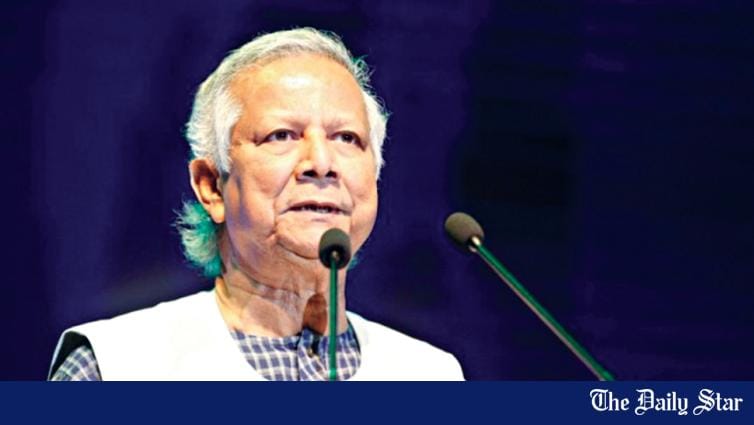
Chief Adviser Prof Muhammad Yunus today said social business is not merely an idea, but a growing social movement.

He made the remarks in a special video message at a programme titled "Social Business Academia Dialogue", organised by North South University (NSU), in collaboration with Yunus Centre, on the NSU campus in Dhaka.

At the daylong event, three centres — the NSU Social Business Centre, NSU Social Impact & Sustainability Centre, and NSU Climate & Disaster Resilience Centre — were launched.

Yunus said, "We are moving forward to achieve the three zeros: zero poverty, zero unemployment, and zero carbon emissions. Through this, we aim to build a liveable and equitable world for all."

He added that social business was no longer just a concept. "It is now a social movement. NSU has long been a pioneering academic institution for social business in Bangladesh."

By hosting social business forums and fostering a culture of innovation, NSU has set a strong example for others to follow, he said.

At the event, Nurjahan Begum, adviser to the health and family welfare ministry, stated that to achieve sustainable growth, it was essential to address the three zeros by setting aside profit motives and personal interests.

"Our focus needs to be on creating social impact, fostering environmental sustainability, and ensuring the well-being of our communities. Therefore, promoting accessible healthcare and prioritising public health must be integral to our growth strategy," she added.

Sharmeen Soneya Murshid, adviser to the social welfare ministry, and Ismail Serageldin, co-chair of the Nizami Ganjavi International Center (NGIC), also spoke.

Murshid said social business belongs to the care community, adding, "It is driven not by greed, but by compassion. It's not about what we can take from vulnerable people, but how we can uplift and support them."

"The vision of the three zeros is not a utopia; it is a practical path towards shared dignity, meaningful work, and a healthier planet," she added.

Lamiya Morshed, principal coordinator of SDGs affairs at the Chief Adviser's Office, said, "Professor Yunus' work has inspired millions around the world."

Aziz Al Kaiser, chairman of the Board of Trustees at NSU and chairman of City Bank PLC, remarked, "The challenges the world faces today require innovative solutions."

"That is why socially conscious businesses and the concept of the three zeros resonate so strongly. The road ahead won't be easy, but with unity of purpose and shared ideas, there is nothing we cannot overcome," he added.

Erik Solheim, former Norwegian minister of climate and the environment and former executive director of UN Environment, said, "For the first time in human history, we no longer have to choose between economy and ecology; we can achieve both. Bangladesh is in a strong position to lead the way in implementing this balance."

Ismail Serageldin, co-chair of the NGIC and former vice-president of the World Bank, said, "We need more than just knowledge; we need wisdom. Our education system must nurture students to be disciplined, creative, and ethical."

"Such an education will shape a generation committed to achieving the three zeros. NSU has the potential to lead this transformation in education, both in Bangladesh and beyond," he added.

Prof Abdul Hannan Chowdhury, vice-chancellor of NSU and chairman of Grameen Bank, said the newly inaugurated centres reflect NSU's continued commitment to integrating ethical awareness and sustainability into every aspect of its curriculum.​
 

Prof Yunus urges Islamic NGOs to take up social business to support Muslim world


Published :
Jul 06, 2025 19:30
Updated :
Jul 06, 2025 21:43


1751843511326.webp


Chief Adviser Professor Muhammad Yunus has urged Islamic NGOs to take up social business to support the Muslim world.

He made the call when a group of NGO leaders from different Muslim countries met him at the state guest house Jamuna in Dhaka on Sunday.

“In our world we focus on women, health care. If you are poor, you have healthcare problems. We approached healthcare as a means to support the poor,” the Chief Adviser said.

According to a UNB report, Dr Yunus said social business is a good way to carry out this support, adding that he was encouraging young people around the world to take up social business and become entrepreneurs.

The NGO leaders present at the meeting said the social business campaign that Prof Yunus carried out in recent years had encouraged them to take up similar ventures in their respective countries, said the Chief Adviser’s press wing.

Eyüp Akbal, Secretary General of The Union of NGOs of The Islamic World, UNIW from Turkey, Muhammed Hüseyin Akta, representative of the Assembly of Turkish American Associations (ATAA), Fauwaz Bin Hasbullah, Persatuan Wadah Pencerdasan Umat Malaysia (WADAH)UNIW & Deputy Secretary General, UNIW from Malaysia, Muhammad Abdus Shakoor, President Alkhidmat Foundation Pakistan and Deputy Secretary General of UNIW from Pakistan, and Dr. Salamun Bashri, Auditing Board Member, UNIW from Indonesia were present at the meeting as foreign delegates.

Besides, Prof. Mahbub Ahmed, Retired Professor of Dhaka University and President of BIIT, S M Rasheduzzman, Chairman SAWAB and Member of High Advisory Board, UNIW, Dr. Ali Afzal, Council Member, UNIW and Managing Director, Krishibid Group, and Dr. M. Abdul Aziz, Director General, BIIT and Country Representative, IIIT were, among others, present at the meeting.​
 

How social business can power a sustainable future

Taskin Shakib and Humaira Haque
Published :
Jul 23, 2025 23:17
Updated :
Jul 23, 2025 23:17

1753316790576.webp


As Bangladesh grapples with rising unemployment, persistent poverty, and escalating climate risks, Nobel Laureate Professor Muhammad Yunus's 3ZERO vision-Zero Poverty, Zero Unemployment, and Zero Net Carbon Emissions-shines as a beacon of hope, offering a bold and transformative roadmap for the nation's future.

The numbers speak volumes. With 65 per cent of Bangladesh's population under 35 and a labour force exceeding 73 million, the country sits on a demographic goldmine. Yet, unemployment has risen to 4.63 per cent in FY2024-25, with 2.7 million people currently out of work. While extreme poverty has declined-from 12.9 per cent in 2016 to 5.6 per cent in 2022-income inequality continues to widen, threatening long-term social stability and growth.

THE SOCIAL BUSINESS REVOLUTION: At the core of the 3ZERO vision lies the social business model. Unlike traditional businesses, social businesses are enterprises that solve social problems through entrepreneurial means, without the pressure to maximise profits. These businesses reinvest their profits in operations and mission expansion, creating self-sustaining engines for growth and development.

Grameen Bank, founded by Professor Yunus, pioneered this model and today reaches over 9 million borrowers, 97 per cent of whom are women. More significantly, 68 per cent of these borrowers have crossed the poverty line, proving that inclusive financial systems can drive systemic transformation.

"There are an estimated 10 million social enterprises worldwide, encompassing over 3 per cent of all businesses," according to the World Economic Forum's 2024 report. In Bangladesh, social business is no longer a niche idea; it's a national movement. Over 5,500 3ZERO Clubs across 63 countries reflect the global appetite for this approach, with Bangladesh at its epicentre.

ZERO POVERTY -- BEYOND MICROFINANCE: Social business in Bangladesh has moved beyond microcredit. Grameen Danone Foods combats child malnutrition by offering fortified yoghurt at affordable prices. The company sources milk from 500 local micro-farmers, while creating over 350 direct jobs. It serves the dual purpose of improving nutrition and empowering rural economies.

Another example is Grameen Veolia Water, which provides safe drinking water to rural populations that previously relied on groundwater contaminated with arsenic. These models demonstrate how social businesses, by addressing fundamental human needs, can create a sense of empathy and connection while also generating sustainable livelihoods.

Looking forward, integrated service platforms can be developed at the village level. These would combine digital financial tools, healthcare access, nutritious food, and educational support under cooperative or social enterprise models. With a people-centred approach, such models can help entire communities rise above poverty, sustainably and inclusively.

ZERO UNEMPLOYMENT -- FROM JOB SEEKERS TO JOB CREATORS: While many businesses reduce labour costs through automation, social businesses prioritise labour intensity to create inclusive employment opportunities. This strategy opens doors for groups historically marginalised in the job market-the rural poor, women, and persons with disabilities.

Grameen Danone's value chain is structured around social inclusion. From local farmers and factory workers to the "Grameen Ladies" who distribute yoghurt in rural areas, every link in the chain generates income and empowerment. These women, often first-time earners, become change agents in their families and communities.

Looking ahead, Bangladesh has an opportunity to nurture youth-centred entrepreneurship ecosystems. "Skills to enterprise" pathways-where vocational training directly leads to startup opportunities-can mobilise young people as innovators and job creators. Support systems such as access to micro-equity, mentorship, incubators, and digital platforms will be key to unlocking this potential.

Green jobs are also a major frontier. As global economies transition toward sustainability, demand is rising for roles in renewable energy, waste management, sustainable farming, and circular manufacturing. Bangladesh can capitalise on this opportunity by aligning its youth training programs with green enterprise models.

ZERO NET CARBON -- CLIMATE ACTION THROUGH BUSINESS: Bangladesh is one of the countries those are most vulnerable to climate change, ranking 9th globally in terms of climate disaster risk. Rising sea levels and extreme weather events threaten to displace tens of millions of people, with projections suggesting that 17 per cent of the country could be submerged by 2050. Urban centres are already feeling the pressure from an influx of climate migrants.

Social business offers a platform for climate adaptation and mitigation. Grameen Shakti has already installed millions of solar home systems in off-grid areas. This initiative not only reduces reliance on fossil fuels but has also generated thousands of green-collar jobs, including technicians, sales agents, and maintenance workers.

Future models could include community-owned solar mini-grids, biogas plants, electric vehicle services, and climate-resilient farming cooperatives. Social business could also play a crucial role in developing Bangladesh's blue economy through sustainable fishing practices, mangrove restoration initiatives, and coastal tourism efforts that protect marine biodiversity while generating income.

THE IMPLEMENTATION BLUEPRINT: Achieving the 3ZERO goals will require innovative financing. Social impact bonds, blended finance structures, green bonds, and blockchain-powered impact tracking can help attract private capital to public goods. These instruments ensure that investment returns are tied to measurable social and environmental outcomes.

Technology is another enabler. Artificial intelligence can be harnessed to identify social needs and optimise resource allocation. Internet of Things (IoT) devices can provide real-time monitoring for agriculture, water use, and energy systems. Digital marketplace platforms can connect social entrepreneurs to consumers and donors globally.

Equally important is an enabling policy environment. Legal recognition of social enterprises, tax breaks, access to government tenders, and simplified regulatory processes can accelerate the growth of the sector. Public-private partnerships will be vital for infrastructure development, while regulatory sandboxes can support innovation without stifling it through excessive red tape.

Bangladesh must also invest in education. Currently, education receives just 11.88 per cent of the national budget and only 1.69 per cent of GDP-far below the amount needed to nurture an entrepreneurial and innovative generation. Increasing investment in education, especially in entrepreneurship, sustainability, and digital literacy, is critical to making the 3ZERO vision a reality.

A GLOBAL MODEL IN THE MAKING: The momentum behind social business in Bangladesh is increasingly international. The 9th Social Business Youth Summit 2025 brought together over 350 entrepreneurs, changemakers, and policymakers from across the globe to design solutions for shared global challenges. Their collaboration demonstrated that Bangladesh is not only a case study but a leader in the global 3ZERO movement.

Unlike conventional businesses that guard their secrets, social enterprises are inherently collaborative in nature. Their purpose-driven nature fosters ecosystems where knowledge is shared, partnerships are built, and innovations are scaled across borders. This spirit of openness and collective action is what makes social business not just a model, but a movement.

END NOTE: As 2025 unfolds, Bangladesh stands at a crossroads. One path leads toward ecological destruction and deepening inequality. The other envisions a society where economic activity serves human flourishing and environmental sustainability.

The Grameen legacy has laid the groundwork for future success. Now, it's time to scale these models across sectors, regions, and demographics. By aligning entrepreneurial innovation with social goals, Bangladesh can transform its demographic advantage into a development miracle.

The question isn't whether the 3ZERO vision is achievable-it's whether we have the collective will to make it happen. The foundation has been laid; the next chapter is ours to write. As the world watches, Bangladesh has the opportunity to show that sustainable development isn't just an aspiration-it's a choice.

Taskin Shakib is Lecturer & Executive Assistant to the Vice Chancellor at North South University. Humaira Haque is Senior Lecturer, Department of Accounting & Finance, North South University.​
 

Social business practitioners urged to turn ideas into action
Staff Correspondent 28 June, 2026, 00:31

1782606848345.webp

The Yunus Centre and Grameen Group organise the opening ceremony of 16th Social Business Day at the Samajik Convention Centre at Savar on Saturday. | Press release

Nobel Peace Laureate Muhammad Yunus on Saturday called on social business practitioners from around the world to translate their ideas into concrete action, saying imagination must be coupled with sustained efforts to build a more inclusive and sustainable future.

He was speaking at the opening ceremony of the 16th Social Business Day, organised by the Yunus Centre and Grameen Group at the Samajik Convention Centre in Savar.

He also said that the annual gathering provided an opportunity for participants to exchange ideas, learn from one another and renew their commitment to advancing the global social business movement.

‘If the world has to survive, we will win. We will make sure the world becomes a world of three zeros,’ he added, referring to his vision of zero poverty, zero unemployment and zero net carbon emissions.

Expressing confidence in the social business movement, Yunus said it would ultimately succeed because it offers solutions to the world›s pressing challenges.

Yunus stressed that imagination is humanity›s greatest strength and urged participants never to abandon their dreams of creating a better world.

‘Imagine the world that we want in detail, and just keep on imagining, and it will happen. That has a strange power,’ he added.

Professor Yunus called for a fundamental transformation of the education system, saying it should inspire young people to become creative entrepreneurs and problem-solvers instead of becoming job seekers.

He said the conventional education system confines human potential in what he described as a ‘bonsai’ mindset, limiting people›s creativity and independence.

‘Human beings are not born to work for somebody else,’ he added, saying that every individual possesses the innate capacity to create, innovate and contribute to solving social problems.

At the welcome address, Lamiya Morshed, executive director of the Yunus Centre, said that Social Business Day serves as a platform for sharing experiences, exchanging ideas and exploring innovative solutions to address social and economic challenges. Economics

Ashraful Hassan, chairman of Grameen Group, highlighted the importance of strengthening the global social business movement through collaboration and innovation.

The event brought together 219 participants, including entrepreneurs, global leaders, academics, policymakers, innovators and youth from around the world.

This year’s theme is ‘Social Business: The Language of Peace in a Fractured World.’

The two-day conference would feature five plenary sessions and seven breakout sessions, including keynote addresses, innovation showcases, country forums and networking opportunities centred on critical global challenges such as poverty, healthcare, financial inclusion, climate action, education, food security and youth empowerment.

This year, Grameen would mark two historic and deeply connected milestones: 50 years of Grameen Bank and 20 years since the Nobel Peace Prize was awarded to Professor Muhammad Yunus and Grameen Bank, recognising the idea that poverty is not created by the poor but by the systems that surround them.​
 

Nearly 100 Grameen Bank branches attacked in Nov accompanied by ‘Joy Bangla’: Yunus


1795475488634.webp


Nearly 100 Grameen Bank branches across the country were attacked with petrol bombs in November alone, accompanied by "Joy Bangla" slogans, former interim government Chief Adviser Prof Muhammad Yunus said on Monday.

In a statement, he also called for exerting pressure for an end to the daily arson attacks on Grameen Bank and for the perpetrators to be punished.

“Since the beginning of November, Grameen Bank branches have been attacked with petrol bombs almost every day, accompanied by ‘Joy Bangla’ slogans. Nearly 100 branches across the country were attacked in the same way in November alone,” Yunus said.

The 2006 Nobel Peace Prize Laureate said the pattern suggests a daily task assigned to the perpetrators by some people above them. “The world has watched with shock as human beings are commandeered to turn on to destroy the most valuable property of their own poor neighbours, women who borrow from the bank to run their businesses and who receive a share in its profits as dividends.”

In recent days, Bangladesh was witnessing a calculated campaign of arson and terror, he said, adding that suspected activists of the Awami League, whose activities are banned, were responsible.

“My own home in Chattogram was among the targets. It is where I began the work that grew into Grameen Bank, and where two of my younger brothers live with their families,” the former chief adviser said, describing the “systematic assault” on Grameen Bank as unbelievably shocking.

Mentioning that Grameen Bank is a globally respected bank of the poor, owned by poor women, he said the Nobel Committee had recognised it with the Nobel Peace Prize 20 years ago. “This year, the bank and the country mark 50 years since its founding and 20 years since that prize,” he said.

Yunus said in several incidents, dedicated Grameen Bank officials and borrowers narrowly escaped fatal injury. “These attacks have brought deep fear into the daily lives of millions of rural women. For them, Grameen Bank is a vital lifeline for feeding their families, educating their children and meeting many other needs,” he said.

The Nobel Laureate said the violence had extended well beyond Grameen Bank.

The same campaign had set ablaze the home of Nusrat Tabassum, Member of Parliament and a frontline fighter of the July uprising, as well as the homes of three Members of Parliament from the Bangladesh Nationalist Party (BNP) and three police stations, he said.

“Perpetrators try to justify their attacks by spreading a false claim that the bank is owned by me and operated by me,” Yunus said, adding that 90 percent of the shares of the bank are owned by the borrowers and the remaining 10 percent owned by the government.

“I was removed as managing director of the bank by the Awami League government in 2011, and since then I have had no role in its management or operations. I do not own, and have never owned, any share of Grameen Bank,” he said.

The former chief adviser said the bank had formally asked the Ministry of Home Affairs for stronger security. “The request covers its 11 million owners, its dedicated staff and its records, so that services to poor women continue without interruption.”

He called for ensuring the security of the bank and bringing every perpetrator to justice without delay. “I also call on the friends of Grameen Bank around the world to help bring sanity to those planning and executing these attacks at the highest level,” he said.

Yunus said an attack on Grameen Bank branches is not merely an assault on a pioneering global institution. “It is a direct attack on the collective efforts of the international community to end poverty and bring dignity to tens of millions of people, he said.

“I appeal to all who value that work to raise their voices against the perpetrators. We must protect Grameen Bank, the bank of the poor women,” he said.​