| Global Defense, OSINT & Geopolitics Wire

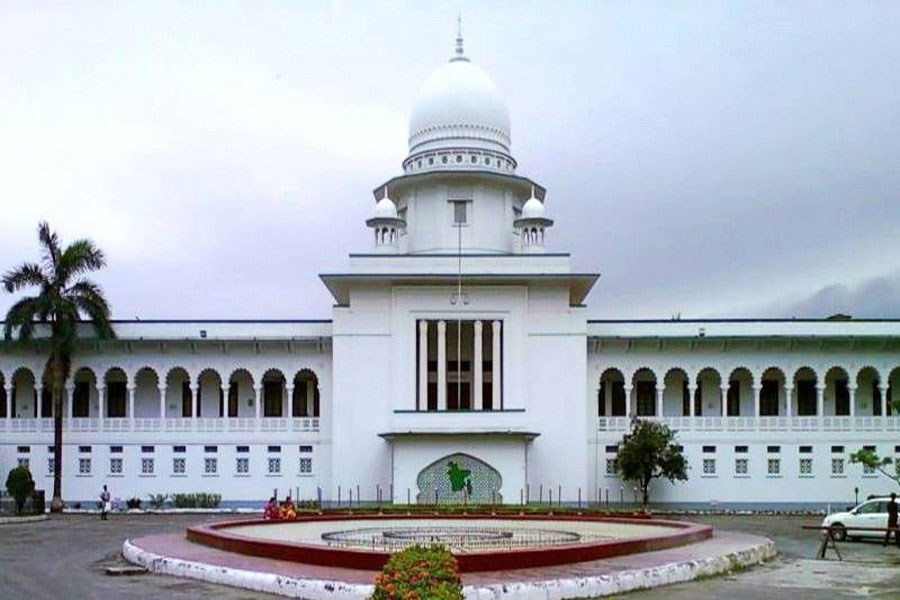
[🇧🇩] Judiciary of Bangladesh.

[🇧🇩] Judiciary of Bangladesh.
81
5K
More threads by Saif

G Bangladesh Defense

Reached a consensus on decentralisation of subordinate courts: Salahuddin

UNB
Published :
Jul 07, 2025 21:29
Updated :
Jul 07, 2025 21:29
Share this news

1751930363941.webp


BNP Standing Committee member Salahuddin Ahmed on Monday said there has been a consensus on decentralisation of subordinate courts, with all parties agreeing on specific directives for establishing courts at the upazila level.

Talking to journalists at the Foreign Service Academy in the capital following the National Consensus Commission's dialogue with political parties, Salahuddin highlighted the unified stance on this judicial reform.

"Certain issues regarding subordinate courts have been clearly defined," said Salahuddin Ahmed, adding, "For instance, there is no need to establish courts in upazilas that are part of district headquarters. Since those specific sadar upazilas can be integrated with the district judge courts located in the district headquarters that effectively establishes the upazila courts there."

He said that some upazilas in Bangladesh, which were once called 'chowkis' during the British period, as well as island and other selected areas, already had courts established.

"For upazilas located very close to district headquarters-say within 15 to 20 kilometres-given the improved state of communication, it becomes administratively burdensome to build new structures, provide housing for officers and staff, and maintain them. Therefore, based on a detailed survey, it has been recommended that no new courts be established in such upazilas," Salahuddin pointed out.

The BNP leader stated, "Factors such as the distance between upazilas, population density, economic conditions, communication facilities, and the number of pending cases in specific upazilas should be considered. Following a survey, a phased approach to establishing courts in all upazilas has been agreed upon."

On the issue of establishing permanent High Court benches in divisional cities, Salahuddin advised involving the judiciary.

The previous discussions on setting up permanent High Court benches in divisional cities were included in the Judicial Reform Commission's report, he said, suggesting that this matter should be discussed with and involve the judiciary.

"In 1988, a Supreme Court judgement declared the relevant constitutional amendment for such benches unconstitutional, and as a result, those benches were never established. To avoid repeating such complications in the future, we have recommended a solution be found in consultation with the judiciary, with both the National Consensus Commission and the government bearing responsibility," Salahuddin reminded.

Emergency Provisions

Salahuddin also addressed the issue of emergency powers in the Constitution, stating that Articles 141A, 141B, and 141C clearly define the President's authority to declare a state of emergency, the process for doing so, which fundamental rights may be suspended, how long it can last, and what must happen if Parliament is not in session.

He said, "The Consensus Commission has proposed adding two or three more clauses related to this. There have been detailed discussions on maintaining fundamental human rights during emergencies, especially in relation to international treaties and agreements with the United Nations."

"Our proposal is that the matter should be determined through a detailed debate in the National Parliament. This is a complex issue. Laws may be enacted under these constitutional provisions, and Parliament would be the appropriate forum for such considerations," Salahuddin explained.​
 

18 judges forced into retirement

The government yesterday sent 18 lower court judges into forced retirement.

A circular was issued in this regard by Branch-3 of the Judicial Division under the Law and Justice Division.

Of the judges, 15 are district and sessions court judges, two are additional district and sessions judges, and one is a joint district and sessions judge.

"As per the terms of service in the Bangladesh Judicial Service, as the members have completed 25 years, it has been decided, in consultation with the Bangladesh Supreme Court, to retire them from service in the public interest under the provisions of Section 45 of the Public Service Act, 2018," read the circular.

According to law ministry sources, it is the first time since August 5 last year that any lower court judge has been sent into forced retirement.

Most of the forced retired judges were serving as special judges in various districts and different tribunals.

Of them, Bikash Kumar Saha, district and sessions judge, Abu Zafar Md Kamruzzaman, district and sessions judge, Md Nurul Islam, additional district and sessions judge, and Mohammad Hossain, joint district and sessions judge, are currently attached to the Law and Justice Division in Dhaka.

The other judges are Sheikh Mofizur Rahman (district and sessions judge), Women and Children Repression Prevention Tribunal, Rajbari; Md Mahbubar Rahman Sarkar (district and sessions judge), Women and Children Repression Prevention Tribunal-1, Kishoreganj; Sheikh Golam Mahbub (district and sessions judge), Women and Children Repression Prevention Tribunal, Kushtia; Md Mojibur Rahman (district and sessions judge), Women and Children Repression Prevention Tribunal-1, Gaibandha; Md Ehsanul Haque (district and sessions judge), Women and Children Repression Prevention Tribunal, Bhola; Md Jewel Rana, (district and sessions judge), Jononirapotta Bighnokari Oporadh Domon Tribunal (Public Safety Disrupting Crimes Prevention Tribunal), Khulna; Md Monir Kamal (district and sessions judge), Cyber Tribunal, Sylhet; Shahidul Islam, special judge (district and sessions judge), Patuakhali; Al Mahmud Faizul Kabir, special judge (district and sessions judge), Dinajpur; Md Nazimuddoula, district and sessions judge, Tangail; AKM Mozammel Haque Chowdhury (district and sessions judge), Women and Children Repression Prevention Tribunal, Thakurgaon; Fazle Elahi Bhuiyan (district and sessions judge), Women and Children Repression Prevention Tribunal-3, Habiganj; Md Rustum Ali, member (district and sessions judge), Administrative Tribunal, Barishal; and AKM Enamul Karim, additional district and sessions judge, Patuakhali.​
 

Money and power should never undermine justice

1752284684364.webp

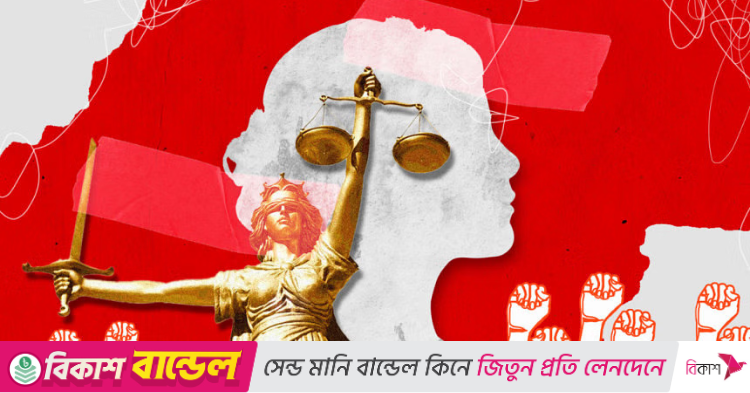
FILE VISUAL: SALMAN SAKIB SHAHRYAR

There are stories that make you sick to your stomach, and then there are stories that remind you how little has actually changed in the country regarding women's safety, no matter who holds the reins of power.

The 2024 Subarnachar case is both.

Back in February last year, a woman and her 12-year-old daughter were gang-raped in their own home in Noakhali's Subarnachar upazila. Yes, a child—but I suppose by now, it comes as no surprise.

But instead of seeing the accused behind bars, we are now seeing the survivors being forced to leave their home amid death threats. They have been forced to sell everything and run—not because they are guilty, but because they dared to demand justice.

The prime accused is Abul Khair Munshi, a known local Awami League leader, who was arrested after the incident. However, he was released on bail in November and is now roaming free. Even though his party has been ousted, he roams confident enough to threaten his victims, confident enough to walk up to a survivor's face on court premises and threaten to kill them if they don't withdraw the case. And even after the survivor filed a general diary (GD) with Char Jabbar Police Station on January 19, the threats have not stopped.

The officer-in-charge of the station confirmed the filing of the GD. He also said that "primary investigation found the allegation to be true." Yet, after the last hearing on June 24, Munshi told the victim he has money, so the court verdict will go in his favour.

Think about what that means.

A man accused of gang-raping a woman and her minor child has so little fear of consequences that he can openly brag about buying justice. And why shouldn't he? The way our legal system works, money has often spoken louder than the law, and political connections have shielded even the most disgraceful crimes.

But here is the brutal truth no one seems ready to face: no party should ever matter when it comes to justice.

The Awami League's fall was supposed to symbolise a new era—one where ordinary people could hope for justice, where survivors would be heard. And yet here we are.

It seems that one member of the party still clings to enough influence to intimidate survivors, enough arrogance to believe his money will rewrite court verdicts, and to casually threaten families into exile.

What does that say about our so-called "new Bangladesh?"

The names change, the faces rotate, but the old system grinds on—fuelled by fear, influence, and political impunity. It just goes to show that no matter which flag someone waves, justice remains optional when money and muscle enter the room.

What makes this case even more dangerous is the silence around it. Where are the fiery speeches from the new champions of justice? Where is the accountability they promised? If the new leadership truly meant to clean house, Munshi would not dare to make a mockery of the legal system.

This is not about one family or one case. It is about every survivor who dares to stand up, only to be met with more violence, more threats, more reasons to regret speaking out. It is about the culture we breed, where victims flee their homes—just as the Muradnagar rape survivor had to leave due to pressure from so-called journalists—while the abusers flaunt their wealth and political ties, new or old.

The Subarnachar survivor did everything right. She reported the crime, pursued legal action, refused to stay silent. In return, she lost her home, her safety, her peace. Her child, already robbed of innocence, now lives with fear as a constant companion. Meanwhile, Munshi boasts about his influence, his money, and his expectation that verdicts can be bought like cheap commodities.

That justice for rape survivors is a mirage in this country is no news, with a miserable conviction rate of three percent in rape cases.

If the interim government is serious about reform, this is where they prove it. No political party, disgraced or not, should be able to shield criminals. No amount of money should tip the scales of justice. And no survivor should have to run for their life because the courts, the police, and the system itself refuse to protect them.

Until men like Munshi, and the myriad "politically powerful" rapists, are stripped of their influence, their protection, and their arrogance, all our promises of justice, change, and progress will remain exactly what they have always been—lip service full of empty words.

Naziba Basher is a journalist at The Daily Star.​
 

Justice goes digital

FE
Published :
Jul 20, 2025 00:04
Updated :
Jul 20, 2025 00:04

1752971276113.webp


The Supreme Court's recent move to make company court proceedings fully digital is a much-needed step toward a more efficient and honest justice system. With paperless processes already introduced in one court and soon expanding to the other two courts that deal with company matters, it is clear there is a genuine commitment to using technology to make things better. Even today, handling disputes in court often involves endless paperwork, chasing after missing files, bureaucratic delays and, unfortunately, opportunities for unfair practices. Consequently, many people in the country take advantage of these loopholes and come to view and treat the law as a mechanism for prolonging disputes instead of resolving them. Digitising company courts as a solution to some of these long-standing problems may therefore prove to be not only effective but also a timely step toward bringing the delivery of justice into the modern age.

At the moment, just three High Court benches handle the legal affairs of more than three lakh registered companies in the country. These benches are overloaded with over 20,000 pending cases, along with other types of legal disputes they have to contend with. This creates a long wait for justice. Making matters worse, the traditional system is plagued by corruption at nearly every stage of the process. Whether it's getting a case onto the cause list, having an order typed or simply collecting a signed copy from the judge's chamber, bribes are often demanded at every turn. Shockingly, even the morning submission of hearing slips, approved by judges, often turns meaningless as bench officers allegedly drop cases from the day's list. Digitisation, in this context, could be a game-changer. When all case records and procedural steps are logged online, there is little room for tampering. Judges can then oversee case progress directly and keep tabs on the process in real time. On top of that, storing documents digitally eliminates the need for physical storage, thus saving valuable space. It would also reduce printing costs for both lawyers and clients.

This move toward digitisation should be just the beginning. If it works well in company courts which it should, it must be expanded to other parts of the judiciary including the lower courts where millions of cases remain stuck for years. As the saying goes, justice delayed is justice denied, and for far too long, delays and corruption have made people lose faith in the court system. That said, going digital alone would not solve the backlog problem. It can certainly make things run more smoothly and help reduce the delays, but with too few judges, the pile-up of cases won't simply go away. Only through the appointment of extra judges can the judiciary realistically expect to reduce the backlog and ensure timely dispensation of justice.

The drive for digitisation must go hand in hand with efforts to make justice more accessible by decentralising the courts. Many residents in remote areas struggle to attend proceedings in district-level courts, leading to delays and higher expenses. Gradually shifting lower courts to the upazila level and establishing High Court benches to every divisional headquarter could solve this issue by bringing justice closer to communities. This would save time, cut travel costs and make the legal system less intimidating for ordinary citizens. If people can bank on their phones and access healthcare in their villages, why should seeking justice require such long journeys? A court system that is both digital and decentralised can ensure a justice delivery process that is easier, faster and fairer for them.​
 

Rules issued for vesting power upon SC to create judicial posts

BSS
Published :
Jul 30, 2025 23:26
Updated :
Jul 30, 2025 23:26

1753923450969.webp


Rules have been issued for creation of posts in the Judicial Service to a committee headed by a senior most judge of the Appellate Division of the Supreme Court (SC) but this power is not absolute and is subject to certain conditions and limitations.

“The secretaries from the public administration, finance, and law ministries will have to be represented in the committee to make recommendations regarding the creation of judicial posts,” Sheikh Abu Taher, the Secretary of the Law and Justice Division of the Ministry of Law, Justice and Parliamentary Affairs informed this in a gazette notification on Monday last.

The notification, titled Judicial Service Formation Rules-2025, mentions the judicial and administrative posts of the Judicial Service as 'cadre' posts.

The judiciary will no longer need to seek approval from the public administration or finance ministries for creating new positions, it said.

The rules stated that members of the judicial service would be appointed in different posts of law and justice divisions.

The new formation rules clearly list the judicial and administrative posts under the Judicial Service, categorizing them separately to streamline the organizational structure.

New recruits will serve a two-year probationary period before confirmation of their service , subject to satisfactory performance, said the rules.

In cases of suspension, dismissal, or removal, the Bangladesh Judicial Service (Discipline) Rules, 2007, will be applicable, and consultation with the Supreme Court is mandatory.

Earlier, any judicial post was initially created for three years. Later, it was gradually made permanent based on the approval of others, including the public administration.

But now any post of judges will be created permanently. As a result, from now on, the judiciary will no longer have to approach the administration for the creation of posts of judges.

In addition, Article 115 of the Constitution gives the President the power to make separate rules regarding the officers performing duties in the judiciary.

In line with ‘the Masdar Hossain case verdict’ and the Constitution, the Bangladesh Judicial Service Formation Rules-2025 has been issued.

Meanwhile, Secretary General of the Bangladesh Judicial Service Association Muhammad Mazharul Islam said the formation of a committee in the creation of judicial posts is one of the most notable aspects of the rules.

“I believe that the institutional complexity in the creation of judicial posts in subordinate courts will be removed through these rules . . . The Judicial Service Formation Rules 2025 will be considered as a milestone in the institutional excellence of the Judiciary,” he added.​