| Global Defense, OSINT & Geopolitics Wire

[🇧🇩] Monitoring Bangladesh's Economy

[🇧🇩] Monitoring Bangladesh's Economy
1K
57K
More threads by Saif

G Bangladesh Defense

Bangladesh receives $1,071m remittance in 12 days of July

BSS
Published :
Jul 13, 2025 18:30
Updated :
Jul 13, 2025 18:30

1752449781287.webp


Expatriate Bangladeshis sent around US$ 1071 million remittances during the first twelve days of July in the fiscal 2025-26, according to the latest data of Bangladesh Bank (BB) issued on Sunday.

This amount reflects a daily average remittance of $89.25 million sent by expatriates during the period.

During the same period last year, the country’s remittance inflow was $948 million.​
 

World Bank to continue support to Bangladesh projects: Finance Adviser

Published :
Jul 13, 2025 18:20
Updated :
Jul 13, 2025 18:48

1752449932812.webp


The World Bank has assured Bangladesh of continuing its assistance in ongoing projects along with the budgetary support.

“It (World Bank) has expressed its satisfaction over the overall economic situation of the country,” Finance Adviser Salehuddin Ahmed told reporters after holding a meeting with World Bank’s visiting new Vice President for the South Asia Region, Johannes Zutt at his office in the secretariat.

He said that Zutt appreciated Bangladesh’s advancement although it went through a very tough situation in the past one year, reports UNB.

“We are very much happy to see the progress of financial sector, balance of payment, foreign exchange sector, all is going well,” the finance adviser quoted the World Bank official as saying.

He also mentioned that Zutt put emphasis on revamping the private sector, its development, and enhancement of the Foreign Direct Investment (FDI) in the country.

He said that Bangladesh is doing well overall comparing to the other countries of the world.

The adviser said Zutt recalled his past role as the country director of the World Bank here 15 years ago and pointed out that since then Bangladesh has gained remarkable changes, especially in physical structure such as metro rail.

“The World Bank will provide all kinds of support needed for Bangladesh,” the adviser quoted the VP of the Washington-based lender as saying.

Responding to a question, Salehuddin said that World Bank is happy about the reforms that are going on in Bangladesh.

Zutt, he said, appreciated central bank’s initiative for restructuring the banking sector.

“The macroeconomic situation of the country is on the right track,” he quoted the WB official as saying.

Regarding the US Tariff issue, the adviser said that the commerce adviser brief about the outcome of the negotiations on his return home from Washington.

“He will inform us in which area we need to adjust our tariff, there is a tax policy and other issues involved in this matter, we will look into the matter,” he said.

The issues relating to the operations of the IFC were also discussed in the meeting.

Answering to a question, the finance adviser said that the interim government has availed whatever support it had sought from the World Bank.

He informed that the next cycle of expected support would be raised in the upcoming Annual Meetings of the World Bank-IMF Group in October.

Replying to another question, Salehuddin said that the World Bank is happy over the reform initiatives in the financial sector including in the NBR.

There were also discussions over the Chattogram Port, container terminal at Laldia, he said adding that they would extend support in the infrastructural sector.

The WB vice president arrived in Dhaka on Saturday.​
 

Exploring alternative sources of remittance

MIR MOSTAFIZUR RAHAMAN
Published :
Jul 14, 2025 23:13
Updated :
Jul 14, 2025 23:13

1752535021548.webp


Remittance has long been a cornerstone of Bangladesh's economic stability and growth. The billions of dollars sent home by expatriates have served as lifelines for families, bolstered our foreign currency reserves, fueled rural economies, and underpinned banking liquidity. In the fiscal year 2023-24, remittance inflows reached an impressive USD 24 billion -- a figure that demonstrates the immense contribution of migrant workers to the national economy. However, a closer look reveals a looming threat: nearly 80 per cent of this remittance came from the Middle East -- a region now engulfed in deepening instability.

The Middle East, once seen as a dependable and generous host to Bangladeshi migrant workers, is today mired in relentless political and military turmoil. From the drawn-out war in Yemen and clashes in Lebanon to the ongoing crises in Syria and Iraq, the genocidal violence in Gaza, and the recent escalation in the Iran-Israel conflict -- the region is quickly becoming a tinderbox of global conflict. These developments are not isolated or distant; they strike at the very core of our economic security. With millions of Bangladeshis working in the Gulf states and beyond, any prolonged disruption in the region could result in mass job losses, forced returns, and a sharp decline in remittance inflows.

This is not a warning we can afford to ignore. It is imperative that Bangladesh begins exploring and developing alternative sources of remittance and foreign income without delay. The old adage "Don't put all your eggs in one basket" rings especially true for us now. We cannot continue to rely so heavily on one region for our economic lifeline -- especially a region so riddled with uncertainty.

The first and most immediate step is labour market diversification. Bangladesh must aggressively pursue new labor destinations across Southeast Asia, Eastern Europe, Latin America, and Africa. Countries such as Malaysia, Japan, South Korea, Romania, Belarus, Croatia, Poland, Brazil, and Chile are grappling with a shortage of skilled and semi-skilled workers. These are opportunities waiting to be tapped.

To access these markets, Bangladesh will need to deploy proactive diplomacy. This means forging bilateral labour agreements, offering mutual training recognition, ensuring worker protection, and building trust with host nations. It also requires private sector collaboration and streamlined government processes to facilitate quicker deployment of trained labor.

Many Bangladeshi workers currently employed abroad -- particularly in the Middle East -- are low-skilled or unskilled. But the demand in emerging labour markets is shifting toward skilled and semi-skilled categories. This mismatch presents both a challenge and an opportunity.

To bridge the gap, the government must prioritise skills development programmes tailored to international demand. Training in electrical work, plumbing, welding, nursing, caregiving, hotel and restaurant management, IT, digital marketing, and even niche areas like hairdressing can transform the earning potential of outbound workers. For example, hairdressing, often dismissed as a low-income trade, commands substantial income in European cities.

By investing in internationally accredited training programmes through technical schools, polytechnics, and public-private initiatives, Bangladesh can unlock a new generation of skilled migrants ready to meet global demand -- and send home greater remittances in the process.

Still, relying solely on exporting labour -- regardless of the market -- keeps Bangladesh vulnerable to external shocks. The more we depend on foreign economies, the more we expose ourselves to global volatility. Therefore, long-term resilience demands the creation of robust employment opportunities within our own borders.

Bangladesh has the potential to stimulate large-scale employment through the development of agriculture-based industries, SMEs, export-oriented manufacturing, freelancing, and entrepreneurship. These are not only avenues for reducing unemployment, but also for increasing domestic income and internal economic circulation.

Freelancing, in particular, has emerged as a major global trend, and Bangladesh is already on the map. After India, we are the second-largest pool of IT freelancers globally. Yet, in the absence of proper infrastructure, payment gateways, tax incentives, and policy support, our freelancers have not been able to translate their potential into substantial export earnings. By removing these bottlenecks, Bangladesh can turn freelancing and digital services into a billion-dollar export industry.

While remittances remain vital, export diversification must go hand in hand with labour market reforms. The ready-made garment (RMG) industry currently accounts for the bulk of our export earnings, but over-reliance on any one sector -- as with any one region -- is dangerous.

There are promising sectors just waiting for the right push: pharmaceuticals, agro-processing, leather, ceramics, frozen fish, light engineering, and handicrafts. With modern infrastructure, smart subsidies, and global market connectivity, these industries can generate substantial foreign exchange -- reducing our dependence on overseas labor altogether.

The IT sector again stands out as a game-changer. With a young, tech-savvy population and a growing digital ecosystem, Bangladesh can become a major hub for outsourcing, software development, and digital services. Countries like India, Vietnam, and the Philippines have already shown the path. All we need is the vision and commitment to follow it.

Should the Middle East crisis escalate, a large number of Bangladeshi migrants may be forced to return home. This influx, if not managed well, could overwhelm the labour market and increase social pressures. But if handled with foresight, it can become a turning point.

Returnee workers bring skills, discipline, and capital -- all of which can be channeled into domestic productivity and investment. The government must create an investment-friendly environment tailored to the needs of the returnees: access to land, bank loans, simplified regulatory procedures, and tax incentives. Such measures can encourage them to become entrepreneurs and employers. This not only ensures them an avenue for soft landing but also turns them into engines of economic growth.

Finally, awareness at the family and community level is essential. Many Bangladeshi households are entirely dependent on remittance, which makes them financially vulnerable. These families must be guided to explore alternative income sources, develop financial literacy, and think beyond remittance dependency.

This can be achieved through joint efforts by local government bodies, NGOs, and the media. Awareness campaigns, community-based entrepreneurship training, and microcredit access can prepare families to adapt and thrive -- even in a post-remittance scenario.

The political crises of the Middle East are not just geopolitical developments playing out on foreign soil -- they are directly connected to the fate of millions of Bangladeshis and the economic lifeline of our nation. We may not be able to stop wars in Yemen, Gaza, or Iran, but we can -- and must -- prepare for their economic fallout.

Now is the time for visionary leadership, not reactive firefighting. Now is the time for bold policies that prioritise human capital, innovation, and diversification. The choices we make today will determine whether we survive future crises or fall victim to them.

Bangladesh stands at a crossroads. It must move beyond the comfort of known markets and traditional remittance channels. A new era demands new thinking -- and exploring alternative sources of remittance is no longer an option; it is an urgent necessity. If we act wisely and decisively now, we can turn today's threats into tomorrow's opportunities. If not, we risk letting uncertainty dictate our destiny.​
 

How global economic governance entrenches dependence for countries like Bangladesh

1752540020037.webp

File visual: SALMAN SAKIB SHAHRIYAR

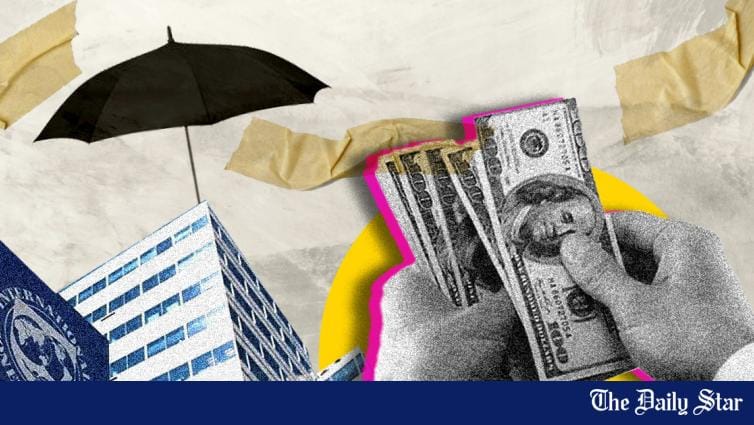
In the first half of 2025, Bangladesh's economic headlines have swung between cautious optimism and deepening alarm: an IMF bailout, renewed negotiations with the World Bank, calls for foreign direct investment (FDI), and an unrelenting cost-of-living crisis. Beneath these surface-level developments lies a deeper structural entrapment—an architecture of global economic governance that continues to bind Bangladesh's future to externally scripted imperatives.

At the core of this system are the Bretton Woods institutions—the International Monetary Fund (IMF) and the World Bank—established in 1944 to help stabilise the post–Second World War economic order. Add to them the World Trade Organization (WTO), created in 1995. Together, these institutions are now acting as enforcers of the Washington Consensus: policy prescriptions promoting austerity, liberalisation, and privatisation, often at the expense of national sovereignty and social equity. Today, this "Unholy Trinity" operates in concert with powerful actors such as the G7, World Economic Forum (WEF), and transnational corporations (TNCs), colluding closely with domestic enablers from Bangladesh's political, business, and bureaucratic elites.

This ensemble—let's call them the Unholy Trinity Plus—sustains a neo-colonial economic order couched in the language of development, reform, and global integration, essentially reproducing dependence in the Global South. Despite Bangladesh's impressive socio-economic resilience, it remains ensnared in this ill-conceived global architecture, its sovereignty gradually mortgaged for short-term liquidity and long-term indebtedness.

The mirage of development

From Latin America to sub-Saharan Africa, IMF stabilisation packages in the 1980s and 1990s ushered in waves of austerity, liberalisation, and deregulation. These policies decimated public services, weakened state capacity, and widened inequality. Bangladesh now treads a similar path.

In June 2025, the IMF disbursed an additional SDR 567 million (equivalent to around $884 million under the extended credit facility and extended fund facility) and $453 million via the rapid financing instrument, totalling $4.1 billion in support—a sum that, ironically, is dwarfed by the record $30 billion remitted by Bangladeshi migrant workers in FY24-25. These remittances have long sustained the economy without conditionalities, yet those who send them remain voiceless in shaping the very policies that govern their families' lives.

In contrast, a staff-level agreement between the IMF and Bangladesh in May 2025 unlocked $1.3 billion, contingent on tax reform and adopting a crawling-peg exchange rate—a mechanism that allows the taka to gradually depreciate against the dollar, making imports more expensive and fuelling inflation. These reforms aim to reassure global investors and stabilise macroeconomic indicators, but they do so at the cost of household budgets and domestic economic autonomy. For ordinary Bangladeshis, these abstractions translate into VAT hikes, fuel price deregulation, and a weakening taka—a recipe for inflation, wage stagnation, and daily hardship. Although the IMF's tone has softened, its approach still draws from the structural adjustment playbook, prioritising macroeconomic targets over social well-being.

The World Bank continues to couch its interventions in the lofty rhetoric of poverty alleviation and capacity building. But its lending in Bangladesh prioritises infrastructure and energy sectors, areas historically prone to elite capture. The Padma Bridge controversy exemplifies this dynamic: the bank withdrew support over corruption allegations, delaying the project amid further opacity. Despite renewed support, such as the $850 million package signed in April 2025 for port modernisation and social safety nets, the risk of reinforcing elite-controlled development circuits remains high.

Meanwhile, the WTO, though less visible in public discourse, plays a crucial role in entrenching Bangladesh's position in global value chains. Its trade rules and intellectual property regimes favour developed countries. In the ready-made garments (RMG) sector, billions in export earnings are siphoned off by Western brands. Bangladesh provides cheap labour, tax holidays, and lax regulation; buyers reap the lion's share of the margins. The 2013 Rana Plaza collapse exposed the human cost of this bargain. Reforms since then have been piecemeal and largely cosmetic.

Local enablers: The complicit elite

Bangladesh is not alone in this predicament. Across the Global South, the postcolonial dream of economic self-determination has given way to regimes of permanent indebtedness. As anthropologist David Graeber argued in Debt: The First 5,000 Years, debt is not just economic—it is moral and political. Debt historically functions as a tool of domination and social control, enforcing hierarchies and subjugation. It creates obligations: the debtor must comply; the creditor retains control.

Today, this power dynamic is institutionalised through global financial governance where policies are shaped not by democratic consensus but by imperatives of debt repayment. The IMF is not merely a lender of last resort but a de facto policymaker and enforcer. The World Bank is an ideological enforcer, and the WTO is a gatekeeper for global capital.

Bangladeshi policymakers often claim they have "no alternative." But this is less a material inevitability than a lack of political will. Alternatives do exist: regional currency swaps, South-South cooperation, wealth taxes, capital controls, and investment in domestic food and energy security. What is missing is the courage to challenge the global orthodoxy.

Sovereignty for sale

Bangladesh is not alone in this predicament. Across the Global South, the postcolonial dream of economic self-determination has given way to regimes of permanent indebtedness. As anthropologist David Graeber argued in Debt: The First 5,000 Years, debt is not just economic—it is moral and political. Debt historically functions as a tool of domination and social control, enforcing hierarchies and subjugation. It creates obligations: the debtor must comply; the creditor retains control.

Today, this power dynamic is institutionalised through global financial governance, where policies are shaped not by democratic consensus but by imperatives of debt repayment. The IMF is not merely a lender of last resort but a de facto policymaker and enforcer. The World Bank is an ideological enforcer, and the WTO is a gatekeeper for global capital.

Bangladeshi policymakers often claim they have "no alternative." But this is less a material inevitability than a lack of political will. Alternatives exist: regional currency swaps, South–South cooperation, wealth taxes, capital controls, and investment in domestic food and energy security. What is missing is the courage to defy global orthodoxy.

The FY2025–26 budget: Dependency continued

The FY25-26 budget, totalling Tk 7.90 trillion, offers little relief from this vicious cycle. Over Tk 1 trillion will be financed through foreign borrowing—an enormous sum, yet the composition, conditionalities, and repayment timelines remain largely undisclosed. Whether through multilateral lenders, bilateral partners, or private bond markets, the lack of transparency raises urgent questions about accountability and debt sustainability.

The budget closely follows donor prescriptions: tax and duty changes aligned with Least Developed Countries (LDC) graduation requirements, emphasis on attracting FDI, and liberalised trade regimes.

Although framed as pragmatic, these priorities entrench the influence of the Unholy Trinity Plus. The budget downplays redistribution, slashes real spending on health and education, and reinforces a growth model reliant on foreign capital and policy tutelage.

Beyond reform: Towards structural change

This is not a call for isolationism or narrow economic nationalism. Bangladesh is embedded in global trade and cannot extricate itself overnight. But it must challenge the false binary of compliance versus collapse.

A shift is needed—from technocratic management to democratic sovereignty. This means reclaiming policy space to prioritise redistribution over GDP growth, public investment over elite enrichment, and livelihoods over loan conditionalities. It requires confronting elite impunity and demanding transparency in how public debt is negotiated, disbursed, and repaid.

Critics will call this utopian. But history suggests otherwise. Malaysia imposed capital controls during the 1998 Asian financial crisis. Ecuador audited and repudiated illegitimate debt under Rafael Correa. A new generation of economists and activists across the Global South calls for debt cancellation, reparations, and post-neoliberal development models.

Bangladesh should not remain a passive recipient of aid. It must become an agent of its own economic future.

The Unholy Trinity Plus—global lenders and their domestic collaborators—will not dismantle themselves. Too deeply entrenched in profit and power, they will continue reinforcing the status quo unless challenged from below. Citizens, civil society, independent intellectuals, and dissenting state voices must demand a different trajectory, one that reclaims democratic choice and prioritises the well-being of the many over the few.

In the long run, development cannot be outsourced or indefinitely borrowed. It must be wrested back—layer by layer, institution by institution—from those who have turned collective need into market opportunity. True sovereignty requires not just rejecting bad deals but reimagining development beyond debt and donor conditionalities.

Ironically, Bangladesh, more than most Global South countries, must pivot on the very regime of global finance it is pitted against, designed to benefit the Global North. This paradox—building national development on foundations that undercut national autonomy—is not only unsustainable; it is structurally unjust.

This vicious cycle must be replaced by a virtuous cycle grounded in self-reliance, equitable redistribution, and democratic accountability. Until then, each new loan is another link in the chain. Each promised reform, a rehearsal of a tired script. It would be overly optimistic to expect this paradigm shift without struggle, particularly when it brooks no delay. But if not now, when? If not us, who?

Dr Faridul Alam, a retired academic, writes from New York City, US.​
 

WB appreciates reforms, reaffirms dev funding

FE REPORT
Published :
Jul 16, 2025 10:31
Updated :
Jul 16, 2025 10:31

1752709617328.webp

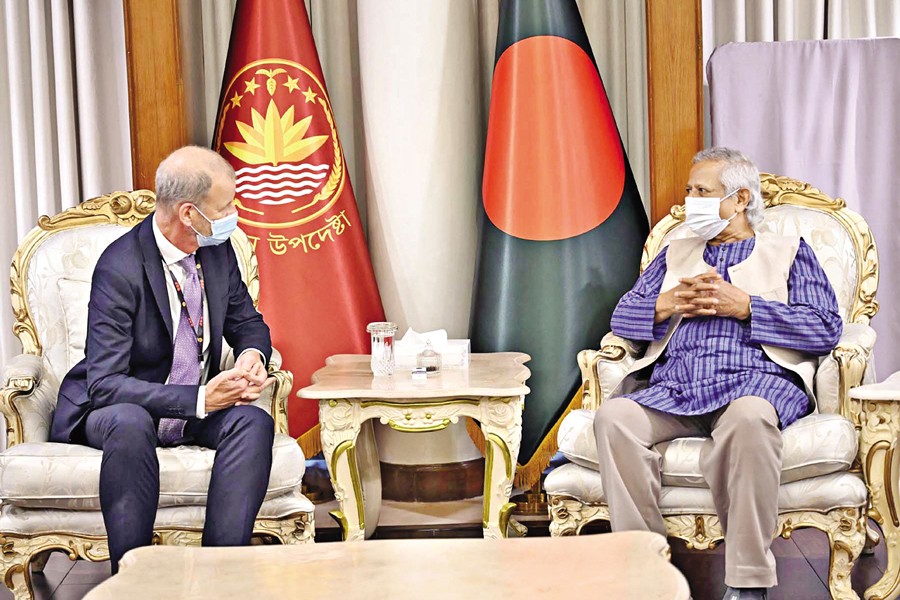
World Bank Vice President for South Asia Johannes Zutt called on Chief Adviser Professor Muhammad Yunus at the State Guesthouse Jamuna in the capital on Monday. — PID

Newly appointed World Bank Vice President for South Asia Johannes Zutt extended Bank's strong support for Bangladesh's inclusive growth and appreciated Chief Adviser Professor Muhammad Yunus-led interim government's reform agenda in the economic sector, officials said.

A spokesperson for the CA Office said Tuesday that Zutt, accompanied by World Bank's new Division Director for Bangladesh and Bhutan, Jean Pesme, called on the Chief Adviser at the State Guesthouse Jamuna in Dhaka late Monday.

During their discussion, Zutt shared his deep affection for Bangladesh, recalling his previous tenure as the World Bank's country director for Bangladesh, Bhutan and Nepal from 2013 to 2015.

"Kudos to you and your fantastic team for doing a good job," he said in acknowledging the post-uprising government's efforts under Professor Yunus's leadership, particularly in addressing "some very challenging issues in the financial sector".

He added, "We are very much prepared to continue our journey and share the ambition of the people of Bangladesh."

He paid tribute to the students who lost their lives in the July Uprising last year, calling it "a very moving moment for everyone who is connected with Bangladesh."

The head of interim government of Bangladesh thanked him for his support and appreciation-explaining how a new journey started in the country after the changeover and what prospects are unfolding.

"When we assumed office, it was like a catastrophic zone, like a place after an earthquake. We didn't have any experience. Yet, all the development partners supported us. And it helped us a lot; it made us confident," he told the WB delegation.

Professor Yunus highlighted the role of the youth in the July Uprising and said, "They showed this nation a dream of building a new Bangladesh."

He termed historic what young people did last July, especially girls and women played a significant role. "We are observing July Women's Day today. Their sacrifices must not go in vain. Young people are the focal point of our country. We need to concentrate on young people and match their ambition."

Professor Yunus urged the World Bank not to view Bangladesh merely as a "geographical boundary", insisting that the Bangladeshi economy is much bigger than that.

"If Bangladesh prospers, the whole South Asian region will prosper. If we separate ourselves, we are not progressing. We need to develop our international trade facilities and transport. We have an ocean. It is an important part of our economy."

The Nobel-laureate economist notes that most countries are short on young people and "so we told them to bring their factories here. We will provide the essentials for industries to make a production hub."

The World Bank Vice President commended Professor Yunus's work in empowering women, offered support on this score. "We will continue supporting you. With the World Bank support, Bangladesh had a pioneering girl's education stipend program that had been replicated in other countries," Zutt mentioned, adding: "The World Bank will help Bangladesh create opportunities for the youth."

He notes that the global lender financed over $3.0 billion in Bangladesh last financial year and pledged to continue similar support in the next three years.

Lutfey Siddiqi, special envoy for international affairs to the Chief Adviser, was also present at the meeting and provided an update on the New Mooring Container Terminal (NCT) of Chattogram seaport.

He noted that container handling at the New Mooring Container Terminal (NCT) of Chattogram Port increased with the new operational management.

"Our plan is to make it more effective. We also saw a significant surge in net foreign direct investment (FDI) in the January-March quarter of 2025, driven by a sharp rise in intra-company loans and strong equity investments," Siddiqi said.​