| Global Defense, OSINT & Geopolitics Wire

[🇧🇩] Monitoring Bangladesh's Economy

[🇧🇩] Monitoring Bangladesh's Economy
1K
57K
More threads by Saif

G Bangladesh Defense

Need for reversing GNS trend

Published :
Jul 01, 2026 00:05
Updated :
Jul 01, 2026 00:13
1782862198016.webp


It is common knowledge that any household's general tendency is to spend less than what it earns. But when the expenditures to meet basic necessities like housing, food, transports, healthcare, taxes, etc., exceed earnings, the household in question cannot save. If the pattern of less income than expenditure persists nationwide for long, then that is bad news for the economy concerned. For household savings remains an important element of Gross National Savings (GNS) which, according to a report published in this paper a couple of days back, fell by 0.74 percentage point during the just-concluded financial year (FY). The decline in GNS, however, has been a constant phenomenon since the FY23 when it peaked to 29.95 per cent of GDP. The fall in household savings was not solely responsible for the decline in GNS during all these years. Other two major components--- corporate savings and government savings were equally responsible.

Economists have expressed concern about this pattern of persistent drop in GNS rate as it points to something that is not incidental, but structural in nature so far as the overall economy is concerned. In this connection, the macroeconomic indicators including the inflation rate have remained high despite the successive government's strict monetary policy. The consumer price index, for instance, has, of late, been stubbornly soaring at around 9.4 per cent. The net outcome of it all is that the common household's expenditures, that is, its cost of living, has been rising. Increased food and utility prices have eroded the households' purchasing power. Lower- and middle-income families are being forced to eat into their savings or become indebted to meet daily expenses. The common households have been left with virtually no disposable income to save. The state of business activities does not need any elaboration. When households do not have enough to spend, banks become shy to offer funds due to liquidity shortage and businesses obviously suffer heavily. This again hurts government's revenue earnings, leading to shortage of investable funds.

Since domestic investments come from national savings, a declining savings rate has been stifling economic expansion, which is severely impacting key sectors like infrastructure and manufacturing. Thus private sector investment remains stagnant, Economists have also pointed out that savings and investments are inextricably linked. All these developments including an uncertain business environment, high cost of fund (due to high rate of bank interest), etc., have militated against fresh private investment and reduced incentives for households as well as businesses to save.

The present elected government that has inherited a problem-ridden economy is trying to make a turnaround. But it is aware how difficult the job is. That is why the incumbent finance minister has sought a couple of years' time to put the economy on track. With the government's revenue earnings remaining at a deplorable level, financial institutions limping and bureaucracy performing well below the desired level, it is hard to expect any meaningful change in major macroeconomic indicators, including GNS. A reverse trend in GNS, however, is all the more necessary to support economic growth. The government will have to work hard to tame inflation, boost its revenue earning and infuse dynamism in corporate activities in order to make that happen.​
 

Can Bangladesh build a democratic, humane & inclusive economy?

Golam Rasul

Published :
Jul 01, 2026 00:00
Updated :
Jul 01, 2026 00:00

1782862610199.webp

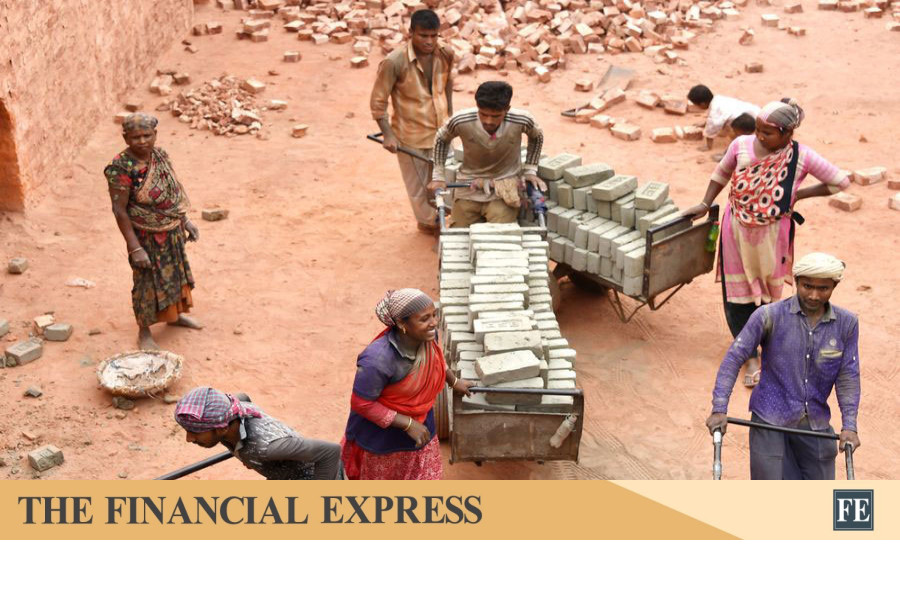
People work at a brickfield in Savar on the outskirts of Dhaka, Bangladesh, March 7, 2020. An inclusive economy requires policies that actively support labour-intensive sectors —Xinhua Photo

The theme of Bangladesh’s national budget for fiscal year 2026–27—”Towards a Democratic, Humane and Inclusive Economy”—is among the most ambitious framings attached to an annual fiscal document in recent years. It reflects a growing recognition that the country’s development challenge is no longer simply how to generate economic growth, but how to ensure that the benefits of growth are distributed more broadly and equitably. Concerns about inequality, youth unemployment, unequal access to opportunities and the concentration of economic power have, therefore, moved closer to the centre of policy debate.

But how should such an aspiration be evaluated? Ultimately, the budget must be judged not by its rhetoric but by its fiscal priorities and policy choices. Three questions are particularly important. First, who pays and who benefits from the state’s fiscal system? This is the test of a democratic economy. Second, does the state merely protect people from economic hardship, or does it also expand their capabilities and opportunities? This is the test of a humane economy. Third, who gains access to economic opportunities, productive employment and the benefits of growth? This is the test of an inclusive economy.

The answers to these questions offer an important window into the kind of development state Bangladesh is seeking to build.

THE DEMOCRATIC ECONOMY: FISCAL STRUCTURE AND DISTRIBUTIONAL POWER: A democratic economy means more than competitive elections or parliamentary representation. It concerns the fairness of economic institutions, the distribution of opportunities, and the ability of citizens to influence how public resources are allocated. At its foundation is a fiscal system that distributes both burdens and benefits equitably.

Bangladesh’s revenue structure, however, remains structurally regressive. Approximately 70 per cent of tax revenue continues to derive from indirect sources—VAT, customs duties and excises. Indirect taxes, whatever their administrative convenience, impose a proportionally heavier burden on lower- and middle-income households: a garment worker purchasing essential goods and a wealthy industrialist purchasing the same goods pay identical VAT rates, but that tax consumes a far greater share of the worker’s income. The result is a tax system that struggles to reduce inequality.

Direct taxation has expanded at the margins, but not sufficiently to alter this structural reality. As income and wealth inequality widens—a trend visible in urban land markets, banking sector credit concentration and the expanding fortunes of a narrow commercial elite—the failure to build a genuinely progressive tax regime becomes not merely a fiscal problem but a democratic one. It signals that those with the greatest capacity to contribute to public goods bear a proportionally lighter burden than those with the least.

Fiscal decentralisation presents a parallel concern. Despite longstanding commitments to local governance strengthening, most public expenditure decisions remain centralised. Local government institutions operate with limited fiscal autonomy and constrained revenue-raising authority, leaving citizens with little meaningful influence over resources that directly shape their communities. A democratic economy requires not only representative institutions at the centre but devolved fiscal authority at the periphery.

Yet fairness in taxation and resource allocation is only one dimension of a democratic economy. Equally important is whether public spending expands people’s capabilities and opportunities. This brings us to the budget’s second aspiration: building a humane economy.

THE HUMANE ECONOMY: PROTECTION VERSUS TRANSFORMATION: Viewed through a humanitarian lens, the 2026–27 budget contains genuine strengths. Social protection allocations exceed Tk 144,000 crore, and in the context of persistent inflation, labour market uncertainty and worsening climate-related vulnerabilities, this expenditure provides an essential safety buffer for millions of low-income households. The expansion of social transfers is not trivial; it reflects a policy recognition that growth alone does not protect the vulnerable.

Yet a humane economy requires more than protection—it requires transformation. There is an important analytical distinction between a state’s protective capacity and its transformative capacity. Protective policies reduce immediate suffering; transformative policies expand human capabilities and long-run opportunities. Sustainable development depends on the latter.

This distinction becomes stark in education and healthcare sectors. Despite absolute increases in allocations, public spending on education remains around 2 per cent of GDP—well below the UNESCO-recommended benchmark of 4–6 per cent—and public health expenditure hovers near 1 per cent of GDP, the lowest in South Asia. The consequence is that more than 70 per cent of healthcare costs continue to be financed directly by households through out-of-pocket payments. Such chronic underinvestment does not merely constrain access to services; it entrenches intergenerational inequality by limiting the social mobility of families unable to absorb private health or education costs.

The same logic applies to skills and workforce development. Bangladesh’s demographic dividend—a large, young, working-age population—is an asset with a limited window of productive utilisation. Automation, digitalisation and restructuring global value chains are transforming labour markets at pace. Yet investments in technical and vocational education, innovation infrastructure and digital capability remain modest relative to the scale and urgency of that transition. A humane economy cannot afford to leave its youth underprepared for a rapidly changing economic environment.

Capability formation ultimately matters because it determines whether people can participate meaningfully in economic life. In practice, that participation is most clearly reflected in access to productive employment.

THE INCLUSIVE ECONOMY: EMPLOYMENT AS THE CENTRAL TEST: If one indicator best captures whether an economy is truly inclusive, it is productive employment. Employment is not merely a source of income; it is the primary vehicle of dignity, social mobility and economic participation. For most households, the most effective form of social protection is not a transfer payment but a decent and secure job.

Yet employment receives insufficient prominence in the budget’s narrative. Bangladesh continues to face significant and growing challenges: youth unemployment, graduate underemployment and structural skills mismatches that neither the education system nor the labour market has adequately addressed.

The data are concerning. According to the Bangladesh Bureau of Statistics Labour Force Survey, nearly 1.94 million young people aged 15–29 were unemployed, representing approximately 7.2 per cent of the youth labour force, and youth account for nearly four-fifths of total unemployment. More strikingly, the Labour Force Survey 2024 recorded an unemployment rate of 13.5 per cent among university graduates—the highest of any educational group—with around one-third of graduates remaining unemployed for up to two years after completing their studies. Of the country’s 2.62 million unemployed individuals, approximately 885,000 held university degrees.

These figures point to a structural disconnect between educational expansion and productive employment generation. Bangladesh has successfully broadened access to tertiary education; it has not yet built the economic structures capable of absorbing a more educated workforce into productive, well-remunerated employment. When higher education no longer reliably delivers economic mobility, public confidence in both institutions and development can begin to erode—a cost that extends well beyond labour market statistics.

An inclusive economy requires policies that actively support labour-intensive sectors, reduce barriers to entrepreneurship, and forge stronger institutional linkages between education and labour market demand. Employment creation must be treated not as a secondary outcome of growth but as a primary development objective in its own right.

At its core, the challenge is one of capability formation. Countries that successfully moved into upper-middle-income status invested heavily in education, health, technical skills and innovation systems. The long-term success of Bangladesh’s development strategy will depend on whether public expenditure increasingly shifts from consumption support towards investments that enhance productivity and human potential.

INCLUSION AND THE CONCENTRATION OF ECONOMIC POWER: A deeper structural concern underlies these sectoral challenges. Bangladesh’s development model has, over time, produced significant concentrations of economic power. In banking, large-scale industry, import trade, energy and real estate, economic resources and market influence are increasingly concentrated among a relatively narrow set of actors. Bangladesh Bank data show a high concentration of credit among a relatively small number of large borrowers, while SMEs continue to receive a disproportionately small share of formal financing. Over 70 per cent of loans concentrated among a small number of business groups. The banking sector’s non-performing loan crisis is, in part, a symptom of this concentration: large enterprises have historically absorbed a disproportionate share of institutional credit, while small and medium enterprises—the primary engines of employment and local economic dynamism—face persistent financing constraints.

This is a paradox of inclusive development. Those who generate the greatest share of jobs often face the greatest barriers to capital and opportunity. Inclusive growth cannot be achieved through social transfers alone; it requires competitive markets, accessible finance, lower barriers to entrepreneurship, and institutional safeguards against the capture of economic rents by politically connected elites.

The budget emphasises redistribution through social protection mechanisms and places comparatively less weight on the structural and institutional reforms necessary to democratise access to economic opportunities.

WHAT KIND OF DEVELOPMENTAL STATE IS EMERGING?: Bangladesh has already demonstrated that it can generate growth. The challenge of the next decade is whether it can broaden access to the opportunities created by that growth. A democratic, humane and inclusive economy will not emerge from social transfers alone. It will require stronger investment in human capabilities, productive employment, competitive markets and a more progressive fiscal system. The success of Budget 2026–27 should therefore be judged not by the size of its allocations, but by whether it expands the economic agency of ordinary citizens and makes growth more broadly shared.

Golam Rasul, Ph.D is a Professor of Economics at the International University of Business Agriculture and Technology (IUBAT), Dhaka.​
 

Remittance inflows hit historic high of $35.56b in FY26

UNB

Published :
Jul 01, 2026 18:42
Updated :
Jul 01, 2026 18:42

1782948958263.webp


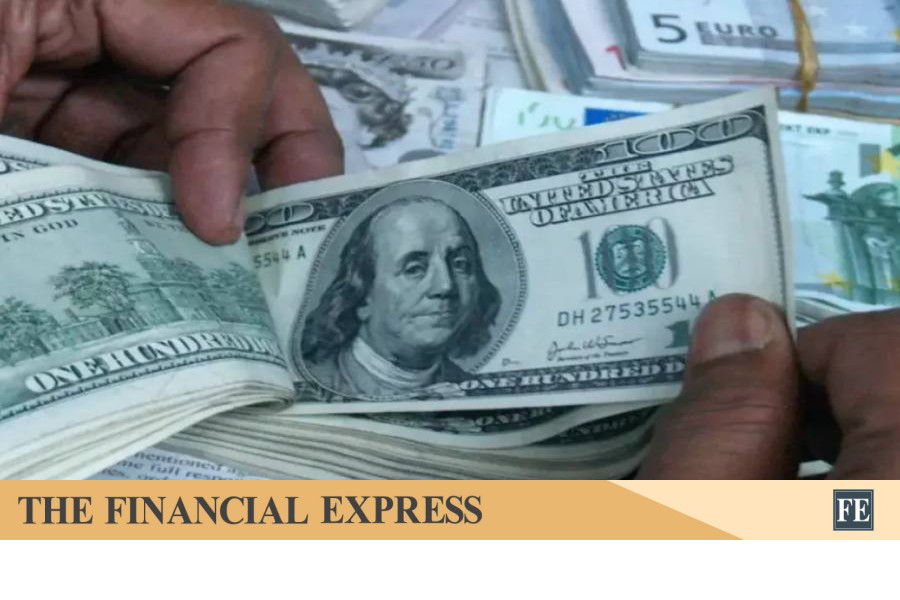
Remittance inflows into Bangladesh hit a historic high of US$ 35.56 billion in the immediate past fiscal year 2025-26, registering a robust double-digit growth driven by strong contributions from expatriates through formal channels.

According to the latest data from Bangladesh Bank, the total remittance receipts between July 2025 and June 30, 2026 stood at $35.56 billion. This marks a significant 17.3 percent growth compared to the $30.32 billion received in FY2024-25, also the previous highest remittance inflows in a financial year.

Central bank officials noted that on the final day of the fiscal year (June 30), the country pulled in $120 million in provisional remittance earnings. However, this single-day figure excludes data from 11 commercial banks due to the bank holiday.

Meanwhile, monthly remittance inflows for June 2026 stood at $2.80 billion, reflecting a minor 0.6 percent dip compared to the $2.82 billion recorded during the same month last year (June 2025).

Despite the marginal monthly decline in June, the overall annual trend remained extraordinarily strong throughout the fiscal year, providing a critical buffer to the country’s foreign exchange reserves and macroeconomic stability.​
 

Merit of Finance Act 2026

Published :
Jul 01, 2026 23:59
Updated :
Jul 01, 2026 23:59

1782949351560.webp


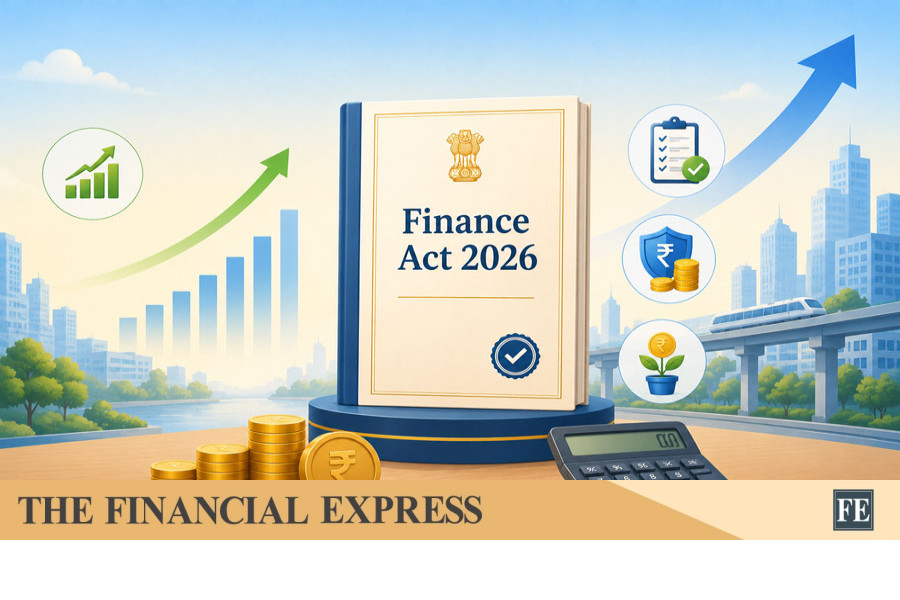
With as many as 64 amendments, the proposed Finance Bill was passed in parliament as the Finance Act 2026 on Monday last. If the budget is a comprehensive financial plan or a roadmap for projected income and expenditure over a specific period, the finance act is a legislative instrument that outlines in details a government's new taxation, revenue and duty measures for the upcoming fiscal year. In effect, the Finance Act legalises the generation of incomes from different sources as proposed in the national budget. Some of the amendments including the tax-free slab at Tk 400,000 were proposed by Prime Minister Tarique Rahman and were duly accepted. The long vision of raising this threshold of individual income tax at Tk 500,000 by the fiscal year 31was also endorsed. However, the lowest rate of taxation has been raised from 5.0 per cent to 10 per cent.

In this connection, the provision for 2.5 per cent corporate rebate for both listed (barring those paying tax at special rates) and unlisted companies conditional to their entire transactions through the banking system apparently looks lucrative. But this can be tricky. It would be more pragmatic if the condition applied for major transactions instead of the 100 per cent. Under the revised provision, however, listed companies will be eligible for tax incentives if they raised capital through repeat public offerings (RPOs) and made room for public shareholding to at least 10 per cent of their paid-up capital. So there is space for manoeuvrability for companies but how many of them will be ready for taking advantage of the measures offered remains unpredictable. After all, this is not a propitious time for business and manufacture due to the murky international politics and trade. Without massive investment in industries and factories, employment generation is impossible and prospect of industrial and commercial turnaround looks dim.

Unless internal sources become modestly robust, raising the government income becomes particularly challenging. At a time when an already dull global business climate is made further complicated by disruption of supply lines of fuels due to wars in the Persian Gulf and in Ukraine, mobilisation of internal resources becomes more daunting with cautious approach by investors. Even in normal time, internal financing has fallen far short of meeting the expenditures as proposed in the national budget. The National Board of Revenue (NBR) could never reach revenue targets set by successive governments. Equally lamentable has been the execution of annual development plan (ADP).

The concessionary measures the incumbent government has taken to broaden the base of revenue income looks good. But there is no guarantee the beneficiaries of the concessions will reciprocate the government's well-intentioned move. The concessions made in business and education sectors are highly appreciable but there was expectation that transactions in both sectors would be transparent enough for mutual benefits. Reduction of tax rate for private universities in particular was made with the expectation that poor students would receive its benefits and more money would be set aside for research and scholarships. Similarly, small groceries and kitchen markets have been kept out of the tax net. But will this be enough to rein in inflation? Meanwhile, the Bangladesh Bank's tight monetary policy, as announced, will persist but this too may fall short of the requirement to bring down the rate of inflation.​
 

FY26 BUDGET EXECUTION WORRY EASES SLIGHTLY
Revenue earning rises to Tk 4.2 trillion, shortens predicted gap

Doulot Akter Mala

Published :
Jul 02, 2026 00:27
Updated :
Jul 02, 2026 00:27

1782949700780.webp


Taxmen in their last-minute efforts managed to mobilise around Tk 4.20 trillion for the just-concluded fiscal year, shortening an anticipated large gap to Tk 800 billion against the revised budgetary target, officials say.

Economists had projected the revenue gap could exceed Tk 1.0 trillion in the fiscal year 2025-26 because of sluggish economic activity. But tax officials say they could contain the shortfall through "intensified enforcement, improved planning and stronger compliance measures".

The National Board of Revenue (NBR) taskforces on income tax, value-added tax (VAT) and customs met Wednesday with Finance Adviser Dr Rashed Al Titumir to formulate a medium-term strategy for achieving yet higher revenue target for this fiscal year (FY2026-27).

Speaking to The Financial Express, Dr Titumir said the government would prepare a three-year revenue strategy identifying both the sources of revenue and priority areas for public spending.

"It is clearly evident that revenue collection has gained momentum from mid-February through June under the present government's leadership," he says about the democratic transition after political upheavals.

"The tax base has been broadened while loopholes causing revenue leakage are being plugged," he adds.

Newly appointed NBR Chairman Ahsan Habib has said revenue collection reached Tk 4.12 trillion as of Wednesday and was expected to increase by another Tk 100 billion once end-of-year adjustments were completed.

"The NBR started working actively from day one under its own Budget Implementation Plan (BIP) for FY2026-27. We have prepared written strategies to achieve the revenue target," he says.

He expects that the revenue board would continue working in full vigour with the existing taskforces which had achieved significant success over the past three months.

According to him, the customs and VAT wings have already finalised their revenue-mobilisation plans, while the income-tax wing is expected to complete its strategy shortly.

Former NBR chairman Abdur Rahman Khan says the FY2026-27 budget has introduced several measures aimed at encouraging investment while strengthening revenue mobilisation.

"The measures, including the turnover-based VAT regime, the 0.2-percent advance income tax on supplies to retailers and stronger actions against tax evasion, will contribute to higher revenue collection," he hopes.

He mentions that online income-tax-return submissions had exceeded 4.6 million as of June 30, describing it as a major milestone in the country's tax digitisation drive.

The government has set a tax-revenue target of Tk 6.04 trillion for the NBR in FY2026-27, to help finance an ambitious budget worth Tk9.38 trillion.

For FY2025-26, the original target was Tk 4.99 trillion, which was later revised up to Tk 5.03 trillion. Based on the projected collection of Tk 4.20 trillion, the revenue shortfall would stand at around Tk 800 billion.

For FY 27, target for VAT-and income-tax wings has been set at Tk 2.23 trillion each, followed by Tk 1.57 trillion for customs wing.​