 Bangladesh Defense

Saif
Senior Member
- Joined
- Jan 24, 2024
- Messages
- 22,036
- Likes
- 9,840
- Nation

- Residence
- Axis Group


Bangladesh must brace for another inflationary shock
Bangladesh needs to prepare for another bout of inflation as global prices could rise from this coming winter, driven by surging oil prices and higher agricultural production costs, economists warned yesterday.
Bangladesh must brace for another inflationary shock
Economists warn
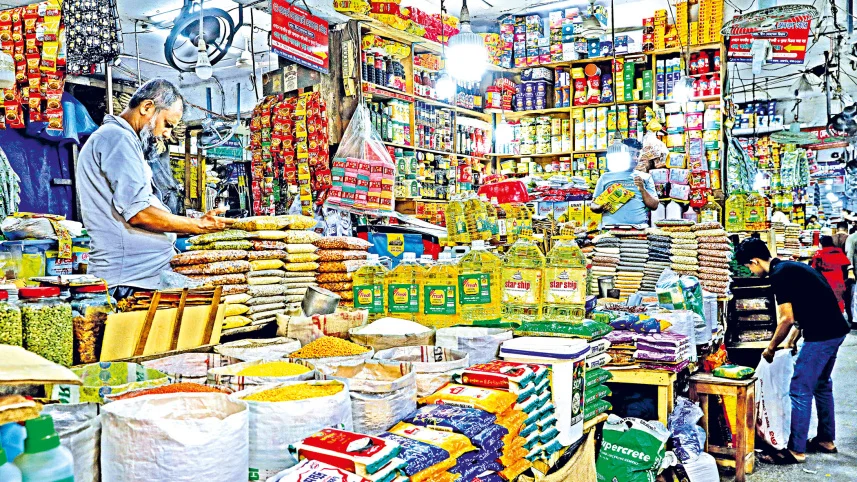
Photo: Anisur Rahman
Bangladesh needs to prepare for another bout of inflation as global prices could rise from this coming winter, driven by surging oil prices and higher agricultural production costs, economists warned yesterday.
They called for stronger social protection, better market management and a fairer distribution of economic growth to protect vulnerable households from rising living costs.
“We should not assume that the situation will improve in the coming months. We need to prepare for the possibility that it could deteriorate further,” said AKM Enamul Haque, director general of the Bangladesh Institute of Development Studies (BIDS).
Crops currently growing in fields worldwide would begin to be harvested next month, but production costs had already doubled, he claimed.
Oil prices had risen from around $70-80 to $115 since February, driving up the costs of fertilisers, pesticides and other agricultural inputs.
Enamul made the remarks at a discussion on food security, nutrition and poverty reduction at the National Press Club yesterday. Right to Food Bangladesh, a civil society advocacy platform, organised the event.
Food security requires access to nutritious and safe food, not merely enough to fill one’s stomach, he said. He called for a review of the public food distribution system, particularly support for rural households facing seasonal income uncertainty.
Citing Bangladesh Bureau of Statistics data, Enamul said 51 percent of rural people were indebted, compared with 32 percent of people in metropolitan cities and around 40 percent in other urban areas.
“If our system is too focused on urban areas, we may fail to reach rural households facing greater income uncertainty and financial pressure,” he said.
He also called for stronger market oversight and supply-chain reforms, saying a price commission alone would not solve the problem unless markets functioned properly. Climate change would further complicate food security, he added.
Sayema Haque Bidisha, a professor of economics at the University of Dhaka, said economic growth alone could not ensure food security unless its benefits were distributed more equitably.
“If growth does not reduce inequality and is not inclusive, it cannot ensure food security or deliver its benefits to ordinary people,” she said.
Bidisha said the impact of inflation should be assessed by examining changes in food consumption, nutritional intake and household coping strategies, rather than relying solely on poverty statistics.
Households may sell assets, including gold and jewellery, or borrow money to meet daily expenses, leaving them financially vulnerable even when their hardship is not immediately reflected in official poverty figures, she said.
She called for higher allocations for social safety net programmes, greater transparency in benefit distribution and minimum-wage arrangements covering workers beyond the garment sector, particularly those employed in the informal economy.
Economist MM Akash warned that slowing economic activity and persistent inflation were eroding purchasing power and making essential goods and services increasingly unaffordable.
He said workers in the private and informal sectors had limited protection against rising costs. Referring to garment workers’ demand for a monthly salary of Tk 30,000 to cover household expenses, he said the gap between wages and living costs reflected unequal income distribution.
Akash also questioned whether Bangladesh would have sufficient foreign exchange to import food if domestic supplies fell short.
In the garment sector, he advocated profit-sharing arrangements between factory owners and workers to improve productivity and ensure workers received a fairer share of industry earnings.
He warned that political instability, corruption, extortion and weak governance could further undermine efforts to tackle the crisis.
Asif M Shahan, a professor of development studies at the University of Dhaka, said Bangladesh needed greater citizen participation in policymaking rather than relying solely on government intervention.
He argued that ordinary people and interest groups had limited influence over decisions affecting their lives.
“Instead of simply asking the government to intervene and waiting for institutions to act, we need to focus on citizen mobilisation and create pressure from below,” he said.
Shahan proposed citizens’ assemblies and other forms of collective action to improve accountability in social protection programmes.
Political parties would be more likely to reform the system when public pressure influenced their political calculations, he added.
Among others, Mohsin Ali, general secretary of Right to Food Bangladesh, and Kaniz Fatima, a coordinator of the platform, also spoke.
Economists warn
Photo: Anisur Rahman
Bangladesh needs to prepare for another bout of inflation as global prices could rise from this coming winter, driven by surging oil prices and higher agricultural production costs, economists warned yesterday.
They called for stronger social protection, better market management and a fairer distribution of economic growth to protect vulnerable households from rising living costs.
“We should not assume that the situation will improve in the coming months. We need to prepare for the possibility that it could deteriorate further,” said AKM Enamul Haque, director general of the Bangladesh Institute of Development Studies (BIDS).
Crops currently growing in fields worldwide would begin to be harvested next month, but production costs had already doubled, he claimed.
Oil prices had risen from around $70-80 to $115 since February, driving up the costs of fertilisers, pesticides and other agricultural inputs.
Enamul made the remarks at a discussion on food security, nutrition and poverty reduction at the National Press Club yesterday. Right to Food Bangladesh, a civil society advocacy platform, organised the event.
Food security requires access to nutritious and safe food, not merely enough to fill one’s stomach, he said. He called for a review of the public food distribution system, particularly support for rural households facing seasonal income uncertainty.
Citing Bangladesh Bureau of Statistics data, Enamul said 51 percent of rural people were indebted, compared with 32 percent of people in metropolitan cities and around 40 percent in other urban areas.
“If our system is too focused on urban areas, we may fail to reach rural households facing greater income uncertainty and financial pressure,” he said.
He also called for stronger market oversight and supply-chain reforms, saying a price commission alone would not solve the problem unless markets functioned properly. Climate change would further complicate food security, he added.
Sayema Haque Bidisha, a professor of economics at the University of Dhaka, said economic growth alone could not ensure food security unless its benefits were distributed more equitably.
“If growth does not reduce inequality and is not inclusive, it cannot ensure food security or deliver its benefits to ordinary people,” she said.
Bidisha said the impact of inflation should be assessed by examining changes in food consumption, nutritional intake and household coping strategies, rather than relying solely on poverty statistics.
Households may sell assets, including gold and jewellery, or borrow money to meet daily expenses, leaving them financially vulnerable even when their hardship is not immediately reflected in official poverty figures, she said.
She called for higher allocations for social safety net programmes, greater transparency in benefit distribution and minimum-wage arrangements covering workers beyond the garment sector, particularly those employed in the informal economy.
Economist MM Akash warned that slowing economic activity and persistent inflation were eroding purchasing power and making essential goods and services increasingly unaffordable.
He said workers in the private and informal sectors had limited protection against rising costs. Referring to garment workers’ demand for a monthly salary of Tk 30,000 to cover household expenses, he said the gap between wages and living costs reflected unequal income distribution.
Akash also questioned whether Bangladesh would have sufficient foreign exchange to import food if domestic supplies fell short.
In the garment sector, he advocated profit-sharing arrangements between factory owners and workers to improve productivity and ensure workers received a fairer share of industry earnings.
He warned that political instability, corruption, extortion and weak governance could further undermine efforts to tackle the crisis.
Asif M Shahan, a professor of development studies at the University of Dhaka, said Bangladesh needed greater citizen participation in policymaking rather than relying solely on government intervention.
He argued that ordinary people and interest groups had limited influence over decisions affecting their lives.
“Instead of simply asking the government to intervene and waiting for institutions to act, we need to focus on citizen mobilisation and create pressure from below,” he said.
Shahan proposed citizens’ assemblies and other forms of collective action to improve accountability in social protection programmes.
Political parties would be more likely to reform the system when public pressure influenced their political calculations, he added.
Among others, Mohsin Ali, general secretary of Right to Food Bangladesh, and Kaniz Fatima, a coordinator of the platform, also spoke.
