K-6 Hypersonic Missile for India: Gamechanger awaits sea trials as country set to join elite club of US, Russia, China, UK
Edited By
Vinod Janardhanan
Published: Jun 27, 2025, 17:25 IST | Updated: Jun 27, 2025, 17:25 IST
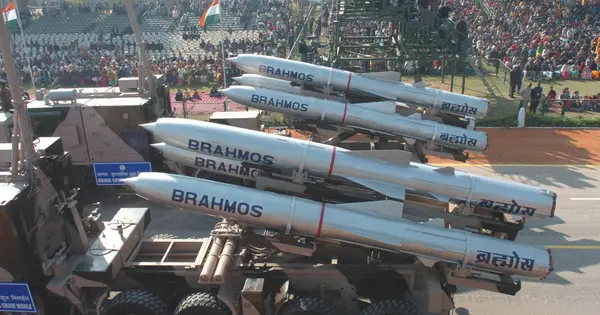
The K-6 hypersonic missile can surpass the Brahmos missile (in picture)
Story highlights
The intercontinental ballistic missile is set to even surpass the Brahmos missile. Here is what you should know about the K-6 hypersonic missile
K-6 hypersonic missile of India: India is close to conducting sea trials of its ambitious K-6 hypersonic missile, according to media reports. Being developed by the Defence Research and Development Organisation (DRDO) , the missile can deploy from India's upcoming S-5 class nuclear submarines. The intercontinental ballistic missile is set to even surpass the Brahmos missile in speed and range. Here is what you should know about the K-6 missile, which when deployed, will help India fight adversaries like Pakistan and China more effectively.
What is K-6 hypersonic missile being developed by India?
The K-6 hypersonic missile can surpass the Brahmos missile (in picture) Photograph: (Others)
Story highlights
The intercontinental ballistic missile is set to even surpass the Brahmos missile. Here is what you should know about the K-6 hypersonic missile
K-6 hypersonic missile of India: India is close to conducting sea trials of its ambitious K-6 hypersonic missile, according to media reports. Being developed by the Defence Research and Development Organisation (DRDO) , the missile can deploy from India's upcoming S-5 class nuclear submarines. The intercontinental ballistic missile is set to even surpass the Brahmos missile in speed and range. Here is what you should know about the K-6 missile, which when deployed, will help India fight adversaries like Pakistan and China more effectively.
What is K-6 hypersonic missile being developed by India?
K-6, the most advanced missile to date, is being developed by India at DRDO's Advanced Naval Systems Laboratory in Hyderabad. The submarine-launched hypersonic ballistic missile will enhance India's strategic and nuclear deterrence capabilities. The S-5 class nuclear submarines from which the K-6 will be launched would be larger and more powerful than the existing Arihant-class submarines. S-5 class submarines can carry heavier warheads and multiple missiles.
You May Like
Hypersonic speed of K-6
When developed, the K-6 will be capable of reaching hypersonic speeds, measured at Mach 7.5 or more than 9,200 kilometres per hour. The missile's operational range is 8,000 km, which means it can strike deep inside enemy territory in just minutes.
The hypersonic speed is also significant as the missile can evade most missile defence systems, giving hardly any time for adversaries to react
The K-6 missile features Multiple Independently Targetable Reentry Vehicle (MIRV) technology. This will enable a single missile to strike multiple targets with precision, thus providing it with enhanced effectiveness in both offensive and deterrent capacities.
The missile is designed to carry both nuclear and conventional warheads. It can be used in a variety of combat scenarios.
The K-6 is a significant upgrade from earlier Indian submarine-launched ballistic missiles or SLBMs such as the K-4 (range of 3,500 km) and K-5 (up to 6,000 km). It will surpass the BrahMos missile in both speed and destructive capability. It is designed to be over 12 metres in length with over 2 metres of diameter.
India to join hypersonic missile club
When K-6 missile becomes operational, India will be joining an elite list of countries that possess or are developing advanced hypersonic and MIRV-equipped missile systems. These countries are United States, Russia, China, France, and the United Kingdom.
The missile will complement India’s land-based Agni-5 intercontinental ballistic missile and reinforce its nuclear triad.
K-6 will be a valuable addition to India's strategic deterrence amid increasing regional tensions, particularly with Pakistan, and in the Indo-Pacific with China.
The intercontinental ballistic missile is set to even surpass the Brahmos missile. Here is what you should know about the K-6 missile

www.wionews.com


 Indian Defense

 ecember 25, 2025, 12:00 IST