Pakistan Defense

Saif
Senior Member
- Joined
- Jan 24, 2024
- Messages
- 22,417
- Likes
- 9,875
- Nation

- Axis Group


US-Iran deal likely soon: Pakistan
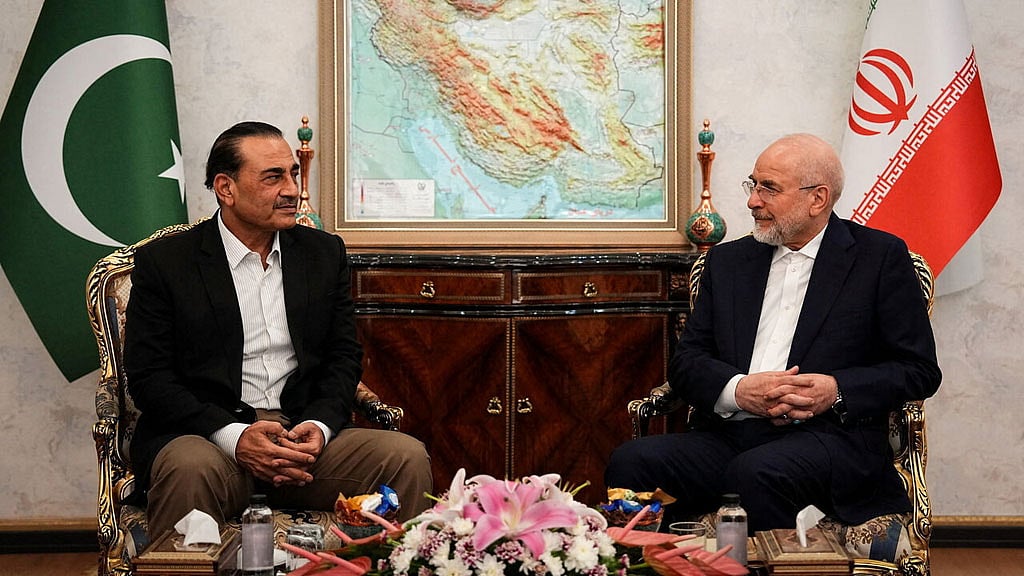
The United States and Iran could finalise an agreement to end the Middle East war within as little as 24 hours, mediator Pakistan said Saturday, after both sides expressed optimism about the chances of concluding a deal.
 www.newagebd.net
US-Iran deal likely soon: Pakistan
Late Khamenei to be buried July 9
Agence France-Presse . Tehran, Iran 14 June, 2026, 00:21
The United States and Iran could finalise an agreement to end the Middle East war within as little as 24 hours, mediator Pakistan said Saturday, after both sides expressed optimism about the chances of concluding a deal.
The apparent momentum came in spite of new skirmishes in the Strait of Hormuz, which has been at the centre of the months-long war that has roiled the region and the global economy.
Weeks of negotiations on a long-term peace agreement following an April 8 truce have so far been fruitless, with US president Donald Trump repeatedly insisting a deal was near only for the wrangling to drag on.
‘We are closer to a peace deal than ever before,’ Pakistani prime minister Shehbaz Sharif, whose country has played a crucial role in peace talks, wrote on X.
‘With finalisation likely expected in the next 24 hours, Pakistan is preparing for the electronic signing of the peace deal immediately after, followed by technical level talks next week.’
The schedule for the signing remains to be seen, however.
A Pakistani foreign ministry statement said it was planned for Sunday, while Iranian foreign ministry spokesman Esmaeil Baqaei on Saturday said it was yet to be determined, ‘although it will not be tomorrow [Sunday]’.
He nonetheless added: ‘The possibility of this happening in the coming days cannot be ruled out.’
Meanwhile, Iran’s former supreme leader Ali Khamenei, who ruled the country for nearly 37 years before being killed by Israeli and US airstrikes on February 28, will be buried on July 9, state television reported Saturday.
The burial in his hometown, the northeastern holy city of Mashhad, initially scheduled for March but postponed due to the war, will follow three days of funeral ceremonies in capital Tehran beginning July 4 and another in the holy city of Qom on July 7, it said.
July 4, the start date of the national funeral, will coincide with the United States’ Independence Day, which this year celebrates its 250th anniversary.
Foreign minister Abbas Araghchi had likewise said on Friday that the deal could be signed ‘in the coming days’,
while a senior US official had put their confidence in finally reaching an agreement at ‘80 to 85 percent’.
However, the warring parties have released conflicting information about the contents of the deal, as each seeks to show it emerged from the war with the upper hand.
Among other things, Tehran has insisted on its right to enrich uranium and maintain control over the Strait of Hormuz, both of which appear to be sharply at odds with Washington’s longstanding red lines.
The strait is a key maritime trade route carrying oil and gas from the Gulf to markets worldwide, and Tehran has blockaded the waterway since the outbreak of the war.
It has insisted vessels obtain permission from its armed forces before transiting, and has established a new body to oversee and collect tolls in the strait.
The US has responded with its own blockade of Iranian ports in an attempt to choke off the country’s energy exports.
Earlier Saturday, the United States said it downed multiple Iranian drones over the strait.
The US military’s central command posted on X that Iran had ‘launched multiple one-way attack drones in an attempt to strike commercial ships transiting the Strait’.
It added that ‘US forces have downed all of them in recent hours’.
Trump on Friday denied that the peace deal favoured Tehran after Iranian media outlets published a purported breakdown that clashed with Washington’s description.
The reports, Trump said in a social media post, ‘have NOTHING to do with the terms that were agreed to, in writing’.
Araghchi provided some details on the deal in an interview with state television, saying it called for the lifting of the US naval blockade and unspecified changes to the administration of the Strait of Hormuz.
He also said the only way to deal with Iran’s enriched uranium ‘is to dilute it inside Iran’.
Trump, who has justified the war as necessary to prevent Iran from obtaining nuclear weapons, had previously said the US would take control of the uranium.
Prime minister Benjamin Netanyahu of Israel—which launched the war in tandem with the US in February—said Trump had promised him any agreement would include the removal of Tehran’s enriched nuclear material.
Iran has long insisted its nuclear programme is peaceful.