| Global Defense, OSINT & Geopolitics Wire

[🇧🇩] Save the Rivers/Forests/Hills-----Save the Environment

[🇧🇩] Save the Rivers/Forests/Hills-----Save the Environment
660
27K
More threads by Saif

G Bangladesh Defense

Country needs to brace for climate catastrophe
Sarker Nazrul Islam
Published :
Feb 18, 2025 22:39
Updated :
Feb 18, 2025 22:39

1739926582931.webp


Bangladesh has to bear the brunt of awful climate impacts though its contribution to global warming is negligible, believed to be less than 0.47 per cent of global emission. The Bonn-based green organisation Germanwatch reaffirmed this phenomenon and focused on how climate change is likely to leave disproportionate impact on countries like Bangladesh. It estimates that climate-induced disasters inflict a loss of $3.0 billion on this country annually and affect above 6.3 million of its people.

Because of its unique location and geophysical formation, Bangladesh is a disaste- prone deltaic plain, battered almost regularly by cyclones, floods, heat waves, erratic rainfall and drought that seriously hinder its development efforts. In recent years, these extreme climatic events are taking place in Bangladesh more frequently and with increased fierceness. Quoting Germanwatch, this newspaper reports that cyclones have assumed a more devastating proportion and are taking place recurrently in the Bay of Bengal under the impact of global warming. Bangladesh was devastated by some 49 cyclones since 1960 and was swept over by as many as five cyclones just in twelve months beginning from May 2023.

Scorching heat waves have become an almost common feature of the country's weather pattern during the summer months. According to Bangladesh Meteorological Department, mercury rose to a record high of 43.8 degree Celsius in Jashore in April last year. The World Weather Attribution claims that climate change has made heat wave 30 times more likely, indicating a growing threat of compounding climate disasters.

Drought is increasingly becoming more and more damaging due to declining rainfall ? for example, 66 per cent in April, 44 per cent in May and as low as 16 per cent in June in 2023. But the most devastating impact of climate change on this low lying country is that some 17 per cent of the country's total area along the coastal belt is likely to be permanently submerged under seawater due to rise of the sea level by only one metre at the end of the century. This will lead to a complete destruction of the flora and fauna of the affected areas, forcing millions to migrate to other areas.

The combined effect of all these climate calamities will lead to a human catastrophe in this most densely populated country. Poverty of about 21 per cent of the population is a harsh reality, only to be aggravated by almost every disaster. Poverty scenario follows a cyclic pattern in this country due in part to climate catastrophe: as a section of the poor people somehow pulls itself out of poverty, another section slides down to it following a disaster. Climate catastrophes make poverty eradication a difficult task in this country.

Germanwatch underscores the need for urgent action as climate crisis is increasingly becoming a worldwide security risk with the intensification of global warming. It also called for increased climate finance for vulnerable countries to keep global warming near the set target of 1.5 degree Celsius above the pre-industrial level. Though some of the wealthy nations like Spain, Italy and Greece are exposed to Nature's fury, coastal countries such as Bangladesh are most vulnerable to it. Since these countries have to suffer the impact of global warming despite no or negligible contribution to greenhouse gas emission, they deserve due compensation from the worst polluters to tide over the crisis. Experts suggest, as the global climate change is taking place due to GHG emission by developed countries, they are obligated to provide for the loss-and-damage fund as adopted by the UN at the Dubai climate conference in 2023. Bangladesh must strive hard to get its legitimate share of the global climate fund and at the same time go on with its own mitigation and adaptation programme.​
 

Wealthy nations owe Bangladesh $5.8 trillion in climate debt
ActionAid says

1740006271612.webp


Bangladesh, a country grappling with an increasing external debt burden, is owed a staggering $5.8 trillion in climate debt by rich, high-polluting nations, according to a report by ActionAid released this month.

The report, titled "Who Owes Who?", highlights the urgent need for debt cancellation and global financial justice.

Based on historic and projected atmospheric appropriation using low-range estimates since 1992, wealthy nations owe Bangladesh $5.8 trillion in climate debt, the report said.

It also underscored the stark imbalance between the debts that low- and lower-middle-income countries owe and the obligations that high-income countries continue to evade.

The report said that as we enter 2025, 54 countries are in a debt crisis and are being forced to cut spending on basic public services and climate action in order to pay external debts.

Bangladesh, whose external public sector debt stood at $84.44 billion as of September 2024, made debt repayments totalling $4.77 billion to its creditors in 2023.

The country on the Bay of Bengal, one of the most vulnerable to climate change, has to divert its resources towards debt repayment rather than essential public services, while wealthier nations fail to meet their own financial obligations relating to climate justice and reparations.

In 2024, Bangladesh spent 16.9 per cent of its national revenue on external debt repayments, while only 3.08 per cent was allocated to health and 11.73 per cent to education.

"Bangladesh needs debt cancellation and freedom from colonial debt structures to address both the debt crisis and climate change," ActionAid Bangladesh Country Director Farah Kabir said.

The new report highlights the debt burden of low- and lower-middle-income countries versus the financial obligations of rich nations regarding climate damages, compensations, and unmet commitments, she added.

The Global South, which broadly represents countries mostly in Latin America, Asia, Africa, and Oceania, must secure debt cancellation and push for the establishment of a new UN Framework Convention on debt this year.

She emphasised the impact of the climate crisis, especially on women and girls.

"We have seen time and again how women are at the forefront of the climate crisis. The failure by the rich polluting countries to pay their climate debt is standing in the way of mitigation and adaptation."

The ActionAid report said that lower-income countries collectively paid $138 billion just to service their debts last year, sacrificing health, education, people's rights, and sustainable national development to satisfy wealthy creditors.

It said that, based on the most systematic studies, the climate debt that rich polluting countries owe low- and lower-middle-income countries is $107 trillion.

This is more than 70 times greater than the total external debt of $1.45 trillion that these countries collectively owe.

The report urges global leaders to unite in demanding debt cancellation as part of payment of the climate debt and other reparations owed by high-income countries.

"As Bangladesh and other vulnerable nations continue to struggle under the weight of an unjust financial system, the findings of this report reinforce the need for urgent global action to address both debt injustice and the climate crisis."​
 

Global glacier melt is accelerating, scientists say
Agence France-Presse . Paris 20 February, 2025, 22:58

1740098748351.webp

AFP file photo

Ice loss from the world’s glaciers has accelerated over the past decade, scientists said on Wednesday, warning that melting may be faster than previously expected in the coming years and drive sea levels higher.

The world’s glaciers, which are important climate regulators and hold freshwater resources for billions, are rapidly melting as the world warms.

In a first-of-its-kind global assessment, an international team of researchers found a sharp increase in melting over the past decade, with around 36 per cent more ice lost in the 2012 to 2023 period than in the years from 2000 to 2011.

On average some 273 billion tonnes of ice are being lost per year — equivalent to the world population’s water consumption for 30 years, they said.

The findings are ‘shocking’ if not altogether surprising as global temperatures rise with humanity’s greenhouse gas emissions, said Michael Zemp, a professor at the University of Zurich, who was a co-author of the assessment published in the journal Nature.

Overall, researchers found that the world’s glaciers have lost around five per cent of their volume since the turn of the century, with wide regional differences ranging from a two-per cent loss in Antarctica to up to 40 per cent in the European Alps.

Zemp said that regions with smaller glaciers are losing them faster, and many ‘will not survive the present century’.

The research — coordinated by the World Glacier Monitoring Service, The University of Edinburgh and research group Earthwave — was an effort to bring together field and satellite measurements to create a ‘reference estimate’ for tracking ice loss.

Zemp, who leads the WGMS, said the team’s observations and recent modelling studies suggest that glacier melt this century will be faster than projected in the most recent assessment by United Nations IPCC climate experts.

‘Hence, we are facing higher sea-level rise until the end of this century than expected before,’ he said, adding that glacier loss would also impact fresh water supplies, particularly in central Asia and the central Andes.

Glaciers are the second-largest contributor to global sea-level rise — after the rise caused by the expansion of seawater as it warms.

The nearly two centimetres of sea level rise attributed to glacier melt since 2000 means almost four million more people on the world’s coasts made vulnerable to flooding, scientists have estimated.

So far smaller glaciers are the main contributors to sea level rise, but Martin Siegert, a Professor at the University of Exeter who was not involved in the study, said the research was ‘concerning’.

That is because it predicts further glacier losses and could indicate how Antarctica and Greenland’s vast ice sheets react to global warming.

‘Ice sheets are now losing mass at increasing rates — six times more than 30 years ago — and when they change, we stop talking centimetres and start talking metres,’ he said.

Glaciers have been a key bellwether for human-caused climate change for decades, with WGMS data going back more than a century.

In the 20th century, assessments were based on field measurements from some 500 glaciers—involving scientists digging a hole on the top to record the amount of fresh snow that year and then assessing ice amounts lost on the ‘tongue’ where the melting ice flows.

More recently, satellites have allowed scientists to better track changes across the world’s 2,75,000 glaciers — using cameras, radar, lasers and methods to assess the Earth’s mass.

In January, the United Nations said saving the world’s glaciers was an important ‘survival strategy’ for the planet.

To do that, ‘you have to reduce the greenhouse gas emissions, it is as simple and as complicated as that,’ said Zemp.

‘Every tenth of a degree warming that we avoid saves us money, saves us lives, saves us problems.’​
 

Biodiversity starts thriving in St Martin’s island after tourism restrictions
Abdul Kuddus
Cox’s Bazar
Published: 20 Feb 2025, 09: 21

1740185334591.webp

Saint Martin Island Prothom Alo

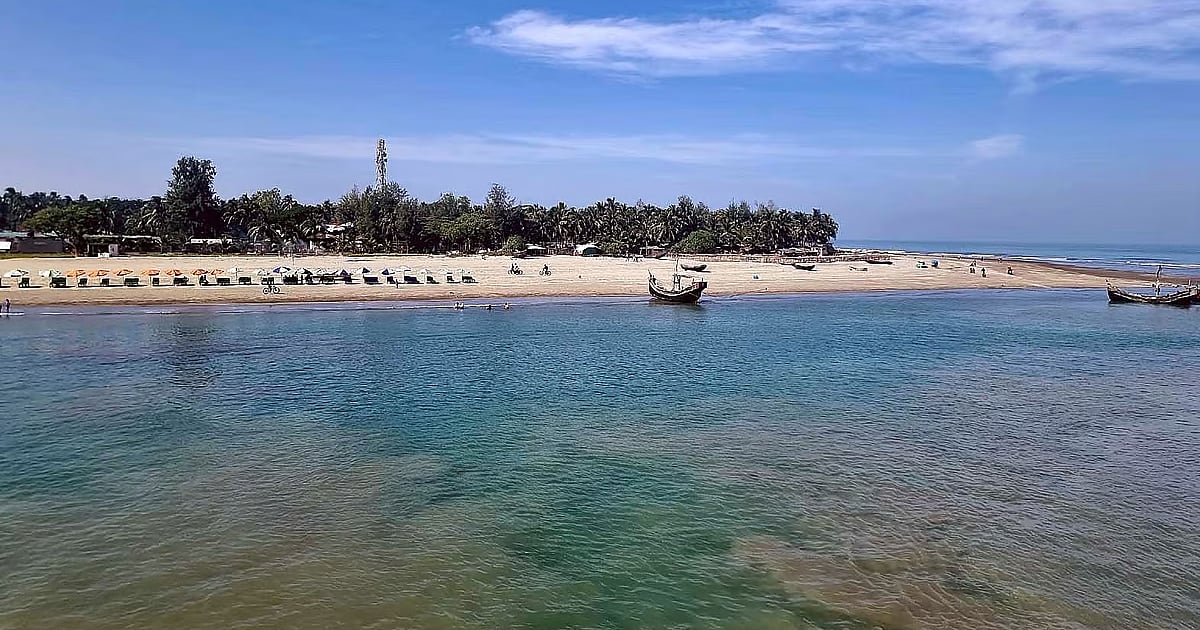
With tourists barred from visiting the coral reef island, Saint Martin’s, on Bay of Bengal from 1 February, the island’s deserted beaches are now teeming with snails and oysters.

Green mangrove forest and Keya plant (Pandanus tectorius) are also emerging at Diyarmatha and Chheradia on the southern side of the island.

The 8-square kilometer Saint Martin’s is the only coral-reef island in the Bay of Bengal.

Located in Teknaf Upazila of Cox’s Bazar, tourists used to be able to visit the island until 31 March in other years. However, the island was open for tourists until 31 January this year. While earlier 5,000 tourists would visit the island every day, only 2,000 tourists were allowed to visit it every day this season.

Various studies have shown that Saint Martin has 1,076 species of flora and fauna, including coral, algae, turtles, snails, oysters, marine fish, birds, mammals, and crabs.

The island’s sandbanks are also the nesting grounds for the Olive Ridley sea turtles, one the endangered species of sea turtles of the world.

However, the island has become endangered due to uncontrolled infrastructure building, influx of unchecked number of tourists and the consequential environmental pollution.

The Department of Environment (DoE) organised a two-day cleaning campaign across the island after the tourists were banned. The authorities used drones to identify and remove garbage on the island. Volunteers removed 930 kg of waste in the campaign.

Md Jamir Uddin, Deputy Director of the Cox’s Bazar office of the DoE, told Prothom Alo that a team from the department reached the island on 5 February, and identified the places where waste was lying through multiple drones.

The Department of Environment (DoE) observed a two-day cleaning campaign across the island after the tourists were banned. The authorities used drones to identify and remove garbage on the island. Volunteers removed 930 kg of waste in the two-day campaign
He said the removal of this waste began on 12 February. Nearly 90 per cent of the waste was chips packets, polythene and packets of biscuits. Earlier, plastic waste was removed from various areas including beaches in a joint initiative of a private organisation and the DoE.

The official of DoE added that as tourists were barred and movement of battery-run auto-rickshaw and motorcycle stopped, a layer of snails and oysters had already started to accumulate on at least a 7-8 kilometer stretch of the beach in the southeast and west of the island.

Snails and oysters prevent erosion of the beach and work as bulwark for sand dunes. Earlier, people used to collect snails and oyster from the beach and smuggle them to Myanmar. Furniture and garland are made from snails and oysters.

The DoE declared Saint Martin an Ecologically Critical Area (ECA) back in 1999 to protect its biodiversity.

Lastly on 4 January 2023, according to the wildlife (conservation and security) act, the environment ministry declared 1,743 square kilometres of area in the Bay of Bengal adjoining Saint Martin’s island as a reserved area.

Earlier in 2016, ECA management rules were framed under the Bangladesh Environment Protection Act, 1995.

Nur Mohammad, 50, a local trader of Saint Martin said locals do not usually walk on beaches without any reason. They do not usually tread in Chheradia or Diarmatha area. But the tourists roam around the island in different vehicles.

The island has several kilometers of pucca road in the middle but going to Diyarmatha and Chheradia requires use of beaches. When vehicles ply on the beaches, various marine animals like snails, oysters and crabs get killed and biodiversity including corals and algae get destroyed.

He further said that many hotels, resorts and cottages have been built in ecologically critical and travel-prohibited areas, including Diyarmatha and Golachipa, on the island. Guests of these hotels have to travel via the beach.

According to him, as there are no tourists, marine life and biodiversity are being protected. Local people are fishing in the sea for a living, some are drying fish, while others are busy cultivating vegetables and watermelons.

Nazir Hossain, member of ward no. 9 of Saint Martin island, told Prothom Alo that green mangroves are growing in over one-acre beaches on the southern part, including Diyarmatha, of the island. The trees are growing fast. Locals are being monitored to ensure that they do not destroy the mangrove.

Saiful Islam, a resident of the southern part of the island, said the whirlwind created by the propellers of tourist ships used to make the blue water of the sea muddy. Water bottles, polythene, and packets of chips used to float in the sea water.

He pointed out that since the ship traffic has stopped, the sea water has now got back to its azure color. Plastic waste is no longer visible in the sea water.

DoE officials said a set of important decisions were taken in a meeting on 2 February to protect Saint Martin’s island. The garbage littered in the island was identified and removed as the first step.

As part of the next step, initiatives such as arranging drinkable water for the local people, preserving biodiversity, taking up power generation projects from waste and rehabilitating unemployed people will be taken, they added.

Abdur Rahim Jihadi, president of the Saint Martin Island Hotel Owners Association, told Prothom Alo that none of over 230 hotels, resorts, and cottages on the island have any environmental clearance.

Ibrahim Khalil, chief executive of the environmental organisation, Youth Environment Society (YES) in Cox’s Bazar, said that the island’s environment has improved by implementing the initiative to limit tourists for the first time. Due to strict monitoring during the travel period (December-January), coral was not collected from the sea.

He further stated that absence of tourists on the beach has created an environment for mother turtles to lay eggs. Red crabs, snails, and oysters have also been bred.​
 

How climate change drives social conflicts

1740266688028.webp

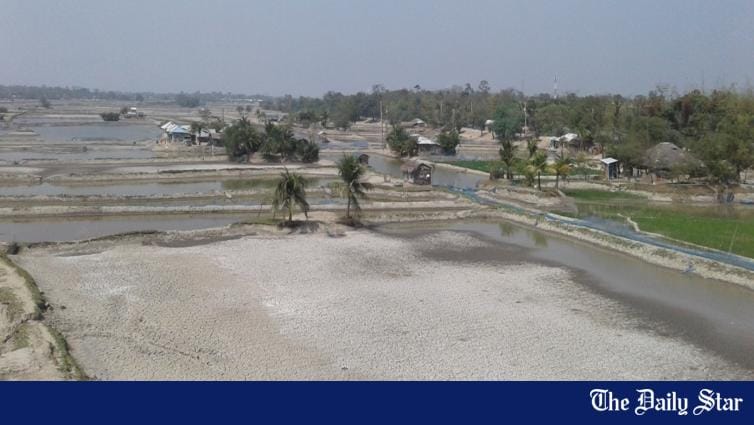
Indiscriminate shrimp farming has destructed local ecology, fresh water sources, and common property resources in the coastal villages of southwest Bangladesh, leading to social conflicts in the region. SOURCE: BCAS

The impacts of climate change are visible in all crucial aspects of life, be it agriculture and food security or access to healthcare and human potential to work. In vulnerable regions, climate change, which is rapid and forceful, is aggravating the existing social and economic problems such as extreme poverty, unemployment, food insecurity, social conflicts over resources, and gender inequity. The 2022 Assessment Report of the Intergovernmental Panel on Climate Change (IPCC) asserted that climate change is pushing us into a high-risk-centred world, where the growing impacts of climate change are limiting the adaptive capacity of humans as well as the ecosystems.

The National Adaptation Plan (2023-2050) of Bangladesh has identified several climate-induced stresses that are affecting regions, people, their livelihoods, and ecosystems across the country. Traditional occupational groups such as small farmers, fishers, daily wage earners, and people dependent on natural resources are suffering the most. The poor, particularly women and socially marginalised communities, are severely affected in all the climate hotspots; they are highly exposed and sensitive to climate disasters like extreme heat stress during summer, frequent and devastating floods, cyclones, tidal surges, and landslides. They lack adaptive capacity in terms of awareness, motivation, disaster preparedness, and resources to address climate change impacts.

It is evident that many climate-vulnerable people in Bangladesh mainly depend on their wage earnings and livelihoods based on natural resources (such as subsistence agriculture, fishing, and horticulture), which are again very sensitive to climate change. Furthermore, natural resources like forests and wetlands are very often captured and controlled by local influential people. Thus, climate change is increasing deprivation and social conflicts in the existing social systems, where local government institutions are weak and biased towards the power elites. Recent studies suggest that all the climate hotspots in Bangladesh have high levels of poverty, livelihood insecurity, and gender inequity. Many of the poor, especially women, are forced to migrate to the cities in search of livelihood options, where they live in the slums and fringe areas, in degraded social and environmental conditions.

The NETZ Bangladesh, an international development agency, recently conducted an exploratory study to understand the physical causes—like climate-induced stresses—as well as social causes of vulnerability and gender inequity in three climate-affected regions: southwest coastal areas, northwest drought-prone areas, and north-central river basin. The study also explored the nature and types of social conflicts triggered and aggravated by climate change. The surveyed people (covering 400 respondents) in the three study areas agreed on the rise of social conflicts (63 percent) during and after a climate disaster. Social conflicts were found to occur the most in the coastal region (82 percent), compared to the high Barind (61 percent) and the river basin (49 percent) areas. Over 90 percent of the respondents in coastal villages said they frequently face conflicts over accessing fresh water for small agriculture, catching fish in the open water bodies, and accessing grazing lands.

The study findings also reveal that social conflicts increase due to frequent natural disasters, salinity intrusion, high tides (linked to sea level rise) and waterlogging in coastal villages. Conflicts are increasing while collecting drinking water from limited sources of water, as the demand for fresh water is on the rise in climate-affected localities. Public water distribution points (like piped water supply and rainwater harvesting systems) are inadequate compared to the growing needs of the vast number of poor people. The poor are not allowed to send their cattle on the grazing lands. Agricultural lands owned by marginal farmers are often converted into shrimp farms forcefully. These are the main sources of social conflicts in coastal villages. Local rich people and power elites very often win in the fight since they are well-connected to political parties and local government institutions (LGIs).

The existing conflict resolution mechanisms do not protect the interest and rights of poor women, ethnic groups, and marginalised people. There is an urgent need for strengthening alternative and transformative conflict resolution mechanisms, where civil society groups and local partners can play a significant role in empowering the poor, particularly women, to pursue social justice and gender equity. LGIs like union parishads and sectoral agencies in the upazilas should be made more accountable and responsible to the poor, women, and socially excluded groups.

Furthermore, gendered drivers, such as women's lack of mobility and participation, as well the patriarchal norms and values affect the decision-making power of women, girls, and socially disadvantaged groups. Hence, the social capitals of the poor and women, in terms of organisational capacity, cohesiveness and raising collective voice, should be advanced with institutional linkages for locally led solutions, conflict resolution, and climate-resilient livelihoods. LGIs, NGOs, and civil society should promote gender-responsive and pro-poor adaptation and social protection mechanisms for poor women and marginalised groups, which will build resilience of the vulnerable communities and empower them, in order to ensure gender equity as well as a peaceful and just society in the long run. These should be supported by rights-based organisations and their networks.

Dr Dwijen L Mallick is fellow at Bangladesh Centre for Advanced Studies (BCAS).​