| Global Defense, OSINT & Geopolitics Wire

[🇧🇩] Strategic Aspect of Bangla-Japan Relation

[🇧🇩] Strategic Aspect of Bangla-Japan Relation
137
7K
More threads by Saif

G Bangladesh Defense

Bangladesh-Japan trade passes $3.3b on garment demand

Refayet Ullah Mirdha

1792630427028.webp


Trade between Bangladesh and Japan has grown steadily over the past decade, mainly due to rising demand for competitively priced Bangladeshi garments. Bangladesh’s exports to Japan have more than tripled during this period, according to data from the Export Promotion Bureau (EPB) and Bangladesh Bank (BB).

In the past, Bangladesh’s exports to Japan were worth only a few hundred million dollars. Shipments of ready-made garments (RMG) began to grow rapidly in 2011, when Japan relaxed its rules of origin for knitwear imports from least developed countries (LDCs).

As an LDC, Bangladesh benefited from duty-free access for its knitwear in the Japanese market, helping boost exports.

Annual exports to Japan have exceeded $1 billion since fiscal year 2015-16 (FY16). Meanwhile, two-way trade between the countries crossed $3 billion in FY18.

Bangladesh’s exports to Japan grew by 20.74 percent in FY19 but declined over the next two fiscal years amid the Covid-19 pandemic.

According to EPB data, exports returned to pre-pandemic levels in FY22. They then rose sharply in FY23, reaching $1.9 billion. Two-way trade between Bangladesh and Japan increased to more than $3.31 billion in FY25, up from $3.12 billion in the previous fiscal year, the data showed.

Japan is now Bangladesh’s ninth-largest export destination globally and its second-largest in Asia. It is also an important source of foreign direct investment (FDI) for Bangladesh.

Tareq Rafi Bhuiyan Jun, immediate past president of the Japan-Bangladesh Chamber of Commerce and Industry (JBCCI), said Bangladesh has significant potential to increase exports to Japan as demand for Bangladeshi products is growing in the country.

He said Japan can become one of Bangladesh’s most promising export destinations, alongside Europe and the United States.​
 

Business leaders want PM’s Tokyo trip to bring investment

They also urge faster EPA rollout as garment exports to Japan target $3 billion

Refayet Ullah Mirdha


1792630610275.webp


Business leaders and trade officials say Bangladesh should use Prime Minister Tarique Rahman’s upcoming Tokyo visit to attract more Japanese investment and press for swift implementation of the Economic Partnership Agreement (EPA) signed in February this year.

The PM will visit the island nation from October 26 to 29.

Japan is already an important export market and a major source of investment for Bangladesh. Recently, several leading Japanese companies have expressed interest in investing in Bangladesh or expanding their operations here.

Japanese businesses are also looking at new markets, including Bangladesh and its neighbours, under Tokyo’s “China Plus One” policy, which aims to diversify investment beyond China and reduce dependence on a single country.

“We should seize this opportunity to attract Japanese investment to Bangladesh, as several major Japanese companies have already shown interest in investing here,” said Tareq Rafi Bhuiyan Jun, immediate past president of the Japan-Bangladesh Chamber of Commerce and Industry (JBCCI).

Senior executives from three major Japanese business groups, Toyota, Mitsui and Marubeni, have recently visited Bangladesh and met senior government officials, Tareq told The Daily Star over the phone.

Commerce Minister Khandakar Abdul Muktadir also said representatives of Marubeni and Toyota have visited and discussed investment opportunities.

Tareq expects the visit to focus on implementing the EPA, launching the third terminal at Hazrat Shahjalal International Airport in Dhaka and attracting more Japanese investment.

Mahmud Hasan Khan, president of Bangladesh Garment Manufacturers and Exporters Association (BGMEA), said investment should be a priority too.

Last month, the BGMEA opened a dedicated desk for the Japanese market at its Uttara office to attract more Japanese textile and garment businesses, as part of its strategy to expand into Asian markets.

The association will also hold a roadshow in Hong Kong next month to attract Asian garment retailers and brands. Japanese retailers are expected to attend, as the association has been working closely with them, Mahmud said.

Bangladesh exports more than $1.4 billion worth of garments to Japan annually, benefiting from duty-free access under its Least Developed Country (LDC) status, according to the Export Promotion Bureau (EPB).

Garments account for about 80 percent of its exports to Japan. The BGMEA aims to raise garment exports to Japan to $3 billion in the near future. Japan has committed to continuing LDC-related duty-free access for three years after Bangladesh graduates from the category.

Md Fazlul Hoque, administrator of the Federation of Bangladesh Chambers of Commerce and Industry (FBCCI), called for swift ratification of the EPA to boost trade and investment between the two countries.

“However, I would like to see a greater focus on investment during the prime minister’s visit,” Fazlul said.

Kazuaki Kataoka, country representative of the Japan External Trade Organization (JETRO) in Bangladesh and current president of the JBCCI, also expects economic issues to feature in the talks.

He said Japanese investors are showing greater interest in Bangladesh since the country’s political situation stabilised after the general election in February this year.

Commerce Minister Muktadir said he hopes both countries will soon ratify the EPA in their national parliaments, paving the way for implementation and stronger bilateral trade.

Japan’s Ministry of Foreign Affairs said in a statement on Tuesday that Prime Minister Sanae Takaichi would hold a meeting and lunch with Tarique Rahman during his visit.

“The visit of Prime Minister Rahman is expected to further strengthen the ‘Strategic Partnership’ between Japan and Bangladesh, a key regional partner that shares values and principles such as freedom, democracy and the rule of law, and enhance coordination towards realising the updated ‘Free and Open Indo-Pacific (FOIP)’,” the statement said.

Google News LinkFor all latest news, follow The Daily Star's Google News channel.
Foreign Secretary Asad Alam Siam said on Tuesday that the visit would build on the EPA to expand trade and investment.

Bangladesh is also discussing about eight memorandums of understanding (MoUs) with Japan, and three or four are expected to be signed during the visit. The proposed agreements cover agriculture, fisheries, skills development, civil aviation, trade, environmental protection and the modernisation of local government.

Business surveys also support Bangladesh’s prospects for attracting Japanese investments.

Bangladesh has ranked among the top 20 promising destinations for overseas business in surveys by the Japan Bank for International Cooperation (JBIC) for the past three years, and a recent JETRO survey found that 71.5 percent of Japanese companies want to expand their businesses in Bangladesh.

To attract more Japanese foreign direct investment, Bangladesh is developing the Japan Economic Zone in Araihazar, Narayanganj.​
 

Japan to arrange private investments worth $6.36b in Bangladesh


1792711844069.webp


Japan will agree to arrange 1 trillion yen ($6.36 billion) in private-sector investments in Bangladesh over the next five years, the Nikkei newspaper reported on Thursday.

Prime Minister Sanae Takaichi will host her Bangladesh counterpart Tarique Rahman for a summit in Japan this month, and a joint statement will mention the arrangement, the report said.

The investments are expected to go into automobile and other manufacturing industries, as well as the construction of energy facilities, Nikkei reported.

It will also involve companies entering the Bangladesh Special Economic Zone being developed by parties including Japanese trading house Sumitomo Corp, opens new tab, the newspaper added.

Reuters could not immediately verify the report.

($1 = 157.1900 yen)​
 

Tarique Rahman's Japan visit: The next frontier of Bangladesh-Japan relations

Published : 25 October 2026

Md Shariful Islam

Prime Minister Tarique Rahman’s scheduled visit to Japan on 26 October 2026 comes at a significant moment in Bangladesh-Japan relations, as Dhaka seeks to deepen economic and strategic engagement with Tokyo. During the visit, Bangladesh is set to propose a US$14 billion investment and cooperation package spanning 12 priority sectors, including transport, technology and energy. The visit provides an opportunity to assess the evolving bilateral partnership and identify avenues for expanding cooperation in an increasingly complex regional geopolitical environment.

Bangladesh’s strategic location at the crossroads of South and Southeast Asia holds considerable significance for regional and global powers, including Japan. This importance has long been recognised in Japan’s official foreign policy assessments. The 2021 Diplomatic Bluebook describes Bangladesh as “geopolitically very important as an intersection between India and ASEAN” (MOFA, Japan, 2021, p. 79). Bangladesh’s geographical position, together with its growing geostrategic relevance amid evolving regional dynamics, has also been a key consideration underpinning Japan’s Bay of Bengal Industrial Growth Belt (BIG-B) Initiative, which places Bangladesh at the centre of its regional connectivity and economic development strategy.

Deepening Bangladesh-Japan investment ties

According to a survey conducted by the Japan External Trade Organization (JETRO), 73.2 per cent of the 57 companies interviewed said Bangladesh was their top priority for business expansion; 61 per cent said the country had high growth potential. The survey covered Japanese firms across 20 countries in Asia and Oceania. Among these 20 countries, Bangladesh ranked second in terms of profitability for Japanese companies, owing to low wages and production costs. Bangladesh has also taken steps to create a more favourable investment environment. One notable example is the Bangladesh Special Economic Zone (BSEZ) in Araihazar, Narayanganj, developed in partnership with Japan to attract Japanese and other foreign investors.

1792886073902.webp

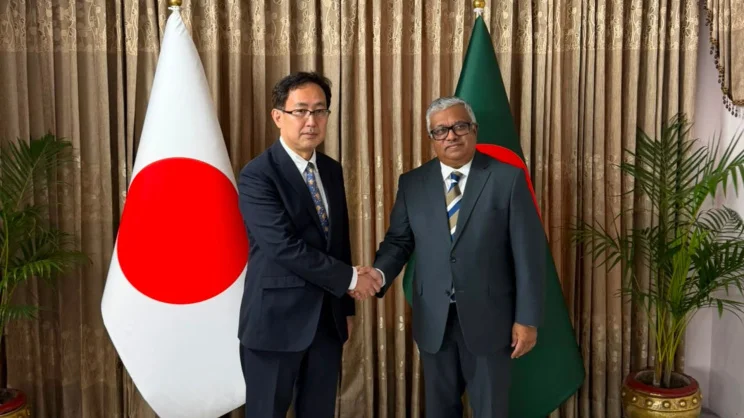
Foreign Secretary Asad Alam Siam and Japan's Senior Deputy Foreign Minister Namazu Hiroyuki lead their respective delegations at the seventh Bangladesh-Japan Foreign Office Consultations in Dhaka on 12 August 2026. The consultations formed part of ongoing diplomatic engagement to strengthen bilateral relations. Photo: MOFA, Bangladesh.

In recent years, several leading Japanese companies have expressed interest in investing in Bangladesh or expanding their existing operations in the country. Japanese businesses are also exploring opportunities in Bangladesh and neighbouring markets as part of their “China Plus One” strategy, which seeks to diversify production and investment beyond China and reduce dependence on a single market. Bangladesh and Japan signed an Economic Partnership Agreement (EPA) in February 2026, marking an important step towards deepening bilateral economic cooperation. Its effective implementation could further strengthen trade and investment ties and generate mutual economic benefits.

Promoting trade relations

Trade between Bangladesh and Japan has expanded steadily over the past decade, driven largely by growing demand for competitively priced Bangladeshi garments. Bangladesh’s exports to Japan have increased significantly since 2011, when Japan relaxed its rules of origin for knitwear imports from least-developed countries (LDCs), enabling Bangladeshi products to benefit from duty-free market access. According to data from the Export Promotion Bureau (EPB) and Bangladesh Bank (BB), Bangladesh’s annual exports to Japan first exceeded US$1 billion in FY2015–16, rising sharply to US$2.8 billion in FY2021–22. Japan is now Bangladesh’s ninth-largest export destination globally and second-largest in Asia.

Nevertheless, there is ample scope to expand Bangladesh-Japan bilateral trade. For instance, Bangladesh has considerable potential to increase its exports of ready-made garments and pharmaceuticals to the Japanese market. Japan’s Finance Ministry data show that the country imported US$24.72 billion worth of apparel, with the bulk (US$22.96 billion) coming from Asia, including US$13.57 billion from China alone. China's share of Japan's textile product imports fell below 50 per cent in 2025, reaching a 31-year low. The resulting gap is increasingly being filled by Southeast and South Asian countries. Vietnam's share rose by 7.7 percentage points over the past decade to 17.4 per cent, while Bangladesh gained two percentage points to reach only 4.3 per cent. It is also encouraging that Bangladesh has already begun exporting ICT products to Japan, which could become another promising area of bilateral trade.

Expanding Bangladesh-Japan labour cooperation

From Bangladesh’s perspective, labour migration and diaspora connections are critical to its relations with Japan. According to BMET, between 1976 and 2020, of the 1.3 crore Bangladeshi migrant workers who went abroad for employment, only 0.02 per cent went to Japan. Several factors make Bangladesh a promising source of skilled workers to meet Japan’s growing labour demand.

Bangladesh and Japan should move beyond immediate economic gains to deepen cooperation in maritime security, technology transfer and sustainable development. Japan has much to offer in terms of technology, expertise and institutional experience, while Bangladesh brings a young workforce, a growing market and a strategically important position in the Bay of Bengal. The challenge lies in translating these complementary strengths into a lasting partnership grounded in mutual respect and shared prosperity.

First, Bangladesh offers a large pool of semi-skilled and skilled workers, while Japan faces a severe shortage of people of working age. According to a joint survey by Persol Research and Consulting and Chuo University, Japan will face a shortage of approximately 6.44 million workers by 2030. The proportion of people aged over 65 had already reached 28 per cent, one of the highest in the world, as reported by The Washington Post. Although there is considerable discussion about the Fourth Industrial Revolution, in which machines may replace human workers, human resources remain essential. The demand for human labour is unlikely to disappear anytime soon. Therefore, to address its labour shortages, Japan has increasingly opened its doors to foreign workers. In this context, Japan introduced legal amendments in 2018 to grant visas to more foreign workers and address its tightening labour market.

Against this backdrop, labour migration presents a promising avenue for cooperation between Bangladesh and Japan. Encouragingly, in August 2019, Bangladesh and Japan signed a Memorandum of Cooperation (MoC) to facilitate the recruitment of Bangladeshi workers under Japan’s Specified Skilled Worker (SSW) programme across 14 sectors. Bangladesh was the ninth country to sign such an MoC with Japan as a sending country for specified skilled workers. In addition, in May 2025, Bangladesh and Japan reached an agreement to recruit at least 100,000 Bangladeshi workers over the following five years to help address Japan’s severe labour shortage.

Building on these bilateral arrangements for labour cooperation, Bangladesh and Japan signed a five-year Memorandum of Cooperation on Employment Skills Development (ESDP-MoC) on 17 October 2026. The agreement, which will be automatically renewable for another five years, aims to facilitate the recruitment of Bangladeshi workers in Japan from 1 April 2027. The agreement marks a significant step towards expanding employment opportunities for Bangladeshi workers in Japan. With a formal framework for labour cooperation now in place, Bangladesh needs to focus on its effective implementation to maximise the opportunities it offers.

1792886130803.webp

Prime Minister Tarique Rahman meets a Japanese delegation led by Parliamentary Vice-Minister for Foreign Affairs Shimada Tomaki at the Prime Minister's Office in Dhaka on 1 July 2026. Discussions covered bilateral cooperation in energy, airport infrastructure development and Rohingya repatriation. Photo: PMO

Strengthening Bangladesh-Japan maritime security and blue economy cooperation

The Bay of Bengal and the wider Indian Ocean region have become increasingly important arenas of strategic competition among regional and extra-regional powers. Against this backdrop, closer cooperation between Bangladesh and Japan is essential to address growing non-traditional security challenges, including climate change, piracy and illegal, unreported and unregulated (IUU) fishing.

During Japanese Prime Minister Shinzo Abe’s visit to Bangladesh in September 2014, the two countries agreed to strengthen cooperation in the blue economy. However, progress in this area has remained limited despite its growing strategic and economic significance. Bangladesh continues to face constraints in investment, technology and skilled human resources, limiting its ability to harness marine resources sustainably. As a major maritime nation with advanced technological capabilities and expertise, Japan is well positioned to support Bangladesh in developing its blue economy while strengthening maritime cooperation.

Looking ahead, Bangladesh and Japan should move beyond immediate economic gains to deepen cooperation in maritime security, technology transfer and sustainable development. Japan has much to offer in terms of technology, expertise and institutional experience, while Bangladesh brings a young workforce, a growing market and a strategically important position in the Bay of Bengal. The challenge lies in translating these complementary strengths into a lasting partnership grounded in mutual respect and shared prosperity.

Dr Md Shariful Islam is Associate Professor and Chairman of the Department of International Relations at the University of Rajshahi.​
 

More than RMG needed to tap Japan market

Industry insiders say

Refayet Ullah Mirdha

Bangladesh is missing opportunities to boost export earnings from Japan by relying heavily on garment shipments while struggling to tap demand for products such as footwear, leather goods and food items, industry insiders say.

Garments account for more than 80 percent of Bangladesh’s exports to Japan, leaving considerable scope to diversify into higher-value products. However, exporters need to address energy shortages and meet Japan’s stringent quality and compliance requirements to turn that potential into higher export earnings.

Bangladesh already exports jute and jute goods, leather products, fish and shrimp, plastic goods, and information technology and IT-enabled services to Japan, according to the Export Promotion Bureau (EPB). Sector leaders say exports could be expanded by shipping more agricultural products, higher-value garments and man-made fibre apparel.

Food and vegetable products offer another potential avenue for growth, particularly given demand among Japanese consumers and expatriate Bangladeshis. However, Bangladesh has struggled to capitalise on this opportunity because exporters have difficulty meeting Japanese quality and compliance standards.

Mostafa Abid Khan, chief executive officer of the Bangladesh Foreign Trade Institute (BFTI), said Bangladesh needed to diversify its exports to Japan, including within the garment sector.

The country should increase shipments of man-made fibre garments, while footwear and leather goods also hold significant potential in the Japanese market, he said.

Bangladesh could substantially increase earnings from these sectors over the next few years if exporters diversified their products and improved quality and compliance with Japanese standards, Mostafa said.

However, energy shortages in the domestic industrial sector could constrain production and limit the country’s ability to tap the market, he added.

Attracting more Japanese investment could also create opportunities for export diversification. More than 350 Japanese companies currently operate in Bangladesh across various sectors, including trading, manufacturing and infrastructure development, according to business leaders.

Japanese manufacturers, ranging from motorcycle producers to apparel companies, contribute to employment generation and industrial development through technological upgrading.

Japanese small and medium-sized enterprises are also exploring opportunities in Bangladesh’s IT, logistics and other service sectors, industry insiders have said.

Business leaders in both countries expect more Japanese companies to enter Bangladesh following the implementation of the Economic Partnership Agreement (EPA). The two countries signed the agreement on February 6 this year, but it has yet to come into force.

Japan is already a significant destination for Bangladeshi exports. Bangladesh’s annual exports to Japan have exceeded $1 billion since fiscal year 2015-16 (FY16). Two-way trade between the countries crossed $3 billion in FY18, according to the EPB.

Japan also supplies Bangladesh with a wide range of products, including iron and steel, vehicles and accessories, ships, machinery, mineral fuels, medical and surgical instruments, plastics and electrical machinery, according to Bangladesh Bank data.

Prime Minister Tarique Rahman is expected to visit Japan from October 26 to 29, During the visit, the two countries are expected to elevate their existing strategic partnership to a comprehensive strategic partnership (CSP), The Daily Star has learnt from officials involved with the proceedings.​