| Global Defense, OSINT & Geopolitics Wire

[🇧🇩] The U.S.A.---A Strategic Partner of Bangladesh

[🇧🇩] The U.S.A.---A Strategic Partner of Bangladesh
256
14K
More threads by Saif

G Bangladesh Defense

US Ambassador sees strong Bangladesh–US cultural link through art

UNB
Published :
Mar 16, 2026 20:13
Updated :
Mar 16, 2026 20:13
​
1773707885494.webp

​
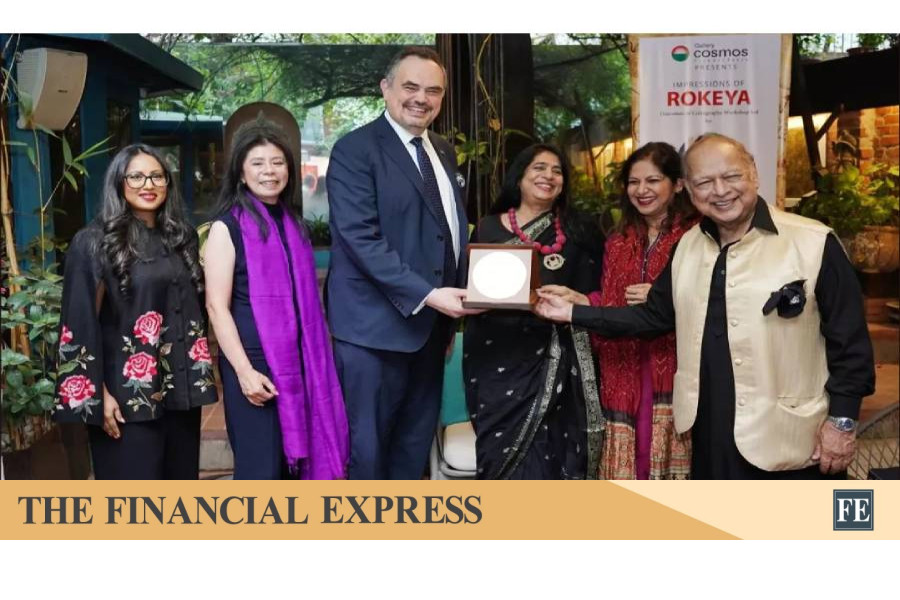
US Ambassador to Bangladesh Brent T. Christensen presents a crest to Ekushey Padak-winning artist Dr Rokeya Sultana at the Garden Gallery of Gallery Cosmos in the capital on Sunday. Photo : Samsul Alam Hady/UNB

US Ambassador to Bangladesh Brent T. Christensen on Sunday highlighted the strong cultural link between Bangladesh and the US through art while attending an event honouring Ekushey Padak-winning artist Dr Rokeya Sultana at Gallery Cosmos in the capital.

He also praised the vibrancy and creativity of Bangladesh’s art scene and the role of cultural exchange programmes such as the Fulbright in strengthening ties between the two countries.

The event organised by Gallery Cosmos and House of Solis at Garden Gallery in Baridhara showcased artworks produced during the workshop at Cosmos Atelier71, bringing together artists, organisers and art enthusiasts to reflect on the learning and collaboration fostered during the programme.

Ambassador Brent T. Christensen was the chief guest along with Ms Deanne Dao (his wife).

Christensen thanked the organisers for arranging the event and said it was a pleasure to attend a gathering celebrating the acclaimed artist.

The envoy said he and his wife, Ms Deanne Dao, have long admired Bangladeshi art and artists.

“My wife, Deanne, and I are very big fans of Bangladeshi art and the spirit and creativity of Bangladeshi artists going back to our previous time in Dhaka and reinforced in our not just over two months here.”

Christensen recalled that during an early visit to an art gallery in Dhaka, they noticed Dr Sultana’s work and were immediately drawn to it.

“And an early art gallery we visited, we noticed Dr. Sultana’s work. We were both immediately drawn to it. And so much the better when we learned that she was in fact one of ours as well as a US alumnus, a Fulbright alumnus,” he said.

He said he was particularly excited to learn that the Bangladeshi artist completed her Fulbright programme at the University of Nebraska-Lincoln, where he had also spent several years.

“So, It was really great to make that connection, to see her work further recognized. I was even more excited when I learned that she had done her Fulbright at the University of Nebraska-Lincoln, where we spent several years in Nebraska just prior to this return to Bangladesh.”

“But it’s really tremendous to see, you know, continued vibrant art scene of Bangladesh to see events like this, bringing together artists, the printmaking workshops, the great work that Dr. Sultana is doing in teaching the next generation of artists. “

“That’s one of the things where we like to see both the vibrant art scene but also the connection back to the U.S., back to the Fulbright, how our cultural ties can benefit both countries and the global art community. “

Speaking at the event, Nahar Khan, founder of House of Solis, the experiential partner for the event, highlighted the significance of the workshop and the artistic exchange it created.

“Over the past days, Professor Rokeya Sultana has led a workshop at Cosmos Atelier71, exploring printmaking and collography, sharing not only technical mastery but also the spirit of experimentation and courage that defines true artistic practice. The works you see exhibited here this evening are the result of that dialogue between mentor and artists – an exchange of ideas, technique, and imagination,” she said.

“We believe that art spaces must do more than exhibit works. They must create experiences, build community, and nurture the next generation of artists.”

She added, “This evening’s exhibition is therefore not only a presentation of works. It is a celebration of mentorship, knowledge sharing, and artistic continuity. Professor Rokeya Sultana’s work has travelled far beyond borders, yet it remains deeply connected to the artistic lineage of Bangladesh and to the pioneering spirit of institutions such as University of Dhaka - Faculty of Fine Arts.”

She said her Ekushey Padak recognition is a reminder that the arts are central to Bangladesh’s national identity and cultural imagination.

Nahar Khan expressed gratitude to Professor Rokeya Sultana for sharing her knowledge so generously, and to all the participating artists whose work fills this garden with energy and creativity.

Cosmos Gallery Director Tehmina Enayet, and organizer of the workshop, said the gallery and its studio have long aimed to create an active platform for artistic practice and collaboration.

“Through Gallery Cosmos, and our studio, Cosmos Atelier71, we have tried to create, not only an exhibition space, but also a working platform for artists. Atelier71, which has been active for almost two decades, has become a printmaking studio and creative hub where artists can experiment, learn, and collaborate. “ she said.

The studio has hosted numerous workshops, art camps, and exhibitions, especially to encourage young artists and expand their possibilities of printmaking, said Tehmina Enayet.

“Over the years, our initiatives have extended beyond Bangladesh. Through residencies, exchange programs, and collaboration projects, we have welcomed artists and scholars from many parts of the world. Members of our artistic community have also engaged with important international platforms—from exhibitions to global art fairs in cities such as Venice, Miami, New York, Singapore, Toronto, Kathmandu, Mumbai and more - helping position Bangladeshi art within a wider international conversation,” she added.

“At Gallery Cosmos we believe that art is a language that transcends geography, politics, and culture. Artists are often the ambassadors of a nation’s creativity and imagination. This is why today’s exhibition is so meaningful. “

Professor Rokeya Sultana has not only shared her expertise in printmaking and collography, but she has also inspired artists to explore and experiment, she said. “We are grateful to her for her generosity, her mentorship, and contribution to the arts of Bangladesh.”

She also extended special thanks to freedom fighter and eminent artist Biren Shome and several others including Anisuzzaman Anis, Sheikh Mohammad, Rokonuzzaman, Fariha Zeba, Bishwajit Goswami, Anukul Chandra Majumder, Shohag Parvez, Rashed Kamal Rasel, Rania Alam, Kamruzzoha, Juton Chandra Ray, Toufiq Emon, Sadia Mizan, Pooja Basak and Sharmin Shahriar.

In her remarks, Professor Rokeya Sultana expressed gratitude to the organisers and reflected on the importance of artistic mentorship.

Reflecting on her artistic journey, she said sharing knowledge has always been an important part of her work.

“Throughout my artistic journey and career I have always tried to share my knowledge and techniques with others - through workshops, universities, and artistic communities around the world. Because art does not need any special language nor does it have boundaries. Art connects people beyond geography and culture.”

She also praised the young artists who participated in the workshop.

US Ambassador to Bangladesh Brent T. Christensen also presented a crest to Professor Rokeya Sultana at the event.

Dr Iftekhar Ahmed Chowdhury, former foreign minister to the caretaker government, and Ambassador Farooq Sobhan, longtime patron of the arts, also attended the event.​
 
@Saif bhai - I can't figure out who this Anu Muhammad guy is.

Is he a chetonabadi economist and pro-Hasina/pro-India guy because he has issues with the US trade deal?
এই ভদ্রলোক তেল-গ্যাস রক্ষা কমিটির চেয়ারম্যান ছিলেন। হাসিনার আমলে তেল-গ্যাস ক্ষেত্রগুলো বিদেশী কোম্পানীর কাছে ইজারা দেওয়ার বিরুদ্ধে আন্দোলন করতে গিয়ে পুলিশের হাতে মার খেয়েছে। সে হাসিনার প্রিয় পাত্র ছিলো না।
 
এই ভদ্রলোক তেল-গ্যাস রক্ষা কমিটির চেয়ারম্যান ছিলেন। হাসিনার আমলে তেল-গ্যাস ক্ষেত্রগুলো বিদেশী কোম্পানীর কাছে ইজারা দেওয়ার বিরুদ্ধে আন্দোলন করতে গিয়ে পুলিশের হাতে মার খেয়েছে। সে হাসিনার প্রিয় পাত্র ছিলো না।

Many Thanks for the clarification.
 

Bangladesh-US trade: a bold strategy forward

Mohd Akhtaruzzaman
Published :
Mar 17, 2026 23:27
Updated :
Mar 17, 2026 23:27

1773793670601.webp


Bangladesh is at a turning point in its economic transformation. In the past three decades, it has become one of the world’s most dynamic manufacturing economies, driven by export-oriented industries, entrepreneurship, and global supply chains. For the next phase, Bangladesh must diversify industry, build technological strength, and position itself as a global manufacturing hub.

At the same time, the global economic landscape is undergoing significant change. Supply chains are being reorganised, manufacturing bases are shifting, and emerging economies are gaining greater importance in global trade networks. In this new environment, the growing economic engagement between Bangladesh and the United States (US) presents a significant strategic opportunity.

Rather than viewing this relationship through the narrow lens of trade competition, Bangladesh has an opportunity to frame it as one of industrial complementarity, in which both economies benefit from their respective strengths.

Bangladesh, therefore, proposes a clear and decisive strategy: the country will withdraw selected Non-Tariff Barriers (NTBs) affecting imports from the US in sectors that directly support Bangladesh’s economic modernisation, while simultaneously ensuring commitments from the United States to facilitate greater market access for Bangladeshi exports.

This approach recognises a simple reality — decisive economic cooperation that produces stronger results than prolonged negotiations that delay opportunity and create uncertainty.

US Growing interest in Bangladesh: The growing economic attention from the United States toward Bangladesh in recent years reflects broader global economic trends.

First, global supply chains are undergoing major restructuring. Following the COVID-19 pandemic and rising geopolitical tensions among major powers, multinational corporations have increasingly adopted a “China +1” strategy, diversifying manufacturing bases beyond a single country. Bangladesh, with its large workforce, competitive production costs, and established export industries, has emerged as an attractive alternative manufacturing hub.

Second, Bangladesh’s sustained economic growth has drawn international attention. Over the past decade, the country has demonstrated strong export performance, expanding industrial capacity, and a rapidly growing domestic market of more than 170 million people. Rising incomes and increasing urbanisation are gradually transforming Bangladesh from purely an export platform into an important emerging consumer economy.

Third, Bangladesh occupies a strategically important position in the Bay of Bengal. It is located near major maritime routes that connect South Asia, Southeast Asia, and the broader Indo-Pacific region. In this context, economic engagement with Bangladesh fits naturally with Indo-Pacific strategies. These strategies aim to strengthen supply chains and ensure stable trade routes.

Bangladesh is vital in global apparel supply chains. As the second-largest exporter of ready-made garments, it supplies much of the apparel sold in the US. US businesses need stable sourcing from Bangladesh.

Bangladesh’s structural advantages: Bangladesh possesses several structural advantages that could enable it to emerge as one of Asia’s most important manufacturing hubs by 2040 if current economic trends continue.

Bangladesh’s first advantage is its large, young workforce. This labour force can support manufacturing industries for decades.

The second advantage is Bangladesh’s existing industrial ecosystem. Thousands of factories, skilled production workers, logistics networks, and long-standing relationships with international buyers create a powerful manufacturing base. Few emerging economies can easily replicate this base.

Third, Bangladesh’s geographic location offers major trade advantages. Improvements in ports, economic zones, and transport networks continue. Bangladesh can then serve as a gateway for markets across South Asia, Southeast Asia, and the Indian Ocean region.

Finally, Bangladesh is diversifying its industries. Beyond garments, sectors like pharmaceuticals, leather goods, light engineering, agro-processing, and technical textiles are expanding.

Industrial complementarity: A long-term economic partnership can be built on the principle of complementary strengths rather than direct competition.

The US remains a global leader in advanced agriculture, high-technology manufacturing, industrial machinery, and medical innovation. Bangladesh, meanwhile, has developed strong competitive advantages in labour-intensive manufacturing industries, pharmaceuticals, and agro-processing.

Balanced trade architecture can therefore emerge in which:

• The US supplies technology, industrial machinery, agricultural inputs, and medical innovation

• Bangladesh supplies manufactured goods, value-added textiles, pharmaceuticals, and processed food products

Natural economic factors reinforce this complementarity. The long shipping distance between the two countries limits the competitiveness of many U.S. consumer goods in Bangladesh, while Bangladesh’s lower production costs strengthen its global competitiveness in labour-intensive manufacturing sectors.

NTB withdrawal with reciprocal commitment: Bangladesh will remove selected NTBS on-Tariff Barriers on imports from the United States in sectors that build Bangladesh’s productive capacity to speed up industrial upgrading and deepen economic cooperation.

These sectors include:

Agricultural inputs. Facilitating imports of high-quality soybeans, feed ingredients, wheat, and other agricultural inputs from the United States will improve productivity in Bangladesh’s poultry, aquaculture, and food-processing sectors.

Industrial machinery and manufacturing technology.Simplifying import procedures for advanced industrial equipment, manufacturing machinery, and energy technology will accelerate industrial modernisation and increase productivity across Bangladesh’s manufacturing sector.

Medical technology and specialised healthcare equipment.Streamlining regulatory procedures for advanced medical equipment and specialised pharmaceuticals will strengthen Bangladesh’s healthcare system and support improvements in public health infrastructure.

At the same time, Bangladesh will seek firm commitments from the United States. These commitments will help Bangladesh gain greater market access for exports in sectors where it is most competitive.

Expanding Bangladesh’s export base. Bangladesh can significantly expand exports to the United States through a targeted strategy focused on five high-potential sectors.

Technical and high-value textiles. Building on the success of the garment industry, Bangladesh can expand into advanced textile segments, including performance, industrial, and medical-grade textiles.

Footwear and leather goods. Bangladesh’s established leather industry provides a strong foundation for expanding exports of footwear, bags, and fashion accessories.

Light engineering and industrial components. The fast-growing light engineering sector can supply metal parts, bicycle components, electrical fittings, and mechanical parts to global supply chains.

Pharmaceuticals and generic medicines. Bangladesh’s pharmaceutical industry has developed strong manufacturing capabilities and has significant potential to expand exports of high-quality generic medicines.

Agro-processed food products. Bangladesh can increase exports of seafood, spices, ready-to-cook foods, and speciality processed food products to growing international markets.

These sectors can become new pillars of Bangladesh’s export economy. They will reduce reliance on a single industry and strengthen economic resilience.

Strategic outcomes: A carefully implemented NTB withdrawal strategy combined with export expansion could generate several long-term benefits for Bangladesh: (a) Diversification of exports beyond garments; (b) modernisation of domestic industries through technology imports; (c) stronger integration into global supply chains; (d) productivity gains in agriculture and manufacturing; (e) improved healthcare infrastructure; and (f) expansion of bilateral trade and investment.

Most importantly, this strategy can transform Bangladesh–US economic relations into a strategic partnership grounded in shared economic opportunities and complementary strengths.

END NOTE: Bangladesh’s future relies not just on protecting current industries. It also depends on our ability to compete, innovate, and grow in global markets. Strategic openness, guided by the national interest and careful planning, will speed up this transformation.

This policy direction is not about giving up national interest. Instead, it uses economic cooperation to strengthen Bangladesh’s industries, expand opportunities for workers, and secure prosperity for the nation.

Bangladesh has repeatedly demonstrated its resilience and determination to move forward. With clear strategy, confident leadership, and the collective strength of our people, the country can transform this moment of global change into a new era of national economic strength and prosperity.

Maj (Retd.) Mohd. Akhtaruzzaman, Former Member of Parliament (1991–1996, 1996–2001)​
 

US trade deal boosts Wi-Fi but threatens revenue

Bangladesh also risks falling out of step with Asia-Pacific spectrum plans by opening the entire 6 GHz band for unlicensed use

Mahmudul Hasan

1773797340002.webp


Bangladesh will open the entire 6 gigahertz (GHz) band for unlicensed use, allowing devices such as smartphones, laptops, routers, smart TVs and VR headsets to use this spectrum, according to the reciprocal trade deal with the United States.

With this additional spectrum allocated for Wi-Fi, Bangladesh will have more than enough capacity to support connected devices simultaneously, but it may come at the cost of mobile connectivity, on which the country’s internet ecosystem heavily relies.

The deal also could cost the telecom regulator significant future revenue from spectrum auctions, officials at the Bangladesh Telecommunication Regulatory Commission (BTRC) said.

Besides, industry experts say that making both the lower and upper parts of the band licence-free could leave the country out of step with regional spectrum plans. This could lead to signal interference near borders and slower growth of mobile networks in the longer term.

In simple terms, think of the 6 GHz band as a long road. It starts at 5.925 GHz and ends at 7.125 GHz, giving a total width of 1,200 MHz.

This road is divided into two sections. The lower part, from 5.925 GHz to 6.425 GHz, spans about 500 MHz. It works like a public road, open to all. It is now mainly used for Wi-Fi, home internet and smart devices, and does not require a licence.

The upper part, from 6.425 GHz to 7.125 GHz, covers about 700 MHz. This section is more like a toll road. Companies must pay the government to use it, and it is usually reserved for mobile networks such as 5G.

Under the reciprocal trade deal, this “toll road” would also be opened up for free use. In effect, the entire band would become licence-free.

While that could improve internet speeds indoors and support a growing number of connected devices, it raises two key concerns.

First, most countries in the Asia-Pacific region plan to keep the upper portion for mobile services. If Bangladesh takes a different approach, signals using the same frequencies on either side of the border could interfere with each other.

Second, giving up the upper band means the telecom regulator would lose the option to sell that spectrum to mobile operators in future, potentially reducing a major source of revenue.

Telecom industry insiders say that US companies such as Amazon, Apple, Meta Platforms, and Google make devices, cloud services, streaming platforms, and smart-home products that rely heavily on Wi-Fi.

For them, more spectrum means better performance and sales for their products worldwide.

“Opening the upper 6 GHz spectrum band for licence-exempt WLAN/RLAN use may stimulate connectivity and innovation, but it also reduces potential fiscal revenues from spectrum auctions while increasing regulatory demands related to interference management and enforcement,” said MA Razzaque, chairman of Research and Policy Integration for Development (RAPID).

“The benefits of such spectrum liberalisation may accrue disproportionately to foreign technology firms and device manufacturers, given Bangladesh’s still evolving digital infrastructure, regulatory capacity, and limited domestic high-value technology production,” he added.

RISK OF FALLING OUT OF STEP WITH THE REGION

Bangladesh, one of the world’s most densely populated countries with more than 180 million people, faces rapidly rising demand for mobile broadband.

Projections suggest around 2,000 MHz of spectrum will be needed for International Mobile Telecommunications (IMT) services, yet mid-band availability remains limited.

To prepare, the government has already included the upper portion of the 6 GHz band in its national frequency allocation plan as a licensed band for mobile networks.

Dhaka has also submitted its position to the International Telecommunication Union (ITU), backing regional harmonisation of the upper 6 GHz band for licensed mobile use.

Several countries, including India, China, Sri Lanka, the Maldives, Laos and Cambodia, are pursuing similar plans.

Telecom experts say a sudden shift could disrupt that alignment and increase the risk of interference.

Anamika Bhakta, senior director at Robi Axiata, told The Daily Star that harmonisation within a region is crucial. It shapes the device ecosystem and determines how quickly a band matures. A lack of alignment, she said, can create interference issues in border areas.

“Most of the Asia Pacific countries, along with Bangladesh, have already adopted the upper 6 GHz band for licensed IMT spectrum, which will finally be approved in the World Radiocommunication Conference 2027 and will be included in the Radio Regulations of ITU. Accordingly, BTRC has already developed the roadmap for releasing the upper 6 GHz band,” she said.

“Going against the flow of other countries within the Asia Pacific region will isolate Bangladesh in terms of using the 6 GHz band.”

If both the upper and lower parts of the band are made licence-free, the government would also lose substantial revenue from future spectrum sales to mobile operators, Anamika further said.

“So, from the country’s interest perspective, it will not be prudent at all to keep both upper and lower 6 GHz band for license-exempt band,” she added.

QUESTIONS OVER CONSULTATION

A BTRC official said current projections show that around 500 MHz in the lower portion is enough to support Wi-Fi, WLAN, low-power indoor and Internet of Things (IoT) services. Bangladesh has already agreed to open this part for unlicensed use.

Officials stress that keeping the upper band for licensed mobile services is vital, both to maintain network quality in a densely populated market and to protect a major future source of government income.

According to Anamika, a huge amount of spectrum will be required in near future for the mobile operators to support the digital economy of the country. There is scarcity in the IMT band. So, it will not be possible to support them without the upper 6 GHz band.

Asked about the deal, BTRC Chairman Major General (retd) Md Emdad Ul Bari said there are regional differences in how the 6 GHz band is used, and the regulator is still examining the implications of the agreement.

In Bangladesh, spectrum allocation has long been a significant source of revenue. Since 2005, Bangladesh has earned more than Tk 43,000 crore by assigning 396.6 MHz of spectrum to mobile operators. In January alone, the regulator sold spectrum in the 700 MHz band at Tk 237 crore per megahertz.

However, four BTRC officials told The Daily Star that the BTRC’s views were not sought before the deal was finalised by the interim government.

Two officials said that the regulator has already drafted a letter to the government explaining why the upper part of the 6 GHz band should remain reserved for licensed use.

Telecom expert Abu Nazam M Tanveer Hossain said a decision of this scale should ideally be reviewed by a technical body, with input from the regulator. “We would like to know that such discussions did take place.”​