Home Watch Videos Wars Movies Login

[🇮🇷] Protests in Iran

[🇮🇷] Protests in Iran
109
2K
More threads by Saif

G   Iranian Defense

Iran rejects talks amid threats
Trump says time running out


Agence France-Presse . Paris, France 29 January, 2026, 01:30

President Donald Trump on Wednesday warned Iran that time was running out for the Islamic republic to prevent American military intervention as Tehran rejected holding negotiations against a backdrop of threats.

Trump has never ruled out a new attack on Iran in the wake of its deadly crackdown on protests this month, to follow the 12-day June war between the Islamic republic and Israel which the US backed and joined.

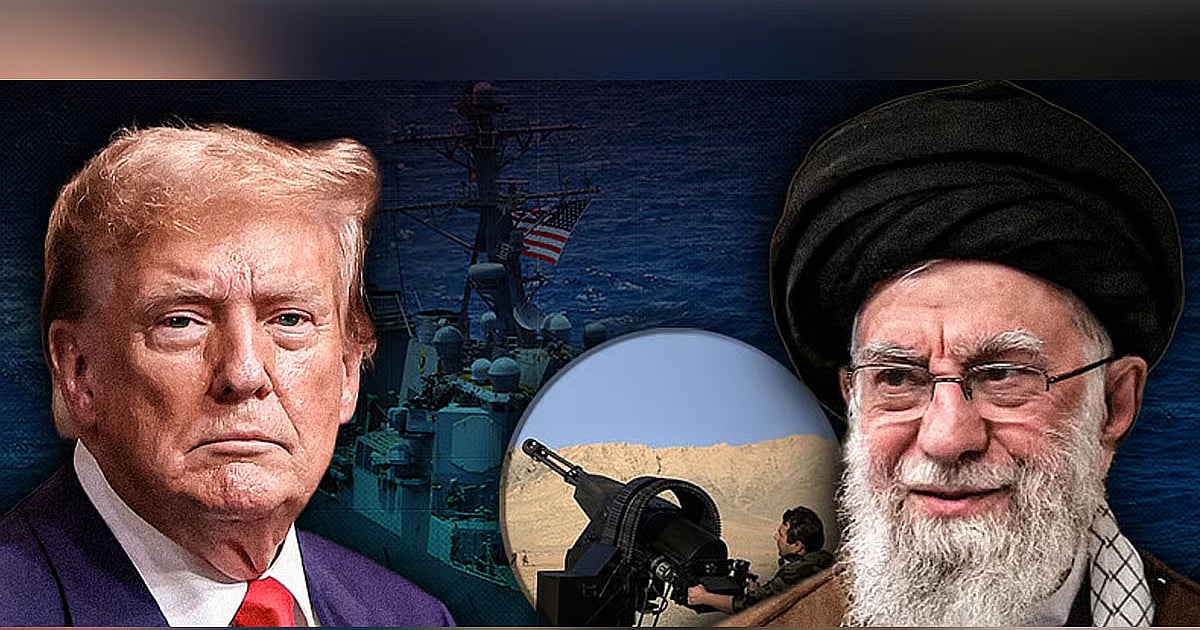
A US naval strike group that Trump described as an ‘armada’ led by aircraft carrier the USS Abraham Lincoln is now lurking in Middle East waters.

A rights group said that it has verified over 6,200 deaths, mostly of protesters killed by security forces, in the wave of demonstrations that rocked the clerical leadership since late December but peaked on January 8-9.

Activists say that the actual toll could be many times higher, with an internet shutdown still complicating efforts to confirm information about the scale of the killings.

In his latest post on Truth Social, Trump did not mention the protests but said Iran needed to negotiate a deal over its nuclear programme, which the West believes is aimed at making an atomic bomb.

‘Hopefully Iran will quickly ‘Come to the Table’ and negotiate a fair and equitable deal — NO NUCLEAR WEAPONS — one that is good for all parties. Time is running out, it is truly of the essence!’ said Trump.

Referring to American strikes against Iranian nuclear targets during the June war which he said resulted in ‘major destruction of Iran’, he added: ‘The next attack will be far worse! Don’t make that happen again’.

Analysts say options include strikes on military facilities or targeted hits against the leadership under Ayatollah Ali Khamenei, in a full-scale bid to bring down the system that has ruled Iran since the 1979 Islamic revolution that ousted the shah.

But foreign minister Abbas Araghchi said before Trump’s comments were published that ‘conducting diplomacy through military threat cannot be effective or useful’.

‘If they want negotiations to take shape, they must certainly set aside threats, excessive demands and raising illogical issues,’ he said in televised comments.

Araghchi said he had ‘no contact’ with US Middle East envoy Steve Witkoff in recent days and that ‘Iran has not sought negotiations’.

Iranian armed forces chief of staff Habibollah Sayyari warned the US against any ‘miscalculation’, saying that ‘they too would suffer damage’.

New billboards have meanwhile appeared in Tehran, including one showing Iran striking an American aircraft carrier, according to AFP journalists.

Following a call on Tuesday between Iranian president Masoud Pezeshkian and de facto Saudi leader Crown Prince Mohammed bin Salman, Iran reached out to other US allies in the region, in an apparent bid to rally support.

The Secretary of Iran’s Supreme National Security Council Ali Larijani spoke with Qatari prime minister Sheikh Mohammed bin Abdulrahman Al Thani, who is also foreign minister, both sides said.

Sheikh Mohammed emphasised Qatar’s support for ‘all efforts aimed at reducing escalation and achieving peaceful solutions’, the Qatari foreign ministry said.

Egyptian foreign minister Badr Abdelatty meanwhile held separate calls with both Araghchi and Witkoff, Cairo said.

Abdelatty stressed the need to intensify efforts to ’ease tensions and work towards deescalation’ and create the ‘necessary conditions to resume dialogue between the US and Iran’, the Egyptian foreign ministry said.

Turkey’s foreign minister Hakan Fidan told Al-Jazeera television that ‘it’s wrong to attack Iran. It’s wrong to start the war again’. He called on Washington to reopen talks on the nuclear standoff.

In an updated toll, the US-based Human Rights Activists News Agency said it had confirmed that 6,221 people had been killed, including 5,856 protesters, 100 minors, 214 members of the security forces and 49 bystanders.

But the group added it was still investigating another 17,091 possible fatalities. At least 42,324 people have been arrested, it said.

HRANA warned that security forces were searching hospitals for wounded protesters, saying this highlighted ‘new dimensions of the continued security crackdown’.

HRANA said that a trial in Malard outside Tehran on Tuesday of a man accused over the death of a police officer was the first such hearing linked to the protests. Images of the hearing were broadcast on state television in Iran.

It was a ‘starting point for a broad series of trials’ that would be ’aimed at imposing severe penalties on protesters’, HRANA said.

Meanwhile, Iran on Wednesday executed a man arrested in April 2025 on charges of spying for Israel’s Mossad spy agency, the judiciary said. Rights groups fear some protesters could also face the death penalty.​
 
Analyze

Analyze Post

Add your ideas here:
Highlight Cite Respond
Kos keshe modr jende:


All in it together no?

Harumzade.
 
Analyze

Analyze Post

Add your ideas here:
Highlight Cite Respond

Trump weighs Iran strikes to inspire renewed protests, sources say

Reuters Dubai
Published: 29 Jan 2026, 20: 25

1769735024335.webp


A 3D printed miniature of US President Donald Trump and Iranian flag are seen in this illustration taken 9 January, 2026. Reuters

US President Donald Trump is weighing options against Iran that include targeted strikes on security forces and leaders to inspire protesters, multiple sources said, even as Israeli and Arab officials said air power alone would not topple the clerical rulers.

Two US sources familiar with the discussions said Trump wanted to create conditions for "regime change" after a crackdown crushed a nationwide protest movement earlier this month, killing thousands of people.

To do so, he was looking at options to hit commanders and institutions Washington holds responsible for the violence, to give protesters the confidence that they could overrun government and security buildings, they said.

Trump has not yet made a final decision on a course of action including whether to take the military path, one of the sources and a US official said.

The second US source said the options being discussed by Trump's aides also included a much larger strike intended to have lasting impact, possibly against the ballistic missiles that can reach US allies in the Middle East or its nuclear enrichment programmes.

Iran has been unwilling to negotiate restrictions on the missiles, which it sees as its only deterrence against Israel, the first source said.

The arrival of a US aircraft carrier and supporting warships in the Middle East this week has expanded Trump's capabilities to potentially take military action, after he repeatedly threatened intervention over Iran's crackdown.

Reuters spoke to more than a dozen people for this account of the high-stakes deliberations over Washington's next moves regarding Iran.

Four Arab officials, three Western diplomats and a senior Western source whose governments were briefed on the discussions said they were concerned that instead of bringing people onto the streets, US strikes could weaken a movement already in shock after the bloodiest repression by authorities since the 1979 Islamic Revolution.

Alex Vatanka, director of the Iran Program at the Middle East Institute, said that without large-scale military defections Iran's protests remained “heroic but outgunned.”

The sources in this story requested anonymity to talk about sensitive matters. Iran's foreign office, the US Department of Defense and the White House did not respond to requests for comment. The Israeli Prime Minister's office declined to comment.

Trump urged Iran on Wednesday to come to the table and make a deal on nuclear weapons, warning that any future US attack would be "far worse" than a June bombing campaign against three nuclear sites. He described the ships in the region as an "armada" sailing to Iran.

A senior Iranian official told Reuters that Iran was "preparing itself for a military confrontation, while at the same time making use of diplomatic channels."

However, Washington was not showing openness to diplomacy, the official said. The US official said the current weakness of the regime encouraged Trump to apply pressure and seek a deal on denuclearisation.

Iran, which says its nuclear program is civilian, was ready for dialogue "based on mutual respect and interests" but would defend itself "like never before" if pushed, Iran's mission to the United Nations said in a post on X on Wednesday.

Trump has not publicly detailed what he is looking for in any deal. His administration's previous negotiating points have included banning Iran from independently enriching uranium and restrictions on long-range ballistic missiles and on Tehran's already-weakened network of armed proxies in the Middle East.

Limits of Air Power

A senior Israeli official with direct knowledge of planning between Israel and the United States said Israel does not believe airstrikes alone can topple the Islamic Republic, if that is Washington's goal.

“If you're going to topple the regime, you have to put boots on the ground,” he told Reuters, noting that even if the United States killed Supreme Leader Ayatollah Ali Khamenei, Iran would "have a new leader that will replace him."

Only a combination of external pressure and an organised domestic opposition could shift Iran’s political trajectory, the official said.

The Israeli official said Iran’s leadership had been weakened by the unrest but remained firmly in control despite the ongoing deep economic crisis that sparked the protests.

Multiple US intelligence reports reached a similar conclusion, that the conditions that led to the protests were still in place, weakening the government, but without major fractures, two people familiar with the matter said.

The Western source said they believed Trump's goal appeared to be to engineer a change in leadership, rather than "topple the regime," an outcome that would be similar to Venezuela, where US intervention replaced the president without a wholesale change of government.

During a US Senate hearing about Venezuela on Wednesday, US Secretary of State Marco Rubio said "the hope" was for a similar transition if Khamenei were to fall, although he recognised that the situation in Iran was far more complex.

The US official said it was unclear who would take over if Khamenei were out of power.

Khamenei has publicly acknowledged several thousand deaths during the protests. He blamed the unrest on the United States, Israel and what he called “seditionists.”

US-based rights group HRANA has put the unrest-related death toll at 5,937, including 214 security personnel, while official figures put the death toll at 3,117. Reuters has been unable to independently verify the numbers.

Khamenei Retains Control but Less Visible

At 86, Khamenei has retreated from daily governance, reduced public appearances and is believed to be residing in secure locations after Israeli strikes last year decimated many of Iran’s senior military leaders, regional officials said.

Day-to-day management has shifted to figures aligned with the Islamic Revolutionary Guard Corps (IRGC), including senior adviser Ali Larijani, they said. The powerful Guards dominate Iran's security network and big parts of the economy.

However, Khamenei retains final authority over war, succession and nuclear strategy - meaning political change is very difficult until he exits the scene, they said. Iran's foreign ministry did not respond to questions about Khamenei.

In Washington and Jerusalem, some officials have argued that a transition in Iran could break the nuclear deadlock and eventually open the door to more cooperative ties with the West, two of the Western diplomats said.

But, they cautioned, there is no clear successor to Khamenei. In that vacuum, the Arab officials and diplomats said they believe the IRGC could take over, entrenching hard-line rule, deepening the nuclear standoff and regional tensions.

Any successor seen as emerging under foreign pressure would be rejected and could strengthen, not weaken the IRGC, the official said.

Across the region, from the Gulf to Turkey, officials say they favour containment over collapse - not out of sympathy for Tehran, but out of fear that turmoil inside a nation of 90 million, riven by sectarian and ethnic fault lines, could unleash instability far beyond Iran's borders.

A fractured Iran could spiral into civil war as happened after the 2003 US invasion of Iraq, two of the Western diplomats warned, unleashing an influx of refugees, fueling Islamist militancy and disrupting oil flows through the Strait of Hormuz, a global energy chokepoint.

The gravest risk, analyst Vatanka warned, is fragmentation into “early-stage Syria,” with rival units and provinces fighting for territory and resources.

Regional Blowback

Gulf states - long‑time US allies and hosts to major American bases- fear they would be the first targets for Iranian retaliation that could include Iranian missiles or drone attacks from the Tehran-aligned Houthis in Yemen.

Saudi Arabia, Qatar, Oman and Egypt have lobbied Washington against a strike on Iran. Saudi Crown Prince Mohammed bin Salman has told Iranian President Masoud Pezeshkian that Riyadh will not allow its airspace or territory to be used for military actions against Tehran.

“The United States may pull the trigger,” one of the Arab sources said, “but it will not live with the consequences. We will.”

Mohannad Hajj-Ali of the Carnegie Middle East Center said the US deployments suggest planning has shifted from a single strike to something more sustained, driven by a belief in Washington and Jerusalem that Iran could rebuild its missile capabilities and eventually weaponise its enriched uranium.

The most likely outcome is a "grinding erosion - elite defections, economic paralysis, contested succession - that frays the system until it snaps,” analyst Vatanka said.​
 
Analyze

Analyze Post

Add your ideas here:
Highlight Cite Respond

Trump weighs Iran strikes to inspire renewed protests, sources say

Reuters Dubai
Published: 29 Jan 2026, 20: 25

View attachment 24161

A 3D printed miniature of US President Donald Trump and Iranian flag are seen in this illustration taken 9 January, 2026. Reuters

US President Donald Trump is weighing options against Iran that include targeted strikes on security forces and leaders to inspire protesters, multiple sources said, even as Israeli and Arab officials said air power alone would not topple the clerical rulers.

Two US sources familiar with the discussions said Trump wanted to create conditions for "regime change" after a crackdown crushed a nationwide protest movement earlier this month, killing thousands of people.

To do so, he was looking at options to hit commanders and institutions Washington holds responsible for the violence, to give protesters the confidence that they could overrun government and security buildings, they said.

Trump has not yet made a final decision on a course of action including whether to take the military path, one of the sources and a US official said.

The second US source said the options being discussed by Trump's aides also included a much larger strike intended to have lasting impact, possibly against the ballistic missiles that can reach US allies in the Middle East or its nuclear enrichment programmes.

Iran has been unwilling to negotiate restrictions on the missiles, which it sees as its only deterrence against Israel, the first source said.

The arrival of a US aircraft carrier and supporting warships in the Middle East this week has expanded Trump's capabilities to potentially take military action, after he repeatedly threatened intervention over Iran's crackdown.

Reuters spoke to more than a dozen people for this account of the high-stakes deliberations over Washington's next moves regarding Iran.

Four Arab officials, three Western diplomats and a senior Western source whose governments were briefed on the discussions said they were concerned that instead of bringing people onto the streets, US strikes could weaken a movement already in shock after the bloodiest repression by authorities since the 1979 Islamic Revolution.

Alex Vatanka, director of the Iran Program at the Middle East Institute, said that without large-scale military defections Iran's protests remained “heroic but outgunned.”

The sources in this story requested anonymity to talk about sensitive matters. Iran's foreign office, the US Department of Defense and the White House did not respond to requests for comment. The Israeli Prime Minister's office declined to comment.

Trump urged Iran on Wednesday to come to the table and make a deal on nuclear weapons, warning that any future US attack would be "far worse" than a June bombing campaign against three nuclear sites. He described the ships in the region as an "armada" sailing to Iran.

A senior Iranian official told Reuters that Iran was "preparing itself for a military confrontation, while at the same time making use of diplomatic channels."

However, Washington was not showing openness to diplomacy, the official said. The US official said the current weakness of the regime encouraged Trump to apply pressure and seek a deal on denuclearisation.

Iran, which says its nuclear program is civilian, was ready for dialogue "based on mutual respect and interests" but would defend itself "like never before" if pushed, Iran's mission to the United Nations said in a post on X on Wednesday.

Trump has not publicly detailed what he is looking for in any deal. His administration's previous negotiating points have included banning Iran from independently enriching uranium and restrictions on long-range ballistic missiles and on Tehran's already-weakened network of armed proxies in the Middle East.

Limits of Air Power

A senior Israeli official with direct knowledge of planning between Israel and the United States said Israel does not believe airstrikes alone can topple the Islamic Republic, if that is Washington's goal.

“If you're going to topple the regime, you have to put boots on the ground,” he told Reuters, noting that even if the United States killed Supreme Leader Ayatollah Ali Khamenei, Iran would "have a new leader that will replace him."

Only a combination of external pressure and an organised domestic opposition could shift Iran’s political trajectory, the official said.

The Israeli official said Iran’s leadership had been weakened by the unrest but remained firmly in control despite the ongoing deep economic crisis that sparked the protests.

Multiple US intelligence reports reached a similar conclusion, that the conditions that led to the protests were still in place, weakening the government, but without major fractures, two people familiar with the matter said.

The Western source said they believed Trump's goal appeared to be to engineer a change in leadership, rather than "topple the regime," an outcome that would be similar to Venezuela, where US intervention replaced the president without a wholesale change of government.

During a US Senate hearing about Venezuela on Wednesday, US Secretary of State Marco Rubio said "the hope" was for a similar transition if Khamenei were to fall, although he recognised that the situation in Iran was far more complex.

The US official said it was unclear who would take over if Khamenei were out of power.

Khamenei has publicly acknowledged several thousand deaths during the protests. He blamed the unrest on the United States, Israel and what he called “seditionists.”

US-based rights group HRANA has put the unrest-related death toll at 5,937, including 214 security personnel, while official figures put the death toll at 3,117. Reuters has been unable to independently verify the numbers.

Khamenei Retains Control but Less Visible

At 86, Khamenei has retreated from daily governance, reduced public appearances and is believed to be residing in secure locations after Israeli strikes last year decimated many of Iran’s senior military leaders, regional officials said.

Day-to-day management has shifted to figures aligned with the Islamic Revolutionary Guard Corps (IRGC), including senior adviser Ali Larijani, they said. The powerful Guards dominate Iran's security network and big parts of the economy.

However, Khamenei retains final authority over war, succession and nuclear strategy - meaning political change is very difficult until he exits the scene, they said. Iran's foreign ministry did not respond to questions about Khamenei.

In Washington and Jerusalem, some officials have argued that a transition in Iran could break the nuclear deadlock and eventually open the door to more cooperative ties with the West, two of the Western diplomats said.

But, they cautioned, there is no clear successor to Khamenei. In that vacuum, the Arab officials and diplomats said they believe the IRGC could take over, entrenching hard-line rule, deepening the nuclear standoff and regional tensions.

Any successor seen as emerging under foreign pressure would be rejected and could strengthen, not weaken the IRGC, the official said.

Across the region, from the Gulf to Turkey, officials say they favour containment over collapse - not out of sympathy for Tehran, but out of fear that turmoil inside a nation of 90 million, riven by sectarian and ethnic fault lines, could unleash instability far beyond Iran's borders.

A fractured Iran could spiral into civil war as happened after the 2003 US invasion of Iraq, two of the Western diplomats warned, unleashing an influx of refugees, fueling Islamist militancy and disrupting oil flows through the Strait of Hormuz, a global energy chokepoint.

The gravest risk, analyst Vatanka warned, is fragmentation into “early-stage Syria,” with rival units and provinces fighting for territory and resources.

Regional Blowback

Gulf states - long‑time US allies and hosts to major American bases- fear they would be the first targets for Iranian retaliation that could include Iranian missiles or drone attacks from the Tehran-aligned Houthis in Yemen.

Saudi Arabia, Qatar, Oman and Egypt have lobbied Washington against a strike on Iran. Saudi Crown Prince Mohammed bin Salman has told Iranian President Masoud Pezeshkian that Riyadh will not allow its airspace or territory to be used for military actions against Tehran.

“The United States may pull the trigger,” one of the Arab sources said, “but it will not live with the consequences. We will.”

Mohannad Hajj-Ali of the Carnegie Middle East Center said the US deployments suggest planning has shifted from a single strike to something more sustained, driven by a belief in Washington and Jerusalem that Iran could rebuild its missile capabilities and eventually weaponise its enriched uranium.

The most likely outcome is a "grinding erosion - elite defections, economic paralysis, contested succession - that frays the system until it snaps,” analyst Vatanka said.​
He does any of dis and Irans goin fuckk him up right in de ass!
 
Analyze

Analyze Post

Add your ideas here:
Highlight Cite Respond
  • Rahul (+2)
Reactions: Afhan
He does any of dis and Irans goin fuckk him up right in de ass!
Trump needs to learn a lesson and Iran is the only country which can do this.
 
Analyze

Analyze Post

Add your ideas here:
Highlight Cite Respond
  • Like (+1)
Reactions: Lulldapull
Analyze

Analyze Post

Add your ideas here:
Highlight Cite Respond

Iran prepared for 'fair' talks with US but not on defence capabilities, Araqchi says

REUTERS
Published :
Jan 30, 2026 20:02
Updated :
Jan 30, 2026 20:02

1769819886695.webp


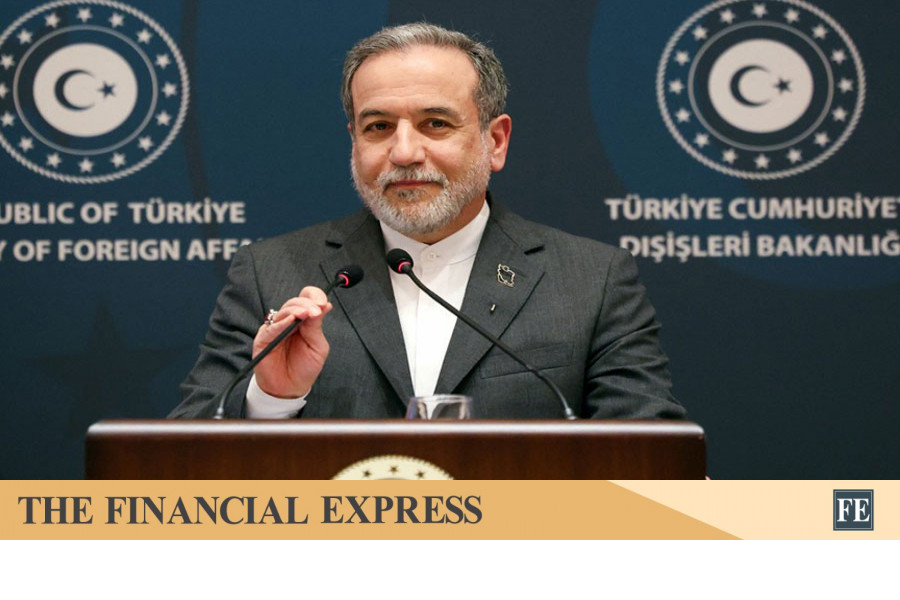
Iranian Foreign Minister Abbas Araqchi attends a press conference after meeting with his Turkish counterpart Hakan Fidan, in Istanbul, Turkey, Jan 30, 2026. Photo : REUTERS/Dilara Senkaya

Iran is prepared for the resumption of talks with the United States, but they should be fair and not include Iran's defence capabilities, Iran's chief diplomat said on Friday, as regional powers work to prevent military conflict between the two foes.

US President Donald Trump said on Thursday he planned to speak with Iran, even as the US sent another warship to the Middle East and the Pentagon chief said the military would be ready to carry out whatever the president decided.

One of the main demands by the US to resume talks with Iran is curbing its missile programme, a senior Iranian official told Reuters last week. Iran rejects that demand.

"If negotiations are fair and equitable, Iran is ready to participate in such talks," Foreign Minister Abbas Araqchi said in a press conference with his Turkish counterpart in Istanbul.

Araqchi said no talks between Tehran and Washington were currently arranged.

Regional allies, including Turkey, the United Arab Emirates, and Saudi Arabia, have been engaging in diplomatic efforts to prevent a military confrontation between Washington and Tehran.

In response to US threats of military action, Araqchi said Tehran was ready for either negotiations or warfare.

Araqchi, who described his talks with Hakan Fidan as "good and useful", also said Tehran was ready to engage with regional countries to promote stability and peace.​
 
Analyze

Analyze Post

Add your ideas here:
Highlight Cite Respond

Trump says 'hopefully' no need for military action against Iran

AFP Paris, France
Published: 30 Jan 2026, 11: 42

1769821161427.webp

In the wake of rising tensions with Iran, the United States wants to demonstrate its capabilities in the Middle East. Collage

US President Donald Trump said on Thursday he hoped to avoid military action against Iran, which has threatened to strike American bases and aircraft carriers in response to any attack.

Trump said he is speaking with Iran and left open the possibility of avoiding a military operation after earlier warning time was "running out" for Tehran as the United States sends a large naval fleet to the region.

When asked if he would have talks with Iran, Trump told reporters: "I have had and I am planning on it."

"We have a group headed out to a place called Iran, and hopefully we won't have to use it," the US president added, while speaking to media at the premiere of a documentary about his wife Melania.

As Brussels and Washington dialled up their rhetoric and Iran issued stark threats this week, UN chief Antonio Guterres has called for nuclear negotiations to "avoid a crisis that could have devastating consequences in the region".

An Iranian military spokesman warned Tehran's response to any US action would not be limited -- as it was in June last year when American planes and missiles briefly joined Israel's short air war against Iran -- but would be a decisive response "delivered instantly".

Brigadier General Mohammad Akraminia told state television US aircraft carriers have "serious vulnerabilities" and that numerous American bases in the Gulf region are "within the range of our medium-range missiles".

"If such a miscalculation is made by the Americans, it will certainly not unfold the way Trump imagines -- carrying out a quick operation and then, two hours later, tweeting that the operation is over," he said.

An official in the Gulf, where states host US military sites, told AFP that fears of a US strike on Iran are "very clear".

"It would bring the region into chaos, it would hurt the economy not just in the region but in the US and cause oil and gas prices to skyrocket," the official added.

'Protests crushed in blood'

Qatar's leader Sheikh Tamim bin Hamad Al Thani and Iran's President Masoud Pezeshkian held a call to discuss "efforts being made to de-escalate tensions and establish stability," the Qatar News Agency (QNA) reported.

The European Union, meanwhile, piled on the pressure by designating the Islamic Revolutionary Guard Corps (IRGC) a "terrorist organisation" over a deadly crackdown on recent mass protests.

"'Terrorist' is indeed how you call a regime that crushes its own people's protests in blood," said EU chief Ursula von der Leyen, welcoming the "overdue" decision.

Though largely symbolic, the EU decision has already drawn a warning from Tehran.

Iran's military slammed "the illogical, irresponsible and spite-driven action of the European Union", alleging the bloc was acting out of "obedience" to Tehran's arch-foes the United States and Israel.

Iranian officials have blamed the recent protest wave on the two countries, claiming their agents spurred "riots" and a "terrorist operation" that hijacked peaceful rallies sparked over economic grievances.

Rights groups have said thousands of people were killed during the protests by security forces, including the IRGC -- the ideological arm of Tehran's military.

In Tehran on Thursday, citizens expressed grim resignation.

"I think the war is inevitable and a change must happen. It can be for worse, or better. I am not sure," said a 29-year-old waitress, speaking on condition of anonymity for fear of reprisals.

"I am not in favour of war. I just want something to happen that would result in something better."

Another 29-year-old woman, an unemployed resident of an upscale neighbourhood in northern Tehran, told AFP: "I believe that life has highs and lows and we are now at the lowest point."

Trump had threatened military action if protesters were killed in the anti-government demonstrations that erupted in late December and peaked on 8 and 9 January.

But his more recent statements have turned to Iran's nuclear programme, which the West believes is aimed at making an atomic bomb.

On Wednesday, he said "time is running out" for Tehran to make a deal, warning the US naval strike group that arrived in Middle East waters on Monday was "ready, willing and able" to hit Iran.

Conflicting tolls

The US-based Human Rights Activists News Agency (HRANA) said it has confirmed 6,479 people were killed in the protests, as internet restrictions imposed on 8 January continue to slow verification.

But rights groups warn the toll is likely far higher, with estimates in the tens of thousands.

Iranian authorities acknowledge that thousands were killed during the protests, giving a toll of more than 3,000 deaths, but say the majority were members of the security forces or bystanders killed by "rioters".

Billboards and banners have gone up in the capital Tehran to bolster the authorities' messages. One massive poster appears to show an American aircraft carrier being destroyed.​
 
Analyze

Analyze Post

Add your ideas here:
Highlight Cite Respond

Members Online

No members online now.

Latest Posts

Back
 
G
O
 
H
O
M
E