Bangladesh Defense
Saif
Senior Member
- Jan 24, 2024
- 21,680
- 9,794
- Nation

- Residence
- Axis Group


Can the new government break Bangladesh's energy paradox?
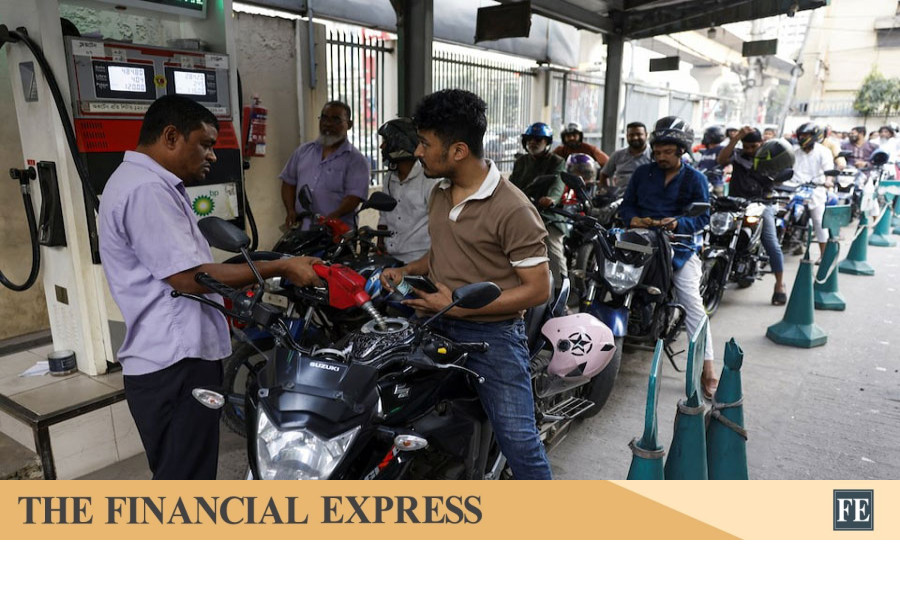
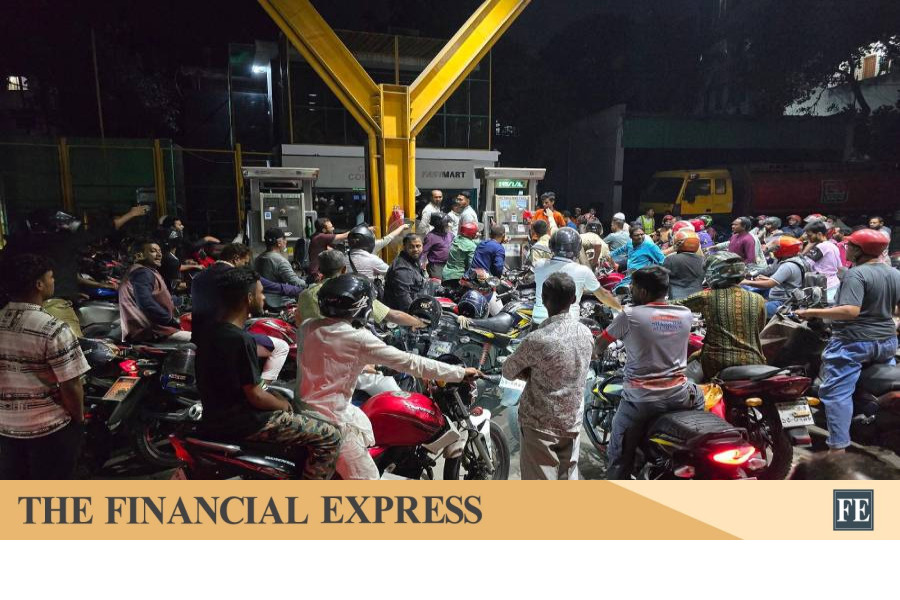
The new minister of power, energy and mineral resources is facing his first test to ensure energy security as the whole world reels from the shock of the Strait of Hormuz closure.
Can the new government break Bangladesh's energy paradox?
Dr Khondaker Golam Moazzem

The new minister of power, energy and mineral resources is facing his first test to ensure energy security as the whole world reels from the shock of the Strait of Hormuz closure. Several initiatives have already been announced to address any short-term supply shock. The minister must also prepare for medium-term challenges if the Hormuz closure continues beyond March. On the other hand, the global energy crisis and price volatility of major fossil fuels, including crude oil and liquefied natural gas (LNG), could bring opportunities to explore alternative energies, particularly renewable energy-based power generation and electrification.
In Bangladesh, renewable energy is often framed as a distant aspiration. Something futuristic, desirable, yet perpetually just out of reach. This narrative, while common, is misleading. Renewable technology exists, it works under local conditions, and it is commercially viable. Solar home systems, rooftop solar under net metering, and small-scale renewable projects have already proven this. The real barriers lie not in technology, but in structural, institutional, and political-economic factors. At the heart of the problem is the dominance of fossil fuels in the country’s energy market. As long as fossil fuel-based projects remain more profitable, less risky, and heavily supported institutionally, renewables will struggle to compete. Banks, investors, and industry actors follow incentives and guaranteed returns. Fossil fuel projects often benefit from mechanisms such as capacity payments, long-term guarantees, and public subsidies—security that renewable energy projects rarely enjoy. In this context, expanding renewables is directly linked to phasing out fossil fuels: the faster fossil fuels retreat, the greater space renewables can occupy.
Bangladesh’s energy transition debate has also been overly focused on macro-level policy targets. National plans, aspirational targets, and international declarations are necessary but insufficient. What is missing is engagement at the meso and micro levels, within institutions, infrastructure planning, financing mechanisms, and operational decision-making. Without reform and participation at these levels, policy remains rhetorical rather than transformative.
The institutional architecture itself is a barrier. Major energy institutions from planning bodies to utilities were designed around fossil fuel systems. Their norms, procurement practices, technical standards, and performance metrics reflect this legacy. Expecting these institutions to deliver a clean energy transition without restructuring is unrealistic. Institutional reform is not peripheral—it is central to scaling up renewable energy.
This structural bias becomes visible in the gap between policy rhetoric and reality. Documents such as the Integrated Energy and Power Master Plan (IEPMP) and the Energy and Power Sector Master Plan (EPSMP) emphasise clean energy and decarbonisation. Yet, the internal projections and investment pathways remain overwhelmingly fossil fuel-centric. This inconsistency sends confusing signals to investors and undermines confidence in renewable energy projects.
Technical and human capacity constraints further exacerbate the problem. Most graduates entering the energy sector are trained in fossil fuel-based systems. Many lack orientation towards renewables, and some even carry an implicit bias against it. Within institutions such as the Bangladesh Power Development Board (BPDB), this translates into hesitation or outright resistance to renewable energy initiatives. Capacity-building is therefore not just about skill development, but also about reshaping institutional culture.
Fiscal and structural incentives also discriminate against renewables. Fossil fuel plants can be sited almost anywhere and connected to the grid with minimal cost, often subsidised via public funds. Renewable projects, by contrast, are frequently located in remote areas where grid connectivity is expensive and left to private investors. Tax benefits, subsidies, and other policy privileges further tilt the playing field towards fossil fuels, making renewables appear less attractive despite their long-term economic and environmental benefits.
The banking sector reflects a similar risk-averse mindset. Banks prioritise guaranteed returns and avoid perceived risks. Many renewable energy projects lack assured payments if electricity dispatch is uncertain, so banks remain reluctant to finance them.
All of these dynamics are reinforced by a powerful fossil fuel nexus—a close relationship between segments of the private fossil fuel industry and certain state institutions. In some cases, high-level energy decisions are influenced by this nexus. This distorted political economy actively resists energy transition, regardless of policy declarations.
Foreign influence complicates the situation further. Some external actors exert disproportionate influence over Bangladesh’s energy strategies, steering priorities towards fossil fuel finance, hydrogen, or carbon capture technologies. While international engagement is important, national energy policy must remain sovereign and aligned with domestic needs.
Even foreign direct investment (FDI) in renewables faces hurdles. International investors typically prefer incremental entry with low-risk projects. Bangladesh has not yet created such entry points, expecting instead large-scale investments upfront, a mismatch that discourages participation.
The renewable energy discourse also needs recalibration. Too much focus remains on utility-scale projects, while distributed renewables like rooftop solar and mini-grids receive less attention. Yet, evidence shows these decentralised systems are growing rapidly. Net metering has more than doubled in recent years, and the overall renewable capacity is expanding quietly but steadily. Bangladesh’s energy transition is happening but in forms that are often overlooked.
The private sector’s role is crucial. Industries like RMG, textile, leather, and even fossil fuel businesses can drive renewable energy expansion if they actively participate. The RMG sector can invest in rooftop solar, deploy electricity generation projects for factories, and integrate renewables into industrial processes. Employee training and awareness programmes can further scale up green initiatives. The leather industry, meanwhile, can generate biogas or bioenergy from waste, use solar or bioenergy for electricity and heat, and invest in rooftop solar to enhance energy efficiency. Fossil fuel businesses can diversify into renewables, promote biofuel or solar-electric hybrid policies, and incorporate renewables into trading and distribution networks.
Through such investments and technology adoption, the private sector can play an entrepreneurial, market-driven role in scaling renewable energy in Bangladesh. Businesses are uniquely positioned to bridge gaps left by institutions and public policy.
The renewable energy narrative in Bangladesh must shift. Policies must become more transparent and nationally owned, media engagement must be sustained, and a new generation of renewable energy experts and journalists must emerge. Energy transition is not a one-off story; it is a long-term, ongoing process that demands sustained attention.
Bangladesh no longer needs generic energy planners. It needs bold renewable energy leaders, within the government, industry, and civil society, who can drive innovation, secure investment, and ensure that clean energy becomes the foundation of a sustainable future. The challenge is to remove structural, institutional and political barriers, and to empower businesses and communities to lead the charge.
Against this backdrop, CSOs are looking forward to bold and concrete steps from the new minister and state minister of power, energy and mineral resources to ensure sustainable energy transition in the next five years. To build a resilient and future-ready energy sector, the new government should prioritise the following measures: i) adopt a structured and time-bound plan to gradually phase out inefficient, high-emission conventional power plants, creating space for scaling up renewables while ensuring energy security and system stability; ii) invest substantially in grid modernisation, including transmission and distribution upgrades and the development of smart grid systems to effectively integrate variable renewable energy sources; iii) review and withdraw discriminatory fiscal and policy measures that disadvantage renewable energy, ensuring a level playing field for investors; iv) introduce diversified and innovative financial instruments to support distributed renewable energy across households, industries, agriculture and commercial sectors; and v) undertake comprehensive institutional reforms to strengthen governance, coordination, and regulatory capacity, ensuring a coherent and just energy transition.
Dr Khondaker Golam Moazzem is research director at the Centre for Policy Dialogue (CPD).
Dr Khondaker Golam Moazzem
The new minister of power, energy and mineral resources is facing his first test to ensure energy security as the whole world reels from the shock of the Strait of Hormuz closure. Several initiatives have already been announced to address any short-term supply shock. The minister must also prepare for medium-term challenges if the Hormuz closure continues beyond March. On the other hand, the global energy crisis and price volatility of major fossil fuels, including crude oil and liquefied natural gas (LNG), could bring opportunities to explore alternative energies, particularly renewable energy-based power generation and electrification.
In Bangladesh, renewable energy is often framed as a distant aspiration. Something futuristic, desirable, yet perpetually just out of reach. This narrative, while common, is misleading. Renewable technology exists, it works under local conditions, and it is commercially viable. Solar home systems, rooftop solar under net metering, and small-scale renewable projects have already proven this. The real barriers lie not in technology, but in structural, institutional, and political-economic factors. At the heart of the problem is the dominance of fossil fuels in the country’s energy market. As long as fossil fuel-based projects remain more profitable, less risky, and heavily supported institutionally, renewables will struggle to compete. Banks, investors, and industry actors follow incentives and guaranteed returns. Fossil fuel projects often benefit from mechanisms such as capacity payments, long-term guarantees, and public subsidies—security that renewable energy projects rarely enjoy. In this context, expanding renewables is directly linked to phasing out fossil fuels: the faster fossil fuels retreat, the greater space renewables can occupy.
Bangladesh’s energy transition debate has also been overly focused on macro-level policy targets. National plans, aspirational targets, and international declarations are necessary but insufficient. What is missing is engagement at the meso and micro levels, within institutions, infrastructure planning, financing mechanisms, and operational decision-making. Without reform and participation at these levels, policy remains rhetorical rather than transformative.
The institutional architecture itself is a barrier. Major energy institutions from planning bodies to utilities were designed around fossil fuel systems. Their norms, procurement practices, technical standards, and performance metrics reflect this legacy. Expecting these institutions to deliver a clean energy transition without restructuring is unrealistic. Institutional reform is not peripheral—it is central to scaling up renewable energy.
This structural bias becomes visible in the gap between policy rhetoric and reality. Documents such as the Integrated Energy and Power Master Plan (IEPMP) and the Energy and Power Sector Master Plan (EPSMP) emphasise clean energy and decarbonisation. Yet, the internal projections and investment pathways remain overwhelmingly fossil fuel-centric. This inconsistency sends confusing signals to investors and undermines confidence in renewable energy projects.
Technical and human capacity constraints further exacerbate the problem. Most graduates entering the energy sector are trained in fossil fuel-based systems. Many lack orientation towards renewables, and some even carry an implicit bias against it. Within institutions such as the Bangladesh Power Development Board (BPDB), this translates into hesitation or outright resistance to renewable energy initiatives. Capacity-building is therefore not just about skill development, but also about reshaping institutional culture.
Fiscal and structural incentives also discriminate against renewables. Fossil fuel plants can be sited almost anywhere and connected to the grid with minimal cost, often subsidised via public funds. Renewable projects, by contrast, are frequently located in remote areas where grid connectivity is expensive and left to private investors. Tax benefits, subsidies, and other policy privileges further tilt the playing field towards fossil fuels, making renewables appear less attractive despite their long-term economic and environmental benefits.
The banking sector reflects a similar risk-averse mindset. Banks prioritise guaranteed returns and avoid perceived risks. Many renewable energy projects lack assured payments if electricity dispatch is uncertain, so banks remain reluctant to finance them.
All of these dynamics are reinforced by a powerful fossil fuel nexus—a close relationship between segments of the private fossil fuel industry and certain state institutions. In some cases, high-level energy decisions are influenced by this nexus. This distorted political economy actively resists energy transition, regardless of policy declarations.
Foreign influence complicates the situation further. Some external actors exert disproportionate influence over Bangladesh’s energy strategies, steering priorities towards fossil fuel finance, hydrogen, or carbon capture technologies. While international engagement is important, national energy policy must remain sovereign and aligned with domestic needs.
Even foreign direct investment (FDI) in renewables faces hurdles. International investors typically prefer incremental entry with low-risk projects. Bangladesh has not yet created such entry points, expecting instead large-scale investments upfront, a mismatch that discourages participation.
The renewable energy discourse also needs recalibration. Too much focus remains on utility-scale projects, while distributed renewables like rooftop solar and mini-grids receive less attention. Yet, evidence shows these decentralised systems are growing rapidly. Net metering has more than doubled in recent years, and the overall renewable capacity is expanding quietly but steadily. Bangladesh’s energy transition is happening but in forms that are often overlooked.
The private sector’s role is crucial. Industries like RMG, textile, leather, and even fossil fuel businesses can drive renewable energy expansion if they actively participate. The RMG sector can invest in rooftop solar, deploy electricity generation projects for factories, and integrate renewables into industrial processes. Employee training and awareness programmes can further scale up green initiatives. The leather industry, meanwhile, can generate biogas or bioenergy from waste, use solar or bioenergy for electricity and heat, and invest in rooftop solar to enhance energy efficiency. Fossil fuel businesses can diversify into renewables, promote biofuel or solar-electric hybrid policies, and incorporate renewables into trading and distribution networks.
Through such investments and technology adoption, the private sector can play an entrepreneurial, market-driven role in scaling renewable energy in Bangladesh. Businesses are uniquely positioned to bridge gaps left by institutions and public policy.
The renewable energy narrative in Bangladesh must shift. Policies must become more transparent and nationally owned, media engagement must be sustained, and a new generation of renewable energy experts and journalists must emerge. Energy transition is not a one-off story; it is a long-term, ongoing process that demands sustained attention.
Bangladesh no longer needs generic energy planners. It needs bold renewable energy leaders, within the government, industry, and civil society, who can drive innovation, secure investment, and ensure that clean energy becomes the foundation of a sustainable future. The challenge is to remove structural, institutional and political barriers, and to empower businesses and communities to lead the charge.
Against this backdrop, CSOs are looking forward to bold and concrete steps from the new minister and state minister of power, energy and mineral resources to ensure sustainable energy transition in the next five years. To build a resilient and future-ready energy sector, the new government should prioritise the following measures: i) adopt a structured and time-bound plan to gradually phase out inefficient, high-emission conventional power plants, creating space for scaling up renewables while ensuring energy security and system stability; ii) invest substantially in grid modernisation, including transmission and distribution upgrades and the development of smart grid systems to effectively integrate variable renewable energy sources; iii) review and withdraw discriminatory fiscal and policy measures that disadvantage renewable energy, ensuring a level playing field for investors; iv) introduce diversified and innovative financial instruments to support distributed renewable energy across households, industries, agriculture and commercial sectors; and v) undertake comprehensive institutional reforms to strengthen governance, coordination, and regulatory capacity, ensuring a coherent and just energy transition.
Dr Khondaker Golam Moazzem is research director at the Centre for Policy Dialogue (CPD).