Home Watch Videos Wars Movies Login

Wars 2023 10/08 Monitoring the Israel and Lebanon War

Wars 2023 10/08 Monitoring the Israel and Lebanon War
191
8K
More threads by Saif

G War Archive

Lebanon PAGER ATTACKS
Israel’s Unit 8200 in spotlight

1726795076861.webp

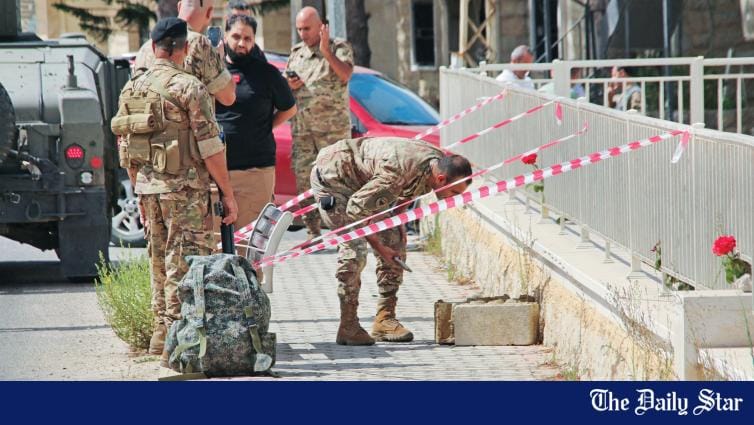
Lebanese army members prepare to carry out a controlled explosion of a battery of a communications device in the town of Qlayaa, southern Lebanon yesterday. Photo: REUTERS

The mass pager attack against Hezbollah in Lebanon has turned the spotlight on Israel's secretive Unit 8200, the Israel Defense Forces' intelligence unit, which a Western security source said was involved in planning the operation.

Israeli officials remained silent on the intelligence operation that killed 12 people on Tuesday and wounded thousands of Hezbollah operatives. At least 20 people was killed on Wednesday when hand-held radios used by Hezbollah detonated.

A senior Lebanese security source and another source told Reuters that Israel's Mossad spy agency was responsible for a sophisticated operation to plant a small quantity of explosives inside 5,000 pagers ordered by Hezbollah.

One Western security source told Reuters that Unit 8200, a military unit that is not part of the spy agency, was involved in the development stage of the operation against Hezbollah which was over a year in the making.​
 
Analyze

Analyze Post

Add your ideas here:
Highlight Cite Respond

Israel kills top Hezbollah figure in Beirut strike
Lebanon’s health ministry says 11 more people killed, 66 hurt

Israel killed a top Hezbollah commander and other senior figures in the Lebanese movement in an airstrike on Beirut yesterday, vowing to press on with a new military campaign until it is able to secure the area around the Lebanese border.

The Israeli military and a security source in Lebanon said Ibrahim Aqil had been killed along with other senior members of an elite Hezbollah unit in the airstrike, sharply escalating the year-long conflict between Israel and the Iran-backed group, reports Reuters.
  • Israeli strike, Hezbollah attack reported at Lebanon border​
  • UN peacekeepers call for immediate de-escalation​
  • 14 Palestinians killed in Israeli strikes across Gaza​

The Israeli military described Aqil as the acting commander of the Radwan special forces unit, and said it had killed him along with around 10 other senior commanders as they held a meeting. Aqil sat on Hezbollah's top military council, sources in Lebanon told Reuters.

The strike inflicted another blow on Hezbollah after two days of attacks on the group in which pagers and walkie-talkies used by its members exploded, killing 37 people and wounding thousands. Those attacks were widely believed to have been carried out by Israel, which has neither confirmed or denied its involvement.

Lebanon's health ministry said Friday's strike killed 12 people and wounded 66 others, nine of whom were in critical condition. Rescue teams were searching for people under the rubble of two buildings, the country's civil defence service said.

On Thursday night, Israeli fighter jets pounded Hezbollah targets in southern Lebanon, destroying 1,000 rocket launcher barrels that were set to be used to immediately fire toward Israeli territory, the military said.

UN peacekeepers in Lebanon urged immediate de-escalation.

Hezbollah said its fighters had fired a guided missile at Israeli troops in Metula, an Israeli town on the border targeted frequently by the Lebanese group over the last year.

Israeli radio reported that residents of several towns in northern Israel were instructed by the military's Homefront Command to stay close to their shelters.

Meanwhile, some Palestinians displaced by the Israeli assault on Gaza said they feared their temporary beachside camp would be inundated by high waves.

Palestinian health officials said shelling by Israeli tanks killed eight people and wounded several others in the Nuseirat refugee camp in the central area of Gaza, and six others were killed in an airstrike on a house in Gaza City.

In the northern town of Beit Hanoun, an Israeli strike on a car killed and wounded several Palestinians, medics said. It was not clear how many of the casualties were combatants and how many were civilians.

In the southern city of Rafah, where the Israeli army has been operating since May, tanks advanced further to the northwest area backed by aircraft, residents said.

They also reported heavy fire and explosions echoing in the eastern areas of the city, where Israeli forces blew up several houses, according to residents and Hamas media.​
 
Analyze

Analyze Post

Add your ideas here:
Highlight Cite Respond

Lebanon's Hezbollah in disarray after second wave of deadly blasts
AFP
Beirut
Published: 19 Sep 2024, 17: 33

1726880415936.webp

Lebanese Hezbollah members carry the coffin of their killed comrade Hussein Amhaz during his funeral in Baalbek, in Lebanon's Bekaa valley, on 19 September, 2024. Hundreds of pagers and walkie-talkies used by Hezbollah exploded across Lebanon in unprecedented attacks that spanned two days, killing 32 people and wounding more than 3,000 others. AFP

Hezbollah was in disarray on Thursday after a second wave of deadly explosions swept through its strongholds across Lebanon, putting pressure on its leader to exact revenge for the operation it blames on Israel.

The attack killed 32 people in two days, including two children, and wounded more than 3,000 others, according to Lebanese health ministry figures.

Israel has not commented on the unprecedented operation that saw Hezbollah operatives' walkie-talkies and pagers exploding in supermarkets, at funerals and on streets.

But its defence minister, Yoav Gallant, said on Wednesday, in reference to Israel's border with Lebanon: "The centre of gravity is moving northward."

"We are at the start of a new phase in the war", he said.

Hezbollah is an ally of Palestinian militant group Hamas, which has been fighting a war in Gaza since its 7 October attack on Israel.

For nearly a year, the focus of Israel's firepower has been on Gaza, which is ruled by Hamas.

But its troops have also been engaged in near-daily clashes with Hezbollah militants along its northern border, killing hundreds in Lebanon, most of them fighters, and dozens more in Israel.

The exchanges of fire have also forced tens of thousands of people on both sides of the border to flee their homes.

Gallant said earlier this month that Hamas as a military formation "no longer exists".

Reeling from the operation that targeted its communication system, Iran-backed militant group Hezbollah said Israel was "fully responsible for this criminal aggression" and vowed revenge.

Hezbollah on Thursday said 20 of its members had been killed, with a source close to the group saying they had died when their walkie-talkies had exploded a day earlier.

At 5:00 pm (1400 GMT) on Thursday, Hezbollah leader Hassan Nasrallah will give a previously unscheduled televised speech that will be watched closely by both his supporters and his enemies for any signals of what shape a response might take.

'Wider war'

Lebanese Foreign Minister Abdallah Bou Habib said the "blatant assault on Lebanon's sovereignty and security" was a dangerous development that could "signal a wider war".

Iran's envoy to the UN said the country "reserves the right to take retaliatory measures" after its ambassador in Beirut was wounded in the blasts.

The White House, which is pressing to salvage efforts for an elusive ceasefire deal to end the war in Gaza, warned all sides against "an escalation of any kind".

"We don't believe that the way to solve where we're at in this crisis is by additional military operations at all," US National Security Council spokesman John Kirby told reporters.

The 7 October attacks that sparked the war in Gaza resulted in the deaths of 1,205 people, mostly civilians, on the Israeli side, according to an AFP tally based on official Israeli figures that include hostages killed in captivity.

Out of 251 hostages seized by militants, 97 are still held in Gaza, including 33 the Israeli military says are dead.

Israel's retaliatory military offensive has killed at least 41,272 people in Gaza, most of them civilians, according to data provided by the Hamas-run territory's health ministry. The UN has acknowledged these figures as reliable.

In Gaza on Wednesday, the civil defence agency said an Israeli strike on a school-turned-shelter killed five people, while the Israeli military said it targeted Hamas militants.

In Lebanon, the influx of so many casualties following the blasts overwhelmed medics.

At a Beirut hospital, doctor Joelle Khadra said "the injuries were mainly to the eyes and hands, with finger amputations, shrapnel in the eyes -- some people lost their sight."

A doctor at another hospital in the Lebanese capital said he had worked through the night and that the injuries were "out of this world -- never seen anything like it".

'Sabotaged at source'

Analysts said operatives had likely planted explosives on the pagers before they were delivered to Hezbollah.

The preliminary findings of a Lebanese investigation found the pagers had been booby-trapped, a security official said.

"Data indicates the devices were pre-programmed to detonate and contained explosive materials planted next to the battery," the official said, requesting anonymity to discuss sensitive matters.

A source close to Hezbollah, asking not to be identified, said the pagers were "recently imported" and appeared to have been "sabotaged at source".

After The New York Times reported that the pagers that exploded on Wednesday had been ordered from Taiwanese manufacturer Gold Apollo, the company said they had been produced by its Hungarian partner BAC Consulting KFT.

A government spokesman in Budapest said the company was "a trading intermediary, with no manufacturing or operational site in Hungary".

Japanese firm Icom said that it had stopped producing the model of radios reportedly used in Wednesday's blasts in Lebanon around 10 years ago.​
 
Analyze

Analyze Post

Add your ideas here:
Highlight Cite Respond

Israeli jets pound Lebanon after deadly Beirut strike
Agence France-Presse. Beirut 22 September, 2024, 05:17

1726964883270.webp

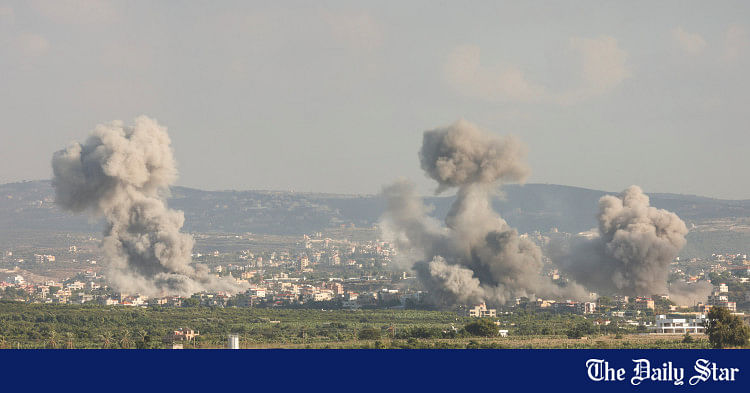
Smoke billows at the site of an Israeli airstrike on the outskirts of the southern Lebanese village of Zawtar on September 21, 2024. | AFP Photo

Israeli warplanes pounded southern Lebanon Saturday, raising fears of all-out war a day after an Israeli strike on Beirut left senior Hezbollah commanders among the 37 people Lebanese officials reported killed.

Dozens of Israeli warplanes were ‘widely’ striking Hezbollah targets in southern Lebanon ‘to eliminate threats against the citizens of Israel,’ military spokesman Rear Admiral Daniel Hagari said.

For nearly a year, Iran-backed Hezbollah fighters in Lebanon have traded cross-border fire with Israeli forces in support of Palestinian ally Hamas, whose October 7 attack on Israel triggered war in Gaza.

But the cross-border exchanges have escalated since late August.

Lebanon's official National News Agency reported that Israeli warplanes had launched ‘a large-scale air attack’ Saturday evening over south Lebanon.

With heavy equipment still working beneath high-rise buildings at the site of the Beirut strike, Lebanon's health ministry reported six more dead, up from 31 earlier Saturday.

AFPTV footage showed mourners gathering in the Lebanese capital for funerals of three of the slain Hezbollah members.

‘We thought the war had started,’ said Zeinab, 35, a housewife who preferred to be identified only by her first name, recalling the noise that accompanied the strike.

Horrific massacres

Lebanese Prime Minister Najib Mikati decried ‘horrific massacres’ and said he had cancelled his trip to the annual United Nations General Assembly in New York.

Germany said there was ‘an urgent need’ to defuse tensions. The UN has also voiced concern about ‘heightened escalation’ and called for ‘maximum restraint’ from all sides.

The US State Department meanwhile urged Americans in Lebanon to leave the country while commercial options remain available.

Earlier Saturday, an Israeli military statement said Israeli aircraft ‘struck thousands’ of rocket launchers ready to fire from southern Lebanon, as well as ‘approximately 180’ other, unspecified targets.

AFP correspondents reported intense Israeli strikes over a wide area of southern Lebanon.

Hezbollah said it targeted at least seven military positions in northern Israel and the annexed Golan Heights with rockets on Saturday.

Israel's military said the militants had fired ‘about 90’ rockets by late afternoon.

Targeted strike

Lebanon's Health Minister Firass Abiad said three children and seven women were killed in Friday's strike on an underground meeting room in a densely populated neighbourhood of the capital's southern suburbs, a Hezbollah stronghold.

Israel said the ‘targeted strike’ had killed the head of Hezbollah's elite Radwan Force, Ibrahim Aqil, and several other commanders.

A source close to Hezbollah said a total of 16 Radwan Force members were killed during a meeting.

The Radwan Force has spearheaded Hezbollah's ground operations, and Israel has repeatedly called for its fighters to be pushed back from the border.

Confirming the death of Aqil, Hezbollah hailed him as ‘one of its great leaders’.

Washington had offered a $7 million reward for information on Aqil, calling him a ‘principal member’ of the organisation behind the 1983 Beirut US embassy bombing, which killed 63.

Penetrate and disrupt

Hezbollah said a second senior commander, Ahmed Mahmud Wahbi, had also been killed Friday. He headed the group's operations against Israel from the onset of the Gaza war in October until the start of this year, it said.

In July, another Israeli strike on Beirut killed Fuad Shukr, a top Hezbollah operations chief.

Friday's strike also followed sabotage attacks on pagers and two-way radios used by Hezbollah on Tuesday and Wednesday, which killed 39 people. Hezbollah blamed Israel, which has not commented.

Hezbollah chief Hassan Nasrallah acknowledged an ‘unprecedented’ blow, vowing that Israel would face retribution for what he called a possible ‘act of war’.

Months of near-daily exchanges have killed hundreds in Lebanon, mostly fighters, and dozens in Israel and the annexed Golan, forcing tens of thousands on both sides to flee their homes.

Israeli Prime Minister Benjamin Netanyahu on Tuesday announced an expansion of the country's war goals to include the return of northern Israeli residents.

On Saturday, posting on X, formerly Twitter, he said: ‘Our objectives are clear and our actions speak for themselves.’

International mediators, including the United States, are trying to stop the Gaza war from becoming a regional conflict.

Netanyahu's critics in Israel have accused the prime minister of dragging out the war. Thousands again gathered in Tel Aviv Saturday night demanding a deal to free captives still held by Hamas.

Shahar Mor, nephew of slain hostage Avraham Munder, said he feared the fight against Hezbollah would again distract leaders who focus on the illusion of 'absolute victory'.

Gaza school strike

In Gaza on Saturday, the civil defence agency said an Israeli strike on Al-Zeitun School C, which had been turned into a displaced shelter, killed 21 people including 13 children and six women, one of them pregnant.

Israel's military said the strike targeted Hamas militants who were ‘embedded inside’ an adjacent school, and that it had taken steps ‘to mitigate the risk of harming civilians’.

An AFP reporter confirmed Al-Zeitun School C was hit.

In late August the United Nations said Israel had struck at least 23 school shelters since July 4.

Israel has repeatedly accused Hamas of operating from such facilities in highly urbanised Gaza, a charge the militants deny.

The October 7 attack that triggered the war resulted in the deaths of 1,205 people, mostly civilians, on the Israeli side, according to an AFP tally based on Israeli official figures that include hostages killed in captivity.

Of 251 hostages seized by militants, 97 are still held in Gaza, including 33 the Israeli military says are dead.

Israel's retaliatory military offensive has killed at least 41,391 people in Gaza, most of them civilians, according to figures provided by the Hamas-run territory's health ministry. The UN has acknowledged the figures as reliable.​
 
Analyze

Analyze Post

Add your ideas here:
Highlight Cite Respond

Top Hezbollah commander among 14 killed in Israeli strike on Beirut
Reuters
Beirut/Jerusalem
Published: 21 Sep 2024, 08: 47

1726966956508.webp

Smoke rises from Beirut southern suburbs, Lebanon on 20 September 2024.Reuters

Israel killed a top Hezbollah commander and other senior figures in the Lebanese movement in an airstrike on Beirut on Friday, vowing to press on with a new military campaign until it is able to secure the area around the Lebanese border.

The Israeli military and a security source in Lebanon said Ibrahim Aqil had been killed with other senior members of an elite Hezbollah unit in the airstrike, sharply escalating the year-long conflict between Israel and the Iran-backed group.

Hezbollah confirmed Aqil's death in a statement just after midnight that called him "one of its top leaders," without providing details of how he died.

In a later statement summarising Aqil's biography, Hezbollah said he was killed in Beirut's southern suburbs of Dahiyeh in what it called a "treacherous Israeli assassination".

Lebanon's health ministry said at least 14 people died in the strike and the toll was expected to climb as rescue teams worked through the night. It was not immediately known whether the toll included Aqil and other Hezbollah commanders.

Earlier, the ministry said at least 66 people were injured, nine of whom were in critical condition.

A second security source said at least six other Hezbollah commanders died when multiple missiles slammed into the opening of a building's garage. The explosion tore into the building's lower levels as Aqil met other commanders inside.

Witnesses reported hearing a loud whistling and several consecutive blasts at the time of the strike.

In a brief statement carried by Israeli media, Prime Minister Benjamin Netanyahu said Israel's goals were clear and its actions spoke for themselves.

Defence Minister Yoav Gallant, who said this week that Israel is launching a new phase of war on the northern border, posted on X: "The sequence of actions in the new phase will continue until our goal is achieved: the safe return of the residents of the north to their homes."

Tens of thousands of people have been evacuated from homes on both sides of the Israel-Lebanon border since Hezbollah began rocketing Israel in October in sympathy with Palestinians in the nearly year-old Israeli war against Hamas in Gaza.

Israel, which last fought an all-out war against Hezbollah 18 years ago, has said it will use force if necessary to ensure its citizens can return to northern Israel.

The Israeli military described Aqil as the acting commander of the Radwan special forces unit, and said it had killed him along with around 10 other senior commanders as they met. Aqil sat on Hezbollah's top military council, sources in Lebanon told Reuters.

The strike inflicted another blow on Hezbollah after two days of attacks in which pagers and walkie-talkies used by its members exploded, killing 37 people and wounding thousands. Those attacks were widely believed to have been carried out by Israel, which has neither confirmed nor denied its involvement.

Local broadcasters showed groups of people gathered near the site, and reported they were searching for missing people, most of them children. Drones were still flying over Beirut's southern suburbs hours after the strike.

"We are not afraid, but we want a solution. We cannot continue with the country like this," said Alain Feghali, a resident of Beirut who spoke to Reuters. "War? I don't know if it started or not, but nothing is reassuring. It is clear that the two sides will not stop."

The U.N. Special Coordinator for Lebanon, Jeanine-Hennis Plasschaert, said Friday's strike in a densely populated area of Beirut's southern suburbs was part of "an extremely dangerous cycle of violence with devastating consequences. This must stop now."

The strike marked the second time in less than two months that Israel has targeted a leading Hezbollah military commander in Beirut. In July, an Israeli airstrike killed Fuad Shukr, the group's top military commander.

Aqil had a $7-million bounty on his head from the United States over his link to the deadly bombing of Marines in Lebanon in 1983, according to the U.S. State Department website.

The Israeli military said Aqil had been head of Hezbollah operations since 2004 and was responsible for a plan to launch a raid on northern Israel, similar to the Hamas-led attack on southern Israel on Oct. 7 that triggered the war in Gaza.

"The Hezbollah commanders we eliminated today had been planning their ‘October 7th’ on the northern border for years," Israeli army chief General Herzi Halevi said.

"We reached them, and we will reach anyone who threatens the security of Israel's citizens."

Rubble and burnt-out cars

The Israeli military reported warning sirens in northern Israel following the Beirut strike, and Israeli media reported heavy rocket fire there.

Hezbollah said it twice fired Katyusha rockets at what it described as the main intelligence headquarters in northern Israel "which is responsible for assassinations".

White House national security spokesperson John Kirby said he was not aware of any Israeli notification to the United States before the Beirut strike, adding Americans were strongly urged not to travel to Lebanon, or to leave if they were there.

However he added that, "war is not inevitable ... and we're going to continue to do everything we can to try to prevent it."

The current conflict between Israel and Hezbollah, ignited by the Gaza war, has intensified significantly this week.

On Thursday night, the Israeli military carried out its most intensive airstrikes in southern Lebanon since the conflict erupted almost a year ago.

The conflict between Israel and Hezbollah is the worst since they fought a war in 2006. Tens of thousands of people have had to leave homes on both sides of the border.

While the conflict has largely been contained to areas at or near the frontier, this week's escalation has heightened concerns that it could widen and further intensify.​
 
Analyze

Analyze Post

Add your ideas here:
Highlight Cite Respond

Israel says ‘landed blows’ on Hezbollah as Lebanon violence intensifies
Agence France-Presse . Haifa, Israel 23 September, 2024, 00:15

Prime minister Benjamin Netanyahu said Sunday that Israel has dealt serious blows to Lebanese group Hezbollah, as rapidly escalating cross-border exchanges raised fears of an all-out war.

Netanyahu’s remarks follow a night of intense rocket fire at northern Israel that had sent hundreds of thousands of people to bomb shelters, according to the military, and caused damage in the area of Haifa, a major city.

‘No country can tolerate attacks on its citizens’, Netanyahu said in a statement nearly a year into the Gaza war, which was sparked by Hamas’s October 7 attack on Israel and has drawn in Iran-backed groups across the region, including Hezbollah.

In his first detailed remarks since a Friday air strike on Beirut that killed Hezbollah commanders, and deadly blasts of communication devices across Lebanon earlier in the week, the prime minister said: ‘In recent days, we have landed a series of blows on Hezbollah that it could have never imagined.’

He did not directly mention the specific incidents.

‘I assure you it will get the message’, added Netanyahu, vowing to restore safety to the country’s north and allow displaced residents to return to the border area.

The overnight rocket fire reached Kiryat Bialik on the edge of north Israel’s biggest city Haifa, leaving a building in flames, another pockmarked with shrapnel, and vehicles incinerated.

‘This is not pleasant. This is war,’ said Sharon Hacmishvili, a resident of the area.

Israel has signalled its intention to turn its focus to Iran-backed Hezbollah after nearly a year of cross-border fire that began in October in what Hezbollah calls support for Hamas Palestinian militants fighting Israel.

An Israeli air strike on Friday killed the head of Hezbollah’s elite Radwan Force, Ibrahim Aqil, in a densely-populated Hezbollah stronghold in south Beirut, an attack that the Lebanese health ministry left 45 dead.

Aqil’s funeral in Beirut on Sunday is expected to draw large crowds.

The Radwan Force has spearheaded Hezbollah’s ground operations, and Israel has repeatedly called for its fighters to be pushed back from the border.

‘With the region on the brink of an imminent catastrophe, it cannot be overstated enough: there is NO military solution that will make either side safer,’ United Nations special coordinator for Lebanon Jeanine Hennis-Plasschaert said on social media platform X.

The Israeli army said more than 150 rockets, missiles and drones had been fired at its territory during the night and early Sunday morning, most from Lebanon.

The military said it launched strikes on Hezbollah targets in southern Lebanon in response to the rocket fire and, according to spokesman Nadav Shoshani, ‘to prevent a larger-scale attack’.

Lebanon’s health ministry said three people were killed in separate Israeli strikes on southern areas, while Hezbollah announced two fighters had been killed.

Israel’s civil defence agency ordered all schools in the country’s north closed following the rocket fire.

‘It reminds me of October 7 when everybody stayed home,’ Haifa resident Patrice Wolff said, referring to the day the Hamas attack started the Gaza war.

Hezbollah said it had targeted Israeli military production facilities and an air base in the Haifa area after the communication device blasts on Tuesday and Wednesday that killed 39 and wounded almost 3,000.

‘In an initial response’ to the explosions of the pagers and two-way radios, which it blamed on Israel, Hezbollah ‘bombed the Rafael military industry complexes’ in northern Israel with ‘dozens’ of rockets, the group said.

It said it targeted Ramat David airbase with Fadi-1 and Fadi-2 rockets. The site is among the deepest inside Israeli territory so far targeted, and this appeared to be the group’s first use of that rocket type during the Gaza war.

The US State Department urged Americans in Lebanon to leave the country, and Jordan on Sunday urged its nationals to do the same.

On Saturday, an Israeli military statement said Israeli aircraft ‘struck thousands’ of rocket launchers ready to fire from southern Lebanon, while Hezbollah said it targeted at least seven military positions in northern Israel and the annexed Golan Heights with rockets.

Amin Shoumer, a local official in Saksakiyeh near south Lebanon’s Sidon city, said there was a ‘heavy night of Israeli strikes’ that ‘terrified the children’ and other residents.

Hezbollah chief Hassan Nasrallah acknowledged that the communication device attack was an ‘unprecedented’ blow. He vowed that Israel — which has not commented on the blasts — would face retribution.

Months of near-daily exchanges have killed hundreds in Lebanon, mostly fighters, and dozens in Israel and the annexed Golan, forcing tens of thousands on both sides to flee their homes.

Netanyahu on Tuesday announced an expansion of the country’s war goals to include the return of northern Israeli residents.

International mediators from Qatar, Egypt and the United States have for months tried to secure a ceasefire and hostage release deal in Gaza, which diplomats repeatedly said would help calm regional tensions.

Netanyahu’s critics in Israel have accused him of dragging out the war. Thousands again gathered in Tel Aviv Saturday night demanding a deal to free captives still held in Gaza.

Hamas’s October 7 attack on Israel resulted in the deaths of 1,205 people, mostly civilians, according to an AFP tally based on Israeli official figures that include hostages killed in captivity.

Of the 251 hostages also seized by militants, 97 are still held in Gaza, including 33 the Israeli military says are dead.

Israel’s retaliatory military offensive has killed at least 41,431 people in Gaza, most of them civilians, according to figures provided by the Hamas-run territory’s health ministry. The UN has acknowledged the figures as reliable.

Civil defence rescuers in Gaza City said an Israeli strike Sunday on a school used as shelter by displaced Palestinians killed at least seven people, the latest of numerous such incidents, with the Israeli military saying it had targeted Hamas militants.​
 
Analyze

Analyze Post

Add your ideas here:
Highlight Cite Respond

Israeli airstrikes kill 356 in Lebanon
1,246 wounded; tens of thousands fleeing for safety

1727136874345.webp

Smokes rise, amid ongoing cross-border hostilities between Hezbollah and Israeli forces, in Tyre, southern Lebanon September 23, 2024. Photo: Reuters/Aziz Taher

Israel launched airstrikes against hundreds of Hezbollah targets yesterday, killing 356 people and sending tens of thousands fleeing for safety on Lebanon's deadliest day in decades, according to authorities.

After some of the heaviest cross-border exchanges of fire since the hostilities flared last October, Israel warned people in Lebanon to evacuate areas where it said the armed movement was storing weapons.

Nasser Yassin, the Lebanese minister coordinating the crisis response, told Reuters 89 temporary shelters in schools and the like had been activated, with capacity for more than 26,000 people as civilians fled "Israeli atrocities".

Israeli Prime Minister Benjamin Netanyahu sent a short video statement addressed to the Lebanese people.

"Israel's war is not with you; it's with Hezbollah. For too long, Hezbollah has been using you as human shields," he said.

After almost a year of war against Hamas in Gaza on its southern border, Israel is shifting its focus to the northern frontier, where Iran-backed Hezbollah has been firing rockets into Israel in support of Hamas, also supported by Iran.

Israel's military said it had struck Hezbollah in Lebanon's south, east and north.

Lebanon's health ministry said 356 people had been killed, including 24 children and 42 women, and 1,246 wounded. One Lebanese official said it was Lebanon's highest daily death toll from violence since the 1975-1990 civil war.

The Israeli air force said on X it had carried out about 650 strike missions in the past 24 hours, attacking more than 1,100 targets using more than 1,400 munitions, hitting buildings vehicles and other places where it said weapons were stored.

Hezbollah has not commented on Israeli claims that it hid weapons in houses, which Reuters could not independently verify, but it has said it does not place military infrastructure near civilians.

In response to the strikes, Hezbollah said it had launched dozens of missiles at a military base in northern Israel.

In New York, Iranian President Masoud Pezeshkian said Israel wanted to drag the Middle East into a full-blown war by provoking Iran to join the Israel-Hezbollah conflict.

"It is Israel that seeks to create this all-out conflict," he told journalists after his arrival in New York to attend the UN General Assembly, saying the consequences of such instability would be irreversible.​
 
Analyze

Analyze Post

Add your ideas here:
Highlight Cite Respond

274 killed in Israeli strikes on Hezbollah
Agence France-Presse . Beirut, Lebanon 23 September, 2024, 23:31

1727139768087.webp

A plume of flame and smoke from an Israeli air strike on the Marjayoun area in south Lebanon near the border. | AFP photo

Israeli air strikes on Hezbollah strongholds in Lebanon on Monday killed 274 people, according to the Lebanese health ministry, in by far the deadliest cross-border escalation since war erupted in Gaza on October 7.

The toll was ‘274 dead including 21 children and 39 women — that’s who we know about until now,’ Lebanese health minister Firass Abiad told a news conference, adding that ‘thousands of families from the targeted areas have been displaced’.

About 5,000 people had been wounded ‘in less than a week’ of Israeli attacks, he said, after Hezbollah pagers and walkie-talkies exploded and an Israeli strike on Beirut’s southern suburbs.

War began when Palestinian militant group Hamas carried out the worst-ever attack on Israel, with Hezbollah and other Iran-backed groups around the region drawn into the violence.

On Monday, Israel said it had hit more than 300 Hezbollah sites with dozens of strikes, while Hezbollah said it had targeted three sites in northern Israel.

World powers have implored Israel and Hezbollah to pull back from the brink of all-out war, with the focus of violence shifting sharply in recent days from Israel’s southern front with Gaza to its northern border with Lebanon.

‘We sleep and wake up to bombardment that’s what our life has become,’ said Wafaa Ismail, 60, a housewife from the southern Lebanese village of Zawtar.

Israeli military spokesman Rear Admiral Daniel Hagari told people in Lebanon to avoid potential targets linked to Hezbollah as strikes would ‘go on for the near future’.

Hagari said Israel’s military ‘will engage in more extensive and precise strikes against terror targets which have been embedded widely throughout Lebanon’.

He told civilians to ‘immediately move out of harm’s way for their own safety’.

The strikes sent hundreds of people fleeing their homes, according to Bilal Kachmar, an official in Tyre.

‘Hundreds of displaced people rushed’ to a school-turned-shelter in the southern city, he said, with many others ‘camping out in the streets’.

AFP correspondents saw rows of cars leaving the nearby city of Sidon.

The Israeli military also warned people living in the Bekaa valley, in eastern Lebanon, to flee their homes, as it announced it was ‘broadening’ the scope of its strikes.

Explosions around the ancient city of Baalbek in eastern Lebanon triggered flashes of fire and sent smoke billowing into the sky.

In divided Lebanon, large parts of the south and east of the country, as well as the southern suburbs of capital city Beirut, are seen as strongholds of Hezbollah, where the group has historically wielded influence and built up services for its Shiite Muslim support base.

The education minister said schools in targeted areas would close for two days.

The official National News Agency said Lebanese had received phone messages from Israel telling them to ‘quickly evacuate’.

Hezbollah, a powerful political and military force in Lebanon, says it is acting in its near-daily battle with Israeli troops along Lebanon’s border in support of its Palestinian ally Hamas, which is also backed by Iran.

Prime minister Benjamin Netanyahu said on Monday that Israel was not waiting threats to emerge but was preempting them and was acting to change the ‘security balance’ in the north.

Hezbollah’s deputy chief, Naim Qassem, said the group was in a ‘new phase, namely an open reckoning’ with Israel, and ready for ‘all military possibilities’.

They spoke after Hezbollah rocket attacks on northern Israel caused damage in the area of Haifa, a major city on Israel’s north coast.

On Sunday morning, hundreds of thousands of people in northern Israel fled to their bomb shelters as Hezbollah fired a barrage of rockets across the border.

The attack came after an Israeli air strike in Hezbollah’s southern Beirut stronghold on Friday killed its elite Radwan Force commander, Ibrahim Aqil, along with other commanders and civilians.

Last Tuesday and Wednesday, coordinated communications device blasts that Hezbollah blamed on Israel killed 39 people and wounded almost 3,000.

On Sunday, Hezbollah said it targeted Israeli military production facilities and an air base in the Haifa area with rockets as ‘an initial response’.

On Monday the group said it had again fired rockets at military sites near Haifa.

‘No country can live like this,’ said Ofer Levy, 56, a customs officer, who lives on the edge of Haifa.

Since the cross-border exchanges between Israel and Hezbollah began in October, tens of thousands of people on both sides have fled their homes.

An Israeli military official, who cannot be further identified under military rules, on Monday outlined the goals of the military operation.

It seeks to ‘degrade threats’ from Hezbollah, push them back from the border, and then to destroy infrastructure built near the frontier by Hezbollah’s Radwan Force, the official said.

Lebanese prime minister Najib Mikati urged the United Nation and world powers to deter what he called Israel’s ‘plan that aims to destroy Lebanese villages and towns’.

US president Joe Biden, whose country is Israel’s main ally and weapons supplier, said his administration was ‘going to do everything we can to keep a wider war from breaking out’.

Ahead of the annual General Assembly in New York, UN chief Antonio Guterres warned of Lebanon becoming ‘another Gaza’ and said it was ‘clear that both sides are not interested in a ceasefire’ there.

Hamas’s October 7 attack on Israel resulted in the deaths of 1,205 people, mostly civilians, according to an AFP tally based on Israeli official figures that include hostages killed in captivity.

Of the 251 hostages also seized by militants, 97 are still held in Gaza, including 33 the Israeli military says are dead.

Israel’s retaliatory military offensive has killed at least 41,431 people in Gaza, most of them civilians, according to figures provided by the Hamas-run territory’s health ministry. The UN has described the figures as reliable.​
 
Analyze

Analyze Post

Add your ideas here:
Highlight Cite Respond

Members Online

Latest Posts

Back
 
G
O
 
H
O
M
E