| Global Defense, OSINT & Geopolitics Wire

Wars 2026 02/28 Israel-Iran War 3.0

Wars 2026 02/28 Israel-Iran War 3.0
383
11K
More threads by RayKalm

G War Archive

Tehran says diplomacy continues but no deal yet with US

Aljazeera

Published :
May 23, 2026 15:51
Updated :
May 23, 2026 15:51
1779591514345.webp


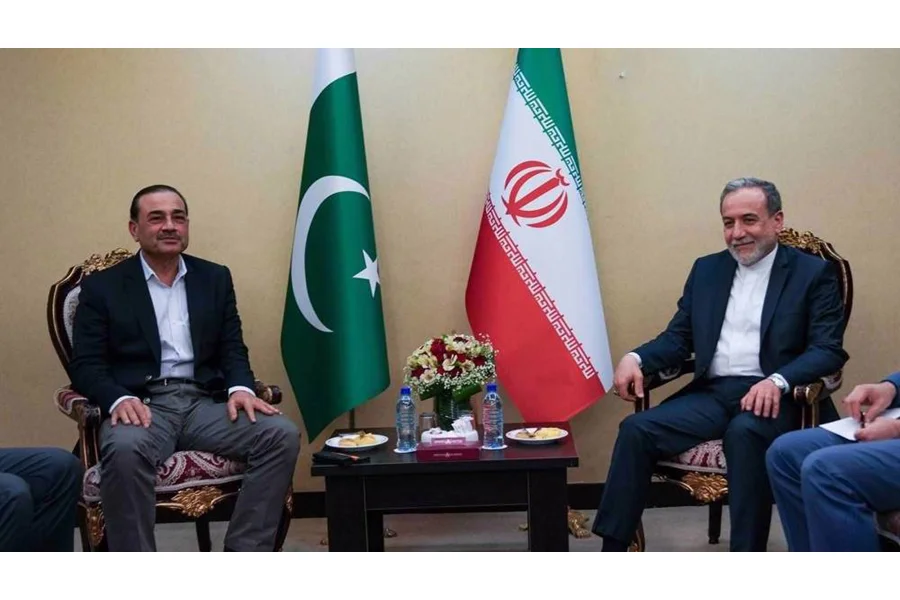
Pakistan's army chief Field Marshal Asim Munir visited Tehran on Friday and held talks with Iranian Foreign Minister Abbas Araghchi on ongoing diplomatic efforts aimed at preventing further escalation and ending the conflict involving Iran, the United States and Israel.

According to Iranian state media, the discussions focused on recent diplomatic initiatives to ease tensions and stop what Tehran described as a war "imposed" on Iran by Washington and Tel Aviv.

Iran's Foreign Ministry spokesman was quoted as saying that differences between Tehran and Washington in mediated negotiations remain "deep and significant."

Meanwhile, Iranian Defence Ministry spokesman Reza Talaei-Nik said the United States would face further setbacks if it failed to recognise what he described as Iran's legitimate rights.

Speaking to the Tasnim news agency, Talaei-Nik said, "The only way out of the third imposed war for the American-Zionist enemy, on both the battlefield and in diplomacy, is to secure the demands of the Iranian people."

He also said US President Donald Trump should accept Iran's proposals to avoid further losses and costs for both the American people and the wider international community.​
 

Trump says no rush for Iran deal, US blockade stays

REUTERS

Published :
May 24, 2026 22:08
Updated :
May 24, 2026 22:08

1779683316893.webp

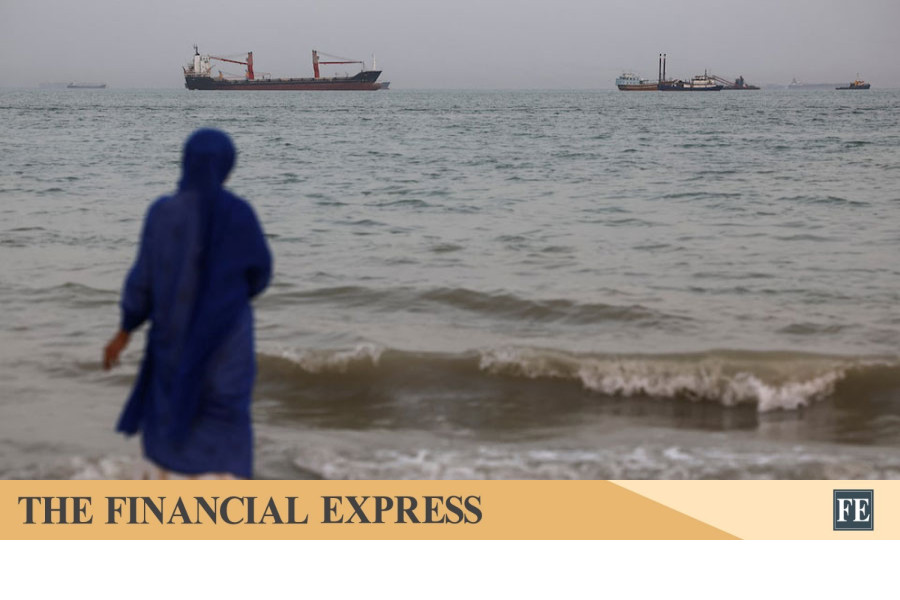
Vessels in the Strait of Hormuz are visible near the beach of Bandar Abbas, Iran, May 22, 2026. Photo : Majid Asgaripour/WANA (West Asia News Agency) via REUTERS

US President Donald Trump said on Sunday he had told his representatives not to rush into any deal with Iran, appearing to dampen hopes of an imminent breakthrough in the three-month-old war that had been raised by both sides a day earlier.

The US blockade on Iranian ships on the Strait of ‌Hormuz would "remain in full force and effect until an agreement is reached, certified, and signed", Trump wrote on Truth Social.

Negotiations were progressing and the US relationship with Iran had become more professional and productive, he said. But he added: "Both sides must take their time and get it right. There can be no mistakes!"

A day earlier, Trump said Washington and Iran had "largely negotiated" a memorandum of understanding on a peace deal that would reopen the Strait of Hormuz, which before the conflict carried one-fifth of global oil and liquefied natural gas shipments.

Trump has repeatedly played up the prospect of an agreement to end the war that the US and Israel started on February 28, so far without success.

It was not clear whether the agreement he was referring to on Sunday was the initial memorandum of understanding that has been under discussion, or ⁠a much more challenging broad peace settlement, likely to take much longer.

The two sides remain at odds over numerous difficult issues, such as Iran's nuclear ambitions and Tehran's demands for the lifting of sanctions and the release of tens of billions of dollars of Iranian oil revenues frozen in foreign banks.

Various media in the US and Iran had said the memorandum setting out a framework for ending months of fighting would, if concluded, lift a US blockade on Iranian shipping and reopen the waterway, which Iran has shut with threats to attack shipping.

HOPE FOR RELIEF IN GLOBAL ENERGY CRISIS

A senior Iranian source earlier told Reuters that if Iran's Supreme National Security Council approved the memorandum, it would be sent to Supreme Leader Ayatollah Mojtaba Khamenei for final approval.

Witness video captured the moment gunfire rang out near the White House on Saturday evening.

But Iran's Tasnim news agency said differences remained over one or two clauses. Tasnim cited a source as saying there would be no final understanding if the US continued to create obstacles.

In another potential stumbling block, a military adviser to Khamenei said Tehran had the legal right to manage the Strait of Hormuz, though it was not clear if that meant continuing to decide which ships can go through.

Any deal cementing the current fragile ceasefire would bring relief to markets but not immediately quell a global energy crisis, which has driven up costs of fuel, fertilizer and food.

Even if ‌the war ⁠ends now, full flows through the strait will not return before the first or second quarter of 2027, the head of the Abu Dhabi National Oil Company said last week.

Iran's Revolutionary Guards said 33 vessels had passed through the strait over the past 24 hours after getting permission from Tehran, still far short of the 140 on a typical day before the war.

Trump, while offering various war aims during the conflict, has repeatedly said the US struck Iran to prevent it from obtaining nuclear weapons.

Iran "must understand, however, that they cannot develop or procure a Nuclear Weapon or Bomb", he reiterated in his post on Sunday.

Iran has long denied it is pursuing such weapons and says it has a right to enrich uranium for civilian purposes, although ⁠the purity it has achieved far exceeds that needed for power generation.

'ISSUES STILL NEED TO BE DISCUSSED,' IRAN SAYS

Sources have told Reuters the proposed framework, when it emerges, will unfold in three stages: formally ending the war, resolving the crisis in the Strait of Hormuz and launching a 30-day window for negotiations on a broader agreement, which can be extended.

Trump, whose approval ratings have been hit by the war's impact on US energy prices, said on Friday he would not attend his son's wedding this weekend, citing ⁠Iran among the reasons for staying in Washington.

He spoke on Saturday with leaders from Saudi Arabia, Qatar, the United Arab Emirates, Jordan, Egypt, Turkey and Pakistan, who encouraged Trump to agree to the emerging framework, Axios reported.

Iranian Foreign Ministry spokesperson Esmail Baghaei said on Saturday that "the trend this week has been towards a reduction in disputes, but there are still issues that need to be discussed through mediators".

Baghaei said the issue of the US blockade ⁠on Iran's shipping was important, but that its priority was ending the threat of new US attacks and the parallel conflict in Lebanon.

The US-Israeli bombing of Iran killed thousands of people in Iran before it was suspended in a ceasefire in early April.

Israel has also killed thousands more and driven hundreds of thousands from their homes in Lebanon, which it invaded in pursuit of the Iran-backed Hezbollah militia.

Iranian strikes on Israel and neighbouring Gulf states have killed dozens of people.​
 

Trump links Abraham Accords to any Iran deal

REUTERS

Published :
May 26, 2026 00:53
Updated :
May 26, 2026 00:53

1779760842261.webp


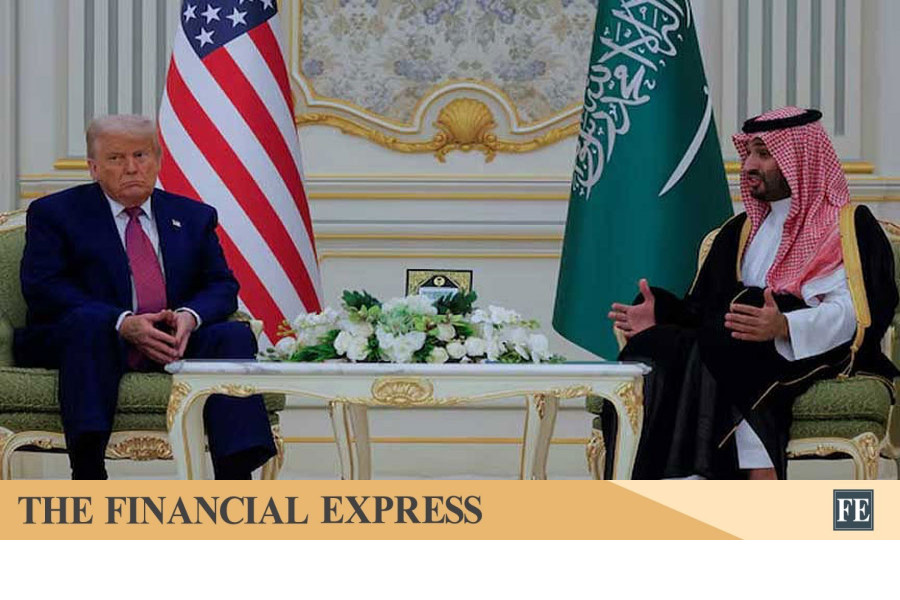
US President Donald Trump said on Monday that he asked Saudi Arabia, Qatar, Pakistan, Turkey, Egypt and Jordan to join the Abraham Accords en masse to normalise relations with Israel as he tries to negotiate an agreement to end the war with Iran.

Pakistan rejected the proposal. None of the other countries has so far publicly reacted to Trump's demand and a positive response was unlikely when the public mistrust of Israel in these Muslim nations remains high over the scale of its military offensive in Gaza.

Trump said he spoke on Saturday to leaders of those countries, as well as the United Arab Emirates and Bahrain, which have already signed the accords, a set of agreements to normalise relations with Israel.

"I am mandatorily requesting that all Countries immediately sign the Abraham Accords, and that, if Iran signs its Agreement with me, as President of the United States of America, it would be an Honor to have them also be part of this unparalleled World Coalition," Trump wrote in a post on Truth Social.

He cited "all the work done by the United States to try and pull this very complex puzzle together."

A Pakistani security source said Trump’s statement reflected an attempt to use Iran ceasefire diplomacy for a wider push around the Abraham Accords, but said the two issues were “not interlinked and cannot be made so."

"Pakistan is under no compulsion to adhere to any such demand,” the source said.

Israeli Prime Minister Benjamin Netanyahu's office also did not immediately respond to a request for comment on Trump's post.

Deeply Sensitive Issue

Trump said one or two of the countries he spoke with may have a reason for not joining, but most should be "ready, willing, and able to make this Settlement with Iran a far more Historic Event than it would, otherwise, be."

For Saudi Arabia — the birthplace of Islam and custodian of its two holiest sites, Mecca and Medina - recognising Israel would be more than just a diplomatic milestone. It is a deeply sensitive national security issue tied to resolving one of the region’s oldest and most intractable conflicts.

The kingdom's longstanding position has been that it would not sign the accords unless there is an agreement on a roadmap to Palestinian statehood.

Egypt, Jordan and Turkey already have diplomatic relations with Israel, even as those ties have been strained since the start of the Gaza war.

Trump also said negotiations with Iran were "proceeding nicely," but gave no indication a deal was imminent.

Longtime Trump ally Senator Lindsey Graham has embraced the idea of linking an Iran deal to expanding the Abraham Accords as "beyond transformative for the region and world."

Others see the strategy as something to make an Iran deal more palatable to skeptics.

"Trump is trying to sell an Iran deal as an Abraham Accords sequel: good for Israel, good for the region, tough enough for Washington," said Ali Vaez, Iran project director at the International Crisis Group.

"But he is trading one fantasy for another — from forcing Iran to surrender to pretending a fragile deal can anchor a new Middle East order."

Trump has repeatedly said he wants to expand the accords that he brokered during his first term in the White House.

The United Arab Emirates and Bahrain signed during Trump's first term in 2020, breaking a longstanding taboo to become the first Arab states to recognise Israel in a quarter century. Morocco and Sudan followed suit.​
 

US launches fresh strikes on Iran as talks to end war proceed

Reuters

1779764115921.webp


US forces on Monday conducted strikes in southern Iran against targets including boats attempting to lay mines and missile launch sites, in what it described as defensive actions.

The strikes came as Iran's top negotiator and its foreign minister were in Doha for talks with Qatar's prime minister on a potential deal with the US to end the three-month-old war, an official briefed on the visit said on Monday, after Washington and Tehran played down hopes for an imminent breakthrough.

US Secretary of State Marco Rubio told reporters in New Delhi earlier that the US would give diplomacy every chance to succeed before considering whether to deal with Iran in "another way".

There was a "pretty solid thing on the table in terms of their ability to open up the strait (of Hormuz), get the strait open, enter into a very real, significant, time-limited negotiation on the nuclear matter, and hopefully we can pull it off," Rubio said.

In a lengthy post on Truth Social on Monday, US President Donald Trump said talks with Iran were going "nicely", but warned of fresh attacks if they failed. It "will only be a Great Deal for all, or no Deal at all," he wrote.

Hours later, US Central Command said in a statement it had carried out fresh strikes designed "to protect our troops from threats posed by Iranian forces."

"US Central Command continues to defend our forces while using restraint during the ongoing ceasefire," said Navy Captain Tim Hawkins, a Central Command spokesperson.

Also Monday, Iran said it had downed a "hostile" stealth drone using a new air defence system, Iranian news agencies reported, without saying where it had come from.

"This is a sign from us that no more stealth drones can penetrate the skies of the Persian Gulf," Fars quoted unnamed officials as saying.

In another indication of the region's tensions, Israeli Prime Minister Benjamin Netanyahu said on Monday Israel would intensify strikes against the Iran-backed Hezbollah militia in Lebanon. Israel's military soon thereafter said it was attacking Hezbollah infrastructure in Lebanon's eastern Bekaa Valley and other areas.

Israel and Lebanon agreed to a ceasefire in mid-April, but Israel has continued airstrikes it says are acts of self-defence against Hezbollah, which was not party to the truce.

The official briefed on the Iranians' Doha visit told Reuters the discussions focused on the Strait of Hormuz and Iran's stockpile of highly enriched uranium, while Iran's central bank governor attended to discuss the potential release of frozen Iranian funds as part of a final deal.

Iranian foreign ministry spokesperson Esmaeil Baghaei said earlier that nuclear issues would only be negotiated after the framework accord was agreed.

Trump has said his key aim in the war is to prevent Iran from developing a nuclear weapon with its highly enriched uranium. Tehran has consistently denied it has plans to do that.

TRUMP PUSHES ABRAHAM ACCORDS

In his Truth Social post, Trump also called on more Arab and Muslim states to sign up to the Abraham Accords, brokered during his first term in office and aimed at normalising ties between those states and Israel. He said Saudi Arabia and Qatar should immediately sign and Pakistan, Egypt, Jordan and Turkey should follow suit, calling his request mandatory.

Netanyahu's office did not respond to a request for comment.

A Pakistani source familiar with the matter said that the statement reflected an attempt to use the Iran diplomacy for a wider push around the accords - but that the two issues were "not interlinked and cannot be made so."

Others saw the suggestion as aimed at making an Iran deal more palatable to sceptics.

"Trump is trying to sell an Iran deal as an Abraham Accords sequel: good for Israel, good for the region, tough enough for Washington," said Ali Vaez, Iran project director at the International Crisis Group.

"But he is trading one fantasy for another — from forcing Iran to surrender to pretending a fragile deal can anchor a new Middle East order."

IRAN DEAL STICKING POINTS

Baghaei said the potential Iran deal contained no specific details on management of the Strait of Hormuz, through which about a fifth of the world's oil and liquefied natural gas usually flows.

Iran will not charge tolls for ships to pass through but there will be a cost for services offered such as navigation and steps to protect the environment, he said, under a protocol to be agreed with Oman, which lies on the opposite shore of the waterway.

Citing a Middle East diplomatic source, Japan's Nikkei newspaper reported the US and Iran were discussing a plan to open the strait about 30 days after reaching a deal to end hostilities.

Iran would then clear mines from the strait during a 30-day window, after which ships from all countries could navigate freely and safely, Nikkei reported.

Since the US and Israel launched strikes on Iran on February 28, only a few dozen vessels have been passing through the Strait of Hormuz compared with 125 to 140 daily previously.

Iran's state TV said on Monday that 32 vessels and five oil tankers passed through the strait in the past 24 hours with the authorisation of Iran's Revolutionary Guards naval forces.

The standoff has caused a spike in oil prices and driven up the costs of fuel, fertiliser and food. On Monday, oil prices fell more than 4% to two-week lows amid optimism that a deal might come soon.​
 

Rubio says Iran deal still possible within days despite US strikes

AFP

Jaipur, India

1779840716909.webp

US Secretary of State Marco Rubio speaks to reporters onboard his plane at Jaipur International Airport in Jaipur on 26 May, 2026. AFP

US Secretary of State Marco Rubio said on Tuesday that a deal with Iran was still possible despite new American strikes that cast doubt on their fragile ceasefire.

"There were some talks going on in Qatar today, so we'll see if we can make progress. I think it's a lot of talking back and forth going on about specific language in the initial document, so it'll take a few days," Rubio told reporters in Jaipur during a visit to India.

"The president's expressed his desire to make it. He's either going to make a good deal or no deal," he said.

The strikes came as top Iranian negotiators arrived in Doha for the latest round of talks to end the months-long conflict, which had prompted Iran to blockade the Strait of Hormuz, a crucial artery for global energy exports.

Rubio told reporters that "the straits have to be open".

"They're going to be open one way or the other, so they need to be open. What's happening there is unlawful, it's illegal, it's unsustainable for the world, it's unacceptable."​