Wars 2026 02/28 Israel-Iran War 3.0

Wars 2026 02/28 Israel-Iran War 3.0
198
2K
More threads by RayKalm

G War Archive

Iran Guards vow war will 'spread far beyond region' if US resumes attack

AFP
Tehran
1779332141519.webp

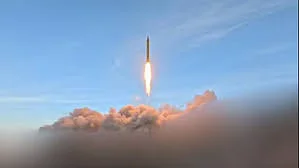
Above, a video grab from an Iranian Revolutionary Guard Corps footage on March 12, 2026, shows what it says was the ‘launch of wave #41 of Iranian missiles.’AFP

Iran's Revolutionary Guards warned on Wednesday that the Middle East war will extend beyond the region if the United States and Israel resume attacks on the Islamic republic.

"If the aggression against Iran is repeated, the promised regional war will this time spread far beyond the region, and our devastating blows will crush you," the Guards said in a statement on their website Sepah News.

The warning comes after US President Donald Trump said Washington could strike Iran again if no deal on a lasting settlement is reached in the coming days.

The two sides have escalated their threats while swapping proposals to end the war, which broke out on 28 February. A ceasefire has been in place since 8 April.

"The American-Zionist enemy... must know that despite the offensive carried out against us using the full capabilities of the world's two most expensive armies, we have not deployed the full power of the Islamic revolution," the Guards said.

The nearly 40-day war killed top Iranian leaders including supreme leader Ayatollah Ali Khamenei, triggering retaliatory missile and drone attacks by Tehran across the region.

On Tuesday, Trump offered a deadline of several days for resuming strikes if a deal is not agreed. He had said a day earlier that Gulf Arab leaders asked him to hold off on an attack at the 11th hour.

"I'm saying two or three days, maybe Friday, Saturday, Sunday, something, maybe early next week, a limited period of time," he said.

Iran's Foreign Minister Abbas Araghchi wrote on X that a "return to war will feature many more surprises".​
 

Iran examines US proposal to end war

Trump says peace talks on ‘borderline’

New Age Desk 21 May, 2026, 09:55

1779422307858.webp

Women hold Iran's national flags and photos of country's supreme leader Ayatollah Mojtaba Khamenei and his predecessor and late father Ayatollah Ali Khamenei during an anti-US and Israel protest at the Hafte Tir Square in Tehran on May 17, 2026. | AFP photo.

Iran said on Wednesday it was examining a new US proposal to end the Middle East war, as president Donald Trump described the talks as being on the ‘borderline’ between a deal and renewed strikes, reports Agence France-Presse.

Trump, who said earlier that negotiations were in their ‘final stages,’ later warned that the window for diplomacy could close quickly.Health & Wellness

‘It’s right on the borderline, believe me,’ Trump told reporters at Joint Base Andrews, near Washington. ‘If we don’t get the right answers, it goes very quickly. We’re all ready to go.’

He said a deal could come ‘very quickly’ or ‘in a few days,’ but warned Tehran would have to provide ‘100 percent good answers.’

Iranian foreign ministry spokesman Esmaeil Baqaei said Tehran had ‘received the points of view of the American side’ and was examining them. He repeated Iran’s demands for the release of frozen assets and an end to the US blockade of Iranian ports.

Earlier, Tehran’s chief negotiator Mohammad Bagher Ghalibaf accused Washington of seeking to restart the war after Trump threatened fresh attacks unless Iran agreed to a deal.

Ghalibaf warned of a ‘forceful response’, while Iran’s Revolutionary Guards said any renewed conflict would spread far beyond the Middle East.

‘The enemy’s movements, both overt and clandestine, show that despite economic and political pressure, it has not abandoned its military objectives and is seeking to start a new war,’ Ghalibaf said.Politics

Six weeks after a ceasefire took effect, efforts to bring the war to a permanent end have intensified in recent days as Pakistan’s military chief, Field Marshal Asim Munir, was set to travel to Tehran on Thursday for ‘talks and consultations’ with Iranian authorities, Iran’s ISNA news agency reported, says Al Jazeera.

Pakistani interior minister Mohsin Naqvi arrived in Iran on Wednesday for his second visit in less than a week to discuss Washington’s latest proposal.

Pakistan in April hosted the only direct negotiations between US and Iranian officials since the war began on February 28.

Munir was at the centre of the talks, which ultimately failed as Iran accused the US of making ‘excessive demands’.

Munir’s announced visit would come a day after Trump warned that talks were on the ‘borderline’ between a deal and the US renewing its attacks on Iran.

‘Believe me, if we don’t get the right answers, it goes very quickly. We’re all ready to go,’ Trump told reporters at Joint Base Andrews outside Washington, DC, on Wednesday.

Trump, who has repeatedly set deadlines for Iran to reach a deal only to delay or cancel them, said he was willing to wait a few days to ‘get the right answers’ from Tehran.

Iranian foreign minister Abbas Araghchi said on Wednesday that his ministry was ready for either talks or a return to fighting.

‘Wherever it is necessary to fight, we will fight, and wherever it is necessary to negotiate, we will negotiate,’ he said.

‘If necessary and if the interests of the system require it, we will be present in the field of diplomacy, dialogue and negotiation with the same determination and strength that the armed forces demonstrate in defending the country.’

Pakistan’s prime minister Shehbaz Sharif will head to China this weekend for talks with president Xi Jinping, Beijing said Thursday, without specifying whether the war in Iran would be discussed.

‘The leaders of China and Pakistan will have an in-depth exchange of views on bilateral relations and issues of common concern,’ said Chinese ministry spokesman Guo Jiakun of the Saturday to Tuesday visit.

Guo added that China would work with Pakistan to ‘make positive contributions to the early restoration of peace and stability in the Middle East’.

‘China supports Pakistan in playing a fair and balanced mediating role in promoting peace and ending the war,’ he said.

Iran’s Islamic Revolutionary Guard Corps has warned against renewed attacks. ‘If aggression against Iran is repeated, the promised regional war will extend beyond the region this time,’ it said in a statement.

Iran submitted its latest proposal to the US this week. According to Nour News, the proposal was based on Tehran’s original 14-point proposal, which included demands for Iranian control of the Strait of Hormuz, reparations for war damage, ⁠lifting of sanctions, release of frozen assets and the withdrawal of US troops.

Scott Lucas, professor of US and international politics at University College Dublin’s Clinton Institute, said the momentum was on Iran’s side.

‘Iran has the initiative because it formulated a 14-point proposal and, in doing so, shifted the focus to the Strait of Hormuz rather than the nuclear programme. Iran was using its strongest form of leverage, which put Washington on the defensive. Now, the US is scrambling to bring the nuclear file back to the forefront of negotiations.

‘The US does not want to find itself in a worse position than it was on February 26 when it walked away from talks. It’s also worth noting that curbs on Iran’s ballistic missile programme are no longer being discussed nor are Tehran’s links to groups such as Hezbollah.

‘Eventually, I think a settlement will be reached, but we’re dealing with a chaotic and unpredictable president Trump, so a return to war cannot be ruled out.’

Iran has been under a US naval blockade since mid-April, which was launched by Trump in a bid to force Tehran to reopen the Strait of Hormuz and accept his terms for a deal.

The US has boarded at least five vessels since the blockade came into effect. On Wednesday, the US military’s Central Command said a ship was searched and redirected after being suspected of trying to travel to an Iranian port.​
 

42 aircraft lost in Iran war: report
New Age Desk 21 May, 2026, 22:17

At least 42 United States military aircraft, including fighter jets and drones, have been lost or damaged during the war in Iran, according to an official report, reports NDTV.Health & Wellness

The losses may increase due to multiple factors, including classification, on-going combat activity, and attribution, said the report by the Congressional Research Service.

Recently, the Pentagon declared that the cost of military operations against Iran under Operation Epic Fury has already climbed to nearly $29 billion.

‘A lot of that increase comes from having a refined estimate on repair or replacement costs for equipment,’ said Pentagon finance chief Jules Hurst III during the May 12 hearing.

The aircraft losses and damages include four F-15E Strike Eagle fighter jets, one F-35A Lightning II fighter aircraft, one A-10 Thunderbolt II ground-attack aircraft, seven KC-135 Stratotanker aerial refuelling aircraft, one E-3 Sentry airborne early warning-and-control system aircraft, two MC-130J Commando II special operations aircraft, one HH-60W Jolly Green II combat search-and-rescue helicopter, 24 MQ-9 Reaper medium-altitude long-endurance uncrewed aircraft and one MQ-4C Triton high-altitude long-endurance uncrewed aircraft.

The US Department of Defence has not published a comprehensive assessment of combat losses so far. The CRS, which provides policy and legal analysis to the US Congress and committees, compiled the losses by perusing news reports and statements by the Department of Defence and the US Central Command.

The war in Iran began on February 28, when the United States and Israel launched coordinated military strikes on Iranian targets, killing several prominent figures, including Supreme Leader Ali Khamenei.

Iran’s foreign minister, Seyed Abbas Araghchi, posted the CRS report on X, saying that the US said Iran had gained knowledge from two months of combat action before the ceasefire in April. He warned that Tehran will use its learning and will deliver ‘many more surprises’ against the US forces if Trump resumes military action against the Islamic Republic.

‘Months after initiation of war on Iran, US Congress acknowledges loss of dozens of aircraft worth billions. Our powerful Armed Forces are confirmed as 1st to strike down a touted F-35. With lessons learned and knowledge we gained, return to war ‘Months after initiation of war on Iran, US Congress acknowledges loss of dozens of aircraft worth billions. Our powerful Armed Forces are confirmed as 1st to strike down a touted F-35. With lessons learned and knowledge we gained, return to war will feature many more surprises', he said.​
 

Tehran says diplomacy continues but no deal yet with US

Aljazeera

Published :
May 23, 2026 15:51
Updated :
May 23, 2026 15:51

1779591514345.webp


Pakistan's army chief Field Marshal Asim Munir visited Tehran on Friday and held talks with Iranian Foreign Minister Abbas Araghchi on ongoing diplomatic efforts aimed at preventing further escalation and ending the conflict involving Iran, the United States and Israel.

According to Iranian state media, the discussions focused on recent diplomatic initiatives to ease tensions and stop what Tehran described as a war "imposed" on Iran by Washington and Tel Aviv.

Iran's Foreign Ministry spokesman was quoted as saying that differences between Tehran and Washington in mediated negotiations remain "deep and significant."

Meanwhile, Iranian Defence Ministry spokesman Reza Talaei-Nik said the United States would face further setbacks if it failed to recognise what he described as Iran's legitimate rights.

Speaking to the Tasnim news agency, Talaei-Nik said, "The only way out of the third imposed war for the American-Zionist enemy, on both the battlefield and in diplomacy, is to secure the demands of the Iranian people."

He also said US President Donald Trump should accept Iran's proposals to avoid further losses and costs for both the American people and the wider international community.​
 

Trump says no rush for Iran deal, US blockade stays

REUTERS

Published :
May 24, 2026 22:08
Updated :
May 24, 2026 22:08

1779683316893.webp

Vessels in the Strait of Hormuz are visible near the beach of Bandar Abbas, Iran, May 22, 2026. Photo : Majid Asgaripour/WANA (West Asia News Agency) via REUTERS

US President Donald Trump said on Sunday he had told his representatives not to rush into any deal with Iran, appearing to dampen hopes of an imminent breakthrough in the three-month-old war that had been raised by both sides a day earlier.

The US blockade on Iranian ships on the Strait of ‌Hormuz would "remain in full force and effect until an agreement is reached, certified, and signed", Trump wrote on Truth Social.

Negotiations were progressing and the US relationship with Iran had become more professional and productive, he said. But he added: "Both sides must take their time and get it right. There can be no mistakes!"

A day earlier, Trump said Washington and Iran had "largely negotiated" a memorandum of understanding on a peace deal that would reopen the Strait of Hormuz, which before the conflict carried one-fifth of global oil and liquefied natural gas shipments.

Trump has repeatedly played up the prospect of an agreement to end the war that the US and Israel started on February 28, so far without success.

It was not clear whether the agreement he was referring to on Sunday was the initial memorandum of understanding that has been under discussion, or ⁠a much more challenging broad peace settlement, likely to take much longer.

The two sides remain at odds over numerous difficult issues, such as Iran's nuclear ambitions and Tehran's demands for the lifting of sanctions and the release of tens of billions of dollars of Iranian oil revenues frozen in foreign banks.

Various media in the US and Iran had said the memorandum setting out a framework for ending months of fighting would, if concluded, lift a US blockade on Iranian shipping and reopen the waterway, which Iran has shut with threats to attack shipping.

HOPE FOR RELIEF IN GLOBAL ENERGY CRISIS

A senior Iranian source earlier told Reuters that if Iran's Supreme National Security Council approved the memorandum, it would be sent to Supreme Leader Ayatollah Mojtaba Khamenei for final approval.

Witness video captured the moment gunfire rang out near the White House on Saturday evening.

But Iran's Tasnim news agency said differences remained over one or two clauses. Tasnim cited a source as saying there would be no final understanding if the US continued to create obstacles.

In another potential stumbling block, a military adviser to Khamenei said Tehran had the legal right to manage the Strait of Hormuz, though it was not clear if that meant continuing to decide which ships can go through.

Any deal cementing the current fragile ceasefire would bring relief to markets but not immediately quell a global energy crisis, which has driven up costs of fuel, fertilizer and food.

Even if ‌the war ⁠ends now, full flows through the strait will not return before the first or second quarter of 2027, the head of the Abu Dhabi National Oil Company said last week.

Iran's Revolutionary Guards said 33 vessels had passed through the strait over the past 24 hours after getting permission from Tehran, still far short of the 140 on a typical day before the war.

Trump, while offering various war aims during the conflict, has repeatedly said the US struck Iran to prevent it from obtaining nuclear weapons.

Iran "must understand, however, that they cannot develop or procure a Nuclear Weapon or Bomb", he reiterated in his post on Sunday.

Iran has long denied it is pursuing such weapons and says it has a right to enrich uranium for civilian purposes, although ⁠the purity it has achieved far exceeds that needed for power generation.

'ISSUES STILL NEED TO BE DISCUSSED,' IRAN SAYS

Sources have told Reuters the proposed framework, when it emerges, will unfold in three stages: formally ending the war, resolving the crisis in the Strait of Hormuz and launching a 30-day window for negotiations on a broader agreement, which can be extended.

Trump, whose approval ratings have been hit by the war's impact on US energy prices, said on Friday he would not attend his son's wedding this weekend, citing ⁠Iran among the reasons for staying in Washington.

He spoke on Saturday with leaders from Saudi Arabia, Qatar, the United Arab Emirates, Jordan, Egypt, Turkey and Pakistan, who encouraged Trump to agree to the emerging framework, Axios reported.

Iranian Foreign Ministry spokesperson Esmail Baghaei said on Saturday that "the trend this week has been towards a reduction in disputes, but there are still issues that need to be discussed through mediators".

Baghaei said the issue of the US blockade ⁠on Iran's shipping was important, but that its priority was ending the threat of new US attacks and the parallel conflict in Lebanon.

The US-Israeli bombing of Iran killed thousands of people in Iran before it was suspended in a ceasefire in early April.

Israel has also killed thousands more and driven hundreds of thousands from their homes in Lebanon, which it invaded in pursuit of the Iran-backed Hezbollah militia.

Iranian strikes on Israel and neighbouring Gulf states have killed dozens of people.​
 

Trump links Abraham Accords to any Iran deal

REUTERS

Published :
May 26, 2026 00:53
Updated :
May 26, 2026 00:53

1779760842261.webp


US President Donald Trump said on Monday that he asked Saudi Arabia, Qatar, Pakistan, Turkey, Egypt and Jordan to join the Abraham Accords en masse to normalise relations with Israel as he tries to negotiate an agreement to end the war with Iran.

Pakistan rejected the proposal. None of the other countries has so far publicly reacted to Trump's demand and a positive response was unlikely when the public mistrust of Israel in these Muslim nations remains high over the scale of its military offensive in Gaza.

Trump said he spoke on Saturday to leaders of those countries, as well as the United Arab Emirates and Bahrain, which have already signed the accords, a set of agreements to normalise relations with Israel.

"I am mandatorily requesting that all Countries immediately sign the Abraham Accords, and that, if Iran signs its Agreement with me, as President of the United States of America, it would be an Honor to have them also be part of this unparalleled World Coalition," Trump wrote in a post on Truth Social.

He cited "all the work done by the United States to try and pull this very complex puzzle together."

A Pakistani security source said Trump’s statement reflected an attempt to use Iran ceasefire diplomacy for a wider push around the Abraham Accords, but said the two issues were “not interlinked and cannot be made so."

"Pakistan is under no compulsion to adhere to any such demand,” the source said.

Israeli Prime Minister Benjamin Netanyahu's office also did not immediately respond to a request for comment on Trump's post.

Deeply Sensitive Issue

Trump said one or two of the countries he spoke with may have a reason for not joining, but most should be "ready, willing, and able to make this Settlement with Iran a far more Historic Event than it would, otherwise, be."

For Saudi Arabia — the birthplace of Islam and custodian of its two holiest sites, Mecca and Medina - recognising Israel would be more than just a diplomatic milestone. It is a deeply sensitive national security issue tied to resolving one of the region’s oldest and most intractable conflicts.

The kingdom's longstanding position has been that it would not sign the accords unless there is an agreement on a roadmap to Palestinian statehood.

Egypt, Jordan and Turkey already have diplomatic relations with Israel, even as those ties have been strained since the start of the Gaza war.

Trump also said negotiations with Iran were "proceeding nicely," but gave no indication a deal was imminent.

Longtime Trump ally Senator Lindsey Graham has embraced the idea of linking an Iran deal to expanding the Abraham Accords as "beyond transformative for the region and world."

Others see the strategy as something to make an Iran deal more palatable to skeptics.

"Trump is trying to sell an Iran deal as an Abraham Accords sequel: good for Israel, good for the region, tough enough for Washington," said Ali Vaez, Iran project director at the International Crisis Group.

"But he is trading one fantasy for another — from forcing Iran to surrender to pretending a fragile deal can anchor a new Middle East order."

Trump has repeatedly said he wants to expand the accords that he brokered during his first term in the White House.

The United Arab Emirates and Bahrain signed during Trump's first term in 2020, breaking a longstanding taboo to become the first Arab states to recognise Israel in a quarter century. Morocco and Sudan followed suit.​
 

US launches fresh strikes on Iran as talks to end war proceed

Reuters

1779764115921.webp


US forces on Monday conducted strikes in southern Iran against targets including boats attempting to lay mines and missile launch sites, in what it described as defensive actions.

The strikes came as Iran's top negotiator and its foreign minister were in Doha for talks with Qatar's prime minister on a potential deal with the US to end the three-month-old war, an official briefed on the visit said on Monday, after Washington and Tehran played down hopes for an imminent breakthrough.

US Secretary of State Marco Rubio told reporters in New Delhi earlier that the US would give diplomacy every chance to succeed before considering whether to deal with Iran in "another way".

There was a "pretty solid thing on the table in terms of their ability to open up the strait (of Hormuz), get the strait open, enter into a very real, significant, time-limited negotiation on the nuclear matter, and hopefully we can pull it off," Rubio said.

In a lengthy post on Truth Social on Monday, US President Donald Trump said talks with Iran were going "nicely", but warned of fresh attacks if they failed. It "will only be a Great Deal for all, or no Deal at all," he wrote.

Hours later, US Central Command said in a statement it had carried out fresh strikes designed "to protect our troops from threats posed by Iranian forces."

"US Central Command continues to defend our forces while using restraint during the ongoing ceasefire," said Navy Captain Tim Hawkins, a Central Command spokesperson.

Also Monday, Iran said it had downed a "hostile" stealth drone using a new air defence system, Iranian news agencies reported, without saying where it had come from.

"This is a sign from us that no more stealth drones can penetrate the skies of the Persian Gulf," Fars quoted unnamed officials as saying.

In another indication of the region's tensions, Israeli Prime Minister Benjamin Netanyahu said on Monday Israel would intensify strikes against the Iran-backed Hezbollah militia in Lebanon. Israel's military soon thereafter said it was attacking Hezbollah infrastructure in Lebanon's eastern Bekaa Valley and other areas.

Israel and Lebanon agreed to a ceasefire in mid-April, but Israel has continued airstrikes it says are acts of self-defence against Hezbollah, which was not party to the truce.

The official briefed on the Iranians' Doha visit told Reuters the discussions focused on the Strait of Hormuz and Iran's stockpile of highly enriched uranium, while Iran's central bank governor attended to discuss the potential release of frozen Iranian funds as part of a final deal.

Iranian foreign ministry spokesperson Esmaeil Baghaei said earlier that nuclear issues would only be negotiated after the framework accord was agreed.

Trump has said his key aim in the war is to prevent Iran from developing a nuclear weapon with its highly enriched uranium. Tehran has consistently denied it has plans to do that.

TRUMP PUSHES ABRAHAM ACCORDS

In his Truth Social post, Trump also called on more Arab and Muslim states to sign up to the Abraham Accords, brokered during his first term in office and aimed at normalising ties between those states and Israel. He said Saudi Arabia and Qatar should immediately sign and Pakistan, Egypt, Jordan and Turkey should follow suit, calling his request mandatory.

Netanyahu's office did not respond to a request for comment.

A Pakistani source familiar with the matter said that the statement reflected an attempt to use the Iran diplomacy for a wider push around the accords - but that the two issues were "not interlinked and cannot be made so."

Others saw the suggestion as aimed at making an Iran deal more palatable to sceptics.

"Trump is trying to sell an Iran deal as an Abraham Accords sequel: good for Israel, good for the region, tough enough for Washington," said Ali Vaez, Iran project director at the International Crisis Group.

"But he is trading one fantasy for another — from forcing Iran to surrender to pretending a fragile deal can anchor a new Middle East order."

IRAN DEAL STICKING POINTS

Baghaei said the potential Iran deal contained no specific details on management of the Strait of Hormuz, through which about a fifth of the world's oil and liquefied natural gas usually flows.

Iran will not charge tolls for ships to pass through but there will be a cost for services offered such as navigation and steps to protect the environment, he said, under a protocol to be agreed with Oman, which lies on the opposite shore of the waterway.

Citing a Middle East diplomatic source, Japan's Nikkei newspaper reported the US and Iran were discussing a plan to open the strait about 30 days after reaching a deal to end hostilities.

Iran would then clear mines from the strait during a 30-day window, after which ships from all countries could navigate freely and safely, Nikkei reported.

Since the US and Israel launched strikes on Iran on February 28, only a few dozen vessels have been passing through the Strait of Hormuz compared with 125 to 140 daily previously.

Iran's state TV said on Monday that 32 vessels and five oil tankers passed through the strait in the past 24 hours with the authorisation of Iran's Revolutionary Guards naval forces.

The standoff has caused a spike in oil prices and driven up the costs of fuel, fertiliser and food. On Monday, oil prices fell more than 4% to two-week lows amid optimism that a deal might come soon.​
 

Latest Posts

Back