New Tweets

Wars 2026 02/28 Israel-Iran War 3.0

G War Archive
Wars 2026 02/28 Israel-Iran War 3.0
94
944
More threads by RayKalm


Got messages from 'friendly countries' about US request for talks: Iran foreign ministry

AFP
Tehran
Published: 23 Mar 2026, 22: 46

1774311971031.webp

Iran foreign minister Abbas Araghchi AFP

Iran's foreign ministry said on Monday that it had received messages through "friendly countries" about a request from the United States for talks, but denied any such negotiations had taken place since the start of the war.

"Over the past few days, messages were received through some friendly countries indicating a US request for negotiations aimed at ending the war," said foreign ministry spokesman Esmaeil Baqaei, according to the official IRNA news agency.

However, he "denied any negotiations or talks with the United States during the past 24 days of the imposed war".​
 
Analyze

Analyze Post

Add your ideas here:
Highlight Cite Respond

Operation Epic Fury: Dawn of 5th generation warfare
Mohammad Alam Tareque
Updated: 23 Mar 2026, 22: 24

1774312356726.webp

The US and Israel carried out an attack on Iran File photo

The outbreak of hostilities on 28 February 2026, marked a decisive turning point in the Middle Eastern crisis that had unfolded between 2023 and 2025. This study contends that the 2026 Iran War was the direct result of three interrelated factors: the collapse of regional deterrence, diplomatic failure, and Western interventionist escalation. These developments converged to produce a conflict intentionally structured to reshape the regional order. Thus, the thesis advanced here is that the convergence of eroding deterrence, the shift from economic pressure to overt military action aimed at regime change, and the persistent diplomatic stalemate rendered war inevitable and collectively signalled the onset of a new phase in fifth-generation warfare.

Nevertheless, some may argue that diplomatic engagement or alternative regional security arrangements could have mitigated the path to war, suggesting that greater international mediation or confidence-building measures might have prevented escalation. While these counterarguments merit consideration, this analysis demonstrates that the combined pressures of declining deterrence, failed diplomacy, and escalating external intervention outweighed such possibilities, making large-scale conflict unavoidable in this context.

To address this thesis, the following analysis is organised into six key sections: the genesis of hostilities, the execution of Operation Epic Fury and initial military actions, regional escalation and allied involvement, the human and institutional costs of high-intensity conflict, the global economic impact, and the political and legal dimensions of Iran's succession and continued ambiguity. Each section examines how these interrelated pressures produced both the initiation and evolution of the 2026 Iran War.

Three main pressures shaped the strategic environment. Diplomatically, the 2026 Muscat nuclear talks failed when the United States demanded zero enrichment, and Tehran refused, despite Omani statements that an agreement was close at hand. Economically, the US Treasury created a dollar shortage, which led to the collapse of the rial and the worst unrest since 1979. The violent suppression of protests in 2025 and 2026, with some estimates of up to 32,000 deaths, set the stage for intervention. The military buildup that occurred was the largest since 2003, and there was a clear gap between public statements and intelligence assessments.

Strategic justification vs intelligence reality

Imminent WMD Threat: Claims Iran was developing ICBMs capable of striking the US mainland. DIA Assessment (2025): Concluded Iran was at least a decade away from viable ICBM technical capacity.

Nuclear Emergency: It was asserted that Iran had immediately revived its weapons programme post-2025 strikes.

DOD Assessment (2025): Estimated earlier strikes had set back the nuclear programme by at least two years.

Diplomatic Intransigence: Alleged Iran refused all verification and enrichment limits.

Omani Intelligence: Suggested Iran had agreed to downgrade its stockpile just before the strikes irreversibly.

This illustrates the discrepancy between public strategic justifications for military intervention and the classified intelligence assessments available at the time. Critically examining these sources, including declassified summaries from the US Office of the Director of National Intelligence (ODNI, February 2026) and leaked excerpts from the Joint Intelligence Committee (Appendix A, 2026), reveals a systematic divergence between official narratives and the underlying intelligence.

While public statements emphasised an imminent nuclear threat, primary intelligence reports highlighted a lack of technical advancement. They found no direct evidence of a weapons programme, as indicated in the March 2026 IAEA Verification Report. This suggests that public messaging was shaped to justify escalation, whereas intelligence did not substantiate such urgency. Similarly, while official pronouncements depicted regime instability, classified assessments, such as the Defence Intelligence Agency's 'Persian Gulf Situation Update' (February 2026), indicated that, despite internal unrest, Iran’s security apparatus remained resilient.

The alignment of public justifications with political objectives rather than with intelligence findings reflects an instrumental use of information to legitimate intervention. Additionally, assessments of Iranian proxies diverged, with public statements amplifying threats not fully supported by classified reports from CENTCOM briefing materials (2026).

The gap between intelligence and public justifications has significant implications: it undermines both the accuracy of policy deliberations and the legitimacy of military action in the eyes of domestic and international audiences. When strategic decisions are based on narratives rather than empirical intelligence, the risk of miscalculation, escalation, and diplomatic fallout is heightened. This process not only distorts the policymaking environment but also erodes trust in governmental institutions and complicates future efforts at conflict resolution.

Thus, in this context, the deployments of the USS Abraham Lincoln and USS Gerald R Ford, and the ensuing cessation of diplomatic engagement, underscore how selective interpretations of classified intelligence sources served broader strategic aims rather than reflecting an objective assessment of the situation.

Operation Epic Fury: The decapitation strike and initial hostilities

Decapitation strikes are military actions that target leadership to disrupt command and control. Operation Epic Fury by the United States and Operation Roaring Lion by Israel aimed to remove Iran's top leaders and prevent an organised response. On 28 February at 9:45 a.m. IRST, more than 200 Israeli fighter jets and several US carrier sorties attacked 500 targets in a coordinated air campaign.

The Pasteur Street district in Tehran was destroyed, killing Supreme Leader Ali Khamenei and over 40 senior officials, including Defence Minister Aziz Nasirzadeh and IRGC commander Mohammad Pakpour. This attack disrupted the structure of Iranian governance, leading to the rapid formation of an Interim Leadership Council.

Fifth-generation warfare, as explicitly defined by Hoffman (2007) and Hammes (2012), is a form of conflict in which the boundaries between traditional military operations and non-military domains are blurred, and adversaries employ non-kinetic methods, such as cyberattacks, information operations, and psychological manipulation, alongside conventional military force. Within this framework, the air campaign was closely integrated with a cyber offensive, illustrating core elements of fifth-generation warfare.

In this context, the deliberate targeting of information and communication infrastructure accompanied kinetic operations. A 60-hour internet blackout reduced Iran’s connectivity to 4 per cent, effectively severing security forces from command channels and disrupting public access to information. Simultaneously, the Bade Saba prayer app was manipulated to deliver messages inciting rebellion directly to mobile devices.

This approach, reflecting the principles articulated in contemporary information warfare scholarship, sought to bypass state-controlled media, manipulate the information environment, and encourage unrest as national leadership came under attack, thus demonstrating the fusion of psychological, informational, and cyber tactics emblematic of fifth-generation warfare.

Despite these attacks, the Iranian command structure remained functional throughout Operation True Promise IV. Within hours, ballistic missiles and Shahed drones struck regional targets, showing that decentralised command protocols were still in place even after the loss of senior leaders.
Iranian Retaliation Targets (True Promise IV): US Military Bases, Al Udeid Air Base (Qatar), Ali Al Salem Air Base (Kuwait), Al Dhafra Air Base (UAE) US and Navy Fifth Fleet HQ (Bahrain),

Allied Civilian Infrastructure: Kuwait International Airport (Kuwait), Dubai International Airport and Burj Al Arab (UAE), Aramco Ras Tanura refinery (Saudi Arabia) and Nakhchivan International Airport (Azerbaijan).

These strikes showed that the conflict would go beyond Iran and involve the entire Persian Gulf, putting US alliances under pressure.

The regional conflagration: Allied involvement and theatre expansion

Iran chose to strike neighbouring countries to punish Gulf partners for supporting US operations. The goal was to increase the cost of cooperation and create divisions between Washington and its allies. Instead of weakening the alliance, these attacks led to the rapid mobilisation of the European Defence Coalition. The UK, France, and Germany allowed the use of their bases for defensive operations, and naval forces from several European countries deployed to protect Cyprus and Jordan.

In the Levant, the killing of Khamenei led Hezbollah to resume rocket attacks on northern Israel. The Israeli Defence Forces responded with a ground incursion into southern Lebanon, ending the 2024 ceasefire. At sea, on 4 March, the USS Charlotte sank the IRIS Dena near Sri Lanka. The Dena was unarmed and returning from Exercise MILAN. This action marked a shift to total war, focusing on reducing Iranian assets rather than adhering to traditional rules of engagement.

This escalation exposed a significant rift within Iran’s leadership, characterised by a divergence between the civilian government and the Islamic Revolutionary Guard Corps (IRGC). While President Masoud Pezeshkian issued formal apologies to neighbouring states in an effort to de-escalate regional tensions, the IRGC maintained operational autonomy by persisting with independent drone strikes. The IRGC’s institutional structure, rooted in a parallel command system and longstanding ideological commitments, allows it to operate with considerable independence from the executive branch.

This autonomy, as discussed in civil-military relations theory, complicates unified national decision-making and undermines the coherence of Iran’s strategic response. As a result, the United States faces increased difficulty in pursuing a negotiated unconditional surrender, since effective negotiation is impeded by the fragmentation of Iranian authority and the persistence of hardline military actions beyond the reach of civilian oversight.

Human and institutional costs: The toll of high-intensity conflict

In the current information environment, controlling public perception is critical. The way casualty data is reported shapes the narrative of the conflict. Accurate accounts of damage to schools and hospitals influence international support and shape perceptions of which side is seen as legitimate.

US and allied forces sustained combat losses primarily in the Persian Gulf and Gulf States, while Lebanese civilian deaths resulted from renewed hostilities in southern Lebanon.

High casualty rates among civilians and the destruction of critical infrastructure have attracted increased international scrutiny and condemned the legitimacy of military actions undertaken, shaping not only public perception but also governmental decision-making. The extent of these losses has prompted shifts in US policy, as humanitarian concerns and mounting global criticism pressure policymakers to reconsider escalation and prioritise diplomatic solutions.

Iranian state institutions have been severely damaged. Strikes destroyed the Assembly of Experts, the IRIB headquarters, and Parliament. The most serious incident was an airstrike in Minab that killed 180 at a girls’ elementary school. There are also reports of follow-up strikes hitting first responders. These incidents extend beyond immediate casualties to disrupt essential social infrastructure, exacerbating public health crises, service access, and community stability.

Furthermore, the cumulative humanitarian toll has diminished the effectiveness of the US information campaign, eroded international support, and led the United Nations to declare a major humanitarian emergency. With 25 million people affected, 32,000 Americans evacuated, and large numbers of Lebanese displaced, the visibility and scale of human suffering have intensified global diplomatic calls for a ceasefire. Thus, the casualty data not only convey the magnitude of the devastation but also directly inform policy discourse, compelling a reevaluation of military objectives and heightening the urgency of humanitarian and conflict-resolution efforts.

Global economic disturbance and the energy crisis

The Strait of Hormuz is Iran’s main tool for asymmetric warfare. By using strikes and maritime threats to restrict passage, Iran has disturbed global energy markets. The goal is to use economic pressure to force the United States into a ceasefire. Oil prices have risen to $114 per barrel, the highest since the COVID-19 period. Qatar has warned it may halt all LNG exports, increasing the risk of a global recession if the Strait of Hormuz remains closed.

The economic conflict also included attacks on digital infrastructure. Drone strikes on Amazon Web Services data centres in the United Arab Emirates caused structural damage and widespread outages of cloud services. This disrupted regional commerce and affected infrastructure beyond the immediate area of military operations.

The conflict has generated a pronounced bifurcation in international support, reflecting deeper fissures within the global geopolitical landscape. This division extends beyond surface-level diplomatic alignment, highlighting divergent national interests, security calculations, and ideological perspectives on the legitimacy and consequences of the military intervention. Explicitly engaging with alliance theory, as outlined by Walt (1987), clarifies that states forge alliances not only based on shared values or institutional ties, but also in response to threat perceptions, with alignment decisions influenced by assessments of aggregate power, geographic proximity, and offensive capabilities.

This is exemplified by Ukraine, Canada, and Germany expediting intelligence-sharing agreements and deploying reconnaissance assets to support US operations. These actions manifest balancing behaviour in anticipation of a perceived regional threat. Similarly, Australia and the E3 states authorised pre-positioning of allied munitions at regional bases, illustrating practical alignment to deter further Iranian escalation. Recent assessments by the International Institute for Strategic Studies (IISS, 2025) reinforce this theoretical framing, noting that alliance formation during a crisis often mirrors the calculations described in alliance theory—namely, balancing against the perceived central threat.

Conversely, opposing states such as China, Russia, and Pakistan initiated joint naval exercises in the Indian Ocean. They imposed export restrictions on key dual-use materials, collectively demonstrating a balance against external intervention by the Western bloc. North Korea’s pledge to increase oil shipments to Iran and Brazil’s convening of emergency UN General Assembly sessions are further behaviours consistent with counterbalancing strategies. These specific alliance responses reveal how the 2026 Iran conflict exemplifies the dynamics predicted by alliance theory, transforming the war into a focal point for contestations over international norms, shifting power structures, and debates about the evolving security architecture of the Middle East, as highlighted by recent analyses from the Council on Foreign Relations (2026).


Supportive Bloc: Ukraine, Argentina, Australia, Canada, Germany, and the E3.

Opposing Bloc: China, Russia, Pakistan, Brazil, and North Korea.

The Trump administration threatened economic retaliation against Spain for denying access to a base. This situation underscores the strain the conflict has placed on NATO and the broader Western alliance.

The new guard: Political succession and judicial ambiguity

The goal of the decapitation strike, which was to collapse Iran’s political system, has not been achieved. On March 8, the Assembly of Experts elected Mojtaba Khamenei as Supreme Leader. President Trump regarded him as a lightweight, but the IRGC, police, and military gave him their support. The regime’s security core persists in place and has survived the first phase of Operation Epic Fury.

There is ongoing legal uncertainty about the conflict. Bipartisan groups of U.S. lawmakers have questioned the war under the War Powers Act, and some have called it a domestic distraction. International legal experts contend that the strikes may violate the UN Charter, since the IAEA had no evidence of an active nuclear weapons program in Iran at the time.

As of 9 March 2026, the conflict remains entrenched in a high-intensity stalemate, with the United States pursuing unconditional surrender while Iran’s new leadership employs a strategy of prolonged attrition using its remaining missile arsenal. In summary, the 2026 Iran War highlights several major policy lessons: the convergence of eroding deterrence, unresolved diplomatic tensions, and escalatory external interventions can make large-scale conflict unavoidable; reliance on public justifications not grounded in intelligence undermines both policy legitimacy and effective decision-making.

Consequently, policymakers should prioritise aligning public narratives with credible intelligence, invest in persistent and adaptable crisis diplomacy, and strengthen multilateral frameworks for conflict resolution. However, these recommendations are not without risk or limitation. Public narratives may prove difficult to align with classified intelligence due to political pressures or operational secrecy; diplomatic initiatives may be hindered by mutual distrust, fragmentation among stakeholders, or the lack of credible mediators; and divergent strategic interests among international actors could constrain multilateral efforts. Acknowledging these challenges is essential, as these measures, while critical to minimising unintended escalation and preserving both regional and global security, cannot guarantee rapid conflict resolution or universal compliance.

#Dr Mohammad Alam Tareque is a retired major of the Bangladesh Army, an Associate Professor of Business Management at Green University of Bangladesh, and the Army Institute of Business Administration​
 
Analyze

Analyze Post

Add your ideas here:
Highlight Cite Respond
Well that is a side benefit. USA has plenty of Oil in Alaska and in its Northern States.

More than the oil, the main beneficiary (if successful with the current objective) will be - for Is-real to emerge as the super power of the Middle East.

Their main concern is to neutralize Iran (specifically - a nuclear Iran) which is a challenger for Is-real's dominance.

Their objective is to de-stabilize the Middle East (using the gulf States opposing Iran) so they can ultimately dominate over the spoils i.e. build Greater Is-Real.

It will start by the takeover of Lebanon and Jordan (already a puppet state of Judea) and even Egypt (part of the Sinai).
The USA cannot extract oil from Alaska due to environmental issues. Trump is attacking Iran to remove the present leadership and to install a puppet regime which will safeguard US interest. The USA is expending $3 billion a day in the current war against Iran. It's an investment for the future. Israel may have other plans as you have mentioned in your post. Greater Israel is a pipedream of Israel. It's not achievable. Peace.
 
Analyze

Analyze Post

Add your ideas here:
Highlight Cite Respond
  • Like (+1)
Reactions: Bilal9
The USA cannot extract oil from Alaska due to environmental issues. Trump is attacking Iran to remove the present leadership and to install a puppet regime which will safeguard US interest. The USA is expending $3 billion a day in the current war against Iran. It's an investment for the future. Israel may have other plans as you have mentioned in your post. Greater Israel is a pipedream of Israel. It's not achievable. Peace.

Well achievable or not - they keep trying nonetheless, as this war is showing.

 
Analyze

Analyze Post

Add your ideas here:
Highlight Cite Respond
  • Like (+1)
Reactions: Saif
Well achievable or not - they keep trying nonetheless, as this war is showing.


Israel is vigorously trying to form greater Israel but they will end up eating হামাস ও হিজবুল্লাহর পায়খানা। :p
 
Analyze

Analyze Post

Add your ideas here:
Highlight Cite Respond

Saudi prince pushes for ‘total destruction’ of Tehran regime in recent calls with Trump: NY Times

bdnews24.com
Published :
Mar 24, 2026 23:07
Updated :
Mar 24, 2026 23:07

1774397213069.webp


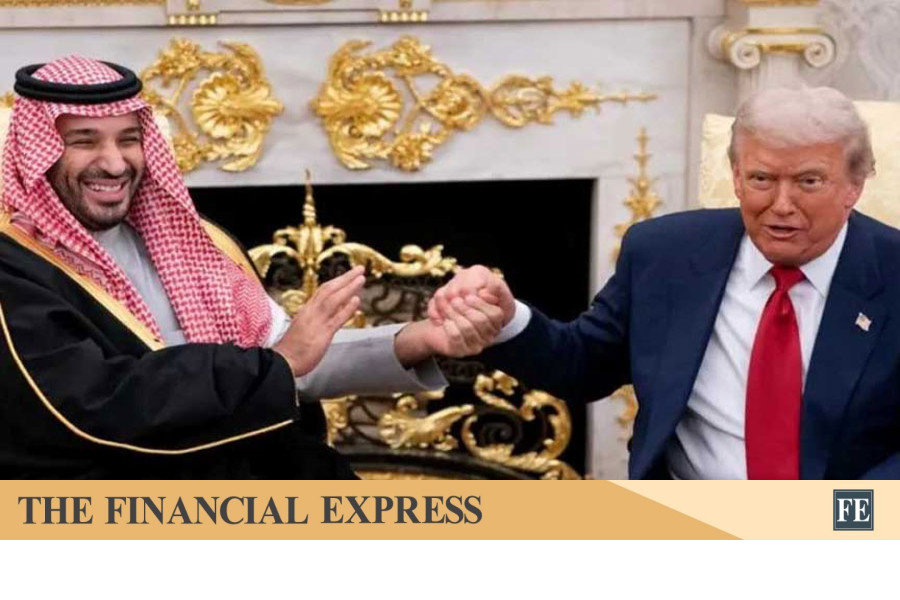
Saudi Arabia’s de facto leader, Crown Prince Mohammed bin Salman, is reportedly lobbying US President Donald Trump to prolong the ongoing military offensive against Iran, describing the conflict as a "historic opportunity" to fundamentally alter the Middle Eastern landscape.

According to a report run on Tuesday by the New York Times, which cited unnamed sources briefed on high-level discussions between the two leaders, the Saudi prince has argued that the total dismantling of the Tehran government is the only way to eliminate the long-term security threats facing the Gulf.

Prince Mohammed is encouraging the White House to maintain its aggressive stance, the report said, adding that his rationale is rooted in the belief that a halfway measure would leave Saudi Arabia vulnerable to a vengeful and emboldened Iranian regime.

While Israel also views Tehran as a primary threat, mostly unnamed analysts noted to the US-based newspaper a strategic divergence: whereas Israel might tolerate a failed Iranian state consumed by internal chaos, Riyadh views such a power vacuum as a direct and grave peril to its own borders.

The conflict’s impact has been felt acutely in the global energy market. Retaliatory strikes by Iran have severely restricted traffic through the Strait of Hormuz, the primary artery for Saudi, Emirati, and Kuwaiti oil exports. Although Riyadh has developed bypass pipelines, these alternative routes have also been targeted, the report said.

The NYT report highlights that Prince Mohammed has even suggested the United States consider ground operations to seize Iranian energy infrastructure, specifically Kharg Island, a critical oil hub, to force a collapse of the current administration.

President Trump has reportedly expressed concerns about skyrocketing oil prices and their toll on the global economy. In response, the crown prince has allegedly assured the US president that the economic turbulence is merely temporary.

Publicly, the Saudi government has rejected claims that it is pushing for an extension of the war, the New York Times article noted.

In an official statement, the report said, Riyadh maintained that it has always advocated for peaceful resolutions and that its primary focus remains defending its citizens and infrastructure from daily drone and missile barrages.

"Iran has chosen dangerous brinkmanship over serious diplomatic solutions," the report quoted a Saudi government statement.

The war has already taken a human toll beyond the immediate combatants, the report added, with projectile fragments from interceptions killing two Bangladeshi migrant workers and injuring over a dozen other foreign residents in Saudi Arabia.

The report said a protracted war poses a significant threat to Prince Mohammed’s "Vision 2030" plan, which aims to transform the kingdom into a global business and tourism hub.

The success of these ambitious megaprojects relies heavily on regional stability to attract foreign investment, which is likely to be impacted by a prolonged war, the report said.

"Saudi officials certainly want the war to end, but how it ends matters," Yasmine Farouk of the International Crisis Group told the NYT, suggesting that Riyadh is terrified of being left to face an enraged Iran alone if the US withdraws prematurely.​
 
Analyze

Analyze Post

Add your ideas here:
Highlight Cite Respond

Iran, Israel trade strikes despite Trump talk of negotiations

AFP
Tehran, Iran
Published: 24 Mar 2026, 21: 13

1774399036795.webp

Smoke rises from an Iranian missile strike in Tel Aviv on March 23, 2026. Iran fired a fresh broadside of missiles at Israel March 24, causing damage and injuries in Tel Aviv, as uncertainty swirled over possible talks to end the three-week Middle East war AFP

Iran and Israel traded strikes on Tuesday, as the Middle East war showed no sign of de-escalation after US President Donald Trump signalled "very good talks" to end the three-week conflict.

The war, sparked by US-Israel attacks on Iran that killed its supreme leader, has upended global energy markets, roiled the world economy, and spiralled throughout the region -- even dragging in safe-haven Gulf nations.

Israel''s army said it had conducted a "large wave" of airstrikes across several areas of Iran, which had earlier launched a "direct hit" on a building in an upscale area of Tel Aviv.

AFP images showed rubble-strewn streets and the side of a three-storey building in Israel''s commercial hub in ruins, as first responders scrambled to assist at least four people lightly injured at four different locations.

Earlier, Iranian media reported US-Israeli warplanes had struck two gas facilities and a pipeline, hours after Trump stepped back from his threat to attack energy sites, citing negotiations to end the war.

Trump on Monday said his administration was speaking with an unidentified "top person", as he extended by five days a deadline to hit Iran''s power plants.

But Tehran''s parliamentary speaker, Mohammad Bagher Ghalibaf said "no negotiations" were underway, accusing Trump of seeking "to manipulate the financial and oil markets."

As uncertainty swirled about diplomatic efforts to end the war, Gulf nations Bahrain, Kuwait, the United Arab Emirates and Saudi Arabia said they intercepted renewed drone and missile attacks on Tuesday.

''Friendly countries''

There are no formal diplomatic relations between Washington and Tehran, and Trump''s suggestion that there had been progress in talks was met with a swift denial from Iran.

But Iran''s foreign ministry acknowledged that messages had been relayed by "some friendly countries" indicating a "US request for negotiations aimed at ending the war".

Pakistan''s Prime Minister Shehbaz Sharif said Monday he spoke with Iran''s President Masoud Pezeshkian, promising Islamabad''s help to bring peace to the region.

And Egypt''s Foreign Minister Badr Abdelatty already called his Iranian counterpart Araghchi and Trump''s envoy Steve Witkoff on Sunday and Monday.

US media outlet Axios reported US negotiators Witkoff and Jared Kushner may meet an Iranian delegation for talks in Pakistan as soon as this week, with Vice President JD Vance possibly joining.

Traditional mediator Qatar said Tuesday it "supports all diplomatic efforts" to end the war.

The US State Department announced that Secretary of State Marco Rubio would meet G7 counterparts in France on Friday to discuss Iran, his first foreign trip since the war began.

''There''s nothing left''

Israel meanwhile stepped up its campaign against the Iran-backed Hezbollah militant group in Lebanon, saying its military would take control of south Lebanon up to the Litani river, around 30 kilometres (20 miles) from the border.

Israeli pounded Beirut''s southern suburbs throughout the night while a strike on Bshamoun, south of the capital, killed two people on Tuesday, according to Lebanon''s health ministry.

"There''s nothing left. It''s all burned or destroyed... No walls, the windows are gone, the facade is gone, all my hard work has been lost," said Abbas Qassem, 55 from Bshamoun, weeping at the damage to his flat.

In Beirut, AFP images showed smoke billowing from gutted buildings, as rescuers picked through the rubble and twisted metal.

Lebanon was pulled into the Middle East war when Hezbollah began firing rockets into Israel on March 2 to avenge the killing of Iran''s supreme leader Ayatollah Ali Khamenei.

Israel''s attacks in Lebanon have killed more than 1,000 people, according to Lebanon''s health ministry, and displaced more than a million people.
Underscoring the war''s broad impact, the UAE defence ministry said that a Moroccan contractor with the Emirati military was killed in Bahrain in an Iranian attack.

The war has killed at least 3,230 Iranians, including 1,406 civilians, according to the US-based Human Rights Activists News Agency. AFP cannot access strike sites nor independently verify tolls in Iran.

Qatar said Tuesday the war had caused the "breakdown of the security system in the Gulf region."

In unusually strong comments, German President Frank-Walter Steinmeier said the US-Israeli war on Iran was "a politically disastrous mistake".

''Trust has been destroyed''

Before again coming under fire on Tuesday, Iran''s neighbours had breathed a sigh of relief when Trump stepped back from a threat to "obliterate" Iran''s power plants unless Tehran fully reopened the strategic Strait of Hormuz shipping lane.

Tehran had vowed to deploy naval mines and strike power and water infrastructure across the region in retaliation, threatening to escalate an energy crisis of already historic proportions.

Since the start of the US-Israeli attacks, Tehran has retaliated by throttling traffic through the Strait of Hormuz, sending oil and gas prices soaring and fuelling fears of higher inflation and weaker global growth.

Oil prices, which had tumbled after Trump''s comments, rebounded slightly in Tuesday trade, with Brent back above $100 a barrel.

Although Iran''s chokehold on the strait gives it leverage in potential negotiations it did not have before the war, analysts remained cautious.

"I''m very sceptical (about the talks) because trust has been completely destroyed and the positions of the warring parties are further apart than ever," David Khalfa, a Middle East specialist at the Jean-Jaures Foundation, a Paris-based think-tank, told AFP.

"The margin for manoeuvre on both sides is very limited," he added.​
 
Analyze

Analyze Post

Add your ideas here:
Highlight Cite Respond

Latest Posts

Back
PKDefense - Recommended Toggle