New Tweets

Wars 2026 02/28 Israel-Iran War 3.0

G War Archive
Wars 2026 02/28 Israel-Iran War 3.0
101
1K
More threads by RayKalm


US 15-point plan 'conveyed to Iran via Pakistan': officials to AFP

Published: 25 Mar 2026, 20: 01

1774485841082.webp

Pakistan prime minister Shehbaz Sharif Reuters file photo

Proposals from the United States to end the war in Iran have been sent to Tehran through Pakistani intermediaries, two senior officials in Islamabad told AFP on Wednesday.

The confirmation came after US President Donald Trump voiced optimism at ending a nearly a month of conflict, and Tehran announced it would let "non-hostile" oil vessels through the crucial Strait of Hormuz.

Pakistan has been touted as a possible mediator given its longstanding ties with both neighbouring Iran and the United States, as well as close contacts in the region.

The 15-point US plan to stop the fighting, which has spread across the Middle East, had been "conveyed to Iran via Pakistan", the two Pakistani officials said, requesting anonymity as they were not allowed to speak publicly on the matter.

Prime Minister Shehbaz Sharif and his deputy, Foreign Minister Ishaq Dar, have been in close contact with top Iranian officials, and said they were ready to host any talks.

They have also been keen to keep Gulf allies onside, and on Wednesday morning, Sharif''s office said he spoke to Saudi Arabia''s de facto ruler, Crown Prince Mohammed bin Salman.

Islamabad and Riyadh have a mutual defence pact.

1774485877620.webp

Saudi Crown Prince Mohammed bin Salman and Pakistan Prime Minister Shehbaz Sharif meet in Riyadh, Saudi Arabia on 17 September 2025. Reuters file photo

The head of the Pakistan army, Field Marshal Asim Munir, has also been involved in diplomatic efforts, and spoke to Trump on Sunday, the senior officials said.

Earlier on Wednesday, Iran''s ambassador to Pakistan said there had been no talks between Washington and Tehran, despite Trump''s indication of tentative progress.

"According to my information -- and contrary to Trump''s claims -- so far, no negotiations, direct or indirect, have taken place between the two countries," said Reza Amiri Moghadam.​
 
Analyze

Analyze Post

Add your ideas here:
Highlight Cite Respond

Iran sees US peace plan as 'one-sided' as Trump presses for deal

REUTERS
Published :
Mar 27, 2026 00:52
Updated :
Mar 27, 2026 00:52

1774570208020.webp

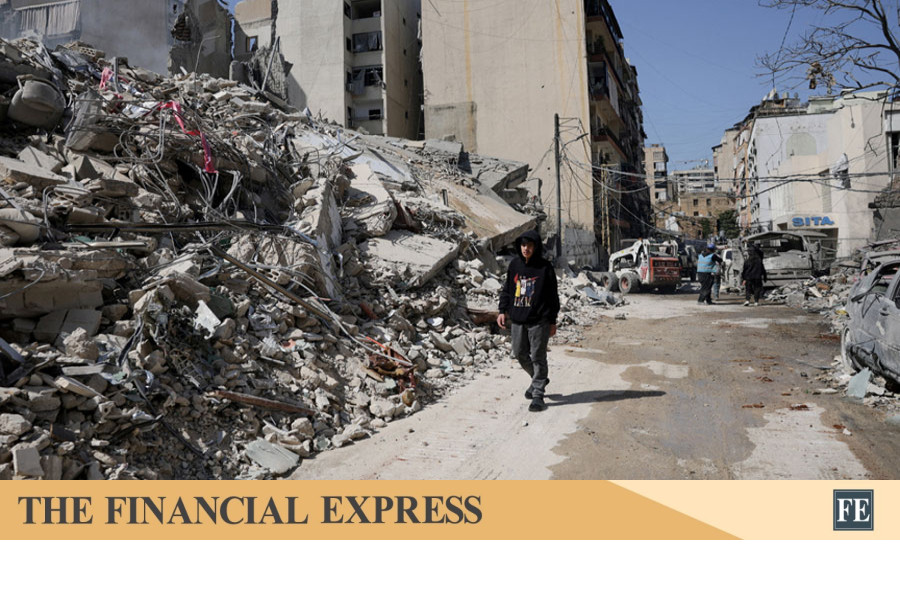
A person walks past debris at the site of an Israeli strike, following an escalation between Hezbollah and Israel amid the US-Israeli conflict with Iran, Zuqaq al-Blat district in central Beirut, Lebanon, Mar 18, 2026. Photo : REUTERS/Khalil Ashawi

A US proposal for ending nearly four weeks of fighting is "one-sided and unfair", a senior Iranian official told Reuters on Thursday, while US President Donald Trump said Iran must make a deal or face a continued onslaught.

The Iranian official said the proposal, conveyed to Tehran by Pakistan, "was reviewed in detail on Wednesday night by senior Iranian officials and the representative of Iran's Supreme Leader".

It lacked the minimum requirements for success and served only US and Israeli interests, the official said, while stressing that diplomacy had not ended despite the lack for now of a realistic plan for peace talks.

Trump described the Iranians as "great negotiators" but added that he was not sure he was "willing to make a deal with them to end the war".

The conflict began when the US and Israel attacked Iran on Feb 28. Iran has since launched strikes against Israel, US bases and Gulf states.

"They now have the chance, that is Iran, to permanently abandon their nuclear ambitions and to join a new path forward," Trump said during a Cabinet meeting at the White House. "We'll see if they want to do it. If they don't, we're their worst nightmare. In the meantime, we'll just keep blowing them away."

His comments came as the economic and humanitarian toll of the conflict mounted, with fuel shortages spreading worldwide, sending companies and countries scrambling to contain the fallout.

Maximalist Positions

US Special Envoy Steve Witkoff confirmed that the US had sent a "15-point action list" as a basis for negotiations to end the war, adding that there were signs that Tehran was interested in making a deal.

Pakistan's foreign minister said "indirect talks" between the US and Iran were taking place through messages relayed by Islamabad, with other states including Turkey and Egypt also supporting mediation efforts.

But Iran's foreign minister said on Wednesday this did not amount to negotiation. "At present, our policy is to continue resistance and defend the country, and we have no intention of negotiating," Abbas Araqchi said.

Any talks, were they to happen, would likely prove very difficult given the positions laid out by both sides.

According to sources and reports, the 15-point proposal to end the conflict includes demands ranging from dismantling Iran's nuclear programme and curbing its missiles to effectively handing over control of the Strait of Hormuz.

Iran has hardened its stance since the war began, demanding guarantees against future military action, compensation for losses, and formal control of the Strait, Iranian sources say. It also told intermediaries that Lebanon must be included in any ceasefire deal, regional sources said.

Trump has not identified who the US is negotiating with in Iran, with many high-ranking officials among the thousands of people killed in the war across the Middle East.

Iran's Supreme Leader Ayatollah Ali Khamenei was killed on the first day of the conflict and was replaced by his son Mojtaba, who has been wounded and has not been seen in public since his appointment.

A Western diplomat said the US had taken a "maximalist" position and there were doubts about whether Washington was genuinely seeking to end the war or instead buying time to calm markets as it prepares for a potential ground operation.

Waves of Missiles

On Thursday, Iran launched multiple waves of missiles at Israel, triggering air raid sirens in Tel Aviv and other areas and injuring at least five people.

In Iran, strikes hit a residential zone in the southern city of Bandar Abbas and a village on the outskirts of the southern city of Shiraz, where two teenage brothers were killed, Iran's Tasnim news agency said. A university building in Isfahan was reported to have been hit.

Israeli officials said Israel had killed the naval commander of Iran's Revolutionary Guards, and that it had many more targets left as it degraded Iranian capabilities.

Still, Israel took Araqchi and Iranian Parliament Speaker Mohammad Baqer Qalibaf off its hit-list after Pakistan urged Washington to press Israel not to target people who could be negotiating partners, a Pakistani source with knowledge of the discussion told Reuters. An Israeli military spokesperson declined to comment.

Stock Rally Fades, Oil Prices Resume Rise

Hopes of a resolution to the conflict that had boosted global stock markets in the previous session dimmed on Thursday, with oil prices resuming their surge.

The fallout from the war, which has caused the worst energy shock in history, has spread far beyond the region.

With the Strait of Hormuz, a conduit for a fifth of the world's oil and liquefied natural gas, effectively closed, the impact is rippling through sectorsfrom plastics and airlines to technology, retail and tourism.

Some governments are weighing support measures last used during the COVID pandemic. Farmers are struggling to source diesel for their tractors and tens of millions more people will face acute hunger if the war continues into June, the World Food Programme estimates.

Exchanges of missiles and drones across the Gulf continued on Thursday.

In Abu Dhabi, two people were killed and three others injured by debris from an intercepted ballistic missile, the government said.​
 
Analyze

Analyze Post

Add your ideas here:
Highlight Cite Respond

US uses hundreds of Tomahawk missiles on Iran, alarming some at Pentagon, WaPo reports

REUTERS
Published :
Mar 27, 2026 22:39
Updated :
Mar 27, 2026 22:39

1774656214697.webp

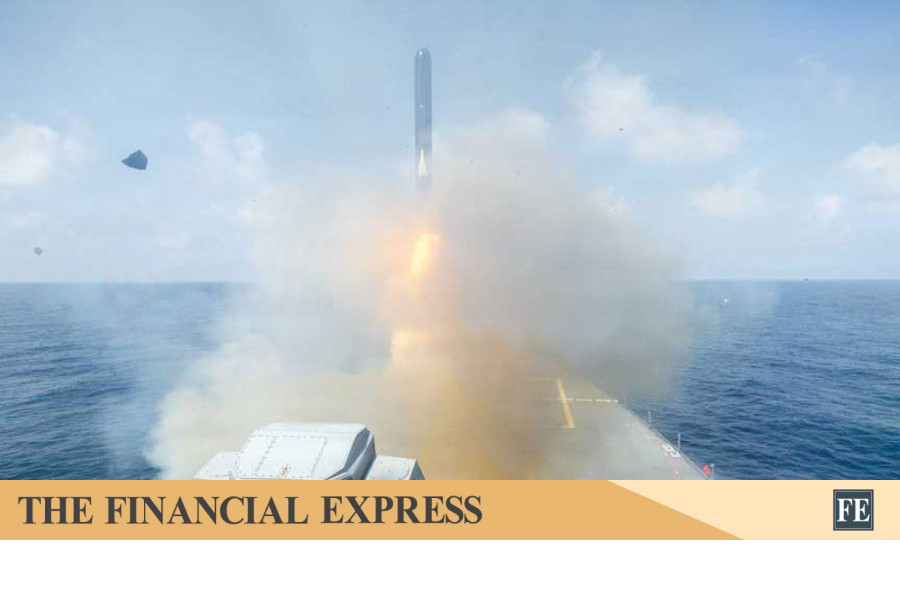
Arleigh Burke-class guided-missile destroyer USS Spruance fires a Tomahawk Land Attack Missile in support of Operation Epic Fury, at an undisclosed location, Feb 28, 2026. Photo: Reuters

The US military has fired over 850 Tomahawk cruise missiles in four weeks of war with Iran, burning through the precision weapons at a rate that has alarmed some Pentagon officials and prompted internal discussions about how to make more available, the Washington Post reported on Friday, citing people familiar with the matter.

Reuters could not immediately verify the report.

“The US military has more than enough munitions, ammo, and weapons stockpiles to achieve the goals of Operation Epic Fury laid out by President Trump -- and beyond," White House press secretary Karoline Leavitt said in a statement to Reuters.

"Nevertheless, President Trump has always been intensely focused on (strengthening) our Armed Forces and he will continue to call on defense contractors to more speedily build American-made weapons, which are the best in the world,” Leavitt's statement said.

Asked for comment, the Pentagon, which Trump has ordered renamed Department of War, said the military had all it required.

"The Department of War has everything it needs to execute any mission at the time and place of the President’s choosing and on any timeline," chief Pentagon spokesman Sean Parnell said in a statement to Reuters.​
 
Analyze

Analyze Post

Add your ideas here:
Highlight Cite Respond

Gulf states tell US ending the war is not enough, Iran’s capabilities must be degraded

REUTERS
Published :
Mar 27, 2026 20:33
Updated :
Mar 27, 2026 20:33

1774656338676.webp

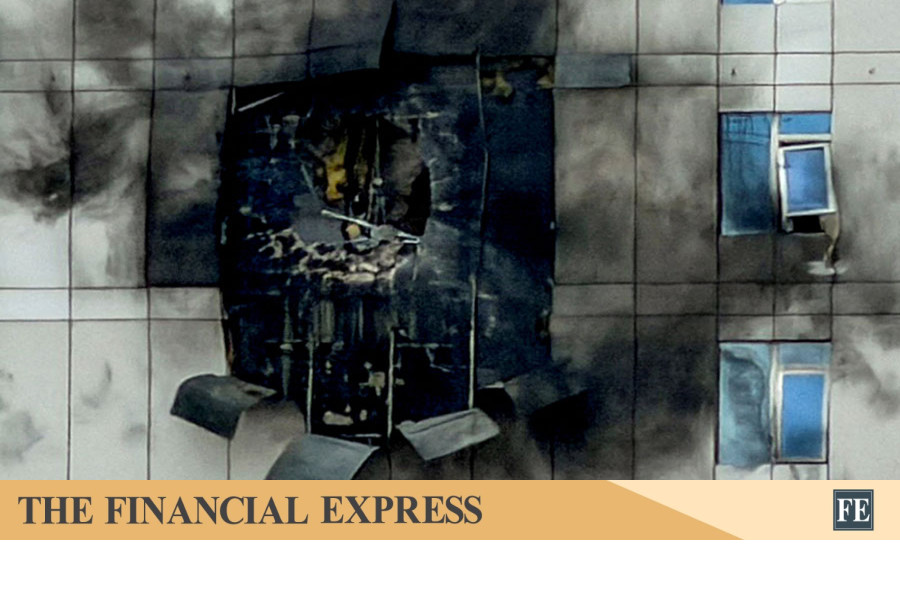
A building that was damaged by an Iranian drone attack, after Israel and the US launched strikes on Iran, in Juffair, Manama, Bahrain, Mar 1, 2026. Photo : REUTERS/Hamad I Mohammed/Files

Gulf Arab states are telling the US that any deal with Tehran should do more than end the war, and must permanently curb Iran's missile and drone capabilities and ensure global energy supplies are never again "weaponised", four Gulf sources said.

US President Donald Trump has extended his deadline for Iran to reopen the Strait of Hormuz, which carries about 20 percent of global oil and liquefied natural gas supplies, or face the destruction of its energy plants.

But the big question confronting Gulf policymakers is no longer how the Iran war ends, but what kind of regional order follows, the four Gulf sources with knowledge of the matter told Reuters.

A Ceasefire Alone 'Isn't Enough'

Gulf officials, whose countries have been repeatedly fired on by Tehran during the US-Israeli war on Iran, have told Washington in private meetings that the Islamic Republic has left them no diplomatic "off-ramp", the sources said.

The officials want any deal to lock in enforceable restraints on missile and drone attacks on energy and civilian assets, threats to oil and shipping routes, and proxy warfare, the sources added.

Any agreement must rewrite the rules of engagement by providing guarantees that the Strait of Hormuz is never again used as a tool of war and Gulf states must be written into the architecture of what comes next, they say.

"The real challenge is not persuading Iran to stop the war, but ensuring the Gulf is not left exposed to the same dynamics that made it possible in the first place," Ebtessam Al‑Kerbi, president of the Emirates Policy Centre, told Reuters.

Yousef al‑Otaiba, the United Arab Emirates’ ambassador to the United States, has framed the war not as a crisis to be frozen but as a test of whether Iran can still hold the global economy hostage afterwards.

"A simple ceasefire isn’t enough," Otaiba wrote in a column for the Wall Street Journal. "We need a conclusive outcome that addresses Iran’s full range of threats: nuclear capabilities, missiles, drones, terror proxies and blockades of international sea lanes."

A deal that only shelves missiles, drones and proxy warfare, he wrote, would simply defer the next crisis.

Gulf economies, highly reliant on energy exports and travel, have been hit hard by the war, which has sent shockwaves through the global economy, with disruptions in the strait driving up energy prices, rattling supply chains and fuelling inflation.

The United States can determine with certainty only that it has destroyed about a third of Iran's vast missile arsenal, according to five people familiar with the US intelligence.

Gulf officials say their scepticism is rooted in experience.

Iran’s nuclear enrichment - part of the process of making nuclear weapons although Tehran denies seeking them - was capped under a deal reached in 2015, but Tehran retained the ability to menace the region with missiles, drones, proxy warfare and threats to maritime security. The Gulf states say that possibility must now be removed if the region is to be stable.

In 2018, Trump announced the United States' withdrawal from the 2015 Iran nuclear deal, calling the agreement a “defective” and “one-sided” agreement that did not serve US interests.

Iran’s Strikes Push UAE Closer to Washington

The Gulf states of Qatar, Oman and Kuwait are pushing behind closed doors for a swift end to the war, fearing the economic fallout and reprisals, the sources said.

The UAE, Saudi Arabia and Bahrain say they are ready to absorb an escalation of the war and will not accept a post-war Iran that is still able to use the Strait of Hormuz as a bargaining chip of for what they see as blackmail.

Trump has not only said he will extend his deadline for Tehran to open the strait until 0000 GMT on April 7, but has also said talks with Iran are going "very well".

An Iranian official has described a US proposal for ending the war was "one-sided and unfair," and Tehran has demanded the closure of US bases in the Gulf as a condition for any settlement.

But UAE presidential adviser Anwar Gargash said Iran’s attacks on Gulf states had had "profound geopolitical repercussions," cementing Tehran as the central threat shaping Gulf strategic thinking. The result, he said, would be deeper security alignment by the UAE with Washington.

"This is the cost of Iran’s misguided calculations,” he said.

Gulf States Want Security Guaranteed

Abdulaziz Sager, chairman of the Saudi-based Gulf Research Center, said the Gulf states' message to Washington was no longer implicit but explicit - that any agreement with Iran must directly address and guarantee the security of the Gulf states."

"The United States protects its interests, and Israel’s. Now it is our turn to protect and defend ours," he said.

That message was reinforced by the Gulf Cooperation Council, a group including Bahrain, Kuwait, Saudi Arabia, Qatar, Oman and the UAE, which has signalled a unified front against any settlement that sidelines Gulf security.

Citing 5,000 missile and drone attacks on Gulf energy facilities, civilian infrastructure and maritime traffic, GCC Secretary‑General Jasem Al-Budaiwi has said that Iran has "crossed all limits".

He said the Gulf had exercised restraint to avoid a wider war but that the region would not accept being targeted again, making clear that while a political path is preferred, every state retains the right to defend itself.

Trump has been weighing whether to deploy ground forces to seize Iran’s strategic oil hub of Kharg Island, which handles 90 percent of Iran’s oil exports, according to a US official and three people familiar with the matter.

Taking it, analysts say, would give Washington powerful leverage over Iran’s economy.

Tehran has warned that any such move would trigger strikes by Iran against the “vital infrastructure” of any country that aided such an operation by US forces.

Some Gulf allies have been cautioning Washington against putting boots on the ground, including troops on Kharg Island, as they believe doing so would expand the war, trigger significant retaliation by Iran, and possibly on Gulf energy and civilian infrastructure, a senior Gulf official said.But the Gulf states are urging Washington to continue degrading Iran's cruise and ballistic missile capabilities as that has long been the main threat against their countries, the Gulf official said.​
 
Analyze

Analyze Post

Add your ideas here:
Highlight Cite Respond

US and the Israel-Iran war: Exiting the escalatory trap

Mohammad Abdur Razzak
Published: 27 Mar 2026, 08: 45

1774658269805.webp

The sun sets over city of Doha on 6 March 2026. Qatar on 6 March said its naval forces were inside buildings targeted by Iran in Bahrain overnight, though they were unharmed, after Manama reported attacks on residential buildings and a hotel. The Gulf has borne the brunt of Iran's retaliation since US-Israeli strikes sparked war on Saturday, with Tehran striking US assets but also civilian infrastructure in the region. AFP

The US and Israel war is raging through the fourth week as President Donald Trump issued a second ultimatum, the countdown beginning on 24 March 2026. What began on 1 April 2024, with the Israeli strike on Iran's embassy in Damascus, a sovereign violation tantamount to an act of war, has since spiraled into a regional inferno. As smoke engulfs the US's strategic interests, a bitter truth is emerging. the United States is no longer the principal actor in the Middle East. It has become a variable in the Middle Eastern geopolitical equation written by Israel.

Over the past two years, the world has witnessed a masterclass in coercive alliance management. Through a series of calculated, unilateral escalatory action, each one timed to exploit America’s political vulnerabilities. Israel has systematically dismantled the Biden (and now current) administration’s Middle East policy implying-Israel’s actions, particularly April 2024 onward, consistently undermined the stated objectives of both the Biden administration and his successor regarding the Middle East, hijacked US military assets i.e.

Israel, through its escalations, seized effective control over the deployment and use of American military assets, turning them into instruments of Israeli strategy, and transformed the US from a stabilising superpower into a reactive co-belligerent.

The spiraling of the escalation is not chaos; it is Israel’s planned mechanism to ensure that the United States cannot leave, cannot negotiate, and cannot de-escalate without appearing to abandon Israel which the US cannot do.

Israel activated the escalatory trap by bombing the Iranian consulate in Syria on 1 April 2024. It knew that would compel a direct Iranian response. What Israel also counted on, if Iran retaliates (it did so on 13 April 2024), the United States would be obligated to come to Israel's defence. That is exactly what happened. Tel Aviv was the lead, Washington followed. This position is further substantiated by Israel’s attack on Qatar on 9 September 2025.

Israel's attack on Doha on 9 September 2025 exposed the escalatory trap with stunning clarity. The Integrated Air and Missile Defence system, designed to protect Gulf skies and operated by US CENTCOM from Qatari soil, remained conspicuously silent as Israeli jets flew unopposed through Jordanian, Saudi, and Qatari airspace. The White House took hours to decide a response.

Spokesperson Karoline Leavitt acknowledged the attack "does not advance American goals" but simultaneously validated it, calling the elimination of Hamas "a worthy goal." Emboldened Prime Minister Benjamin Netanyahu warned Qatar to expel Hamas leaders: "If you don''t, we will." The Qatari Prime Minister could only lament, "We are betrayed."

The United States was manoeuvered into a position where it could neither defend its host-Qatar nor condemn the monster it created. Weeks later, after Arab states united in rhetorical outrage, the Trump administration extracted a belated apology from Netanyahu and issued an executive order pledging to defend Qatar, a promise that did not work, as Iran retaliated following the attack on it by the USA and Israel.

The US re-relocated military assets to the Mediterranean coast to protect Israel from Iranian missiles and drones. The message clearly signaled that the primary purpose of American bases in the GCC states is to serve Israeli interests first. Washington was trapped into taking Israel''s side over its GCC partners, proving that the security umbrella offers protection only when it goes by the Israel's playbook.

The pattern that Israel framed is ‘escalation dominance’. In June 2025, while American-Iranian negotiation was showing signs of progress, Israel struck again. The timing was no coincidence. Successful peace talks were meant to break Tehran’s strategic isolation that Israel viewed as existential threat. By forcing a military escalation at the precise moment when diplomacy was gaining traction, Israel ensured that the United States had to choose between abandoning its ally-Israel, or accepting peace in the Middle East. US abandoned peace and accepted Israel. Soon after, on 24 June 2026, American bombers hit Iranian nuclear facilities.

The escalatory dynamic reached its ugly height during the Omani mediation. According to reports, the United States and Iran were on the verge of a nuclear deal that would have re-established guardrails on the program and de-escalate tensions. At the precipice of a breakthrough, a massive preemptive strike was launched both by the USA and Israel on 28 February 2026, killing the Iranian Supreme Leader, dozens of other top-tier leaderships, and obliterating military infrastructure. The United States, bound by the necessity of standing with Israel, was dragged into the war.

US Secretary of State Marco Rubio defended the administration''s decision, telling reporters on Capitol Hill on 2 March 2026, "There absolutely was an imminent threat, and the imminent threat was that we knew that if Iran was attacked, and we believed they would be attacked, that they would immediately come after us. And we were not gonna sit there and absorb a blow before we responded (Aljazeera English, 2 March 2026)”. Rubio added that the Defence Department assessed that waiting for Iran to strike first after an Israeli attack would result in greater American casualties.

Journalist Mehdi Hasan, CEO of Zeteo, described this reasoning as fundamentally illogical. In an interview with India Today, following the strikes, Hasan argued that rather than restraining Israel, the United States had chosen to attack first and then retroactively justify the action as self-defense. "It is illogical," Hasan said, pointing to the administration''s willingness to be dragged into a war on Israel''s terms (India Today, 3 March 2026). His critique underscores a broader concern that the United States has surrendered its strategic autonomy, allowing Israel to dictate the terms of engagement in the Middle Est, with Iran in particular.

For decades, the ‘escalation trap’ was a theoretical concept, that a smaller ally could drag a larger power into war by manipulating facts on the ground. We are witnessing the industrialisation of that concept through the US-Israel and Iran war. Every Israeli operation is designed with an ‘escalation premium’. By striking Iran's Kharg Island, Pars gas field, oil refinery, hospitals, schools, residential buildings and public utilities, what international humanitarian law considers critical civilian infrastructure, both the US and Israel ensured Iran''s retaliation.

Now, the United States finds itself caught in a position of tragic irony. It is obligated by agreement to provide security to Gulf states who now face Iranian retaliation and tied to Israeli government that ensures Iran retaliates. The spiraling of the escalation is not chaos; it is Israel’s planned mechanism to ensure that the United States cannot leave, cannot negotiate, and cannot de-escalate without appearing to abandon Israel which the US cannot do.

The Trump administration appears confused about finding a ‘face saving exit’ as it started Israel''s war without its own political and military objective. To break the trap, Washington would have to do what is politically unthinkable: exercise strategic autonomy. It would have to signal that American forces and assets will not be activated automatically in response to Israel-triggered escalations. It would have to demonstrate the capacity of withholding military support if strikes are launched that jeopardize American diplomatic efforts or personnel.

The United States has allowed the tail to wag the dog to the point where the dog forgot it has a brain and jaws. Attacks on schools, hospitals, and critical infrastructure are against the Laws of Armed Conflict and serve the narrow strategic purpose of foreclosing- stepping back from conflict, saving face, or ending hostilities without further destruction. When critical civilian infrastructure is in ruins or threatened with destruction, the adversary cannot afford to stop fighting; the US and Israel cannot afford to lose, and so the cycle of escalation continues.

The world, especially the West, must recognise this war is not driven by American strategic necessity, but by Israel's efforts to reshape the region according to its own playbook. The United States has been caught in a trap of its own making, built by decades-long policy of unconditional support that removed all incentives for Israeli restraint.

The tragedy is that the US still possesses the power to prevent escalation. But power unused is power wasted. So long as Washington continues to make mistakes, it will remain on a one-way road to war that serves the interests of Israel, leaving US’s own standing and GCC allies in ashes.

The question is no longer whether Israel can drag the US into war. It already has. The question is whether the United States can remember that it is a sovereign nation with its own interests, or if it will continue to fight Israel's war until the last American ship, soldier, dollar and shred of credibility is gone.

* Mohammad Abdur Razzak (safera690@gmail.com), a retired Commodore of Bangladesh Navy, is security analyst.​
 
Analyze

Analyze Post

Add your ideas here:
Highlight Cite Respond

US, Israel hit Iran nuclear sites as Rubio trails end to Iran war
Agence France – Presse . Tehran, Iran 27 March, 2026, 23:36

1774660162500.webp

US Secretary of State Marco Rubio looks on as he speaks to the press following a G7 Foreign Ministers' meeting with Partner Countries before his departure at the Bourget airport in Le Bourget, outside Paris, on March 27, 2026. | AFP photo

US-Israeli strikes hit two Iranian nuclear facilities on Friday, as America’s top diplomat left a meeting with his G7 counterparts to declare that Washington expects victory within a couple of weeks.

Markets fell and oil prices rose against the backdrop of ongoing fighting in the Gulf and in Lebanon, with no clear end to the conflict in sight and despite US President Donald Trump’s repeated insistence that indirect talks with Iran are going well.

‘When we are done with them here in the next couple weeks, they will be weaker than they’ve been in recent history,’ Rubio told reporters in Paris after G7 talks.

Rubio also said that he had won support from his G7 colleagues to oppose Iran’s attempts to impose a toll on ships crossing the Strait of Hormuz, a key sea lane for oil and gas shipments from the Gulf.

‘Not only is this illegal, it’s unacceptable, it’s dangerous to the world, and it’s important that the world have a plan to confront it,’ Rubio said.

In a joint statement, the G7 foreign ministers ‘reiterated the absolute necessity to permanently restore safe and toll-free freedom of navigation in the Strait of Hormuz’ and called for ‘an immediate cessation of attacks against civilians and civilian infrastructure’.

Iran had sent ‘messages’ to the American side but had not responded to a US-proposed peace plan, Rubio said.

Iranian media reported a US-Israeli attack on the Khondab heavy water complex in central Iran, citing a local official, while the country’s atomic energy agency said a uranium processing plant 600 kilometres away in Ardakan was also hit.

Israel’s army confirmed that it struck the two facilities, while the Iranian sources said there was no release of radioactive material at either site.

Renewed strikes and diplomatic action came after Iran’s Revolutionary Guards warned civilians across the middle East Friday to stay away from areas near US forces.

Trump has insisted the Islamic republic wants to ‘make a deal’ and extended a deadline for Tehran to open the Strait of Hormuz or face the destruction of its energy assets from Friday to April 6.

But the Iranian side, which has made it clear it wants to end fighting on its own terms, indicated no let up in reprisal attacks against Israel and targets across the Gulf.

Civilians should ‘urgently leave locations where American forces are stationed so that no harm comes to you,’ the Guards said.

Iran has reportedly replied to a 15-point US plan with its own demands, including war reparations and recognition of its sovereignty over Hormuz.

‘The US, Israel and Iran each think they’re winning the war,’ Crisis Group Iran specialist Ali Vaez wrote on X.

‘If all three think their plan is working, each also believe(s) it has more cards up their sleeve,’ he added, which encourages each side to hold out for more in negotiations.

With war engulfing the region four weeks after the United States and Israel first attacked Iran on February 28, Tehran resident Ensieh said every day she was ‘losing more hope’.

‘We’re caught between three mad powers, and war is terrifying,’ the 46-year-old dentist told AFP journalists outside Iran. ‘I know I’ll never be the same person again.’

A month of US and Israeli attacks have damaged at least 120 museums and cultural and historic sites nationwide, a top Tehran official said.

Markets have been upended by Iranian attacks on trade and energy targets in the Gulf, with Kuwait saying Friday its main commercial port was damaged in a drone attack at dawn.

A top Iranian official threatened to attack Saudi Arabia’s Red Sea port of Yanbu, home to the Samref oil refinery, as well as the coastal Fujairah oil complex in the United Arab Emirates, should a ground invasion take place.

‘Step onto Iranian soil, and $150 becomes the floor for oil,’ vice-president Esmael Saghab Esfahani wrote on X.

Iran’s message on Hormuz was just as defiant, with the Guards saying the strait was ‘closed’ to vessels travelling to and from enemy ports, and that they had turned back three ships seeking to cross.

Oil prices were more than three percent higher Friday even after Trump pushed back his ultimatum for a second time.

The Tasnim news agency said Tehran also called for an end to US and Israeli attacks on its territory and on aligned regional groups – a reference to Lebanon’s Hezbollah, among others.

Lebanon was drawn into the war after Hezbollah fired rockets at Israel.

Blasts rocked a largely deserted southern Beirut early on Friday morning and again in the afternoon, with the government reporting two people killed.

Over one million people are displaced in a ‘deepening humanitarian crisis’, the UNHCR refugee agency’s local representative Karolina Lindholm Billing warned, adding that ‘the risk of a humanitarian catastrophe… is real’.

Israel has shown no sign of wavering, with Defence Minister Israel Katz vowing to ‘intensify and expand’ strikes on Iran in response to missile attacks on its soil.

The escalation threat came despite opposition leader Yair Lapid warning its military was ‘stretched to the limit and beyond’.​
 
Analyze

Analyze Post

Add your ideas here:
Highlight Cite Respond

Latest Posts

Back
PKDefense - Recommended Toggle