Home Watch Videos Wars Movies Login

[🇧🇩] Bangladesh Polls & Referendum 2026

[🇧🇩] Bangladesh Polls & Referendum 2026
6
13
More threads by Saif

G Bangladesh Defense

Saif

Senior Member
Joined
Jan 24, 2024
Messages
17,119
Likes
8,163
Nation

Residence

Axis Group

Referendum to fundamentally transform political order
Feb 12 vote to mark 'historic break' with past: CA


FE REPORT
Published :
Feb 10, 2026 08:17
Updated :
Feb 10, 2026 08:17

1770856935191.webp


Chief Adviser Prof Muhammad Yunus presides over a meeting of the advisory council at the Chief Adviser’s Office in the capital on Monday. — PID

Chief Adviser Prof Muhammad Yunus reassures that the forthcoming national elections will be conducted in a free, fair and transparent manner in a "historic break" with years of "mock" and "fake" polls.

Addressing senior secretaries and secretaries of the government, at his office in Dhaka Monday, barely three days before the nation goes to the polls, he said the general election - to be held alongside a constitutional referendum on 12 February -could usher in a fundamental transformation of Bangladesh's political order.

Addressing senior secretaries and secretaries of the government, at his office in Tejgaon on Monday, Yunus said the election - to be held alongside a constitutional referendum on 12 February - could usher in a fundamental transformation of the country's political order.

According to his press secretary, Shafiqul Alam, the head of the post-uprising interim government told the meeting with the high officials that a victory for the 'Yes' vote in the referendum would ensure that misgovernance "does not return" and would place Bangladesh's future on a more positive footing.

"If the 'Yes' vote wins in the referendum, Bangladesh's future will be built in a more positive way," Yunus said, adding that the country is "almost at its destination" with only days remaining before polling.

The chief adviser contrasted the upcoming vote with the previous three general elections held under the government of Sheikh Hasina, saying that those lacked legitimacy and failed to attract credible international observers. Those polls, he argues, could "hardly be described as genuine elections".

By a contrast, Yunus said, the forthcoming election would be peaceful and competitive, noting an absence of major political tensions. Campaigning was taking place across the country without serious incidents, he said, and political parties were showing restraint even as large public gatherings continued.

For the first time, expatriate Bangladeshis have been formally brought into the political process, a move Yunus describes as long-overdue. Acknowledging the role played by the diaspora in past political movements, he said their inclusion would allow them to contribute more meaningfully to national life.

Technology, he said, would play a central role in ensuring transparency. A voter-guidance mobile app has been developed, while other digital tools are being used to monitor security at nearly 43,000 polling centres.

Initiatives such as the "Election Bondhu" programme, the deployment of body-worn cameras to around 25,700 law-enforcement personnel, and the installation of CCTV cameras at polling stations are also part of the security framework.

Yunus said the arrival of a large number of international observers from different countries reflects renewed global confidence in Bangladesh's democratic process and shows that the election is being taken seriously by the international community.

He thanks senior civil servants for their support over the past 18 months, particularly in fast-tracking work on around 130 ordinances issued during the interim period, saying that their cooperation had been crucial to the government's functioning.

Looking beyond the election, Yunus said Bangladesh would seek to capitalise on its young population to attract global investment and expand industrial production.

He pointed out the Japan-Bangladesh Economic Partnership Agreement as a model for future trade arrangements, arguing that duty-free and preferential market access would encourage foreign companies to establish factories in the country.

Bangladesh, he notes, would pursue additional free-trade and preferential-trade agreements to open new economic opportunities and expand the reach of its exports, signalling an outward-looking economic strategy alongside what he describes as a turning point in the nation's political history.​
 
Analyze

Analyze Post

Add your ideas here:
Highlight Cite Respond

Calm comes down on poll campaigns
Voting Thursday in post-uprising referendum, general election

FE REPORT
Published :
Feb 10, 2026 08:34
Updated :
Feb 10, 2026 08:34

1770858001228.webp


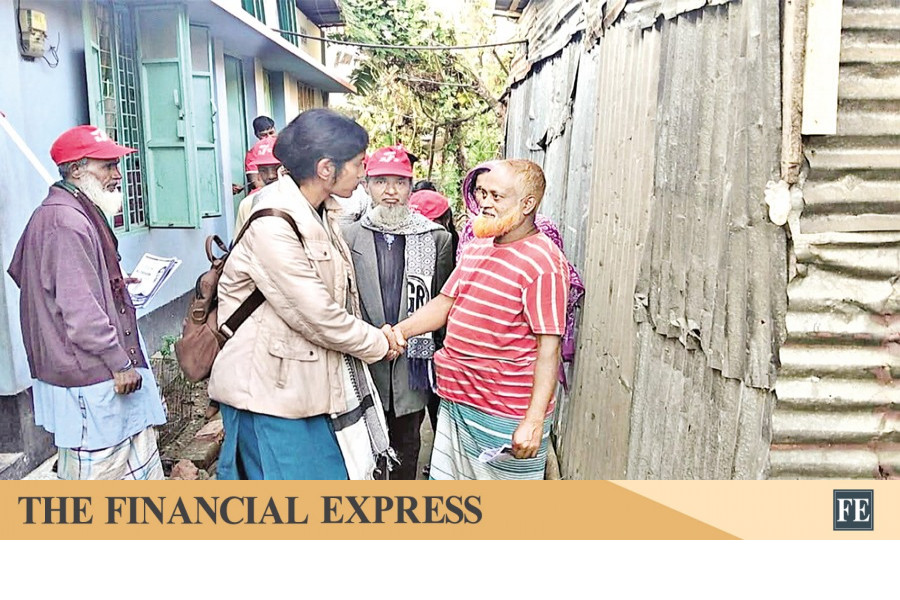
Dr Manisha Chakraborty, a candidate of Bangladesher Samajtantrik Dal for Barishal-5 constituency in the upcoming parliamentary elections, seeks votes on Monday. — Collected

Calm comes down on poll campaigns, sometimes having turned vituperative, as the countdown begins for voting Thursday in post-uprising referendum and general election.

The Election Commission has banned electioneering rallies and publicity from 7:00am Tuesday (today) in the run-up to the polls, being held against the backdrop of political upheavals that ousted a major party from power and from the electoral race.

Candidates passed busy time running campaigns across the country overnight to win voters' heart at the last hour as electoral campaign was to conclude this (Tuesday) morning.

As per schedule announced by the Bangladesh Election Commission (EC), campaign period began on January 22 and continued until 7.30 today-48 hours before the people begin to exercise their franchise.

If any candidates are found breaching the electoral code of conduct by running further campaigns beyond the stipulated time, they will have to face punishment

Meanwhile, heavyweight candidates joined rallies and conferences in different parts of the capital city to make the best use of the penultimate day.

Supporters of BNP Candidate Mirza Abbas brought out two processions in Shantinagar area of Dhaka-8 constituency, with separate male and female participants, from the BNP office at the fag-end of the election campaign. They also visited home to home in their areas and distributed the voter ID in favour of their candidate.

Supporters of other candidates from different constituencies were also seen in Ramna Park early in the morning distributing leaflets to joggers. An FE scribe found supporters distributing leaflets of Taslima Akter, a female candidate of Gono Sanghati Andolon from Dhaka 12. Though Ramna Park was not Taslima's constituency in the 13th national election, supporters said the campaign could be carried out from all corners, and people may inspire others in favour of their candidate.

The candidates and their supporters installed campaign booths in different parts of the constituency. They were also seen visiting home and business areas, footpaths and other local gatherings talking to people and asking to go to vote centres.

As the election commission barred parties from attaching posters, so many banners were seen hanging in different parts of the constituencies, particularly in front of shopping malls and other places.

Campaigners also gave voters check-list and booth details in those campaign booths. On a visit to some of the areas people were seen coming, specially women and elderly.

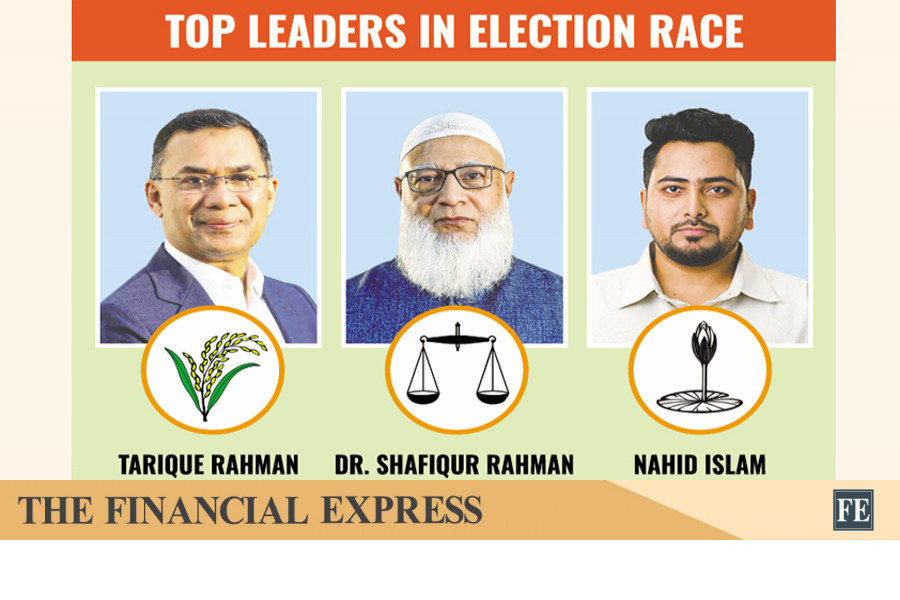
Dhaka-17 is a heavyweight constituency in this election. BNP Chairperson Tarique Rahman is contesting the polls from the constituency. Dr. SM Khaliduzzaman is contesting from Jamaat against him.

Tarique Rahman addressed a campaign rally in the city's Banani neighbourhood on Monday. City- dwellers apart from his supporters and party-men of the constituency joined the campaign.

Partymen and campaigners also conducted campaigns on foot to home and people on the streets for Tarique Rahman in the upscale Gulshan area and nearby slums. There are banners hanging on roadsides asking for votes.

His contestant, Dr Khaliduzzaman, is no different. He along with his wife and women and young supporters ran last-hours campaigns, including "mehedi utshob", in Gulshan 2. His doctor colleagues also joined election processions and campaigns on Monday seeking votes and support.

In Dhaka-11, campaigns of both the main competitors-BNP candidate MA Qayyum and Jamaat-e-Islami-led 11-party coalition-backed NCP candidate Nahid Islam-were seen seeking votes and support from the voters.

The area covers Badda of Dhaka North City Corporation, specifically wards 21, 22, and 23. Badda, Beraid, Vatara, and Satarkul, Vatara.

Talking to the FE, Mannan Mahmud, a campaigner of BNP's MA Qayyum at the city's Uttor Badda campaign booth near Hossain Market, said they were all set to see a great election day after three national elections as those failed to become a real test of democracy.

"We are seeing great enthusiasm among the voters. Especially the voters who never voted in the last 17 years and the young voters are so enthusiastic. This time, due to the situation that changed after the July uprising, we didn't have any unwanted conditions or violence over running campaign," he added.

Mahmud, a member of the local development, said, "This is a great opportunity to restore democracy we shouldn't miss."

Presence of women campaigners has also been seen. Women campaigners for Nahid Islam were also seen visiting residential areas and businesses.

"We are visiting homes and asking for their support and vote for Nahid. We are getting positive responses from both men and women but the women and youth response we got pleasing," said Arzina Begum. People of the group are counting time to see the transition of democracy on February 12, she added.

A Supreme Court chamber judge Monday referred to a full bench the leave-to-appeal petition filed by NCP candidate Nahid Islam for a stay on the Election Commission's decision to allow the BNP nominee to contest in the Dhaka-11 constituency.

Bangladesh Jamaat-e-Islami Ameer Shafiqur Rahman joined rally on the day for his own election campaign in Dhaka-15 constituency consisting of Mirpur and Kafrul areas.

He said if his party wins the national elections, they will establish justice (Insaf) and egalitarian society for the welfare of the country's people.​
 
Analyze

Analyze Post

Add your ideas here:
Highlight Cite Respond

Referendum on constitutional and governance reforms will also be held
Historic 13th parliamentary polls today


Mir Mostafizur Rahman
Published :
Feb 12, 2026 00:18
Updated :
Feb 12, 2026 02:40

1770858222851.webp


Bangladesh heads to the Jatiya Sangsad (JS) polls Thursday amid a changed political ambience in a consequential election in its recent history as rebuilding the country's upended democratic institutions is an onerous stake.

Many see the vote--arranged against the backdrop of an uprising that banished the then-ruling government-as a test of whether the nation can restore faith in democratic institutions after years of polarisation and contested ballots.

The 13th parliamentary election, taking place in 299 of 300 constituencies, raises hope for a free, fair and credible polls after almost 16 years as the last three polls, held under the Awami League-led regime, were marred by massive rigging and state-backed manipulations.

This time around, the election is being held under an interim administration led by Nobel-laureate economist Muhammad Yunus which has been steering the country since the ouster of the Hasina regime on August 5, 2024.

Today's polls have generated an unprecedented enthusiasm among the voters, particularly among the young voters who were deprived of exercising their voting rights during last three electiookns held under the autocratic regime of Sheikh Hasina. People in their thousands left Dhaka city by roads, railway and waterways to their respective constituencies during the last couple of days. Never before such exodus for exercising voting rights happened.

Given the security arrangements in place, polls analysts expect a festive polling atmosphere and high voter turnout.

More than 127.7 million voters are eligible to cast ballot, including 62,885,200 women and 64,825,361 men. Polling will run from 7.30am to 4.30pm, with paper ballots placed in transparent boxes. Officials say voters present at polling centres before closing time will be allowed to vote.


Polling in Sherpur-3 constituency is postponed due to the death of a candidate.

The Awami League, which had ruled for 15 years in a row, has been barred from contesting over allegations of crimes against humanity during its tenure.

In its absence, the political landscape has shifted dramatically. The Bangladesh Nationalist Party (BNP), founded by the late president Ziaur Rahman, is widely viewed as the frontrunner, according to most opinion polls in the run-up to the polls.


1770858259222.webp


The BNP chairman, Tarique Rahman - son of Ziaur Rahman and the late former prime minister Khaleda Zia, who herself served three terms - has led an energetic campaign, addressing 64 rallies in 19 days. In a recent interview, he said he was hopeful the party would be able to form the government on its own after Thursday's general election, coupled with a referendum on constitutional changes.

Jamaat-e-Islami, once banned and widely criticised for its role during 1971 the Bangladesh'd Liberation War, is also poised for what analysts suggest its strongest showing yet.

Its leader, Shafiqur Rahman, has addressed at least 62 public meetings since campaigning began on January 22, travelling by road and helicopter.

In a nationally broadcast address, he emphasised reforms in education, the judiciary, the economy and governance to restore public trust and promote inclusive development.

At several rallies, including four large gatherings in Feni, Noakhali, Laksam and Cumilla on January 30, his speeches went beyond soliciting votes and sought to frame the BNP as Jamaat's principal rival.

A total of 2,028 candidates from 50 political parties and independents are contesting the general election. Of them, 83 are women. Voting in the Sherpur-3 constituency has been postponed following the death of a candidate.

The scale of security deployment reflects both the stakes and lingering anxieties. About 958,000 law-enforcement personnel have been mobilised nationwide, including 103,000 army troops, 3,500 air-force personnel and 5,000 navy members. Police, Rapid Action Battalion officers and nearly 568,000 Ansar members will be on duty, alongside Border Guard Bangladesh and coast guard units.

More than 2,000 executive magistrates and 657 judicial magistrates have been assigned to oversee compliance and adjudicate election-related offences.

Authorities have identified 8,770 polling centres as highly vulnerable and 16,000 as moderately vulnerable. Over 90 per cent of centres have been equipped with CCTV cameras.

Inspector-general of police Baharul Alam has said a three-tier security system - static, mobile and striking forces - has been put in place.

"With the scale of security arrangements in place, no one has the capacity to disrupt the election," he said, though he acknowledged isolated incidents could not be ruled out.

Vehicle movement has been restricted nationwide in the run-up to polling, with motorcycles banned from Tuesday to Friday and most private and commercial vehicles suspended from Wednesday midnight until polling day, save emergency services and authorised personnel.

On the streets of Dhaka, the pre-election atmosphere has been subdued. A four-day holiday beginning Wednesday has prompted many residents to leave the capital for their native homes. Roads and neighbourhoods appear unusually quiet, with reduced public transport and only rickshaws and auto-rickshaws plying the streets.

Political analysts caution that the absence of the Awami League from the ballot does not mean its influence has evaporated. Even if half of its supporters turn out, they could decisively shape outcomes in tightly contested constituencies. As a result, nearly all major parties, including BNP and Jamaat, have made overtures to Awami-leaning voters.

Professor Lailufar Yasmin of Dhaka University says expectations are particularly high among younger voters. "Many expectations surround the election, as Bangladesh votes for the first time in roughly 17 years," she adds, referring to widespread doubts about the credibility of recent polls.

"About 30 per cent of young people are expected to vote for the first time. Many suspect their votes will go to rightwing, youth-led parties."

But she cautions against overstating their influence. "Young voters are distributed across different constituencies. They will not be the only deciding factor. Women's votes and those of financially marginalised groups - especially small business owners seeking stability, protection from extortion and assurance of law and order - will matter."

The varsity teacher looks out for three groups: youth voters, women voters and financially marginalised voters.

Alongside the parliamentary vote, a national referendum will also be held simultaneously, adding another layer of significance to Thursday's ballot.

Voters will be asked to give their verdict on a set of proposed reforms aimed at reshaping key constitutional and governance structures, a move the interim administration says is intended to strengthen accountability and prevent future democratic backsliding.

Supporters argue the referendum offers a rare opportunity for citizens to directly influence structural reforms, while critics warn that complex constitutional questions may not lend themselves to a simple yes-or-no vote amid an already polarised environment.

The simultaneous holding of parliamentary elections and referendum is unprecedented in recent years, and election officials say separate ballot papers and procedures have been arranged to ensure clarity and transparency in the dual process.

The final days of campaigning have also seen a surge in online disinformation. Facebook has become a battleground for fabricated quotes, doctored images and AI-generated visuals depicting staged meetings and conspiracy theories.

False statements attributed to political leaders have circulated widely, while unrelated images have been used to suggest foreign backing or geopolitical tensions.

Yunus, the interim government chief, has urged voters to participate "courageously" and called on political parties to accept the results with good grace in national interest.

In a televised address ahead of the election and the referendum, he warned that flawed or violent polls ultimately harm the country as a whole.

At least 394 international election observers and 197 foreign journalists have arrived in Bangladesh to observe the election.

Of the international observers, 80 represent various international organisations, 240 come from bilateral countries-including independent European observers-and 51 are individuals affiliated with different global institutions, officials said.

According to analysts, as Bangladesh prepares for the ballot, the vote represents more than a contest between parties. It is a referendum in both the literal and symbolic sense - on whether the country can move beyond years of acrimony and restore confidence in the democratic process, or whether its deep political divisions will once again cast a long shadow over the result.​
 
Analyze

Analyze Post

Add your ideas here:
Highlight Cite Respond

No possibility of lower voter turnout in absence of Awami League: EC

Diplomatic CorrespondentDhaka
Published: 11 Feb 2026, 23: 09

1770859301933.webp

Election Commissioner Brigadier General (retd) Abul Fazal Md Sanaullah briefs domestic and foreign observers and journalists ahead of the 13th parliamentary election at a hotel in Dhaka on 11 February 2026. Tanvir Ahammed

Several foreign journalists visiting Dhaka raised questions about whether the Awami League’s non-participation in the 13th parliamentary election would affect the acceptability of the election results. The Election Commission (EC) could not provide a direct answer to that question.

However, Election Commissioner Brigadier General (retd) Abul Fazal Md Sanaullah does not see any possibility of reduced voter turnout due to the Awami League’s absence. He explained that although the Awami League is not participating in this election, its allied parties are taking part.

On the day before the election, today Wednesday, the EC Secretariat organised a briefing for foreign election observers and journalists at a hotel in the capital. There, Election Commissioner Abul Fazal Md Sanaullah said that the official announcement of the 13th parliamentary election results would be made on Friday morning after counting the results received from across the country.

A BBC journalist asked the Election Commissioner whether initiatives have been taken to ensure a free, fair, and credible election, but a major party is effectively unable to participate—does this cast a shadow on the election’s credibility? There may be people in Bangladesh who wish to support that party, but tomorrow their choice will not be on the ballot. Is the government not concerned about the legitimacy of the election?

In response, Abul Fazal Md. Sanaullah said that the context of this election must not be forgotten. For one and a half decades, this country suffered from a democratic deficit. Those who are now in their thirties never had the opportunity to vote. We are going through a transformation process. Those who were involved in electoral processes that deprived people of their democratic rights are now facing legal proceedings. That is why certain entities are barred from participating in the election. However, this will not reduce voter turnout—you will see that tomorrow.

In a follow-up question, another BBC journalist asked whether he was therefore supporting the ban. In reply, the Election Commissioner said, he is saying this is a matter of a specific context and they must not forget the events of July–August 2024.

When asked about the EC’s position, Brigadier General (retd) Abul Fazal Md Sanaullah said that they do not see any possibility of reduced voter turnout. There is equal enthusiasm among people regardless of political ideology. A small number may not show up—that always happens. But overall, the majority will vote. And the party you are referring to was not alone—their other partners are participating in the election.

Allegations of violence have also been raised during the interim government. Is the Election Commission’s role weak? In response, the election commissioner posed a counter-question: Is work always visible? They are working effectively. Elections under a neutral government are always better—Bangladesh successfully held elections under caretaker governments in 1991, 1996, 2001, and 2008. Currently, due to the interim government, there is no influence from the government. Compared to recent times, this is one of the best environments. Isolated incidents have occurred, but they are vigilant. Historically, the highest level of deployment has been made—more than 950,000 personnel in the field, and for the first time UAVs, drones, body cameras, and CCTV are being used.

This Election Commissioner added that Operation Devil Hunt has been underway since 13 December; around 900 weapons have been recovered. There are three layers of security. There is no general threat. Isolated incidents may occur, and we will respond.

Brigadier General (retd) Abul Fazal Md Sanaullah said that they are not ruling out the possibility of such incidents. Tonight, all returning officers and law enforcement personnel have been instructed to remain alert. Isolated incidents may occur—they are prepared. In extreme cases, if any polling centre is so severely affected that voting cannot take place, alternative arrangements will be made on the same day.

Regarding postal voting, the election commissioner said that registration for postal votes was digital, while the rest of the process was manual. Each postal vote will be counted according to the respective parliamentary constituency. Only postal votes received by 4:00 pm on voting day will be counted.

When asked when the election results would be announced, Brigadier General (retd.) Abul Fazal Md Sanaullah said voting will end at 4:30 pm, and counting will begin immediately afterward. On average, each centre has two to three thousand votes and two types of ballots—counting may take four to six hours. Preliminary results will begin coming in from night through early morning.

At the event, referring to the fact that the previous two CECs are now in prison for failing to properly discharge their duties, a journalist asked whether the CEC feared a similar fate, even though voters are expected to cast their ballots in a festive atmosphere this time.

In response, CEC AMM Nasir Uddin said, “For a free, fair, and credible election, we have acted so far in line with the pledge we made to the nation, working strictly within the framework of the law. We are fulfilling our constitutional obligations. We are working with the commitment in focus that we made. Therefore, we have no reason to fear.”

Senior Secretary of the EC Akhtar Ahmed also spoke at the briefing.​
 
Analyze

Analyze Post

Add your ideas here:
Highlight Cite Respond

13th National Election
Working with commitment in focus, nothing to fear: CEC


Diplomatic CorrespondentDhaka
Updated: 11 Feb 2026, 16: 40

1770859485559.webp


Chief Election Commissioner (CEC) AMM Nasir Uddin speaks at a briefing for foreign election observers and media personnel at the Election Commission (EC) Secretariat in Dhaka on 11 February 2026. Tanvir Ahammed

Chief Election Commissioner (CEC) AMM Nasir Uddin said, “We are working in accordance with our commitment, within constitutional obligations and the law, with the goal of holding a free, fair, and credible election. Therefore, there is no reason for fear.”

He made this remark today, Wednesday, in response to a journalist’s query at a briefing organised by the Election Commission (EC) Secretariat for foreign election observers and media personnel at a hotel in the capital.

Referring to the fact that the previous two CECs are now in prison for failing to properly discharge their duties, a journalist asked whether he feared a similar fate, even though voters are expected to cast their ballots in a festive atmosphere this time.

In response, AMM Nasir Uddin said, “For a free, fair, and credible election, we have acted so far in line with the pledge we made to the nation, working strictly within the framework of the law. We are fulfilling our constitutional obligations. We are working with the commitment in focus that we made. Therefore, we have no reason to fear.”

Prior to this, the CEC in his scheduled speech said that all necessary arrangements for the election to be held tomorrow, Thursday, have been finalised, and full preparedness for election day has been ensured.

Nationwide public awareness activities are being conducted in coordination with relevant government departments to increase voter participation.

Presiding officers, assistant presiding officers, and polling officers will conduct voting and vote counting. Voting will be completed at polling centres in the presence of candidates or their nominated agents, accredited observers, and journalists, he added.

The CEC stated that after voting ends, counting will be conducted at the polling centres under the supervision of the presiding officers. Results will be announced after counting, and returning officers will later compile and officially publish them. In this way, transparency will be ensured in both voting and counting processes. All voters—regardless of gender, age, or background—are being encouraged to participate freely.

AMM Nasir Uddin said, “Transparency is the foundation of our election management. Representatives from election management bodies and international institutions, including delegates from 45 countries and organisations, are participating in this election. More than 60 officials and nearly 330 international observers are involved in the electoral process, including about 220 from the European Union. In addition, more than 160 international journalists are independently covering the election. Domestically, more than 45,000 observers from 81 registered organisations and over 60,000 journalists are expected to receive accreditation. All approvals are being completed through proper verification.”

The CEC said that relevant government officials and institutional representatives are also performing their duties to ensure effective coordination.

The commission has ensured journalists’ access to polling centres while maintaining voters’ privacy, so that voters do not face any inconvenience.

Domestic and international observers are being welcomed to monitor the process in accordance with the commission’s guidelines. They will be able to publish their observations after the election.

AMM Nasir Uddin added, “From the very beginning of our journey, we have prioritised transparency. Journalists are an important medium through which any irregularities can be identified. In this way, your engagement is highly significant in ensuring the highest level of transparency and public confidence in this election. I sincerely thank you for your professionalism, neutrality, and constructive engagement. I believe your observations and reports will make an important contribution to strengthening transparency and democratic trust.”​
 
Analyze

Analyze Post

Add your ideas here:
Highlight Cite Respond

Nation votes, hope rekindled
JS polls, referendum today set to end long denial of people’s right to vote

Ahmed Deepto and Mohiuddin Alamgir

1770859858599.webp


Bangladesh has been without a competitive election for so long that almost a third of the electorate has never witnessed genuine polls in which voters elect parliamentarians of their choosing.

That is set to change today as thousands queue at polling centres, some since the crack of dawn, to reclaim their franchise. These same voters had taken to the streets in July 2024 to overthrow a tyrannical regime. They bled while many others lost their lives.

It had been a monsoon of rupture. But today, they can usher a spring of hope.

Keen to ensure a peaceful election, the Election Commission has taken all-out measures to drape the country in a security blanket. And the voters will be at hand to make it festive. Many have journeyed back to their ancestral homes to take back what had been long withheld -- their right to vote.

Bangladesh is witnessing a competitive election again after 17 years as the entire nation will wait in suspense over who will emerge victorious.

Alongside the parliamentary election, citizens will also cast ballots in a referendum on constitutional reforms born out of a rare political consensus. The July charter is set to strengthen democratic institutions and ensure they function with greater accountability and effectiveness.

The memories of past elections still weigh heavy. The one-sided contests of 2014 and 2024 were widely dismissed as shams, while the 2018 edition was marred by allegations of ballot stuffing and intimidation. Together, these episodes destroyed public trust and left an entire generation without the experience of a genuine electoral contest.


“It feels like our voice matters again… We have waited too long for this day. I am really excited,” said Raihan Bin Sarwar, a private company executive from Mirpur-15, who will vote for the first time today.

Prof Sk Tawfique M Haque, an expert on policy and governance at the North South University, said people now feel empowered, as they will be able to elect their representatives.


Regarding enthusiasm among voters, he said that images of people rushing home in large numbers to cast ballots have been absent for many years. “The turnout could reach record levels.”

Even poor and low-income citizens are spending from their own pockets to travel home just to cast vote -- some riding on the roofs of trains, he said.

1770859912884.webp


“Since the mass uprising, people have become far more politically confident. There is no fear, no hesitation. This level of enthusiasm is unprecedented, and for democracy, it is a major achievement,” he said.

Ever since the interim government took office, it often repeated its priorities -- reforms, justice, and election. Although elections are generally held every five years, this election, the 13th edition in Bangladesh, comes just 26 months after the last one -- triggered by a mass uprising that ousted the previous regime in August 2024.

Awami League has been barred from the election for its role in the brutal crackdown that claimed at least 1,400 lives. While 50 parties are contesting the election, the main contest will be between two alliances -- one led by the BNP and the other by the Jamaat-e-Islami.

While the BNP was pressing for an election by December 2025 from early in the interim government’s tenure, other parties, including the Jamaat, said they would go to polls only after reforms were carried out.

But as demands for a quick election became stronger, Chief Adviser Muhammad Yunus announced in June 2025 that polls would be held in the first half of February, provided that preparations were complete.

Reforms remained elusive until mid-October, when 25 parties signed the July charter after months of negotiations among 30 parties at the National Consensus Commission. Five parties refused to sign, which included the National Citizen Party (NCP), the natural heir to the July uprising.

In November, the government announced that the national election and the referendum would be held on the same day. Later, the Election Commission confirmed February 12 as polling day.

In his address to the nation, Chief Election Commissioner AMM Nasir Uddin yesterday urged citizens to vote, reminding them that it was not only a civic right but also a responsibility.

“I appeal to political parties, candidates and voters; behave responsibly to maintain peace and harmony,” he said.

Polling is taking place in 299 constituencies, with election to Sherpur-3 suspended following the death of a candidate. Today, 42,779 polling stations will open their doors to 12.77 crore voters between 7:30am and 4:30pm.

They will be picking from 2,028 candidates -- 1,755 fielded by 50 parties and 273 independents. Among them, only 83 are women.

The BNP fielded 292 candidates, compared to 225 from the Jamaat. Both parties gave up the remaining seats to their alliance partners. The NCP, formed by frontline July protestors, is contesting 32 seats as part of the Jamaat-led alliance.

The Jatiya Party (Ershad) fielded 196 candidates, while Islami Andolan Bangladesh nominated 259 contestants.

With the AL banned and its registration withheld, the political landscape has shifted dramatically, leaving the scope for the BNP and the Jamaat-led alliance to secure AL strongholds where they never had a chance.

Founded in 1978, BNP has been out of power for 17 years -- its longest stretch. The Jamaat, banned after independence for collaborating with Pakistan during the war, was revived in 1976 and later joined BNP in a four‑party alliance in 1999. Together, they won in 2001, with two Jamaat leaders becoming cabinet members.

In 2013, the High Court cancelled Jamaat’s registration, ruling that provisions of its charter violated the constitution and election laws.

Facing criticism for its ties with the Jamaat, the BNP distanced itself from the Islamist party. The 20-party alliance dissolved in December 2022 after BNP asked allies not to use the alliance’s name.

BNP won the 1979 election, and then the election in 1991 following the fall of HM Ershad in a mass uprising. It also won the one-sided polls in February 1996 but that administration was short lived. It regained power in 2001.

Jamaat took part in the national election under its name in 1986. The party achieved its best result in 1991 with 18 seats and 12.13 percent of the popular vote.

While both parties pledge justice as a founding principle, their chiefs have exchanged taunts and barbs, and at times fiery rhetoric.

BNP’s Tarique Rahman and Jamaat’s Shafiqur Rahman had been in a war of words. The BNP slammed the Jamaat for its role during the 1971 Liberation War, and accused of misleading people through misuse of religion, and of conspiring to carry out “election engineering.”

On the other hand, the Jamaat accused the BNP of corruption, land-grabbing, extortion, and “neo-fascism.”

While pre-polls violence is not unusual in South Asia, it has been low in Bangladesh this time.

“In a densely populated country like Bangladesh, where emotions run high during elections, the overall atmosphere remains relatively calm,” said Prof Tawfique.

Political analysts note another striking feature of this election: the heightened global interest in Bangladesh’s democratic transition. The polls are being held under the watch of the largest contingent of local and international observers since 2008 -- 335 international observers from 40 countries and eight representatives from international organisations. Another 57 observers have arrived at the EC’s invitation.

Badiul Alam Majumdar, chief of the now-defunct Electoral Reform Commission, said the surge in observers reflects the competitive nature of this election.

“Many international observers showed little interest in monitoring the last three polls, as they were not contested,” he added.​
 
Analyze

Analyze Post

Add your ideas here:
Highlight Cite Respond

Nation goes to polls
Moinul Haque 12 February, 2026, 00:04

1770860283419.webp

Election officials arrange ballot boxes at Willes Little Flower School and College to send them to local polling centres in the capital on Wednesday for today’s national elections and referendum. | Sony Ramani

Bangladesh is voting today in its 13th Jatiya Sangsad elections, being held simultaneously with a referendum on whether voters back the state reforms known as the ‘July National Charter’.Bangladesh cultural tours

Polling is taking place in 299 constituencies of the total 300, as voting in Sherpur-3 has been postponed following the death of a candidate in the constituency.

Ballotting began at 7:30am and will continue until 4:30pm, with election officials instructed to ensure that no voter is deprived of casting their ballot due to time constraints.

A total of 2,028 candidates are contesting the elections from 50 political parties, including 274 independent and 41 women contenders.

The total registered political parties are 60.

Among the parties, the Bangladesh Nationalist Party has fielded the highest number of candidates – 291. The Islami Andolon Bangladesh has put forward 258 candidates while the Jamaat-e-Islami has nominated 228. The Jatiya Party has fielded 198 candidates.

The Election Commission said that the breadth of participation underscored the competitive nature of the polls.

According to official figures, the country has 12.77 crore registered voters, including around 6.48 crore men and 6.28 crore women.

Nearly 45 per cent of the voters are aged between 18 and 33, reflecting a strong youth presence.

Around four crore young voters are taking part, many of whom are casting their ballots for the first time in a general election.

The election carries particular significance as it is being held under an interim administration formed after the 2024 political upheaval.

The Awami League government led by Sheikh Hasina, which had been in power from 2009 until August 4, 2024 as a result of a series of disputed elections, was toppled by a student-led mass uprising on August 5.

An interim government headed by Professor Muhammad Yunus assumed office on August 8, 2024.

A few days after assuming office, the government imposed a ban on the activities of the Awami League over allegations of crimes against humanity during the 2024 mass uprising, and the Election Commission subsequently suspended the party’s registration, rendering it ineligible to contest the election.

The interim government pledged sweeping state reforms, accountability for the July–August violence, and the holding of a credible national election.

For many voters who were excluded from the previous three general elections in 2014, 2018 and 2024, today’s vote is seen as an opportunity to reclaim their franchise.

Alongside them, millions of young and previously disillusioned citizens are expected to cast their votes in the hope of shaping a new political chapter.

In another first, expatriate Bangladeshis have cast their votes through postal ballots.

Voting is being conducted at 42,958 centres nationwide. Of these, 42,659 are designated for in-person voting, while 299 centres are assigned for counting postal ballots.

The commission has identified around half of the in-person polling stations as sensitive, based on local risk assessments.

Around 9.58 lakh members of law enforcement agencies have been deployed in all constituencies.

Additionally, about 2,100 executive magistrates and 657 judicial magistrates are on duty to address any electoral or legal violations.

The EC said that there was no cause for alarm given the scale of preparations, though it acknowledged that isolated incidents could not be ruled out.

For the first time in a national poll, unmanned aerial vehicles are being used to monitor voting areas.

Law enforcement personnel have been equipped with body-worn cameras while more than 90 per cent of the polling centres have been fitted with CCTV cameras, bringing most of the process under visual surveillance.

1770860350142.webp

Caption


The election is being managed by 69 returning officers, more than 900 assistant returning officers, 4,378 presiding officers, 247,862 assistant presiding officers, and over five lakh polling officers.

At least 394 international election observers and 197 foreign journalists have arrived in Bangladesh to observe the general election and the referendum.Bangladesh cultural tours

A key feature of this election is the referendum on the July National Charter (Constitutional Reform) Implementation Order, 2025.

If a majority voters endorse the ‘yes’ answer in the referendum, a constitutional reform council will be formed, consisting of elected members of the new parliament.

The council will function concurrently with the Jatiya Sangsad and will be tasked with finalising specific constitutional reforms within 180 working days from its first sitting.

The constitutional reforms adopted by the council will be final and will not require further approval.

Within 30 working days of completing the reforms, a 100-member upper house will be constituted based on the vote share of the political parties in the election and it will serve until the end of the lower house’s term.

The ousted Awami League government faced sustained criticism over the general elections held in 2014, 2018 and 2024.

An investigation committee appointed by the interim administration concluded that the three previous elections were not isolated events but part of a long-term strategy designed to keep the Awami League in power after the abolition of the caretaker government system in 2011 through the 15th Amendment to the constitution.

The report concluded that the constitutional amendment enabled a series of one-sided and engineered elections, culminating in the 10th, 11th and 12th Jatiya Sangsad in 2014, 2018 and 2024.

These elections, held at significant public expenses, severely eroded citizens’ voting rights, the committee chief said.

The 2014 election was characterised by boycotts, widespread violence and a large number

of uncontested seats, with 153 candidates elected unopposed.

International observers, including the US State Department and the Commonwealth, reported serious irregularities, restrictions on campaigning and manipulations in vote counting.

In 2018, opposition parties took part but according to the report faced systematic suppression, including mass arrests and politically motivated cases, while courts routinely denied them bail.

The 2024 polls, boycotted again by major the opposition forces, allegedly relied on dummy candidates to simulate competition.

Findings cited from the European Union Election Expert Mission pointed to manipulation and tactics designed to secure victory for the ruling party.​
 
Analyze

Analyze Post

Add your ideas here:
Highlight Cite Respond

Members Online

Latest Posts

Back
 
G
O
 
H
O
M
E