[🇧🇩] Banking Industry in Bangladesh

Quick Reply ✓ Posted!
[🇧🇩] Banking Industry in Bangladesh
446
21K
More threads by Saif

G Bangladesh Defense

A legal weapon against NPL menace

There is something profoundly unsettling about the fact that Bangladesh now needs a new legal arsenal to deal with non-performing loans (NPLs) that should have been contained by normal banking discipline. The proposed Distressed Asset Management Act (DAMA) 2026 and amendments to the Money Loan Court Act are, therefore, welcome, but they also represent an uncomfortable reality: the banking system has allowed the problem of bad loans to grow far beyond the management capacity of its existing institutions. The scale of bad loans is staggering. Classified loans stood at Tk 6.06 trillion at the end of the 4th quarter of fiscal year 2026, equivalent to 32.78 per cent of total outstanding bank credit. In other words, roughly one in every three taka lent by the banking system had entered a troubled territory. Even more revealing is the broader definition of distressed assets --- including defaulted, written-off, rescheduled and court-stayed loans --- which reached nearly Tk 11 trillion, or about 60 per cent of outstanding loans, at the end of 2025.

Under the circumstances, the government's move to equip itself with stronger legal instruments is thus both necessary and overdue. The proposed Distressed Asset Management Act, together with amendments to the Money Loan Court Act, seeks to turn loan recovery from a slow, cumbersome process into a more dynamic mechanism. More importantly, DAMA envisages a formal market in which distressed loans can be bought and sold, allowing private firms to acquire bad loans, take possession of mortgaged assets and, where necessary, assume control of indebted companies.

There is indeed logic behind such an approach. Once bad loans remain trapped on banks' balance sheets, their ability to extend fresh credit is diminished, capital is impaired and the entire financial system becomes less efficient. A functioning distressed-asset market could, in principle, give banks an avenue to clean, at least partially, their balance sheets while allowing specialised investors to recover value from assets that banks themselves may be unable to manage effectively. The proposed Distressed Asset Management Unit (DAMU) under the Bangladesh Bank, and a specialised enforcement taskforce, could further strengthen this process. The proposal to settle Money Loan Court cases within six months and introduce mechanisms for appeals, auctions and recovery officers also points to an effort to address one of the most persistent weaknesses of the system involving the extraordinary delay between default, litigation and recovery.

In view of the wrongs facing the banking industry, one may find it easy to be convinced that legislation alone will correct the system. Bangladesh's NPL problem did not emerge simply because recovery laws were inadequate. It also grew out of politically connected lending, absence of due diligence, regulatory lapses and wilful default. The proposed law should be seen not only as an instrument for recovering old loans but also as a larger effort to prevent creation of new bad loans. Ultimately, success of the DAMA will be measured not by how efficiently it recovers yesterday's bad loans, but how successfully it prepares ground for sound borrowing practices for tomorrow.​
 

Agent banking accounts rise to 27.22m in June


1789253238292.webp


The number of accounts opened through agent banking in Bangladesh rose to 27.22 million at the end of June 2026, marking a 2.77 percent increase from the previous quarter, according to a Bangladesh Bank report.

The Quarterly Report on Agent Banking, April-June 2026, said 30 banks were providing agent banking services through 20,597 outlets operated by 15,424 agents as of June 30.

The number of agents increased by 1.58 percent and outlets by 1.27 percent during the quarter.

Of the total 27,224,256 agent banking accounts, 13,558,918, or around 50 percent, belonged to female customers, while 23,027,755 accounts, or 85 percent, were held by customers in rural areas.

The report said the growing number of accounts reflected rising demand for agent banking services among different segments of the population. Female-owned accounts increased by 3.06 percent during the quarter, surpassing male-owned accounts.

Deposits held through agent banking also continued to rise. The cumulative deposit reached Tk 519,072.92 million at the end of June, up 1.96 percent from the previous quarter and 13.82 percent from a year earlier.

Lending through agent banking recorded stronger growth, with cumulative loan disbursement reaching Tk 408,703.97 million. The amount increased by 8.26 percent during the quarter and 40.89 percent year-on-year.

The loan-to-deposit ratio rose to 78.74 percent in June from 74.16 percent in March, indicating increasing momentum in loan disbursement through agent outlets. Twenty-three of the 30 banks engaged in agent banking were involved in lending activities.

Rural customers received Tk 262,263.99 million, or 64.17 percent, of the total loans disbursed through agent banking. However, women accounted for only Tk 52,002.06 million, or 12.72 percent, of total lending, indicating significant scope for increasing women’s access to credit.

Agent banking also continued to play a major role in distributing inward remittances. The cumulative amount of inward remittances disbursed through agents reached Tk 2,149,041.57 million at the end of June, up 1.76 percent from the previous quarter and 16.87 percent year-on-year.

Rural beneficiaries received 90.44 percent of the total inward remittances distributed through agent banking, highlighting the channel’s importance in bringing remittance money to people outside major urban centres.

The report said agent banking was contributing significantly to financial inclusion by providing banking services to underserved populations, particularly in rural areas.

It noted that the increasing lending-to-deposit ratio indicated growing availability of finance for entrepreneurship through agent outlets. Bangladesh Bank is encouraging banks to facilitate CMSME and women entrepreneurship loans and refinance schemes for marginalised people through agent banking.

Meanwhile, female participation in agent banking as entrepreneurs is also increasing. As of June 2026, 28 banks were offering services through 2,106 female-owned outlets operated by 1,776 female-owned agents.

The report said female-owned outlets accounted for 10.22 percent of the country’s total agent banking outlets and had 2.34 million accounts, including 1.94 million accounts in rural areas.

Bangladesh Bank introduced agent banking in 2013 to provide an alternative delivery channel for banking services, particularly to people living in geographically remote areas. Customers can use the outlets for deposits, loans, remittances, payments and government social safety-net benefits.​
 

What lies behind Bangladesh Bank’s huge profit?

Shawkat Hossain


1789428597186.webp

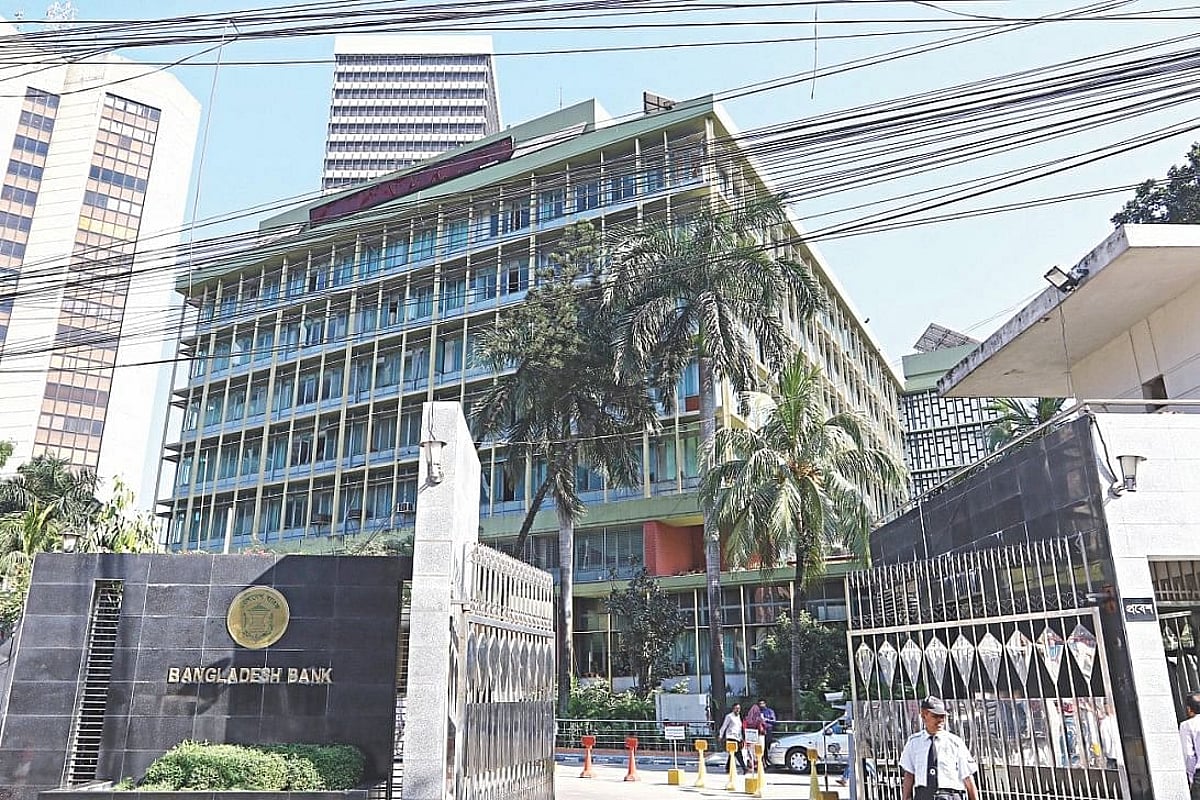
Bangladesh Bank headquarters Prothom Alo

When the financial sector is beset by multiple crises, the Bangladesh Bank’s net profit of more than Tk 260 billion raises fresh questions. Does the central bank’s record profit reflect weaknesses in the financial sector, or is it a sign of economic strength? Shawkat Hossain writes about the central bank’s profit and the financial sector.

When the financial sector is beset by multiple crises, the Bangladesh Bank’s net profit of more than Tk 260 billion raises new questions. Does the central bank’s record profit reflect weaknesses in the financial sector, or is it a sign of economic strength? Shawkat Hossain writes about the central bank’s profit and the financial sector.

At a time when bad news is coming from all directions about the country’s financial sector, a surprising piece of information has emerged about Bangladesh Bank. The country’s central bank made a net profit of more than Tk 260 billion in the 2025–26 fiscal year.

Its profit increased by about 15 per cent from the previous fiscal year. Bangladesh Bank is not a commercial enterprise. So how did it make such a large profit? Is this evidence of a healthy economy?

How much did Bangladesh Bank’s profit increase?

In the 2025–26 fiscal year, Bangladesh Bank’s gross profit stood at Tk 350.16 billion. Its expenditure during the year was Tk 89.93 billion. As a result, its net profit stood at Tk 260.23 billion. In the previous fiscal year, its net profit was Tk 226.20 billion.

Of this profit, Bangladesh Bank transferred Tk 259.77 billion to the government treasury. In other words, the government received almost the entire net profit. At the same time, a decision has been taken to provide the central bank’s officers and employees with an incentive bonus equivalent to six months’ basic salary.

Interestingly, although Bangladesh Bank’s income increased, part of it came from the weakness of the banking sector. If banks were stronger and better governed, they would not have needed such large amounts of emergency liquidity support.
Why did profit increase this time?

According to preliminary information, three main factors contributed to the increase in Bangladesh Bank’s profit in the 2025–26 fiscal year.

First, several weak banks in the country became dependent on Bangladesh Bank’s liquidity support to return depositors’ money and keep their day-to-day transactions running.

The central bank provided these banks with large amounts of money through repo, the Standing Lending Facility and special liquidity support. The interest earned on this lending was one of Bangladesh Bank’s main sources of income.

Interestingly, although Bangladesh Bank’s income increased, part of it came from the weakness of the banking sector. If banks were stronger and better governed, they would not have needed such large amounts of emergency liquidity support.

Second, Bangladesh Bank pursued a contractionary monetary policy to control inflation. As policy interest rates remained high for most of the year, banks had to pay higher interest on money borrowed from the central bank.

1789428693746.webp

Shawkat Hossain Prothom Alo

As a result, Bangladesh Bank’s income from lending and liquidity support increased. The central bank also earned interest from loans to the government and investments in government Treasury bills and bonds. Because of shortfalls in revenue collection and foreign financing, the government had to borrow more from the banking system.

At the same time, interest rates on government securities were also high. In other words, the interest-rate policy pursued to combat high inflation also helped increase Bangladesh Bank’s profit.

Third, Bangladesh Bank invests a large portion of its foreign exchange reserves in deposits with the central and commercial banks of various countries, foreign government bonds and other safe short-term financial assets. As international interest rates remained higher than in previous years, these investments also generated good returns.

What are Bangladesh Bank’s responsibilities?

The Bangladesh Bank Order, 1972 sets out six principal functions of the central bank. These include formulating and implementing monetary policy; formulating and implementing policies for intervention in the foreign exchange market; advising the government on the interrelationship between monetary, fiscal and exchange-rate policies and the economic effects of these policies; holding and managing Bangladesh’s official foreign exchange reserves; establishing and regulating a safe and efficient payments system, including the issuance of banknotes; and regulating and supervising banking companies and financial institutions.

Why profit is not a measure of success

The central bank’s principal responsibilities are to control inflation and maintain financial stability. Its success therefore should not be judged by the size of its profit or loss. The real question is whether a policy is serving the national interest and achieving its intended objectives.

A central bank’s profit can increase even as an economy faces growing crises. When policy interest rates are raised to curb inflation, the central bank earns more interest from loans to commercial banks. It can also earn money by selling dollars to prevent a depreciation of the domestic currency.

Again, when banks facing liquidity shortages borrow more, the central bank’s interest income increases. In other words, higher profit is not always a sign of a healthy economy; it may reflect high inflation, pressure on the currency or weaknesses in the banking sector.

Conversely, the central bank’s profit may decline, or it may even incur losses, because of measures taken to maintain economic and financial stability—such as providing funds at low interest rates, intervening in the foreign exchange market or taking on risky assets from distressed banks. But if such measures protect price and financial stability, they cannot be considered failures simply because they result in losses.

Let us now look at the experience of the central banks of several other countries.

Foreign assets are India’s main source of income

The Reserve Bank of India (RBI), recorded total income of around 4.28 trillion Indian rupees in the 2025–26 fiscal year, up 26 per cent from the previous fiscal year. However, it transferred 2.86 trillion rupees to the central government.

A large portion of the RBI’s income came from foreign assets.

Returns on investments in foreign government securities, foreign exchange transactions and income from domestic government bonds all increased. Pressure on the rupee has also been rising.

To counter this pressure, the RBI sold dollars in the market. Some of those dollars had earlier been purchased at relatively lower rupee rates. Selling them later at higher rupee rates generated a profit.

India, however, did not transfer the entire amount of its income to the government. Around 1.09 trillion rupees was transferred to the contingency fund, or an emergency risk reserve. The value of a central bank’s assets can fall rapidly when foreign exchange rates, gold prices, interest rates or the market value of government bonds change. To manage these risks, the RBI strengthened its own financial capacity before transferring the surplus to the government.

Higher interest rates boost profit in Pakistan

The State Bank of Pakistan made a net profit of 1.99 trillion Pakistani rupees in the 2025–26 fiscal year. Of this, 1.932 trillion rupees was given to the federal government. In other words, the government received around 97 per cent of the net profit.

However, the profit of Pakistan’s central bank declined by around 20 per cent from the previous fiscal year. At one point, the policy interest rate had risen to 22 per cent as the country sought to control inflation and meet the conditions of its IMF programme. Commercial banks were major buyers of government Treasury bills and Pakistan Investment Bonds.

When they needed liquidity, they pledged these securities with the central bank and borrowed through Repurchase Agreement (repo) and open market operations. High interest rates and the large volume of liquidity provided caused the State Bank’s interest income to rise as well.

Later, as inflation declined, the policy rate was gradually reduced to 11.5 per cent. This caused the central bank’s interest income and profit to decline as well. Therefore, the decline in profit cannot be directly described as a failure; rather, the fall in inflation made it possible to reduce interest rates. However, the profit of Pakistan’s central bank was one of the government’s major sources of non-tax revenue.

In Sri Lanka, lower profit but greater capacity

Sri Lanka’s example is different from those of Bangladesh, India and Pakistan. In 2025, the Central Bank of Sri Lanka made a net profit of 193.1 billion Sri Lankan rupees. Its profit declined by 29.7 per cent from the previous year.

One of the main reasons for the decline was lower net income from foreign currency assets. At the same time, net income from domestic currency assets also declined. The economy and markets are gradually returning to normal. As a result, income from the unusually high interest rates, exchange-rate movements and revaluation gains seen during the crisis period has declined.

Despite the fall in profit, the Central Bank of Sri Lanka’s financial capacity did not weaken. Rather, its foreign exchange reserves and total assets increased, while its equity almost doubled.

At the same time, the outstanding amount of funds obtained through a swap arrangement with the Reserve Bank of India declined, reducing pressure to repay foreign currency liabilities. In other words, a decline in profit does not necessarily mean that a central bank’s financial position has deteriorated; its capital, reserves, assets and liabilities must also be taken into consideration.

Although Sri Lanka’s central bank made a substantial profit, the government received only around 22 per cent of the total profit. The rest was retained to offset previous losses, build reserves, manage market risks and strengthen the central bank’s capital.

Profits in four countries, but different meanings

In Bangladesh, profit increased mainly because of interest earned on funds provided to distressed banks and the government, as well as income from investments of reserve assets.

In India, income increased from foreign assets, dollar sales and government bonds. In Pakistan, high policy interest rates and liquidity provided to banks boosted profit; after interest rates were lowered, profit also declined. In Sri Lanka, profit fell, but reserves, capital and financial capacity increased.

In other words, high profit is not definitive evidence of economic strength, just as low profit is not definitive evidence of weakness.

There are also differences in how profits are distributed. Bangladesh and Pakistan transferred almost their entire net profits to their respective governments, whereas Sri Lanka transferred around 22 per cent. India retained a large amount in its risk reserve before transferring the surplus to the government.

In Bangladesh, however, it is necessary to maintain adequate reserves to absorb future losses against the large volume of lending provided to weak banks. Therefore, before transferring almost the entire profit to the government, the central bank’s capital and its capacity to absorb credit risks should have been assessed.

The government is already facing a substantial shortfall in revenue collection. Receiving almost the entire amount of Bangladesh Bank’s profit will therefore provide the government with some relief.

The real measure of success

It is not unusual for a central bank to make a profit. Maintaining financial strength is also essential to a central bank’s independence and effectiveness. But profit is not its ultimate objective.

Bangladesh Bank’s success should be judged by whether inflation has been reduced and stabilised; whether excessive volatility in the exchange rate has declined; whether the dependence of weak banks on the central bank has decreased; how secure depositors’ money is; whether non-performing loans and banking fraud have come under control; and whether foreign exchange reserves are sufficiently safe and usable.

So the real question is not simply how much profit Bangladesh Bank has made. What matters is where the profit has come from, what risks lie behind it, how much represents genuine income and how much is accounting profit, and how the money has been distributed among the government, risk reserves and the central bank’s own capital.

*Shawkat Hossain is Head of Online at Prothom Alo​
 

Growth in NPLs weakening Bangladesh's banking sector: Experts

The growing trend of non-performing loans (NPLs) in Bangladesh's banking sector is placing severe pressure on the nation's financial system, with default loans now exceeding 32 percent of total disbursements and disrupting the natural cycle of credit recycling.

Mahbub Ullah, former Professor and Chairman of the Department of Development Studies at University of Dhaka, highlighted these concerns while delivering the 23rd Nurul Matin Memorial Lecture on "Ethics in Banking," organized by the Bangladesh Institute of Bank Management (BIBM) on Saturday, reports UNB.

Bangladesh Bank Governor and Chairman of the BIBM Governing Board, Md Mostaqur Rahman, presided over the event. BIBM Director General Dr. Md. Ezazul Islam delivered the welcome address, while Professor and Director (Research, Development and Consultancy) Md. Shihab Uddin Khan offered the vote of thanks.

In his memorial lecture, Dr. Mahbub Ullah observed that the core engine of the banking system—the continuous recycling of loan funds through deposit collection, lending, and reinvestment—has been severely disrupted. Because a significant portion of disbursed loans is not returning on time, banks are facing severe liquidity pressures and constrained lending capacity.

He pointed out that prolonged financial losses and mounting NPLs have left several banks struggling to maintain required capital reserves under international Basel-II standards. Consequently, even solvent institutions are adopting hyper-cautious lending postures, leaving eligible entrepreneurs and industrial enterprises starved of working capital and investment financing—a scenario that threatens national production, employment, and overall economic growth.

Dr. Mahbub Ullah warned that without sustainable measures, systemic risks will escalate, calling for immediate good governance, ethics, accountability, and proper risk management in loan approval and recovery processes.

Presiding over the function, Bangladesh Bank Governor Md Mostaqur Rahman emphasized that a bank's true strength relies not just on capital, technology, or liquidity, but fundamentally on public trust. He urged bankers to uphold the highest professional and ethical standards to safeguard depositor confidence.

BIBM Director General Dr. Md. Ezazul Islam stressed that banking decisions impact the broader economy because banks handle public funds. He noted that board members and top executives must lead by example to establish a culture of integrity, transparency, and accountability across financial institutions.

Concluding the session, BIBM Director Md. Shihab Uddin Khan stated that ongoing banking sector reforms aim not merely to keep troubled banks afloat, but to build a robust, governance-driven financial architecture that protects depositors, directs credit toward productive sectors, and ensures operational transparency.

The lecture was attended by economists, senior bankers, academics, and representatives from various professional sectors.​
 

Taxpayers should not have to bear the cost of bad loans

M Kabir Hassan

1789861364667.webp


Bangladesh’s bad loan situation raises a question that accounting alone cannot answer: who should bear the losses? At the end of June 2026, non-performing loans (NPLs) reached about Tk 6,06,555 crore, or 32.78 percent of bank loans. A New Age report says Bangladesh Bank is considering extending the overdue period for classification from three months to nine. That would improve the reported NPL ratio without recovering any money. Delaying recognition leaves the loss where it was.

Besides, repeated loan rescheduling has brought little lasting relief. As a recent commentary published in The Daily Star argues, concessions to large defaulters can make non-payment seem acceptable. Bangladesh needs to acknowledge losses, establish which borrowers can recover to pay off loans, and rebuild viable banks. Further concessions without these decisions will only prolong the problem.

Notably, much of the debate treats loan classification, provisioning, restructuring, write-offs and recapitalisation as interchangeable. Each serves a different purpose, and each has different consequences for the public purse.

Provisions—amounts banks set aside to cover potential losses in case a borrower fails to pay—reduce a bank’s income and capital. They are not government expenditure. Writing off a fully provisioned loan removes it from the bank’s balance sheet, but the borrower’s obligation and the bank’s recovery efforts continue. Public funding becomes relevant only when private capital cannot absorb losses and intervention is needed to protect systemic stability.

The Tk 6,06,555 crore NPL stock therefore does not imply an equivalent taxpayer bill, i.e., it is not an automatic government liability. Banks should first absorb the losses from these NPLs through provisioning and write-offs. Several studies co-authored by me show that how a bank provisions for its loans depends on a number of factors, ranging from institutional incentives to changes in accounting standards and provisioning regulations. Discretionary provisioning can also reduce a bank’s liquidity.

Therefore, the Bangladesh Bank’s move towards risk-based supervision of banks and IFRS 9—an international accounting standard for banks to classify, measure and report loans—requires credible asset-quality reviews of individual banks to establish losses. Besides, the IMF emphasises addressing undercapitalisation in the banking sector, depositor protection, and minimising the fiscal cost of restructuring banks.

Some businesses default because currency shocks, import disruptions, energy shortages or higher interest rates undermine their cash flow. Therefore, restructuring is justified where an independent assessment shows that recovery is possible. Borrowers should contribute equity by putting in more of their own capital, disclose information on beneficial ownership (actual owners who control the business) and accept restrictions on dividends and related-party transfers, and agree on measurable repayment milestones. Non-viable firms, serial reschedulers and diverted funds—used for purposes other than the stated business purpose—warrant different treatment.

Recovery also depends on how quickly disputes are settled. An article in The Daily Star describes Thailand’s out-of-court workouts and specialised bankruptcy procedures. Bangladesh already has a legal basis for mediation: section 22 of the Artha Rin Adalat Ain, 2003, requires court-referred mediation after the defendant (in this case the borrower) has submitted a written statement; section 23 allows a further attempt at alternative dispute resolution (ADR) before judgment.

Banks should use these provisions through mediation lasting 60-90 days, with independent mediators and representatives authorised to settle. Borrowers must disclose their assets and beneficial ownership, and settlements must be enforceable. Recovery proceedings should resume promptly if mediation fails. Parliament could introduce a pre-litigation ADR window for small and medium enterprises and viable corporate borrowers. Clear eligibility rules would help prevent willful defaulters from using mediation to obtain another waiver.

Professionally managed distressed asset companies—specialised firms that buy and manage troubled financial assets—could help banks recover value under Bangladesh Bank oversight. Their usefulness depends on honest transfer prices. Suppose a Tk 100 bad loan has a recovery value of Tk 30. Selling it to an asset management company (AMC) for Tk 90 with a public guarantee conceals a Tk 60 recapitalisation cost, which the taxpayer ultimately bears.

South Korea’s KAMCO and Malaysia’s Danaharta illustrate the importance of credible valuations, professional management, recovery powers and a limited operating life. Ukraine wrote off fully provisioned loans while continuing recovery. These experiences suggest that asset sales work best alongside borrower restructuring, bank recapitalisation and efficient foreclosure, backed by political commitment.

The FY2026-27 budget allocates Tk 36,706 crore to bank mergers and restructuring; the revised FY2025-26 allocation was Tk 41,558 crore. Before drawing on these funds, banks should absorb losses through earnings and capital. Shareholders should face dilution or loss of their investment, and culpable insiders should face clawbacks. Borrower repayments, collateral recoveries and asset sales should reduce the remaining gap. Viable banks should then seek private capital. Taxpayers should supply only the residual capital needed by systemically important banks.

Any public recapitalisation should secure an equity stake in the bank or another recoverable claim. Management changes, recovery targets and a timetable for government exit should be conditions of support.

Bonds issued by the government to recapitalise banks defer cash payments but add to public debt. At an assumed 10 percent financing cost, Tk 36,706 crore would require roughly Tk 3,671 crore in annual interest, alongside about Tk 1,27,500 crore already budgeted for interest payments. Financing insolvency by printing money would create further pressure. Therefore, central bank liquidity should serve only solvent banks experiencing temporary stress.

A three-year timetable should be set up for bad loan clean-up. During the first six months, the asset-quality-review results must be published, distinguishing viable from non-viable banks and restricting dividends at undercapitalised institutions. Over the following 18 months, viable borrowers should be restructured through disciplined workouts and ADR; distressed assets should be sold and fully provisioned loans written off without abandoning recovery. Then, government should recapitalise viable banks and resolve or merge those that cannot survive.

The final year should concentrate on preventing another accumulation of bad loans. Better underwriting (assessment of borrower risk), fit-and-proper tests (strict screening of bank management/directors), board accountability, disclosure of related-party lending and faster collateral enforcement must become routine practice.

A lower reported NPL ratio will mean little if banks still cannot recover their loans. The test is whether Bangladesh restores credible balance sheets, preserves viable businesses and recovers diverted assets while protecting depositors. Taxpayers have a role where stability requires public support, but they should not carry the losses that borrowers, bank owners and responsible insiders can bear.

Dr M Kabir Hassan is professor and Moffett Chair in finance at LSU-New Orleans, US, and member of the AAOIFI Ethics and Governance Board and chairman of its education board.​
 

PKDefense Forums: Country-by-Country Military Discussions

Log In Register Forums