[🇧🇩] BIMSTEC for Regional Prosperity

Afghanistan Albania Algeria Andorra Angola Antigua Austria Azerbaijan Bahamas Bahrain Bangladesh Barbados Canada China Egypt Finland Germany India Iran Israel Japan Lebanon North Macedonia Pakistan Palestine Qatar Russia Syria Turkey Ukraine United Kingdom United States Yemen
[🇧🇩] BIMSTEC for Regional Prosperity
35
2K
More threads by Saif

G Bangladesh Defense

BIMSTEC finalises action plan to curb illicit financial flows

1784676033643.webp


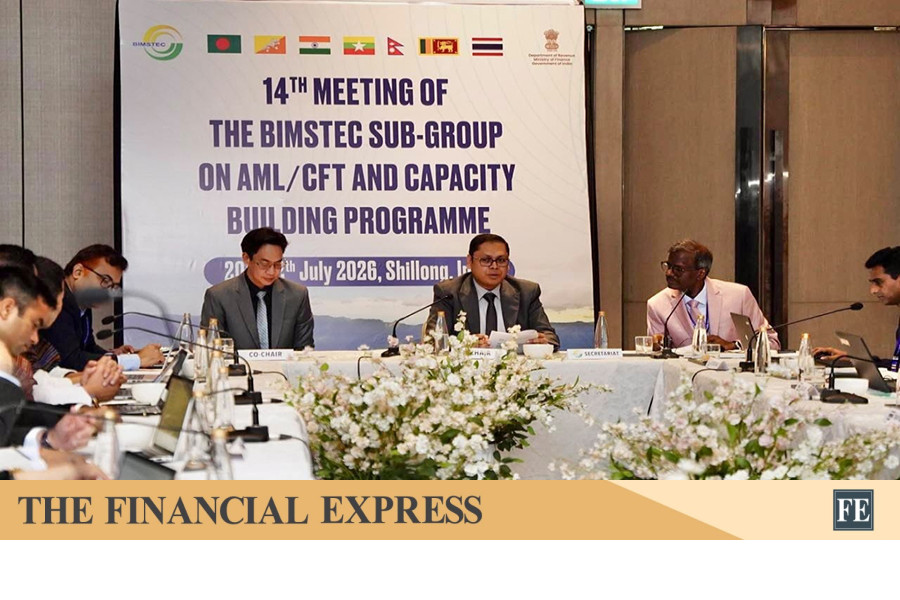
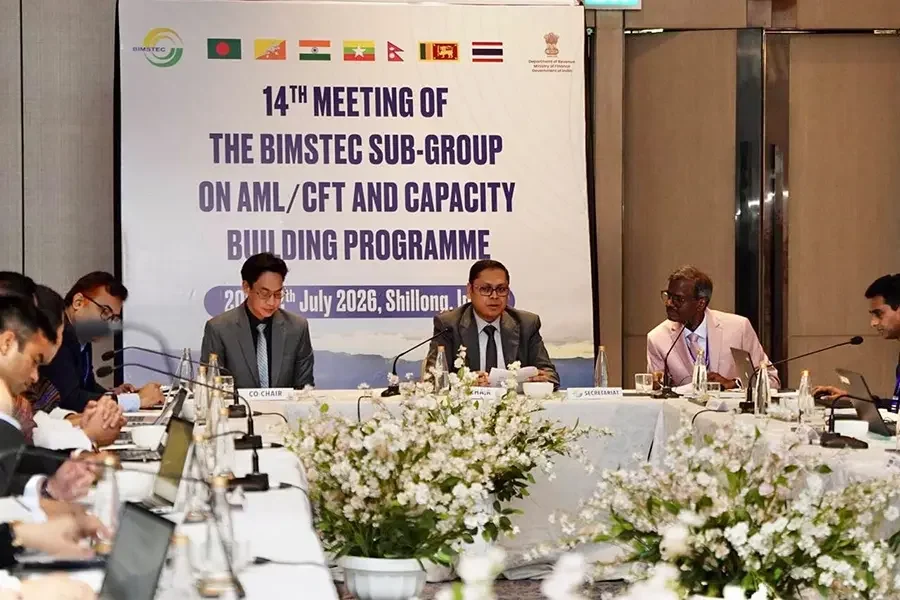
BIMSTEC member states finalised an Action Plan to Prevent Illicit Financial Flows in the region, as well as a Memorandum of Understanding (MoU) on capacity building to combat money laundering and terrorist financing.

At a meeting on Monday, they also agreed to develop a BIMSTEC AML/CFT Work Plan (2026-2028) and emphasised the operationalisation of the BIMSTEC AML/CFT Contact Point Network to deepen cooperation among Financial Intelligence Units.

The Department of Revenue under India's Ministry of Finance hosted the 14th Meeting of the BIMSTEC Sub-Group on Anti-Money Laundering and Combating the Financing of Terrorism in Shillong and discussed the issue.

The member states reaffirmed their shared commitment to strengthening regional cooperation in combating money laundering, terrorist financing, proliferation financing and other evolving forms of financial crime.

The meeting underscored the need for stronger regulatory frameworks, enhanced public-private partnerships, improved analytical capabilities, and closer regional and international cooperation to effectively address these evolving challenges.

The meeting brought together delegations from all seven member states, according to a UNB report.

The meeting reviewed progress made since the 13th Meeting of the Sub-Group and exchanged views on national AML/CFT developments, emerging risks, evolving typologies and good practices, the BIMSTEC Secretariat said on Tuesday.

Recognising the increasingly transnational and technology-driven nature of financial crime, the member states underscored the importance of strengthening regional cooperation, timely information sharing, capacity building and the effective use of technology to enhance national and regional AML/CFT frameworks.

The meeting also discussed ways to effectively leverage BIMSTEC's observer status in the Asia/Pacific Group on Money Laundering (APG) to enhance regional capacity building, facilitate knowledge sharing, and strengthen member states' preparedness for forthcoming Financial Action Task Force (FATF) mutual evaluations.

Member states also held substantive discussions on emerging risks associated with virtual assets, fintech platforms, artificial intelligence, trade-based money laundering, online fraud and other cyber-enabled financial crimes.

Delegations expressed their appreciation to the Department of Revenue under India's Ministry of Finance for the excellent arrangements and warm hospitality extended to all participants.

The meeting also conveyed its appreciation to the BIMSTEC Secretariat for its continued coordination and support.

BIMSTEC comprises seven countries in the Bay of Bengal region: Bangladesh, Bhutan, India, Myanmar, Nepal, Sri Lanka and Thailand.​
 

Rohingya crisis outside BIMSTEC’s mandate, says secretary general

Comparing BIMSTEC with SAARC is 'misleading and misplaced', Indra Mani Pandey says

Star Online Report

1784677150455.webp

Photo: Courtesy

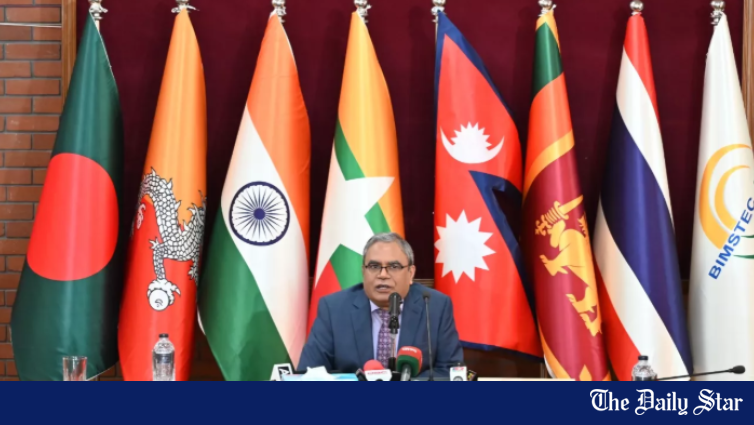
The Bay of Bengal Initiative for Multi-Sectoral Technical and Economic Cooperation (BIMSTEC) does not deal with issues that are political in nature, its Secretary General Indra Mani Pandey said today.

Responding to a question on whether BIMSTEC could play a role in resolving the Rohingya crisis, Pandey said, "As of now, our agenda, as I explained to you, does not include issues that are political in nature. So, that's where the matter stands."

Pandey was speaking to members of the Diplomatic Correspondents Association, Bangladesh (DCAB) at the BIMSTEC headquarters in Dhaka, reports UNB.

Asked about comparisons between BIMSTEC and the South Asian Association for Regional Cooperation (SAARC), Pandey described them as "misleading and misplaced", saying they undermine BIMSTEC's interests.

"My request has always been that BIMSTEC's vision be appreciated in its own right, and it should not be seen in the context of any other organisation, which has its own history and achievements," he said.

BIMSTEC comprises seven countries in the Bay of Bengal region: Bangladesh, Bhutan, India, Myanmar, Nepal, Sri Lanka and Thailand.
The grouping is often regarded as an alternative platform for regional cooperation amid the decline of SAARC, largely attributed to the India-Pakistan rivalry.

Pandey said BIMSTEC was poised to emerge as a leading regional organisation in the Indo-Pacific, noting that it has made significant institutional progress since its establishment in 1997 and has evolved into a stronger platform for cooperation between South Asia and Southeast Asia.

He said the organisation was created to bring the two regions closer through practical and tangible cooperation, particularly in technical and economic fields.

Pandey added that BIMSTEC is undergoing reforms and revitalisation to become a more efficient, effective and dynamic regional organisation.

He said the organisation has achieved notable milestones over the years, including adopting its charter, developing institutional mechanisms and formulating a long-term vision document, reflecting its growing maturity as a regional body.

On regional challenges, Pandey said Bangladesh faces security and development challenges similar to those of other BIMSTEC member states, which cannot be addressed by any country alone.

He said BIMSTEC is negotiating a BIMSTEC Motor Vehicles Agreement, while India has proposed establishing a BIMSTEC Sustainable Maritime Transport Centre.

Pandey also said BIMSTEC has decided to institutionalise meetings of home ministers to strengthen regional security cooperation. The inaugural meeting is scheduled to be hosted by India in October 2026.

He said the BIMSTEC Plan of Action on countering radicalisation and terrorism has been finalised, while an action matrix for its implementation is under consideration.

An action matrix for implementing the finalised Plan of Action to combat human trafficking has also been developed, he added.

Pandey said BIMSTEC is considering measures to facilitate travel across member states, including visa facilitation and the introduction of a BIMSTEC visa facilitation scheme.​
 

Bimstec FTA talks underway

Bloc devising new mechanisms to boost trade, investment

Forum SG explains prog to Dhaka journalists

1784762353580.webp


Regional bloc Bimstec is pursuing alternative mechanisms to boost trade and investment among its seven member-states while negotiations on a long-pending free-trade agreement (FTA) continue, says its chief executive.

The forum's Secretary-General, Indra Mani Pandey, explained the trade-promotion programme to journalists on Tuesday during an interaction with members of the Diplomatic Correspondents Association of Bangladesh (DCAB) at the headquarters of the Bay of Bengal Initiative for Multi-Sectoral Technical and Economic Cooperation (Bimstec) in Dhaka.

He said the FTA negotiations remained a complex process involving multiple countries with differing priorities, but expressed optimism that progress could be made on several constituent agreements in the coming months and years.

The Bimstec FTA framework agreement was signed in 2004. Subsequently, a Trade Negotiation Committee (TNC) was established along with six working groups to negotiate six constituent agreements covering different areas of the proposed trade pact.

"The working groups have been meeting from time to time, and in some subgroups we have made significant progress. We are quite hopeful that in the coming months and years we will see progress in the finalisation of some of the constituent agreements," Pandey said.

He noted that multilateral trade negotiations naturally take longer than bilateral FTAs because member-countries seek to balance regional trade liberalisation with their respective national priorities and concerns.

"FTA is one mechanism for enhancing trade, but it is not the only mechanism."

To strengthen economic cooperation while the negotiations continue, Bimstec is promoting several complementary initiatives aimed at facilitating business and investment across the region.

Among the proposals are establishing a Bimstec Chamber of Commerce and Industry to strengthen business-to-business links, creating a platform for investment-promotion authorities to encourage cross-border investment, and exploring cooperation on common standards to reduce non-tariff barriers to trade.

Pandey said differences in standards remain a significant obstacle to expanding intra-regional trade, and member-states are examining whether greater harmonisation could help facilitate commerce.

"The goal is very clear. We need to have more trade and investment in our region. There are many opportunities to pursue, and that's where Bimstec is fully focused."

Bangladesh, which recently assumed the Bimstec chairmanship, intends to accelerate the negotiation process by convening meetings of the Trade Negotiation Committee and its working groups more frequently to provide "the much-needed push" towards concluding the pending agreements, he told the reporters.

On regional connectivity, Pandey said member-states are also working on a visa-facilitation scheme to promote business travel, tourism and people-to-people exchanges.

An expert group on visa measures agreed last year to work towards such a framework. However, discussions are continuing as the members have yet to reach a consensus on the specific provisions of the proposed scheme.

"All member-states fully understand that if we need to have more trade, more travel, more tourism and more exchanges among our member-states, ease of travel through visa facilitation is very important," he observed.

Looking ahead, Pandey has noted that Bangladesh's second year as Bimstec chair in 2027 will coincide with the organisation's 30th anniversary, raising the possibility that the next Bimstec Summit could also serve as a platform to commemorate the milestone.

He notes that Bimstec continuously reviews the implementation of its programmes through regular meetings of experts, senior officials and ministers.

Action plans are updated periodically to incorporate new areas of cooperation, with all initiatives undertaken on the basis of consensus among the seven member-states.​
 

Invitation from Delhi to BRICS Summit; Dhaka yet to decide

According to several current and former senior Bangladeshi diplomats, public perceptions of Dhaka–Delhi relations following the 2024 mass uprising have not changed significantly.

Raheed Ejaz
Dhaka

1785368739537.webp

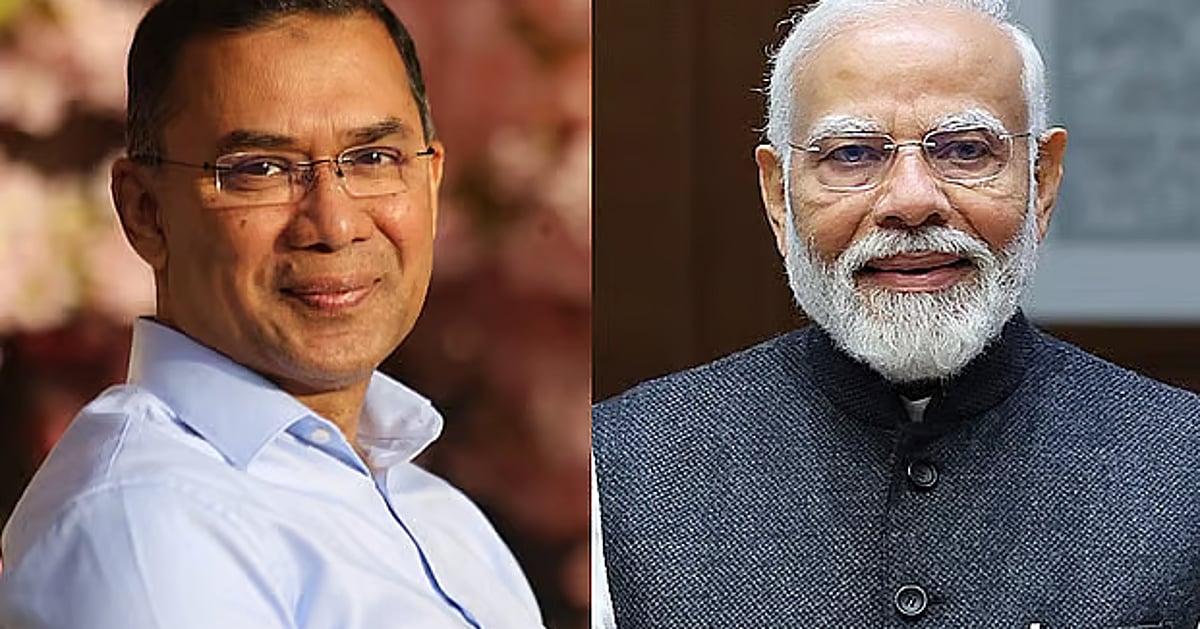
Prime Minister Tarique Rahman And Indian Prime Minister Narendra Modi

India has invited Prime Minister Tarique Rahman, in his capacity as the current chair of BIMSTEC, to attend the Outreach Session of the BRICS Summit to be held in New Delhi next September. However, Bangladesh has not yet made a final decision on whether it will accept the invitation and participate in the summit.

A high-level government source told Prothom Alo last Monday that Prime Minister Tarique Rahman may take a decision after consulting Foreign Minister Khalilur Rahman. The foreign minister returned to Dhaka on Tuesday morning after visits to the United States, the Philippines, and the Maldives.

According to diplomatic analysts, Bangladesh’s participation in the BRICS Outreach Session is not merely a matter of attending a multilateral meeting. For several years, Bangladesh has expressed interest in becoming a member of BRICS and has sought the support of existing member states.

On 23 July, State Minister for Foreign Affairs Shama Obaed Islam told journalists that the invitation letter addressed to the prime minister had been received from India by the Ministry of Foreign Affairs and had already been forwarded to the Prime Minister’s Office (PMO).

Diplomatic sources in Dhaka and New Delhi said that on 14 July, India sent a diplomatic note to the Ministry of Foreign Affairs through the Indian High Commission in Dhaka.

Through this, Indian Prime Minister Narendra Modi invited Prime Minister Tarique Rahman, as the current chair of BRICS, to attend the Outreach Session of the 18th BRICS Summit, to be held in New Delhi on 12–13 September.

BRICS is a grouping of emerging economies, while BIMSTEC is a regional cooperation organisation of countries in the Bay of Bengal region.

The BRICS Outreach Session typically allows the participation of leaders from selected non-member countries and regional organisations. BRICS currently comprises 11 member states: Brazil, Russia, India, China, South Africa, Egypt, Ethiopia, Iran, the United Arab Emirates (UAE), Saudi Arabia, and Indonesia.

According to diplomatic analysts, Bangladesh’s participation in the BRICS Outreach Session is not merely a matter of attending a multilateral meeting. For several years, Bangladesh has expressed interest in becoming a member of BRICS and has sought the support of existing member states.

Broader geopolitical realities may also be a factor in the government’s consideration of whether the prime minister should attend the BRICS Outreach Session.

China and Russia have already expressed support for Bangladesh’s membership. At the same time, given the current state of Dhaka–Delhi relations, the possibility of a meeting between Prime Minister Tarique Rahman and Indian Prime Minister Narendra Modi on the sidelines of the summit is also being given serious consideration.

Bangladesh has been regularly invited to the BRICS Outreach Session since 2023. It participated in the outreach events held in Johannesburg, South Africa, in 2023 and Kazan, Russia, in 2024. However, Bangladesh did not take part in the Outreach Session held in Rio de Janeiro, Brazil, in 2025.

According to diplomatic sources in New Delhi, most leaders of BRICS member countries are expected to attend this year’s summit. As a result, Prime Minister Tarique Rahman may have opportunities to exchange views with the leaders of several important countries, including China and Russia, on the sidelines of the multilateral forum.

Speaking about this, Mohammad Touhid Hossain, foreign affairs adviser to the former interim government, told Prothom Alo that Bangladesh has been interested in joining BRICS for several years.

Bangladesh–India relations have not progressed at the pace that had been expected after the February election.
M Humayun Kabir, former Bangladeshi ambassador to the US and president of BEI.

Considering that, he stated, the prime minister should participate in the Outreach Session. At the same time, it could provide an opportunity for what may be the first meeting between Prime Minister Tarique Rahman and Indian Prime Minister Narendra Modi after the election.

He believes Bangladesh should make use of the opportunities offered by this multilateral forum.

Modi’s invitation for the BIMSTEC chair

Diplomatic sources in Dhaka and New Delhi said that in his invitation letter, Narendra Modi noted that this year’s summit carries special significance as it marks the 20th anniversary of BRICS.

Held under the theme “Building Foundations for Resilience, Innovation, Cooperation and Sustainable Development,” the summit will discuss ways to strengthen cooperation through people-centred development and the principle of “Humanity First.” It will also provide an opportunity to exchange views on important regional and global contemporary issues.

Narendra Modi expressed hope that Tarique Rahman’s participation as the current chair of BIMSTEC would further enrich the discussions during the BRICS Outreach Session.

The Indian prime minister also expressed his interest in meeting and exchanging views with Tarique Rahman on the sidelines of the summit.

It may be noted that Bangladesh has held the chairmanship of BIMSTEC since April 2025.

At the government’s regular press briefing at the Secretariat yesterday, Tuesday, where various issues were discussed, a question was raised about whether Bangladesh would participate in the BRICS Outreach Session.

In response, Prime Minister’s Adviser on Information and Broadcasting Zahed Ur Rahman said Bangladesh is not a member of BRICS but has been invited as an observer. Therefore, the government will decide whether the prime minister will attend. If he does, there will be opportunities to hold meetings with many leaders. However, no decision has yet been made.

He also said he was not aware of any preliminary discussions on the matter.

Uneasy relations, yet scope for dialogue

According to several current and former senior Bangladeshi diplomats, public perceptions of Dhaka–Delhi relations following the 2024 mass uprising have not changed significantly.

They believe that during the Awami League government’s tenure, a large section of the Bangladeshi public did not view bilateral relations as being people-centred. Although expectations for positive progress in bilateral ties emerged after the February election, those expectations have not been reflected in reality.

Continued attempts by India to push people across the border, various comments by Indian political leaders regarding Bangladesh, and former prime minister Sheikh Hasina’s recent remarks in an interview with Reuters expressing her desire to return from India and resume politics have all contributed to the government’s cautious approach towards the future of Dhaka–Delhi relations, according to diplomatic circles.

International relations analysts say that the trajectory of Bangladesh’s relations with the United States during the interim government has continued after the election.

As a result, broader geopolitical realities may also be a factor in the government’s consideration of whether the prime minister should attend the BRICS Outreach Session.

At the same time, if a meeting between Prime Minister Tarique Rahman and Indian Prime Minister Narendra Modi takes place on the sidelines of the summit in New Delhi, the government is also likely to consider how such a meeting may be received politically and by public opinion in Bangladesh.

M Humayun Kabir, former Bangladeshi ambassador to the United States and president of the Bangladesh Enterprise Institute (BEI), told Prothom Alo that Bangladesh–India relations have not progressed at the pace that had been expected after the February election.

In his view, the BRICS Summit provides an important opportunity for the first meeting between the prime ministers of the two neighbouring countries, and India is also keen to make use of that opportunity.​
 

Latest Posts

Back