Bangladesh Defense
Saif
Senior Member
- Jan 24, 2024
- 20,815
- 9,685
- Nation

- Residence
- Axis Group


China keen to take Chief Adviser to Beijing in March
China has already invited Dr Muhammad Yunus to attend the Boao Forum For Asia (BFA), scheduled to be held in Beijing on 27-28 March, diplomatic sources said
 en.prothomalo.com
China keen to take Chief Adviser to Beijing in March
Raheed Ejaz
Dhaka
Published: 20 Jan 2025, 23: 14

Following the 5 August 2024 changeover due to the student-people uprising, China is keen to deepen the relations with Bangladesh. Beijing is interested in a summit meeting in continuation of bilateral meetings with the interim government. That is why China wants to take Chief Adviser Dr Muhammad Yunus to China in March this year, marking five decades of diplomatic relations between the two countries.
China has already invited Dr Muhammad Yunus to attend the Boao Forum For Asia (BFA), scheduled to be held in Beijing on 27-28 March, diplomatic sources said.
The Boao Forum for Asia is a nonprofit platform that hosts high-level forums for leaders from government, business and academia in Asia and other continents to share their vision on the most pressing issues in this region and the world at large.
Wishing not to be named, a high level source in the government Sunday evening told this correspondent that China has shown interest for a bilateral summit meeting with the Chief Adviser alongside attending the BFA conference during the visit to Beijing
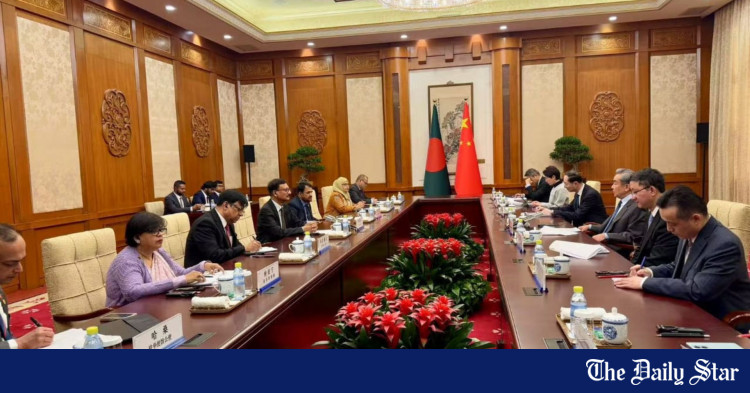
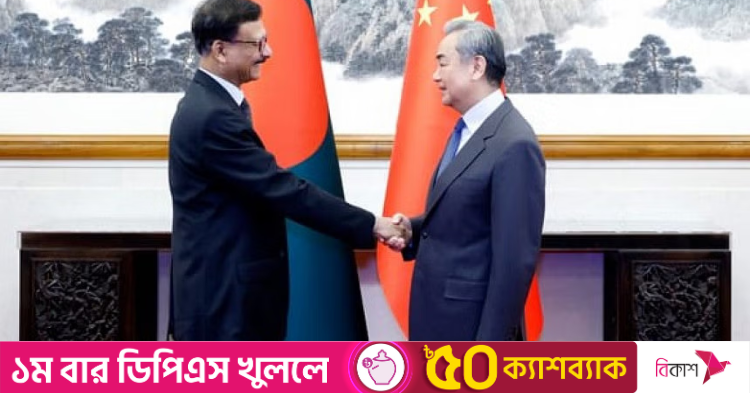
Foreign ministry officials said foreign adviser Md Touhid Hossain would leave for China in a bilateral meeting on Monday afternoon. He will hold a bilateral meeting with China Foreign Minister Wang Yi in Beijing on Tuesday.
The two will discuss how the relations would move forward. The health sector could get importance in cooperation between the two countries in the coming days. Discussions may be held on setting up a friendship hospital in Bangladesh with the help of China for the first time, ensuring low-cost medical services for Bangladeshi patients in several provinces, including Kunming, as well as on signing several memorandums of understanding (MoUs) on special projects for the care and rehabilitation of injured people in Dhaka.
China wants to send chartered aircraft
The chief adviser has recently been invited to attend the 25-nation BFA summit in Beijing from 25-28 March. China is interested in organising a discussion between the country’s top leaders, including President Xi Jinping, and Bangladesh’s top leader on the sidelines of the forum meeting.
However, wishing not to be named, several foreign ministry officials think that there is uncertainty about the visit in March. State events are organised on 26 March due to Bangladesh’s Independence and National Day. Apart from this, it is also a matter of consideration, whether it is enough to organise a summit meeting just two months after the foreign adviser’s meeting.
At the same time, diplomats believe that it is imperative to move cautiously instead of getting close to any country hurriedly due to the tilted policies of the previous government.
A diplomatic source told this correspondent that the matter of sending a chartered plane from China to take Chief Adviser Muhammad Yunus to Beijing was also mentioned.
The source said the issue of the Chief Adviser’s visit to China may come up for discussion during the foreign affairs adviser’s visit to Beijing.
Bangladesh-China friendship hospital in discussion
Sources said that the issue of giving importance to the health sector in cooperation is expected to be discussed at the foreign minister-level meeting in Beijing Tuesday. Dhaka has proposed to Beijing to sign an MoU to set up a specialised medical and rehabilitation centre with financial and technical assistance from China, especially for the treatment and rehabilitation of those injured in the student uprising.
Sources further said that Bangladesh is interested in signing an MoU quickly to construct the first friendship hospital, funded by China, in Purbachal. Bangladesh wants the hospital to be run by skilled physicians and professionals from China.
Apart from this, Bangladesh wants China’s cooperation in identifying high-quality hospitals in Kunming and adjacent areas to ensure medical services for Bangladeshi patients.
China’s Ambassador to Bangladesh Yao Wen told Prothom Alo Sunday morning, “We agree in principle to establish a hospital in Bangladesh. We are now waiting for a detailed proposal from Bangladesh. We want to know what kind of hospital Bangladesh wants and where this hospital will be constructed.”
“We will move forward following a process after receiving a proposal from Bangladesh. We are interested in modernising Bangladesh’s health sector,” he added.
China still interested in Teesta project
The MoU on sustainable management of river water, signed between the two countries in 2016, is scheduled to be renewed during the foreign adviser’s visit. The agreement signed between the Bangladesh Water Development Board (BPDB) and Power China is considered an outline MoU. Discussions are underway between the two countries on the Teesta project in continuation of this MoU.
Speaking about the Teesta project, Yao Wen said, “We are interested in assisting Bangladesh in this project. Now it is Bangladesh that will have to decide how to implement it.”
Diplomatic sources said the Bangladesh side at the meeting in Beijing will raise the construction of China’s mega dam in upstream of the Brahmaputra River. The country has taken the initiative to construct a dam worth about USD 100 billion in Tibet to generate about 60,000 MW electricity. This has created doubts about the availability of water for downstream countries. India has already expressed concerns over the construction of the dam.
The Chinese ambassador met with adviser Touhid Hossain on Sunday morning. Later, speaking about the construction of the dam in Tibet, the ambassador said that the construction will not have any negative impact on the downstream countries.
Bangladesh focuses on reducing interest rates
In the foreign minister level bilateral meeting, Bangladesh will put stress on investment, trade and project financing. In addition to reducing the interest rate from 2 per cent to a reasonable level, Dhaka will seek the cancellation of the 0.5 per cent loan commitment fee.
The meeting will also discuss important projects, including the procurement of four ships as per the previous agreement, especially the projects for which financing is currently stalled. Dhaka will also seek China’s cooperation on the Rohingya issue.
Bangladesh will also urge China to stand by the Rohingyas in the UN Security Council. At the same time, Bangladesh expects more investment from China.
After 5 August, China has come forward with an investment of over USD 200 million. The country is also one of the major trading partners of Bangladesh. Dhaka will seek cooperation in free trade of goods and raw materials, including delayed payment.
Bangladesh will also seek duty-free and quota-free facilities for Bangladeshi products in the Chinese market for an additional three years after graduating from a low-income country.
Asked about the China visit, foreign adviser Md. Touhid Hossain told Prothom Alo, “There will be discussions on advancing cooperation between the two countries, keeping in mind the five-decade anniversary of the relations. Our priority will be economic and development cooperation.”
* The report, originally published in the print and online editions of Prothom Alo, has been rewritten in English by Shameem Reza
Raheed Ejaz
Dhaka
Published: 20 Jan 2025, 23: 14
Following the 5 August 2024 changeover due to the student-people uprising, China is keen to deepen the relations with Bangladesh. Beijing is interested in a summit meeting in continuation of bilateral meetings with the interim government. That is why China wants to take Chief Adviser Dr Muhammad Yunus to China in March this year, marking five decades of diplomatic relations between the two countries.
China has already invited Dr Muhammad Yunus to attend the Boao Forum For Asia (BFA), scheduled to be held in Beijing on 27-28 March, diplomatic sources said.
The Boao Forum for Asia is a nonprofit platform that hosts high-level forums for leaders from government, business and academia in Asia and other continents to share their vision on the most pressing issues in this region and the world at large.
Wishing not to be named, a high level source in the government Sunday evening told this correspondent that China has shown interest for a bilateral summit meeting with the Chief Adviser alongside attending the BFA conference during the visit to Beijing
Foreign ministry officials said foreign adviser Md Touhid Hossain would leave for China in a bilateral meeting on Monday afternoon. He will hold a bilateral meeting with China Foreign Minister Wang Yi in Beijing on Tuesday.
The two will discuss how the relations would move forward. The health sector could get importance in cooperation between the two countries in the coming days. Discussions may be held on setting up a friendship hospital in Bangladesh with the help of China for the first time, ensuring low-cost medical services for Bangladeshi patients in several provinces, including Kunming, as well as on signing several memorandums of understanding (MoUs) on special projects for the care and rehabilitation of injured people in Dhaka.
China wants to send chartered aircraft
The chief adviser has recently been invited to attend the 25-nation BFA summit in Beijing from 25-28 March. China is interested in organising a discussion between the country’s top leaders, including President Xi Jinping, and Bangladesh’s top leader on the sidelines of the forum meeting.
However, wishing not to be named, several foreign ministry officials think that there is uncertainty about the visit in March. State events are organised on 26 March due to Bangladesh’s Independence and National Day. Apart from this, it is also a matter of consideration, whether it is enough to organise a summit meeting just two months after the foreign adviser’s meeting.
At the same time, diplomats believe that it is imperative to move cautiously instead of getting close to any country hurriedly due to the tilted policies of the previous government.
A diplomatic source told this correspondent that the matter of sending a chartered plane from China to take Chief Adviser Muhammad Yunus to Beijing was also mentioned.
The source said the issue of the Chief Adviser’s visit to China may come up for discussion during the foreign affairs adviser’s visit to Beijing.
Bangladesh-China friendship hospital in discussion
Sources said that the issue of giving importance to the health sector in cooperation is expected to be discussed at the foreign minister-level meeting in Beijing Tuesday. Dhaka has proposed to Beijing to sign an MoU to set up a specialised medical and rehabilitation centre with financial and technical assistance from China, especially for the treatment and rehabilitation of those injured in the student uprising.
Sources further said that Bangladesh is interested in signing an MoU quickly to construct the first friendship hospital, funded by China, in Purbachal. Bangladesh wants the hospital to be run by skilled physicians and professionals from China.
Apart from this, Bangladesh wants China’s cooperation in identifying high-quality hospitals in Kunming and adjacent areas to ensure medical services for Bangladeshi patients.
China’s Ambassador to Bangladesh Yao Wen told Prothom Alo Sunday morning, “We agree in principle to establish a hospital in Bangladesh. We are now waiting for a detailed proposal from Bangladesh. We want to know what kind of hospital Bangladesh wants and where this hospital will be constructed.”
“We will move forward following a process after receiving a proposal from Bangladesh. We are interested in modernising Bangladesh’s health sector,” he added.
China still interested in Teesta project
The MoU on sustainable management of river water, signed between the two countries in 2016, is scheduled to be renewed during the foreign adviser’s visit. The agreement signed between the Bangladesh Water Development Board (BPDB) and Power China is considered an outline MoU. Discussions are underway between the two countries on the Teesta project in continuation of this MoU.
Speaking about the Teesta project, Yao Wen said, “We are interested in assisting Bangladesh in this project. Now it is Bangladesh that will have to decide how to implement it.”
Diplomatic sources said the Bangladesh side at the meeting in Beijing will raise the construction of China’s mega dam in upstream of the Brahmaputra River. The country has taken the initiative to construct a dam worth about USD 100 billion in Tibet to generate about 60,000 MW electricity. This has created doubts about the availability of water for downstream countries. India has already expressed concerns over the construction of the dam.
The Chinese ambassador met with adviser Touhid Hossain on Sunday morning. Later, speaking about the construction of the dam in Tibet, the ambassador said that the construction will not have any negative impact on the downstream countries.
Bangladesh focuses on reducing interest rates
In the foreign minister level bilateral meeting, Bangladesh will put stress on investment, trade and project financing. In addition to reducing the interest rate from 2 per cent to a reasonable level, Dhaka will seek the cancellation of the 0.5 per cent loan commitment fee.
The meeting will also discuss important projects, including the procurement of four ships as per the previous agreement, especially the projects for which financing is currently stalled. Dhaka will also seek China’s cooperation on the Rohingya issue.
Bangladesh will also urge China to stand by the Rohingyas in the UN Security Council. At the same time, Bangladesh expects more investment from China.
After 5 August, China has come forward with an investment of over USD 200 million. The country is also one of the major trading partners of Bangladesh. Dhaka will seek cooperation in free trade of goods and raw materials, including delayed payment.
Bangladesh will also seek duty-free and quota-free facilities for Bangladeshi products in the Chinese market for an additional three years after graduating from a low-income country.
Asked about the China visit, foreign adviser Md. Touhid Hossain told Prothom Alo, “There will be discussions on advancing cooperation between the two countries, keeping in mind the five-decade anniversary of the relations. Our priority will be economic and development cooperation.”
* The report, originally published in the print and online editions of Prothom Alo, has been rewritten in English by Shameem Reza