| Global Defense, OSINT & Geopolitics Wire

[🇧🇩] China is a Time Tested Friend and a Strategic Partner of Bangladesh

[🇧🇩] China is a Time Tested Friend and a Strategic Partner of Bangladesh
369
19K
More threads by Saif

G Bangladesh Defense

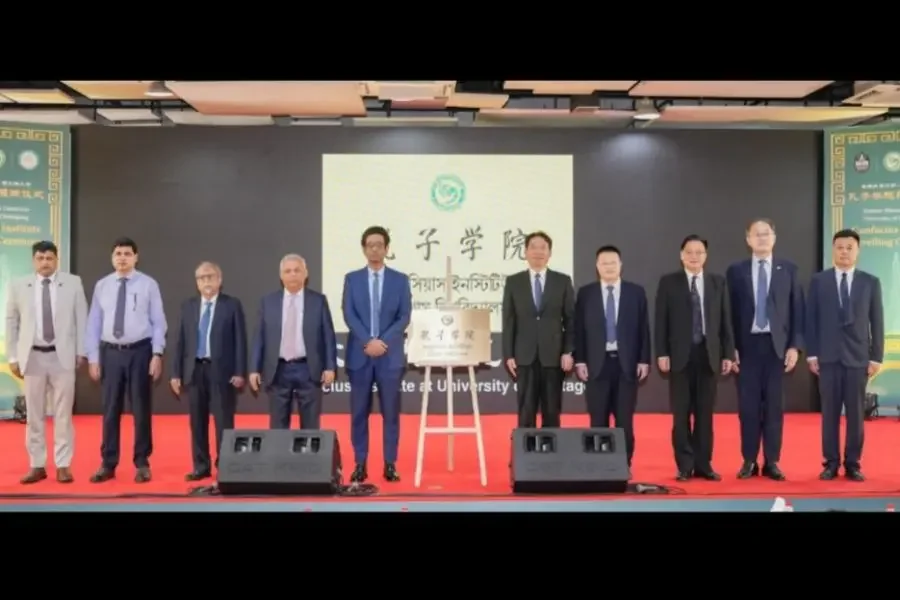
Confucius Institute launched at Chattogram university

1790466172576.webp


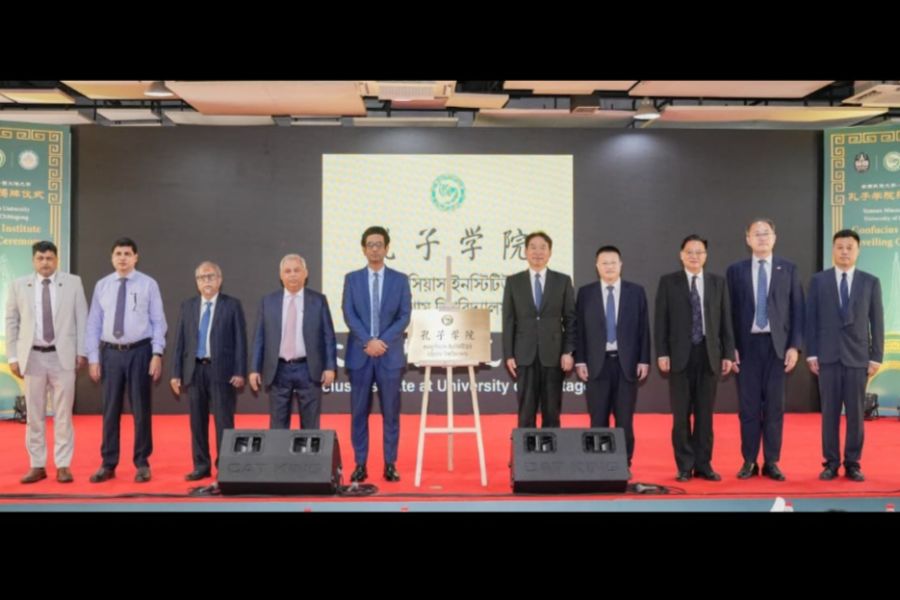
The Confucius Institute at the University of Chittagong was formally inaugurated in Dhaka on Saturday, marking a new step in educational and cultural cooperation between Bangladesh and China.

The inauguration ceremony was held at the International Convention City Bashundhara (ICCB) in Dhaka, where the University of Chittagong and China’s Yunnan Minzu University jointly established the institute.

The institute received approval from the Chinese International Education Foundation in October 2025.

The two universities subsequently signed a cooperation agreement at the World Chinese Language Conference in Beijing in November 2025.

Zhao Junmin, member of the Standing Committee of the Communist Party of China Yunnan Provincial Committee, attended the ceremony as the chief guest.

Yao Wen, Chinese ambassador to Bangladesh; Professor Dr Abdullah-Al-Mamun, member of the University Grants Commission; and Professor Dr Mohammad Al-Forkan, vice-chancellor of the University of Chittagong, were present as special guests.

Also present were Professor Dr Mohammad Al-Amin, pro-vice-chancellor (academic) of the University of Chittagong; Professor Dr Md Shafiqul Islam, pro-vice-chancellor (administration); Ruan Chaoqi, secretary of the Party Committee of Yunnan Minzu University; Professor Dr Md Kamal Uddin, director of the Confucius Institute at the University of Chittagong; and Brigadier General Mohammad Saif Ullah, director general of the Bangladesh Krira Shikkha Protishtan, among others.

Representatives from universities and educational institutions in Bangladesh and China, other Confucius Institutes, Chinese organisations and media outlets also attended the event.

The institute is the fourth Confucius Institute in Bangladesh and the first in the country’s southeastern region.

Ruan Chaoqi said Yunnan Minzu University would support the institute by sending more qualified teachers to Bangladesh and helping expand opportunities for Bangladeshi young people to pursue higher education in China.

The Confucius Institute would serve as an important bridge for young people from the two countries to learn Chinese while strengthening friendship and mutual understanding, he said.

Zhao Junmin said Yunnan province would continue to support the Confucius Institute's activities. The province would also help the two universities further develop the institute based on their respective strengths and expertise, he said.

Yao Wen said the institute could play an important role in developing skilled human resources needed for industrial development in the Chattogram region and for Bangladesh-China trade and economic cooperation.

It could also help build a community with a shared future between Bangladesh and China in the new era, he said.

Professor Dr Abdullah-Al-Mamun expressed hope that the Confucius Institute at the University of Chittagong would set an example for other higher education institutions in Bangladesh through new initiatives and experiences.

Guests later jointly unveiled the nameplate of the Confucius Institute at the University of Chittagong.

The inauguration ceremony also featured cultural performances by students and institutions from both countries. Yunnan Minzu University presented a traditional lion dance and a martial arts performance titled “The Wushu Spirit of China”.

The Bangladesh Krira Shikkha Protishtan presented “The Rhythms of Bangladesh”, while Chinese students studying Bengali at Yunnan Minzu University performed Bengali songs.

The performances highlighted the cultural diversity of Bangladesh and China, as well as the friendship between the two countries.

The launch of the Confucius Institute at the University of Chittagong is expected to deepen educational and cultural exchanges between Bangladesh and China. As the first Confucius Institute in southeastern Bangladesh, it will offer Chinese language education while serving as a platform for broader cultural exchange.

Through language and culture, the institute is expected to contribute to greater mutual understanding and friendship between the peoples of Bangladesh and China, as well as exchanges and mutual learning between the two countries’ civilizations.​
 

China leads BD's GVC integration

1790637615742.webp


Fast-advancing China has been the largest trading partner of Bangladesh and now it has also emerged as the top backward-link partner economy of this country with supply of both primary and intermediate goods to feed its export industry.

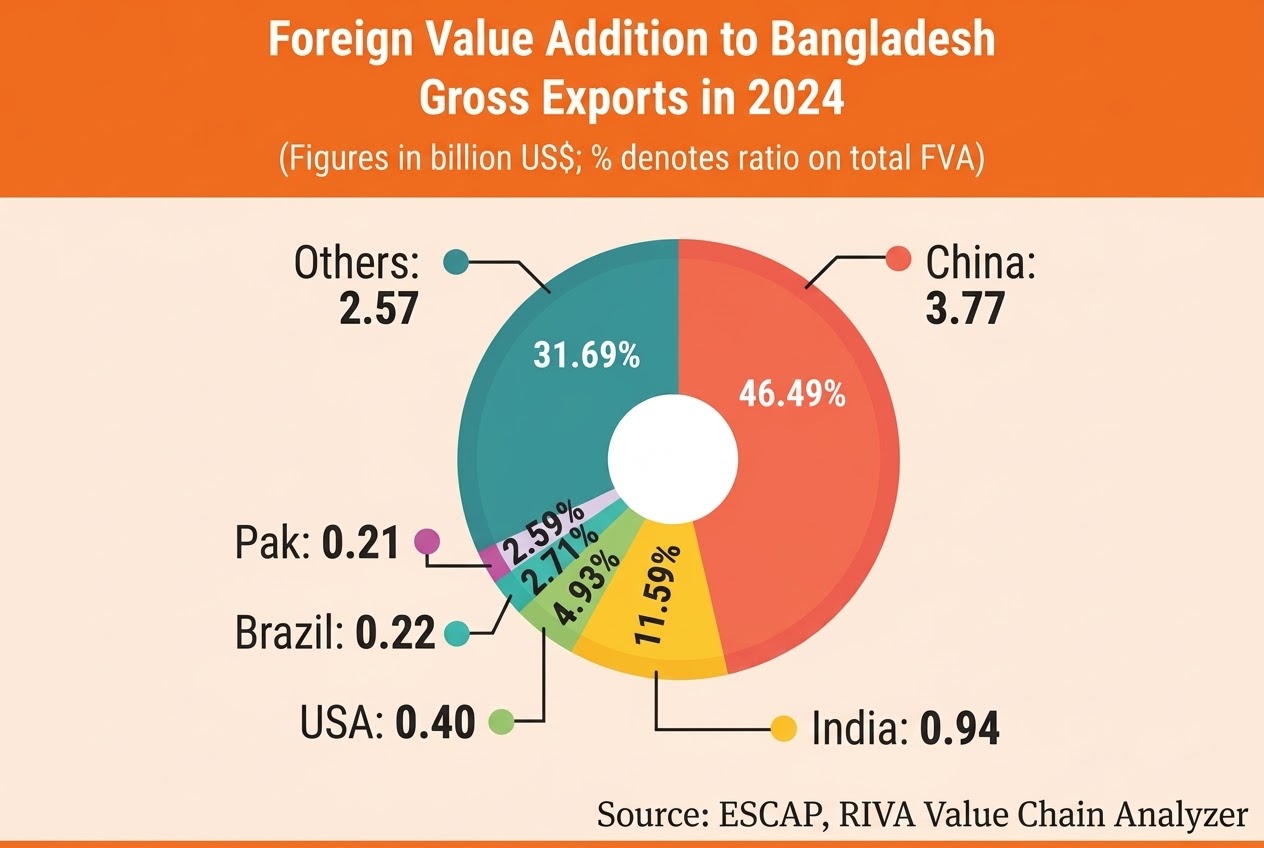
Backward linkages refer to foreign value added (FVA) produced abroad and used in a country’s total exports. In 2024, FVA accounted for 17.7 per cent or US$ 8.10 billion of Bangladesh’s gross exports. Of the total FVA, $ 3.77 billion came from China.

It means around 46 per cent of the FVA of Bangladeshi exports in the year under review was added by Chinese products. Chinese FVA was also accounted for 8.30 per cent of Bangladesh’s gross exports worth $44.20 billon.


1790637632997.webp


In other words, China contributes the most towards Bangladesh’s merchandise exports in the form of backward-link partner.

India is the second-largest backward-link partner of Bangladesh as it accounted for 11.60 per cent of FVA of Bangladeshi exports in 2024. The value addition of Indian input was estimated at $0.94 billion in the year under review.

Statistics available with the Regional Integration and Value Chain Analyzer (RIVA), developed by the United Nations Economic and Social Commission for Asia and the Pacific (ESCAP), unveiled such pictures of trade architecture. For a lack of updated data, the picture for 2025 is not available yet.

RIVA is an online analytical platform developed to support a better understanding of how economies and sectors participate in regional and global value chains (GVC).

GVC DEFINED: The United Nations Industrial Development Organisation (UNIDO) Industrial Analytics Platform defines GVC as the full range of activities (design, production, marketing, distribution and support to the final consumer etc) that are divided among multiple firms and workers across geographic spaces to bring a product from its conception to its end use and beyond.

An economy’s participation in GVCs is generally considered to include the total imported item used in its exports (backward linkages) and its total domestic value-added exports used by importing economies to produce their own exports—better known as forward linkages.


1790637666169.webp


During the last decade, in between 2015 and 2024 to be precise, Bangladesh’s GVC linkage was mostly driven by backward linkages. RIVA estimate showed that 14.6 per cent of Bangladesh’s gross exports embedded FVA from abroad in 2015, which increased to 17.7 per cent in 2024.

At the same time, the country’s domestic value added (DVA) was 10.60 per cent in 2015, which dropped slightly to 10.40 per cent of gross exports, according to RIVA data. DVA in exports is referred to as forward linkages.

China has already become one of the most dynamic economies of the world in terms of participating in GVCs. As per Global Value Chain Development Report 2025, released by the World Trade Organisation (WTO), GVCs accounted for 46.30 per cent of global trade in the year under review. It also added that in 2024, just 10 economies accounted for 53.5 per cent of global domestic value added (DVA) in exports, with China, the United States and Germany ranking at the top. Thus China is categorised as a high-GVC trader.

The report also shows that Bangladesh is one of the 19 low-GVC traders in the world. In 2010, these economies contributed 0.69 per cent and 0.66 per cent to the global gross and GVC-related export values, respectively. These shares rose to 1.26 per cent and 1.24 per cent in 2024.


1790637698137.webp


On Bangladesh’s export front, Chinese inputs are heavily concentrated on textiles and textile products, including clothing. In 2024, around 95 per cent of total inputs from China added to the sector, which is also the largest export earnings industry in the country, according to RIVA data.

Statistics available with Bangladesh Bank show cottons, fabrics and fibres account for around 60 per cent of the total raw inputs used in ready-made garment industry in the country.

Again, during 2020-2024, textile and clothing shared around 85 per cent of Bangladesh’s backward linkages in GVC and 51 per cent in forward linkages, revealed the RIVA statistics.

HOW china matters: Textile and clothing exporters are of the view that Chinese fabrics are highly competitive both in terms of prices and qualities. That’s why, even it takes around three weeks to reach Bangladesh from mainland China on sea routes via Singapore and Colombo, there is no adequate alternative sources of imports.

Md Fazlul Hoque, former president of Bangladesh Knitwear Manufacturers and Exporters Association (BKMEA), told the FE that there are both cost and quality advantages of using Chinese raw materials and intermediate goods in the export-oriented clothing industry in Bangladesh.

“Producers and exporters can import required inputs at competitive prices from China,” he said. “It doesn’t mean the price is always cheap. In many items, China provides very good-quality products at higher, but even competitive, prices.”

He also says that price and quality advantage of Chinese inputs and intermediate items offset the distance to bring these goods from China by sea.

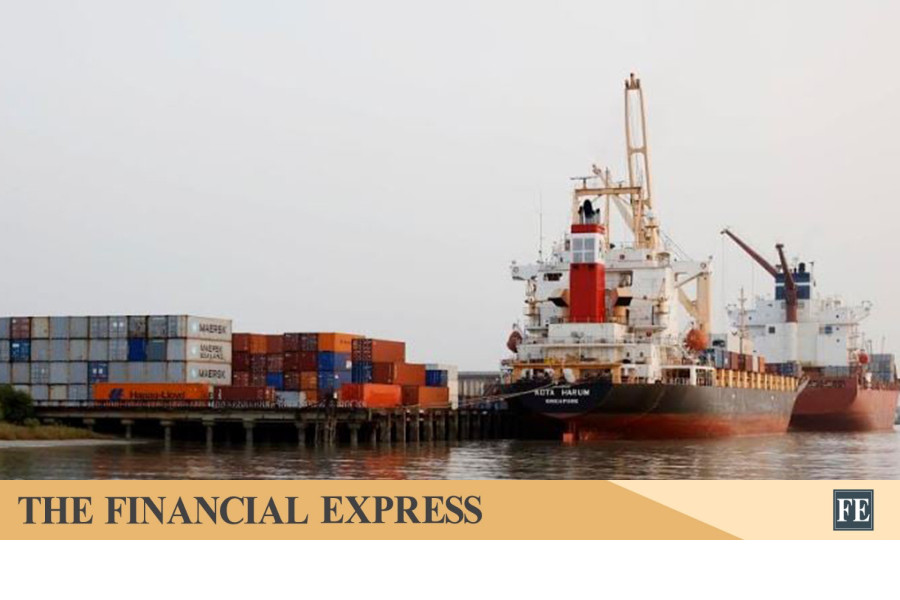
“Around 99 per cent of items are transported through sea routes,” he adds. “Though there was a time when Chinese goods were landed in Chottogram port via Singapore and Colombo taking three weeks on average. In recent years, more products are landed using direct route by reducing the shipment time by at least a week.”

To gain from the reduced time of shipment, importers have to pay higher freight charge. Nevertheless, the additional charge is not a big deal for the importers as they are getting the products earlier.

Nesar Ahmed, a former trade negotiator of Bangladesh at the WTO, opined that there is little to surprise that China led the global value chain integration of Bangladesh.

“RIVA data is well researched and also reflected the reality,” he added. “As it is focused on trade in goods, another interesting dimension will be Bangladesh’s GVC integration in trade in commercial services through China.” At present, trade in commercial services with China accounts for less than one-tenth of trade in goods.

FDI FROM & EXPORTS TO CHINA: Fazlul Hoque, now Administrator of the Federation of Bangladesh Chambers of Commerce and Industry (FBCCI), also has said that China is more interested to increase investment in Bangladesh.

Net inflow of FDI from China stood at $321.15 million in 2025 as the country became the second-largest source of FDI for Bangladesh in the year.

“We are also expecting that Chinese FDI will increase in the near future and it will also increase the integration of Bangladesh in global value chain,” he added.

Statistics available with the central bank show that the stock of Chinese FDI stood at $ 1916.75 million (about $1.92 billion) at the end of 2025.

Bangladesh’s annual export of goods to China is yet to cross $1.0-billion level and the current annual export is around 3.50 per cent of the total trade with China. Moreover, the share of GVCs in Bangladesh’s gross export to China is declining gradually for the last couple of years.

RIVA data show that around 46 per cent of Bangladesh’s gross exports to China was attributable to GVCs in 2015 which declined to 31.7 per cent in 2024.

Meanwhile, imports of goods from China crossed $2 billion level in the last year.​
 

Trade potential of proposed Ctg-Kunming road link

1790722512049.webp


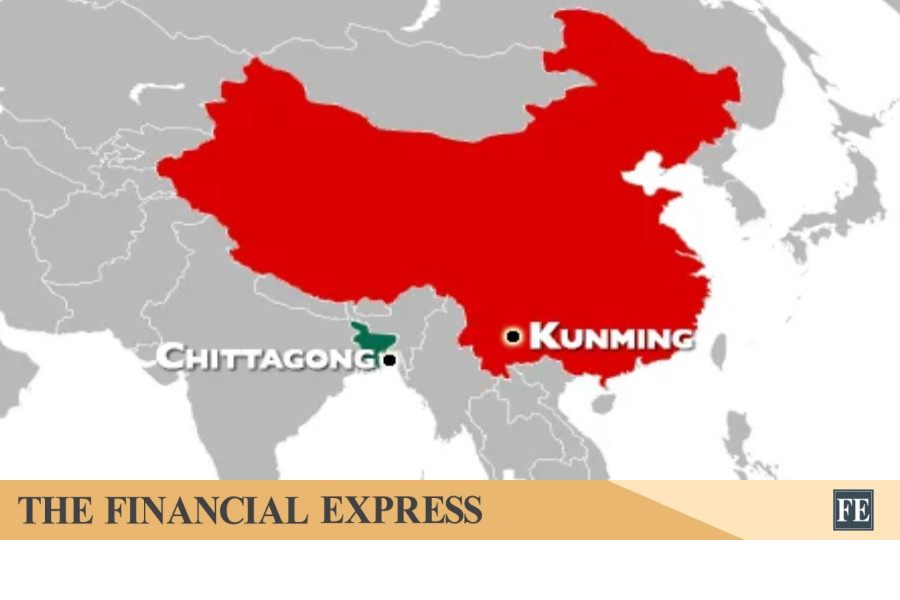
There is no gainsaying the enormous potential for trade and commerce between Bangladesh and China's south-western province, Yunnan, particularly with Dhaka becoming the first South Asian capital to enjoy Kunming's trade preference policy. Notably, bilateral trade between Dhaka and Kunming (Yunnan's capital) has already seen strong growth potential, with two-way trade volume exceeding 1.3 billion yuan in 2025. Small wonder that Bangladesh's commerce minister did reportedly propose enhancing trade cooperation between the two sides during a recent meeting with the visiting high level delegation from Kunming. It is exactly here that the importance of the 1,200-kilometre road connectivity between the country's port city, Chattogram, and Kunming through Myanmar lies. But as of now, the trade potential is not adequately reflected because goods now have to travel either by air or through a long maritime detour. If cargo could move between Chattogram and Kunming within about 24 hours, as envisaged, the economics of bilateral trade would change significantly. This is important especially for Bangladesh's perishable exports such as frozen fish, fruits and other agricultural products. Leather goods, jute and jute products, processed foods and merchandise could also reach Yunnan faster and at costs lower than that of air freight. In that case, improved overland connectivity could give the trade relationship a much-needed boost.

The road link, however, would be only one part of the trade architecture required to turn geographical advantage into business. So, Yunnan's proposed duty-free bonded warehouse, exhibition centre and customs facilitation offers for Bangladeshi goods are no less important. Such facilities would enable exporters to keep stocks closer to Chinese buyers, display their products and respond to market demand without depending solely on occasional trade fairs. Faster customs treatment, particularly for perishable goods, could further improve competitiveness. Bangladesh could also source fertilisers, animal feed and other agricultural inputs from Yunnan faster. Obviously, to make the best use of that opportunity, customs, quarantine, cold-chain and cargo-handling facilities on the Bangladesh side would have to be upgraded in step with the proposed corridor.

However, the proposed link road involves a third country, Myanmar, and therein rests the uncertainty. A road corridor passing through a third country cannot function effectively merely on the strength of an understanding between Dhaka and Yunnan. Myanmar has remained trapped in a protracted civil war, while violence and political instability continue to disrupt transport and border trade in several areas. So, a commercially viable Chattogram-Kunming road would require not only physical connectivity, but also dependable security, transit agreements, customs coordination, insurance cover and uninterrupted movement of vehicles across Myanmar. In other words, the project is as much a diplomatic undertaking as an infrastructural one. Bangladesh, China and Myanmar would, therefore, have to work through a trilateral mechanism before businesses can commit cargo to the route. Until conditions inside Myanmar become sufficiently stable, improved maritime logistics should continue so that the emerging Yunnan market is not left unexplored.

There is yet another point the policymakers must not lose sight of. Connectivity with Yunnan should not become another one-way channel through which Chinese goods enter Bangladesh faster while Bangladeshi exports fail to gain comparable access. Bangladesh's trade with China is already import-heavy and better connectivity could also deepen that imbalance unless export capacity expands simultaneously. The proposed warehouses, exhibition facilities and customs clearance should therefore be linked to a strategy for identifying products Yunnan's market can absorb, meeting Chinese standards, developing cold-chain facilities and connecting Bangladeshi producers with distributors there. Reciprocal safeguards are necessary for enabling the corridor to create opportunities for local exporters and producers rather than merely lowering the cost of imports. Market research, product certification and buyer-seller linkages should receive as much attention as the road itself. If pursued with balanced trade objectives, export readiness and patient diplomacy over Myanmar, the Chattogram-Yunnan connectivity could become a major gateway for Bangladesh's deeper commercial engagement with China.​
 

China-Bangladesh trade reaches US$12.8b in first half of 2026: Embassy


1790984866538.webp


Flags of Bangladesh and China are seen cross-pinned in this photo, symbolising friendship between the two nations

Bilateral trade between Bangladesh and China reached a record US$12.8 billion in the first half of 2026, up 10.6 per cent year on year, the Chinese embassy in Dhaka said on Wednesday.

In a statement marking the 77th anniversary of the founding of the People's Republic of China, the embassy highlighted expanding cooperation in trade, investment, infrastructure and healthcare.

China remained Bangladesh's largest trading partner for 16 consecutive years from 2010 to 2025, the statement said.

Bangladeshi agricultural products, including fresh mangoes and jackfruits, have gained access to the Chinese market, while efforts are underway to secure market access for guavas and aromatic rice.

The two countries are also implementing a joint action plan to enhance Bangladesh's export capacity and improve the structure of bilateral trade, the embassy said.

Alongside growing trade, China's cumulative investment in Bangladesh reached approximately US$3.6 billion as of June 2026, according to the statement.

Chinese direct investment in Bangladesh increased by approximately 50 per cent year on year in 2025, it said.

Since the establishment of the new government, five Chinese-invested enterprises have invested more than US$100 million in Bangladesh, creating nearly 20,000 jobs, the embassy added.

The China Economic and Industrial Zone in Chattogram was officially launched in July 2026 and has attracted intended investments totalling US$500 million.

The zone focuses on developing textiles and garments, machinery manufacturing, electronics and information technology, biomedicine and green energy industries, the statement said.

Highlighting infrastructure cooperation, the embassy cited the Padma Bridge, constructed by a Chinese company, as a major project connecting Dhaka with 21 districts in southwestern Bangladesh.

The bridge is estimated to contribute 1.23 percentage points to annual GDP growth and reduce the poverty rate by 0.84 percentage points, according to the statement.

Chinese companies have also undertaken coal-fired, solar and wind power projects with a combined installed capacity exceeding 1,000 megawatts, it said.

Several China-aided projects are currently under construction, including the burn unit at Chattogram Medical College Hospital and the renovation of Bangladesh-China Friendship Bridge-6.

Other projects, including a general hospital, a women's hall of residence at the University of Dhaka, Bangladesh-China Friendship Bridge-9 and an emergency management centre, are also progressing, the embassy said.

In healthcare and humanitarian assistance, China has provided Bangladesh with donations worth more than US$4 million in recent years, according to the statement.

The assistance included dengue and Cocid-19 testing kits, medicines and ventilators for burn treatment, robotic rehabilitation equipment and flood relief supplies.

China has also supported the construction of a 1,000-bed general hospital and the burn unit project at Chattogram Medical College Hospital, it added.

The embassy said these initiatives reflected China's support for Bangladesh in times of need and its contributions to safeguarding the health and well-being of the Bangladeshi people.​
 

$336m Chinese loan signed for Mongla Port upgrade


1791863852737.webp

A general view of Mongla Port in Khulna is seen in this undated photo. — BSS/File

China has agreed to provide a $335.78-million concessional loan to expand and modernise Mongla Port, Bangladesh's second-largest seaport.

The Bangladesh government and the Export-Import Bank of China signed a loan agreement on October 10 in Dhaka for the project titled 'Expansion and Modernisation of Mongla Port Facilities', according to a press release issued by the Economic Relations Division (ERD) of the Ministry of Finance.

Alia Meher, joint secretary of the ERD, and Fengjun Tian, assistant general manager of the Chinese bank, signed the agreement on behalf of their respective sides.

The project will include the construction of two container terminals equipped with modern machinery, a container yard, a container delivery yard and a cargo handling yard, with financial support from China.

Under the agreement, the loan carries an annual interest rate of 2.0 per cent and is repayable over 20 years, including a five-year grace period.​