Bangladesh Defense
Saif
Senior Member
- Joined
- Jan 24, 2024
- Messages
- 21,366
- Likes
- 9,715
- Nation

- Residence
- Axis Group


Bangladeshis need to learn Chinese language
Fourteen years ago, on 21 September 2012, I wrote an article titled "Motivation to Learn Chinese Language." I argued then that the ability to speak Bengali, English and Chinese simultaneously could become a valuable combination for Bangladeshis in education, employment, business and international e
Bangladeshis need to learn Chinese language

Bangladeshi students play a game of Chinese characters during a celebration of the United Nations Chinese Language Day in Dhaka, Bangladesh, on April 25, 2024 —Xinhua Photo
Fourteen years ago, on 21 September 2012, I wrote an article titled "Motivation to Learn Chinese Language." I argued then that the ability to speak Bengali, English and Chinese simultaneously could become a valuable combination for Bangladeshis in education, employment, business and international engagement. At that time, however, no newspaper agreed to publish the article, either in English or Bengali.
I mention this today not as a complaint, but because the situation has changed remarkably. The idea that seemed premature in 2012 is now becoming increasingly relevant to Bangladesh's education, skills development and employment policies.
My own journey with Chinese began much earlier. In 1988, while serving in the Bangladesh Army, I went to China to study the Chinese language. Since my retirement in 2008, I have devoted much of my time to promoting Chinese-language education and Bangladesh-China relations. I have personally taught Chinese to more than 3,500 learners from Bangladesh and other countries. Over the years, I have seen many of my learners obtain employment using Chinese, often with better remuneration; others have used the language successfully in business and other professions, while many have gone to China for higher studies too. These experiences have convinced me that Chinese is not merely an additional language-it can be a practical career skill, especially for Bangladeshi people.
The global picture supports this experience. Chinese is now one of the world's most widely learned foreign languages. More than 200 million people worldwide have been reported to be learning Chinese, and it has been incorporated into the education systems of dozens of countries. The HSK Chinese-proficiency testing network now extends across a large part of the world. This is no longer a language learned only by diplomats, China specialists or scholars; it is increasingly being learned for education, employment, business and communication.
For Bangladesh, the opportunity is particularly important.
China is already one of Bangladesh's most important economic and development partners. Chinese companies are involved in infrastructure, power, construction, manufacturing, telecommunications, transport and other sectors. As these activities expand, the demand for Bangladeshis who can communicate effectively in Chinese is also increasing.
I was fortunate to be present at the National Skills Development Authority (NSDA) validation workshop on Chinese-language competency standards and the Course Accreditation Document on 25 August 2026, where I personally heard Chinese Ambassador to Bangladesh H E Yao Wen speak. His message was especially significant. He said that more than 100,000 Bangladeshis are learning Chinese and emphasised that Chinese-language ability should be combined with technical and vocational skills. He further pointed out that skilled Bangladeshis with Chinese-language proficiency could work not only in Chinese companies in Bangladesh but also in Chinese projects in other countries.
This opens a much bigger horizon.
Bangladesh is one of the world's major suppliers of manpower. We should now aim to send abroad not only workers, but skilled workers who possess an additional international language. A Bangladeshi technician, engineer, electrician, construction supervisor, IT professional, hospitality worker or business executive who can communicate in Chinese can potentially compete for opportunities associated with Chinese enterprises in Bangladesh and overseas.
This has a natural connection with China's Belt and Road Initiative (BRI) and China's growing international economic engagement. Wherever Chinese companies work on infrastructure, industry, logistics or other projects, communication between Chinese and local professionals is essential. Chinese-speaking Bangladeshi professionals could therefore become part of a much larger international employment market.
Bangladesh could even aspire to become a regional hub for Chinese-language and skills training for overseas employment.
There is now strong official momentum behind this idea. During Prime Minister Tarique Rahman's visit to China in June 2026, Bangladesh and China signed agreements covering a range of areas, including education and vocational cooperation. Mandarin was prioritised as a third language in Bangladesh, alongside an increased emphasis on technical and vocational education. The visit also opened new avenues for cooperation in healthcare and other sectors.
Education Minister Dr A N M Ehsanul Hoque Milon has also repeatedly emphasised the importance of third-language education and developing students into globally competitive skilled citizens. Speaking at the China-Bangladesh Education Cooperation Forum in May, he stressed that third-language education should help Bangladesh face the challenges of globalization and that Chinese education could open international employment opportunities.
These developments represent a major change from 2012. What was then largely an idea advocated by individuals has now begun to receive serious policy attention.
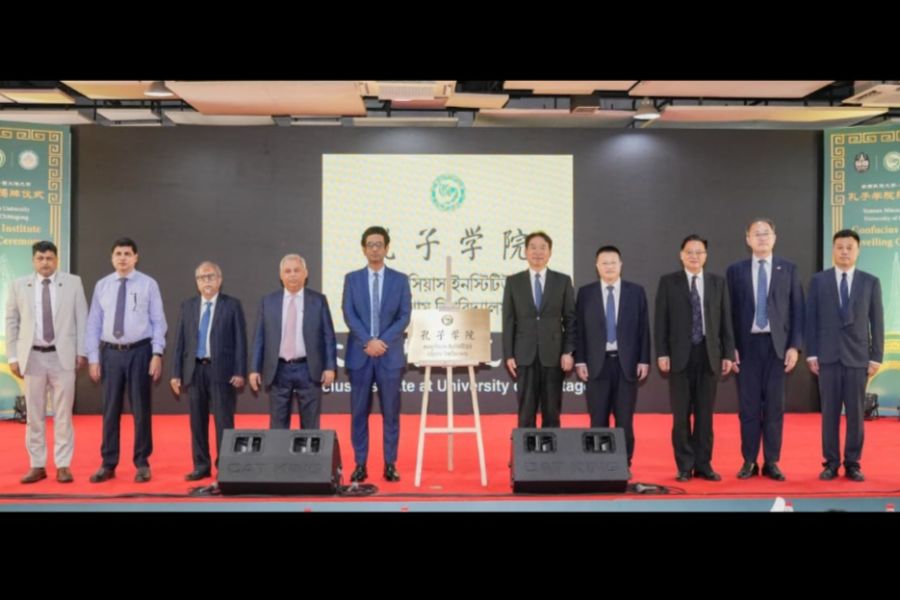
Bangladesh also does not have to start from zero. Chinese-language education has been promoted for years by universities, Confucius Institutes and classrooms, private academies and community organisations. Among the private and voluntary initiatives, Zhong Meng Chinese Academy (ZMCA) has been providing Chinese education through residential, offline and online programmes, while Yi Dai Yi Lu Chinese Academy and other institutions have also contributed to the spread of Chinese learning. We Speak Chinese Club Bangladesh Limited (WSCC) has been promoting Chinese-language learning, people-to-people contact, interpretation, educational programmes and China-related activities. Its members have also helped learners with employment, business and higher studies in China.
These initiatives deserve encouragement, but Bangladesh needs a much larger and better-coordinated national effort. The experiences of our Asian neighbours are instructive. India has introduced Mandarin in selected schools and universities and continues to maintain Chinese-language programmes despite the complexities of its relationship with China. Pakistan has developed Chinese-language programmes through universities and Confucius Institutes, including degree and professional courses. Sri Lanka has expanded Chinese teaching and teacher training in schools, while Nepal and Myanmar have increasingly linked Chinese learning with tourism, industry and employment. Thailand has long developed Chinese-language education connected with business and higher education.
The Western experience also deserves attention. For many years, universities and schools in the United States, Britain, Australia and other Western countries actively encouraged Mandarin because of China's growing economic and global importance. Enrolment patterns have changed in some institutions in recent years for a variety of geopolitical, demographic and institutional reasons. But this does not alter the basic value of Chinese. The important lesson for Bangladesh is that language education becomes sustainable when it is connected to real educational, professional and economic opportunities.
Another emerging area is medical tourism. As medical cooperation between Bangladesh and China expands, more Bangladeshis may travel to China for specialised treatment. Chinese-speaking Bangladeshi doctors, nurses, medical coordinators, interpreters and tourism professionals could play an increasingly important role. The easier communication becomes, the more comfortable and efficient medical travel can be.
Some people still believe that Chinese is too difficult to learn. I do not agree. When I first studied Chinese in the 1980s, learning resources were limited. Today, the situation is completely different. The internet, smartphones, online classes, digital dictionaries, Pinyin, video lessons, social media and communication platforms have made Chinese much more accessible. Modern learners can hear native speakers, practise pronunciation, communicate with Chinese people and access learning materials from almost anywhere. Learning Mandarin is still a serious commitment, but it is certainly more accessible today than it was decades ago.
What should Bangladesh do?
Chinese should be properly incorporated into the country's third-language strategy, with students allowed to connect language learning with their future careers. Chinese should also be taught alongside professional skills-Chinese plus engineering, Chinese plus construction, Chinese plus tourism, Chinese plus healthcare, Chinese plus IT and Chinese plus business.
We urgently need more trained Bangladeshi Chinese-language teachers, recognised certification, modern teaching materials, scholarships, exchange programmes and opportunities for language immersion in China. China can support Bangladesh through teachers, teacher-training programmes, scholarships, digital resources, language laboratories, curriculum development and cooperation between Chinese universities and Bangladeshi educational and technical institutions.
Most importantly, Chinese learning should lead somewhere: to a job, a scholarship, a business opportunity, a professional qualification or a meaningful connection with China. Learning Chinese will not replace English, nor should it. Rather, it can complement Bengali and English and give Bangladeshis another powerful window to the world.
The question for Bangladesh is no longer whether we should learn Chinese. The question is whether we are prepared to act now-or wait another fourteen years.
Lt Col (Retd) Md Shahadat Hossain, psc, MBA, MDS is a Graduate in Chinese Language, Beijing Language and Culture University; Adjunct Professor, Institute of Professional Language (IPL), Bangladesh Maritime University.
Bangladeshi students play a game of Chinese characters during a celebration of the United Nations Chinese Language Day in Dhaka, Bangladesh, on April 25, 2024 —Xinhua Photo
Fourteen years ago, on 21 September 2012, I wrote an article titled "Motivation to Learn Chinese Language." I argued then that the ability to speak Bengali, English and Chinese simultaneously could become a valuable combination for Bangladeshis in education, employment, business and international engagement. At that time, however, no newspaper agreed to publish the article, either in English or Bengali.
I mention this today not as a complaint, but because the situation has changed remarkably. The idea that seemed premature in 2012 is now becoming increasingly relevant to Bangladesh's education, skills development and employment policies.
My own journey with Chinese began much earlier. In 1988, while serving in the Bangladesh Army, I went to China to study the Chinese language. Since my retirement in 2008, I have devoted much of my time to promoting Chinese-language education and Bangladesh-China relations. I have personally taught Chinese to more than 3,500 learners from Bangladesh and other countries. Over the years, I have seen many of my learners obtain employment using Chinese, often with better remuneration; others have used the language successfully in business and other professions, while many have gone to China for higher studies too. These experiences have convinced me that Chinese is not merely an additional language-it can be a practical career skill, especially for Bangladeshi people.
The global picture supports this experience. Chinese is now one of the world's most widely learned foreign languages. More than 200 million people worldwide have been reported to be learning Chinese, and it has been incorporated into the education systems of dozens of countries. The HSK Chinese-proficiency testing network now extends across a large part of the world. This is no longer a language learned only by diplomats, China specialists or scholars; it is increasingly being learned for education, employment, business and communication.
For Bangladesh, the opportunity is particularly important.
China is already one of Bangladesh's most important economic and development partners. Chinese companies are involved in infrastructure, power, construction, manufacturing, telecommunications, transport and other sectors. As these activities expand, the demand for Bangladeshis who can communicate effectively in Chinese is also increasing.
I was fortunate to be present at the National Skills Development Authority (NSDA) validation workshop on Chinese-language competency standards and the Course Accreditation Document on 25 August 2026, where I personally heard Chinese Ambassador to Bangladesh H E Yao Wen speak. His message was especially significant. He said that more than 100,000 Bangladeshis are learning Chinese and emphasised that Chinese-language ability should be combined with technical and vocational skills. He further pointed out that skilled Bangladeshis with Chinese-language proficiency could work not only in Chinese companies in Bangladesh but also in Chinese projects in other countries.
This opens a much bigger horizon.
Bangladesh is one of the world's major suppliers of manpower. We should now aim to send abroad not only workers, but skilled workers who possess an additional international language. A Bangladeshi technician, engineer, electrician, construction supervisor, IT professional, hospitality worker or business executive who can communicate in Chinese can potentially compete for opportunities associated with Chinese enterprises in Bangladesh and overseas.
This has a natural connection with China's Belt and Road Initiative (BRI) and China's growing international economic engagement. Wherever Chinese companies work on infrastructure, industry, logistics or other projects, communication between Chinese and local professionals is essential. Chinese-speaking Bangladeshi professionals could therefore become part of a much larger international employment market.
Bangladesh could even aspire to become a regional hub for Chinese-language and skills training for overseas employment.
There is now strong official momentum behind this idea. During Prime Minister Tarique Rahman's visit to China in June 2026, Bangladesh and China signed agreements covering a range of areas, including education and vocational cooperation. Mandarin was prioritised as a third language in Bangladesh, alongside an increased emphasis on technical and vocational education. The visit also opened new avenues for cooperation in healthcare and other sectors.
Education Minister Dr A N M Ehsanul Hoque Milon has also repeatedly emphasised the importance of third-language education and developing students into globally competitive skilled citizens. Speaking at the China-Bangladesh Education Cooperation Forum in May, he stressed that third-language education should help Bangladesh face the challenges of globalization and that Chinese education could open international employment opportunities.
These developments represent a major change from 2012. What was then largely an idea advocated by individuals has now begun to receive serious policy attention.
Bangladesh also does not have to start from zero. Chinese-language education has been promoted for years by universities, Confucius Institutes and classrooms, private academies and community organisations. Among the private and voluntary initiatives, Zhong Meng Chinese Academy (ZMCA) has been providing Chinese education through residential, offline and online programmes, while Yi Dai Yi Lu Chinese Academy and other institutions have also contributed to the spread of Chinese learning. We Speak Chinese Club Bangladesh Limited (WSCC) has been promoting Chinese-language learning, people-to-people contact, interpretation, educational programmes and China-related activities. Its members have also helped learners with employment, business and higher studies in China.
These initiatives deserve encouragement, but Bangladesh needs a much larger and better-coordinated national effort. The experiences of our Asian neighbours are instructive. India has introduced Mandarin in selected schools and universities and continues to maintain Chinese-language programmes despite the complexities of its relationship with China. Pakistan has developed Chinese-language programmes through universities and Confucius Institutes, including degree and professional courses. Sri Lanka has expanded Chinese teaching and teacher training in schools, while Nepal and Myanmar have increasingly linked Chinese learning with tourism, industry and employment. Thailand has long developed Chinese-language education connected with business and higher education.
The Western experience also deserves attention. For many years, universities and schools in the United States, Britain, Australia and other Western countries actively encouraged Mandarin because of China's growing economic and global importance. Enrolment patterns have changed in some institutions in recent years for a variety of geopolitical, demographic and institutional reasons. But this does not alter the basic value of Chinese. The important lesson for Bangladesh is that language education becomes sustainable when it is connected to real educational, professional and economic opportunities.
Another emerging area is medical tourism. As medical cooperation between Bangladesh and China expands, more Bangladeshis may travel to China for specialised treatment. Chinese-speaking Bangladeshi doctors, nurses, medical coordinators, interpreters and tourism professionals could play an increasingly important role. The easier communication becomes, the more comfortable and efficient medical travel can be.
Some people still believe that Chinese is too difficult to learn. I do not agree. When I first studied Chinese in the 1980s, learning resources were limited. Today, the situation is completely different. The internet, smartphones, online classes, digital dictionaries, Pinyin, video lessons, social media and communication platforms have made Chinese much more accessible. Modern learners can hear native speakers, practise pronunciation, communicate with Chinese people and access learning materials from almost anywhere. Learning Mandarin is still a serious commitment, but it is certainly more accessible today than it was decades ago.
What should Bangladesh do?
Chinese should be properly incorporated into the country's third-language strategy, with students allowed to connect language learning with their future careers. Chinese should also be taught alongside professional skills-Chinese plus engineering, Chinese plus construction, Chinese plus tourism, Chinese plus healthcare, Chinese plus IT and Chinese plus business.
We urgently need more trained Bangladeshi Chinese-language teachers, recognised certification, modern teaching materials, scholarships, exchange programmes and opportunities for language immersion in China. China can support Bangladesh through teachers, teacher-training programmes, scholarships, digital resources, language laboratories, curriculum development and cooperation between Chinese universities and Bangladeshi educational and technical institutions.
Most importantly, Chinese learning should lead somewhere: to a job, a scholarship, a business opportunity, a professional qualification or a meaningful connection with China. Learning Chinese will not replace English, nor should it. Rather, it can complement Bengali and English and give Bangladeshis another powerful window to the world.
The question for Bangladesh is no longer whether we should learn Chinese. The question is whether we are prepared to act now-or wait another fourteen years.
Lt Col (Retd) Md Shahadat Hossain, psc, MBA, MDS is a Graduate in Chinese Language, Beijing Language and Culture University; Adjunct Professor, Institute of Professional Language (IPL), Bangladesh Maritime University.