 Chinese Defense
Saif
Senior Member
- Jan 24, 2024
- 21,040
- 9,685
- Nation

- Residence
- Axis Group


Beijing says US firms train AI models on Chinese examples
Beijing accused US artificial intelligence companies of using Chinese examples to train their models, after US threatened sanctions Chinese firms over 'technology theft'.
 en.prothomalo.com
Beijing says US firms train AI models on Chinese examples
AFP
Beijing
Published: 27 Jul 2026, 19: 10
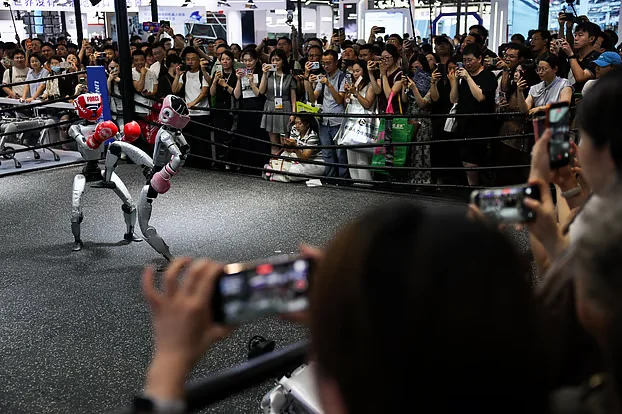
Visitors watch two humanoid robots kickbox at the Unitree booth during the World Artificial Intelligence Conference (WAIC) in Shanghai, China, on 18 July 2026 REUTERS
Beijing accused US artificial intelligence companies on Monday of using Chinese examples to train their models, days after Washington threatened sanctions on Chinese firms for allegedly stealing American technology.
"It is understood that many American artificial intelligence enterprises have distilled Chinese models during their research, development and training processes," the Chinese commerce ministry said in a statement.
Distillation is a process in which an AI model is trained to mimic the output of a larger, more capable one.
The method is widely used across the industry, but US officials say Chinese firms have deployed it at scale to illicitly copy proprietary American systems.
The Chinese ministry said the US accusations "lack factual basis and legal grounds, adopt double standards in practice, and constitute typical acts of artificial intelligence hegemonism".
"China will take all necessary measures to firmly safeguard its legitimate and lawful rights and interests," it added.
Last week, a senior White House official accused Chinese startup Moonshot AI of covertly copying Anthropic's most advanced model to build its Kimi K3.
The latest Moonshot model stunned the US tech industry upon its release, setting off a fresh discussion over the AI rivalry with China.
Treasury Secretary Scott Bessent last week threatened sanctions against China, amid reports the US is also weighing a ban or curbs on foreign-made open source models that are often built through distillation.
AFP
Beijing
Published: 27 Jul 2026, 19: 10
Visitors watch two humanoid robots kickbox at the Unitree booth during the World Artificial Intelligence Conference (WAIC) in Shanghai, China, on 18 July 2026 REUTERS
Beijing accused US artificial intelligence companies on Monday of using Chinese examples to train their models, days after Washington threatened sanctions on Chinese firms for allegedly stealing American technology.
"It is understood that many American artificial intelligence enterprises have distilled Chinese models during their research, development and training processes," the Chinese commerce ministry said in a statement.
Distillation is a process in which an AI model is trained to mimic the output of a larger, more capable one.
The method is widely used across the industry, but US officials say Chinese firms have deployed it at scale to illicitly copy proprietary American systems.
The Chinese ministry said the US accusations "lack factual basis and legal grounds, adopt double standards in practice, and constitute typical acts of artificial intelligence hegemonism".
"China will take all necessary measures to firmly safeguard its legitimate and lawful rights and interests," it added.
Last week, a senior White House official accused Chinese startup Moonshot AI of covertly copying Anthropic's most advanced model to build its Kimi K3.
The latest Moonshot model stunned the US tech industry upon its release, setting off a fresh discussion over the AI rivalry with China.
Treasury Secretary Scott Bessent last week threatened sanctions against China, amid reports the US is also weighing a ban or curbs on foreign-made open source models that are often built through distillation.