[🇧🇩] Civilian/Military Nuclear Program in Bangladesh

Quick Reply ✓ Posted!
[🇧🇩] Civilian/Military Nuclear Program in Bangladesh
127
7K
More threads by Saif

G Bangladesh Defense

Rooppur’s first unit gets clearance to start nuclear fission
Unit-1 is expected to generate 300MW by Dec

Staff Correspondent . Dhaka
1791505576805.webp

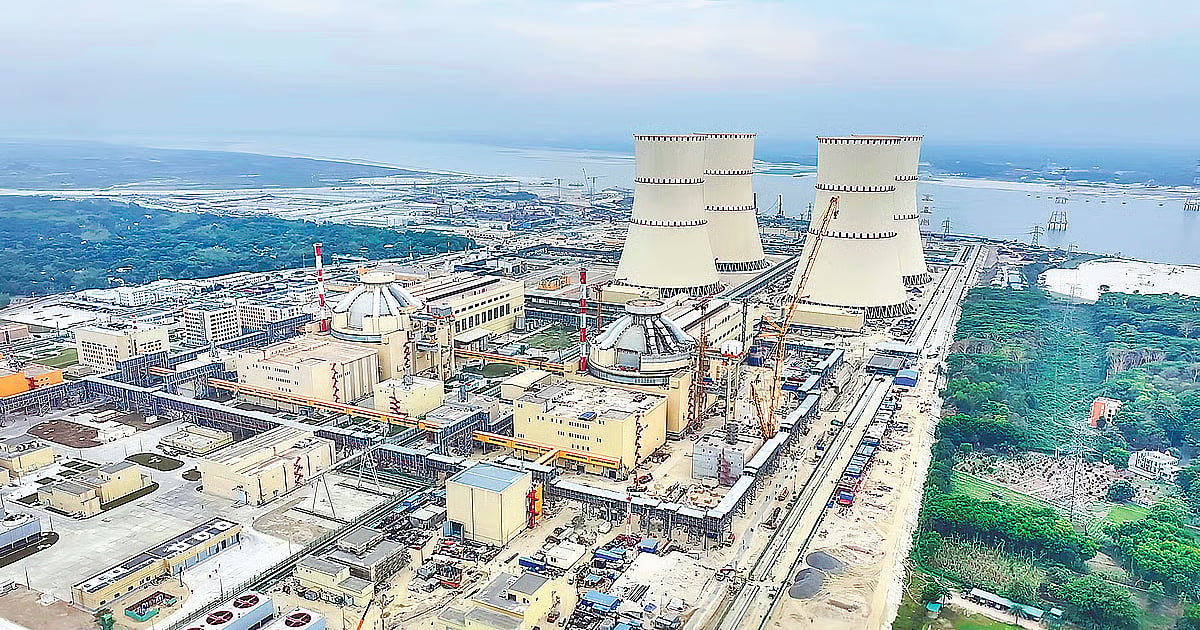
Rooppur Nuclear Power Plant | File photo

The first unit of the Rooppur Nuclear Power Plant in Ishwardi, Pabna, has received final clearance from the Bangladesh Atomic Energy Regulatory Authority on Thursday to begin the controlled nuclear fission reaction, a key step towards commissioning the 1,200MW reactor.

‘The clearance will allow the reactor to reach the B2 stage where it would be brought to first criticality,’ Construction of Rooppur Nuclear Power Plant Project focal point Saikat Ahmed told New Age.

Here, first criticality means the start of a controlled, self-sustaining nuclear chain reaction that produces heat for electricity generation.

The first unit is expected to initially generate 300MW of power as test production by December and it may continue for six to seven months, project sources said.

Before getting the BAERA nod for nuclear fission, the unit cleared a couple of high-pressure tests of its Pressure Operating Relief Valve including 18 megapascals and 16 megapascals test.

Earlier this week, a convoy carrying uranium arrived at the Rooppur plant under a tight security cordon. RNPP officials informed New Age that the convoy reached the site at about 12:20pm on October 3.

Multiple sources indicated that a total of nine consignments of nuclear fuel would be brought into the country.

Of these, seven are intended for the second unit, currently under construction, and two are for the refueling of the first unit.

Russia’s state nuclear corporation Rosatom in a statement on September 28 said, the delivery of nuclear fuel was scheduled to begin in October and continue through December.

The fuel will be shipped in several flights, in accordance with the contract terms and the project schedule, it added.

Under the plant’s fuel supply plan, nine cargo flights are scheduled to transport an additional 48 uranium assemblies for the first unit and 163 assemblies for the second unit to Bangladesh by December.

Worth over $12 billion, the country’s first nuclear power project has been implemented by the science and technology ministry with technical and financial assistance from Russia.​
 

Rooppur Nuclear Power Plant draws both hope, worry for Bangladesh
Agence France-Presse . Pabna, Bangladesh


1791591596025.webp

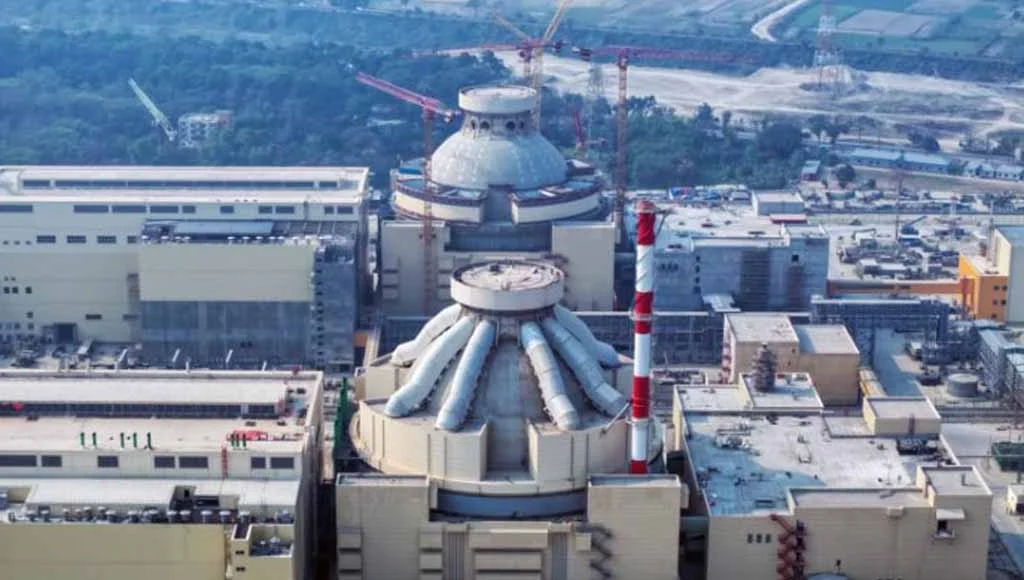
his photograph taken on September 24, 2026 shows a general view of the Rooppur Nuclear Power Plant at Ishwardi in Bangladesh’s Pabna district. | AFP photo.


Bangladesh is preparing to switch on its first nuclear power plant, a long-delayed project promising relief from chronic electricity shortages — even as some fear living beside it.

The 2.4-gigawatt Rooppur nuclear plant, a $13-billion project more than a decade in the making, has transformed the once sleepy nearby village of the same name, bringing Russian workers, new businesses and jobs.

Once fully operational, its two reactors are expected to supply more than 10 per cent of electricity demand in the South Asian nation of 170 million people, which has been hit hard by the fuel crisis sparked by the conflict in the Middle East.

For Md Zahedul Hasan, managing director of state-owned Nuclear Power Plant Company Bangladesh, the giant complex represents the culmination of a decades-old ambition to bring nuclear power to the country.

The plant’s first reactor is scheduled to be turned on by the end of this year, and the second unit ‘will be operational within a year’, Hasan said at the site on the banks of the Padma River, 150 kilometres west of Dhaka.

Bangladesh’s power sector is dominated by fossil fuels, particularly natural gas, with coal, oil and renewables making up the rest.

The project, built with Russian state nuclear corporation Rosatom, has also brought an unlikely Russian enclave to rural Bangladesh.

Thousands of Russian workers have spent years building and installing equipment, with a residential complex, shops and restaurants springing up around them.

Shop signs appear in Bangla, English and Russian, while some restaurants serve borscht soup alongside local dishes.

Alexander Vladimirovich Skvortsov, a Russian installation technician, said he had a choice between working in Turkey or Bangladesh. He chose Rooppur, moving there with his family in 2024.

‘When I first saw the construction site at Rooppur, I realised how much work lay ahead on this project. Honestly, Rooppur changed me and my life,’ he told AFP.

The project has also transformed the local economy.

Md Emon Khan, 28, left his garment-factory job in Dhaka and returned to Rooppur, where he now sells vegetables and fruit to workers.

‘I can speak a bit of Russian, and they can speak Bangla, too,’ he said.

Plant officials say stringent safety measures have been followed and lessons from previous nuclear accidents were incorporated into the project.

Standing near a radiation monitoring tower and an alarm post, 15-year-old Mohammad Nafiz said he saw little to fear.

‘We are glad that Rooppur is known to the world, and my friends and I hope that we will work at the plant after graduating from engineering schools,’ he added.

Not everyone shares that confidence.

Md Yunus Ali, 80, whose home is a 15-minute walk from the plant, said opposition to building a nuclear facility in the densely populated area dates back decades.

‘A few days ago, they ran a compressor test with a big bang. Even the children who were asleep woke up in fear,’ said Ali, a retired paper mill worker.

‘I am old now, and I am not afraid for my life. But, I have children and grandchildren, and I want safety for them.’

The ambition to build a nuclear power plant at Rooppur dates back to the 1960s.

Several attempts came after independence, including approaches to Saudi Arabia and France, and talks with China and South Korea. No deals were materialised.

Bangladesh finally signed an agreement with Moscow in 2015, with the Russian state offering a loan covering about 90 per cent of the project’s original cost.

The project has since faced delays, including disruption from the Covid-19 pandemic and sanctions on Russia after its invasion of Ukraine, which complicated equipment deliveries and payments.

There have also been corruption allegations surrounding the project, including against ousted former prime minister Sheikh Hasina and members of her family. They have rejected the accusations.

For most Bangladeshis, however, the biggest question is when Rooppur will finally deliver reliable electricity.

Belly Begum, a 55-year-old farmer, struggles to irrigate her land during frequent power cuts.

‘I wish the Rooppur nuclear power plant goes into operation soon, and we reap the full benefit,’ she said.

‘I hope we will get electricity for 24 hours without interruption, as the plant is near my house.’​
 

Rosatom vows early grid connection of Rooppur’s first unit
Staff Correspondent

1791591841143.webp

Press Release Photo

Russia’s state atomic energy corporation Rosatom has assured Bangladesh that electricity from the first unit of the Rooppur Nuclear Power Plant will be connected to the national grid on a trial basis as soon as possible.

Rosatom director general Alexey Likhachev gave the assurance at a meeting with science and technology minister Faqir Mahbub Anam in Moscow on Friday, according to a press release issued by the ministry.

The meeting discussed the overall progress of the country’s first nuclear power project and the timeline for starting electricity generation from its first unit, equipped with a VVER-1200 reactor.

Likhachev said the project would play an important role in ensuring Bangladesh’s energy security by supplying affordable and environment-friendly energy. He also said commissioning and initial start-up activities for the plant’s second unit would begin next year.

Faqir Mahbub Anam said the 2,400-megawatt power plant would meet about 11 per cent of the country’s total electricity demand.

The two sides also discussed expanding Bangladesh’s nuclear energy sector and strengthening bilateral cooperation by building on the experience gained through the Rooppur project.

On Thursday, the first unit received final approval from the Bangladesh Atomic Energy Regulatory Authority to begin a controlled nuclear fission reaction, a key step towards commissioning the 1,200-megawatt reactor.

Before receiving the approval, the unit passed high-pressure tests of its pressure-operated relief valve, including tests at 18 and 16 megapascals.

Fuel loading in the first unit began on April 28 and was completed on May 12.

In a statement on September 28, Rosatom said the delivery of nuclear fuel for the plant’s second unit was scheduled to begin in October and continue through December.

Under the plant’s fuel supply plan, nine cargo flights are scheduled to transport an additional 48 uranium fuel assemblies for the first unit and 163 for the second unit to Bangladesh by December.​
 

Rooppur nuclear power plant begins fission, moves closer to electricity generation

Mohiuddin
Dhaka


1791762253271.webp

Rooppur nuclear power plant File photo


The first unit of the Rooppur Nuclear Power Plant has begun a nuclear fission reaction, bringing Bangladesh’s only nuclear power plant closer to starting electricity generation and supplying power to the national grid.

The reaction is the process through which nuclear energy is released and marks a crucial stage in the final preparations for electricity generation and supply. The plant is scheduled to supply 300 megawatts of electricity to the national grid in December.

According to sources at the Rooppur plant, the process of generating energy through nuclear fission was initially scheduled to begin in September. However, the schedule was delayed after defects were detected during tests of safety valves. The valves were tested under high pressure in two rounds last week. After reviewing the test results, the Bangladesh Atomic Energy Regulatory Authority (BAERA) approved the start of the reaction last Thursday. Nuclear fission began at 3:34pm on Sunday.

The Rooppur project in Pabna is the largest single project in Bangladesh’s history in terms of cost. The Bangladesh Atomic Energy Commission, under the Ministry of Science and Technology, is implementing the project. The state-owned Nuclear Power Plant Company Bangladesh Limited (NPCBL), under the commission, is responsible for operating the plant.

Russian contractor Atomstroyexport is constructing two units at Rooppur, each with a capacity of 1,200 megawatts.

NPCBL Managing Director Md Zahedul Hasan told Prothom Alo that the final process leading to the start of the nuclear reaction began on Saturday after three days of preparation. The controlled reaction successfully started on Sunday.

“This brings to an end the long wait following the beginning of Bangladesh’s journey towards the peaceful use of nuclear energy in 1961. This is a major milestone for the country’s science sector,” he said.

Sources at the plant said the reactor vessel of the first unit had achieved criticality for the first time. This is a significant milestone for Bangladesh’s nuclear power programme. Following criticality, all key reactor parameters have remained within the prescribed limits, and the process is being conducted under controlled conditions.

Officials involved in the project said the start of the nuclear reaction was a major step towards connecting the plant to the national grid. The next stages will involve reactor physics tests, verification of safety systems, a gradual increase in reactor power and the completion of tests and preparations required for grid connection, in accordance with the approved commissioning programme.

Each stage must comply with the highest safety standards, approved procedures and regulatory requirements.

According to plant officials, achieving reactor criticality is not merely a technical success but also a historic recognition of Bangladesh’s capabilities in science, engineering and nuclear technology. After years of effort, the country has reached a crucial stage in connecting its first nuclear power plant to the national grid.

Reaction process likely to take 30 to 40 days

Sources at the Rooppur plant said a series of tests would be conducted following the start of the nuclear reaction. The entire process could take 30 to 40 days.

The reactor’s power output will then be increased gradually. Nuclear fuel fission will generate heat, which will be used to produce steam and drive a turbine to generate electricity.

Once the reactor begins producing energy, electricity can be supplied to the national grid when its output reaches 30 per cent of capacity. At that stage, the plant is expected to supply 300 megawatts of electricity, potentially in December.

Plant officials said trial operations could continue for seven to eight months after the initial start-up. Once electricity is supplied to the grid, Bangladesh will become the world’s 33rd country to generate nuclear power.

Rooppur was recognised as a nuclear installation after nuclear fuel arrived at the project site in October 2023. With the receipt of the fuel, Bangladesh also joined the group of countries possessing nuclear energy capabilities.
According to plant sources, once operational, the nuclear power plant will be able to supply electricity continuously at a steady rate, 24 hours a day.

The reactor will require refuelling every 18 months. A unit may remain shut down for up to two months for the removal of spent fuel, loading of fresh fuel and maintenance.

The sources said that once one unit of Rooppur became operational, it could save USD 1 billion annually in fuel imports. However, the project has already been delayed by three and a half years.

Project cost rises by Tk 260 billion

The Rooppur project was originally scheduled to run until December 2025. Its deadline has been extended twice, with the latest completion date set for June 2028.

Although the deadline has been extended under the agreement with the contractor, there is no provision to increase the project cost under that agreement. However, the rise in the dollar exchange rate has increased the project's expenses by Tk 260 billion.

The total cost of the Rooppur Nuclear Power Plant is now expected to reach Tk 1.39 trillion.​
 

Rooppur’s first unit passes physics test, power start-up awaits clearance


1792883568149.webp


The first 1,200MW unit of Rooppur, Bangladesh’s first nuclear power plant, has completed all preparations, including the physics test of its “B-2” stage.

Zahedul Hasan, managing director of Nuclear Power Plant Company Bangladesh Limited (NPCBL), said on Saturday that the test reports were submitted to the regulator, the Bangladesh Atomic Energy Regulatory Authority (BAERA), on Wednesday.

The “C stage”, or “power start-up”, the final preparatory phase before power generation, will begin once the regulator gives final approval.

The company says it is ready to start the power start-up late this month if all goes to plan, but that depends entirely on BAERA’s clearance.

Power generation will begin on a limited scale at first, and capacity will be raised step by step as the tests succeed.

Project engineers said the Ministry of Science and Technology was briefed on the critical stage of progress after a meeting with a visiting high-level Russian delegation.

They hope that once the plant reaches 25 to 30 percent of capacity after power start-up, the first unit can begin supplying test power to the national grid.

On that basis, at least 300MW could be added to the grid from Rooppur’s first unit by the end of this year.

Under international nuclear standards, every stage must be tested thoroughly and formally approved by BAERA before commercial production.

Once the plant goes commercial, Bangladesh will formally join the elite group of nuclear power producers, a historic milestone for energy security and science and technology.

The project’s original deadline was December 2025, since extended twice to June 2028.

Under the main contract with Russia, the euro or dollar contract cost has not risen despite the extensions.

But a stronger dollar in the local market has pushed up the project cost in taka by about Tk 260 billion. The total estimated cost now stands at Tk 1.39 trillion.​
 
Last edited:

PKDefense Forums: Country-by-Country Military Discussions

Log In Register Forums
Back