 Bangladesh Defense

Saif
Senior Member
- Joined
- Jan 24, 2024
- Messages
- 21,926
- Likes
- 9,837
- Nation

- Residence
- Axis Group


What promise Rooppur holds for nation's energy future?
The first unit of the Rooppur Nuclear Power Plant (RNPP) in Pabna was reportedly ready to enter the power start-up phase on Sunday, subject to approval by the Bangladesh Atomic Energy Regulatory Authority (BAERA). The 1,200 megawatt (MW) unit achieved 'first criticality' on October 11, when a contr
What promise Rooppur holds for nation's energy future?
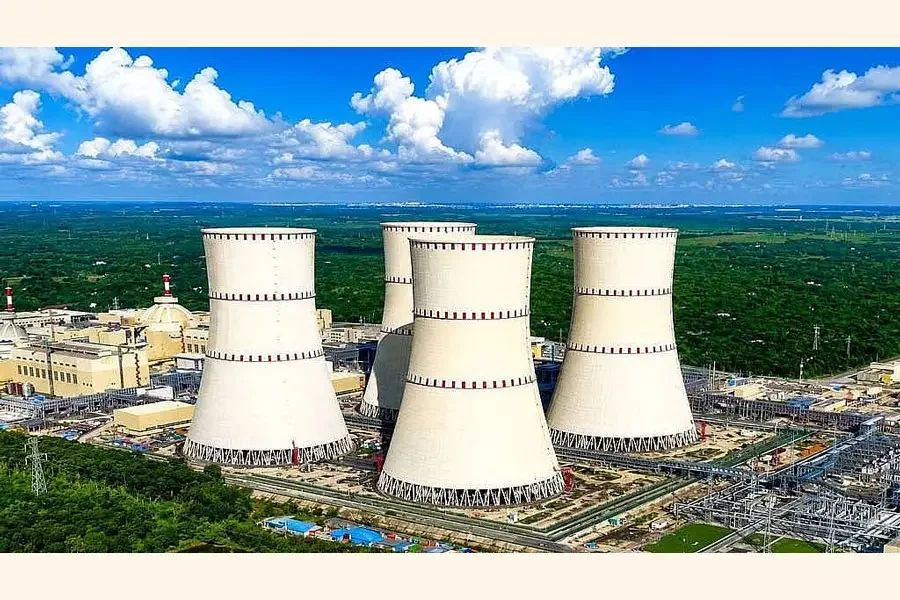
The first unit of the Rooppur Nuclear Power Plant (RNPP) in Pabna was reportedly ready to enter the power start-up phase on Sunday, subject to approval by the Bangladesh Atomic Energy Regulatory Authority (BAERA). The 1,200 megawatt (MW) unit achieved 'first criticality' on October 11, when a controlled nuclear chain reaction began. With the B-2 stage physics tests completed, the reactor is expected to enter the next stage. If all goes well, project officials hope that at least 300MW could be added to the national grid by the end of December. No doubt, this is encouraging news for an economy struggling with power shortages despite ample installed generation capacity. In a sense, it is a test of the country's ability to master a demanding technology. But does the prospective supply of a few hundred megawatts from Rooppur mean Bangladesh is finally on the way to securing a sustainable clean energy future?
It is too early to answer that question. For, starting a nuclear reaction is one thing and delivering electricity to homes, farms and industries is quite another. Before grid connection, the reactor's power level must rise gradually to around 30 to 35 per cent while engineers test its systems. Any anomaly may necessitate further checks and delay the process. In a nuclear station, a technical fault cannot be dismissed as in an ordinary power plant. Notably, faulty pressure relief safety valves have already delayed commissioning. That the authorities insisted on resolving the problem before proceeding is commendable. In nuclear energy, adherence to safety requirements should take precedence over any political urge to announce a grand achievement.
However, the present milestone has been a long time coming. The two-unit, 2,400MW project was expected to produce electricity years earlier. Instead, the completion schedule was extended repeatedly, with the overall project deadline now pushed to June 2028. The Covid-19 pandemic disrupted movement of personnel and imported equipment. Then came Russia's war in Ukraine and the sanctions-related complications involving international banking transactions. Since Russia's Rosatom is responsible for building the plant, such disruptions could hardly leave Rooppur unaffected. A project dependent on cross-border expertise and equipment is especially vulnerable to geopolitical upheavals. So, dependence on a foreign supplier for a supposedly secure domestic source of electricity has its own irony.
Then there is the question of cost. The original agreement was worth US$12.65 billion, including a US$11.38 billion Russian loan. With the taka depreciating against the dollar, additional requirements and delays, the approved estimate has climbed from Tk1.13 trillion to Tk1.39 trillion. Of course, the exchange-rate adjustment does not, by itself, mean that the foreign contractor has increased the dollar value of the original agreement. But to taxpayers bearing the burden, the distinction offers little comfort. Meanwhile, interest accrues on borrowed money as time passes, even when the machinery acquired with it has yet to produce electricity. Thus, delays not only deprive the economy of badly needed power, they also make that power costlier even before the first unit starts earning revenue. What will be the ultimate cost per unit after financing, maintenance and future decommissioning are accounted for?
Not surprisingly, Rooppur has not escaped the irregularities in procurement that bedevils public projects in Bangladesh. One might recall pillows and pieces of furniture purchased at fantastic prices for Rooppur's Green City residential complex. Investigations and audits exposed anomalies involving furniture and electrical equipment procurement. The revised development proposal also provided higher allocations for various components, including residential facilities. But not all extra cost arose from corruption. BDT's depreciation and delays explain much of the revision. A project involving nuclear safety and public debt demands the highest financial scrutiny. This, after all, is public money. Why should the public accept waste and lack of transparency as inevitable companions of development?
Even so, should the financial and technical setbacks lead us to question the rationale for nuclear power itself? Not necessarily. Unlike fossil-fuel plants, a nuclear reactor can generate large quantities of electricity without emitting carbon dioxide at the point of generation. Rooppur could provide round-the-clock, low-carbon baseload electricity, relieving dependence on imported liquefied natural gas (LNG), oil and coal. This is the larger significance of the observation by Science and Technology Secretary Md Anwar Hossain that Rooppur marks a historic milestone for national energy security. At a time when wars and disruptions in international fuel markets repeatedly send electricity costs soaring, a dependable source of nuclear energy is surely an advantage.
But nuclear power is not renewable energy, nor is it free from risks or external dependence. The uranium fuel, specialised maintenance services and much of the technical know-how are foreign in origin. Radioactive spent fuel requires secure handling and long-term arrangements. Neither can emergency preparedness, cooling water and environmental protection be wished away. One may recall how the Fukushima disaster in Japan in 2011 forced even technologically advanced nations to revisit their nuclear safety assumptions. As a newcomer, Bangladesh has still more reason to be cautious. The International Atomic Energy Agency's safety review and the independence of BAERA must, therefore, be treated as essential safeguards, not procedural hurdles to be hurried through.
Moreover, the country's electricity predicament is not just one of inadequate power stations. Fuel shortages, financial liabilities, weak distribution networks and poor planning have time and again prevented existing capacity from being used effectively. Rooppur requires a grid capable of absorbing output and managing unexpected shutdowns. So, what happens if Rooppur generates electricity but the transmission and distribution systems fail to deliver it economically to industries and consumers? Nuclear energy cannot substitute solar power, storage, grid modernisation and exploration of domestic energy resources. These sources and technologies should complement one another instead of becoming rival claims on limited public funds. Nor can the country go on paying for idle generating capacity while factories suffer outages for want of fuel or a functioning network.
So, bringing Rooppur's first unit into operation safely would certainly be a major step forward. But 300MW of trial supply, if achieved by December, cannot end our energy worries. The government has to ensure transparent accounting of the project cost, competent local management, credible regulation and a coherent long-term energy policy. The real measure of Rooppur's success will be not merely the electricity it generates, but whether it helps Bangladesh build a reliable, affordable and sustainable energy system.
