| Global Defense, OSINT & Geopolitics Wire

[🇧🇩] Coastal/Inland Riverine Shipping & Passenger Logistics

[🇧🇩] Coastal/Inland Riverine Shipping & Passenger Logistics
22
3K
More threads by Bilal9

G Bangladesh Defense

Foreigners showing more interest to invest in shipping sector, says Sakhawat
FE ONLINE DESK
Published :
Dec 15, 2024 22:38
Updated :
Dec 15, 2024 22:38
1734309734927.webp


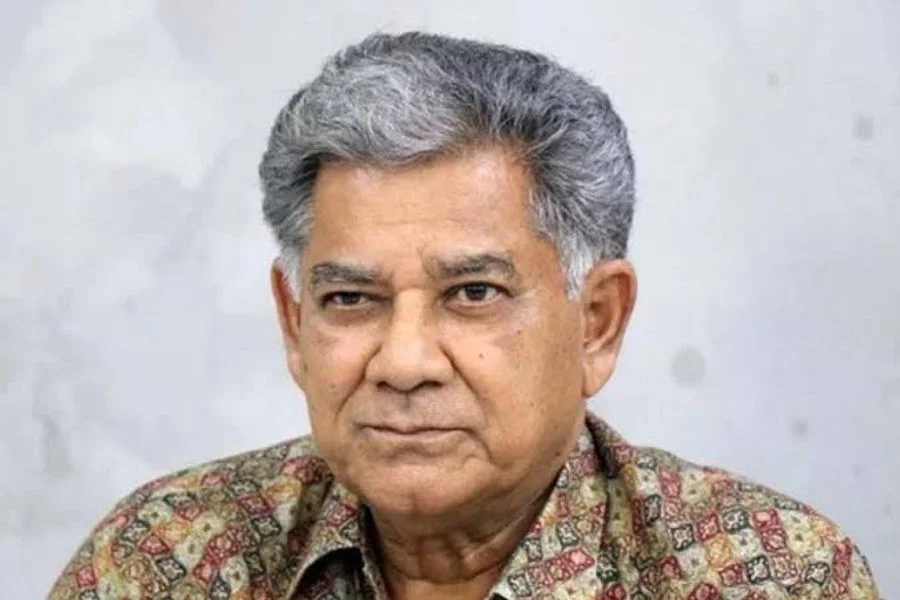
Shipping, and Labour and Employment Adviser Brig Gen (retd) Dr M Sakhawat Hussain on Sunday said foreigners have been showing more interest to invest in the country’s shipping, maritime and port infrastructure development sectors.

“The government has already taken various steps for maritime sector development, including reducing the port congestion to ease imports-exports,” he said while speaking at a view-exchange with a delegation of the Shipping Reporters’ Forum at his ministry in Dhaka.

Sakhawat Hussain said the ministry has planned to build an international stander dockyard in Matarbari Deep Sea Port with support of the World Bank, reports BSS.

He said the ministry also took steps to increase facilities of carrying passengers and goods via waterway.

Besides, the shipping ministry has taken steps to turn Mongla Sea Port into an environmental friendly green port.

The present interim government is working relentlessly for the country and its people, he added.

The adviser urged the journalists to publish objective news for the development of the country.​
 

Govt committed to ensuring security on waterways: Adviser Sakhawat
UNB
Published :
Dec 29, 2024 22:21
Updated :
Dec 29, 2024 22:21

1735525013485.webp


Adviser to the Ministry of Labour and Employment and the Ministry of Shipping, Brigadier General (retd) M. Sakhawat Hossain, has said that overall security will be ensured on all inland waterways with the cooperation of the River Police.

He made these remarks today during a meeting held at the Labour Building conference room to review the overall situation of inland vessel operations in Bangladesh.

The adviser expressed condolences for the seven lives lost on board the MV Al Bakhera on the Meghna River in Chandpur, and prayed for the eternal peace of their souls. He also expressed deep sympathy to the grieving families.

The adviser said that the district administration had already provided Tk 20,000 to each of the victim families, and the police had given Tk 10,000 for burial expenses.

He also said, "The RAB has already arrested one suspect in connection with the murders. An investigation is ongoing to determine if anyone else is involved in the crime."

He called for the continued operation of the shipping sector to keep the country's economy functioning. He also instructed the River Police to promptly receive complaints in accident-prone areas.

The meeting was attended by the Secretary of Labour and Employment, the Secretary of Shipping, and other officials.​
 

Baghabari port fading from inland water map as river silts up
1736125077080.webp

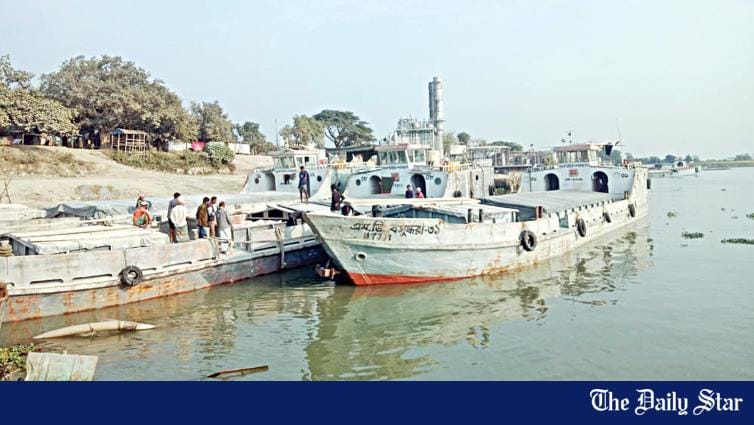
Established in the 1980s on the banks of Baral river, Baghabari river port currently offers a draft of only 7-8 feet during the dry season, which allows vessels with roughly 300 tonnes of cargo. PHOTO: AHMED HUMAYUN KABIR TOPU

Once a key supply hub for agricultural inputs and fuel to the greater northern region, Baghabari river port in Shahzadpur upazila of Sirajganj is now seeing more and more cargo vessels avoiding it due to years of neglect in navigability management and inadequate port facilities.

Fertiliser-laden vessels arriving from Chattogram now offload their consignments at Nawapara port in the southwestern district Jashore, from where the agricultural inputs are then transported to northern districts.

"I travelled to Baghabari port around one and a half years ago carrying imported fertiliser, but I was unable to reach the port directly due to navigability problems," said Md Eusuf Mollah, master of an inland water vessel.

"Now we use Nawapara port regularly instead of Baghabari to unload fertiliser," Mollah added.

He said that Nawapara port can accommodate vessels carrying 1,000-1,200 tonnes of cargo, a capacity that Baghabari cannot match.

Established in the 1980s on the banks of Baral river, Baghabari currently offers a draft of only 7-8 feet during the dry season, which allows vessels with roughly 300 tonnes of cargo.


1736125147616.webp


Although minor dredging of the nearby Jamuna channel was carried out in recent years, there has been no visible improvement in navigability in the Baral as water levels have been declining rapidly.

"Fertiliser vessels usually have a draft of 10-12 feet, but the current water level in the river is only 9 to 9.5 feet. Therefore, only ships with a draft of 7-8 feet can navigate this channel in winter," Md Asaduzzaman, in-charge of Baghabari port, told The Daily Star.

He said that during the monsoon, heavier vessels with drafts more than 10-12 feet can easily access the port.

Asaduzzaman said that over the years, both the size and the load capacity of inland vessels have increased, but the port's facilities have failed to keep pace.

These decades-old port facilities are inadequate for handling larger vessels, leaving the port yard largely empty during the dry season.

Port officials said some small cargo vessels carrying cement still arrive at the port, but fertiliser and coal-laden ships are less regular.

For hundreds of port workers, this decline in activity has put pressure on them to find alternative livelihoods.

"Around 400-500 workers had sufficient income at the port even a few years ago, now even 100-150 workers struggle to make their ends meet with the income here," said Md Jahangir Sardar, a local labour leader.

Many port workers have left the port in search of new jobs, Jahangir added.

The empty port yards have also impacted the buffer fertiliser warehouse at the port area, leaving it with insufficient stocks.

"We have a demand for 10,281 tonnes of fertiliser for Sirajganj district in January, but we currently have a reserve of 7,734 tonnes," said Md Abdullah Al Ansari, in-charge of the warehouse at the port.

Run under the Bangladesh Chemical Industries Corporation (BCIC), Ansari said the warehouse is receiving truckloads from Nawapara, but they do not arrive on time.

"Fuel-laden vessels can load a minimum of 10 to 12 lakh litres, but now each fuel-laden vessel carries a maximum of 8 to 9 lakh litres of fuel to reach the port," said Md Abul Fazal, in-charge of the Jamuna oil depot at Baghabari.

Baghabari fuel depot is one of the largest fuel depots in the northern districts, with a fuel reserve capacity of more than 7.5 crore litres.

"We have the capacity to unload three fuel ships daily at the three fuel jetties in the port, but they all arrive with reduced loads," he said, adding that if the Baral river channel is improved, fully loaded ships could be accommodated without any issue.​
 

Renewing inland water trade & transit protocol
Asjadul Kibria
Published :
May 18, 2025 00:27
Updated :
May 18, 2025 00:27

1747526667956.webp


Even before the independence of Bangladesh, the waterway was one of the key modes for the movement of freights with India like it was historically the case through the railway. Most of the railway network of Bangladesh was also built and developed in the British period, starting with a 53-km long broad-gauge track between Darsana and Jagati, in 1862. The record also shows that steam navigation in inland waterways began in the mid-nineteenth century with passenger services between Kolkata and key river ports of erstwhile East Bengal. The river routes were relatively cheap compared to road transport. Nevertheless, since the independence of Bangladesh in 1971, the importance of waterways started declining, as the country became focused more on developing roads and highways. The emphasis on roadways has also put the developmental issues of railway to the backburner. Bilateral trade with India also largely depends on roadways, although waterways are still used to carry freight.

In 1972, two countries signed the Protocol on Inland Water Transit and Trade (PIWT&T) in accordance with Article VIII of the Indo-Bangla bilateral trade agreement. The protocol was signed to make mutually beneficial arrangements for the use of their waterways for commerce between the two countries. The protocol also allowed the passage of goods between two places in one country and to third countries through the territory of the other. So far, it is one of the few Indo-Bangla bilateral deals that is still working.

The protocol was initially renewable every two years. Later, in 2015, with a few amendments, the deal became renewable every five years. The relevant section of the protocol said: "It shall automatically be extended for successive five years unless either Government terminates the protocol by giving a written notice of its intention to terminate to the other Government at least six months before end of term. In case of termination, it shall cease to operate on the expiry of the respective term. But termination shall not affect the actions taken or agreements reached pursuant to this protocol."

1747526687073.webp


Consequently, the protocol was formally renewed on May 20, 2020, extending the scope. Two new routes and five new ports of calls were included in the protocol, making the total number of routes and ports of calls ten and eight, respectively. As the renewed period of five years will end on Tuesday next, it is to see what the governments on both sides of the border do. Suppose the governments maintain silence and neither side gives any notice for termination. In that case, the protocol will get another five years of extension, with the current terms and conditions unchanged. The automatic renewal will be effective from May 21, 2025. So far, there has been no indication from any of the governments to terminate the deal, especially when the two countries' bilateral ties have come under serious strain.

In the face of a mass uprising, Sheikh Hasina, the autocratic prime minister of Bangladesh, resigned and fled to India for shelter. Since then, the two neighbouring countries' bilateral relations have deteriorated. New Delhi's unconditional support to Hasian and persistent intervention in the domestic affairs of Bangladesh during one and half decades of the Hasina regime made the people of Bangladesh angry and disappointed. Hasina unleashed a reign of terror and oppression in Bangladesh with the backing of India. Her regime brutally killed around 1,400 people during the student-led mass uprising when more than 20,000 were also injured. As Hasina took shelter in Delhi on August 5 last year, a new era of Indo-Bangla ties has also emerged where Bangladesh signalled for a balanced and mutually respectful relationship. As Hasina had turned the country almost into a 'vassal state' of India, her ouster irritated the Indian establishment. Even after nine months of the fall of Hasina, India is yet to accept the reality in Bangladesh, making it difficult to restore normalcy in bilateral relations.

Nevertheless, bilateral trade is going on as both countries are interdependent regarding many products and services, and it is not easy to shift the sources of imports within a short period. The trade and transit cargo movements under the inland waterway protocol routes have also continued, though the volume has declined. The Bangladesh Inland Water Transport Authority (BIWTA) statistics showed that the total volume of cargo carried under the protocol declined by 13 per cent to 4.13 million tonnes (MT) in FY23 from 4.74 MT in FY22. In FY24, the volume declined further by 2.50 per cent in FY24 to 4.02 MT. The official statistics also showed that during the first half (July-December) of FY25, the water vessels carried some 1.97 MT of cargo in various protocol routes. Despite adding new routes under the protocol five years ago, most of the routes remained unused.

The protocol's main objective is to reduce the cost of bilateral trade and allow India to transfer goods using Bangladesh's inland waterways. It is also known as a river transit facility.

Around 99 per cent of the cargo was carried under the inter-country trade arrangements, which means a negligible amount of cargo was transited through Bangladesh waterways from one part of India to another part. Another interesting feature of the cargo movement under the protocol is the dominance of Bangladeshi vessels, as around 99 per cent of the trip is conducted by Bangladeshi ships. It indicates that Bangladeshi water vessel owners have gained significantly in carrying bilateral trade cargo.

Against the backdrop, it is clear that the importance of the protocol is there, and both countries need to continue the arrangement for bilateral trade. The protocol also provides necessary transit routes for India to connect the northeastern region, known as the seven-sisters, with mainland India. Though the usage of transit routes is small, keeping them open is helpful for India in reducing the cost of transferring products from one part to another. Bangladesh also needs to continue the facility for the neighbouring country as the movement of transit cargo is still limited and does not bring additional pressure on the movement of local cargo vessels. It is to see whether both governments will go for auto-renewal of the protocol or amend the agreement.​
 

No disruption expected in river transport during Eid: Shipping Adviser

Published :
May 31, 2025 22:36
Updated :
May 31, 2025 22:36

1748736073691.webp


Like the previous Eid, holidaymakers are unlikely to face any trouble while travelling via waterways this time as well, said Shipping, Labour and Employment Adviser Brig Gen (retd) M Shakhawat Hossain on Saturday.

"Our government has improved the communication network in the southern region. During the last Eid, there were no problems with the waterways last Eid, and there won't be any this time either," he told journalists while visiting the Ilisha ferry terminal in Bhola during a two-day visit, UNB reports.

Responding to a query about launching government-run ferry services on the Bhola-Dhaka route, Shakhawat said, “There is currently a shortage of ferries. Some are outdated, while others are still operating on the Aricha-Daulatdia route. If we had enough ferries, there would be no issue in deploying them.”

He noted that government ferries are currently serving several locations facing transport difficulties. “We’ve deployed ferries in Maheshkhali and Sandwip and now Kutubdia has also requested one.”

The adviser said that some new ferries are expected to arrive later this year, and “we’ll be able to distribute them across different locations accordingly.”

Bhola Deputy Commissioner Md Azad Jahangir and Additional Superintendent of Police (Administration and Finance) Md Sohan Sarkar, along with other senior officials, were present during the visit.​