โ˜• Support Us โ˜•
[๐Ÿ‡ง๐Ÿ‡ฉ] - Corruption Watch | Page 34 | PKDefense

[๐Ÿ‡ง๐Ÿ‡ฉ] Corruption Watch

Reply (Scroll)
Press space to scroll through posts
G Bangladesh Defense
[๐Ÿ‡ง๐Ÿ‡ฉ] Corruption Watch
339
11K
More threads by Saif


Awami League tenure: ACC probing 15yrs of financial irregularities

1752975173693.png


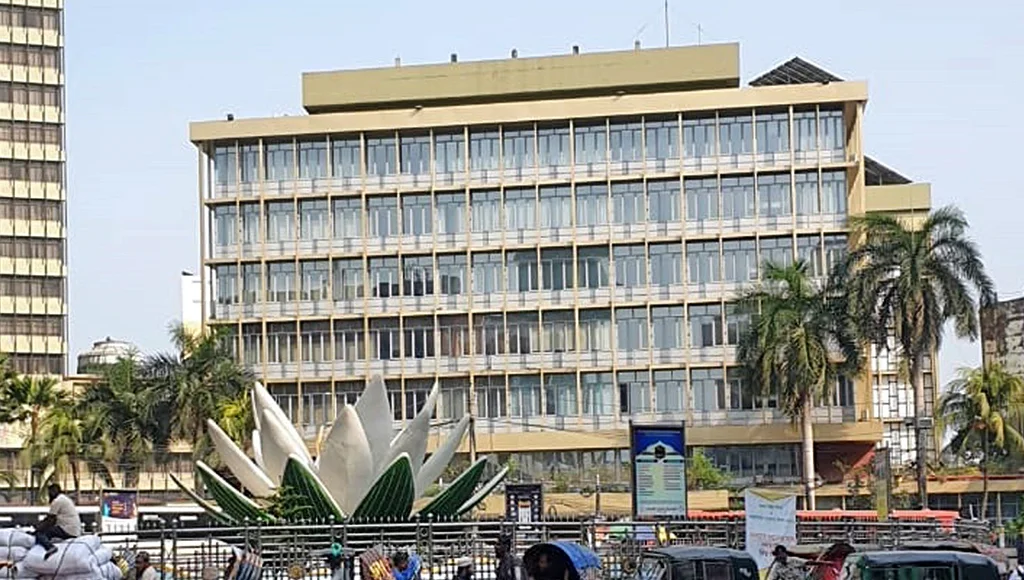
The Anti-Corruption Commission (ACC) has launched an investigation into alleged corruption by individuals, financial institutions, industrial groups, and loan defaulters during the Awami League's 15-year tenure, which it claims led to the destruction of the country's financial system.

As part of this move, the commission is examining the role of former top officials of Bangladesh Bank, including three former governors and four former deputy governors, in major irregularities in the financial sector.

In a recent letter signed by ACC Deputy Director Mominul Islam, the commission sought information on various allegations of irregularities in the banking sector over the last 15 years.

"Several teams are working on financial irregularities. Once the investigation is complete, the assigned committee will submit its report. The findings will be disclosed in due time," ACC Director General (Prevention) and spokesperson Md Akhter Hossain told The Daily Star.

According to ACC sources, information has been sought regarding former BB governors Atiur Rahman, Fazle Kabir, and Abdur Rouf Talukder; former deputy governors SK Sur Chowdhury, SM Moniruzzaman, Abu Hena Mohammad Razee Hassan, and Abu Farah Mohammad Nasser; and former heads of the Bangladesh Financial Intelligence Unit Masud Biswas and Kazi Saidur Rahman.

These nine individuals held responsibilities at the central bank at different times during the past 15 years.

The ACC has also requested documents related to the approval of new banks during their tenure, all loan policies issued during that period, information on loan disbursements, money laundering, notices regarding US dollar disbursement from reserves to businesses, and copies of any internal investigation reports by BB concerning these matters.

Additionally, the ACC asked for policies issued since 2009 regarding the regularisation of default loans, and details of companies that benefited from these policies, including: Beximco Group, MR Group, Ratanpur Group, Keya Group, Jamuna Group, Thermax Group, Sikder Group, BBS Group, Abdul Monem Ltd, AnonTex Group, and others.

The commission has sought names of these companies and their owners, permanent and current addresses, loan amounts, and current loan statuses.

The ACC also demanded approval-related notices, documents, and circulars for nine banks approved after the AL came to power in 2009, namely: Meghna Bank, Midland Bank, Madhumati Bank, NRB Bank, NRB Commercial Bank, NRB Global Bank, South Bangla Agriculture and Commerce Bank, Union Bank, and The Farmers Bank, currently named Padma Bank.

In response to a letter from Salman F Rahman, the commission has also asked for the notice and documents related to the 2015 policy on loan restructuring; attested copies of policies issued after 2009 regarding bank inspections; and documents related to the formulation and issuance of those policies.

Furthermore, the ACC has sought attested copies of notices and circulars regarding the acquisition and ownership control of Islami Bank and Social Islami Bank.

If the central bank has conducted any internal investigations on these matters, the commission wants those reports as well.

Contacted, BB spokesperson Arif Hossain Khan said, "Recently, the ACC has issued several letters requesting various information. We are trying to provide all the required data to the best of our ability."​
 

Will corruption ever leave RAJUK?
Govt must ensure transparency and accountability in this institution

1753062228038.png

VISUAL: STAR

We are quite disappointed to see RAJUK continuously failing to deliver its services in a transparent and accountable manner. Over the years, this organisation has earned a bad reputation for subjecting service-seekers to various forms of irregularities and unethical practices. While city dwellers had hoped that things would improve during the interim government's tenure, old practices have reportedly remained unchanged. From allotment letters and plot transfers to building design approvals and land-use clearances, irregularities persist across the board. While RAJUK is entrusted with the responsibility of restoring Dhaka's liveability, there have been no visible steps taken towards fulfilling that mandate. This state of affairs is unacceptable.

According to a report by Banik Barta, service-seekers face the greatest challenge while seeking land-use clearance and design approvals. Apparently, getting building designs approved is nearly impossible without paying hefty bribes. Landowners and developers claim it may take anywhere from Tk 5 lakh to upwards of a crore to get a design approved. To address such irregularities, RAJUK had launched the Electronic Construction Permitting System (ECPS) in 2022 but it remains non-functional, mostly because all processes continue through manual, desk-based dealings. Often, building designs submitted online through RAJUK-approved engineers are rejected without explanation. So applicants must visit RAJUK office in person, where they end up being compelled to pay bribes. RAJUK's inefficiency and irregularities are also reflected in its new Detailed Area Plan (DAP), which has drawn criticisms from experts.

We urge the government to eliminate corruption and bribery from RAJUK to ensure the smooth delivery of services to citizens. Currently, securing even a single service requires submitting numerous documents, many of which are unnecessary. This burdensome practice also must end. RAJUK should streamline all its services to alleviate public suffering.

In 2020, the Transparency International Bangladesh (TIB) recommended some critical reforms to curb corruption and promote accountability within the institution. These include amending outdated laws and regulations, transferring RAJUK's housing and real estate functions to a separate authority, dedicating RAJUK solely to planning and development, decentralising its services, and strengthening oversight, among others. We call on the government to seriously consider these recommendations and take decisive steps to transform RAJUK into a transparent, efficient, and citizen-friendly institution.​
 

ACC seeks details of โ€˜Mujib Yearโ€™ expenses
Staff Correspondent 22 July, 2025, 00:07

The Anti-Corruption Commission on Monday sent letters to all 64 districts across the country, seeking detailed financial records related to the nationwide observance of โ€˜Mujib Borshoโ€™ or โ€˜Mujib Yearโ€™ on the occasion of birth centenary of the countryโ€™s founding president, Sheikh Mujibur Rahman, and the construction of over 10,000 murals and sculptures during the period.

The Awami League government, which was ousted on August 5, 2024, in a mass uprising, allegedly misappropriated and wasted about Tk 4,000 crore on various events and installations, including the construction of murals and statues across the country, during the event.

The โ€˜Mujib Borshoโ€™ celebrations took place from March 2020 to March 2022. Sheikh Hasina, daughter of the late Sheikh Mujibur Rahman, was in power then.

ACC director general (prevention) Akhtar Hossain said that the inquiry was initiated following allegations of misappropriation and waste โ€” estimated at about Tk 4,000 crore โ€“ from the state treasury during the โ€˜Mujib Borshaโ€™ celebrations.

The anti-graft agency in the letters sent to the DCs sought how much money had been used to celebrate the โ€˜Mujib Yearโ€™, the name of the ministry which spent the money, and the names of the officials involved in the expenses.

The funds were allegedly spent under projects associated with ousted prime minister Sheikh Hasina, her sister Sheikh Rehana, and others.

Earlier in January, a seven-member ACC team headed by a deputy director launched an inquiry into the allegations.​
 

Trade-based money laundering drains $16b a year for laxity

FE REPORT
Published :
Jul 22, 2025 23:53
Updated :
Jul 22, 2025 23:53

1753229560085.png


Bangladesh loses US$16 billion annually through trade-based money laundering alone for policy leniency and lax regulation of trading operations, reveals an official outfit's study and prescribes preventives.

Despite having strong policy frameworks to help combat trade-based money laundering (TBML), the country remains significantly exposed to illicit financial outflows due to their inadequate enforcement and systemic challenges, says the study report published Tuesday by the Bangladesh Institute of Bank Management (BIBM).

The report, titled 'Enforcement Status of the Standards to Prevent Trade-Based Money Laundering', which was presented at a roundtable at the BIBM office, says approximately 75 per cent of domestic money- laundering cases involve trade channels.

Deputy Governor of Bangladesh Bank and Chairman of the BIBM Executive Committee Nurun Nahar was present at the programme as chief guest with BIBM Director-General S. M. Abdul Hakim in the chair.

Professor (Selection Grade) of BIBM Dr. Shah Md. Ahsan Habib presented the keynote while a good number of top bankers and experts also attended the event.

Over the period of past 15 years from 2009 to 2023, Bangladesh had lost an estimated amount of $16 billion annually through TBML, mostly in the sectors like textiles, consumer goods and petroleum imports.

Such outflow of money is equivalent to 3.4 per cent of the country's GDP, surpassing even the annual public health budget.

While Bangladesh has aligned its policies with global anti-money laundering standards--including risk-based customer due diligence, price-verification protocols, and real-time monitoring tools -- the implementation of the measures across the financial and customs systems remains inconsistent and, in many cases, ineffective.

Based on a combination of secondary research and a primary survey of 37 commercial banks, the BIBM study found all banks having claimed to have some form of sanctions-screening-and trade-monitoring systems.

However, only half of surveyed banks subscribe the global price- verification tools such as Bloomberg or Global Trade Tracker, mainly due to cost constraints.

Similarly, 90 per cent of banks report having vessel-tracking mechanisms but many do not utilise internationally reputed services like Lloyd's or the International Maritime Bureau.

Besides, while customer-risk scoring is applied universally, only 45 per cent of the banks have implemented enhanced due-diligence policies tailored specifically to trade-based clients.

Many banks rely on manual assessments without uniform benchmarks, leading to discrepancies in risk grading and inconsistent application of controls, it says.

The absence of dedicated price-verification units in most public banks and the use of subjective judgment by trade officers further complicate their enforcement.

The report mentions that TBML is not explicitly listed as a predicate offence in the Money Laundering Prevention Act 2012, although the law does provide for the prosecution and confiscation of assets linked to illicit financial flows through trade.

Recent updates to the BFIU's guidelines and the universally recognised national goAML platform have improved the reporting of TBML-linked suspicious transactions, but the overall detection rate still remains low.

A key concern highlighted in the study is a lack of integration and coordination among regulatory bodies, including the Bangladesh Financial Intelligence Unit (BFIU), the National Board of Revenue (NBR), customs authorities, and commercial banks.

"The disjointed systems prevent real-time sharing of trade, shipment, and payment data--an essential component in tracking phantom shipments, circular trades, and mispriced invoices," says the study report.

The BIBM analysis also points out a weak compliance culture within the banking sector.

Many institutions treat TBML controls as a box-ticking exercise rather than a core component of operational risk management, it says, stressing a shift in institutional mindset, where board-level leadership takes ownership of AML responsibilities and invests in staff training, trade analytics, and audit processes.

Global best practices--from countries such as Singapore, Chile, Finland and Sri Lanka--illustrate how integrated trade-and-payment data systems, beneficial ownership transparency, and structured public-private cooperation can strengthen TBML enforcement.

Such examples also demonstrate that visible and proportionate penalties, combined with incentives for clean trade, enhance compliance across financial institutions.

The report adds closing Bangladesh's TBML-enforcement gap is not merely a regulatory obligation but a development necessity.

Without urgent action, the country risks continued revenue loss, distorted trade data, and potentially damaging consequences such as FATF grey-listing, higher correspondent banking costs, and reputational harm in global markets.

Among the key recommendations are establishment of a national Trade Transparency Unit (TTU), the publication of a public beneficial ownership register, expanded use of dynamic price-benchmarking tools, and formalised information-sharing arrangements with regional trading partners.

The study findings indicate that Bangladesh's vulnerability to TBML remains both a governance and competitiveness challenge.

As the country pursues export-led growth and seeks to preserve its foreign-exchange buffers, improved enforcement of anti-TBML standards will be critical to sustaining economic integrity.​
 

Trade-based money laundering

FE
Published :
Jul 25, 2025 00:10
Updated :
Jul 25, 2025 00:10

1753401922072.png


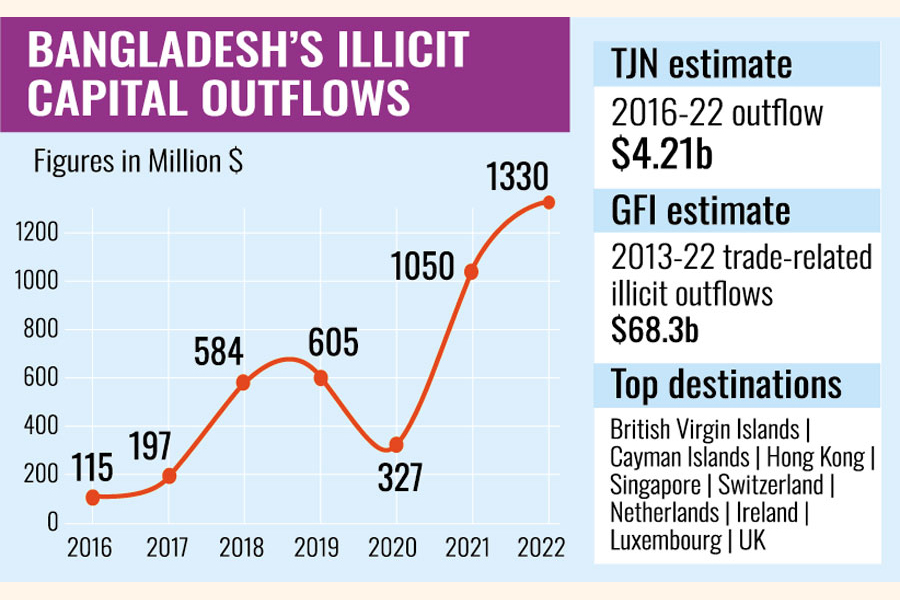
It is hardly surprising that the issue of money laundering continues to resurface, as it remains a stark and persistent reality the country is forced to confront without any foreseeable remedy. For long, there have been concerns raised from various quarters, and over time it seems as though this 'concern' is a cyclic expression of frustration and anger. The issue, because of its enormity and scale, has been receiving media focus for quite a while -- set off by rough estimates about the money flown off the country to so called tax heavens and overseas financial institutions. Lately, a government estimate has revealed that the country loses US$16 billion annually through trade-based money laundering alone primarily due to lax oversight of trading operations. The scale of this outflow is staggering. It accounts for around 3.4 per cent of the country's GDP, surpassing even the national budget for public health. The Bangladesh Institute of Bank Management (BIBM), in a study based on surveys across 37 commercial banks, reports that about 75 per cent of all domestic money laundering cases are linked to trade channels. The sectors most affected include textiles, consumer goods, and petroleum imports.

Despite policy alignment with global anti-money laundering (AML) standards --such as risk-based customer due diligence, price verification protocols, and real-time monitoring -- the actual implementation remains inconsistent. Although the banks surveyed claim to have sanctions-screening and trade-monitoring systems, only 50 per cent use global price verification tools like Bloomberg or Global Trade Tracker, often citing cost as a barrier. Similarly, 90 per cent of banks have vessel-tracking systems, but few rely on established platforms such as Lloyd's or the International Maritime Bureau. While most institutions apply customer risk scoring, only 45 per cent have enhanced due diligence frameworks tailored to trade-specific risks. Moreover, many public banks lack dedicated price verification units, leaving trade officers to rely on subjective judgment -- an approach that severely undermines oversight. The legal framework also poses challenges. Notably, the Money Laundering Prevention Act 2012 does not explicitly list TBML as a predicate offence, although it provides for prosecution and asset seizure linked to illicit trade-related flows. A critical gap lies in the lack of coordination between key regulatory bodies such as the Bangladesh Financial Intelligence Unit (BFIU), National Board of Revenue (NBR), customs authorities, and commercial banks. The absence of real-time data sharing on trade, shipments, and payments creates loopholes that are exploited through phantom shipments, circular trading, and invoice manipulation.

Global best practices provide a way forward. Countries like Singapore, Finland, and Sri Lanka have successfully implemented integrated trade and payment data systems, strengthened beneficial ownership transparency, and structured public-private collaboration. These measures, coupled with proportionate penalties and incentives for clean trade, have significantly improved compliance.

Addressing TBML is not merely a regulatory obligation but a development imperative. Without urgent action, Bangladesh risks continued revenue losses, distorted trade statistics, and damaging consequences such as Financial Action Task Force (FATF) grey-listing, higher correspondent banking costs, and reputational harm in global markets.​
 

Government halts flats-for-July martyrs project over inflated cost, corruption claims

bdnews24.com
Published :
Jul 28, 2025 00:24
Updated :
Jul 28, 2025 00:24

1753658363321.png


The government has turned down a housing project for the families of those killed during the student-led anti-discrimination protests in July last year, amid concerns over inflated costs and allegations of corruption.

On Sunday, at the first Executive Committee of the National Economic Council (ECNEC) meeting of fiscal year 2025โ€“26, the project failed to gain approval.

โ€œIt should be properly cost-evaluated before any decision,โ€ said Planning Advisor Wahiduddin Mahmud at a post-meeting press conference.

The project was submitted by the Ministry of Housing and Public Works. It proposed building 804 flats of 1,355 sq ft each on government land in Mirpur, with a budget of Tk 7.61 billion, to be completed between July 2025 and June 2029.

โ€œThis was a well-intentioned proposal, but we didnโ€™t approve it because we believe the cost must be assessed more carefully before the tendering process,โ€ Wahiduddin said.

The project had earlier come under scrutiny during a Jun 16 evaluation by the Planning Commissionโ€™s Project Evaluation Committee (PEC), which flagged implementation challenges.

Subsequent media reports revealed inflated expenditure estimates and possible irregularities.

Wahiduddin further noted the lack of clarity surrounding multiple aid efforts for the same families.

โ€œWhen different ministries start offering varied forms of support, overlaps and gaps become difficult to track,โ€ he said. He stressed the need for a comprehensive and coordinated approach, bringing together all housing, stipend, and disability aid schemes for the victimsโ€™ families under one umbrella.

โ€œThere are also larger questions,โ€ he added. โ€œWhy Mirpur? Why only Dhaka? What about families living in rural areas or other cities? The matter of inheritance will also arise when allocating permanent flats. These require deeper planning.โ€

Ultimately, the Ministry of Liberation War Affairs will be tasked with coordinating these efforts, he confirmed.

DHAKA UNIVERSITY PROJECT

Despite the rejected flats proposal, ECNEC approved 12 projects worth Tk 81.49 billion, including a major initiative for Dhaka Universityโ€™s infrastructure overhaul.

The Tk 28.4 billion five-year plan for the university includes:

Six academic buildings
Five male and four female dormitories accommodating 7,700 students
Two residential buildings for teachers and officers
A stadium, DUCSU building, and other administrative facilities
Reflecting on his own student and teaching days, Wahiduddin said: โ€œThough income levels have improved, housing conditions in the university have worsened.โ€

Given the universityโ€™s space constraints, some old structures will be demolished to make room for high-rise buildings while preserving heritage sites like Salimullah Muslim Hall and Curzon Hall.

OTHER PROJECTS

Tk 2.78 billion: Revised road construction along Karnafuli river (Kalurghat Bridge to Chaktai Canal), up by Tk 4.69 billion
Tk 6.5 billion: Establishment and reconstruction of 20 fire stations nationwide
Tk 7.57 billion: Upgraded logistics and maintenance facilities for the Coast Guard
Tk 13.43 billion: Rural sanitation and canal excavation in Chattogram, cost reduced by Tk 1.94 billion
Tk 17.91 billion: Railway maintenance and rehabilitation in the eastern zone
Tk 2.34 billion: Mirpur cantonment officers' mess and bachelor quarters, cost up by Tk 754.5 million
Tk 3.95 billion: Womenโ€™s income-generating training (second phase)
Tk 1.6 billion: Expansion of museum and infrastructure at Folk and Crafts Foundation
Tk 1 billion: Tuber crop research strengthening
Tk 7.7 billion: Smart pre-paid metering project under BPDB, cost increased by Tk 1.5 billion​
 

Former BTRC top officials accused of Tk 90.1 billion telecom forgery

FE ONLINE REPORT
Published :
Dec 03, 2025 18:48
Updated :
Dec 03, 2025 18:48

1764810515776.webp


A group of former senior officials of the Bangladesh Telecommunication Regulatory Commission (BTRC) have been accused of causing a staggering Tk 90.1 billion loss to the state through deliberate misuse of power, illegal decisions, and revenue manipulation in favour of private International Gateway (IGW) operators.

According to an official briefing, six former BTRC executivesโ€”former chairmen Sunil Kanti Bose and Dr Shahjahan Mahmud, former vice chairman Brig Gen (Retd) Md Ahsan Habib Khan, and former commissioners Md Jahurul Haque, Md Rezaul Kader, and Md Aminul Hasanโ€”have been named in a corruption and money laundering case approved by the authorities.

The plaintiff in the case and the investigation officer is Md Jalal Uddin Ahmed, Director of the ACCโ€™s Khulna Divisional Office.

The Anti Corruption Commission (ACC) investigators said the alleged financial forgery took place between October 2015 and January 2018, during which these officials continued a set of โ€œtemporary and experimentalโ€ call termination rates and revenue-sharing arrangements long after their legal expiry.

In 2014, IGW operators were allowed to bring international incoming calls at a discounted and experimental termination rate of US$ 0.015 per minute, replacing the standard rate of $ 0.03.

Similarly, the governmentโ€™s revenue share was lowered from 51.75 per cent to 40per cent, while IGW operatorsโ€™ share was raised from 13.25 per cent to 20 per cent for a trial period of one year.

However, instead of restoring the original rates after September 2015, the accused officials illegally extended the lower rates for another 28 months, without any approval from the government, violating the Telecommunication Act, guidelines, and government directives.

Officials say these decisions were taken with โ€œdishonest intent,โ€ benefitting IGW operators at the expense of the national exchequer.

As a result, the government incurred losses in three major areas those include revenue sharing loss worth Tk 3.83 billion; allowing IGW operators to continue importing calls at a reduced rate led to an additional loss of Tk 29.41 billion while failing to ensure that the government-set call rates were applied to incoming international calls, Bangladesh was deprived of approximately US$ 72.1 million, equivalent to Tk 56.85 billion.

Altogether, the total damage stands at Tk 90.1 billion, marking one of the largest alleged financial frauds involving a regulatory body in recent years.

Authorities said the former officials abused their regulatory powers to favour private operators, amounting to โ€œcriminal breach of trust and misuse of authority.โ€ The case has been approved under Sections 409 and 418 of the Penal Code, Section 5(2) of the Prevention of Corruption Act 1947, and Sections 4(2) and 4(3) of the Anti-Money Laundering Act 2012.

Legal experts say the scale of financial damage makes the case highly significant, with the possibility of further investigations into whether any IGW owners colluded with the accused.

Officials said further action will be taken after completing the investigation and identifying all beneficiaries involved in the alleged forgery.​
 

The link between power and the magic wand of wealth
Badiul Alam Majumdar
Published: 07 Dec 2025, 19: 38

1765155854199.webp


It is now almost certain that in the first half of February next year, the 13th National Parliament and the Constitution Reform Council elections will be held. At the same time, a referendum will take place on several important reforms included in the July National Charter. For a large portion of citizens, this is undoubtedly good news. However, many remain concerned about who will form the next Parliament and the Constitution Reform Council. There is also apprehension that the upcoming Parliament or Reform Council may include numerous controversial figures who could use power as a 'magic wand' to acquire wealth.

Our past experiences are not reassuring. As an example, consider a previous instance. Many readers may recall that in June 2008, elections were held for four old city corporationsโ€”Barishal, Khulna, Rajshahi, and Sylhet. For the first time, candidates were required to submit affidavits along with their nomination papers, detailing their educational qualifications, profession, sources of income, past and present legal cases, and the assets and liabilities of both themselves and their dependents. This was made mandatory following persistent efforts by โ€œShujanโ€”Citizens for Good Governanceโ€ and under the guidance of the High Court. The purpose of submitting and publishing these details was to empower voters with information so they could make informed choices and vote for honest and qualified candidates.

In all these elections, candidates nominated by the Awami League were victoriousโ€”Shawkat Hossain Hiron in Barishal, Talukdar Abdul Khalek in Khulna, AHM Khairuzzaman Liton in Rajshahi, and Badruddin Ahmed Kamran in Sylhet. Candidates nominated by the BNP were defeated: Ahsan Habib Kamal in Barishal, Md Moniruzzaman in Khulna, Mohammad Mosaddek Hossain in Rajshahi, and Salauddin Rimon in Sylhet.

Five years later, on 15 June 2013, elections were held again in these city corporations. All candidates nominated by the BNP and Awami League in 2008 contested again in 2013, although in Sylhet, the BNP nominated Ariful Haque Chowdhury. In the 2013 elections, all BNP-nominated candidates won. Once again, candidates were required to submit seven types of information through affidavits along with their nomination papers.
From the information submitted with the nomination papers, it is evident that all eight mayoral candidatesโ€”both winners and losers in the two electionsโ€”were businessmen. However, Talukdar Abdul Khalek became a businessman only after being elected; in his 2008 affidavit, he had listed his profession as โ€œcurrently no business.โ€

The affidavit data further shows that the incomes of all four outgoing mayors and their dependents increased significantly during their time in office. In Khulna, Talukdar Abdul Khalek and his dependentsโ€™ income rose from Tk 3,62,000 to Tk 5,32,66,977, an increase of 14,615 per cent. In Barishal, Shawkat Hossain Hiron and his dependentsโ€™ income increased from Tk 5,80,250 to Tk 3,49,11,030, or 5,916 per cent.

In Rajshahi, AHM Khairuzzaman Liton and his dependentsโ€™ income rose from Tk 2,44,000 to Tk 57,75,772, or 2,308 per cent. In Sylhet, Badruddin Ahmed Kamran and his dependentsโ€™ income rose from Tk 2,10,000 to Tk 15,49,988, or 638 per centโ€”the relatively lower increase is because his personal income received as โ€˜honourariumโ€™ was not declared in the affidavit. Overall, the average income of the four mayors and their dependents rose from Tk 3,49,063 to Tk 2,39,00,981, or 6,747 per cent.

On the other hand, among the three main candidates who were defeated in the 2008 elections, two saw an increase in income along with their dependents, while one saw a decrease. In Barishal, Ahsan Habib Kamalโ€™s income increased from Tk 7,08,000 in 2008 to Tk 9,30,000 in 2013, or 31 per cent. In Khulna, Md Moniruzzamanโ€™s income decreased from Tk 8,36,000 to Tk 2,00,000, a drop of 76 per cent. In Rajshahi, Mosaddek Hossainโ€™s income increased from Tk 1,68,000 to Tk 1,92,000, or 14 per cent. Collectively, the income of these three defeated mayoral candidates fell by 23 per cent over five years. This indicates a correlation between election victory and income growth.

Looking at assets, the same trend is observed. The immovable and movable assets of Barishal Mayor Shawkat Hossain Hiron and his dependents increased from Tk 2,08,53,26 to Tk 10,94,39,150, a 5,148 per cent rise over five years. Khulnaโ€™s Talukdar Abdul Khalekโ€™s assets rose from Tk 1,85,97,550 to Tk 10,08,41,292, or 442 per cent.

In Rajshahi, Khairuzzaman Litonโ€™s assets grew from Tk 96,75,000 to Tk 1,94,47,198, a 133 per cent increase. Sylhetโ€™s Kamranโ€™s assets rose from Tk 2,14,78,290 to Tk 5,00,62,624, also a 133 per cent increase. The total assets of the four outgoing mayors and their dependents increased from Tk 1,29,59,041 to Tk 6,99,47,566, or 440 per cent. It is worth noting that the outgoing mayors had relatively low liabilities, which contributed to the large increase in their net assets.

The affidavit data shows that among the three main candidates who were defeated in the 2008 elections, the assets of two and their dependents increased, while one saw a decrease. In Barishal, Ahsan Habib Kamalโ€™s assets decreased from Tk 1,04,11,650 in 2008 to Tk 27,73,000 in 2013, a decline of 73 per cent. In Khulna, Moniruzzamanโ€™s assets rose from Tk 16,13,100 to Tk 30,55,537, an increase of 89 per cent.

Rajshahi, Mosaddek Hossainโ€™s assets increased from Tk 1,68,000 to Tk 1,92,000, or 14 per cent. Overall, over five years, the total assets of the mayoral candidates and their dependents who were defeated in 2007 in the three citiesโ€”Khulna, Barishal, and Rajshahiโ€”declined by 41 per cent. This indicates that asset growth is closely linked to electoral victory. It is noteworthy that in the 15 June 2013 elections, all outgoing mayors were defeated, while the three candidates who lost in 2008 were elected. Additionally, Ariful Haque Chowdhury won in Sylhet.

Political parties must undertake reforms, particularly ensuring transparency in candidate selection, ending nomination-related trade and undue financial influence
This analysis makes it clear that there is a significant correlation between political power and the accumulation of income and assets, although questions remain regarding the reliability of the information provided by competing candidates. Winning candidates assumed office and this power acted like a โ€œmagic wand,โ€ enabling them and their dependents to substantially increase their income and assets. In contrast, the defeated candidates did not benefit similarly. This raises an important questionโ€”has our politics, which is meant to serve as a means of public service, increasingly become a profitable business? Does it create opportunities for individuals to acquire personal wealth rather than serve the public?

Furthermore, more recent affidavit data from parliamentary election candidates clearly illustrates the link between power and asset accumulation, which will be discussed in a subsequent article. This underscores the urgent need to establish new frameworks of transparency and accountability for elected representatives.

At the same time, political parties must undertake reforms, particularly ensuring transparency in candidate selection, ending nomination-related trade and undue financial influence. It is also crucial for the Election Commission to revise the affidavit forms provided to candidates and rigorously verify the completeness and reliability of the information submitted. Some changes to the affidavit forms have already been implemented.

* Dr. Badiul Alam Majumdar is secretary of Shushashoner Jonno Nagorik-SHUJAN (Citizens for Good Governance).​
 

Extortion, corruption continue riding on lack of govt will

THE remark by the chief of Transparency International Bangladesh that the interim government has failed to put checks on corruption, land grabbing and extortion is worrying. The executive director of the anti-corruption agency has also said that various groups are engaged in partisan activities, land grabbing and extortion by abusing political and administrative powers, noting that corruption has occurred even within the government, which is concerning. The situation calls on the government authorities to put in greater efforts to deal with such issues that harm democratic governance and stand as a barrier to a society free of corruption. The agency chief has said that there was an opportunity during the tenure of the interim government to take a strong stand against corruption and there is no denying that the government has failed in this regard. The chief, who headed the anti-corruption reforms commission set up on October 3, 2024, which submitted its recommendations to the government on January 15, made the remarks at a press conference at which he recommended the inclusion of a set of 52 issues in the manifestos of political parties aimed at ensuring steps against corruption.

Transparency International Bangladesh also called on political parties to make public their positions on the use of money, muscle and religion in politics and to spell out their commitments in their manifestos in view of the next general election, scheduled for February. He made the call, noting that the debris of corruption that has accumulated over 54 years, especially during the past decade and a half when the authoritarian Awami League governed the country, cannot be cleared overnight. He has hoped that political parties would seize the opportunity that arose after the overthrow of the Awami League government, which changed the political landscape and would largely shape future outcomes. The issues will ultimately fall on political parties after the general elections. But the interim government has failed to show the will to stop menaces such as corruption, extortion and land grabbing. Leaders and activists of the Bangladesh Nationalist Party have largely been blamed, and rightly so, for such incidents. The BNP leadership has punished many of its leaders and activists and asked the police to arrest anyone involved in such incidents. Yet the situation has not improved much because of the lack of will on part of the government. Leaders and activists of some other political parties are also reported to have been engaged in such menaces, but the finger has almost always been pointed at the Bangladesh Nationalist Party, which has, rightly, made the headlines time and again for such misdeeds.

It is, therefore, time that the interim government acted decisively to stop corruption, extortion, land grabbing and the abuse of political and administrative powers without regard to the political affiliation of the offenders.​
 

Finance adviser attributes rise in millionaire bank accounts to โ€˜hidden moneyโ€™

bdnews24.com
Published :
Dec 09, 2025 21:48
Updated :
Dec 09, 2025 21:48

1765327433328.webp


Finance Adviser Salehuddin Ahmed has said the Bangladesh Bankโ€™s report showing a rise in millionaire bank accounts is due to โ€œmoney hidden at home for a long timeโ€ now being deposited.

He made these comments after a meeting of the Advisery Council Committee on Government Procurement at the Secretariat on Tuesday.

His remarks follow a report published on Sunday, which noted an increase of 5,974 millionaire bank accounts in the second quarter and a further 734 in the third quarter of this year.

On why the number of millionaire bank accounts is surging despite expectations of reduced corruption, he said: โ€œThis could be because money that was hidden away inside homes for a long time is now being deposited in banks. It is not that people have no money.โ€

Salehuddin said other government work, including procurement, will continue even after the schedule is announced. However, work that โ€œinfluencesโ€ the election will be stopped.

โ€œFive banks will merge, nine NBFIs (leasing companies) will merge. Those will not be stopped.โ€​
 

Members Online

Latest Posts

Latest Posts