Bangladesh Defense

Saif
Senior Member
- Joined
- Jan 24, 2024
- Messages
- 22,367
- Likes
- 9,875
- Nation

- Axis Group


Normalising extortion?
The allegation of sponsoring extortion dogged the Bangladesh Nationalist Party (BNP) as a whole, and many of its leaders in particular, throughout the 13th parliamentary election campaign. The charges were so persistent that the party leaders are supposed to think twice, or even thrice, before sayi
Normalising extortion?
Atiqul Kabir Tuhin
Published :
Feb 25, 2026 23:53
Updated :
Feb 25, 2026 23:53

The allegation of sponsoring extortion dogged the Bangladesh Nationalist Party (BNP) as a whole, and many of its leaders in particular, throughout the 13th parliamentary election campaign. The charges were so persistent that the party leaders are supposed to think twice, or even thrice, before saying or doing anything that could be construed as condoning such criminal offence. Fresh from winning the polls, the BNP has an opportunity to prove its critics wrong by taking strict action against extortionists. In fact, fighting corruption is one of the party's key election pledges. Also, in his first address to the nation, newly elected Prime Minister Tarique Rahman vowed to take a strong stand against corruption.
Against this backdrop, any argument in favour of extortion from someone holding important ministerial position is the last thing to be welcomed. Thus, when Road Transport and Bridges Minister Sheikh Rabiul Alam recently remarked that not all forms of extortion are bad, particularly when it occurs through "mutual understanding", it triggered widespread shock and condemnation.
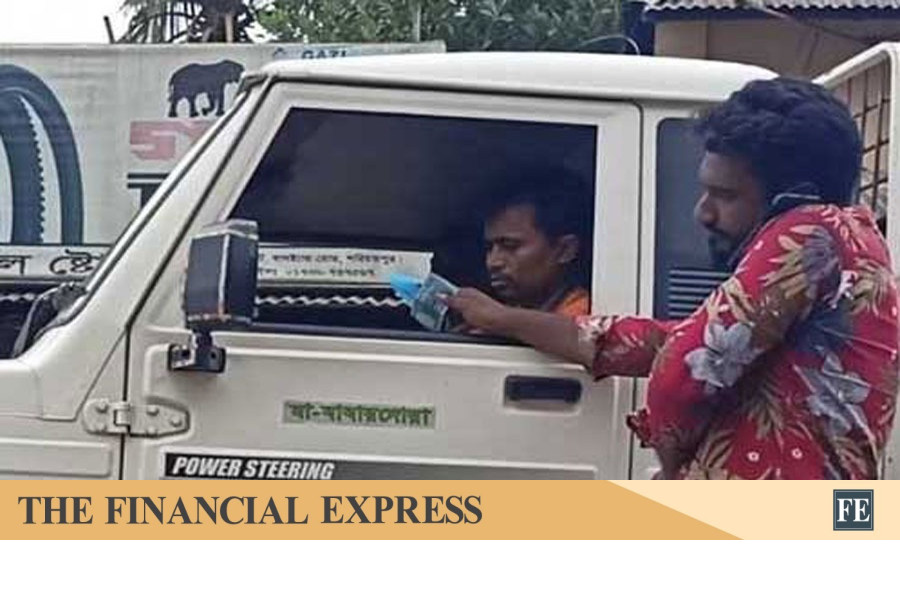
The road transport sector stands out among as the most severely affected one due to the prevalence of systematic extortion. An investigation by a government agency conducted during the Interim Government revealed that more than Tk 20 million is extorted every day from 53 transport terminals and stands in Dhaka city alone. As reported in the media, the monthly collection from these locations amounts to a staggering Tk 670 million and, at times, rises as high as Tk 800 million.
In this situation, when a person responsible for overseeing this sector suggests that money collected from vehicles on the roads should not be termed extortion if it is taken through "mutual understanding", it leaves the public with little hope of stemming this rot. With this comment the minister actually washed the government's hands of the responsibility of reining in the extortionists, who in most cases belong to the party in power. Moreover, many see it as a blatant effort to normalise this deep-seated problems in this sector, which not only hurts legitimate businesses, but also burdens citizens by driving up the prices of goods and transport fares.
The minister was probably unaware that his comment would go as a cruel fun against the stakeholders of the sectors as well. He said, "There are owners' associations and workers' associations, and they collect funds at a fixed rate with the aim of spending the money for the welfare of their members. It functions like an unwritten rule."
But in reality genuine transport sector workers or owners rarely get benefitted from this enormous amount of money collected in their names. Workers of this sector are in fact a miserable lot. Without any job contracts, fixed salaries, or standard benefits, they have to work for long hours under gruelling and unpredictable conditions. As a majority of them work under 'no work, no pay' system, they face heightened job and income insecurity throughout their career. Moreover, the demanding and strenuous nature of their work puts them at high risk of developing a wide range of health conditions. When faced with illness or injury, they find that the so-called "workers' welfare fund" is a myth. And in cases of accidental death, their families and dependents are virtually left destitute. Besides, the memory of the COVID-19 pandemic still serves as a raw wound. During the lockdowns, while transport workers were rendered jobless and suffered unspeakably, these associations were nowhere seen lending a helping hand.
Why, then, would these workers contribute to a "welfare fund" that offers them no protection? In reality, they are forced to pay, not out of a sense of shared benefit, but as a mandatory toll to carry out their day-to-day operations.
Owners and workers in the transport sector may legitimately collect contributions at a fixed rate to run their respective organisations and serve their collective interests. But transparency and accountability regarding where, when and how that money is spent are equally important.
So, where does the payment go?
The answer may lie in the minister's comment. He said, "In many cases, influence comes into play - whether from owners or political parties. The labour wing affiliated with the party in power often holds dominance." Therein lies the problem. What legitimacy do labour leaders associated with the ruling party have to control the numerous associations in the transport sector? Regrettably, successive governments have never bothered to ensure transparency and accountability in the functioning and operations of these associations. Does the minister's remark suggest that the current government, too, intends to maintain the status quo in this sector?
Furthermore, this "mutual agreement" argument sets a dangerous precedent for other sectors. If "mutual understanding" justifies illegal payments in transport, the same logic could be applied to the BRTA, health, education, land services and all other sectors. In these sectors, formal systems are often dysfunctional or excessively cumbersome. To bypass the hassle, service seekers often pay brokers or corrupt officials at a mutually agreed rate. Such pervasive and collusive forms of corruption have already been institutionlised in most sectors. If it is considered acceptable, public service will always remain inefficient and the common people will have to pay under informal arrangement.
The government therefore should take stock of the prevailing situation. It is the sacred duty of this government to fight corruption and to take all possible measures to strengthen the public and private services that work in favour of the common people. If formal, official channels are allowed to function normally, the informal arrangements that perpetuate corruption will naturally die down.
Atiqul Kabir Tuhin
Published :
Feb 25, 2026 23:53
Updated :
Feb 25, 2026 23:53
The allegation of sponsoring extortion dogged the Bangladesh Nationalist Party (BNP) as a whole, and many of its leaders in particular, throughout the 13th parliamentary election campaign. The charges were so persistent that the party leaders are supposed to think twice, or even thrice, before saying or doing anything that could be construed as condoning such criminal offence. Fresh from winning the polls, the BNP has an opportunity to prove its critics wrong by taking strict action against extortionists. In fact, fighting corruption is one of the party's key election pledges. Also, in his first address to the nation, newly elected Prime Minister Tarique Rahman vowed to take a strong stand against corruption.
Against this backdrop, any argument in favour of extortion from someone holding important ministerial position is the last thing to be welcomed. Thus, when Road Transport and Bridges Minister Sheikh Rabiul Alam recently remarked that not all forms of extortion are bad, particularly when it occurs through "mutual understanding", it triggered widespread shock and condemnation.
The road transport sector stands out among as the most severely affected one due to the prevalence of systematic extortion. An investigation by a government agency conducted during the Interim Government revealed that more than Tk 20 million is extorted every day from 53 transport terminals and stands in Dhaka city alone. As reported in the media, the monthly collection from these locations amounts to a staggering Tk 670 million and, at times, rises as high as Tk 800 million.
In this situation, when a person responsible for overseeing this sector suggests that money collected from vehicles on the roads should not be termed extortion if it is taken through "mutual understanding", it leaves the public with little hope of stemming this rot. With this comment the minister actually washed the government's hands of the responsibility of reining in the extortionists, who in most cases belong to the party in power. Moreover, many see it as a blatant effort to normalise this deep-seated problems in this sector, which not only hurts legitimate businesses, but also burdens citizens by driving up the prices of goods and transport fares.
The minister was probably unaware that his comment would go as a cruel fun against the stakeholders of the sectors as well. He said, "There are owners' associations and workers' associations, and they collect funds at a fixed rate with the aim of spending the money for the welfare of their members. It functions like an unwritten rule."
But in reality genuine transport sector workers or owners rarely get benefitted from this enormous amount of money collected in their names. Workers of this sector are in fact a miserable lot. Without any job contracts, fixed salaries, or standard benefits, they have to work for long hours under gruelling and unpredictable conditions. As a majority of them work under 'no work, no pay' system, they face heightened job and income insecurity throughout their career. Moreover, the demanding and strenuous nature of their work puts them at high risk of developing a wide range of health conditions. When faced with illness or injury, they find that the so-called "workers' welfare fund" is a myth. And in cases of accidental death, their families and dependents are virtually left destitute. Besides, the memory of the COVID-19 pandemic still serves as a raw wound. During the lockdowns, while transport workers were rendered jobless and suffered unspeakably, these associations were nowhere seen lending a helping hand.
Why, then, would these workers contribute to a "welfare fund" that offers them no protection? In reality, they are forced to pay, not out of a sense of shared benefit, but as a mandatory toll to carry out their day-to-day operations.
Owners and workers in the transport sector may legitimately collect contributions at a fixed rate to run their respective organisations and serve their collective interests. But transparency and accountability regarding where, when and how that money is spent are equally important.
So, where does the payment go?
The answer may lie in the minister's comment. He said, "In many cases, influence comes into play - whether from owners or political parties. The labour wing affiliated with the party in power often holds dominance." Therein lies the problem. What legitimacy do labour leaders associated with the ruling party have to control the numerous associations in the transport sector? Regrettably, successive governments have never bothered to ensure transparency and accountability in the functioning and operations of these associations. Does the minister's remark suggest that the current government, too, intends to maintain the status quo in this sector?
Furthermore, this "mutual agreement" argument sets a dangerous precedent for other sectors. If "mutual understanding" justifies illegal payments in transport, the same logic could be applied to the BRTA, health, education, land services and all other sectors. In these sectors, formal systems are often dysfunctional or excessively cumbersome. To bypass the hassle, service seekers often pay brokers or corrupt officials at a mutually agreed rate. Such pervasive and collusive forms of corruption have already been institutionlised in most sectors. If it is considered acceptable, public service will always remain inefficient and the common people will have to pay under informal arrangement.
The government therefore should take stock of the prevailing situation. It is the sacred duty of this government to fight corruption and to take all possible measures to strengthen the public and private services that work in favour of the common people. If formal, official channels are allowed to function normally, the informal arrangements that perpetuate corruption will naturally die down.