[🇧🇩] Footwear, Rubber and leather Industry in Bangladesh

[🇧🇩] Footwear, Rubber and leather Industry in Bangladesh
77
5K
More threads by Bilal9

G Bangladesh Defense
Who is the primary competitor to Bangladesh for export of leather shoes in global markets? You guessed it - India.

In non-leather footwear (sports shoes like joggers and tennis footwear), we have outperformed India for the last thirty five years. In that sector, we are still losing to Vietnam, Thailand and Indonesia, and now - Cambodia. Thailand and Indonesia will soon price themselves out of that market and they are not hugely focused on leather footwear at all.

Indians will always try their level best to sabotage Bangladesh leather industry - hook, line and sinker. They lost the garments sector to us because their products all fare horribly in quality and are made in sweatshop factories. The next sector they will lose is shoes and leather goods - Indians know it very well. This is one of the largest wage earners for semi-skilled labor in India.

Most Bangladeshi entrepreneurs are idiots and they hire Indians as 'experts' and these Bharatis do their level best to sabotage our leather shoes and bags export sector by interacting with foreign buyers and sending business to India.

Same with Hasina bringing in Indian 'experts' to 'advise on' the new leather processing zone in Savar for the last two decades and that has been an abject failure. One wonders why....

Ditto with API park for Pharma.

After all, if you can do deshbhakt andhbhakt work to sink the foreign revenue for a Muslim country and get paid on top of it, why won't you?

Our Govt. should ban hiring shoe and bag 'experts' (or any experts, for that matter) from competitor nations like India. Period.

There are a lot better experts found in SE Asian countries for our export industries. Specifically - China.
Hiring Chinese experts in textile & garment industries is a must for Bangladesh. Chinese people are friendly and honest. Hiring them will help our textile & garment industries to gain competitiveness in the global market. The same goes for leather industry. The Bangladeshi entrepreneurs should formulate a policy where priority will be given to hire Chinese experts. The Indian experts are selfish and crooked and must be avoided when comes to hiring them in our foreign exchange earning sectors.
 
Last edited by a moderator:

Leather sector struggles under capital shortfall
Global traders harvest billions as local rawhide market collapses

1779936239807.webp


Ahead of every Eid-ul-Azha, the sacrificial rawhide market re-emerges as a critical macroeconomic concern in Bangladesh.

Year after year, the government announces statutory price caps, state-owned banks clear seasonal credit lines, and tannery owners publish high-volume collection targets.

Meanwhile, grassroots stakeholders—including orphanages, madrasas, and seasonal collectors—wait in anticipation of a fair return.

However, for over a decade, the raw leather market has remained locked in a destructive cycle: sharp price crashes, severe mismanagement, processing bottlenecks, and a steady loss of competitiveness in international markets.

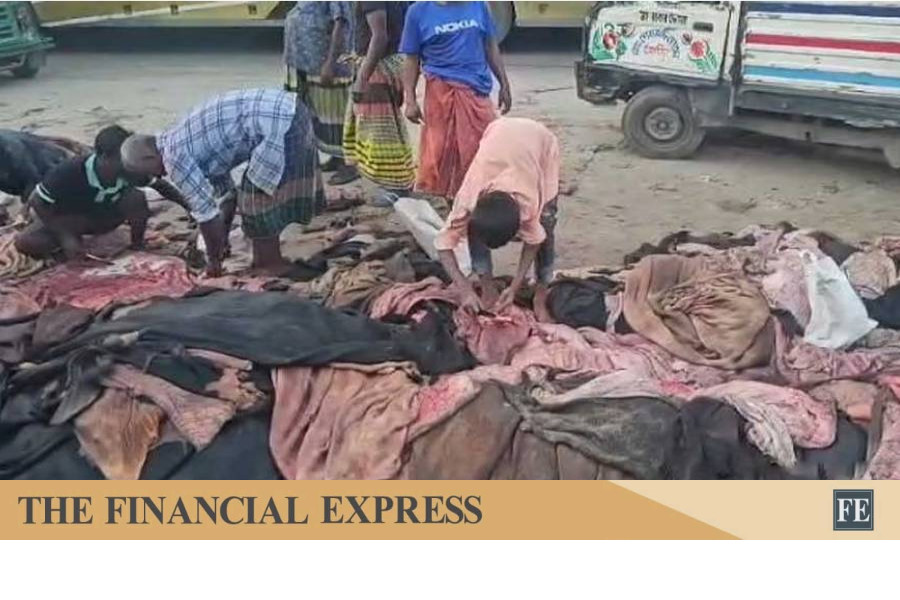
Rawhides, which once served as the primary source of funding for charitable orphanages and religious schools, are routinely sold at throwaway prices.

Despite being one of the world's largest producers of raw leather, Bangladesh’s multi-billion Taka leather industry is failing due to poor compliance, lack of infrastructure, market syndicates, and policy gaps.

Exploiting these local gaps, international buyers—predominantly from China—purchase semi-processed Bangladeshi crust leather at low costs, refine it to global compliance standards, and reap massive profits on the global market.

As another trading cycle begins, the central question resurfaces: who is actually profiting from Bangladesh’s leather resource?

Tannery owners have announced a target to collect 7.5 to 8 million pieces of sacrificial rawhide this season, aiming to purchase nearly 80% of Dhaka’s local supply directly.

To back this effort, three state-owned commercial banks approved Tk160 crore in seasonal credit lines, supported by limited private commercial funding.

However, industry experts question whether this liquidity injection can stabilize the market or if it will remain an underfunded on-paper target.

Tannery operators argue that the approved bank credit falls far short of actual market requirements, primarily because most tanneries have defaulted on past obligations and are legally barred from seeking fresh loans.

State-owned bank disbursals for rawhide purchases
  • Sonali Bank: Disbursed Tk25 crore, restricted to a single entity (Bhulua Tannery).​
  • Agrani Bank: Disbursed Tk75 crore, split between Apex Tannery (Tk45 crore) and Bay Tannery (Tk30 crore).​
  • Janata Bank: Approved Tk60 crore, though a major portion is designated for general working capital.​
  • Rupali Bank: Disbursed Tk0 in fresh credit, as its core clients have breached their statutory credit limits.​
Banking sector guidelines specify that 65% of these allocated funds must be used for running day-to-day operations, leaving only 35% directly available for spot-cash rawhide purchases during the high-demand Eid window.

In 2015, an average cow hide sold for Tk2,200 to Tk2,400. By 2026, those same hides are selling for just Tk700 to Tk900 in regional markets.

Adjusted for compounding inflation over the last 11 years, a hide worth Tk2,200 in 2015 should have a current value of roughly Tk4,180. This indicates a real-term loss in purchasing power of over 80%.

For the current cycle, the Ministry of Commerce fixed the price of salted cow hide at Tk62–Tk67 per square foot in Dhaka and Tk57–Tk62 outside the capital, setting a minimum floor price of Tk1,350 per piece.

However, historical data shows that state-mandated pricing floors rarely work on the ground.

Last season, actual market returns fell far below government targets, with some remote sellers forced to dump hides for as little as Tk200 to Tk500 due to a lack of competing buyers.

Core reasons driving market decline

Market analysts point to several deep-seated issues behind the structural decline of the leather sector.

In 2017, tanneries were moved from Hazaribagh to the BSCIC Leather Industrial Estate in Savar to build an eco-friendly export industry.

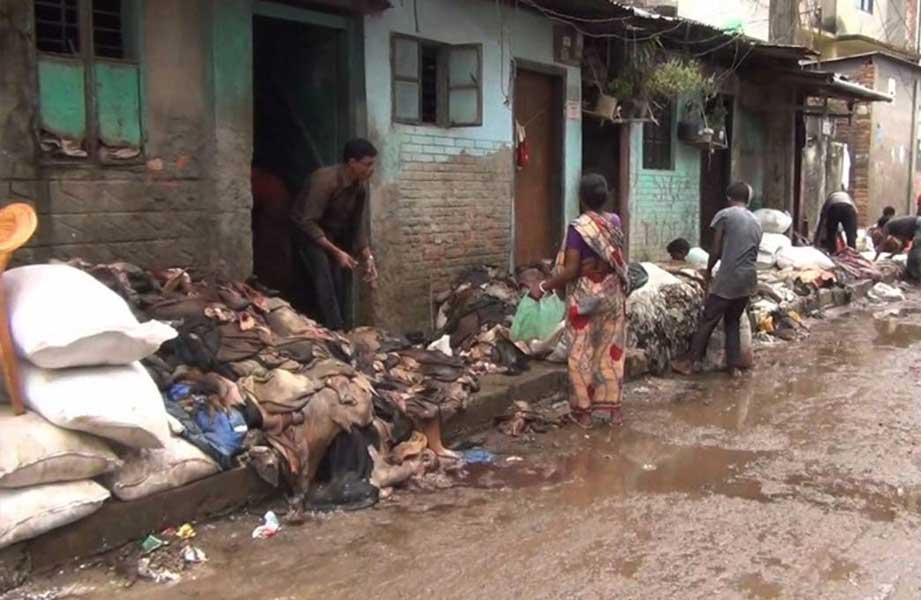
However, the Central Effluent Treatment Plant (CETP) is still not fully functional.

The CETP has a daily treatment capacity of 14,000 cubic meters, but during peak Eid operations, daily toxic waste output shoots up to 32,000–40,000 cubic meters.

The resulting overflow dumps untreated waste directly into the Dhaleshwari River.

Because of this environmental pollution, local tanneries cannot secure certification from the international Leather Working Group (LWG).

Out of roughly 160 operational tanneries in Bangladesh, only 6 to 8 hold LWG certification.

For comparison, India has over 240 LWG-certified facilities, Pakistan has over 50, and Vietnam maintains a significantly higher share.

Lacking LWG compliance, local tanneries are barred from selling directly to major European, American, or Japanese consumer brands.

This leaves the country dependent on Chinese buyers, who purchase semi-processed "crust leather" at heavily discounted rates. Consequently, export values that once averaged $1.50 per square foot have dropped to $0.60–$0.65.

The market value of local leather is also being hurt by a decline in the quality of raw hides before they even reach tanneries.

A study by the Centre for Policy Dialogue (CPD) revealed that 21% of all seasonal hides suffer from deep knife cuts, punctures, or disease scars, which instantly lowers their market grade.

Furthermore, data showed that 100% of individual sacrifice givers and 83% of seasonal grassroots collectors sold hides completely unsalted, accelerating rot during warm, humid weather.

To prevent a complete market collapse this season, the government has introduced several emergency measures, such as partially lifting restrictions on raw hide exports to create alternative demand channels, banning the entry of raw, unsalted hides into Dhaka for seven days post-Eid to protect regional processing, and distributing subsidized salt directly to madrasas and orphanages for immediate preservation.

The Department of Livestock Services trained over 15,000 professional and 23,000 seasonal butchers in proper hide-flaying techniques.

The need to fix these structural issues has become more urgent as Bangladesh graduates from the Least Developed Country (LDC) list.

While duty-free access to the European Union will continue until 2029 under transitional arrangements, the expiration of this grace period means local exporters will face import tariffs of up to 12% if they fail to meet global environmental compliance standards.

Failing to reform the sector before this deadline risks further isolating Bangladesh from high-value global footwear and luxury goods supply chains.

Required policy reforms

To stop the value erosion of this national asset, economists and industrial experts recommend implementing several immediate reforms, including completely upgrading and expanding the waste-treatment capacity of the Savar CETP to meet global standards, setting up a transparent, open-market export window for raw hides to break domestic purchasing monopolies, establishing regional, union-level hide collection and cold storage centers equipped with subsidized salt reserves, introducing digital tracking networks to trace hides from the initial slaughter point down to the final tannery floor, and encouraging private investment into high-value, diversified leather consumer goods rather than relying solely on low-margin crust leather exports.

Every year, the period leading up to Eid-ul-Azha sees a predictable round of high-level meetings, price declarations, and policy promises—yet the ground reality remains largely unchanged.

The leather industry is not just a seasonal marketplace; it supports millions of temporary jobs, provides essential funding for social welfare systems, and represents a major pillar of Bangladesh's export potential.

If the government can use the current phase of political stability to permanently fix the Savar treatment plant and open the market to genuine competition, the sector could recover.

Only then can the country restore a market where the proceeds from a single hide can successfully fund a community orphanage for months.​
 

341 trucks carrying 80,000 rawhides enter Savar tannery

bdnews24.com

Published :
May 28, 2026 23:50
Updated :
May 28, 2026 23:50

1780020457882.webp


At least 341 trucks carrying 79,218 rawhides of animals sacrificed on Eid-ul-Azha have entered the leather industrial estate in Savar, on the outskirts of Dhaka.

These vehicles arrived there from different areas in and around the capital until 8pm Thursday, the Eid day.

The concerned authorities said the trucks managed to arrive quickly without any inconvenience due to advance preparations by tannery owners and the absence of traffic jams on the highways in and around Dhaka.

Md Mehrajul Maiyan, executive engineer at the Bangladesh Small and Cottage Industries Corporation in the estate, said the influx of trucks started in the afternoon.

The trucks carried 78,515 hides of cows and buffaloes. And the rest (703) were goatskins and sheep hides.

Meanwhile, Commerce Minister Khandakar Abdul Muktadir, inspecting the trading of rawhides in Aminbazar, told reporters: "There is no possibility of sacrificial animal hides being smuggled this time.

“Because we’re working round the clock in the places where the skins are collected from."

He is hopeful that more skins can be preserved this time than in any other year in the past.

The minister said they are keeping an eye so rawhides are not damaged this season.​
 

Fashion, footwear retailers report weak Eid-ul-Azha sales amid inflation woes

Retailers say repeated festivals, weather disruptions and reduced purchasing power dampened consumer spending

Sukanta Halder


1780022260732.webp

Star file photo

The country’s fashion and footwear retailers have expressed disappointment over weak Eid-ul-Azha sales, citing changing consumer behaviour and persistent inflationary pressure as key reasons behind the decline in demand.

Retailers said the close timing of Eid-ul-Fitr, Pahela Baishakh and Eid-ul-Azha this year also reduced consumers’ interest in buying clothes and footwear for Eid-ul-Azha.

According to the Fashion Entrepreneurs Association of Bangladesh (FEAB), retailers lost nearly 60 percent of their expected sales during the season.

Eid-ul-Azha, the second-largest religious festival in Muslim-majority Bangladesh, is traditionally considered a peak shopping period during the 15 days leading up to the festival, retailers said.

Azharul Hoque Azad, managing director of Sadakalo, said this year’s Eid-ul-Azha sales were the worst in the past decade, with businesses witnessing a sharp fall in consumer spending.

He attributed the poor sales mainly to continued economic hardship and inflation, which have weakened people’s purchasing power. He also said the decision to close markets at 10:00pm affected shopping habits and reduced customer turnout during peak evening hours.

According to Azad, sales this season were only around 40 percent of what retailers would normally expect during a typical Eid-ul-Azha period.

Inflation climbed above 9 percent again in April, reversing the easing trend seen in March and signalling renewed pressure from fuel price hikes and higher import costs linked to the Middle East conflict.

Point-to-point inflation stood at 9.04 percent in April, up from 8.71 percent in March, according to data from the Bangladesh Bureau of Statistics.

The increase was driven by both food and non-food items. Non-food inflation rose more sharply to 9.57 percent in April from 9.09 percent a month earlier, indicating sustained increases in the costs of fuel, transport and other services.

Soumik Das, chief executive officer of Rang Bangladesh, said sales this year were disappointing, with businesses only managing to match last year’s weak figures.

He said retailers had expected stronger sales following the change in government and the beginning of what many hoped would be a better economic period, but those expectations were not realised.

According to him, the overall market situation remained sluggish, leaving many entrepreneurs frustrated as expectations for Eid-ul-Azha sales had been high while actual consumer spending stayed low.

He added that middle- and lower-middle-income consumers may have prioritised spending on sacrificial animals or become more cautious about discretionary expenses.

Retailers usually face intense pressure during Eid shopping seasons and often require additional temporary workers and support staff to manage crowds.

This year, however, retailers said there was no such pressure.

Rang Bangladesh did not hire additional temporary staff, and office employees were not required to assist at outlets during weekends as customer turnout remained close to regular off-season levels, Soumik added.

Khalid Mahmood Khan, co-founder of Kay Kraft, said the share of Eid-ul-Azha sales in overall annual business has declined in recent years, with recent growth driven largely by repeated promotional campaigns.

According to him, such “price offers” helped attract customers and increase product movement, but significantly reduced profit margins for businesses.

Khalid said this year’s Eid-ul-Azha recorded higher product sales compared to the past few years, but mostly at lower prices.

In many cases, businesses were forced to sell products with little or no profits simply to maintain market activity and sustain customer buying habits, he added.

A senior official of a leading footwear company said extreme heat and heavy rainfall in recent weeks significantly disrupted customer movement and reduced footfall at retail outlets.

The official said consumer buying patterns were also shifting, with demand falling particularly for higher-priced products.

Inflation has weakened purchasing power across both premium and lower-priced market segments, he added.

Azharul Hoque Azad, also president of FEAB, said retail businesses are heavily influenced by political and social conditions, and recent incidents of crime, accidents and killings have negatively affected public sentiment and consumer confidence.​
 

Leather prices depend on int’l market, not domestic demand: Rashid

BSS

Published :
May 30, 2026 16:41
Updated :
May 30, 2026 16:41

1780270965971.webp


Agriculture and Livestock Minister Amin Ur Rashid on Saturday said that leather prices depend not on domestic demand but on conditions in the international market.

He told reporters replying to a query after a discussion marking the 45th martyrdom anniversary of Shaheed President Ziaur Rahman at the District Shilpakala Academy auditorium in Cumilla.

The minister said the global economy is currently experiencing a degree of instability.

Rashid said that as people’s purchasing power has declined, many consumers worldwide are shifting from leather products to synthetic alternatives, affecting the international leather market.

“The world is like one family. Any economic crisis in one part of the world has an impact on other countries as well,” he said.

The minister added that a large portion of the leather produced in Bangladesh is exported. As a result, any decline in global demand and prices is reflected in the domestic market, he added.

Amin Ur Rashid said that to ensure the sustainability of the country’s leather industry, it is essential to adapt to changing international market conditions and place greater emphasis on expanding export markets.

The discussion was presided over by Rezaul Kaiyum, president of Cumilla Adarsha Sadar Upazila BNP.

District Council Administrator Haji Mostak Mia and Cumilla City Corporation administrator Yousuf Molla addressed the discussion as special guests.

Following the discussion, special prayers were offered for the salvation of the departed soul of Shaheed President Ziaur Rahman.​
 

Leather sector loses billions to compliance failures

Say industry leaders, experts

Jagaran Chakma

1780272445605.webp


Bangladesh generates a significant share of the world’s raw leather each year, yet earns only a fraction of what the material is worth due to compliance failures and decades of neglected infrastructure, according to industry leaders.

They point to shortcomings at the Savar Tannery Industrial Estate that have kept the country locked into low-value exports and shut out of premium global markets.

Bangladesh accounts for around four percent of the world’s rawhide and skin resources and produces an estimated 350-400 million square feet of hides and skins annually, according to Md Mizanur Rahman, professor and director of the Institute of Leather Engineering and Technology at the University of Dhaka.

“The country could generate up to $10-$12 billion in export earnings from its existing raw materials alone if the sector were fully utilised,” he said.

“We are sitting on a huge resource, but we are not using it properly,” Rahman added.

He estimates that nearly 30 percent of the country’s leather is wasted due to poor preservation, inadequate processing capacity and the lack of proper utilisation of tannery by-products.

According to the professor, the leather sector offers one of the highest value-addition opportunities in Bangladesh’s manufacturing industry, with up to 90 percent value addition possible as most raw materials are sourced locally.

He noted that foreign buyers, particularly Chinese firms, often purchase Bangladeshi leather for as little as 40-50 cents per square foot and later sell processed leather in international markets for around $2 per square foot.

Much of the profit from Bangladesh’s leather ends up overseas, while local traders and producers receive low prices for rawhides, he added.

According to Rahman, much of the potential lies in by-products that currently go unused.

He noted that tannery waste can be processed into collagen, gelatin, fertiliser and animal feed – industries that, if formalised, would create new demand for hides and push up their market value. “Nothing from leather should go to waste. Every part has economic value.”

The timing of supply adds another layer of difficulty. Some 40-45 percent of the country’s annual rawhide comes to market within three days of Eid-ul-Azha, placing enormous strain on processing capacity and making efficient handling critical to securing better prices.

The DU professor said the lack of internationally compliant environmental infrastructure at the Savar Tannery Industrial Estate has further limited the sector’s ability to move up the value chain.

Md Tipu Sultan, chairman of the Bangladesh Finished Leather, Leather Goods and Footwear Exporters Association (BFLLFEA), said the country’s leather sector continues to receive lower prices in international markets mainly because many factories have yet to meet globally recognised compliance standards.

“If we can move quickly on these issues, it will make a significant difference,” he said.

The compliance gap is the central obstacle for the sector’s growth, he noted, stating that only a handful of factories currently hold the internationally recognised certifications required by buyers in the United States and European markets.

“One or two compliant factories are not enough. If at least 50 out of around 150 factories can achieve those standards, more compliance-focused buyers will source products from Bangladesh,” Sultan said.

“If we can move quickly on these issues, it will make a significant difference,” he added.

If progress continues, he said, many of the recurring problems facing the leather sector could be resolved before the next Eid-ul-Azha season.

At the factory level, the frustration runs deeper. Md Salauddin Ahmed, managing director of New Kajol Tannery Ltd and treasurer of the BFLLFEA, traces the industry’s current predicament to the forced relocation of tanneries from Hazaribagh to Savar – a move the government promised would come with full infrastructure support.

“The government shifted us to Savar with the promise of providing all necessary facilities. But many factories moved before essential infrastructure was ready,” he said.

Even years after the relocation, several tanneries still face shortages of gas and other utilities, while the central effluent treatment plant (CETP) has yet to operate at the expected standard, he added.

These shortcomings have prevented the sector from obtaining internationally recognised certifications, including approval from the Leather Working Group (LWG), a key requirement for supplying many global brands.

“As a result, major European buyers are not coming to Bangladesh. We are largely dependent on Chinese buyers, who currently dictate prices,” Ahmed said.

That dependence shows in the margins. Processed leather is selling at $0.50–0.55 per square foot, barely enough to cover costs. With most chemicals imported and the dollar strengthening, even cheap raw hides offer little relief.

“We import most of our chemicals, and costs have risen sharply due to the stronger dollar. Even when we purchase raw hides at relatively low prices, we struggle to make a profit,” he said.

According to Ahmed, the lack of buyer diversification has weakened the industry’s bargaining power and contributed to the decline in hide prices.

“If we can ensure proper environmental compliance and secure LWG certification, European and other international buyers will return. Then we can sell leather at much better prices and pay higher prices for raw hides as well,” he said.​
 

Latest Posts

Back