| Global Defense, OSINT & Geopolitics Wire

[đŸ‡§đŸ‡©] Insurgencies in Myanmar. Implications for Bangladesh

[đŸ‡§đŸ‡©] Insurgencies in Myanmar. Implications for Bangladesh
493
25K
More threads by Saif

G Bangladesh Defense

Rohingyas hired to fight Arakan Army: report
Staff Correspondent 18 June, 2025, 23:53

The International Crisis Group, a global non-profit think tank, in a report on Wednesday said that Rohingya armed groups were recruiting Rohingyas sheltered in Bangladesh camps in Cox’s Bazar and were being trained to fight Myanmar’s rebel group Arakan Army that now controls Rakhine State.

The information came in the ICG report titled ‘Bangladesh/Myanmar: The Dangers of a Rohingya Insurgency’.

The report was based on field research in Bangladesh during February and March 2025, and on interviews with the Arakan Army and Rohingya armed group leaders, Rakhine and Rohingya activists, civil society leaders and politicians, and United Nations and NGO officials over a period of six months.

‘Rohingya armed groups, meanwhile, have already started carrying out attacks on the Arakan Army in Rakhine State and are training fighters in camps along the border. Further intensification of this insurgency would cause great harm to all concerned – Rohingya civilians, the Arakan Army and Bangladesh,’ said the report of the Brussels-based ICG.

Asked for comment, Office of the Refugee Relief and Repatriation Commissioner top official Mizanur Rahman said that the allegations of training activities by the Rohingya armed groups in camps were completely ‘false’.

‘Anything happening on the Myanmar side is not our concern,’ he said, adding that they were not giving importance to any such Rohingya armed group.

The report predicted that the recruitment and training activity would heighten the risk of further bloodshed between the Buddhist majority and Rohingya Muslim minority within Rakhine State, as well as increase the likelihood that more Rohingya would flee the conflict across the border to Bangladesh.

The report also said that the Arakan Army’s defeat of the Myanmar military in northern Rakhine State had shifted Rohingya armed groups onto the front foot.

The report mentioned two Rohingya armed groups – Arakan Rohingya Salvation Army and Rohingya Solidarity Organisation.

Meanwhile, other Rohingya groups claimed that they were preparing to join the fight in Rakhine State.

‘Bangladesh and others are trying to resolve [the repatriation issue] politically and we’re waiting for the results. If they can’t do that, then we will do it ourselves,’ the report quoted a senior RSO official as saying.

‘We will start a war against the Arakan Army, if they ignore our rights,’ the RSO official said.

The report said that there were also indications that the Myanmar military was planning to support Rohingya armed groups against the Arakan Army so as to weaken its rival.

‘In May, the regime reportedly dispatched a Rohingya man from Rakhine to Bangladesh for meetings with Rohingya armed group leaders in Cox’s Bazar. During these talks, the man promised that Naypyitaw would provide weapons if the armed groups could build up their forces sufficiently,’ the report added.

At the same time, the Bangladeshi government has started engaging tentatively with the Arakan Army, which controls Myanmar’s entire border with the country, the report said.

It said that mounting attacks by Rohingya armed groups in Rakhine were not only likely to undermine these talks, but could also heighten anti-Rohingya sentiment in Myanmar, damaging prospects for the repatriation of up to one million refugees.

The report recommended that Bangladesh should curb the influence of Rohingya armed groups in camps and step up dialogue with the Arakan Army.

Over 13 lakh Rohingyas fled to Bangladesh amid atrocities against them by the Myanmar military since 2017, according to government data.

In a letter to the RRRC in April, the United Nations High Commissioner for Refugees pressed for ensuring accommodation for 1.13 lakh more Rohingyas who entered Bangladesh between November 2023 and April 27, 2025.​
 

A Rohingya insurgency will only prolong Bangladesh’s refugee crisis

Thomas Kean
Published: 19 Jun 2025, 11: 03

1750551565167.webp

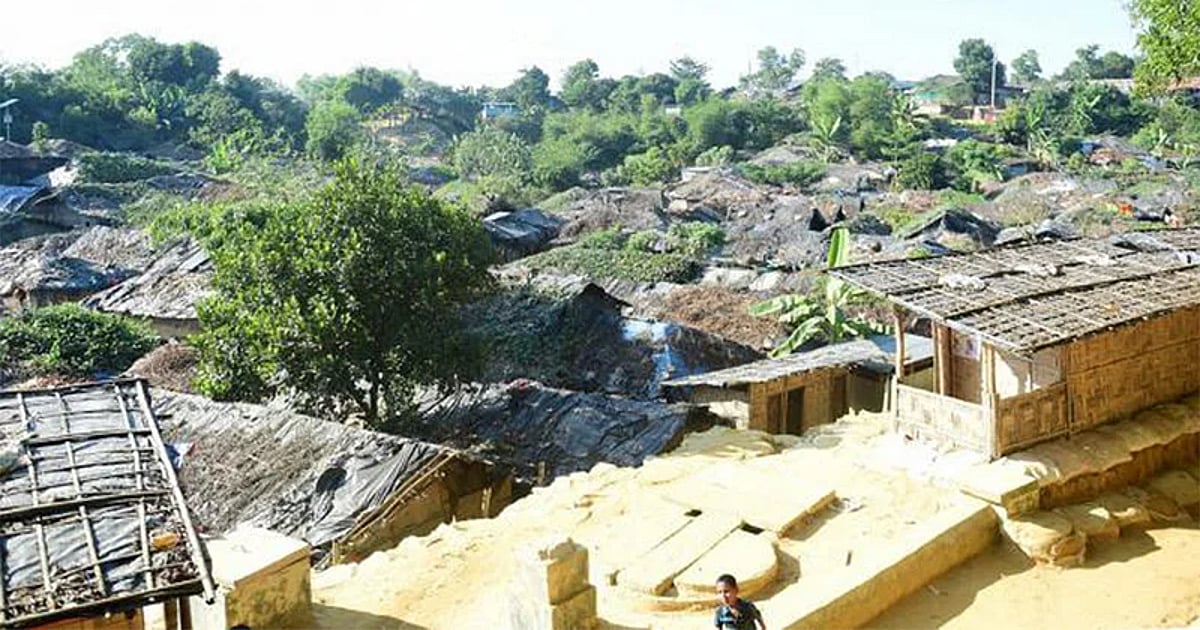
A section of the Rohingya camp in Kutupalong in Ukhia upazila of Cox’s Bazar File photo

Bangladesh faces a growing threat that could undo years of diplomatic and humanitarian efforts on one of its top foreign policy priorities: resolving the Rohingya refugee crisis. The million plus refugees in Cox’s Bazar face worsening living conditions, squeezed by aid cuts and barred from earning a living. Armed groups operating inside the camps are recruiting frustrated and desperate young men with promises of returning to Myanmar through armed struggle over the border. Their target is the Arakan Army, the powerful ethnic Rakhine armed group that now controls much of Myanmar’s Rakhine State and draws its support primarily from the local Buddhist population.

While most refugees had long rejected these groups for their violent tactics, growing anger toward the Arakan Army and a deepening sense of hopelessness about the prospect of returning to Myanmar have made the camps increasingly fertile ground for recruitment. While many refugees remain sceptical about the armed groups’ real intentions, most say they now believe that insurgency is the only way to return home. This strategy of confrontation is not only doomed to fail – Rohingya armed groups are no match for the Arakan Army, which has wrested Rakhine State from the Myanmar military – it also risks derailing Bangladesh’s long-standing goal of refugee repatriation, and could plunge the region into a deeper and more complex crisis.

Since entering office in August 2024, Bangladesh’s interim government has taken several welcome steps towards refugee repatriation. Muhammad Yunus’ administration appointed a high representative for Rohingya affairs, opened dialogue with the Arakan Army’s political wing, and successfully lobbied the United Nations to convene a high-level conference on the side-lines of the General Assembly in New York this September. It also relaxed some rules on the refugee humanitarian response to make it more sustainable, such as permitting durable housing.

But while these diplomatic efforts deserve recognition, they are being quietly undermined by developments in the camps. Given the new situation in Rakhine state, the only way for the Rohingya to return to Myanmar is through negotiations with the Arakan Army, which now controls all the areas where refugees fled from, and the entire Bangladesh border. But the armed group – along with most refugees we spoke to – believe that elements within Bangladesh’s security agencies are allowing Rohingya armed groups to flourish. They point to the groups holding large meetings within the camps, sometimes even publicly thanking the authorities for granting permission. Individuals linked to the armed groups have also been allowed to meet with high-level visitors to the camps, deepening the perception that their activities are being tolerated, if not quietly enabled.

Whether this is part of a formal strategy or a breakdown in oversight is unclear, but the effect is the same: It fuels mistrust with the Arakan Army and weakens Dhaka’s hand at the negotiating table as the Rakhine armed group increasingly sees Bangladesh as speaking the language of diplomacy while allowing militants to operate freely. If that perception hardens, engagement will stall, and with it, any realistic prospect for repatriation.

The Arakan Army also enjoys strong support across Myanmar as one of the leading anti-junta forces. It is not only backing smaller resistance groups in Rakhine State’s periphery, but also has troops in the north and southeast of the country. If the Rohingya are perceived as fighting against the Arakan Army, they will de facto be seen by many in Myanmar as supporting the reviled regime. This could deepen communal hostility with the Rakhine people, and more broadly reverse nascent public acceptance for the Rohingya community in the country.

At least 120,000 more Rohingya have already sought refuge in Bangladesh over the past 18 months, fleeing fighting in Rakhine State, and the refugee flow could get far worse. The presence of Rohingya armed groups in the border area within Myanmar has coincided with an uptick in reports of human rights violations against Rohingya civilians from the Arakan Army. In northern parts of Maungdaw and Buthidaung, where the Arakan Rohingya Salvation Army (ARSA) has launched attacks, the Arakan Army has responded with so-called “clearance operations”, targeting Rohingya villages suspected of sheltering insurgents. In some areas, the group has begun forming ethnic Rakhine militias, and warned nearby Rohingya communities to relocate, likely fearing they will be used as cover by militants. This paints a bleak picture for the possibility of repatriation, and the prospect will only worsen should the Rohingya insurgency grow.

Bangladesh must make a choice. If the government’s ultimate goal remains repatriation of Rohingya refugees, then the country must close the gap between policy and practice. That means reducing the influence of armed groups within the camps, creating an environment for credible civilian leadership to emerge among refugees, and staying the course on political engagement with the Arakan Army. It may also need to rethink its recent engagement with the regime in Nay Pyi Taw, which has sown mistrust with the ethnic armed group for little gain since the Myanmar junta is no longer in a position to facilitate repatriation.

International donors, too, need to rethink their role. Aid cuts, particularly the sudden withdrawal of USAID funding, are feeding the desperation that armed groups are exploiting. Continued underfunding will only exacerbate the problem. Maintaining food support and basic services such as healthcare and sanitation, but also education is essential. But policy shifts from Dhaka, such as legalising small businesses within the camps and creating other economic opportunities for refugees, would help to both reduce the dependence on foreign aid, and to attract more international assistance.

At the same time, the Arakan Army must prove it can govern for all communities in Rakhine state, including for the Rohingya minority. Despite some inclusion efforts, many Rohingya say life under the group’s rule is no better than it was under the military. Ending discrimination and violent reprisals against civilians following ARSA attacks, and ensuring equal access to livelihoods and services will be key to building trust. The group will also need to engage Rohingya leaders in Bangladesh to counter the growing perception among refugees that it is a greater enemy to the Rohingya than the Myanmar military.

The September UN conference offers Bangladesh an opportunity to reset its strategy and build support for a more coordinated approach in dealing with the Rohingya refugee crisis. But that will only be possible if trust can be restored, not just with international partners, but with the actors now shaping the future of Rakhine on the ground.​
 

Myanmar’s new realities demand a new Rohingya strategy

1750554115321.webp

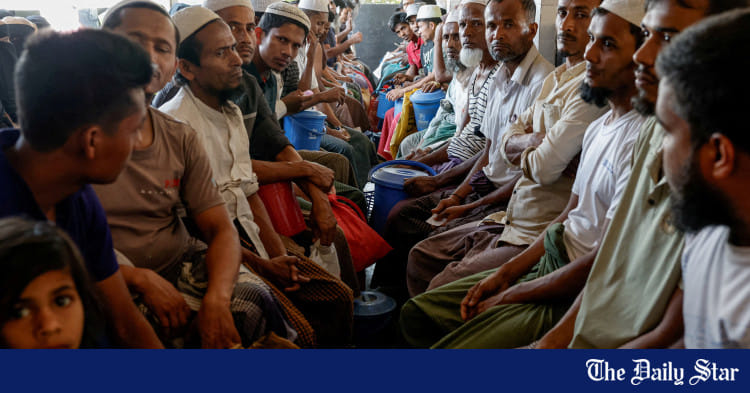
Rohingya refugees wait at the World Food Programme distribution centre to purchase grocery items, at the refugee camp in Cox's Bazar, Bangladesh, March 15, 2025. PHOTO: REUTERS

The idea of opening a humanitarian channel into Myanmar's Rakhine State to deliver aid directly to the Rohingya certainly carries a moral appeal. With Bangladesh having sheltered nearly one million Rohingya refugees for over six years—most of them crammed into overcrowded camps in Cox's Bazar—it's understandable that many are looking for ways to ease this burden. Aid from the international community has started to decrease, and security concerns both inside the camps and along the border are becoming more serious. But good intentions are not always enough, especially in a region so complex and fragile. Sometimes, if you rush into something that seems noble, you might unintentionally open the door to even greater instability.

A humanitarian channel sounds simple, but history tells us it rarely is. The world has seen many such aid channels/corridors in the past, and most of them haven't ended well. In the 1990s, when the Balkans were torn apart by war, the UN declared places like Srebrenica and Gorazde as "safe areas." Despite international presence, those areas became sites of horror—especially Srebrenica, where thousands of people were massacred. In Syria, corridors in Aleppo and Ghouta were frequently manipulated. Instead of delivering safety, they became tools of war used by both government and opposition forces to control populations and divert aid. Even in Ethiopia's Tigray region, where the UN tried to create access routes for aid, efforts were blocked or undermined by the warring parties, and the result was famine.

These experiences tell us that aid routes can go wrong—and they often do. They are vulnerable to being misused, especially in places where there is no clear control, where there are multiple armed actors, and where international trust is already thin. In such settings, what starts as a route for food and medicine can quickly turn into a passageway for weapons, fighters, or influence. In the end, the very people the aid is meant to help end up in even more danger.

When we look at the current situation in Myanmar, it's important to understand how complicated things have become. This is not a simple case of a government suppressing a minority population. Over the last few years, new players have emerged on the ground. One of the most powerful among them is the Arakan Army (AA), an ethnic armed group that now controls large stretches of northern Rakhine, especially the areas close to the Bangladesh border. Ironically, while Bangladesh and most ASEAN countries maintain diplomatic relations with Myanmar's junta—the military regime that technically runs the country—it's the AA that holds power in the region where the aid channel would likely pass through.

If aid flows through an area controlled by the AA, it may end up strengthening them, even unintentionally. In any war, supply is as powerful as any weapon. If aid turns into a way to boost the logistics and reach of an armed group, then the humanitarian effort risks becoming a political or military act. These risks are compounded by the presence of an uncontrolled border zone, arms trafficking, insurgency, and extremist movements. These threats already exist, and a poorly managed channel could make them worse.

It's a bit like going in for major surgery. You don't go under the knife without knowing exactly what's being done and what the risks are. However, if—after assessing all pros and cons—the surgery is deemed necessary, it's better to pursue it with full prior diagnosis and evaluation. Similarly, before setting up any humanitarian channel into Rakhine, we need to slow down and ask some hard questions. Who controls the ground? Who guarantees the safety of aid workers? Who ensures that the aid isn't misused? And perhaps most importantly, who takes responsibility if something goes wrong?

Rather than rushing into a high-risk initiative, Bangladesh could propose something more comprehensive and stable. Of course, repatriation won't happen overnight, and it won't be easy. But this could be the real beginning of a serious, well-planned first step towards resolving a crisis that has dragged on for too long.

For something like this to work, though, all the key players would have to be involved. China, which has deep ties with Myanmar and major investments in the region—especially through the China-Myanmar Economic Corridor—needs to be part of the conversation. The US, already one of the largest donors to Rohingya aid, can lend global credibility to any comprehensive plan. It also helps that organisations such as Human Rights Watch, International Rescue Committee, and Refugee Council USA, all based in the US, can help monitor any irregularities and create transparency. Reports by such organisations have credibility in the international community. India, which shares borders and strategic interests, must also be tactically engaged. And Bangladesh, which has carried the weight of this crisis with resilience and dignity, should take the lead in shaping a solution that is humane, realistic, and diplomatically sound.

Inside Bangladesh, the decision should include political parties, international relations experts, academics, and defence and security intelligence experts. As this will have long-term implications, this critical decision shouldn't be made in the essence and narrative of an executive order. We have to keep in mind that certain neighbouring forces may always try to sabotage the initiatives as part of their own interest to create instability.

If establishing something more comprehensive proves too difficult, there is still the option of a multilateral humanitarian corridor—one overseen not by a single country, but jointly by the UN, the ICRC, and ASEAN. That way, the risks can be managed more carefully, and there would be international checks and balances in place to prevent misuse. The longer-term strategies should culminate in a stable Rakhine region where power struggles are settled and accepted by the multilateral community. Otherwise, it leaves a possibility for future power struggles and endangers the people residing there.

Whatever direction is taken, one thing is clear: Bangladesh cannot afford to act impulsively. The country is in a sensitive position, surrounded by powerful neighbours with competing interests. China and India have very different approaches to Myanmar. The US currently says it views the Rohingya crisis through a human rights lens. And all three powers are watching the region closely. Bangladesh must navigate this carefully, without getting caught in anyone's camp while also avoiding potential sabotage.

The visit of UN Secretary-General AntĂłnio Guterres in July 2023 was a reminder that the world is still paying attention. But attention is not enough. What's needed now is leadership. Bangladesh has shown remarkable patience and generosity over the years. Now it must lead with clarity and confidence. A humanitarian channel might bring temporary relief, but unless it's part of a larger, more strategic plan, it could do more harm than good.

This isn't just about sending aid across a border. It's about shaping the future of an entire population and protecting the stability of an entire region. That requires more than good intentions. It requires wisdom, courage, and above all, inclusive leadership. We must be careful that this humanitarian action doesn't forget the human angle. Security and the betterment of the people in the region must be the first priority in this mission. Let us move not with haste, but with purpose.

Ashfaq Zaman is the founder of Dhaka Forum and a strategic international affairs expert.​
 

Solution to Rohingya crisis urgently needed
The protracted crisis could pose threat to regional security


1750639052954.webp


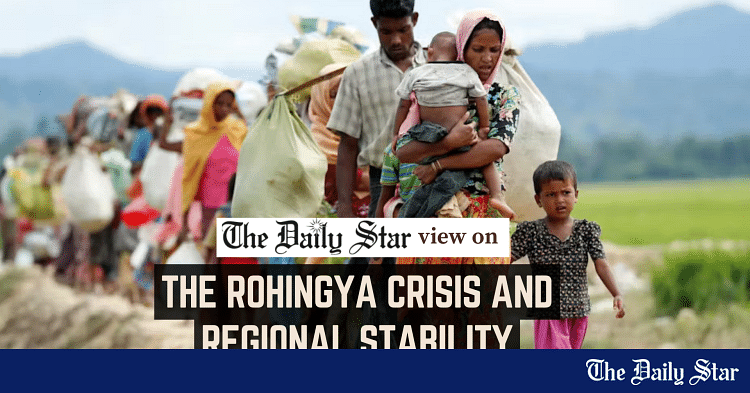
We are deeply concerned about the increasingly complex Rohingya situation in the country, with no progress in the repatriation process and the persistent crisis in Myanmar. Global funding cuts have made the situation particularly alarming, depriving Rohingya refugees of their most basic necessities. Foreign Affairs Adviser Touhid Hossain has therefore rightly warned the UN that, if a sustainable solution is not urgently pursued, the Rohingya crisis could soon escalate into a serious threat to regional security. Highlighting that prolonged crises often stem from systemic marginalisation, the adviser rightly urged renewed international attention and action to facilitate the safe and dignified return of the Rohingya people.

Bangladesh has been hosting 1.2 million Rohingya people for over eight years now, despite the fact that this humanitarian act has placed immense socio-economic and environmental pressures on the country. Unfortunately, despite several attempts, not a single Rohingya sheltered in Bangladesh has been repatriated to Myanmar. In fact, the situation has worsened, with around 150,000 Rohingya people arriving in Bangladesh in recent months, having fled escalating clashes between the Arakan Army and Myanmar's ruling military junta. Bangladesh has already been struggling to provide shelter and basic services to the existing Rohingyas. What will happen if 50,000 more arrive by the end of the year, as a WFP report has projected?

The recent funding cuts have made it increasingly difficult for Bangladesh to provide Rohingya refugees with their basic necessities. Reportedly, only 19 percent of the funds required for Rohingya refugees this year have been secured, even though five months of the year have already passed—out of the $934 million required, only $180 million has been received so far. This funding gap has already disrupted numerous essential services, including health, education, family planning and nutrition. Aid agencies warn that the situation could deteriorate further without immediate financial support. Access to healthcare and education in the refugee camps has already sharply declined. For instance, the number of patients seeking medical care fell from 372,000 in February to 205,000 in April. Meanwhile, with the closure of learning centres, the education of 230,000 children—and the livelihoods of hundreds of local teachers—are in jeopardy. Rohingya children's safety is also at greater risk.

Clearly, the situation is critical and may lead to an increase in criminal activities in and around the camps. With worsening safety conditions, more refugees may resort to dangerous sea routes. Women and girls will be particularly vulnerable to gender-based violence. We therefore urgently call on the international community to provide much-needed humanitarian aid and to play an active role in finding a sustainable solution to the Rohingya crisis.​
 

UN expert urges rejection of election ‘fraud’
1750898746711.webp


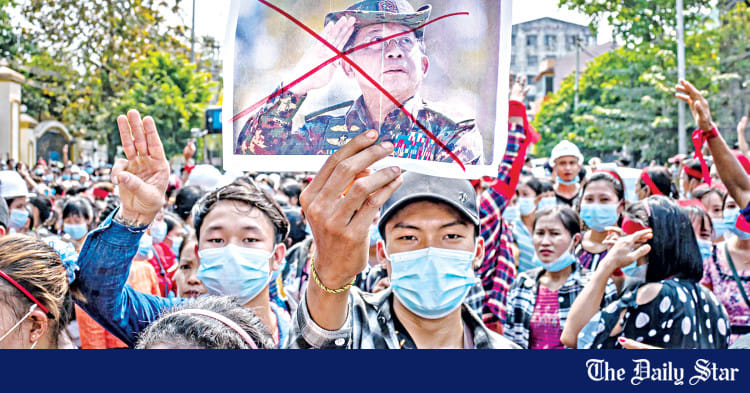
Elections being planned by Myanmar's ruling junta are a ploy to feign legitimacy and should be rejected by the international community as a "fraud", a UN expert said yesterday.

Myanmar has been engulfed in a brutal conflict since February 2021, when Min Aung Hlaing's military wrested power from the civilian government of Aung San Suu Kyi.

The military has said it is planning to hold "a free and fair multi-party democracy general election" around the end of this year or in early 2026.

But Tom Andrews, the United Nations' special rapporteur on the rights situation in Myanmar, said the suggestion that truly democratic elections could be held in a junta-controlled Myanmar was laughable.

"They want to find an exit ramp to the international pressure."

"They want to find an exit ramp to the international pressure," he told journalists in Geneva.

Since the 2021 coup, trade sanctions have isolated Myanmar, making it increasingly dependent on China and Russia for economic and military support.

Min Aung Hlaing himself is under multiple global sanctions and the International Criminal Court's chief prosecutor has sought an arrest warrant for him for alleged crimes against humanity committed against the country's Rohingya Muslims.

The junta, Andrews said, was "trying to create this mirage of an election exercise that will create a legitimate civilian government".

But "you cannot have an election when you imprison and torture and execute your opponents, when it is illegal to report the truth as a journalist, when it's illegal to speak out and criticise the junta," he said.

"It's really important that countries reject this idea of an election and not allow the military junta to attempt to get away with this fraud."

Andrews, who is an independent expert mandated by the UN Human Rights Council but who does not speak on behalf of the United Nations itself, highlighted that more than 6,800 people had been killed in Myanmar since the military coup.

At the same time, he said, some 22,000 political prisoners are languishing behind bars -- "most of whom are guilty of only exercising their fundamental rights, including speaking out and participating in demonstrations opposing a brutal military junta".​