 Bangladesh Defense

Saif
Senior Member
- Joined
- Jan 24, 2024
- Messages
- 22,384
- Likes
- 9,875
- Nation

- Axis Group


Who will implement the verdict on the Rohingya?
The 19 November verdict delivered by the International Court of Justice (ICJ) on the Rohingya of Myanmar immediately made headlines in media outlets around the world. Reached after several years of legal battles, the verdict is significant in many ways and for many parties. However, the process...
 en.prothomalo.com
Who will implement the verdict on the Rohingya?
Altaf Parvez
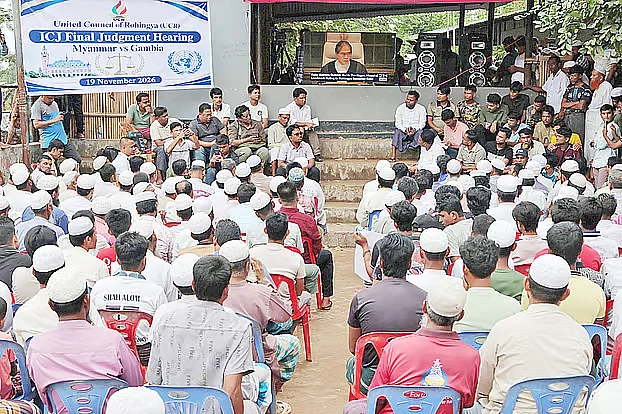
Rohingya refugees watch a live broadcast of the ICJ verdict on a big screen at a refugee camp. 19 November, Cox’s Bazar Reuters
The 19 November verdict delivered by the International Court of Justice (ICJ) on the Rohingya of Myanmar immediately made headlines in media outlets around the world. Reached after several years of legal battles, the verdict is significant in many ways and for many parties. However, the process for its legal implementation remains unclear.
The ICJ’s ruling that Myanmar is responsible for the genocide of the Rohingya represents a major moral victory for the community. It is likely to increase global sympathy for them. The verdict has reaffirmed that the Rohingya were not in a good situation in Myanmar and that the remaining members of the community there continue to face threats.
The language of the verdict will also serve as a significant affirmation of the Rohingya’s rights as citizens of Myanmar. It has further strengthened their demand to return to their homeland. Moreover, the global attention and sympathy generated by the ruling could lead to increased aid and assistance for refugee camps. It may also reduce efforts to deport Rohingya refugees who have sought shelter in various countries around the world. On the contrary, countries may become more willing to offer them refuge.
The ICJ verdict has also strengthened Bangladesh’s position on the Rohingya issue. The ruling provides strong justification for Bangladesh’s decision to shelter a community facing genocide. It could also lead to increased international assistance for their upkeep in the future, which would come as a relief to Bangladesh.
More importantly, the verdict has undoubtedly strengthened Bangladesh’s bargaining position in negotiations with Myanmar over the repatriation of the Rohingya. Another reality that has emerged in the aftermath of the ruling is that Bangladesh cannot, under any circumstances, forcibly send the Rohingya back to Rakhine state. The government in Dhaka, of course, has never wanted to do so.
Following this verdict, all eyes will be on Myanmar’s government and armed forces. The prospects for the Rohingya’s return and rehabilitation will depend on how they respond to the ruling in the long run. So far, they appear to be dismissing it. In an immediate reaction posted on its Telegram channel, a spokesperson for the Myanmar government said there was “nothing to worry about” regarding the verdict.
However, the ruling is undoubtedly a diplomatic blow to General Min Aung Hlaing. It remains to be seen whether China will continue to invite a junta of this kind for visits or extend cooperation to it as comfortably as before. Moreover, Indonesia and Malaysia are likely to raise questions about the representation of General Min’s government at ASEAN meetings. Both countries are considered sympathetic to the Rohingya cause. Trade and commercial dealings with a government accused of genocide could also become problematic for many countries.
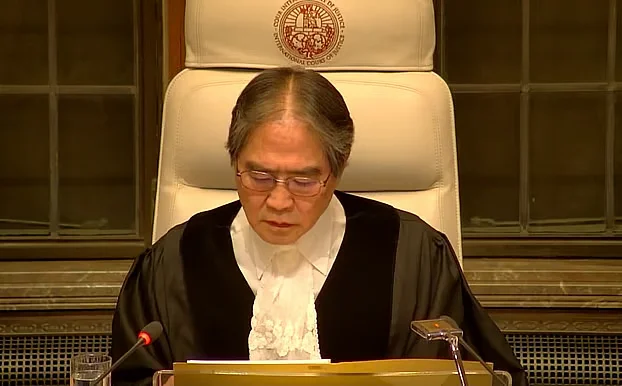
International Court of Justice (ICJ) President Judge Yuji Iwasawa delivers the verdict. Screenshot from the live broadcast on the ICJ website
Overall, ASEAN will have to reconsider its long-standing indifference towards the Rohingya crisis. Continuing to accommodate General Min Aung Hlaing at the bloc’s meetings could become an increasingly sensitive issue for the organisation.
Arakan Army has long controlled much of northern Arakan, a region historically inhabited by a large Rohingya population. Yesterday’s verdict will also compel the Arakan Army to reconsider its position on the Rohingya question.
The verdict is also encouraging for pro-democracy forces in Myanmar. Although the genocide against the Rohingya took place during Aung San Suu Kyi’s tenure, those opposing the military junta have already changed their position on this persecuted community. They have pledged to recognise the Rohingya as a distinct ethnic group. Moreover, the military, which has deprived the country of democracy, has now been identified as a perpetrator of genocide. This has further strengthened the legitimacy of the human rights activists’ struggle in the country.
Understandably, the ICJ verdict has also stirred things up across Rakhine State. Although the ruling has renewed the significance of the Rohingya’s demand to return to the region, the central armed forces, known as the Tatmadaw, now control only a small part of the state. The Arakan Army has long controlled much of northern Arakan, a region historically inhabited by a large Rohingya population. Yesterday’s verdict will also compel the Arakan Army to reconsider its position on the Rohingya question.
The Myanmar government does not recognise the Rohingya as citizens of the country or as a distinct ethnic group. The Arakan Army recognises them as citizens, but not as a distinct ethnic group; instead, it regards them as ‘Bengalis’.
The International Court’s emphasis and directives on the rehabilitation of the Rohingya have also put pressure on the Arakan Army to review its position on the issue. In particular, if it hopes to secure international support for its own ethnic struggle, the Arakan Army now has a moral responsibility to cooperate in the rehabilitation of the Rohingya.
The key question following the verdict is undoubtedly: what practical significance will it have? Who will bring the perpetrators of genocide to justice? For now, there is no clear answer to this question. Another question has also resurfaced: will the international community take any new initiatives to facilitate the Rohingya’s return to Rakhine State?
Given the current realities, even if both the Myanmar military and the Arakan Army agree to the Rohingya’s return, it will be necessary to establish a safe zone in parts of Rakhine State. Without such a zone, the Rohingya will not be able to live there in security and comfort over the long term. However, if such a zone is established, an international presence will be needed to oversee it.
In this regard, Bangladesh could certainly be called upon to play an important role. However, a major question remains: will China agree to the establishment of such a potential safe zone inside Rakhine State? China considers Myanmar part of its security sphere and has substantial strategic investments in Rakhine, also known as Arakan. Any international presence in the region would therefore have to take China’s views into account. Moreover, neither the Arakan Army nor the Tatmadaw would agree to such an initiative without China’s tacit approval.
Recognition of the Rohingya as a distinct ethnic group and the restoration of their citizenship rights are also essential for their repatriation. Persuading the Tatmadaw and the Arakan Army to agree to these demands will only be possible if China takes a sympathetic position on the issue. Following this verdict, China’s role has once again emerged as an indirectly crucial factor.
However, the verdict has already placed China’s longstanding and unwavering support for Myanmar’s military under moral scrutiny. Unless China takes a constructive position on implementing the ruling, it will face increasingly difficult questions in the international arena in the future.
* Altaf Parvez is a writer and researcher.
Altaf Parvez
Rohingya refugees watch a live broadcast of the ICJ verdict on a big screen at a refugee camp. 19 November, Cox’s Bazar Reuters
The 19 November verdict delivered by the International Court of Justice (ICJ) on the Rohingya of Myanmar immediately made headlines in media outlets around the world. Reached after several years of legal battles, the verdict is significant in many ways and for many parties. However, the process for its legal implementation remains unclear.
The ICJ’s ruling that Myanmar is responsible for the genocide of the Rohingya represents a major moral victory for the community. It is likely to increase global sympathy for them. The verdict has reaffirmed that the Rohingya were not in a good situation in Myanmar and that the remaining members of the community there continue to face threats.
The language of the verdict will also serve as a significant affirmation of the Rohingya’s rights as citizens of Myanmar. It has further strengthened their demand to return to their homeland. Moreover, the global attention and sympathy generated by the ruling could lead to increased aid and assistance for refugee camps. It may also reduce efforts to deport Rohingya refugees who have sought shelter in various countries around the world. On the contrary, countries may become more willing to offer them refuge.
The ICJ verdict has also strengthened Bangladesh’s position on the Rohingya issue. The ruling provides strong justification for Bangladesh’s decision to shelter a community facing genocide. It could also lead to increased international assistance for their upkeep in the future, which would come as a relief to Bangladesh.
More importantly, the verdict has undoubtedly strengthened Bangladesh’s bargaining position in negotiations with Myanmar over the repatriation of the Rohingya. Another reality that has emerged in the aftermath of the ruling is that Bangladesh cannot, under any circumstances, forcibly send the Rohingya back to Rakhine state. The government in Dhaka, of course, has never wanted to do so.
Following this verdict, all eyes will be on Myanmar’s government and armed forces. The prospects for the Rohingya’s return and rehabilitation will depend on how they respond to the ruling in the long run. So far, they appear to be dismissing it. In an immediate reaction posted on its Telegram channel, a spokesperson for the Myanmar government said there was “nothing to worry about” regarding the verdict.
However, the ruling is undoubtedly a diplomatic blow to General Min Aung Hlaing. It remains to be seen whether China will continue to invite a junta of this kind for visits or extend cooperation to it as comfortably as before. Moreover, Indonesia and Malaysia are likely to raise questions about the representation of General Min’s government at ASEAN meetings. Both countries are considered sympathetic to the Rohingya cause. Trade and commercial dealings with a government accused of genocide could also become problematic for many countries.
International Court of Justice (ICJ) President Judge Yuji Iwasawa delivers the verdict. Screenshot from the live broadcast on the ICJ website
Overall, ASEAN will have to reconsider its long-standing indifference towards the Rohingya crisis. Continuing to accommodate General Min Aung Hlaing at the bloc’s meetings could become an increasingly sensitive issue for the organisation.
Arakan Army has long controlled much of northern Arakan, a region historically inhabited by a large Rohingya population. Yesterday’s verdict will also compel the Arakan Army to reconsider its position on the Rohingya question.
The verdict is also encouraging for pro-democracy forces in Myanmar. Although the genocide against the Rohingya took place during Aung San Suu Kyi’s tenure, those opposing the military junta have already changed their position on this persecuted community. They have pledged to recognise the Rohingya as a distinct ethnic group. Moreover, the military, which has deprived the country of democracy, has now been identified as a perpetrator of genocide. This has further strengthened the legitimacy of the human rights activists’ struggle in the country.
Understandably, the ICJ verdict has also stirred things up across Rakhine State. Although the ruling has renewed the significance of the Rohingya’s demand to return to the region, the central armed forces, known as the Tatmadaw, now control only a small part of the state. The Arakan Army has long controlled much of northern Arakan, a region historically inhabited by a large Rohingya population. Yesterday’s verdict will also compel the Arakan Army to reconsider its position on the Rohingya question.
The Myanmar government does not recognise the Rohingya as citizens of the country or as a distinct ethnic group. The Arakan Army recognises them as citizens, but not as a distinct ethnic group; instead, it regards them as ‘Bengalis’.
The International Court’s emphasis and directives on the rehabilitation of the Rohingya have also put pressure on the Arakan Army to review its position on the issue. In particular, if it hopes to secure international support for its own ethnic struggle, the Arakan Army now has a moral responsibility to cooperate in the rehabilitation of the Rohingya.
The key question following the verdict is undoubtedly: what practical significance will it have? Who will bring the perpetrators of genocide to justice? For now, there is no clear answer to this question. Another question has also resurfaced: will the international community take any new initiatives to facilitate the Rohingya’s return to Rakhine State?
Given the current realities, even if both the Myanmar military and the Arakan Army agree to the Rohingya’s return, it will be necessary to establish a safe zone in parts of Rakhine State. Without such a zone, the Rohingya will not be able to live there in security and comfort over the long term. However, if such a zone is established, an international presence will be needed to oversee it.
In this regard, Bangladesh could certainly be called upon to play an important role. However, a major question remains: will China agree to the establishment of such a potential safe zone inside Rakhine State? China considers Myanmar part of its security sphere and has substantial strategic investments in Rakhine, also known as Arakan. Any international presence in the region would therefore have to take China’s views into account. Moreover, neither the Arakan Army nor the Tatmadaw would agree to such an initiative without China’s tacit approval.
Recognition of the Rohingya as a distinct ethnic group and the restoration of their citizenship rights are also essential for their repatriation. Persuading the Tatmadaw and the Arakan Army to agree to these demands will only be possible if China takes a sympathetic position on the issue. Following this verdict, China’s role has once again emerged as an indirectly crucial factor.
However, the verdict has already placed China’s longstanding and unwavering support for Myanmar’s military under moral scrutiny. Unless China takes a constructive position on implementing the ruling, it will face increasingly difficult questions in the international arena in the future.
* Altaf Parvez is a writer and researcher.

