Bangladesh Defense
Saif
Senior Member
- Jan 24, 2024
- 21,580
- 9,791
- Nation

- Residence
- Axis Group


Global chokepoints and Bangladesh
We must develop alternative shipping corridors, rail networks and emergency reserves. Global chokepoints are reminders: the world is one thread that can fray any moment
 en.prothomalo.com
Global chokepoints and Bangladesh
Shihab Uddin
Published: 31 Mar 2026, 17: 17

An oil tanker crosses the Strait of Hormuz File photo
On 23 March 2021, a sandstorm was tearing through the Suez Canal. Visibility was almost zero. At that moment, one of modern shipping’s worst disasters occurred. The ''Ever Given'', a massive container vessel—400 meters long and weighing over 200,000 tons—lost control and got wedged completely sideways. In fact, the ship was longer than the canal was wide. The busiest shipping lane between Asia and Europe ground to a halt in seconds.
Hundreds of vessels piled up on both sides. They were carrying everything from oil and gas to electronics and live animals. The math was terrifying: the blockage was costing global trade about $400 million every single hour. It took six days to free the ship. But by then, the world woke up to a harsh truth. Our modern tech, satellite navigation, and trillion-dollar trade all hang by a thread. They depend on just a few narrow, rocky, and sandy waterways. Geopolitics calls them ''chokepoints''.
The ocean is vast, which makes it easy to forget that 80 per cent of international trade relies on just a handful of narrow straits. They are the arteries of the global economy. If any of these arteries get blocked, a global economic heart attack is just a matter of time.
Hormuz Strait
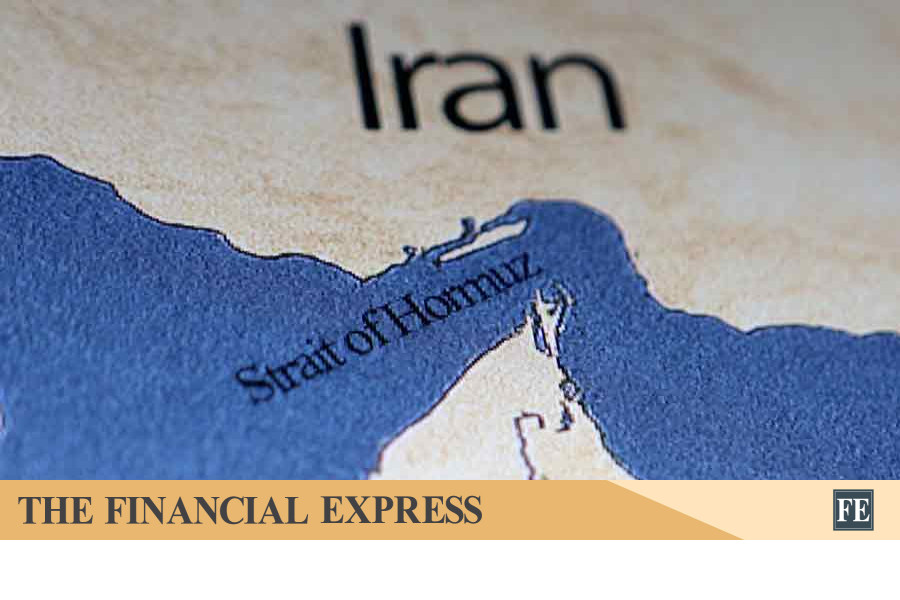
Take a gander at a map of the Middle East. A narrow body of water between Oman and Iran named the Strait of Hormuz. At its narrowest point, it is just 21 miles across. But this 21-mile gap is the largest energy nerve center on the planet. About 20 per cent to 30 per cent of the world’s sea-borne oil, and a quarter of its liquefied natural gas (LNG), passes through here.
For years, we heard nothing but ‘threats’ to close the strait. But amid the new, heightened tensions of an Iran-Israel war, the world witnessed it come to life in a terrifying way. As the conflict reached its zenith Iran committed the unimaginable — they closed down the strait. It wasn’t just a ban, but they actually fired drones and missiles at commercial ships attempting to get through.
The result? Overnight, 80 per cent of oil tanker traffic stopped dead. Insurance companies ripped up their policies for ships in the area. This sudden collapse in fuel supply pushed global oil prices dangerously close to $200 a barrel. The shockwaves hit everywhere. Stock markets in rich countries crashed, while developing nations stared down the barrel of severe fuel shortages and historic inflation.
Bab el-Mandeb Straits
In Arabic, ''Bab el-Mandeb'' translates to the ''Gate of Tears''. Ancient sailors gave it this name because of its deadly currents and pirates. A thousand years later, the name suddenly makes perfect sense again. Perched between Yemen and Djibouti, this passage is the leading southern gateway to the Red Sea and the Suez Canal.

Armed men stand on the beach as the Galaxy Leader commercial ship, seized by Yemen’s Houthis , is anchored off the coast of al-Salif, Yemen, on 5 December, 2023 Reuters
Recently, in the wake of the Gaza war, Houthi rebels in Yemen began firing rockets and drones at commercial ships here. What happened next? The world’s largest shipping firms just dropped the route. Now, their ships have to sail all the way around the southern part of the entire continent of Africa (the Cape of Good Hope) in order to get to Europe. That tacks on an extra 3,500 nautical miles and about two weeks’ time to the voyage. As a result, costs for container freight — and prices of everyday goods — are soaring.
Malacca Strait
If you flip through the history books, you’ll see that empires slogged for decades to control the Strait of Malacca, Setāun, an area between Indonesia and Malaysia and Singapore. The answer is simple: whoever controls the key to the waterway linking the Indian Ocean to the Pacific Ocean controls Asian trade.

The tanker ‘Liberta’, carrying 62,000 tonnes of LNG from Qatar’s Ras Laffan, was scheduled to sail towards Chittagong. However, with the closure of the Strait of Hormuz by Iran, the vessel is now stranded in the Persian Gulf. Collected
Today, this strait is home to 25 per cent of global trade. For a superpower of China’s magnitude, this is a huge strategic headache, termed as the ‘Malacca Dilemma’. It is how around 80 per cent of China’s imported fuel comes in. It is also the major artery for shipping raw materials to factories in Japan and South Korea, and getting their cars and electronics to the rest of the world. If this strait is ever blocked, the wheels of China’s manufacturing industry will literally grind to a halt.
Panama Canal
Chokepoints don’t shut down only because of war or politics. Nature plays a part, too. Consider the Panama Canal in Central America. Linking the Atlantic and Pacific Oceans, it is an engineering marvel of mankind.
But in recent years, climate change brought a drought to Gatun Lake, the canal’s primary water source. As water levels receded, agencies were required to limit the number of ships sailing through and compel them to bear less weight. Ships waited for weeks to pass on either side of the canal. This little mood swing from Mother Nature was costing the US supply chain millions.

Cargo ships navigate Panama Canal during organized media tour on the outskirts of Colon city. Reuters file photo
Bosphorus Strait
The Bosporus Strait connects the Black Sea with the Mediterranean in Turkey. Russia and Ukraine are among the world’s largest exporters of wheat, corn and sunflower oil. Their plants can only reach the world market through the Bosphorus. When the war between Russia and Ukraine cut off this route, it drove many countries in Africa and the Middle East straight to the brink of famine. It showed that even our most basic human right — food — is completely reliant on a narrow body of water.
How does this strike Bangladesh?
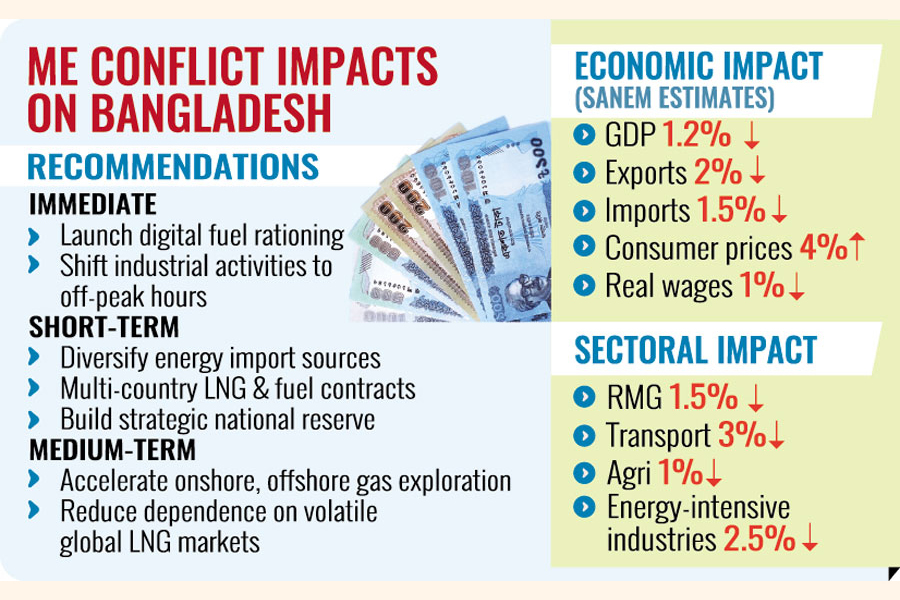
When a crisis erupts in these straits thousands of miles away, the shockwaves hit the factories in Gazipur and the corporate offices in Motijheel almost instantly. Bangladesh is an importing country, and lives through exports. The readymade garment (RMG) sector which is our economic lifeline is completely at the mercy of these chokepoints. Cotton and our factories’ yarn flow via the Malacca Strait. Our finished garments also go to Europe and America through the Suez or Panama Canals. On top of that the LNG and oil for the country to keep running also comes right on through the Strait of Hormuz.
The new Iran-Israel engagement in Hormuz is flying a pretty big red flag for us. With oil prices seeming to approach $200 a barrel, purchasing fuel on the spot market is not feasible. That directly interrupts our power generation, which in turn slows factory production. At the same time, with ships avoiding the Red Sea, it now requires 15 to 20 additional days for goods to reach Europe, and shipping costs have skyrocketed. Foreign buyers threaten to cancel orders; within the country, the cost of daily goods imported from abroad soars and crushes the commoner. Or, metaphorically speaking, when global chokepoints sneeze, an economy like Bangladesh gets pneumonia!
History teaches that who dominates at sea, owns the world. Ideally at its peak of globalisation, it taught us that we are still prisoners of geography and nature. If a stuck ship, one fired missile, or a dearth of rain can ice up international trade, that says something about how fragile our supply chains really are.
Countries also must wake up and prepare long-term alternatives. No longer can we depend on single routes. We must develop alternative shipping corridors, cross-border rail networks and robust emergency reserves. Global chokepoints are a reminder: the world is one thread, and that thread can fray at any moment.
* Md Shihab Uddin is an independent researcher and a student of Folklore and Social Development Studies at the University of Rajshahi.
Shihab Uddin
Published: 31 Mar 2026, 17: 17
An oil tanker crosses the Strait of Hormuz File photo
On 23 March 2021, a sandstorm was tearing through the Suez Canal. Visibility was almost zero. At that moment, one of modern shipping’s worst disasters occurred. The ''Ever Given'', a massive container vessel—400 meters long and weighing over 200,000 tons—lost control and got wedged completely sideways. In fact, the ship was longer than the canal was wide. The busiest shipping lane between Asia and Europe ground to a halt in seconds.
Hundreds of vessels piled up on both sides. They were carrying everything from oil and gas to electronics and live animals. The math was terrifying: the blockage was costing global trade about $400 million every single hour. It took six days to free the ship. But by then, the world woke up to a harsh truth. Our modern tech, satellite navigation, and trillion-dollar trade all hang by a thread. They depend on just a few narrow, rocky, and sandy waterways. Geopolitics calls them ''chokepoints''.
The ocean is vast, which makes it easy to forget that 80 per cent of international trade relies on just a handful of narrow straits. They are the arteries of the global economy. If any of these arteries get blocked, a global economic heart attack is just a matter of time.
Hormuz Strait
Take a gander at a map of the Middle East. A narrow body of water between Oman and Iran named the Strait of Hormuz. At its narrowest point, it is just 21 miles across. But this 21-mile gap is the largest energy nerve center on the planet. About 20 per cent to 30 per cent of the world’s sea-borne oil, and a quarter of its liquefied natural gas (LNG), passes through here.
For years, we heard nothing but ‘threats’ to close the strait. But amid the new, heightened tensions of an Iran-Israel war, the world witnessed it come to life in a terrifying way. As the conflict reached its zenith Iran committed the unimaginable — they closed down the strait. It wasn’t just a ban, but they actually fired drones and missiles at commercial ships attempting to get through.
The result? Overnight, 80 per cent of oil tanker traffic stopped dead. Insurance companies ripped up their policies for ships in the area. This sudden collapse in fuel supply pushed global oil prices dangerously close to $200 a barrel. The shockwaves hit everywhere. Stock markets in rich countries crashed, while developing nations stared down the barrel of severe fuel shortages and historic inflation.
Bab el-Mandeb Straits
In Arabic, ''Bab el-Mandeb'' translates to the ''Gate of Tears''. Ancient sailors gave it this name because of its deadly currents and pirates. A thousand years later, the name suddenly makes perfect sense again. Perched between Yemen and Djibouti, this passage is the leading southern gateway to the Red Sea and the Suez Canal.
Armed men stand on the beach as the Galaxy Leader commercial ship, seized by Yemen’s Houthis , is anchored off the coast of al-Salif, Yemen, on 5 December, 2023 Reuters
Recently, in the wake of the Gaza war, Houthi rebels in Yemen began firing rockets and drones at commercial ships here. What happened next? The world’s largest shipping firms just dropped the route. Now, their ships have to sail all the way around the southern part of the entire continent of Africa (the Cape of Good Hope) in order to get to Europe. That tacks on an extra 3,500 nautical miles and about two weeks’ time to the voyage. As a result, costs for container freight — and prices of everyday goods — are soaring.
Malacca Strait
If you flip through the history books, you’ll see that empires slogged for decades to control the Strait of Malacca, Setāun, an area between Indonesia and Malaysia and Singapore. The answer is simple: whoever controls the key to the waterway linking the Indian Ocean to the Pacific Ocean controls Asian trade.
The tanker ‘Liberta’, carrying 62,000 tonnes of LNG from Qatar’s Ras Laffan, was scheduled to sail towards Chittagong. However, with the closure of the Strait of Hormuz by Iran, the vessel is now stranded in the Persian Gulf. Collected
Today, this strait is home to 25 per cent of global trade. For a superpower of China’s magnitude, this is a huge strategic headache, termed as the ‘Malacca Dilemma’. It is how around 80 per cent of China’s imported fuel comes in. It is also the major artery for shipping raw materials to factories in Japan and South Korea, and getting their cars and electronics to the rest of the world. If this strait is ever blocked, the wheels of China’s manufacturing industry will literally grind to a halt.
Panama Canal
Chokepoints don’t shut down only because of war or politics. Nature plays a part, too. Consider the Panama Canal in Central America. Linking the Atlantic and Pacific Oceans, it is an engineering marvel of mankind.
But in recent years, climate change brought a drought to Gatun Lake, the canal’s primary water source. As water levels receded, agencies were required to limit the number of ships sailing through and compel them to bear less weight. Ships waited for weeks to pass on either side of the canal. This little mood swing from Mother Nature was costing the US supply chain millions.
Cargo ships navigate Panama Canal during organized media tour on the outskirts of Colon city. Reuters file photo
Bosphorus Strait
The Bosporus Strait connects the Black Sea with the Mediterranean in Turkey. Russia and Ukraine are among the world’s largest exporters of wheat, corn and sunflower oil. Their plants can only reach the world market through the Bosphorus. When the war between Russia and Ukraine cut off this route, it drove many countries in Africa and the Middle East straight to the brink of famine. It showed that even our most basic human right — food — is completely reliant on a narrow body of water.
How does this strike Bangladesh?
When a crisis erupts in these straits thousands of miles away, the shockwaves hit the factories in Gazipur and the corporate offices in Motijheel almost instantly. Bangladesh is an importing country, and lives through exports. The readymade garment (RMG) sector which is our economic lifeline is completely at the mercy of these chokepoints. Cotton and our factories’ yarn flow via the Malacca Strait. Our finished garments also go to Europe and America through the Suez or Panama Canals. On top of that the LNG and oil for the country to keep running also comes right on through the Strait of Hormuz.
The new Iran-Israel engagement in Hormuz is flying a pretty big red flag for us. With oil prices seeming to approach $200 a barrel, purchasing fuel on the spot market is not feasible. That directly interrupts our power generation, which in turn slows factory production. At the same time, with ships avoiding the Red Sea, it now requires 15 to 20 additional days for goods to reach Europe, and shipping costs have skyrocketed. Foreign buyers threaten to cancel orders; within the country, the cost of daily goods imported from abroad soars and crushes the commoner. Or, metaphorically speaking, when global chokepoints sneeze, an economy like Bangladesh gets pneumonia!
History teaches that who dominates at sea, owns the world. Ideally at its peak of globalisation, it taught us that we are still prisoners of geography and nature. If a stuck ship, one fired missile, or a dearth of rain can ice up international trade, that says something about how fragile our supply chains really are.
Countries also must wake up and prepare long-term alternatives. No longer can we depend on single routes. We must develop alternative shipping corridors, cross-border rail networks and robust emergency reserves. Global chokepoints are a reminder: the world is one thread, and that thread can fray at any moment.
* Md Shihab Uddin is an independent researcher and a student of Folklore and Social Development Studies at the University of Rajshahi.