| Global Defense, OSINT & Geopolitics Wire

[🇧🇩] Iran, US- Israel War: It's Impact On Bangladesh

[🇧🇩] Iran, US- Israel War: It's Impact On Bangladesh
72
3K
More threads by Saif

G Bangladesh Defense

Bangladesh, Oman call for peaceful resolution of conflict in the Gulf

Diplomatic Correspondent
Dhaka
Published: 23 Apr 2026, 21: 33

1776990063403.webp


Bangladesh Foreign Minister Khalilur Rahman held a meeting with Sayyid Badr bin Hamad Al Busaidi, Foreign Minister of Oman, today, Thursday in Muscat. Collected

Bangladesh Foreign Minister Khalilur Rahman held a meeting with Sayyid Badr bin Hamad Al Busaidi, Foreign Minister of Oman, today, Thursday in Muscat.

Both sides called upon the concerned parties to continue to engage in dialogue and diplomacy to find a durable solution of the ongoing conflict in the Gulf, says a press release.

The Bangladesh Minister conveyed the sincere thanks of Prime Minister Tarique Rahman to Sultan Haitham bin Tarik for his important role in bringing the crisis to a peaceful and early end.

Foreign Affairs Adviser to the Prime Minister, Humaiun Kobir, was also present at the meeting.

Foreign Minister Rahman expressed sincere appreciation to the government of Oman for hosting over 700,000 Bangladeshis in Oman.

The Omani Minister lauded the role and contribution of Bangladeshis to Oman's daily life and progress.

The two sides exchanged views on greater bilateral economic and business cooperation, including expanding mutual collaboration in pharmaceuticals, food and agriculture and port logistics.

Bangladesh Foreign Minister extended an invitation to his Omani counterpart to visit Bangladesh at a convenient time.​
 

Middle East crisis hits businesses hard, small entrepreneurs deeply worried

Shovongkor Karmakar
Dhaka
Published: 26 Apr 2026, 18: 16

1777248535894.webp

Zihan Plastic Industries managing director Md Sumun Collected

At Keraniganj’s Zihan Plastic Industries, a factory producing plastic toys and employing around 800 workers, the impact of the Middle East crisis is already severe.

Prices of raw materials used in plastic toy manufacturing have risen sharply in the global market, driven by the turmoil, forcing the company to reduce imports. At the same time, worsening power shortages in the country have led to increased load-shedding in recent months. As a result, the factory’s output has fallen by half, while sales have dropped by 40 to 50 per cent compared with normal times.

Mohammad Sumun, managing director of the company, recently told Prothom Alo that soaring prices of plastic raw materials in the Middle East had compelled the company to cancel several import orders.

He also alleged that syndicates in the local market had also pushed up raw material prices.

“In addition, we are facing six to seven hours of load-shedding day and night. Diesel is also unavailable,” Sumun said. “Wholesale sales have fallen because shops are required to close in the evening. If the war in the Middle East drags on, shutting down the factory may be the only option left.”

Like Suman, small entrepreneurs scattered across the country have, to varying degrees, been grappling with mounting challenges triggered by the Middle East war that broke out after the US and Israel carried out an attack against Iran.

With no certainty yet over a resolution to the Middle East crisis, which has persisted for nearly two months, business owners say they are deeply anxious about the future.

Wholesale sales have fallen because shops are required to close in the evening. If the war in the Middle East drags on, shutting down the factory may be the only option left------Mohammad Suman, managing director of Jihan Plastic Industries.

Conversations with several small entrepreneurs across the country suggest they are broadly facing four major problems: rising raw material prices and supply shortages; production disruptions caused by electricity load-shedding; higher production costs driven by fuel shortages and increased prices; and a collapse in sales following the mandatory closure of shops in the evening.

Entrepreneurs say the crisis has become so acute that meeting wages and other operating costs is increasingly difficult.

After war broke out between Iran and Israel–United States forces on 28 February, the Strait of Hormuz, a vital route for global fuel transport, was effectively shut down. That pushed crude oil prices in the international market above US$100 a barrel.

Faced with supply shortages and soaring prices, the government introduced fuel rationing last month. Since then, motorists have been forced to queue for long periods at filling stations, and many have had to return without fuel.

Compounding the strain, the Energy and Mineral Resources Division raised fuel prices by Tk15 to Tk20 per litre last Saturday night.

Small entrepreneurs under pressure

Handicrafts firm Hat Bakso produces miniature replicas, fridge magnet replicas, frames, paperweights, card holders, desk calendars, lapel pins, coat pins, tie pins, cufflinks, key rings and luggage tags, among other products. Although corporate institutions make up its main customer base, the company also sells to retail customers online.

The war has pushed up the price of resin, the principal raw material used in its replicas, by 20 per cent. Transport costs have also risen due to higher fuel prices.

The reason is that fuel infrastructure in Middle Eastern countries has been damaged by the war. That means the government no longer has the scope to rely only on short-term measures. To ensure affordable energy in the future, dependence on fossil fuels must be reduced and solar power generation expanded-------Khondaker Golam Moazzem, research director at CPD.

Shafat Kadir, chief executive officer of Hat Bakso, told Prothom Alo that the surge in raw material prices had increased production costs.

“As corporate orders account for 65 to 70 per cent of our business, and we have no scope to raise prices on orders already taken, we are incurring losses,” he said. “Online sales have also fallen by 20 to 30 per cent since Pahela Baishakh.”

In Gopalpur, Faridpur, RK Metal manufactures agricultural machinery including onion storage equipment, grass cutters, rice threshers and maize threshers. The firm’s business has been poor for two years, and the Middle East crisis has worsened the situation further. Sales of agricultural machinery have now fallen by half.

Confirming the downturn, RK Metal managing director Paritosh Kumar Malo told Prothom Alo: “Two years ago, 25 to 30 workers were employed at my factory. Now only eight to ten remain. With business shrinking, we have been forced to reduce manpower.”

He further said the war had driven up the prices of raw materials, while electric motors had become significantly more expensive. Many government projects were currently on hold, and farmers, deprived of subsidies, were reluctant to purchase new machinery.

Asked about the broader outlook, Khondaker Golam Moazzem, research director at the Centre for Policy Dialogue (CPD), said that even if the Iran war ended today, it would take more than a year for fuel supplies to return to normal.

“The reason is that fuel infrastructure in Middle Eastern countries has been damaged by the war,” he said. “That means the government no longer has the scope to rely only on short-term measures. To ensure affordable energy in the future, dependence on fossil fuels must be reduced and solar power generation expanded.”​
 

Global shocks put economy at renewed risk: GED

FE REPORT

Published :
May 01, 2026 08:53
Updated :
May 01, 2026 08:53

1777679167164.webp


Rising global energy costs and escalating tensions in the Middle East (ME) are posing renewed risks to Bangladesh's key macroeconomic indicators, including inflation, trade deficit, and exchange rate stability, according to the latest publication of the General Economics Division (GED) of the Planning Commission.

The April issue of the Economic Update and Outlook says the external sector is cushioned by relatively strong foreign exchange reserves and steady remittance inflows, although exports are under pressure from weak global demand and higher energy costs.

The report, released on Thursday, recommends a cautious policy framework to restore macroeconomic stability by addressing the ongoing energy crisis.

Headline inflation eased slightly in March 2026, declining to 8.71 per cent from 9.13 per cent in February, mainly due to a moderation in food prices driven by falling rice costs, it says.

Food inflation dropped to 8.24 per cent, while non-food inflation remained persistently high at 9.09 per cent, indicating continued underlying price pressures.

1777679195736.webp


Despite a little drop in rice prices, inflationary pressures persisted in key food categories, with meat inflation rising sharply and fish and vegetables continuing to contribute significantly due to seasonal supply gaps and higher transportation costs linked to the energy situation.

The report warns that despite the recent easing, inflation remains vulnerable to external shocks, particularly from rising global commodity prices, higher energy import bills, and exchange rate pressures.

Wage growth continues to lag behind inflation, although the gap narrowed marginally in March as inflation declined and wages edged up slightly.

However, real incomes remain under pressure, raising concerns about household purchasing power, according to the publication.

The report says growth remained strong in the banking sector, reflecting improved confidence, while public sector credit growth accelerated sharply, partly due to increased government borrowing to meet rising fiscal needs, including energy-related expenditures.

Private sector credit growth remained subdued.

The report has expressed concern regarding lower revenue mobilisation, saying that collection by the National Board of Revenue (NBR) continued to fall short of targets.

In March, collections reached Tk 335.21 billion against a revised target of Tk 532.90 billion, highlighting persistent weaknesses in revenue mobilisation despite modest improvement over the previous month.

On the external front, foreign exchange reserves showed a strengthening trend in early 2026, remaining at comfortable levels despite some monthly fluctuations.

The report notes that reserves continue to provide a critical buffer against global uncertainties.

Remittance inflows remained robust, recording strong year-on-year growth and playing a key role in supporting the external sector by easing pressure on the balance of payments and boosting reserve accumulation.

However, export performance weakened in recent months, reflecting subdued global demand and rising production costs linked to higher energy prices.

Both readymade garment (RMG) and non-RMG exports showed signs of pressure, indicating broader challenges in the external sector.

Imports indicated resilient domestic demand, although a slight decline in capital machinery imports suggested cautious investment sentiments amid global uncertainties and rising costs.

The exchange rate remained broadly stable in nominal terms against the US dollar, though movements in real effective terms indicated underlying pressures.

The GED recommends adopting a cautious and coordinated policy framework to address the ongoing

energy crisis and restore macroeconomic stability.

It calls for prudent fiscal and monetary management to contain inflationary pressures, alongside careful handling of energy pricing and subsidies to reduce fiscal stress.

The GED also stresses the need to strengthen external sector buffers by sustaining foreign exchange reserves and remittance inflows, while providing targeted support to exports amid weak global demand and rising production costs.

In addition, it underscores the importance of improving efficiency in public expenditure and accelerating development project implementation to support overall economic stability.​
 

Bangladesh's growth story caught in the oil crossfire

Serajul I. Bhuiyan

Published :
May 04, 2026 00:20
Updated :
May 04, 2026 00:20

1777853452265.webp


“Energy is the lifeline of modern society. Without energy, economic systems collapse and development comes to a halt,”—Daniel Yergin.

The essence of energy permeates every facet of economics and societal life worldwide. Countries require reliable, cost-effective energy sources to drive their economies forward and meet basic necessities. However, when geopolitics enters the equation, all this stability comes crashing down, with consequences for those economies at risk. Bangladesh is a case in point. The economy of Bangladesh has achieved significant progress in a short span of time, despite its extreme vulnerability due to reliance on oil imports. Consequently, it is highly vulnerable to external disturbances, underscoring the urgent need to diversify its energy sources.

CONTEXT OF AN INCREASING PROBLEM: In the past few years, Bangladesh has become recognised as a development success story. It has experienced continuous economic growth, thriving exports largely driven by the booming ready-made garment industry, and improving human development indicators. Unfortunately, despite all this prosperity, Bangladesh remains highly vulnerable. Its stability depends heavily on the political situation in the Persian Gulf region, which is known for instability.

THE PROBLEM OF IMPORTED ENERGY: Central to this issue is the large share of energy sources that must be imported into Bangladesh. Oil from countries such as Saudi Arabia, the UAE, and Kuwait is a major source of Bangladesh’s energy. Bangladesh becomes vulnerable because the situation in these countries can become unstable at any moment.

Any conflict or disruption may cause fluctuations in global oil prices, and because Bangladesh lacks large oil deposits, such events will lead to higher energy import costs and, consequently, larger foreign debts.

LESSONS FROM THE PAST: This is not a new challenge for Bangladesh. The country has repeatedly faced the consequences of global energy shocks. However, it can be argued that the 1973 oil shock hit the economy at one of its weakest moments, driving up inflation and rapidly depleting its already scarce foreign exchange reserves. A similar pattern reappeared during the Gulf War and continued through the energy price surges of the 2000s and the post-pandemic period, as external shocks once again translated quickly into domestic economic strain.

Even so, Bangladesh has shown a strong capacity to endure. In fact, there have been improvements in upgrading the energy sector, greater reliance on natural gas, and the adoption of certain policies and subsidy programs. The contributions of foreign nations and institutions, such as the IMF, have helped address such crises.

However, a significant limitation remains: most of these measures have been reactive rather than transformative. Although it has managed to overcome various shocks before, its dependence on energy imports remains high, leaving its core weakness untouched.

INFLATION AND BUDGET PRESSURES: Higher energy prices affect all levels of the economy. Higher fuel prices increase transportation costs, which in turn raise prices for goods and services. This inflationary pressure affects low- and middle-class families most severely, reducing their buying power and increasing social inequality.

The government faces an equally tough task. Fuel subsidies, as well as energy subsidies, offer temporary relief but come at a huge financial cost. The resources that should have been invested in education and healthcare have been diverted to solve emergencies.

IMPACT ON INDUSTRY AND TRADE: The industries of Bangladesh, especially garment manufacturing, which depend on exports, are extremely sensitive to energy prices. The availability of cheap energy will ensure efficient production while helping the nation maintain its competitiveness in international markets.

Furthermore, an energy crisis will result in power cuts and disruptions, causing inefficiencies and harming Bangladesh’s image as a reliable producer, ultimately forcing international clients to seek alternatives.

EFFECT ON EXCHANGE RATE AND FOREIGN BALANCE: Apart from increasing energy costs, high oil prices put the country’s foreign balance under further pressure, as energy imports become costlier and, consequently, demand for foreign exchange grows, weakening the domestic currency. Even though a weak currency helps exports, it also makes imports expensive.

To address the problem, the central bank usually uses its foreign exchange reserves. This process tends to weaken the country’s financial cushions and diminish its capacity to respond to future shocks.

BROADER DEVELOPMENTAL CHALLENGES: Beyond immediate economic indicators, energy shocks pose bigger risks to Bangladesh’s long-term development goals. The construction of infrastructures is likely to be expensive and could experience delays. Other goals, such as industrial diversification and technological development, would be constrained by financial limitations.

Policy-makers are now faced with challenging decisions. Domestic adjustments to fuel prices will achieve fiscal balance but will create public displeasure. On one hand, subsidies keep the system stable but fail to consider future sustainability. In a time of geopolitical uncertainty, making such decisions is tough.

NEED FOR ENERGY DIVERSIFICATION: The situation is evident: Bangladesh requires diversification of its energy sources. Investments in renewable energy sources, such as solar and wind, offer a promising path forward. Expanding liquefied natural gas infrastructure and strengthening regional energy cooperation particularly with neighbors like India and Nepal can further enhance resilience. At the same time, improving energy efficiency and governance will be crucial in optimizing existing resources.

STRATEGIC DIPLOMACY AND GLOBAL POSITIONING: The question of energy security is not only an economic one; rather, it is also a diplomatic one. Bangladesh needs to consider that the Gulf is not the only option; on the contrary, it should make efforts to build new alliances in other parts of the world.

As geopolitical tensions among the world’s leading players influence the energy market, it will become essential for Bangladesh to adjust and respond strategically to safeguard its economic stability.

CONCLUSION: The prevailing uncertainty in the Gulf region is not merely a challenge but a test of Bangladesh’s economic robustness. Although there is much to applaud about its success story, the future of Bangladesh hinges on how well it will survive an age of constant shocks.

Past experience offers both reassurance and warning. Bangladesh has repeatedly demonstrated its capacity to endure crises, yet the recurring nature of energy shocks highlights the need for bigger structural change. Moving from reactive responses to proactive strategies—centred on diversification, fiscal discipline, and strategic engagement will be essential.

In a world defined by uncertainty, resilience must go beyond recovery; it must encompass anticipation and preparedness. For Bangladesh, the challenge and opportunity lies in transforming energy vulnerability into a foundation for sustainable and independent growth.

Dr. Serajul I. Bhuiyan, Professor and Former Chair Department of Journalism and Mass Communications Savannah State University.​
 

State Minister Shama Obaed voices concern, hopes for peace in West Asia

UNB

Published :
May 11, 2026 00:27
Updated :
May 11, 2026 00:27

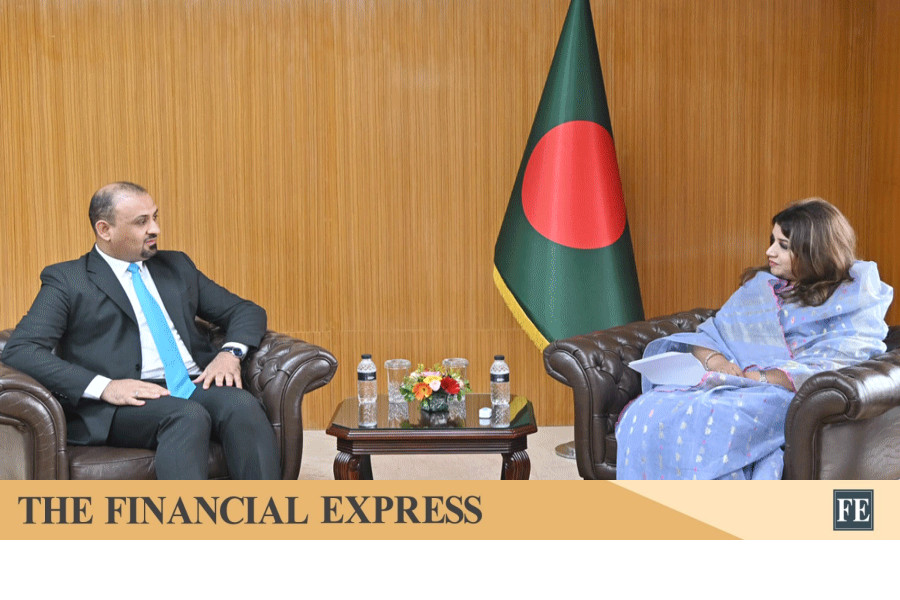
1778464739100.webp


State Minister for Foreign Affairs Shama Obaed Islam on Sunday expressed concern over the ongoing conflict in West Asia/Middle East, and hoped for the early restoration of peace and stability in the region.

She made the remarks when Dr Wisam Hussein Ali Al Ithawi, Chargé d’Affaires of the Embassy of Iraq in Dhaka, paid a courtesy call on her at the Foreign Ministry.

The state minister appreciated the Government of Iraq for hosting Bangladeshi nationals and ensuring their welfare and safety.

She also conveyed appreciation to the Iraqi leadership and government for congratulating the BNP-led government following its victory in the 13th parliamentary election. Shama Obaed recalled with gratitude Iraq’s recognition of Bangladesh in 1972 as the first Arab country to do so.

During the meeting, the two sides discussed bilateral cooperation, manpower, trade and regional issues.

They also explored ways to enhance bilateral trade and economic cooperation in sectors including pharmaceuticals, leather goods, ready-made garments, ceramics and agro-products.

The state minister thanked Iraq for supporting Bangladesh’s candidacy for the presidency of the 81st session of the United Nations General Assembly (UNGA).

Both sides reaffirmed their commitment to further strengthening Bangladesh-Iraq relations and cooperation at bilateral and multilateral forums.​