


 Bangladesh Defense
Saif
Senior Member
- Joined
- Jan 24, 2024
- Messages
- 21,186
- Likes
- 9,688
- Nation

- Residence
- Axis Group


Why Gaza peace deals keep falling apart
Gaza’s repeated peace deals keep faltering because they lack clear mechanisms to verify compliance, resolve disputes and enforce commitments.
Why Gaza peace deals keep falling apart
Adam Farquhar
Donald Trump’s Board of Peace published a 15-point roadmap for Gaza in late July in which Hamas would hand its weapons to a committee of Palestinian technocrats, certified by an international verification body, and Israel would withdraw from the strip in phases. After Israel officially rejected the plan on August 9, US envoy Jared Kushner flew to the Egyptian coast to meet Hamas representatives.
From there, he travelled to Jerusalem where it was proposed the weapons would instead be handed over under the supervision of an American general. This change to the disarmament process is a clear illustration of what has gone wrong with each agreement reached over Gaza since January 2025: none have established, in advance, who certifies compliance.
The University of Edinburgh’s Peace Agreement Database and Dataset recorded four agreements related to the Gaza ceasefire process in 2025. They include a ceasefire agreement in January, a run of ceasefire and related agreements in October and a UN resolution in November.
These agreements addressed things such as the exchange of hostages and prisoners, and created a transitional authority for the Gaza Strip. But they did not build the machinery that decides what counts as a breach, who adjudicates in case of disputes and how the process resumes once a breach has been found.
Series of deals
The January 2025 deal contained the most detailed provisions of the four agreements. Its published text named the number of hostages and prisoners for exchange, the corridors through which Israeli troops would leave Gaza and the sequence in which displaced families could return home. What it did not do is say what holding the parties to it would involve.
The guarantors – the US, Egypt and Qatar – were asked only to work towards continued negotiation. A follow-up mechanism was announced by Qatar’s prime minister, Sheikh Mohammed bin Abdulrahman bin Jassim al-Thani, alongside the deal rather than written into it. Guarantors were given the ability to log issues, but not enforce the agreement.
This gap showed when the first phase of the deal ended on March 1 with the second phase in limbo and, on March 18, Israel resumed its bombing campaign.
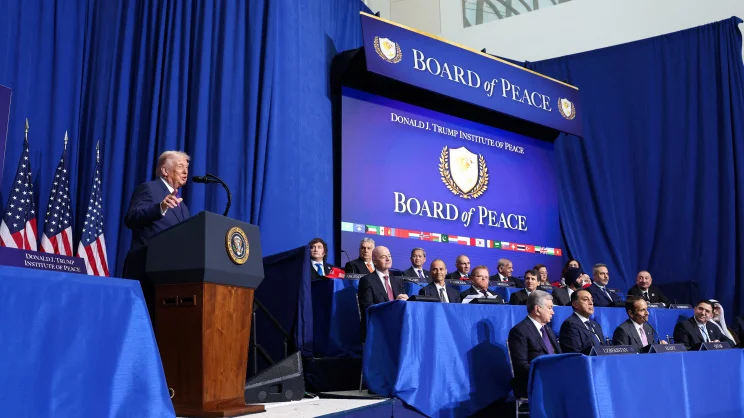
US President Donald Trump speaks at the inaugural Board of Peace meeting at the US Institute of Peace in Washington, DC, US, 19 February 2026. Photo: REUTERS
The two October 2025 agreements sought to get the process back on track under renegotiated terms. The October 10 agreement looked to address the lack of an enforcement mechanism in the January deal.
A centre run from Israel by US Central Command, the arm of the American military responsible for the Middle East, was created to coordinate aid and monitor the ceasefire. But little changed after two months. Aid workers and UN staff complained of continued aid restrictions and a lack of discussion over who would govern and secure Gaza.
The so-called Trump Declaration for Enduring Peace and Prosperity was signed on October 13 by the leaders of the US, Egypt, Qatar and Turkey. This agreement committed signatories to a broad set of principles around religious tolerance, human rights, security and dialogue across the region.
Neither Israel nor Hamas signed it. That is not unusual as guarantors often sign what warring parties will not. But four governments cannot promise tolerance and human rights on behalf of two parties that did not sign, and nothing in the text says what they will do to make them.
The UN’s November resolution was the most institutionally significant agreement. It officially endorsed Trump’s Gaza peace plan, called the Comprehensive Plan to End the Gaza Conflict, and established the Board of Peace as the head of a new transitional body overseeing political transition in Gaza.
It said nothing about who sits on the body, including women, who appear in the agreement only in relation to prisoners and hostages.
The resolution did, however, build the machinery for the economic reconstruction of Gaza. It also included a provision around the “self-determination and statehood” of the Palestinian people. But the resolution carries the same defect as the ceasefires.
Under the UN resolution, statehood becomes possible once reform of the Palestinian Authority, which was created in 1994 as an interim administration for Gaza and the West Bank, is “faithfully carried out” and redevelopment in Gaza “has advanced”. Nobody was appointed to judge when either has happened.
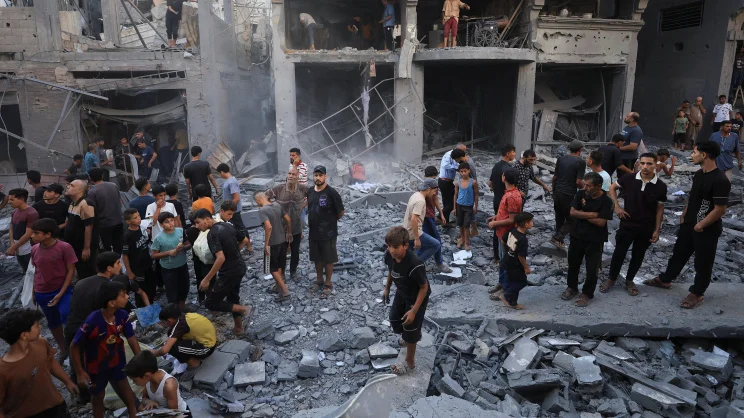
Palestinians inspect the site of an Israeli strike on a house at al-Shati (Beach) refugee camp in Gaza City, 24 August 2026. Photo: REUTERS
This brings us back to the 15-point roadmap, which was an attempt to address some of the lack of detail in previous agreements. The plan contains an international verification committee that would certify that both parties have completed each phase before the next one begins.
However, the phased withdrawal of Israeli troops the roadmap had promised has now been reversed. On August 17, the Board of Peace assured the Israeli prime minister, Benjamin Netanyahu, that Israeli forces would not move out of Gaza until disarmament of Hamas was complete. Verification of this disarmament has also shifted from a multilateral committee to an American general.
Any workable version of this agreement needs an arbiter both sides can live with, agreed before the steps begin, with a stated procedure for breaches. It needs the regional guarantors who made these deals possible in the first place to be inside that mechanism.
And beyond this, there needs to be a governing arrangement that Palestinians in Gaza have some say in and that provides them with a political horizon to aim for and some means of addressing the trauma of war. Without this, even if the disarmament row is settled, the same absence will produce the same deadlock.
This article was first published under the title “Why Gaza peace deals keep unravelling" in The Conversation on August 20, 2026.
Adam Farquhar is a Research Associate in the School of Law at the University of Edinburgh.
Adam Farquhar
Donald Trump’s Board of Peace published a 15-point roadmap for Gaza in late July in which Hamas would hand its weapons to a committee of Palestinian technocrats, certified by an international verification body, and Israel would withdraw from the strip in phases. After Israel officially rejected the plan on August 9, US envoy Jared Kushner flew to the Egyptian coast to meet Hamas representatives.
From there, he travelled to Jerusalem where it was proposed the weapons would instead be handed over under the supervision of an American general. This change to the disarmament process is a clear illustration of what has gone wrong with each agreement reached over Gaza since January 2025: none have established, in advance, who certifies compliance.
The University of Edinburgh’s Peace Agreement Database and Dataset recorded four agreements related to the Gaza ceasefire process in 2025. They include a ceasefire agreement in January, a run of ceasefire and related agreements in October and a UN resolution in November.
These agreements addressed things such as the exchange of hostages and prisoners, and created a transitional authority for the Gaza Strip. But they did not build the machinery that decides what counts as a breach, who adjudicates in case of disputes and how the process resumes once a breach has been found.
Series of deals
The January 2025 deal contained the most detailed provisions of the four agreements. Its published text named the number of hostages and prisoners for exchange, the corridors through which Israeli troops would leave Gaza and the sequence in which displaced families could return home. What it did not do is say what holding the parties to it would involve.
The guarantors – the US, Egypt and Qatar – were asked only to work towards continued negotiation. A follow-up mechanism was announced by Qatar’s prime minister, Sheikh Mohammed bin Abdulrahman bin Jassim al-Thani, alongside the deal rather than written into it. Guarantors were given the ability to log issues, but not enforce the agreement.
This gap showed when the first phase of the deal ended on March 1 with the second phase in limbo and, on March 18, Israel resumed its bombing campaign.
US President Donald Trump speaks at the inaugural Board of Peace meeting at the US Institute of Peace in Washington, DC, US, 19 February 2026. Photo: REUTERS
The two October 2025 agreements sought to get the process back on track under renegotiated terms. The October 10 agreement looked to address the lack of an enforcement mechanism in the January deal.
A centre run from Israel by US Central Command, the arm of the American military responsible for the Middle East, was created to coordinate aid and monitor the ceasefire. But little changed after two months. Aid workers and UN staff complained of continued aid restrictions and a lack of discussion over who would govern and secure Gaza.
The so-called Trump Declaration for Enduring Peace and Prosperity was signed on October 13 by the leaders of the US, Egypt, Qatar and Turkey. This agreement committed signatories to a broad set of principles around religious tolerance, human rights, security and dialogue across the region.
Neither Israel nor Hamas signed it. That is not unusual as guarantors often sign what warring parties will not. But four governments cannot promise tolerance and human rights on behalf of two parties that did not sign, and nothing in the text says what they will do to make them.
The UN’s November resolution was the most institutionally significant agreement. It officially endorsed Trump’s Gaza peace plan, called the Comprehensive Plan to End the Gaza Conflict, and established the Board of Peace as the head of a new transitional body overseeing political transition in Gaza.
It said nothing about who sits on the body, including women, who appear in the agreement only in relation to prisoners and hostages.
The resolution did, however, build the machinery for the economic reconstruction of Gaza. It also included a provision around the “self-determination and statehood” of the Palestinian people. But the resolution carries the same defect as the ceasefires.
Under the UN resolution, statehood becomes possible once reform of the Palestinian Authority, which was created in 1994 as an interim administration for Gaza and the West Bank, is “faithfully carried out” and redevelopment in Gaza “has advanced”. Nobody was appointed to judge when either has happened.
Palestinians inspect the site of an Israeli strike on a house at al-Shati (Beach) refugee camp in Gaza City, 24 August 2026. Photo: REUTERS
This brings us back to the 15-point roadmap, which was an attempt to address some of the lack of detail in previous agreements. The plan contains an international verification committee that would certify that both parties have completed each phase before the next one begins.
However, the phased withdrawal of Israeli troops the roadmap had promised has now been reversed. On August 17, the Board of Peace assured the Israeli prime minister, Benjamin Netanyahu, that Israeli forces would not move out of Gaza until disarmament of Hamas was complete. Verification of this disarmament has also shifted from a multilateral committee to an American general.
Any workable version of this agreement needs an arbiter both sides can live with, agreed before the steps begin, with a stated procedure for breaches. It needs the regional guarantors who made these deals possible in the first place to be inside that mechanism.
And beyond this, there needs to be a governing arrangement that Palestinians in Gaza have some say in and that provides them with a political horizon to aim for and some means of addressing the trauma of war. Without this, even if the disarmament row is settled, the same absence will produce the same deadlock.
This article was first published under the title “Why Gaza peace deals keep unravelling" in The Conversation on August 20, 2026.
Adam Farquhar is a Research Associate in the School of Law at the University of Edinburgh.


