Israeli Defense

Saif
Senior Member
- Joined
- Jan 24, 2024
- Messages
- 22,387
- Likes
- 9,875
- Nation

- Axis Group

Eisenkot rejects Netanyahu calls for unity govt
Agence France-Presse . Jerusalem
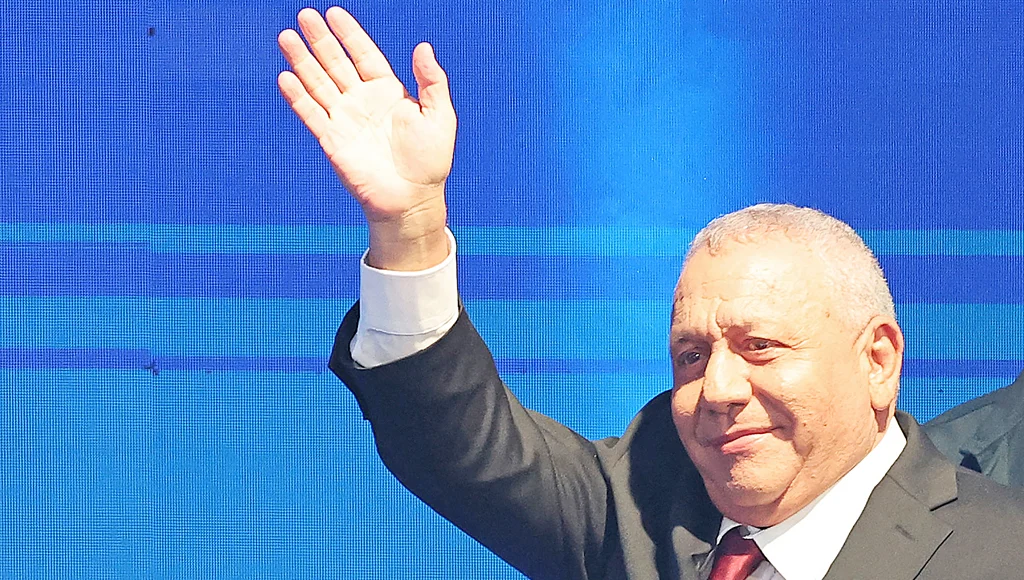
Gadi Eisenkot. | File photo
Israel’s caretaker prime minister Benjamin Netanyahu on Saturday reiterated his calls for a national unity government with his opponent Gadi Eisenkot, who in turn dismissed the appeal as a ruse.
The latest exchange comes as Eisenkot is in the midst of negotiations to form a government, after he was tapped for the post of premier on Sunday.
A meeting with Eisenkot on Thursday ‘only strengthened the conviction that it is essential to form a national unity government’ to guarantee Israel’s security, Netanyahu said in a video statement, adding that such a government could ‘eliminate the Iranian threat once and for all’.
He said this government would be made up of parties that recognise Israel ‘as a state for the Jewish people’.
It would address security challenges, he added, most notably Iran which he claimed would ‘not hesitate to use nuclear weapons against us’.
The outgoing prime minister warned against Eisenkot’s plan to form a minority government, presented as a ‘national emergency government’.
Such a plan would see the 48 lawmakers in Eisenkot’s bloc vote in favour of his government, against the 46 Netanyahu backers. The 26 other members of parliament, from Arab and ultra-Orthodox parties, could abstain, allowing the government to be approved without an absolute majority in the Knesset, which has 120 seats.
‘Instead of trying to form a weak and dangerous government... let’s meet in one room, without preconditions, put aside all our disagreements and all the boycotts, and reach agreements for the security and the future of the state,’ Netanyahu urged.
Minutes later, Eisenkot responded by saying Netanyahu ‘knows he lost the election’, accusing him of playing ‘tricks’ by appealing for a unity government.
‘Netanyahu is calling for negotiations while they are already underway; he claims to want unity but sows division and stokes tensions as if there were no tomorrow,’ the former army chief said, adding that ‘these tricks don’t work on me’.
Eisenkot was tapped on Sunday to form a new government within 28 days, with a possible 14-day extension.
Negotiations are expected to be difficult, especially as Netanyahu has waged a campaign to discredit Arab-Israeli parties, which gained a record number of seats in the election.
Netanyahu’s proposed unity government would be made up of key Jewish parties ranging from the centre to the right, while excluding the Arab parties.
Eisenkot has indicated he would be open to forming a government with members of Netanyahu’s Likud party, as well as outgoing Finance Minister Bezalel Smotrich’s Religious Zionism, provided their commitment to unity is ‘sincere’.
But a unity government with Netanyahu himself remains unlikely, particularly after Eisenkot denounced his ‘racist’ campaign against Arab parties on Friday.
Eisenkot on Saturday reiterated his calls for a ‘break with the extremists’, notably supporters of far-right minister Itamar Ben Gvir, as a condition for any participation in a government under his leadership.
Another point of contention is the election on Tuesday of the speaker of the Knesset, a post currently held by Amir Ohana, a close Netanyahu ally. The opposition has put forward Matan Kahana, a former officer in the Israeli army who was fifth on Gadi Eisenkot’s list, to replace him.
‘If they (Likud and its allies) are truly seeking a sincere political partnership, as they claim, they must allow the democratic process to unfold normally... and instruct their members of parliament to support the appointment of Matan Kahana,’ Eisenkot said.
Agence France-Presse . Jerusalem
Gadi Eisenkot. | File photo
Israel’s caretaker prime minister Benjamin Netanyahu on Saturday reiterated his calls for a national unity government with his opponent Gadi Eisenkot, who in turn dismissed the appeal as a ruse.
The latest exchange comes as Eisenkot is in the midst of negotiations to form a government, after he was tapped for the post of premier on Sunday.
A meeting with Eisenkot on Thursday ‘only strengthened the conviction that it is essential to form a national unity government’ to guarantee Israel’s security, Netanyahu said in a video statement, adding that such a government could ‘eliminate the Iranian threat once and for all’.
He said this government would be made up of parties that recognise Israel ‘as a state for the Jewish people’.
It would address security challenges, he added, most notably Iran which he claimed would ‘not hesitate to use nuclear weapons against us’.
The outgoing prime minister warned against Eisenkot’s plan to form a minority government, presented as a ‘national emergency government’.
Such a plan would see the 48 lawmakers in Eisenkot’s bloc vote in favour of his government, against the 46 Netanyahu backers. The 26 other members of parliament, from Arab and ultra-Orthodox parties, could abstain, allowing the government to be approved without an absolute majority in the Knesset, which has 120 seats.
‘Instead of trying to form a weak and dangerous government... let’s meet in one room, without preconditions, put aside all our disagreements and all the boycotts, and reach agreements for the security and the future of the state,’ Netanyahu urged.
Minutes later, Eisenkot responded by saying Netanyahu ‘knows he lost the election’, accusing him of playing ‘tricks’ by appealing for a unity government.
‘Netanyahu is calling for negotiations while they are already underway; he claims to want unity but sows division and stokes tensions as if there were no tomorrow,’ the former army chief said, adding that ‘these tricks don’t work on me’.
Eisenkot was tapped on Sunday to form a new government within 28 days, with a possible 14-day extension.
Negotiations are expected to be difficult, especially as Netanyahu has waged a campaign to discredit Arab-Israeli parties, which gained a record number of seats in the election.
Netanyahu’s proposed unity government would be made up of key Jewish parties ranging from the centre to the right, while excluding the Arab parties.
Eisenkot has indicated he would be open to forming a government with members of Netanyahu’s Likud party, as well as outgoing Finance Minister Bezalel Smotrich’s Religious Zionism, provided their commitment to unity is ‘sincere’.
But a unity government with Netanyahu himself remains unlikely, particularly after Eisenkot denounced his ‘racist’ campaign against Arab parties on Friday.
Eisenkot on Saturday reiterated his calls for a ‘break with the extremists’, notably supporters of far-right minister Itamar Ben Gvir, as a condition for any participation in a government under his leadership.
Another point of contention is the election on Tuesday of the speaker of the Knesset, a post currently held by Amir Ohana, a close Netanyahu ally. The opposition has put forward Matan Kahana, a former officer in the Israeli army who was fifth on Gadi Eisenkot’s list, to replace him.
‘If they (Likud and its allies) are truly seeking a sincere political partnership, as they claim, they must allow the democratic process to unfold normally... and instruct their members of parliament to support the appointment of Matan Kahana,’ Eisenkot said.