| Global Defense, OSINT & Geopolitics Wire

[🇮🇱] Israel News/Views

[🇮🇱] Israel News/Views
21
452
More threads by Saif

G  Israeli Defense

Israeli president picks Gadi Eisenkot, Netanyahu rival, to try to form govt

Reuters
1794097229600.webp

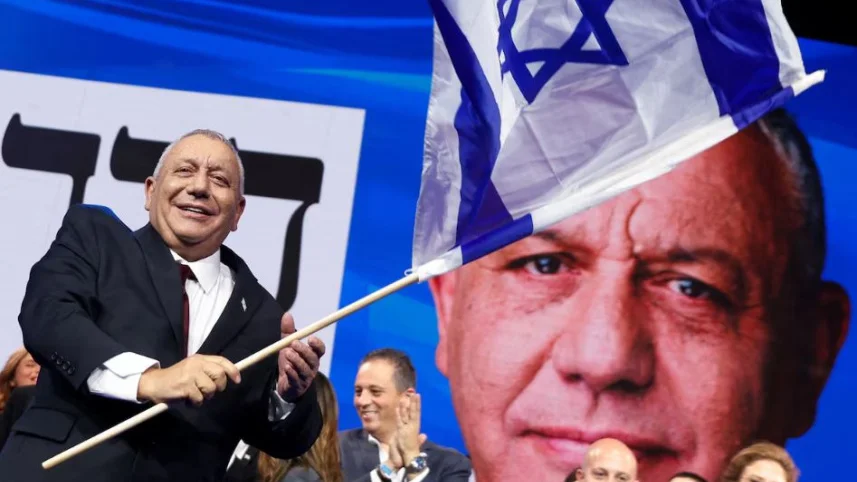
Former military chief Gadi Eisenkot, leader of the Yashar party, waves an Israeli flag following the exit polls at his party headquarters, on the evening of Israel's national election, in Tel Aviv, Israel October 28, 2026. Photo: REUTERS

Israel's president on Saturday chose Gadi Eisenkot, Prime Minister Benjamin Netanyahu's strongest rival, to try to form a new government following a deadlocked election that left neither man with a clear path to power.

Netanyahu, Israel's longest-serving leader, is fighting to stay in office after his religious-nationalist coalition lost its majority in an October 27 election but still emerged as the largest bloc in parliament.

Eisenkot, a former military chief, has declined to join forces with Arab parties, with whose support he would have a majority of seats in parliament. But Arab leaders, incensed by what they view as the racist policies of Netanyahu and his far-right allies, still nominated Eisenkot to try to form a government first — giving him the most endorsements.

"President Herzog has invited Gadi Eisenkot to the President’s Residence, where he will be tasked with forming the government tomorrow," said the spokesperson of President Isaac Herzog, whose largely ceremonial role involves nominating a candidate to form a coalition after elections.

EISENKOT FACES LONG-SHOT BID TO FORM GOVERNMENT

Weeks of protracted negotiations are expected to follow Eisenkot's nomination. He has 28 days to try to forge a government, with a possible 14-day extension.

His potential pathways to power include trying to form a minority government with Arab support from the outside; forming a coalition with ultra-Orthodox parties that he and his allies have shunned in the past; or forging a unity government with Netanyahu.

Analysts say that all three options are unlikely to take shape. If Eisenkot fails, another candidate can try to form a government and if that candidate fails, parliament can nominate another. There is a deadline for the process of around 100 days. If no one succeeds, another election is held.

Likud won the most seats of any single party with 27 in the 120-seat Knesset, but Netanyahu's wider religious-nationalist coalition garnered only 53 in total, short of a 61-seat majority.

Eisenkot's Yashar party emerged as the second-largest party with 21 seats, while his coalition, spanning four centre-left to right-wing Jewish-led parties, won just 48 seats. Two parties representing Israel's Arab minority won an unprecedented 19 seats.

EISENKOT CRITICAL OF SETTLER VIOLENCE

A son of Moroccan immigrants, Eisenkot, 66, would be the country's first prime minister from Israel's Mizrahi community, Jews who trace their roots to the Middle East and North Africa.

Reserved and media-shy, Eisenkot only entered politics in 2022. He briefly served in Netanyahu's wartime cabinet following Hamas' October 7, 2023, attack on Israel before returning to the opposition.

From opposition, he publicly rebuked Netanyahu over his leadership, including his management of the military campaign in Gaza, and has sworn that he would not serve in government with him.

Eisenkot's public standing is also bound up with the personal price his family has paid since 2023: a son and two nephews were killed fighting in Gaza.

Eisenkot highlighted his security credentials on the campaign trail, citing his "Dahiyeh doctrine" of responding to attacks with disproportionate force, which he deployed as a commander during Israel's 2006 war with Iran-backed Hezbollah in Lebanon.

Eisenkot has criticised settler violence against Palestinians, which has surged since 2023, raising tensions in Israel’s ties with Western states, and he opposes Netanyahu's far-right coalition partners Itamar Ben-Gvir and Bezalel Smotrich, who have both faced sanctions by some Western countries for inciting violence against Palestinians.​
 

Israel president taps Netanyahu rival Eisenkot to form new government

AFP
Jerusalem

1794181067411.webp

Former military chief Gadi Eisenkot, leader of the Yashar party, waves an Israeli flag following the exit polls at his party headquarters, on the evening of Israel's national election, in Tel Aviv, Israel 28 October, 2026. REUTERS

Israel's president announced on Saturday he would task Gadi Eisenkot with forming the next government following last week's election, in what Netanyahu's rivals see as a first step to remove the country's longest-serving prime minister.

The opposition bloc led by Eisenkot, a former military chief and political newcomer who has tried to appeal to secular and liberal Israelis, has opened the door to a once improbable alliance with ultra-Orthodox Jews, which could give it the numbers to form a coalition.

President Isaac Herzog said that after consultations with all parties during the week, he would grant Eisenkot the first chance to form a government after the 27 October election, in which neither side secured a majority in a country deeply polarised by Netanyahu's hard-right rule and worn down by three years of war.

The formal appointment would take place in an official ceremony on Sunday at the president's residence in Jerusalem, Herzog's office said.

Eisenkot, who later pledged to "do everything" to form a new government, was recommended by parties representing 67 lawmakers as opposed to 46 for Netanyahu's bloc.

But the recommendations for Eisenkot included members of Israel's Arab minority -- whose seat haul soared in the election on the back of anger against Netanyahu -- and right-leaning segments of the opposition that are against relying on Arab votes.

Unity government
Herzog, originally from Israel's now defunct left-wing Labour Party but who has a non-partisan role and has forged a working relationship with Netanyahu, has signalled that he would like to explore a national unity government that would seek to bring together Jewish Israelis from across the political spectrum.

Pressure for a unity government could build if Netanyahu follows through on threats to resume war on Iran, although US President Donald Trump has not given the green light.

1794181115499.webp

Iranians take pictures of a burning anti-US and anti-Israel billboard depicting US special envoy Steve Witkoff, US President Donald Trump, Israel's Prime Minister Benjamin Netanyahu and US Vice President JD Vance during a rally in Tehran's Enqelab Square on 4 November, 2026. Tehran taunted the US president over his midterms defeat on 4 November as the US leader admitted the war against Iran was the key factor in his stinging electoral rebuke. AFP

Netanyahu, who has led Israel on and off for nearly two decades and guided its sharply rightward turn in recent years, faces corruption charges and potentially jail if he leaves office. He also faces an arrest warrant over the Gaza war from the International Criminal Court, whose authority he rejects.

Netanyahu has already called for a unity government but the opposition has stood firm on removing him first.

He has attacked opposition leaders for even considering working with Israeli Arabs, descendants of Palestinians who stayed after the creation of Israel in 1948.

The incumbent premier said on Saturday that a potential coalition between opposition parties and Arab lists, which he called Islamists, would "dismantle the State of Israel from within" and urged the formation of a unity government comprising "all the Zionist parties that want to safeguard our state."

In response, Eisenkot's Yashar party urged Netanyahu's allies and members of his Likud party to form a unity government led by Eisenkot and to "publicly announce the dissolution of their alliance with the extremists".

"Now is the time to form a national emergency government," Eisenkot wrote on X in his first reaction to the announcement of his designation. "I will do everything to ensure we are worthy."

Opposition bloc member Avigdor Liberman, a former Netanyahu aide turned fierce critic who nonetheless shares his hawkish views on the Palestinians, has made clear that he will not sit with Eisenkot if he relies on Israeli-Arab votes.

But on Friday, Liberman -- a staunch secularist whose support base initially was Russian-speaking immigrants -- made a U-turn on another group he had shunned and said he was open to discussions on a law that would enshrine an exemption for ultra-Orthodox Jews from mandatory military service.
​

1794181156083.webp

A combination picture shows Israeli Prime Minister Benjamin Netanyahu as he attends a memorial service held for Ran Gvili, an off-duty police officer who was killed fighting militants that had infiltrated Israel during the deadly 7 October, 2023, attack by Hamas, and the last hostage recovered from Gaza, in Meitar, Israel, 28 January, 2026, and Israeli opposition leader and former military chief, Gadi Eisenkot, as he launches an election campaign for Yashar, his new political party, at an event near Hod Hasharon, Israel, 30 June, 2026. REUTERS

Liberman and another opposition leader, Naftali Bennett, had made closing the exemption a core campaign promise and had viscerally criticised ultra-Orthodox Jews as burdens on the state, responding to wide resentment by other Israelis at a time when reservists are serving multiple tours in Gaza and Lebanon.

Eisenkot has proposed requiring national service for all Israelis but allowing citizens to choose a civilian option rather than the military, opening the door to integrating the ultra-Orthodox.

On Friday, Eisenkot said it was urgent to replace Netanyahu, calling him a threat to the "very existence of Israeli democracy".

Following his appointment, Eisenkot will have 28 days to come up with the 61 votes needed for a government. If he comes up short, Herzog can provide a 14-day extension before he has to offer the mandate to someone else.

If neither side succeeds, Israel will head to fresh elections. The country held five elections between 2019 and 2022 due to repeated deadlocks.​
 

Israeli president tasks Eisenkot to form govt

Agence France-Presse . Jerusalem

1794182679438.webp

Gadi Eisenkot. | AFP photo

Israel’s president on Sunday officially tasked opposition leader Gadi Eisenkot with forming a new government, warning that the country faces uncertainties after elections in the United States.

‘The State of Israel needs a stable government,’ President Isaac Herzog said, pointing to the ‘new political reality’ in the United States.

Eisenkot said he was open to Prime Minister Benjamin Netanyahu and one of his far-right allies joining but under him as the new leader.

‘If members of Likud and the Religious Zionist Party truly believe this is a time for unity, as they told the president, I cannot conceive of any reason why they would not support a government under my leadership and the principles I have presented,’ Eisenkot said, referring to Netanyahu’s party and that of the far-right finance minister Bezalel Smotrich.

Eisenkot, 66, born to a family of working-class Moroccan immigrants, would be the first Sephardic prime minister — a descendant of Jews from the Middle East or North Africa — in a country long dominated by an Ashkenazi elite with ties to Europe.

Netanyahu, who has been prime minister on and off for nearly two decades and has led war on Gaza, Lebanon and Iran since the October 7, 2023 attacks, lost support in last month’s election but no side claimed an outright majority.

In consultations last week with Herzog, Eisenkot received recommendations from parties accounting for 67 lawmakers, against 46 for Netanyahu.

But the vote count included Israeli Arabs, whose seat haul surged to a historic high on anger over Netanyahu’s government, which includes far-right firebrands who have openly sought to marginalise the community.

Avigdor Liberman, a former Netanyahu aide turned sharp critic who nonetheless shares his hawkish views, has been adamant against any alliance with Israeli Arabs, descendants of Palestinians who stayed after Israel’s creation in 1948.

Taking back one of his signature campaign pledges, Liberman instead voiced an openness to an alliance with ultra-Orthodox Jews, whose almost singular priority is ensuring that they remain exempt from military service.

The exemption for the ultra-Orthodox — whose two main parties had been aligned with Netanyahu but could push Eisenkot to a majority — has been a source of growing resentment for many Israelis as reservists fight on multiple tours of duty.

Liberman said Sunday he still backed conscription for all Israelis but that he had to make ‘difficult decisions’ for the higher priority of ousting Netanyahu, who faces corruption charges that could land him in jail if he loses power.

But he remained adamant that he would never ally with Israeli Arabs.

‘I will not lend a hand to the establishment of such a government, which in my view will harm security and bring Netanyahu back to power,’ Liberman wrote on X.

Liberman, whose party at seven votes is the smallest within the opposition bloc, denied speculation he was trying to engineer a deadlock that could result in him becoming prime minister.

Born in Moldova and with a party base originally from Russian-speaking immigrants, Liberman said that commentators’ views on his motives had ‘sometimes a distinctly racist tone’.

Naftali Bennett, the second strongest opposition leader after Liberman, has also been outspoken against the ultra-Orthodox community’s military exemption and has stayed quiet since Liberman’s about-face.

Eisenkot has called for a ‘national emergency’ government that would remove Netanyahu, calling him ‘a fundamental threat to the very existence of Israeli democracy’.

He has ruled out a unity government with Netanyahu, who has repeatedly called for a broad coalition with himself at the top.

Eisenkot appears to be suggesting that he is willing to start off with a minority government — relying on outside votes from Israeli-Arab parties — while still working to find a stable government with majority support.

Assaf Shapira, a political expert at the Israel Democracy Institute, said that Eisenkot would face an especially fragile government if it only has 48 lawmakers, even if others promise to keep it in power.

‘To pass laws, you need strong support from other parties,’ Shapira said, explaining that an Eisenkot minority government would be forced into extensive negotiations on every piece of legislation.

Eisenkot has vowed to repair Israel’s international reputation and put an end to rampant violence against Palestinians by extremist West Bank settlers supported by Netanyahu’s government.

He has warned Netanyahu he does not have the mandate for another attack on Iran but has also largely backed his war decisions.

Commanding the military during the 2006 war with Hezbollah, Eisenkot devised the so-called ‘Dahiya doctrine’ that calls for massive force against civilian infrastructure where enemies operate, a policy critics say amounts to a war crime.

In Tel Aviv, Neri Bar-On, who works in educational technology, said he expected Eisenkot to succeed in forming a government.

‘But the problems run deeper,’ he said.

‘The country is facing a massive internal conflict; even if he manages to form a government, it won’t solve the underlying issues.’​
 

Eisenkot’s strange bedfellow options to lead Israel
Agence France-Presse . Jerusalem

1794271320584.webp

Gadi Eisenkot.

Israel’s former army chief Gadi Eisenkot has a matter of weeks to form a government, despite not having won a clear majority in the new parliament.

Eisenkot has a number of options, although none look ideal for him, to reach the magic number of 61 in the 120-member parliament.

President Isaac Herzog on Sunday gave Eisenkot the mandate to try to form a government, setting the clock at 28 days for him to come up with the 61 votes, although Herzog could give him a 14-day extension.

Minority govt backed by Arab Israelis

Eisenkot has called for a ‘national emergency’ government that would quickly oust Netanyahu, calling him a threat to democracy.

Eisenkot has suggested it be a minority government at first — with other parties not joining immediately but still voting to install him.

One option would be to rely on Arab Israelis, whose voter turnout surged in the October 27 election on anger over racism and marginalisation by Netanyahu’s far-right government.

Arab-majority parties won a record 19 seats, easily enough to give a majority to Eisenkot, whose core opposition bloc won 48 seats. Netanyahu’s bloc won 53 seats.

But any minority government would be fragile and Arab Israelis, who are descendants of Palestinians who stayed after Israel’s 1948 creation, could bring down Eisenkot over likely policy disagreements including over Israel’s intense military pressure in Gaza.

Netanyahu has relentlessly attacked the prospect of an opposition government backed by Arab Israelis as a threat to Israel’s Jewish character and has accused them of electoral fraud, allegations that the lawmakers deny.

Alliance with ultra-Orthodox

Few campaign promises were as explicit for the opposition as ending an exemption from Israel’s mandatory military service for ultra-Orthodox Jews, who under a longstanding arrangement backed by Netanyahu are allowed to let their children study the Torah instead of joining the army.

The exemption has fuelled major resentment among other Israelis at a time when reservists are carrying out multiple tours of duty to fight in the wars in Gaza, Lebanon and Iran.

But Liberman, who had gone so far as to call the ultra-Orthodox ‘anti-Jewish’, has opened the door to allying with the community as a way to oust Netanyahu while avoiding partnering with Arab Israelis.

The two ultra-Orthodox parties, Shas and United Torah Judaism, have backed Netanyahu but could use their 13 combined seats to push Eisenkot over the top if they were promised a law to enshrine the exemption.

Yair Golan, the most left-leaning of the opposition bloc leaders and a supporter of working with Arab Israelis, quipped that Liberman should just form a government with Netanyahu if he does not want to draft the ultra-Orthodox or overturn the veteran prime minister’s sweeping, controversial judicial reforms.

National unity government

Eisenkot and Netanyahu have both offered a national-unity government — but with each one insisting he would be in charge.

Eisenkot has publicly said that Netanyahu is dangerous and unfit to lead Israel, pointing to his failure to prevent the October 7, 2023 Hamas attack, his deep divisiveness and corruption charges that could land Netanyahu in prison if he were to lose power.

Netanyahu has also shown no interest in serving under Eisenkot and he would lose his immunity if he does not remain premier.

But if Eisenkot cannot find another option, a national unity government could be an option to avoid new elections in which some observers predict the opposition would fare worse due to fading enthusiasm.

Herzog has signalled he would welcome a unity government to ease the country’s polarisation. Israel held five elections between 2019 and 2022 due to repeated deadlocks until Netanyahu formed a government with the far-right.

Netanyahu in 2020 formed a national unity government with another centrist former military chief, Benny Gantz, but the arrangement quickly collapsed, the country headed to new elections and Gantz today is a marginal political figure.​
 

How Israel's new parliament can make Netanyahu's life difficult

AFP
Jerusalem

1794358179827.webp

Israel PM Benjamin Netanyahu Reuters file photo

Benjamin Netanyahu remains Israel's prime minister when the new parliament takes office Tuesday but its new, less friendly composition could make his life much more difficult.

Gadi Eisenkot, a former military chief seeking to move Israel to the centre, was given the mandate Sunday by President Isaac Herzog to form a new government, a complicated task as neither he nor Netanyahu command a majority.

Until then Netanyahu, Israel's longest-serving leader, remains caretaker prime minister -- but the new 120-member parliament can still go to battle against him.

The lack of a new government "does not infringe upon the Knesset's prerogatives", said Assaf Shapira, a political expert at the Israel Democracy Institute.

Eisenkot has also warned military chiefs that Netanyahu does not have a mandate to resume war against Iran -- although the statement was more about politics than the law, with Netanyahu still in charge of national security.

Netanyahu's bloc slipped to 53 seats in the new parliament, down from the decisive 68 it commanded previously.

Eisenkot's core opposition bloc has fewer seats than Netanyahu at 48 but the new parliament also has a record 19 lawmakers from Arab-majority parties that are vehemently opposed to Netanyahu and his hard-right government -- although it remains unclear if Eisenkot will seek to work with Israeli-Arabs directly.

Here are ways in which the new parliament could turn on Netanyahu:

Commission on 7 October attacks

One of the opposition's main campaign promises has been to set up a commission of inquiry to probe failures in the famously high-security country that allowed Hamas's 7 October, 2023, attack, the deadliest ever day for Israel.

While Netanyahu denies any wrongdoing on his part, his government has consistently opposed the creation of a national, independent commission of inquiry that would have broad investigative authority, with Netanyahu instead supporting a review by political appointees.

Even before a new government is formed, the incoming parliament could set up a special committee on the attack which would hand over its findings to an eventual commission of inquiry, Shapira said.

Eisenkot declared after the election that forming a commission would be an immediate priority.

Repealing Netanyahu-era laws

The new parliament could also move quickly to repeal some of the most controversial laws under Netanyahu, including his efforts to revamp the judiciary -- seen by the prime minister as an enemy after he was charged with corruption.

The judicial revamp triggered some of Israel's largest ever protests, with liberals worried about the future of democracy, although the Hamas attack and subsequent wars quickly shifted public attention.

The new parliament could aim to repeal the last coalition's laws that limited the powers of the Supreme Court and made it easier to remove the country's attorney general.

Lawmakers could also roll back exemptions for ultra-Orthodox Jews from serving in the military. The exemption has angered many Israelis at a time that the military is stretched thin, although the laws did not go far enough for ultra-Orthodox parties, who are being wooed by at least one opposition figure.

Shapira said repealing Netanyahu-era laws was as simple as calling a vote and reverting to previous policies. But the process to pass new laws could take weeks as the opposition coordinates its priorities.

Electing new speaker

The first political clash will concern electing a new parliament speaker. The incumbent is Amir Ohana, a Netanyahu loyalist from his Likud Party.

According to parliamentary rules, the vote for speaker can take place as early as during the inaugural session and must happen before a new government is sworn in.

An initial clash took place Thursday when three parties in the Eisenkot bloc sent letters to the outgoing speaker requesting that his successor be elected at the opening session -- a timing that Shapira agreed was more common.

Ohana responded that it was customary to elect the speaker on the day a new government is sworn in.

Naftali Bennett, a key opposition figure, vowed to act "urgently" on the bloc's priorities.

"We will take control of the Knesset as quickly as possible."​