Home Watch Videos Wars Movies Login

[🇧🇩] July Charter

Latest Posts Countries Wars Q&A

[🇧🇩] July Charter
44
1K
More threads by Saif

G Bangladesh Defense

Nahid says NCP is ‘fully committed’ to executing July Charter

bdnews24.com
Published :
Feb 16, 2026 22:05
Updated :
Feb 16, 2026 22:05

1771287750410.webp


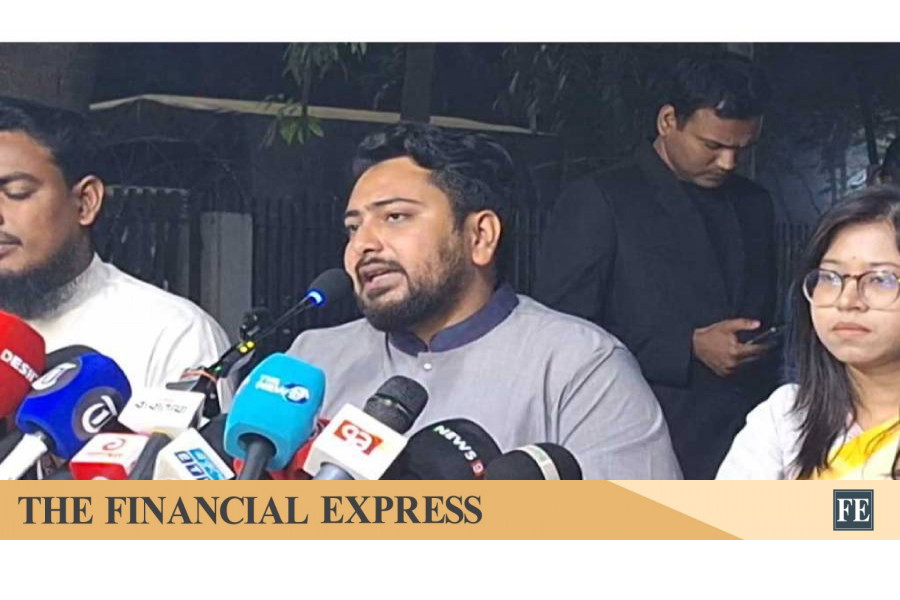
National Citizen Party (NCP) Convenor Nahid Islam has expressed full confidence in the implementation of the July National Charter following the formation of the new government.

Speaking on Monday, a day before the BNP assumes power, Nahid signed the Charter in the presence of Chief Advisor Muhammad Yunus at the State Guest House Jamuna.

Asked whether he harboured any doubts about the Charter’s enforcement, Nahid said: “We see no doubt remaining. This election itself is based on a popular vote, grounded in the July National Charter order.

“Without this order, neither this election nor this government would have been possible. To ensure the next parliament and government function legitimately, the Charter must be implemented according to the people’s mandate.”

Representing the NCP, Nahid and Member Secretary Akhter Hossen signed the July Charter without issuing any note of dissent.

“The note of dissent was resolved through the popular vote. The Charter clearly specifies which reforms each party will undertake, which have unanimous agreement, and which are mandated by the people’s decision, such as proportional representation in the Upper Chamber and appointments of election commissioners,” Nahid added.

The July Charter, originally demanded at the end of 2024 by leaders of the July Uprising to seize the opportunity for reform, was developed through extensive dialogue, incorporating both consensus and limited dissent.

On Oct 17, 2025, 24 political parties, including the BNP and Jamaat-e-Islami, signed it at the South Plaza of parliament, along with Yunus and members of the National Consensus Commission.

The NCP had participated in the dialogue but initially refrained from signing, citing the lack of a clear legal basis.

Nahid said, “At the time of signing, the document was only symbolic. With the legal framework now established through the July National Charter order and reflected in the people’s vote, our original objectives are achieved.

“Signing now is a formality to ensure implementation without hesitation from any party.”​
 
Analyze

Analyze Post

Add your ideas here:
Highlight Cite Respond

NCP signs July National Charter, CA extends thanks

BSS
Published :
Feb 16, 2026 21:02
Updated :
Feb 16, 2026 21:02

1771288010911.webp


National Citizen Party (NCP) has signed the July National Charter, giving it compete shape on the aspects of approval of all stakeholders.

The charter was endorsed by most of the stakeholders of the Consensus Commission of the Interim Government but the NCP remained absent from signing the instrument saying signing would be meaningless without clarity on implementation.

In the presence of Chief Adviser Professor Muhammad Yunus, NCP Convener Nahid Islam and Member Secretary Akhter Hossain signed the charter today at State Guest House Jamuna, said the Chief Adviser’s Press Wing this evening.

National Consensus Commission Vice-Chairman Professor Ali Riaz, Commission Member Badiul Alam Majumdar, and Special Assistant to the Chief Adviser Monir Haider were present on the occasion.

Speaking at the event, Prof Yunus said, “The nation believed that the NCP would sign this charter, and today that conviction came true, the July National Charter has attained completion. I thank the NCP for participating in this noble task.”

He emphasized on keeping constant vigilance at every step to ensure that this document helps build a humane Bangladesh as the new Bangladesh.

The Chief Adviser further said the oath-taking ceremony of the newly elected members of parliament will be held tomorrow and wished wellbeing of all in the coming days.

Nahid Islam said the members of parliament elected from his party will take oath tomorrow.

“We are going to take two oaths at the same time. The trust that the people of the country have placed in us-we will implement it,” he said.

He added that although they have signed the July Charter at the last, they were always most proactive for its implementation.

Other members of the NCP delegation present at the event included Monira Sharmin, Sarwar Tushar, Javed Rasin and Zahirul Islam.​
 
Analyze

Analyze Post

Add your ideas here:
Highlight Cite Respond

BNP to face fate of fascist if July charter ignored: Jamaat
Staff Correspondent 17 February, 2026, 00:48


The Bangladesh Jamaat-e-Islami-led alliance brings out a procession protesting at the post-polls violence from the north gate of the Baitul Mukarram National Mosque in Dhaka.

Bangladesh Jamaat-e-Islami secretary general Mia Golam Parwar on Monday warned that those set to assume power might face the fate of fascists if the July National Charter was not implemented and a new state structure not built accordingly.

He alleged that the Bangladesh Nationalist Party had internally campaigned for a ‘No’ vote in the referendum, claiming that in many centres the votes for the ‘paddy sheaf’ symbol and the ‘No’ vote were equal.

He made the remarks while addressing a protest rally organised by the 11-party alliance led by the Jamaat-e-Islami at the north gate of the Baitul Mukarram National Mosque in Dhaka protesting post-polls violence.

Golam Parwar said that discussions were taking place in talk shows suggesting that the government was not bound to honour the consensus reached on the July Charter.

‘If the July Charter is not implemented by using the strength of majority, another July will be created. Those going to assume power may face the consequences of fascists if they refuse the July Charter,’ he said.

Golam Parwar also claimed that the broadcast of election results had suddenly been halted, creating ‘a web of mystery’ and obstructing announcements of victories of the 11-party alliance.

He demanded disclosure of the reasons for the halt and called on the Election Commission to promptly resolve complaints of irregularities filed by the alliance without delay.

Alleging manipulation in the polls, he said, ‘Even after winning through manipulation, they have unleashed attacks on the nation. Killings, terrorism, arson and assaults are taking place. Such scenes remind us of fascism. They must exercise restraint.’

He demanded justice for those killed in the July mass uprising and for the killing of Sharif Osman Bin Hadi, convener of the Inquilab Mancha.

At the rally, Mamunul Haque, amir of Bangladesh Khelafat Majlis, alleged that the February 12 election had made a ‘mockery’ of people’s voting rights.

He claimed that while a peaceful voting drama was staged during the day, ‘subtle engineering’ in the evening obstructed targeted candidates from entering parliament, adding that the administration was used in implementing a ‘deep state agenda.’

He urged the chief election commissioner to take lessons from the fate of his predecessor and to restore people’s voting rights through proper investigation of objections raised. Otherwise, he warned, ‘the people of Bangladesh will forcibly reclaim their rights.’

Mamunul further cautioned that if anyone attempted to rehabilitate ‘old fascists’ in Bangladesh politics, they too would be ‘driven to Delhi.’

National Citizens Party chief coordinator Nasiruddin Patwary alleged that the election involved not just vote theft but ‘vote robbery’.

While protesting alleged irregularities, he also called for an end to post-election violence, saying that all incidents of attack would be accounted for.

The rally, moderated by Jamaat assistant secretary general Hamidur Rahman Azad, was also addressed by leaders of the AB Party, Liberal Democratic Party, Bangladesh Labour Party, Khelafat Majlis, Jagpa and BDP, among others.

After the rally, a procession was brought out from the north gate of the Baitul Mukarram, marching through Paltan, beside the National Press Club, Matsya Bhaban and ending at Shahbagh, with participants chanting various slogans.​
 
Analyze

Analyze Post

Add your ideas here:
Highlight Cite Respond

We will implement the July Charter to the letter: Salahuddin Ahmed

Staff Correspondent Dhaka
Published: 17 Feb 2026, 14: 39

1771375721821.webp

Salahuddin Ahmed, a member of BNP’s standing committee, speaks to journalists at the Jatiya Sangsad Bhaban on 17 February 2026. Prothom Alo

Salahuddin Ahmed, a member of Bangladesh Nationalist Party (BNP)’s standing committee and the party’s newly elected member of parliament (MP) from Cox’s Bazar-1, said, “We are committed and pledged to implement the July National Charter exactly as it was signed as a document of political consensus.”

He made the remarks to journalists today, Tuesday, shortly after 12:30 pm, following the first meeting of BNP’s parliamentary party at the Jatiya Sangsad Bhaban. The meeting took place after BNP’s newly elected MPs had taken their oath as members of parliament.

The meeting was presided over by BNP Chairman Tarique Rahman. By unanimous decision, Tarique Rahman was elected as the parliamentary party leader and the prime minister.

Salahuddin Ahmed told reporters that during the meeting, Tarique Rahman issued two directives for the party’s MPs, no MP should accept duty-free car facilities, and no MP should take government plots.

The BNP leader added, “Change starts from today. Being an MP in this country no longer means they will be more equal than everyone else.”

BNP’s newly elected MPs did not take the oath as members of the constitutional reform council. On the reason for not taking this oath, Salahuddin Ahmed said that to reflect the people’s will as expressed in the referendum, they must first go to the parliament. In parliament, necessary laws and constitutional amendments must be enacted.

Salahuddin Ahmed also remarked that under the existing constitution, the chief election commissioner (CEC) has no authority to administer the oath of the constitutional reform council members. The CEC did not approach them to administer their oath as members of the constitutional reform council, and they did not take the oath,” he said.

The BNP standing committee member added, “Everything must be conducted constitutionally. Up to now, we have proceeded according to constitutional procedures, and we will continue to govern this state constitutionally in the future as well.”​
 
Analyze

Analyze Post

Add your ideas here:
Highlight Cite Respond

July Charter
Reform implementation process faces complications at the outset
From the date of its first sitting, the council would have 180 working days to complete constitutional reforms in line with the charter and referendum results.


Staff CorrespondentDhaka
Published: 18 Feb 2026, 14: 44

1771462790835.webp


Interim government chief adviser Professor Muhammad Yunus shows the signed July National Charter as National Consensus Commission vice-chairman Ali Riaz watches at South Plaza of National Parliament in Dhaka on 17 October 2025. Facebook page of the Chief Advisor, GOB

Although those elected from the Bangladesh Nationalist Party (BNP) have taken oath as members of parliament (MPs), they did not take oath as members of the constitution reform council.

MPs elected from the party’s allied groups and independent MPs followed the same path. As more than two-thirds of members did not take the oath, the council could not be fully constituted.

People concerned say the outgoing interim government, through the formulation of the July National Charter, initiated efforts to reform various sectors of the state, particularly fundamental constitutional reforms, which were expected to be implemented by the elected government.

But with the council not formed, the reform implementation process has faced complications right at the beginning of the new government’s journey. There are concerns that this could trigger political tensions in the future.

Oath held on Tuesday

Chief Election Commissioner (CEC) AMM Nasir Uddin administered the oath to newly elected MPs in phases at the oath room of the National Parliament building yesterday, Tuesday.

Those elected from Jamaat-e-Islami and the National Citizen Party (NCP) took two separate oaths—one as MPs and another as members of the Constitutional Reform Council. Both oaths were administered by the CEC.

Following the victory of the “Yes” vote in the referendum, the July National Charter (Constitutional Reform) Implementation Order stipulates that a Constitutional Reform Council should be formed comprising representatives elected in the 13th parliamentary elections.

The referendum endorsed the order and the 48 constitutional reform proposals contained in the July Charter. The responsibility for implementing these proposals rests with the council.

According to the order, elected representatives are to take oath as council members at the same ceremony after being sworn in as MPs. They would simultaneously serve in both roles.

From the date of its first sitting, the council would have 180 working days to complete constitutional reforms in line with the charter and referendum results.

Through prolonged discussions between political parties and the former National Consensus Commission, agreement and decisions were reached on a total of 84 reform proposals spanning various sectors. These proposals formed the basis of the July National Charter.

However, the BNP did not join the council yesterday, leaving the reform implementation process in limbo. After taking oath, BNP Standing Committee member Salahuddin Ahmed told journalists that the party remained committed to upholding the July Charter “to the letter” as a document of political consensus.

In the election held on 12 February, the BNP won 209 of the 297 seats and its allies secured 3. Jamaat-e-Islami won 68 seats, while partners in its 11-party alliance secured 8. Seven independents were elected.

Uncertainty had existed beforehand about whether BNP MPs would take oath as council members. During the oath ceremony yesterday morning, Salahuddin Ahmed instructed party MPs that they had been elected under the Constitution as MPs, not as council members. He said oath-taking could proceed once procedures were set out in the Constitution’s Third Schedule following reforms and clarity emerged on who would administer it.

CEC Nasir Uddin then administered the oath to BNP members, including party chair Tarique Rahman, as MPs.

Jamaat and NCP take dual oaths at noon

There had also been uncertainty about whether Jamaat-e-Islami and NCP MPs would take the parliamentary oath if the BNP declined to join the council. Jamaat nayeb-e-ameer Syed Abdullah Mohammad Taher had said in the morning that they might refrain from taking either oath. NCP leaders similarly indicated their six elected MPs might abstain. Ultimately, however, 68 Jamaat MPs and 6 NCP MPs took both oaths.

Around 12:30 pm, Jamaat chief Shafiqur Rahman and the party’s MPs were sworn in, joined by independent MP Rumeen Farhana and BNP’s Ishraq Hossain. After taking oath as MPs, the latter two left the chamber, and Jamaat members then took oath as council members. After 1:00 pm, NCP convener Nahid Islam and the party’s six MPs also took their oaths.

Under the existing Constitution, newly elected MPs are sworn in by the outgoing Speaker or a nominee. If that does not occur within three days, the CEC administers the oath within the following three days.

Procedural rules also require MPs to sign prescribed forms before the Speaker or nominee. Since former speaker Shirin Sharmin Chaudhury has not appeared publicly since resigning in September 2024, and former deputy speaker Shamsul Haque Tuku is in jail following arrest in a murder case, the CEC administered the oath yesterday after the publication of the election gazette.

What was the reform implementation process?

Through prolonged discussions between political parties and the former National Consensus Commission, agreement and decisions were reached on a total of 84 reform proposals spanning various sectors. These proposals formed the basis of the July National Charter.

Of these, 48 proposals were related to the constitution. A referendum was subsequently held to implement those constitutional proposals, and the ‘Yes’ vote prevailed.

The July Charter contains several significant reform proposals, including a partial reduction of the prime minister’s authority, an expansion of the president’s authority in certain appointments, the introduction of a bicameral legislature, and the incorporation of appointment procedures for constitutional bodies directly into the constitution.

However, the Bangladesh Nationalist Party (BNP) submitted notes of dissent on several key issues, including the method of forming the proposed upper house. The party also incorporated its own constitutional reform proposals in its election manifesto.

3 stages of implementation

The implementation of the constitutional proposals was structured in three stages, two of which have already been completed.

First, to provide a legal basis, the ‘July National Charter (constitutional reform) Implementation Order’ was issued.

Second, a referendum was held to endorse the implementation of that Order. With the victory of the ‘Yes’ vote, the process moved towards the third stage.

Under the third stage, the implementation order stipulates the formation of a constitutional reform council comprising MPs to give effect to the constitutional proposals contained in the July Charter.

Why a constitutional reform council?

Under the existing constitution, amendments may be enacted with the support of two-thirds of the MPs. However, the July Charter Implementation Order provides that, rather than the regular parliament, a dedicated constitutional reform council would undertake the task of constitutional reform on this occasion.

During discussions with political parties, the proposal to establish such a council was raised. In particular, Jamaat-e-Islami and the NCP argued that the constitutional proposals contained in the July Charter would, if implemented, introduce substantial changes to the fundamental structure of the constitution.

They contended that there could be legal questions as to whether a regular parliament is empowered to alter the constitution’s basic structure. If amendments were adopted through the ordinary parliamentary process, they might subsequently be challenged before the courts. By contrast, granting the incoming parliament a specific and extraordinary mandate to carry out constitutional reform would preclude such legal challenges.

The BNP, however, expressed the view during those discussions that the formation of a separate council was unnecessary, maintaining that the existing constitutional amendment procedure was sufficient.

Furthermore, Jamaat-e-Islami, the NCP and several other parties proposed that the charter should be implemented through the issuance of a special order rather than by ordinance. The BNP opposed this approach, arguing that there is no constitutional provision for such an order and that the president may only promulgate an ordinance under the constitution.

The National Consensus Commission subsequently sought expert opinions on these matters. Ultimately, on 13 November last year, the president promulgated the ‘July Charter (Constitutional Reform) Order’, which included provisions for the establishment of a constitutional reform council.

Nevertheless, uncertainty remains as to the extent to which this order will be effective in practice and whether it will withstand legal scrutiny in the future.​
 
Analyze

Analyze Post

Add your ideas here:
Highlight Cite Respond

Members Online

Latest Posts

Back
 
G
O
 
H
O
M
E