| Global Defense, OSINT & Geopolitics Wire

[đŸ‡§đŸ‡©] July uprising

[đŸ‡§đŸ‡©] July uprising
108
4K
More threads by Saif

G Bangladesh Defense

If another revolution happens, it’ll be against media and administration: Hasnat

Ownership may have changed, but their character has not, NCP leader says

By Our Correspondent, Cumilla

1769821609493.webp

Photo: Collected

NCP Chief Organiser (South) Hasnat Abdullah today came down heavily on the media, police and the administration at an election rally held in Cumilla’s Laksham.

“If another revolution takes place, it will be against the media and the administration,” Hasnat, the 11-party alliance candidate from Cumilla-4 (Debidwar), said as a special guest at the rally.

Ahead of the upcoming 13th National Parliamentary Election, the alliance organised three separate public rallies today in Feni, Laksham in Cumilla, and at the Cumilla Town Hall ground. Jamaat-e-Islami Ameer Dr Shafiqur Rahman addressed the rallies as the chief guest.

Criticising the media, Hasnat said, “Dear media colleagues, it is deeply unfortunate that even after July, some media figures have not stopped acting as brokers. Somoy TV, Ekattor TV, DBC have once again started this... I have seen that the reports written by agencies are published directly by DBC, Ekattor, and Somoy TV. Ownership may have changed, but their character has not. We will once again bring you before the people’s court, In sha Allah.”

He further said, “The media only asks questions. All the world’s questions and problems are directed towards us. ‘Where does our income come from? Where do our living expenses come from? Where do we buy our shirts? How are political programmes organised?’ All these questions are for us [NCP] and not for certain political parties. Meanwhile, all praise and admiration go to that one particular political party.”

Hasnat said, “I see members of the administration and police present here. Your accountability is to the people. Your accountability is not to Gulshan, not to Dhanmondi. Your accountability is only to the people.”

Addressing the administration, he said, “You do not need to serve any political party. You are not Jamaat-e-Islami's, you are not BNP's , you are not NCP's. Your accountability is to the people of Bangladesh.”

He warned, “If you steal votes, if you conduct ‘night-time elections’ by stuffing ballots at night, if you steal the people’s mandate, you will be accountable to your own children.”

Addressing police, he said, “Earlier, your senior officials used you to secure their own positions and titles. They used you
 Do not allow yourselves to be used anymore. Stand for justice and fairness, not for any political party. The people of Bangladesh will stand by you.”

“The media and administration are necessary to make Bangladesh happy, prosperous, and developed. We are not your enemies. We want your accountability to be people-oriented, not party-oriented."​
 

Uprising’s expectations remain unmet in last 18 months: TIB

UNB
Published :
Feb 02, 2026 23:39
Updated :
Feb 02, 2026 23:39

1770079311733.webp


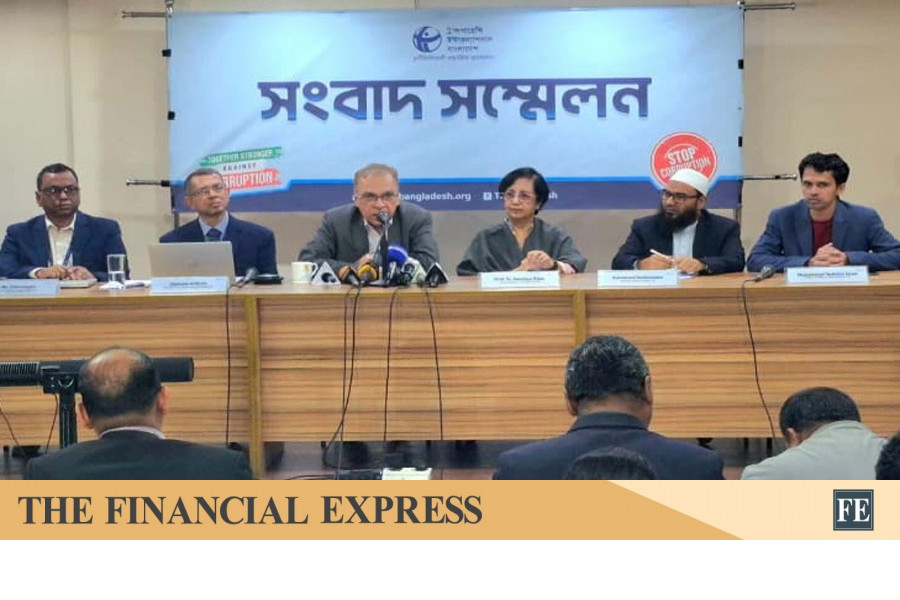
Transparency International Bangladesh (TIB) on Monday noted that despite an announcement to establish the practice of disclosing the asset statements of members of the Council of Advisers and government employees, they failed to set a positive example.

According to the TIB report, the growth and influence of religion-based politics were visible, and in many cases, gender, religious, cultural, and ethnic diversity were under threat due to violence and the use of force, which is contradictory to the spirit of anti-discrimination.

The organisation shared these observations during a press conference organised on the occasion of the publication of an observation-based research report titled “One and Half Years after the Fall of the Authoritarian Regime: Expectations and Realities.”

There was a failure on the part of the government to ensure equality, human dignity, justice, equal rights for all, and freedom of expression for all, TIB said.

In some cases, TIB said, the empowerment of bigots occurred due to the government's inaction or appeasement.

TIB said the free flow of information in state institutions was not ensured and there was a tendency to conceal information in government offices.

It said the issue did not receive importance in ensuring the free flow of information and the people's right to information.

One and a half years after the fall of authoritarianism, the foundation for state reform has not been strengthened; rather, the shortfall is significantly greater than the achievements, TIB said.

At the same time, it said, a failure to establish the foundation for a well-governed, corruption-free, and accountable government has been observed during this period. Furthermore, initiatives taken in the name of reform have missed their mark in almost all cases, and in some instances, the opposite has occurred relative to expectations.

Moreover, although there was a public aspiration to be committed to the people through the establishment of democracy and good governance among new and old political parties as part of a new political settlement, no visible examples of fulfilling this expectation have been observed.

Above all, TIB said political parties and the bureaucracy have not learned any lessons from the July movement.

TIB Executive Director Dr Iftekharuzzaman, Advisor-Executive Management Professor Dr Sumaiya Khair, Director of Research and Policy Division Muhammad Badiuzzaman, and Director of Outreach and Communication Division Mohammad Tauhidul Islam were present.

The report was jointly presented by Senior Research Fellows of the Research and Policy Division, Shahzada M. Akram and Md. Julkarnayeen.

According to TIB’s observations, despite various internal and external adversities, significant initiatives and decisions were taken in the fields of justice, reform, elections, and state governance during the interim period, and the infrastructure for state reform, justice, and elections was created.

However, because this infrastructure was not sufficiently strong, the foundation of state reform in these three areas did not become as robust as it could have been.

While reaching a consensus with political parties on several fundamental issues of state reform in the July Charter was a significant achievement, the foundation of reform was weakened due to resistance from various influential political parties regarding essential provisions for the ultimate goal of establishing an accountable government.

Subsequently, the government's surrender to the subversive and reactionary forces of the resistant circles, particularly the influential sections of the bureaucracy, in matters of ordinances and government decisions led to the reforms missing their mark.

Additionally, there was a failure by the government to achieve progress in immediately implementable reforms, and there were no significant initiatives to implement the recommendations of the reform commissions outside the scope of the July Charter.

Furthermore, TIB said, due to a lack of interest in analyzing the risks posed by those resisting reform, the government had to surrender to these resistant forces.

Highlighting the fundamental weaknesses in various ordinances formulated by the interim government, TIB Executive Director Dr Iftekharuzzaman said recommendations helpful for establishing an accountable government were purposefully excluded from almost every important ordinance.

He said one of the main reasons for this is the government's surrender to the reform-averse bureaucracy.

Initiatives were taken to depoliticize by removing high-level officials in the name of administrative and institutional reform, but in reality, instead of the monopoly influence of one party, a tripartite influence prevails in the bureaucracy: consisting of a section of beneficiaries of the fallen authoritarian government and those blessed by the two currently active major political parties, Dr Zaman said.

Overall, an ad-hoc and “pick and choose” tendency was observed in the interim government’s decision-making process regarding reforms; on the other hand, indecision or a lack of firmness in implementing decisions was prevalent.

Additionally, he said, a lack of coordination among state-responsible forces was seen, which created a sense of insecurity among the public.

Noting that the interim government considered the responsibility of establishing the foundation of reform only as fulfilling an expectation from the beginning, and did not analyze the adverse situations and risks or seek ways to resolve them during implementation, he said, the government could not implement the proposals for immediate action within its jurisdiction as promised; those that were done were superficial.

Dr Zaman said the position of political forces against the establishment of an accountable government system during the formulation process of the July Charter has been reflected in the ordinances approved by interim government.

“Commendable progress has been made in the reform of the judicial system. On the other hand, alongside the slow pace and procedural weaknesses in the judicial process, the line between justice and revenge has become blurred,” he said.

As a result, Dr Zaman said, while the right to a fair trial for the accused is being curtailed indiscriminately on one hand, the possibility of holding the actual criminals accountable is becoming slim on the other.

The TIB Executive Director said in terms of achieving the goals of the new political and social settlement, the weight of the shortcoming is heavier than the progress.

The July Charter has been weakened and the possibility of implementation has been jeopardized due to the uncompromisingly hostile position of the major political parties regarding the proposed recommendations in most fundamental sectors of reform, particularly in ensuring accountability to the people.

In response to a question, describing the picture of the last one and a half years in ensuring media freedom and the safety of media personnel and institutions as deeply disappointing, Dr. Zaman said, the institutional security of the media has come under more severe pressure than before and has faced pressure from quarters outside the state machinery.

The government has failed to take timely steps to prevent this, and has even given impunity to forces opposing media freedom.

Additionally, he said, the interim government has failed to take a stand and adopt strict measures in favor of ensuring equal rights and coexistence for all citizens regardless of gender, religious, ethnic, and cultural identity.

In particular, the government devalued the report of the Women’s Commission by publicly denying its involvement with the report and over-empowered those forces who are against women's empowerment.’

On the issue of the role of civil society, it was seen that while special importance was given to civil society in various reform activities at the beginning of the interim government, a tendency to ignore them was observed later. Recommendations from civil society were ignored in various reforms.

On the other hand, although a significant portion of civil society was within the government, they failed to play the expected role, resulting in a negative perception of civil society among the general public.

Additionally, alongside challenges to media freedom, there was a visible failure to ensure the security of journalists and media institutions during the interim government's tenure.

The freedom and security of the media are now held hostage by over-empowered non-state forces alongside the state. On the other hand, the existence of internal enemies within the media also persists.​
 

Salahuddin cites Liberation War to defend indemnity for July Uprising leaders

Home minister argues wartime and uprising actions should not always be treated as human rights violations

Star Online Report

1773277469169.webp

Photo: Screengrab

Home Minister Salahuddin Ahmed has said that actions taken during wars and uprisings cannot always be judged strictly as human rights violations, citing both the 1971 Liberation War and the 2024 mass uprising.

“Did human rights violations not occur at the hands of freedom fighters during the Liberation War? Yes, it happened,” he remarked. “Everything is said to be fair in love and war, and now people say everything is fair in politics as well.”

Speaking at a dialogue, titled “National Human Rights Commission Ordinance 2025: Expectations from the New Parliament,” at the Bangladesh‑China Friendship Conference Center in Dhaka's Agargaon, Salahuddin said questions are being raised about whether leaders of the July uprising should face legal cases.

He stressed that they were granted indemnity under the July National Charter and that the government must remain committed to that decision.

He argued that if actions during the uprising are treated strictly as human rights violations, similar arguments could be raised about freedom fighters’ actions against collaborators in 1971. “If that logic is applied, then cases could also be filed against freedom fighters for killing their enemies during the war,” he said.

The minister added that his party is committed to protecting human rights, noting that fundamental rights are enshrined in the Constitution and included in BNP’s manifesto and 31‑point reform plan.

He acknowledged, however, that the Human Rights Commission Ordinance may require amendments when presented as a bill in the parliament.

Salahuddin explained that parliament must decide on ordinances within 30 days of a session, but the timeline is challenging due to national holidays.

He said not all of the 133 ordinances can be reviewed within the deadline, and some may lapse automatically before being reintroduced as bills.

He also addressed the law on enforced disappearances, saying its intention is good but some provisions, particularly those on superior liability, need further scrutiny.

Bangladesh, he said, aims to meet international human rights standards but must move gradually, considering social, cultural, and political realities.

The minister emphasised the need to balance human rights protections with state responsibilities, including the role of defence forces in safeguarding sovereignty.​
 

Parliamentary committee agrees on indemnity for July Uprising participants

Staff Correspondent
Dhaka
Published: 24 Mar 2026, 19: 45

1774398909077.webp

A special committee of the Jatiya Sangsad has begun reviewing 133 ordinances issued during the tenure of the interim government. The committee convened its first meeting on 24 March 2026. Parliament secretariat

A special committee of the Jatiya Sangsad (national parliament) has begun reviewing 133 ordinances issued during the tenure of the interim government.

At its first meeting held today, Tuesday at the parliament building, the committee discussed 40 ordinances.

The committee reached a consensus on the “July Mass Uprising (Protection and Determination of Liability) Ordinance-2026,” which grants indemnity to participants of the July uprising. The special committee will recommend it for approval in parliament.

The ordinances issued during the interim government were placed at the first sitting of the first session of the 13th parliament. On the same day, a special committee was formed to review them, and it was asked to submit its report to parliament by 2 April. The committee will meet again tomorrow, Wednesday to continue the review.

After the meeting, committee chairman Zainul Abedin told journalists that less than half of the ordinances had been examined so far. Some members expressed differing views on certain issues, which will be discussed in the next meeting or submitted in writing if necessary.

He added that the committee will reconvene at 2:00 pm tomorrow and may hold additional meetings if all reviews are not completed. They hope to submit the report within the 2 April deadline.

Later, Zainul Abedin said about 40 ordinances had been discussed, but some required further clarification and were therefore kept pending for future discussion.

Seven ordinances related to the Ministry of Home Affairs were also discussed. Leaving the meeting midway, Home Minister and committee member Salahuddin Ahmed said it would not be possible to decide on all 133 ordinances in a single meeting, and several more sessions would be required.

Responding to journalists, he said consensus had been reached on many issues, including full agreement on the “July indemnity.” Any amendments, if needed, could be introduced later.

Law Minister Asaduzzaman said discussions were ongoing and it was too early to specify how many ordinances had reached consensus. Details would be disclosed once the report is published.

On whether the constitution or the aspirations of the July uprising should take precedence in case of conflict, the law minister said they aim to harmonise both, though the constitution must remain paramount.

After the meeting, opposition lawmaker from Bangladesh Jamaat-e-Islami, Rafiqul Islam Khan, said they agreed with the provisions ensuring protection for July participants. He added that most of the ordinances discussed would be recommended to parliament.

However, he said that in case of a conflict between the constitution and the aspirations of July, priority should be given to the latter.

“The constitution is for the people, not the people for the constitution,” he said, adding that changes could be made if necessary to uphold the spirit of July.

Meeting sources said that on the first day, ordinances related to various ministries—including the Cabinet Division, Prime Minister’s Office, Ministry of Public Administration, Ministry of Home Affairs, Ministry of Land, Ministry of Expatriates’ Welfare and Overseas Employment, Ministry of Environment, Forest and Climate Change, Ministry of Women and Children Affairs, Ministry of Civil Aviation and Tourism, Ministry of Fisheries and Livestock, Ministry of Cultural Affairs, Ministry of Youth and Sports, Ministry of Science and Technology, and Ministry of Housing and Public Works—were discussed. However, no final decisions were reached on all of them.

Committee member Gazi Nazrul Islam said discussions included keeping some ordinances unchanged, amending others, and making changes where necessary. He added that a proposal was made to raise the maximum age limit for entry into government jobs to 33–35 years, but the committee agreed to keep it at 32.

The committee also agreed to keep the “July Mass Uprising Memorial Museum Ordinance-2025” unchanged.

The meeting, chaired by Zainul Abedin, was held at the cabinet room of the parliament building and attended by members including Home Minister Salahuddin Ahmed, Chief Whip Nurul Islam, Law Minister Asaduzzaman, Muhammad Osman Faruk, AM Mahbub Uddin, State Minister for Public Administration Abdul Bari, Muhammad Naushad Zamir, State Minister for Social Welfare Farzana Sharmin, Mujibur Rahman, Rafiqul Islam Khan, and GM Nazrul Islam.​
 

Independence came once and for all in 1971: Ahmed Azam Khan

Published :
Mar 28, 2026 20:04
Updated :
Mar 28, 2026 20:04

1774742073897.webp


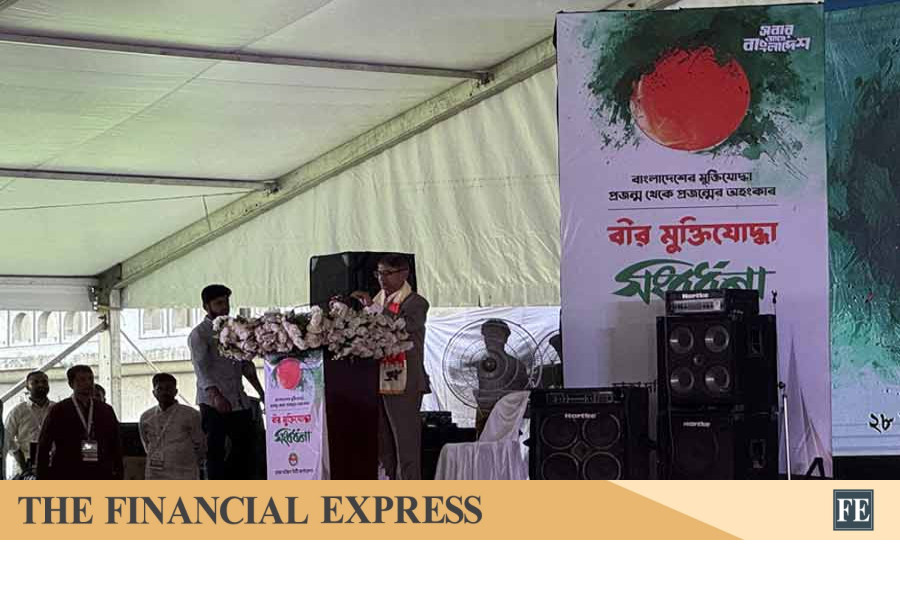
Liberation War Affairs Minister Ahmed Azam Khan has warned that equating the 2024 mass uprising with the nation's independence would lead to a "major disaster", asserting that Bangladesh’s sovereignty was achieved only once and that was in 1971.

Speaking at a reception for freedom fighters organised by the Dhaka South City Corporation (DSCC) to mark Independence Day on Saturday, the minister underscored the distinction between political achievements and the birth of the state, bdnews24.com reports.

"Independence came to Bangladesh only once. It did not come before, and it will not come again," Azam said.

He noted that the 1990 mass uprising successfully toppled autocracy, while the 2024 student-led movement ousted fascism.

"These are undoubtedly great political achievements in an independent country, and we respect them. If we put these achievements on the same level as our Independence, it will be the cause of a major disaster for us," the minister said.

He questioned the historical accuracy of the martyrs figures released shortly after the war ended in 1971.

"It is a much-discussed issue. How did a list of martyrs from a nine-month war appear suddenly just 23 days after independence without any survey or data, abruptly claiming 3 million?" he asked.

Azam identified the preparation of authentic lists as a primary goal for his ministry, including verifying the actual number of 1971 martyrs, removing "fake" claimants from the freedom fighters' list, and creating a definitive record of collaborators such as the Razakar, Al-Badr, and Al-Shams.

The minister further informed the gathering that the government is considering enhanced housing, increased allowances, and free medical treatment for genuine freedom fighters.​