| Global Defense, OSINT & Geopolitics Wire

[🇧🇩] Monitoring Bangladesh's Economy

[🇧🇩] Monitoring Bangladesh's Economy
1K
57K
More threads by Saif

G Bangladesh Defense

Gaps in CIB reporting: A concern for credit risk management

MD. ZAKARIA

Published :
Apr 28, 2026 00:41
Updated :
Apr 28, 2026 00:41
1777333953454.webp


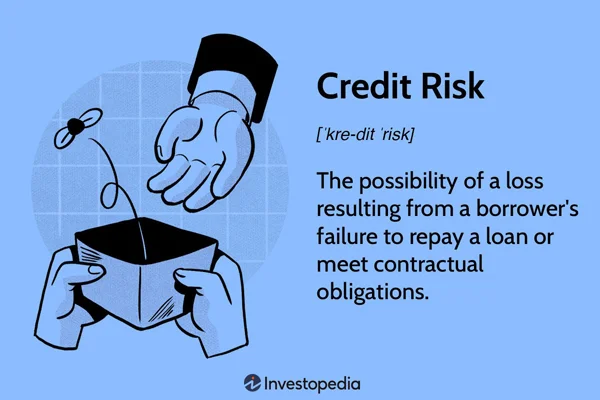
In Bangladesh's banking sector, the Credit Information Bureau (CIB) report of Bangladesh Bank is a cornerstone of prudent lending decisions. Before approving any loan or credit facility, banks rely heavily on this report to assess a borrower's creditworthiness. It provides a consolidated view of existing liabilities, repayment behaviour, overdue status, classification history, and even legal complications such as court-imposed stay orders. It also captures the number and types of credit facilities a borrower holds across banks and financial institutions, including credit card exposures.

A particularly critical element of the CIB report is the "Requested Contract Category," which indicates whether a borrower has recently applied for credit facilities at other banks or non-bank financial institutions. This feature is essential for identifying multiple concurrent loan applications and helps lenders assess the borrower's overall financial exposure and intent.

For example, if a customer applies for a loan at one bank and subsequently approaches another, the second bank should ideally detect the earlier application through the CIB report. This enables the lender to seek clarification and make a more informed decision. However, recent observations suggest that this field is often unpopulated or not updated in a timely manner, creating a significant information gap.

The implications are serious. In the absence of accurate data on ongoing credit requests, banks may unknowingly approve multiple facilities for the same borrower within a short period. A customer could secure approval from one institution, delay disbursement, and obtain another approval elsewhere-eventually drawing funds from both. Without updated CIB data, such overlapping exposures may go undetected.

This risk is particularly acute in unsecured lending, such as personal loans and credit cards, where no collateral exists to limit borrowing. Unlike secured loans, unsecured facilities allow borrowers to accumulate debt across institutions more easily, increasing the likelihood of over-indebtedness.

Such gaps not only elevate borrower-level risk but also pose broader systemic concerns. Incomplete information hampers the accurate assessment of repayment capacity, weakens credit discipline, and challenges effective risk management within the banking sector.

Given the seriousness of the issue, Bangladesh Bank should promptly investigate the underlying causes. Whether due to technical glitches or reporting delays, corrective measures must ensure timely and reliable data updates. Strengthening the CIB reporting framework-potentially through real-time or near real-time updates-is essential.

A transparent and robust credit information system is fundamental to financial stability. Ensuring the completeness and accuracy of key data fields, particularly the "Requested Contract Category," is not merely operational-it is critical for safeguarding disciplined lending and sustainable growth in Bangladesh's financial sector.

The writer is First Assistant Vice President, NCC Bank PLC.​
 

High taxes, policy instability blamed for industrial slow growth
Staff Correspondent 28 April, 2026, 00:21

Businesses in the steel and re-rolling sector urged the government to simplify and rationalise the tariff and value-added tax regime in the upcoming national budget for the financial year 2026-27, warning that high taxes and frequent policy shifts are constraining industrial growth.

At a pre-budget discussion at the National Board of Revenue (NBR) on Monday, trade bodies said the existing tax structure and policy uncertainty are discouraging investment and business expansion.

In their budget proposal to the NBR chairman, Abdur Rahman Khan, the Bangladesh Steel Manufacturers Association proposed withdrawing the advance income tax on the import of raw materials from the existing Tk 600 per tonne.Environmental news updates

Jahangir Alam, president of the BSMA, also urged to reduce tax deducted at source on rod sales to 1 per cent from existing 2 per cent, and lowering turnover tax to 0.5 per cent from the current 1 per cent.

He also said that the sector has been grappling with multifaceted crises following the Covid-19, Russia-Ukraine war, domestic political challenges and stagnation in infrastructure works, and the ongoing Middle East crisis, which forced several mills to shut down their operations.

He also urged the NBR to reduce VAT on scrap imports to Tk 500 per tonne from Tk 1,800 per tonne, along with slash regulatory duty and VAT on ferro alloy import to 5 per cent both from existing 15 per cent.

Meanwhile, the Bangladesh Iron and Steel Importers Association proposed scrapping regulatory duties on key raw materials and fixing import duty at 10 per cent.

On the day, Mohammad Shafiul Alam Ujjal, president of the Bangladesh Elevator, Escalators and Lift Importers Association, placed a seven-point proposal to support the lift sector.

He urged the reinstatement of lifts as essential capital machinery to accelerate infrastructure development and proposed reducing the load factor rate to $1.50 per kg from $3.

He also stressed the need to ensure transparency in raw material declarations, prevent misuse in the open market, and reduce the tax gap between fully imported lifts and locally used inputs.

Other proposals included simplifying port clearance, bringing so-called ‘briefcase companies’ under the tax net, and reviewing tariff structures every five years instead of annually.Politics

The Bangladesh Paint Manufacturers Association demanded the withdrawal of the 10 per cent supplementary duty on paint products, noting that last year’s assurance from the NBR chairman remains unfulfilled.

The Electronics Safety and Security Association of Bangladesh called for slashing duties on fire and life-saving equipment, saying the tax burden on some items has reached 58.40 per cent, putting them beyond the reach of many users.

It proposed a 1 per cent customs duty on products such as fire doors, sprinklers and alarms, along with full VAT exemption from the existing range of 5 per cent to 20 per cent.

Industry players warned that the duty hike on filter-making materials—from 1 per cent to 25 per cent—has put local manufacturers and jobs at risk.

Businesses also proposed VAT reforms, including treating import-stage VAT and advance tax as final settlement and reducing retail VAT to 5 per cent from 7.5 per cent.

They said implementing these measures would encourage investment, ensure fair competition and support sustainable revenue growth over the long term.

NBR chairman Abdur Rahman Khan said not all demands could be accommodated due to revenue constraints, but reasonable proposals would be considered.

He also said that they would take steps to resolve complexities in HS codes and align import prices with international benchmarks.

However, businesses have to take the initiative to prevent abuses of the privileges granted by the government, he added.​
 

A roadmap to boost foreign direct investment in Bangladesh

28 April 2026, 11:00 AM

Owais Parray and Kiyoshi Adachi

1777423272370.webp

FILE VISUAL: SALMAN SAKIB SHAHRYAR

By improving the investment policy landscape, Bangladesh can attract more foreign direct investment (FDI) to catalyse the next wave of economic structural transformation, according to a key finding in the latest UN Trade and Development (UNCTAD) report on the implementation of the Investment Policy Review (IPR).

While Bangladesh aspires to become a world-class manufacturing hub, the country’s absolute and relative FDI performance continues to lag behind that of several regional peers, including Cambodia, Indonesia, and Vietnam, as well as averages for the Association of Southeast Asian Nations (ASEAN) and the Regional Comprehensive Economic Partnership (RCEP)—regional groups Bangladesh aims to join.

The UNCTAD report shows that several important milestones were reached since the last IPR in 2013. These include, inter alia, the establishment of the Bangladesh Investment Development Authority (BIDA), the creation and operationalisation of the Bangladesh Competition Commission, the strengthening of the Public-Private Partnership Authority, and, more recently, the establishment of a multidisciplinary negotiators’ pool who are contributing to the formulation of preferential trade and investment agreements. Moreover, key regulatory and institutional reforms were implemented, including in labour, taxation, and intellectual property, as well as efforts to digitalise and rationalise investment facilitation platforms. The National Drug Policy was also updated to relax restrictions for foreign pharmaceutical manufacturers. Together, these reforms have contributed to improvements in the investment environment, against the backdrop of Bangladesh’s transition from least developed country (LDC) status.

The IPR implementation report was prepared through a partnership between UNCTAD and UNDP under the Transformative Economic Policy Programme, with financial support from the United Kingdom’s Foreign, Commonwealth and Development Office. The report notes that despite improvements, much remains to be done, describing reforms as a “work in progress.” In particular, the legal and institutional framework for investment requires further strengthening, including the review and updating of the Foreign Private Investment (Promotion and Protection) Act of 1980. Institutional fragmentation in access to land, the need for more integrated infrastructure planning, and capacity constraints in key institutions such as the Bangladesh Competition Commission are some of the major challenges.

FDI inflows to Bangladesh peaked at over $1.8 billion in 2019, before declining in subsequent years amid macroeconomic pressures, foreign exchange constraints, global crises, and domestic political developments. By 2024, inflows were approximately one‑third lower than 2019 levels. Preliminary data for the first three quarters of 2025, however, point to a rebound, supported mainly by reinvested earnings and intracompany loans. Despite recent volatility in flows, the inward FDI stock has remained broadly stable at around $18 billion since 2021, reflecting the continued presence of foreign investors. Textile and garment, finance, and the power sector account for the largest shares of FDI stock, while investment is gradually diversifying towards sectors such as pharmaceuticals, telecommunications, and information and communication technologies, with the digital economy emerging as a promising frontier.

The current challenges faced by Bangladesh amid rapid changes in the global political and economic landscape call for greater engagement by both the government and the private sector to better leverage FDI as a source of development finance. The importance of FDI in this regard was underlined at the Fourth Global Conference on Financing for Development (FfD4) held in Spain’s Seville last year. Cuts in official development assistance by traditional donors, a generalised slowdown in global FDI flows, and the gradual loss of preferential market access following LDC graduation underline the urgency for reforms to ensure that Bangladesh remains competitive in attracting higher levels of quality FDI aligned with strategic development objectives.

Looking ahead, the report emphasises the need for developing a national investment policy and a consolidated investment law to reinforce investor confidence and policy coherence. As Bangladesh approaches LDC graduation, proactive engagement with key investment and trading partners will be required to secure the best possible terms under ongoing negotiations of preferential trade and investment agreements. Priority sectors that can enhance competitiveness and diversification should be further nurtured, including pharmaceuticals and the digital economy. Continued reforms are also needed to address persistent bottlenecks to investment, notably in relation to access to land and infrastructure. UNCTAD and UNDP remain committed to continuing the engagement with key stakeholders in Bangladesh to support the implementation of these important reforms and to ensure that FDI contributes effectively to inclusive growth, decent jobs, and sustainable development.

Owais Parray is country economic advisor at United Nations Development Programme (UNDP), Bangladesh.

Kiyoshi Adachi is legal officer at United Nations Conference on Trade and Development (UNCTAD), Bangladesh.​
 

Bangladesh, the IMF-World Bank nexus, and the political economy of reform

M Kabir Hassan

1777423702491.webp

VISUAL: ANWAR SOHEL

Bangladesh’s participation in the 2026 IMF-World Bank Spring Meetings, held earlier this month, presents a case study of a well-known problem in development finance: the conflict between external conditionality and local ownership of policies. Although the immediate narrative focuses on delayed funding and diplomatic manoeuvring, the more fundamental challenge is one of institutional design: how can a lower-middle-income country reconcile its need for credibility, sovereignty, and reform sequencing in a challenging international macroeconomic environment?


To begin with, the case for Bangladesh per the fundamentals of open-economy macroeconomics is obvious. As an energy importer, the country is exposed to various external shocks, especially commodity prices and geopolitical risks affecting the functionality of global supply chains. In such a situation, external disequilibria become a structural feature rather than a cyclical phenomenon.

Google News LinkFor all latest news, follow The Daily Star's Google News channel.
The IMF’s relatively pessimistic assessment of global economy, defined by moderate growth, elevated inflation, and geopolitical risks, accentuates Bangladesh’s vulnerability. In this regard, the country faces a classic trilemma of economic policy, meaning it cannot simultaneously achieve exchange rate stability, monetary independence, and foreign capital inflows. The delayed devaluation of the exchange rate, which has been discussed in policy negotiations, is an illustration of this trilemma.

IMF conditionality and the credibility problem


The conditionality for the next tranche of the $5.5 billion IMF loan is not merely an isolated administrative consequence but an indication of a broader credibility problem. As in any principal-agent relationship, where the former expects certain conditions to be met by the latter, the IMF (principal) needs a commitment on the part of the Bangladesh government (agent) in terms of revenue generation and other measures, including subsidy rationalisation and fiscal discipline.

From the perspective of fiscal contract theory, fiscal capacity would be guaranteed in a credible social contract, where the benefits of tax collection are obvious for taxpayers. However, a credible social contract cannot develop under the circumstances of persistent tax exemptions, as seen in Bangladesh. As a result, the lack of endogenous revenue—money generated within the economy—forces the country to continue relying on international assistance and the accompanying conditionality.

Furthermore, the change in the government raises questions related to dynamic inconsistency, an economic concept describing a situation in which a decision-maker’s preferences change over time, making earlier choices inconsistent with later ones. Since the new government was not responsible for developing the initial IMF package, dynamic consistency implies that renegotiations would require a credible substitute, complete with benchmarks and deadlines, thus providing for additional delays for both parties involved.


The key issue here is whether Bangladesh should stick to the existing programme, or bargain for a more appropriate one from the perspective of its politics.

From the perspective of political economy analysis, ownership of a reform programme is absolutely necessary for its success. Experience shows that foreign-imposed reforms tend to fail if local interests are not committed to them. Sometimes, a harsher new programme may improve compliance if the interests of all political forces involved are aligned.


However, a new agreement could involve greater scrutiny and more severe structural targets, thus leaving Bangladesh with less flexibility for policymaking. Ideally, it is important to start with the signalling approach, showing intentions to pursue reforms through early visible steps, especially in terms of revenue administration and energy prices.

The financial sector: Institutional weaknesses and reform sequencing

Given the presence of non-performing loans (NPLs), there is another classical problem associated with the financial sector that relates to the weaknesses of governance and moral hazard.

The problems associated with the banking sector can be explained through the soft budget constraint approach—the tendency of social welfare-minded governments to bail out failing banks. When institutions expect certain implicit guarantees, excessive riskiness arises and the asset quality worsens. Hence, it is important to implement reforms at the legislative level and to have effective tools of enforcement. Importantly, foreign organisations require having a plan to address the issue, rather than solving it immediately, as this task is impossible. It shows the significance of sequencing reform measures.

The World Bank: Complementarities and strategic conformity

Unlike the IMF, which concentrates on macroeconomic stability, the World Bank works in the domain of development financing, funding long-term projects. This recent involvement shows the possibility of programmatic conformity to the national goals, especially those of the current government’s manifesto.

A strategic opportunity exists here. According to the theory of development finance, complementarities between public expenditure and institution-building are very significant. Aligning itself with the developmental activities of the World Bank can be useful for Bangladesh, as this will enable the use of concessional finance and increase the country’s growth capacity. Notably, the recommendation to diversify finance through capital market instruments such as bonds and sukuk (Shariah-compliant financial instruments) is interesting since, from a portfolio management point of view, the use of one instrument makes the system more vulnerable.

Recent improvements in forex reserves, inflation, and stability in monetary policy are positive signals. Yet, analytically, these are not sufficient indicators of stability. IMF’s emphasis on revenue indicates that the focus is more on fundamentals than on signals. This is because macroeconomic stability entails a combination of policies that must complement each other. Without sufficient fiscal capacity, monetary tightening will be incapable of stabilising the macroeconomy, especially during adverse external conditions.

Negotiation strategy: From reactive to strategic engagement

Bangladesh has always been reactive during its dealings with various multilateral bodies, responding to conditions rather than influencing them. The current approach suggests moving away from the reactive stance towards strategic negotiation.

From a game theory point of view, it marks a transition from the passive to the strategic equilibrium point. By offering comprehensive reform strategies, complete with institution-specific roles and schedules, the country can bring about a change in the bargaining scenario.

In addition to finance, programmes (such as that of the IMF) have an important signalling function. Within international capital markets, programmes provide signals of policy commitment, thus decreasing risk. This means that the lack of a functioning programme will have spillover effects and may constrain the country from accessing further financial assistance, both bilaterally and multilaterally.

The function of signalling may be understood from the perspective of reputation theory. Countries that comply with programmes build up reputation capital, which decreases the cost of borrowing and provides access to more funds. Non-compliance has the reverse effect.

In evaluating the results of the Spring Meetings, one should not simply focus on potential financial benefits. Instead, they serve as an indicator of Bangladesh’s governance capacity to craft and implement meaningful reforms when exposed to international public opinion.

In order to advance, the following steps are necessary: i) implementing credible fiscal reform by improving tax administration to increase revenue-generating capacity; ii) reforming the financial sector by dealing with governance shortcomings and implementing effective measures to ensure accountability; and iii) effectively utilising development partnerships by making use of complementarities between IMF stabilisation programmes and World Bank development finance.

However, the problem at hand is not technical but institutional. The effectiveness of Bangladesh’s interactions with the IMF and World Bank will hinge on the ability to convert policy promises into credible actions. In that regard, the upcoming period may be viewed not so much as a negotiation process but as a test of governance capacity.

Dr M Kabir Hassan is professor of finance and Moffett chair at the University of New Orleans in the US.​
 

Govt seeks two-year cushion from lenders amid economic strain

FE ONLINE REPORT

Published :
Apr 29, 2026 14:11
Updated :
Apr 29, 2026 14:11

1777505467063.webp


The government has sought a two-year cushion from development partners to comply with their loan conditions as the economy is facing shocks.

Finance Minister Amir Khosru Mahmud Chowdhury made the remarks on Wednesday while speaking at a budget consultative meeting jointly organised by the Federation of Bangladesh Chambers of Commerce and Industry (FBCCI) and the National Board of Revenue (NBR) at a city hotel.

Addressing the programme, the finance minister said the request has been made to the IMF and the World Bank to allow time for necessary reforms.

He, however, assured that the upcoming budget would extend similar policy support to all potential export-oriented sectors. He also pledged to remove key barriers to doing business within the next three months.

The meeting was attended by Commerce Minister Abdul Muktadir as a special guest.

The session was conducted by FBCCI Administrator Md. Abdur Rahim Khan and chaired by NBR Chairman Abdur Rahman Khan.​