| Global Defense, OSINT & Geopolitics Wire

[🇧🇩] Monitoring Bangladesh's Economy

[🇧🇩] Monitoring Bangladesh's Economy
1K
57K
More threads by Saif

G Bangladesh Defense

Thousands get jobs as PRAN-RFL revives abandoned mills

Md Asaduz Zaman

1778199814494.webp

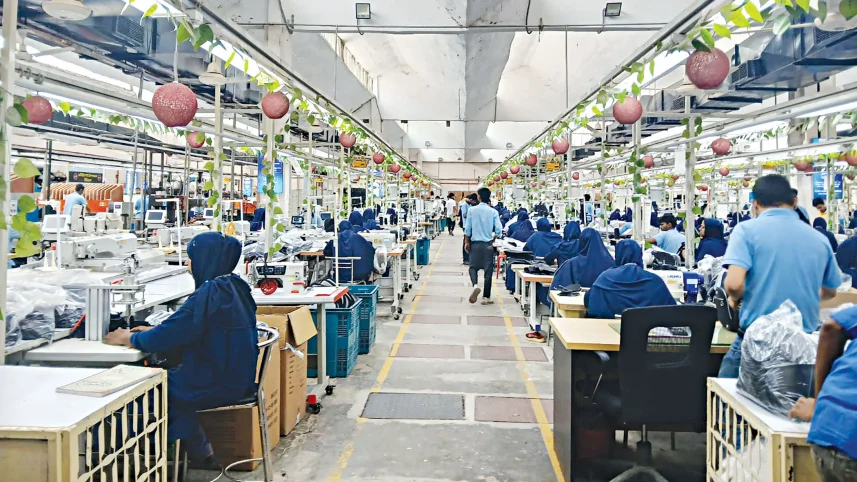
Workers operate in organised rows at Barendra Rajshahi Textile Limited, formerly Rajshahi Textile Mills, revived by PRAN-RFL Group under a public-private partnership, creating thousands of local jobs and producing export-oriented goods. The photo was taken recently. Photo: Md Asaduz Zaman

A few years ago, Champa Begum moved from Rajshahi to Gazipur for factory work, leaving behind her young daughter. Today, the 30-year-old no longer has to make that choice.

Begum now works at a factory barely 12 km from her home in Paba upazila, Rajshahi. The move back home has reduced living costs and allowed her to rebuild her daily life with family.

Her story reflects a broader change underway.

PRAN-RFL Group has restarted three idle state-owned factories in Rajshahi, including Rajshahi Textile Mill and Rajshahi Jute Mill, under a public-private partnership (PPP) model. The initiative has already employed many locals, with plans to scale up, reducing the need for migration to major cities.

Workers say the opportunity to work close to home has brought both economic relief and personal stability.

Nearly 2,500 workers have secured jobs following the revival of the once-abandoned Rajshahi Textile Mill
Export goods -- non-leather footwear and luggage -- are being produced at the revived factories. Officials said utilising idle state-owned mills and land could boost foreign exchange earnings despite sectoral constraints.

A NEW LIFE

Nearly 2,500 workers have secured jobs following the revival of the once-abandoned Rajshahi Textile Mill, which began operations in 1979 but shut down in 2003 due to mounting losses. After more than two decades of inactivity, the factory has resumed production under a private-sector initiative to revive idle facilities through PPPs.

The factories now produce non-leather footwear, luggage, backpacks, trolleys, and women’s handbags. Over the past two years, RFL has invested approximately Tk 325 crore in the footwear and luggage sectors, with another Tk 200 crore planned this year and a further Tk 800 crore targeted over the next three years.

PRAN-RFL has already created 4,500 jobs across the three Rajshahi factories and plans to expand to more than 11,000. Nationwide, the company has generated around 12,000 jobs in footwear and luggage over the past two years and aims to create an additional 30,000 over the next three years.

Currently producing around 48 lakh pairs of shoes per month, the company plans to scale up to 1.5 crore pairs within three years to meet growing global demand. Rising production costs in China are prompting buyers to shift sourcing to Bangladesh, particularly for non-leather footwear.

The global footwear market is valued at $400 to $500 billion. In FY2024-25, Bangladesh exported footwear worth $1.19 billion, with non-leather footwear contributing $522 million-- growing over 25 percent year-on-year, according to the Export Promotion Bureau.

JOBS WHERE THEY ARE NEEDED

For workers like Champa Begum, the impact of such an initiative is immediate and personal.

“If we work far away, the child’s education suffers,” she said. “It’s much better when jobs are available locally,” she said.

Others share similar experiences. Rajshahi University graduate Sultana Khatun, 32, said the opportunity to work locally came at the right time.

“Amid higher inflation, this has somewhat reduced the burden on us.”

Mustafa K Mujeri, executive director of the Institute for Inclusive Finance and Development, welcomed the move to open up state-owned mills for private sector acquisition and reopening.

“Such measures are urgently needed to address the country’s unemployment challenge,” he said.

Amid persistently high inflation, the government should strike a balance between strengthening social protection and actively supporting the private sector to expand job creation, he noted.

Without a stronger push for employment generation, he warned, macroeconomic pressures could further deepen labour market vulnerabilities.

DECENTRALISING INDUSTRIAL DEVELOPMENT

PRAN-RFL operates eight footwear and luggage factories across Narsingdi, Rajshahi, Rangpur, and Pabna, with two more facilities in Chattogram under renovation.

The group exports to 45 countries, with the United States and Europe as key markets. Export earnings from non-leather footwear and luggage rose to Tk 177 crore in FY25 from Tk 92 crore the previous year-- an increase of over 90 percent.

“We are receiving strong purchase orders, but failure to deliver on time means losing opportunities. Reviving closed factories is our fast-track solution,” said Kamruzzaman Kamal, marketing director at PRAN-RFL Group.

He added that utilising idle government jute mills and unused land nationwide could significantly boost foreign exchange earnings.

RFL’s Rahat Hossain Roni said Bangladesh’s large rural workforce gives it a competitive advantage over rivals such as Vietnam and Cambodia, which are well-positioned to absorb production shifting out of China.

On wages, he said the company complies with national minimum standards and offers productivity-linked incentives.

“The fixed salary is just the entry-level; beyond that, earnings increase with performance,” he said.

He also noted that workers returning from Dhaka benefit from higher purchasing power in smaller cities.

“If someone comes from Dhaka to Rajshahi at the same wage, they’ve already gained roughly 30 percent in purchasing power.”

However, challenges remain. Skilled labour shortages persist in rural areas, and 30 to 40 percent of raw materials are still sourced from China, leading to delays of up to a month.

Roni urged the government to streamline customs and bonded warehouse processes to ease bottlenecks and enhance competitiveness.
​
 

BB issues unified guidelines for outward remittances

FE REPORT

Published :
May 08, 2026 11:25
Updated :
May 08, 2026 11:25

1778283692889.webp


The Bangladesh Bank on Thursday issued a consolidated circular, introducing a unified regulatory framework for governing outward remittances related to transportation services.

The new directive aims to streamline foreign exchange operations, enhance compliance clarity, and reduce procedural fragmentation across multiple earlier instructions.

According to the circular, foreign exchange transactions for outward remittances continue to be governed under the Foreign Exchange Regulation (FER) Act, 1947, along with relevant subsequent circulars.

In a move toward regulatory simplification, the central bank has compiled existing instructions relating to transportation-related foreign exchange transactions into a single consolidated document, incorporating necessary modifications for operational ease.

The regulator stated that the latest circular would remain valid for a period of one year from the date of issuance.

Any subsequent instructions issued during this period will be interpreted in conjunction with the present framework, it said.

The consolidated guidelines cover a wide range of transportation-related foreign exchange activities, including issuance of tickets and collection of freight charges for international travel and transport services, foreign exchange operations involving foreign airlines and shipping companies, and transactions undertaken by national entities such as the Bangladesh Shipping Corporation and Biman Bangladesh Airlines.

The circular also provides specific provisions for private sector operators, including shipping companies, airlines, courier services, freight forwarders.

In addition, it outlines the procedures for maintaining and operating foreign currency accounts by shipping companies, airlines, and freight forwarding agencies, including accounts held in the names of Bangladeshi transport operators engaged in international services.

Furthermore, the circular introduces updated guidelines for tour operators engaged in foreign exchange transactions related to outbound travel services, aiming to ensure greater transparency and regulatory alignment in an expanding service sector.

Meanwhile, the BB has made a 14-week foundation training programme mandatory for all newly recruited officials of scheduled banks in a move aimed at ensuring a uniform minimum standard of professional competency across the banking sector.

The central bank issued the directive, stating that the initiative is intended to build a technically skilled, ethical and service-oriented workforce capable of meeting the challenges of a competitive and technology-driven financial environment.

According to the circular, the banking sector remains the main pillar of the country's economic stability and inclusive growth.

In this context, the central bank stressed that developing qualified human resources has become essential for sustaining efficiency and resilience in the financial system.

The directive applies to all newly recruited officials, including Management Trainee Officers (MTOs), Probationary Officers, Senior Officers and Officers, irrespective of designation titles used by banks.

Officials promoted to equivalent positions who have not previously completed foundation training will also fall under the requirement.

Bangladesh Bank said successful completion of the training programme will be mandatory before confirmation of service.

However, banks may adjust the duration and structure of the training for officials working in specialised non-core departments such as Information Technology (IT) and Human Resources (HR), depending on operational needs.

Under the new guidelines, the training programme must run for at least 14 weeks, comprising a minimum of eight weeks of theoretical instruction and six weeks of practical training.

The central bank directed banks to move beyond conventional lecture-based methods and adopt participatory and assessment-based approaches.

These include case studies, group discussions, debates, leadership development exercises, quizzes and regular evaluations aimed at improving practical understanding and professional competence.

The curriculum has been divided into six broad areas covering economics and policy, accounting and financial analysis, banking operations, technology and fintech, legal and ethical frameworks, and professional skills.

The economics and policy component includes macroeconomics, national income estimation and monetary tools such as Repo, Reverse Repo, Cash Reserve Ratio (CRR) and Statutory Liquidity Ratio (SLR).

Banking operations will include credit management, foreign trade finance, treasury operations, SME and agricultural finance, and Shariah-based banking.

The technology and fintech section will focus on digital banking, Mobile Financial Services (MFS), emerging financial technologies and cyber security, while the legal and ethical module will cover major laws including the Bank Company Act, 1991, the Money Laundering Prevention Act, 2012 and the Negotiable Instruments Act, 1881.

In addition, the programme will include professional development training on customer service, emotional intelligence, and office etiquette and conflict management.

As part of the practical component, trainees will be required to participate in a minimum five-day rural field stay to observe SME and agricultural projects and gain firsthand exposure to financial inclusion initiatives.

They will also perform shadow duties at Agent Banking outlets or sub-branches.

The guidelines further require training institutes to establish "Mock Branches" using banks' actual Core Banking Solutions (CBS) so trainees can practice banking transactions in a risk-free environment.

Issued under Section 45 of the Bank Company Act, 1991, the directive sets the minimum standard for foundation training.​
 

Economic cost of bridge holidays

Shafiq R Bhuiyan

Published :
May 09, 2026 23:25
Updated :
May 09, 2026 23:25

1778369550604.webp

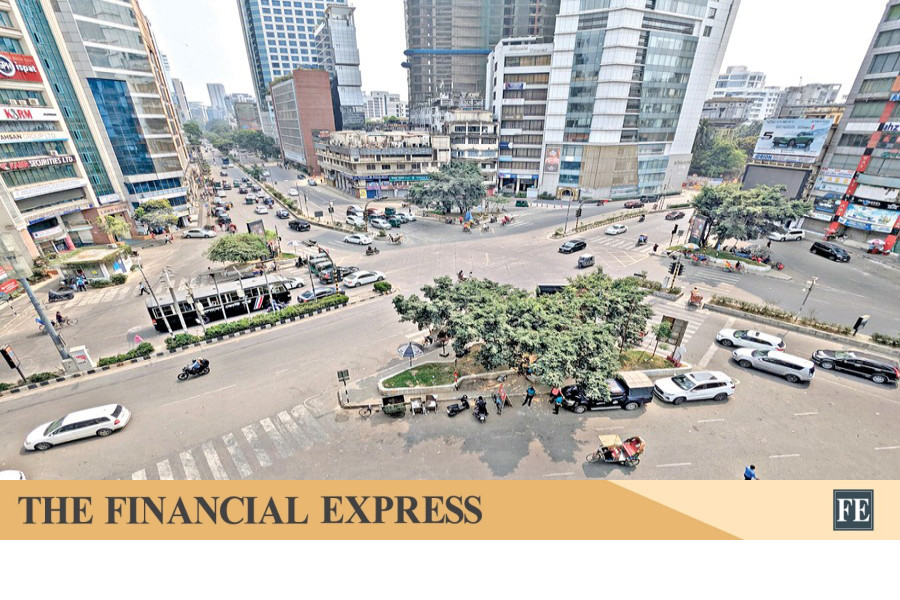
A busy intersection of Dhaka wears a deserted look during Eid holidays — FE file photo

The government announced a 7-day Eid-ul-Azha holiday from 25 to 31 May and cancelled Saturday, 23 May, as a weekly holiday to offset the long break. During Eid-ul-Fitr in March last, it added March 18 as a holiday, creating another 7-day break from March 17 (Shab-e-Qadr) to March 23.

This pattern is increasingly common, as bridge holidays allow families time together and longer opportunities for travel, celebration and rest -- but they carry a hidden cost.

Bridge holidays are more than minor decisions; they have significant economic consequences. Bangladesh must prioritise long-term economic progress over the short-term appeal of extended holidays. Without focus on productivity and growth, the country's development may be slowed.

The key challenge is balancing citizens' comfort with all-important economic activity necessary for progress.

Bangladesh already has many public holidays that affect economic activities. When government offices, banks and logistics operations pause, implementation of projects and activities involving exports and imports also come to a temporary halt, taking an economic toll.

In the public sector, effect of disruption seems manageable as salaries are paid and work resumes later. The case is not same for the private sector: factories miss targets if they stop; banks cannot delay transactions; and retailers, exporters, service providers, and logistics all face higher costs on account of longer holidays. SMEs are most vulnerable, lacking the cash flow to absorb the costs of closures.

One day off often means more than a day's lost work. It may affect the public sector less, as people are accustomed to the bureaucratic nature of its slow pace, but in the private sector, it compresses deadlines, drives up overtime, disrupts routines, and creates backlogs. The Bangladesh Employers' Federation estimates each unplanned holiday can cost the sector up to 1.5 billion taka in lost productivity and revenue.

Bangladesh aims to attract investment, improve the ease of doing business and boost productivity. Unplanned holidays disrupt planning, as companies need predictable schedules.

Many developed countries handle holidays in other ways.

China has long holidays for the Lunar New Year and Golden Week, but releases its calendar early and requires make-up work days. This lets businesses plan ahead and run via staggered operations and sector flexibility.

In Western countries, many businesses stay open during Christmas. Employees alternate leave, keeping retail, hospitality, transport, healthcare, logistics, digital services and financial systems active.

Bangladesh continues to treat extended holidays as a one-size-fits-all solution.

Businesses extend beyond offices and stay connected. Customers expect speed, transactions are online and supply chains cross borders. E-commerce, fintech and online providers face challenges because customers expect service-even during the holidays. Long breaks have a bigger impact.

Contrary to popular belief, long holidays do not boost happiness and efficiency. Sudden breaks slow teams, delay decisions and create backlogs.

Long holidays cause a demographic shift: millions travel from cities to rural areas. Estimates from the Bangladesh Road Transport Authority and news reports suggest 10-15 million leave Dhaka during major holidays like Eid. This exodus severely reduces urban foot traffic, hurting daily wage workers --rickshaw pullers, street vendors, restaurant staff, transport workers -- who depend on city crowds.

During the 2024 Eid-ul-Fitr, business associations in Dhaka reported a 60 per cent drop in daily earnings for these workers. Rural areas may see temporary retail boosts, but these gains are short-lived and do not offset urban losses. The net result is greater hardship for vulnerable urban earners, revealing another hidden cost of the holiday.

Planned annual leave aids recovery, but sudden breaks can rush work and reduce expected benefits, though family time is valued.

This does not mean major holidays should be cut. The question is how policymakers can organise breaks to honour culture and economic stability.

To address these issues, the government could take several clear actions:

First, clearly announce all official holidays, including bridge days, well in advance at the start of each year so businesses and individuals can plan accordingly.

Second, allow sector-specific flexibility, so that essential industries or services can stay open if needed, rather than requiring universal closures.

Third, require essential services-such as banking, ports, logistics, exports and customer support-to implement staggered or rotating staffing during holidays to minimise disruption.

Finally, set up regular consultations with private-sector stakeholders to align the holiday calendar with business needs, and form a joint public-private task force to review and update holiday policies.

Technology can help. Hybrid work, digital approvals, limited digital banking and staggered schedules reduce disruption.

In the end, every extra public holiday comes with a trade-off.

While extra holidays provide personal enjoyment, they lead to lower productivity, decreased efficiency and greater economic losses for Bangladesh.

As Bangladesh aims to enhance competitiveness and attract investment, its holiday policy must support resilient, long-term economic growth rather than sacrificing progress for temporary convenience. The decision policymakers make between short-term enjoyment and future prosperity will shape the country's success.

Sustainable growth depends not just on how hard a country works, but how wisely it manages breaks.​
 

Easing tax burden amid rising inflation

Atiqul Kabir Tuhin

Published :
May 09, 2026 23:23
Updated :
May 09, 2026 23:23

1778369697386.webp


The latest figures from the Bangladesh Bureau of Statistics (BBS) point to a stark reality: inflation is coming back to bite, driven by fuel price hikes and supply chain disruptions caused by the conflict in the Middle East. The inflation rate rose to 9.04 per cent last month from 8.71 per cent in March. Inflation had only eased to single digits in January 2025 after a double-digit streak that lasted several years. Now, it is resurging again, eroding the purchasing power of ordinary people.

According to the latest Household Income and Expenditure Survey (HIES) of BBS, the average monthly household income in 2022 was Tk 32,422. Given the sharp and prolonged inflationary trend since then, even a moderate estimate would place average annual household expenditure between Tk 5 lakh and Tk 6 lakh. Yet, the tax-free income threshold for individuals is Tk 3.75 lakh annually, which exposes a growing disconnect between income realities and the existing tax structure.

Recognising the mounting pressure on households, the country's leading business chambers have proposed raising the tax-free income threshold for individual taxpayers from Tk 3.75 lakh to Tk 5 lakh in the upcoming fiscal year. The proposal was placed by the FBCCI, the Dhaka Chamber of Commerce and Industry, and the Bangladesh Chamber of Industries during pre-budget discussions with the NBR. Business leaders argued that raising tax-free income limit would provide much-needed relief to low and middle-income people. At the same time, it would encourage greater consumer spending and economic participation, which, in turn, could help expand the overall trade and business network.

Meanwhile, in another example of administrative overreach, the interim government fixed the tax rates for individual taxpayers for the 2026-27 and 2027-28 fiscal years. While it has raised the tax-free income threshold for individuals from Tk 3.5 lakh to Tk 3.75 lakh, it has also introduced significant changes in tax rates and slabs. The number of tax slabs has been reduced, while rates across several brackets have effectively been increased, resulting in a higher overall tax burden for many taxpayers.

The government, however, remains hamstrung by persistent revenue shortfalls. For the upcoming fiscal year, a budget of Tk 9.30 trillion has been planned for FY27, of which the National Board of Revenue has reportedly been assigned a revenue collection target of Tk 6.95 trillion. Achieving this target may prove to be a tall order, given the persistent shortfall in meeting revenue target.

Considering the dual need of increasing revenue collection and providing relief to individual taxpayers amid inflationary pressure, experts suggest that the tax liability of individual taxpayers should be determined on the basis of their ability to pay, rather than gross income. It is because a person may be "taxable" on paper, but in reality he or she may be struggling to meet even the basic expenses of their household. In Bangladesh's social structure, a family's economic foundation is typically based on the income of a single individual, who often supports dependent children, students, homemakers, elderly parents, adult dependents, and even unemployed siblings.

Many countries around the world now view taxation not merely through the lens of individual income, but by taking into account the actual financial responsibilities of a taxpayer. In the United States, income up to a certain threshold is tax-free, with additional allowances for married couples. In countries such as Japan and Singapore, tax relief is provided by considering dependents, children, and family obligations.

It is time Bangladesh adopted a more comprehensive, family-based taxation system that goes beyond the narrow focus on individual income. Under this framework, tax liability could be assessed based on the overall structure of the household, including the number of earning members and dependents. Families with multiple earners could be taxed more proportionately. This would not only improve fairness but also reduce undue pressure on single-income households that are currently overburdened under a uniform tax structure.​
 

An analysis of reintroduction of package VAT

Dr. Md. Abdur Rouf

Published :
May 09, 2026 23:16
Updated :
May 09, 2026 23:16

1778466170554.webp


It is reported on 26 April, 2026 on the Financial Express that the government is considering reintroduction of package VAT-a fixed amount of VAT on small retail traders abolished in July 2019, following introduction of the new VAT law. There is a misunderstanding even among the concerned people about the abolition of package VAT and its impact. It is even understood that package VAT was abolished and in that place standard VAT was introduced, so those small retail traders are at disadvantage requiring justice. On this point, I believe, the need for reintroduction of package VAT has gained momentum recently. But the real scenario is completely different. The small retail traders eligible for package VAT along with some other traders with even larger business turnover remain outside VAT net under the current VAT regime. So, the need for reintroducing package VAT does not arise when they do not require paying VAT.

Under the previous VAT regime that ended in June, 2019, package VAT was in place only for small retail traders who had yearly sale of about Taka 5 lac or near. But under the current VAT regime that started from July 2019, all entities with yearly business turnover below Taka 30 lac remain outside VAT net. So, the rationale for reintroduction of package VAT becomes fade.

The VAT Regime

We need to keep in mind the basics of VAT regime of Banglaesh to get the point I am trying to make today. VAT is collected at import stage-we call it import VAT. VAT is collected at manufacturing stage-we call it production VAT. VAT is collected on the provision of services-we call it service VAT. VAT is collected at trading stage-we call it trade VAT. Under trade VAT, there falls dealer, distributor, commission agent, general store, departmental store, super shop, shopping mall, wholesaler, retailer etc. Trading stage remains widely dispersed with biggest entities as like as Walton Plaza and smallest entities as like as small shops at our neighbourhood.

If we look at the revenue scenario, last year NBR collected about Taka 1,56,000 core from domestic VAT. Of the amount, about 50 per cent came from manufacturing, about 40 per cent from service, about 5 per cent from trading and about the rest 5 per cent from Advance Tax (AT). Mentionably, import stage AT is shown with domestic collection but import stage VAT and SD is shown with import stage collection. In monetary value, trade VAT stands at about Taka 7,000 crore. Package VAT stands at the periphery of trade VAT that generated insignificant amount of VAT. So, an attention on package VAT is again misplaced.

The Trade VAT Regime

Commercial importers are traders. Those who purchase goods from commercial importers, manufacturers, local traders and then sell, they are traders. Traders can pay 15 per cent output VAT and can take input tax rebate. Out of the total about 8 lac VAT registered entities, about 2.5 lac are traders. Only a small number of them pay 15 per cent output VAT taking input tax rebate. A good number of traders pay 7.5 per cent output VAT without taking input tax credit. A large number of traders pay scanty amount of VAT. The lion's share of about Taka 7,000 crore trade VAT is paid by a small number of traders, though understatement also remains rampant. About 50 per cent of the registered traders do not submit VAT return. Lacs of small traders are now remain unregistered under VAT and do not pay any VAT. Mostly, they fall under Taka 30 lac bracket requiring no VAT registration. Under the above realities, we need paying more attention on the big and medium traders-not upon the package VAT eligible micro units.

The Package VAT Regime

Under the previous VAT regime, package VAT was meant for small retail traders only. We know that traders are of various types, such as: dealer, distributor, commission agent, super shop, shopping mall, departmental store, general store, wholesaler and retailer. From among them only the small retail traders were eligible to pay package VAT. There was a method of determining package VAT eligibility. They were large in numbers but the amount of VAT they paid was scanty. Package VAT was then ironically called as 'packet VAT'-reintroduction of the same may reintroduce the same possibility.

Annual maximum value addition was the criteria for ascertaining the status of the small retail traders. In the Dhaka (North), Dhaka (South) and Chittagong City Corporation areas, for retail traders, yearly maximum value addition was ascertained at Taka 1,86,667 with a fixed amount of minimum Taka 28,000 package VAT. In other City Corporation areas, for small retail traders, yearly maximum value addition was ascertained at Taka 1,33,334 with a fixed amount of minimum Taka 20,000 package VAT. In the district municipal area, for small retail traders, yearly maximum value addition was ascertained at Taka 93,334 with a fixed amount of minimum Taka 14,000 package VAT. And in other areas, for small retail traders, yearly maximum value addition was ascertained at Taka 46,667 with a fixed amount of minimum Taka 7,000 package VAT. It was directed that the VAT Divisional Officer, Circle Officer, Assistant Revenue Officer and local business leaders together shall prepare list of such small retail traders. So, determination was also assumptive. Even today, ascertaining value addition is a challenging task in our VAT management system. These small retail traders were required to preserve purchase documents, cash memo and sale register. Package VAT could be paid yearly once or in monthly instalments. Based on the above value addition and considering about 30 to 40 per cent value addition in a business, the yearly turnover stands at around Taka 5 lac or near. Currently, an entity with Taka 30 lac or below annual turnover enjoys VAT-free status. So, the need for reintroduction of package VAT does not arise.

In the years close to 2019 when package VAT was scrapped, total trade VAT collection stood at about Taka 4,000 core a year. Of the amount, package VAT contributed to Taka 238, 189 and 117 crore respectively during FYs 2015-16, 2016-17 and 2018-19-a very insignificant amount (The Fiancial Express, 26 April, 2026). Mentionably, the amount of Turnover Tax (TT)-another tax on SME during this period was about Taka 4.85, 2.45 and 20.74 crore respectively-scanty amount. So, the collection from package VAT and TT is very negligible. So, this shall not be a sane proposal to pursue these micro entities-then the bigger ones may go unattended.

A stark reality of our economy is overwhelming amount of turnover is generated by a small number of actors and the overwhelming number of actors generate small amount of turnover. This is true at manufacturing, service, trading all stages. Revenue pattern is also same. The dark reality is the VAT authorities till today could not know the real amount of turnover. This is the greatest challenge in our revenue system requiring utmost attention. An attention on package VAT is rather misguided or misdirected.

Points of Consideration

Detection of the actual amount of turnover of the business entities is the biggest challenge in our VAT system. So, we need to find criteria-based solution on that basis we can differentiate the traders eligible to pay VAT and keep some of them outside VAT. Our current trade VAT regime is a bit anomalous. Generally, we know that an entity with a yearly turnover not exceeding Taka 30 lac enjoys VAT exemption, an entity with a yearly turnover not exceeding Taka 50 lac shall pay 4 per cent Turnover Tax (TT) and an entity with above Taka 50 lac yearly turnover shall pay VAT. But NBR's General Order No-17/Mushak/2019, dated 17 July 2019 lists goods and services those require paying VAT compulsorily whatever be their business turnover. So, at the field level, it is challenging for the common people to ascertain which entity is required to pay VAT and which entity enjoys VAT-free status.

It is challenging for the small traders to maintain proper accounts. Their revenue contribution is scanty. The VAT administration is not properly equipped to fight in all fronts. Highest amount of VAT is paid by a small number of entities though till today, there persists large-scale underreporting among big and medium entities. VAT is imposed on sale. We need to know the proper amount of sale-of course of the toppers first. Roaming around the utmost periphery of package VAT may generate disturbing discourse only.

Recommendations

To meet the objectives of facilitating SMEs with less strain on revenue collection, provisions can be made to specifically determine who shall pay trade VAT and who shall remain VAT-free. Rather than reintroducing package VAT, the small retail traders may be kept outside VAT net along with current Turnover Tax payers. Only commercial importers, supershops, traders located at shopping mall, general store, departmental store, sole dealer, sole agent, sole distributor, entities with limited company and partnership status can be kept under trade VAT regime. A trader located anywhere with less than 150 square feet space who is a retailer and not a limited company or not a partnership firm can be kept outside trade VAT. Advance Tax (AT) paid at import stage by any commercial importer can be made final settlement with ease during first sale. Those who sell at purchase price being sole agent on commission basis shall not pay any VAT since there is no value addition. Rate of trade VAT may be reduced to 3-5 per cent-the current 7.5 per cent trade VAT without input tax credit is too heavy. It is recommended that trade VAT provisions may be framed accordingly. Prior to its introduction, complete invoice automation of these entities at one go is suggested strongly.

The objective of reintroduction of package VAT is to give relief to the small traders-a good move but cauious weighing is needed about whether the measures to be taken shall meet the objectives. It is more expedient to remove VAT from small traders, rather than reintroducing package VAT because reintroduction of package VAT shall neither give the small traders relief, nor shall it contribute to any significant amount of revenue. At the same time, Turnover Tax (TT) may also be scrapped. This can be the proper approach to facilitate the SMEs. The government shall lose pea nuts. VAT administration can be engaged in ensuring compliance of large and medium players generating many times more returns in terms of revenue.

The writer is a former Member of NBR. He is currently Chairman of Bangladesh VAT Professionals Forum and International VAT Training Institute.​