| Global Defense, OSINT & Geopolitics Wire

[🇧🇩] Monitoring Bangladesh's Economy

[🇧🇩] Monitoring Bangladesh's Economy
1K
56K
More threads by Saif

G Bangladesh Defense

Finance Minister Amir Khosru deems IMF conditions ‘not suitable’ for Bangladesh economy

bdnews24.com

Published :
May 11, 2026 23:45
Updated :
May 11, 2026 23:45
1778542462404.webp


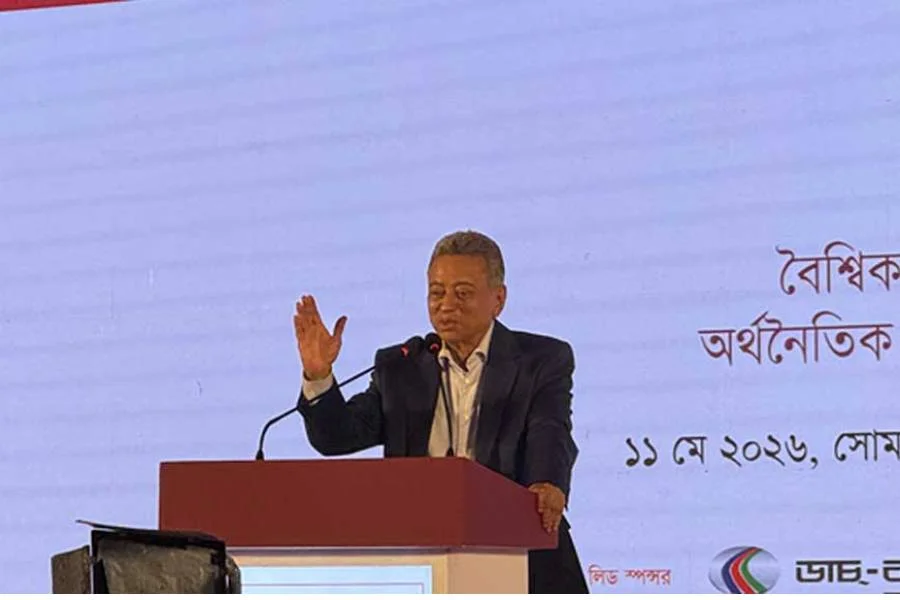
Finance Minister Amir Khosru Mahmud Chowdhury has said the conditions being added by the International Monetary Fund (IMF) under the loan agreement are not “suitable” for the economy of Bangladesh.

He made the comments at a discussion titled “Roadmap to Building Bangladesh’s Economic Future in the Face of Global Uncertainty” organised by the Daily Bonik Barta in Dhaka on Monday.

The finance minister said the government could not accept all IMF conditions out of “responsibility” to the people.

Khosru said, “Most of the development partners agree with the BNP’s election manifesto. They are my development partners. If they do not agree with me, I will not be able to move forward.

“There are disagreements in many places with the IMF, because the conditions that they are giving are not suitable for my economy.”

Explaining the government’s continued stance against the IMF’s conditions, he said: “We are an elected government with a responsibility to the people. We cannot do everything according to their words.

“That is why we have differences with some multilateral organisations, and these differences will continue.

“I will correct my course as much as it is consistent with my manifesto. It is not possible to do anything beyond this.”

Amid concerns about the release of the remaining amount of the loan agreement with the IMF, the minister claimed on Apr 18 that the IMF has a “positive” attitude to continue the loan programme.

Earlier, after a meeting with IMF Deputy Managing Director Nigel Clark in Washington DC, US, he told journalists: “The discussions [on the release of funds] are still ongoing.”

About three weeks later, he indicated that Bangladesh had failed to meet the IMF’s conditions, even as the country sought an additional $2 billion beyond the existing loan package.

The additional funds were requested to tackle the fuel crisis amid the war in the West Asia.

However, the IMF reportedly imposed stricter conditions than those under the current agreement.

Bangladesh signed a $4.7 billion loan deal with the IMF in early 2023 after several rounds of negotiations during the Awami League government to address the financial crisis.

In June 2025, the interim government led by Muhammad Yunus increased the package by $800 million, raising the total to $5.5 billion.

So far, Bangladesh has received $3.64 billion in five instalments, leaving $1.86 billion outstanding. The sixth instalment and the remaining funds were due in December last year.

At the time, the IMF said the remaining amount would be released following discussions with an elected government.

Before disbursing the funds, the lender also sought progress on reform conditions, including improvements in revenue collection, where implementation has lagged.​
 

Revamping state-owned sugar mills

SYED FATTAHUL ALIM

Published :
May 11, 2026 21:21
Updated :
May 11, 2026 21:21

1778543143615.webp


Being part of a region that was historically the first producer of sugar by boiling sugarcane juice until it turned into crystals, Bangladesh now meets 95 to 98 per cent of its annual demand (of roughly between 2 and 2.5 million metric tons) for sugar through import. With the domestic production ranging between 1.0 and 5.0 per cent of the annual demand, the country has to import its sugar from even faraway lands like Brazil. The country has some 15 sugar mills under the Bangladesh Sugar and Food Industries Corporation (BSFIC). But these industries, as in the case of other state-owned industries, are loss-making, top-heavy institutions. Moreover, the obsolete machinery of these sugar mills contributes to increasing sugar's production cost, which often far exceeds its market price. Unsurprisingly, running these sugar mills have become commercially unviable. So, they need major rehabilitation to make them viable. As these sugar mills cannot meet the public's demand for sugar, the market is now under the control of private businesses (five to six large industrial groups essentially control the sugar market), who import raw sugar and refine it. That is the main reason why the sugar market is so volatile. In such circumstances, unless the state-owned sugar mills are rehabilitated, modernised and made operational, the private refiners' grip on the market and its attendant instability will continue. The good news is that the commerce minister, Khandakar Abdul Muktadir, who is also in charge of the industry ministry, told journalists that the government was going to reopen nine of the 15 sugar mills under the BSFIC, which are now sitting idle.

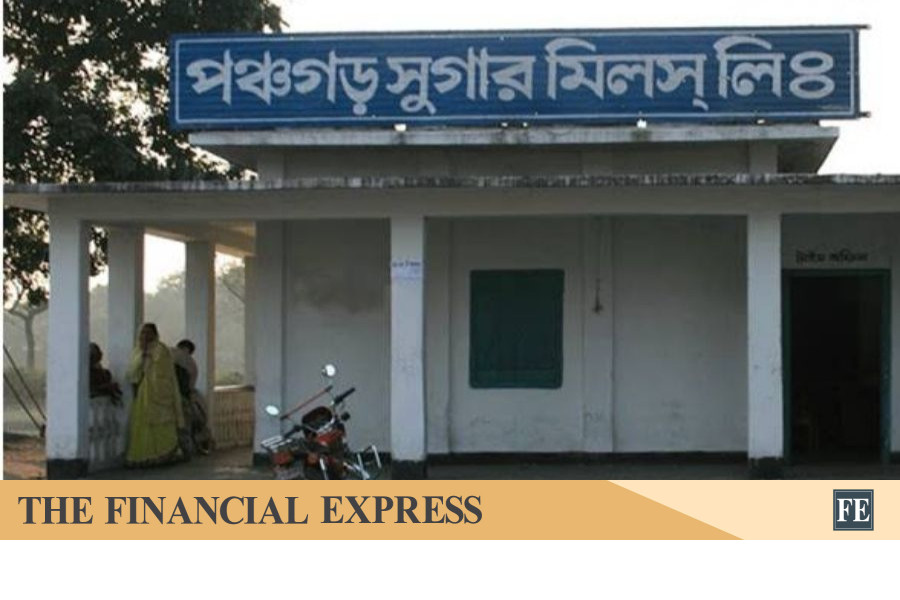
Notably, six of these sugar mills are still operational. On this score, the minister reportedly visited the Panchagar Sugar Mills Limited and stressed the need for renovation and introduction of new technology for the age-old sugar mills. As he assured, once made operational, those sugar mills will be able to reduce country's dependence on imported sugar, contribute to the economy, benefit workers and sugarcane farmers, create jobs and stimulate income-generating activities in the areas centering the sugar mills. The fact that the minister talked with the sugarcane farmers in Panchagarh is reassuring. In fact, most of the state-owned sugar mills in the past were responsible for exploitation of the sugarcane farmers. The administration of those sugar mills was corrupt to the core. The sugarcane farmers would be subjected to cheating by mill officials as soon as the farmers emptied their sugarcane-laden bullock carts on the factory premises. Farmers would be cheated while weighing sugarcane. A sizeable chunk of their product would be rejected without rhyme or reason. The payment against their supply of sugarcane would also fall into bureaucratic traps. That is the reason why the sugarcane farmers in some districts formed associations and staged protests against the exploitative sugar mills officials. In the face of such raw deal meted out to the sugarcane farmers by the sugar mills authorities, the farmers naturally lost interest in supplying their products of hard labour to the mills. This acted as a disincentive to the sugarcane growers.

The state-owned sugar mills' failures could also be traced to the resentment of the sugarcane farmers who gradually stopped growing sugar cane and switched to other cash crops. In that case, the government has to convince the farmers that the rehabilitated sugar mills authorities would treat them fairly and the past practice of mistreating the farmers by mill officials would stop. It is believed the commerce minister's exchange of views with the sugarcane farmers would be motivating enough for the growers. While assuring the farmers about the benefits they would be able to draw from the revived sugar mills, the minister, at the same time, would also do well to issue strict warning against any instance of mistreatment or exploitation of sugarcane growers by the mill officials in the future. In this connection, alongside renovating the sugar mills, their administration needs also to be revamped to render those efficient, productive and free from corruption.​
 

Forex reserves above $34b despite rising ACU payments

Siddique Islam

Published :
May 11, 2026 10:53
Updated :
May 11, 2026 10:53

1778543463746.webp


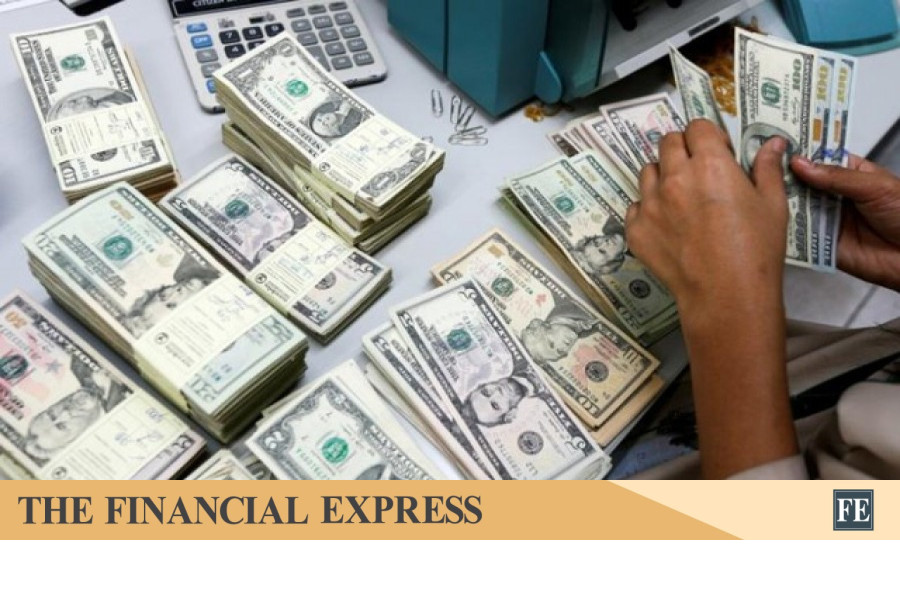
Bangladesh's external account looks stable with gross foreign-exchange reserves standing above US $34 billion despite deferred import payment through the Asian Clearing Unit (ACU), official statistics show.

The government cleared payments worth $1.51 billion against imports made in March-April period of 2026.

After the payment, the country's gross forex reserves came down to $34.14 billion Sunday from $35.62 billion of previous working day.

As per the International Monetary Fund (IMF)'s Balance of Payments International Investment Poisson Manual-six edition, generally known as BMP6, the reserves fell to $29.48 billion during the period under review from $30.96 billion, according to the central bank's latest data.

"Our forex reserves remain at a satisfactory level even after making the routine payment to the ACU," a senior official of Bangladesh Bank (BB) told The Financial Express (FE) in response to a query.

He also says Bangladesh is now capable of meeting more than five months' import-payment obligations with its existing reserves.

"Higher remittance inflows and lower import-payment obligations have contributed to an improvement in the country's reserve position," the central banker explains.

The purchasing of the US dollar from the commercial banks by the central bank has also helped push up the forex reserves recently, according to the central banker.

The central bank of Bangladesh has so far bought $5.75 billion from banks directly since July 13 last under the prevailing free-floating exchange-rate arrangement, the BB data show.

"We're now giving priority to keeping the exchange of the US dollar against the local currency stable despite ongoing geopolitical tensions," the central banker says in response to another query.

The central banker also says the gross forex reserves may cross $36 billion by the end of June if the government secures minimum $2.0 billion in loans from overseas sources.

Meanwhile, the amount of ACU payments rose to $1.51 billion during the period under review from $1.37 billion earlier mainly due to higher imports from the ACU-member countries, particularly from India.

Bangladesh is now importing different consumer items, cotton, raw materials and capital machinery from the ACU countries, especially from neighbouring India, according to the central bankers.

As per the existing provisions, outstanding import bills and interest thereof are to be paid by member-countries at the end of every two months.

The ACU is an arrangement involving Bangladesh, Bhutan, India, Iran, Myanmar, Nepal, Pakistan, Sri Lanka and the Maldives through which intraregional transactions among the participating central banks are settled on a multilateral basis.​
 

Aligning domestic policies with international trading practices

Wasi Ahmed

Published :
May 12, 2026 21:47
Updated :
May 12, 2026 21:47

1778629963385.webp


The question whether domestic policies alone can effectively boost trade is both timely and complex. To understand the impact and limitations of such policies, it is essential to consider them within the broader context of today's global trading environment-an environment shaped as much by external forces as by internal ones.

It is commonly acknowledged that the power of domestic policies to stimulate trade has certain limits, particularly when considered against the backdrop of an increasingly interconnected and interdependent global economy. Trade today is less about isolated national efforts and more about navigating a web of regional agreements, international regulations and cross-border market dynamics. While domestic policy frameworks-such as competition policy, export-import (exim) policy, and industrial policy-play a crucial role in shaping the trade potential of a country, their influence is significantly constrained by external variables over which countries, especially developing and less-developed ones, have limited control.

Domestic policies are generally geared towards creating an enabling environment within the national economy. They aim to ensure price stability, encourage fair business practices, enhance industrial productivity and create infrastructure conducive to trade. These measures support domestic firms in becoming more competitive, both at home and abroad. For example, a well-formulated industrial policy may promote sector-specific growth, leading to increased production for export. Similarly, competition policy can reduce monopolistic tendencies and improve consumer choice and pricing, thereby indirectly influencing the global competitiveness of domestic firms.

However, this is only one side of the coin. The other side presents a more challenging picture. No matter how sound a country's internal policies are, they often fall short in addressing trade barriers imposed by foreign partners. This includes non-tariff barriers, restrictive standards, subsidies, and protectionist measures that distort fair competition. The imbalance in economic strength and negotiating power between trading partners further complicates matters. Developing countries, for instance, frequently find themselves on the weaker end of trade negotiations, having to comply with rules that do not favour their interests.

It is precisely because of these challenges that nations increasingly seek alternative strategies to facilitate trade, such as forming regional alliances or entering into bilateral agreements. These arrangements are often seen as more achievable and less demanding than global trade negotiations. Regional trade agreements (RTAs) and bilateral deals offer a more manageable framework for cooperation, one in which countries can expect a certain degree of mutual understanding and benefit. Geographical proximity often leads to shared challenges and goals, which can be more effectively addressed through joint efforts. For example, neighbouring countries may have similar agricultural concerns, infrastructure limitations, or energy needs, making cooperation more practical and results-driven.

The rise of regionalism in trade, therefore, has been largely driven by the desire for a level playing field-something that multilateralism, despite its broader reach, has frequently failed to provide. Yet, regionalism is not without its flaws. Asymmetries in the economic strength of countries within regional trade blocs have often resulted in unequal benefits. In several such arrangements, smaller or economically weaker members have struggled to keep up, unable to take full advantage of market access opportunities due to their limited production capacity or lack of export-ready goods. These internal disparities can undermine the broader goals of equitable trade and shared prosperity.

Coming back to domestic policies, their role in boosting trade, though undeniably important, must be viewed within these wider perspectives. At best, domestic policies can serve to strengthen a country's internal supply base, address inefficiencies, improve product quality and invest in research and innovation. They can enhance infrastructure, facilitate logistics, streamline customs procedures, and improve the business climate. All of these factors contribute to trade readiness and resilience.

However, domestic policies alone cannot address or overcome the external challenges that come with international trade. These include policy-induced barriers from partner countries, such as anti-dumping duties, phytosanitary standards that act as disguised restrictions and sudden regulatory changes that disadvantage exporters. No matter how proactive or well-designed a country's internal policies are, they cannot shield the shifting landscape of international trade rules that may be tilted in favour of stronger players. For instance, many developing countries have experienced market access difficulties despite liberalising their own markets and aligning domestic policies with international norms. This suggests that mere adoption of trade-friendly policies is not enough to guarantee success in global markets. The external environment, particularly the actions and decisions of trade partners, plays a critical role in shaping outcomes. Without reciprocal openness, supportive international institutions and fair dispute resolution mechanisms, the potential of domestic policies remains constrained.

Therefore, while domestic policies form the foundation of a country's trade strategy, they must be complemented by strategic engagement in regional and multilateral forums, capacity-building for trade negotiations, and efforts to diversify trade partners and products. Furthermore, building alliances with like-minded countries, investing in regional value chains and advocating for fairer international trade rules are all critical elements in a broader trade policy framework.​
 

Created in Bangladesh

FE

Published :
May 14, 2026 00:08
Updated :
May 14, 2026 00:08

1778714970261.webp


When deliberations on economy centre around gross domestic product (GDP), inflation, export, import, inflation, per capita income, skill development etc., human creativity rarely figures there. The impression is that career building and entrepreneurship are the only drivers behind economic advancement. The innate ability to generate original ideas and theories is hardly recognised. Scientists and artists appear to be poles apart from one another, but a closer look reveals that both generate original, valuable and relevant ideas, solutions and artistic genres that advance human civilisations by several steps. Both use their imaginations, personal experiences and cognitive skills to advance new concepts and creative modes. Creativity can express itself in tangible and intangible forms. Usually, policymakers are concerned about such creations as are functional but the artistic output makes life and society enriched on a plane of emotional intelligence.

Governments in general do not bank on what is called 'creative economy'. But the incumbent government has made a bold step towards economising creative works. It wants to bring together the creative sectors in order to make those a part of the economy and also highlight the cultural values ingrained in artistic works. Integration of the disparate creative fields starting from social media contents, information and technology (IT) apps to performing arts like music, theatre and cinema to fashion and life-style is planned under the creative economy. The fact is that all such sectors are engaged separately to generate revenue. But the institutional or organisational effort and infrastructure needed for their branding are missing. The government now wants to play the role of a patronage in order to transition the outputs of those sectors into the branding 'Created in Bangladesh'. Some extraordinary talented people may have done the task of branding Bangladesh through their creative works, but others could not market their intellectual and emotional products in the same way. Artists Monirul Islam and Shahabuddin Ahmed, based respectively in Madrid, Spain and Paris, France have done the branding successfully.

Sure enough, painting, drama and lately cinemas and documentaries produced here are world-class creativity but their promotion has not been carried out in the same measure. With the government's financial backing the intellectual property rights of creative works could be secured and their promotion could be facilitated. In the same way copyrights of apps and digital contents produced by techno geeks have to be protected. The latest Copyright Act 2023 covers artistic, literary, dramatic, musical and cinematographic works along with digital contents.

If the government is serious about promoting the creative genres of art, culture and scientific and technological products, it has to form a committee or body comprising people of high calibre in the respective fields. They will advise the ministry concerned about promoting potential young talents in various creative fields. If the job is left to the bureaucrats, there is little chance of taking the initiative much further. Whether the affairs involve artistic or digital exercise, the proposed committee will be given the responsibility of monitoring and guiding young talents for realising their potential in a congenial ambience. If the creative economy prospers, it will generate revenue for the government exchequer but it should not be the only objective for financing those sectors. Branding is more important.​