[🇧🇩] Monitoring Bangladesh's Economy

[🇧🇩] Monitoring Bangladesh's Economy
1K
53K
More threads by Saif

G Bangladesh Defense

Bangladesh must brace for another inflationary shock

Economists warn

1793320262289.webp

Photo: Anisur Rahman

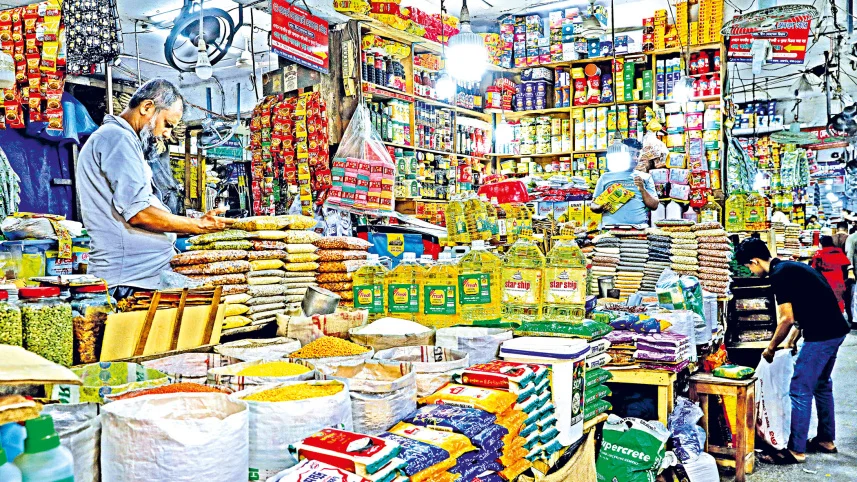
Bangladesh needs to prepare for another bout of inflation as global prices could rise from this coming winter, driven by surging oil prices and higher agricultural production costs, economists warned yesterday.

They called for stronger social protection, better market management and a fairer distribution of economic growth to protect vulnerable households from rising living costs.

“We should not assume that the situation will improve in the coming months. We need to prepare for the possibility that it could deteriorate further,” said AKM Enamul Haque, director general of the Bangladesh Institute of Development Studies (BIDS).

Crops currently growing in fields worldwide would begin to be harvested next month, but production costs had already doubled, he claimed.

Oil prices had risen from around $70-80 to $115 since February, driving up the costs of fertilisers, pesticides and other agricultural inputs.

Enamul made the remarks at a discussion on food security, nutrition and poverty reduction at the National Press Club yesterday. Right to Food Bangladesh, a civil society advocacy platform, organised the event.

Food security requires access to nutritious and safe food, not merely enough to fill one’s stomach, he said. He called for a review of the public food distribution system, particularly support for rural households facing seasonal income uncertainty.

Citing Bangladesh Bureau of Statistics data, Enamul said 51 percent of rural people were indebted, compared with 32 percent of people in metropolitan cities and around 40 percent in other urban areas.

“If our system is too focused on urban areas, we may fail to reach rural households facing greater income uncertainty and financial pressure,” he said.

He also called for stronger market oversight and supply-chain reforms, saying a price commission alone would not solve the problem unless markets functioned properly. Climate change would further complicate food security, he added.

Sayema Haque Bidisha, a professor of economics at the University of Dhaka, said economic growth alone could not ensure food security unless its benefits were distributed more equitably.

“If growth does not reduce inequality and is not inclusive, it cannot ensure food security or deliver its benefits to ordinary people,” she said.

Bidisha said the impact of inflation should be assessed by examining changes in food consumption, nutritional intake and household coping strategies, rather than relying solely on poverty statistics.

Households may sell assets, including gold and jewellery, or borrow money to meet daily expenses, leaving them financially vulnerable even when their hardship is not immediately reflected in official poverty figures, she said.

She called for higher allocations for social safety net programmes, greater transparency in benefit distribution and minimum-wage arrangements covering workers beyond the garment sector, particularly those employed in the informal economy.

Economist MM Akash warned that slowing economic activity and persistent inflation were eroding purchasing power and making essential goods and services increasingly unaffordable.

He said workers in the private and informal sectors had limited protection against rising costs. Referring to garment workers’ demand for a monthly salary of Tk 30,000 to cover household expenses, he said the gap between wages and living costs reflected unequal income distribution.

Akash also questioned whether Bangladesh would have sufficient foreign exchange to import food if domestic supplies fell short.

In the garment sector, he advocated profit-sharing arrangements between factory owners and workers to improve productivity and ensure workers received a fairer share of industry earnings.

He warned that political instability, corruption, extortion and weak governance could further undermine efforts to tackle the crisis.

Asif M Shahan, a professor of development studies at the University of Dhaka, said Bangladesh needed greater citizen participation in policymaking rather than relying solely on government intervention.

He argued that ordinary people and interest groups had limited influence over decisions affecting their lives.

“Instead of simply asking the government to intervene and waiting for institutions to act, we need to focus on citizen mobilisation and create pressure from below,” he said.

Shahan proposed citizens’ assemblies and other forms of collective action to improve accountability in social protection programmes.

Political parties would be more likely to reform the system when public pressure influenced their political calculations, he added.

Among others, Mohsin Ali, general secretary of Right to Food Bangladesh, and Kaniz Fatima, a coordinator of the platform, also spoke.​
 

TAKA OVERVALUED NEARLY 6.5PC IN REER RISE
Concern about Bangladesh losing export competitiveness
Inflation makes domestic goods costlier, imports little cheaper


1793402167165.webp


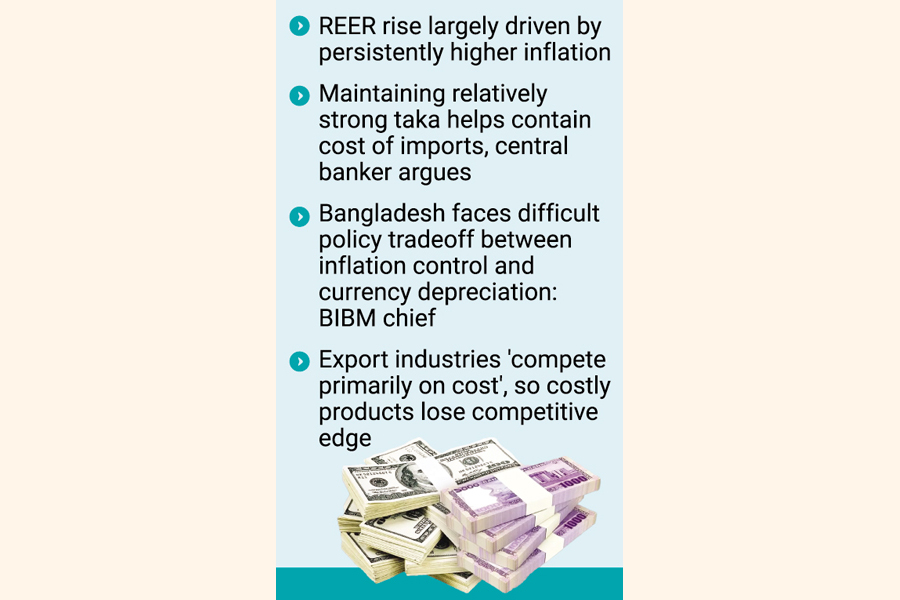
Concerns about Bangladesh's export competitiveness stoke up as the local-currency taka gets overvalued by nearly 6.5 per cent against its benchmark level in exchange with peer currencies and makes products costlier.

According to latest data, the real effective exchange rate (REER) of the currency rose to 106.29 in September, indicating that the taka was overvalued by nearly 6.5 per cent.

The elevated REER suggests that the local currency has become relatively expensive against the currencies of Bangladesh's major trading partners, potentially making Bangladeshi goods less competitive on the international market.

The increase has largely been driven by persistently higher inflation in Bangladesh than in its trading-partner economies which has pushed up the relative price of locally produced goods.

The September reading indicates that the local currency would need to depreciate to restore external competitiveness, economists and central bank officials have said.

However, instead of allowing the currency to weaken in line with the REER movement, Bangladesh Bank has maintained an exchange rate that has kept the taka relatively strong against the US dollar.

The dollar-taka exchange rate stood at Tk 121.87 in September, while the indicative bilateral rate consistent with the REER benchmark was Tk 123.03, suggesting a gap between the prevailing and indicative exchange rates.

REER measures a currency's value against a weighted basket of currencies of major trading partners, adjusted for differences in inflation.

It is widely used by central banks to assess a country's external price competitiveness.

An index value of 100 represents the benchmark level. A reading above this mark generally indicates that a currency is relatively overvalued, while a reading below 100 suggests undervaluation.

The central bank officials argued that maintaining a relatively strong taka helps contain the domestic cost of imports.

Since import payments are settled in foreign currencies, a depreciation of the taka would require importers to spend more local currency to purchase the same amount of dollars, increasing the cost of imported goods.

"If we depreciate the taka in line with the REER, we will have to pay more in local currency for imported goods," a Bangladesh Bank official told the FE, requesting anonymity, about the virtues of managed exchange rate.

But economists warn that keeping the currency relatively strong for an extended period could undermine export competitiveness and affect foreign-exchange earnings as well as the remittance inflows.

"In my view, higher inflation is the principal reason behind the increase in the REER," said Dr Md. Ezazul Islam, director-general of the Bangladesh Institute of Bank Management (BIBM).

He said a persistently high REER would adversely affect exports by making Bangladeshi products relatively more expensive in overseas markets.

The longer-term implications could also extend to remittance inflows if an overvalued taka reduces the incentives for expatriate Bangladeshis to send money through formal banking channels, he added.

Bangladesh faces a difficult policy tradeoff between bringing inflation under control and allowing further depreciation of the taka to restore external competitiveness, Dr Islam said about the quandary.

A persistently elevated REER can erode the price advantage of domestic producers in international markets, particularly in export-oriented industries that compete primarily on cost.

The central bank calculates the REER using a basket of 17 currencies, with fiscal year 2023-24 serving as the base year, when the index was assigned a value of 100.

The calculation incorporates Bangladesh's trade and remittance relationships with its major trading partners, adjusting the nominal exchange rate for relative inflation movements.​
 

Digital finance yet to reach its full potential

1793402580803.webp


In Bangladesh's garment sector, digital wage payments expanded sharply after 2020. For workers who still need cash to pay rent and cover everyday expenses, receiving wages digitally does not eliminate the need to visit an agent and withdraw part of their wages in cash. It simply means they have to do so after receiving their wages. This highlights a broader problem with Bangladesh's digital finance boom. Mobile financial services (MFS) have reached a considerable share of the population, but people do not always have enough reason to keep using them for everyday transactions.

The scale of Bangladesh's digital finance boom is clear in the numbers. The value of mobile financial services (MFS) transactions nearly tripled between 2020 and 2024, rising from about Tk 5,600 billion to Tk 17,400 billion, according to the International Monetary Fund's (IMF) Financial Access Survey. But this growth does not necessarily mean people are relying less on cash. A considerable share of Bangladeshis now has access to mobile financial services, even if how often they use them varies widely. Yet cash still dominates day-to-day spending, while hundi, an informal channel for cross-border remittances, continues to operate outside the formal financial system. That is the puzzle worth explaining. The question is not whether Bangladesh has built digital finance, but why so much economic activity still finds it easier to avoid.

The question, then, is not simply whether people can enter the digital financial system, but whether it gives them enough reason to keep using it. For workers who receive wages through bKash but still need cash for rent and everyday purchases, withdrawing money comes at a cost. bKash charges Tk 18.50 per Tk 1,000 when customers cash out through a standard agent. Customers can register up to two preferred bKash agents, known as "Priyo Agents," in their accounts to access a lower cash-out rate of Tk13.95 per Tk 1,000 on monthly withdrawals of up to Tk 50,000, compared with Tk18.50 at other agents.It is not the sign-up cost but it is the exit cost. The amount sounds small until it repeats. Someone withdrawing Tk 15,000 twice a month at the standard rate pays Tk 555 a month, or Tk 6,660 over a year, just to turn a digital balance into spendable cash. For garment workers, delivery riders and other people who regularly need cash, this recurring expense can make cash more attractive than keeping money in the digital system.

Digital finance also changes how businesses interact with the formal economy. Digital transactions can create records that help the National Board of Revenue (NBR) assess tax liabilities. Greater visibility of business sales may also encourage informal businesses to keep proper accounts and comply with applicable tax rules. In January 2026, NBR introduced a facility allowing companies to pay large amounts of corporate tax and value-added tax (VAT) through bKash, making tax payments faster and easier. For companies already operating in the formal system, this can simplify tax compliance. For some small businesses operating informally, however, digital sales records may make their turnover more visible to tax authorities and raise concerns about compliance costs. This can make cash more attractive when the immediate benefits of formalisation are unclear. Digital finance, therefore, needs to offer small businesses practical reasons to formalise, not simply make their transactions easier for the state to monitor.


1793402622947.webp


Remittances provide a clear example of how incentives shape financial choices. Through 2023 and into 2024, banks' base dollar rate was around Tk108-110. Formal senders could also receive a 2.5 per cent government incentive and, from October 2023, an additional bank incentive of up to 2.5 per cent. Together, these could raise the payout to Tk 115-115.50, although bankers' associations later sought to keep rates near Tk 115. Hundi networks reportedly offered Tk115-119. Senders who received all formal incentives could, therefore, face little or no gap, while those using ordinary bank transfers without these incentives could lose up to Tk 5,500 on a $500 remittance. Hundi is an informal transfer arrangement in which a migrant pays a broker abroad and a connected broker arranges payment in taka to the worker's family in Bangladesh. The brokers settle between themselves outside the formal banking system. Exchange-rate differences and uneven access to formal incentives help explain why some workers chose Hundi despite its risks. Because it operates outside authorised financial channels, users lack the same protections as bank customers and may have fewer ways to recover their money if a transfer fails. These transfers also bypass official remittance reporting. On 8 May 2024, Bangladesh Bank introduced a crawling peg system and set a reference rate of Tk117 per US dollar, allowing the official exchange rate to adjust gradually. The move was intended to narrow the gap with market rates and reduce Hundi's appeal. However, formal channels must remain competitive with informal alternatives if users are to choose them consistently.

A smaller version of the same open-economy friction appears in cross-border digital advertising. When Bangladeshi businesses pay foreign platforms such as Facebook and Google to promote their products, they can face additional taxes. Under rules introduced or clarified between 2019 and 2023, these payments can be subject to a 15 per cent VAT, plus a withholding tax of up to 15 per cent when the payment is remitted abroad for digital advertising. The withholding tax is calculated on the advertising payment itself, not on the business's total sales. As a result, boosting a Facebook post may take only a few taps, but paying for that advertising from Bangladesh can involve additional tax costs and payment procedures. These costs add friction to cross-border digital payments and increase demand for foreign currency, even when the technology itself works smoothly.

Bangladesh Bank's recent actions show how the country is trying to address these barriers. On April 1, 2026, Bangladesh Bank made a single Bangla QR code mandatory at all merchant points, directing banks and mobile financial service providers to replace their separate QR codes by 30 June. The aim is simple. A shop can display one code that accepts payments through participating banks and mobile financial service apps. Merchant fees, however, have remained an important concern. On July 1, Bangladesh Bank set a minimum Merchant Discount Rate (MDR), the fee merchants pay for accepting digital payments, of 1 per cent, including VAT. However, it later withdrew the minimum from October 1 and set the interbank interchange reimbursement fee at zero. These changes give payment providers more flexibility to reduce merchant charges, although they do not necessarily make all digital payments free for merchants. From the same date, merchants must also receive Bangla QR payments immediately. From November 1, customers are scheduled to be able to transfer money between participating institutions by scanning another person's Bangla QR code or uploading its image. These changes address some of the practical barriers to digital payments. A common QR code makes payments easier to accept, while lower payment-system costs and immediate settlement can make them more attractive to merchants. However, these reforms do not eliminate cash-out costs or concerns about tax compliance. Their success will depend on whether digital payments become more convenient and economical for everyday use.

Digital finance has expanded rapidly in Bangladesh, with MFS transaction value nearly tripling between 2020 and 2024. Bangladesh Bank has also taken steps to make digital payments easier through a common Bangla QR code and faster merchant settlements. Yet expanding transactions and improving payment infrastructure have not removed the incentives that keep people and businesses dependent on cash and informal channels. Cash-out costs, the limited immediate benefits of formalisation, and exchange-rate differences that can make Hundi attractive all suggest that having access to digital finance does not always make using it the better choice. Bangladesh therefore needs to focus not only on expanding access, but also on making digital transactions cheaper, more useful and more rewarding than the alternatives. Only then can digital finance become a regular part of everyday economic activity rather than simply another way to move money.

Md Imrul Kayes and Md Al Jarif are students of economics at BRAC University, Bangladesh.​
 

Gains from cashless society


1793402740845.webp


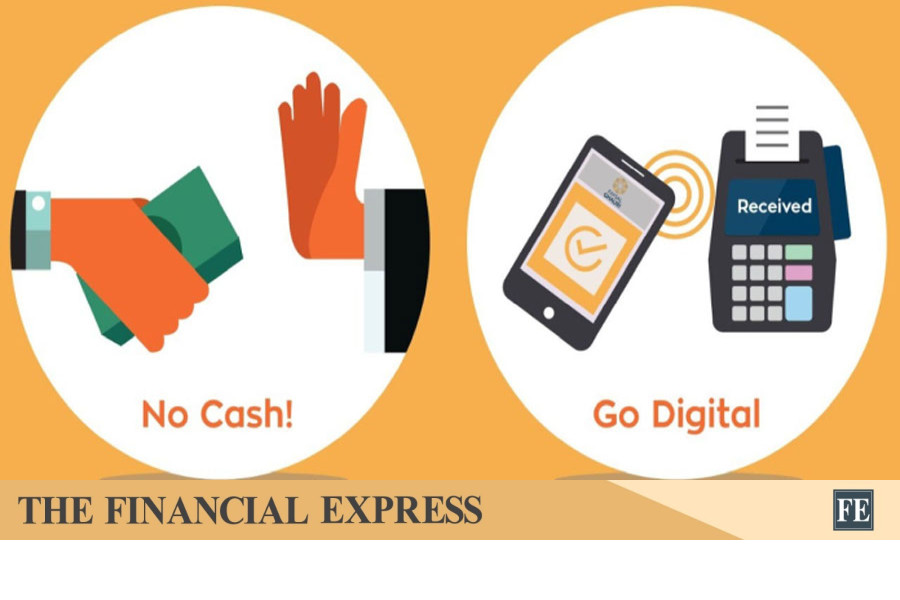
The transition towards a cashless society is often framed as a story of technology: mobile apps, QR codes, digital wallets, and instant payments. But for Bangladesh, the significance is much greater. Moving from cash to digital payments can influence how businesses operate, how citizens access financial services, how taxes are collected and, ultimately, how transparent the economy becomes.

Cash will not disappear from Bangladesh overnight, nor should it. Millions of people, particularly in rural areas and the informal economy, still depend on cash for their everyday transactions. The more important question is whether Bangladesh can build a financial system where digital payments are sufficiently convenient, affordable, and trusted that people choose them whenever possible.

One of the most important advantages of digital transactions is the electronic trail they create. Cash can change hands without leaving a record. A digital transaction, by contrast, generates information that can be recorded, reconciled and verified. Wider adoption of digital payments can therefore make it harder to conceal income, conduct unreported transactions, or evade taxes. It can also reduce opportunities for petty corruption where physical cash changes hands between citizens, businesses and service providers.

This does not mean that digital payments will automatically eliminate corruption or black money. Those are complex economic and governance issues that technology alone cannot solve. But greater transaction visibility can narrow the space for unrecorded economic activity. If more commercial transactions move through formal financial channels, policymakers and regulators gain a clearer picture of economic activity, while businesses and individuals become more connected to the formal economy.

Bangladesh can draw useful lessons from India. The Unified Payments Interface, or UPI, has fundamentally changed the way millions of Indians make everyday payments. Its success is not simply due to a QR code or a mobile application. UPI's real strength lies in interoperability. A customer can use one participating application to pay a merchant using another participating bank or service provider. The experience is simple, immediate and largely invisible to the customer.

Bangladesh has been moving in this direction through Bangla QR and the national TakaPay card scheme. The regulatory push towards interoperability is an important step.

From October 1 2026, Bangla QR-based payments must be offered as an interoperable payment option. Bangla QR payment facilities must also be available through Bangla QR-enabled applications alongside Bangla QR scanners. These measures can address one of the fundamental weaknesses of a fragmented digital payment market: customers and merchants shouldn't have to think about which financial institution is on the other side of a transaction.

Interoperability matters because convenience drives adoption. A merchant is more likely to accept digital payments when a single QR code works across multiple banks and payment platforms. Similarly, customers are more likely to use digital payments when they know their preferred app works almost anywhere. The success of Bangla QR will therefore depend not only on regulatory compliance but also on whether the ecosystem delivers a genuinely simple and reliable customer experience.

For many small entrepreneurs and low-income households, particularly outside major urban centres, informal borrowing remains a reality. When formal credit is difficult to access, people may turn to informal lenders, sometimes at very high costs. Digital financial services can help change this equation.

Consider a small retailer who receives a significant proportion of daily sales digitally. Over time, those transactions create a record of business activity. With appropriate privacy, regulatory, and risk-management safeguards, such information can help financial institutions better understand cash flows and assess the creditworthiness of customers who may not have a conventional credit history. Digital payments can therefore become an entry point into savings, insurance, and formal credit, rather than simply another way to transfer money.

This is particularly relevant for Bangladesh's millions of micro, small and informal businesses. Bringing them into the formal financial ecosystem does not necessarily mean forcing them into complicated banking processes. It means making formal finance sufficiently accessible and useful that there is a genuine incentive to participate.

Yet assuming technology alone will deliver financial inclusion is dangerous. Digital exclusion can replace financial exclusion if the transition is poorly managed.

Financial and digital literacy must therefore remain at the centre of the agenda. A customer needs to know not only how to make a digital payment but also how to protect a PIN, identify a fraudulent message, recognise a suspicious link and report an unauthorised transaction. Elderly customers, rural communities and people with limited digital experience may require additional support.

Trust is equally important. A failed transaction, delayed refund or unresolved fraud complaint can discourage a customer far more quickly than a successful transaction can encourage one. Banks and payment providers must therefore invest as much in cybersecurity, fraud prevention and customer protection as they do in new digital features.

Infrastructure also matters. Reliable connectivity, affordable internet access and dependable digital services are prerequisites for a cashless economy. If poor network coverage or system downtime prevents a customer from completing a transaction, cash remains the more dependable option.

Bangladesh should therefore avoid treating the cashless agenda as a race to eliminate banknotes. A more realistic objective is to create an environment where digital payments become the natural choice for an increasing number of transactions.

Government payments, salaries, utility bills, education fees, transportation, retail purchases, and business-to-business transactions can gradually move to digital channels. The more frequently people use digital payments, the more familiar and trusted the system becomes.

The journey towards a cashless Bangladesh is ultimately not about cash versus technology. It is about building a more transparent, efficient and inclusive economy. Digital payments can reduce the space for unrecorded transactions, strengthen accountability and connect millions of people and small businesses to formal financial services.

The real measure of success, however, will not be the number of QR codes installed or the volume of transactions reported. It will be whether a farmer, shopkeeper, student, small entrepreneur or salaried employee can make a digital payment easily, safely and affordably, and whether that digital footprint helps them access better financial opportunities.

A cashless Bangladesh, therefore, should not mean a Bangladesh without cash. It should mean a Bangladesh where cash is no longer the default because digital finance has become simpler, safer, more inclusive and more trusted. That is the transformation worth pursuing.​
 

Concern over external debts

No economy can run without having debt. Governments must borrow from external and internal sources to finance budget deficits. This is known as public debt, which governments generally use to finance expenditures, protect and invest in people, and pave the way for a better future. However, these borrowings, obviously, create the burden of debt repayments, or debt servicing. When debt-servicing costs grow excessively, they displace other spending and disrupt development, as governments must spend more on debt repayments. Besides, budgets for social sectors shrink when debt servicing costs go up. In this process, people's futures also come under risk.

There is also no rigid formula to determine which types of debt are good or bad. Is domestic debt more costly than external debt? Is external debt more burdensome than domestic borrowing? The answers depend on a country's economic structure and development dimensions. What is good at one time may become bad for a country at another time. Because the government can repay domestic loans by printing money, domestic borrowing is easier, although it is likely to fuel inflation. Repaying foreign borrowing requires a persistent inflow of foreign exchange through exports, remittances, and foreign investment. If inflows are insufficient, they put pressure on foreign exchange reserves. Thus, balancing the domestic and foreign debt is also a matter of prudent macroeconomic management.

Globally, government borrowing from domestic and external sources is known as public debt, the major component of a country's total debt. Private debt refers to the amounts borrowed by individuals and corporates in a country. Governments worldwide borrow externally by issuing sovereign bonds, through multilateral lending agencies, or through bilateral arrangements.

Developed countries largely depend on bond issuance. Currently, around 85 per cent of developed nations' external borrowing comes from issuing sovereign bonds. By issuing these bonds, countries borrow from the international securities market, where private and public investors purchase them. Public investors usually include central banks or relevant government agencies. For instance, China is now the third-largest investor in United States (US) Treasury bonds, and the People's Bank of China purchases these bonds on behalf of the Chinese government. Many Chinese commercial banks also buy US Treasury bonds as private investors.

Some developing countries also issue treasury bonds to borrow from international markets. Still, most developing nations borrow from multilateral lending agencies like the World Bank, the Asian Development Bank (ADB), and the International Monetary Fund (IMF). They also borrow from developed and advanced developing countries through bilateral arrangements. Bangladesh usually borrows from the international lending agencies and other countries.

In recent years, the global debt market has become a cause of serious concern as borrowers, especially governments, come under pressure from rising repayment costs. UN Trade and Development (UNCTAD), in its latest version of 'A World of Debt', mentioned: "Rising borrowing costs are adding pressure on developing countries' public finances, limiting the resources available for health, education and other development priorities." The report showed that in many developing countries, external debt repayments now exceed new inflows. Since 2022, interest payments on external public debt have exceeded net new lending to developing countries. In 2022, developing countries paid $84 billion in interest on previous borrowing while receiving $52 billion in new loans. Both amounts became almost equivalent to $125 billion in 2024.

Organisation for Economic Co-operation and Development (OECD), in its Global Debt Report 2026, cautioned that geopolitical tensions, trade disputes, and an uncertain macroeconomic environment are adding pressure to the global debt market. It argued that sovereign and corporate bond markets, with a combined size of US$ 109 trillion, need better management to provide stable financing to governments and corporations. The report projected that governments and companies are likely to borrow US$ 29 trillion from the global bond market this year, up 17 per cent from 2024. Moreover, 78 per cent of OECD governments' borrowings are projected to refinance existing debt this year.

A London-based international firm (www.worldeconomics.com) ranked countries based on their public debt-to-GDP ratios. It showed that 20 countries have now sunk into very high debt, with debt-to-GDP ratios ranging from 76 per cent to 209 per cent. Japan is at the top of the list, followed by Singapore, the United States (US), Greece, Italy, Bahrain, France, and Canada. All these countries' debt-to-GDP ratios crossed 100 per cent. Poor countries like Sudan and Senegal, and war-devastated countries like Ukraine and Libya, are also among the top 20 indebted nations. World Economics has updated each country's GDP in Purchasing Power Parity (PPP) terms by adding estimates for the size of the informal economy. It also adjusted the out-of-date GDP base-year data. So, the ranking may differ from the IMF estimate.

The ranking placed Bangladesh 70th, with its debt-to-GDP ratio estimated at 28.4 per cent of GDP PPP in 2025. PPP is a currency conversion rate that equalises the purchasing power of different currencies by eliminating differences in price levels between countries.

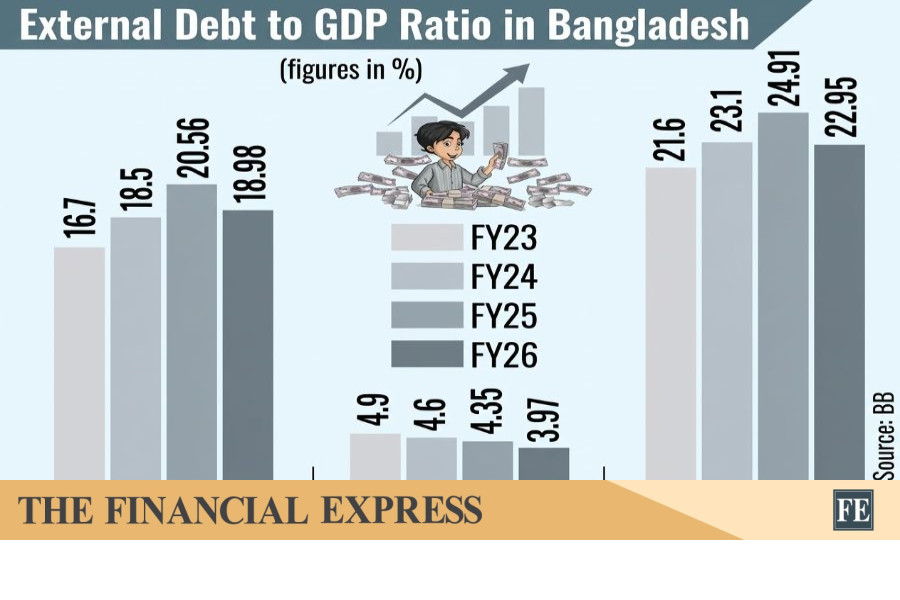
In the global context, Bangladesh's debt situation is still not alarming. Rather, it may signal temporary relief that the country's total external debt to gross domestic product (GDP) declined modestly to 22.95 per cent at the end of the last fiscal year (FY26) from 24.91 per cent in the same period of FY25. Of the total external debt, the public sector external debt to GDP declined to around 19 per cent last fiscal year from around 21 per cent in FY25.

The International Monetary Fund (IMF), in January this year, also projected that Bangladesh would see a decline in the external debt-to-GDP ratio in the coming years. According to the projection (IMF Country Report No 26/24), although overall public debt to GDP would increase gradually, external public debt to GDP would fall to 17.30 per cent in FY30 from 19.20 per cent in FY26. At the same time, total public debt to GDP would rise to 47.70 per cent from 42.40 per cent during the period under review.

A decline in external debt does not always mean something good. It is necessary to see the reasons behind the decline or rise in debt. The main reason behind the latest development is a marginal increase in external debt last fiscal year. In FY26, external debt grew by 1.20 per cent, after a robust surge of 9.10 per cent in FY25. Official statistics compiled by the central bank showed that last fiscal year, the total stock of external debt increased to $114.98 billion from $113.58 billion in FY25. Thus, the country recorded a net foreign debt of $1.23 billion last fiscal year. The country's per capita external debt also increased slightly to US$ 657.76 last fiscal year from $653 in the previous fiscal year.

Overall, there is no scope for complacency about the low debt-to-GDP ratio, as the country now faces multiple economic pressures due to global turmoil in energy and commodity markets. Gross irregularities in the banking sector and substantial capital outflows under the now-ousted autocratic regime also added a significant financial burden to the country. The mounting pressure on debt servicing is also there. According to the finance ministry projection, the country's external debt servicing burden may reach $7.6 billion in FY29 from $4.11 billion in FY25. Growing interest payments, short-term maturities of loans and repayments obligations for various mega projects are the main factors behind the surge in debt servicing liabilities. Thus, the country's need for external borrowing will grow in the coming days, along with the increase in debt-servicing liabilities. This, in all likelihood, may make the debt management more difficult than before.​
 
Back
Top