 Bangladesh Defense

Saif
Senior Member
- Joined
- Jan 24, 2024
- Messages
- 22,367
- Likes
- 9,875
- Nation

- Axis Group

Bangladesh's FTA push
Bangladesh has long been talking about signing free trade agreements (FTAs) with several trading partners. Nevertheless, progress in this regard was minimal even two years ago. However, progress has accelerated under the Yunus-led interim government, especially after Bangladesh signed the Agreement
Bangladesh's FTA push
Bangladesh has long been talking about signing free trade agreements (FTAs) with several trading partners. Nevertheless, progress in this regard was minimal even two years ago. However, progress has accelerated under the Yunus-led interim government, especially after Bangladesh signed the Agreement on Reciprocal Trade (ART) with the United States (US). The deal was signed in February this year to address US President Donald Trump's aggressive tariff policy. Bangladesh also signed an economic partnership agreement (EPA) with Japan in the same month.
The government is now working to ratify the Bangladesh-Japan EPA, complete negotiations to sign a comprehensive economic partnership agreement (CEPA) with South Korea, actively participate in the Bangladesh-Singapore FTA, and initiate talks to sign a CEPA with the UAE within a year.
Last week, the commerce minister presented an outline of the government's FTA measures in the national parliament. He also said Bangladesh wants to complete negotiations to join the Regional Comprehensive Economic Partnership Agreement (RCEP) within five years. In September last, RCEP trade ministers approved the formation of a working group to start the accession process for Bangladesh, Chile, Sri Lanka, and Hong Kong. In 2024, Bangladesh formally submitted its request to join the world's largest free-trade bloc, which now accounts for 28 per cent of global GDP, 29 per cent of the world's population, and 25 per cent of global trade in goods and services. Signed on November 15, 2020, the RCEP entered into force on January 1, 2022. It is constituted of the 10 ASEAN nations-Brunei Darussalam, Cambodia, Indonesia, Lao PDR, Malaysia, Myanmar, the Philippines, Singapore, Thailand and Vietnam, plus Australia, China, Japan, South Korea, and New Zealand.
For Bangladesh, it is the most ambitious and challenging free trade deal to negotiate, as the country must make a long list of commitments to open up various areas gradually. RCEP negotiations cover trade in services, investment, economic and technical cooperation, intellectual property, competition, dispute settlement, e-commerce, and small and medium enterprises (SMEs). So far, Bangladesh has focused on trade in goods, which limits its chances of moving ahead.
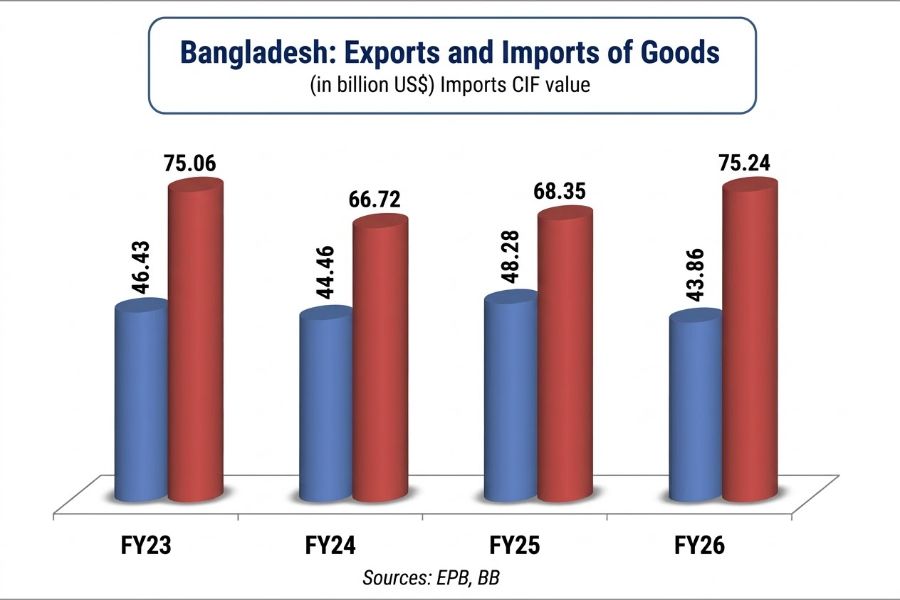
Bangladesh has also intensified its efforts to negotiate an FTA with the European Union (EU), considering it the most important trade deal to maintain its competitive edge in the post-graduation era after 2029. The EU is the largest market for Bangladeshi products, as exports to the bloc crossed $20 billion in FY26, which constituted more than two-fifths of the country's total annual exports. Bangladesh has enjoyed duty-free, quota-free market access under the Everything But Arms (EBA) scheme. The benefit will continue for three more years after Bangladesh strips off its LDC tag, meaning market access will not end until 2032. The three-year extension of the graduation deadline thus provides a breathing space for Bangladesh to negotiate the FTA. The government rightly set a five-year deadline to complete negotiations and strike a beneficial deal. However, it is a tough task.
India recently concluded negotiations to sign the FTA with the EU by the end of the year so it can come into force early next year. The negotiation took almost two decades to complete. Begnning in 2007, the bilateral trade talks stalled in 2013 amid disagreements over market access, tariffs, and other issues. Negotiations later restarted in June 2022 and advanced rapidly, with both sides declaring the talks concluded and moving to sign the deal formally. Through the deal, India has secured preferential access for over 97 per cent of EU tariff lines, covering 99.5 per cent of Indian exports by value. Textiles, apparel, leather, footwear, gems and jewellery, sports goods and selected marine products are among the sectors to gain from the deal with reduced or eliminated tariffs.
The India-EU FTA poses a big challenge to Bangladesh's clothing exports, as Indian products will enjoy almost similar market access from next year. If Bangladesh cannot complete the FTA negotiations by 2032, it will face higher tariffs when entering the EU market from 2033. Five years is not a long period to negotiate a win-win deal for Bangladesh, and there is a chance the country may agree to a highly compromised pact to retain its largest market. Thus, the FTA could be quite expensive in the long run.
In reply to a question in parliament, the commerce minister added that FTA negotiations with Malaysia and Turkey are also on the five-year programme list. Signing an FTA with Malaysia is a decade-long initiative, though there has been no headway in this regard. Currently, Malaysia is Bangladesh's seventh-largest source of imports, with Bangladesh importing $2.30 billion in FY25. The move to strike an FTA with Turkey is a new initiative, as Bangladesh expressed interest by sending a formal proposal in April this year. The two countries have set a target to increase bilateral trade to $2 billion soon.
With Indonesia, Bangladesh also started talks to reach a preferential trade agreement (PTA). However, negotiations have stalled since 2023 over market access for Bangladeshi textiles and clothing. An ice-breaker is now expected, as both sides recently hinted at converting the PTA talks into CEPA talks. Indonesia is Bangladesh's third-largest source of imports, after China and India.
Bilateral FTA negotiations with Singapore, the fourth-largest source of imports, have already advanced, and the government expects to complete the negotiations by the end of next year. Meanwhile, New Zealand has expressed interest in becoming an FTA partner of Bangladesh.
An important question may be asked in this connection. Malaysia, Indonesia, Singapore, and New Zealand are all RCEP members. As Bangladesh is trying to join RCEP, is there any necessity to negotiate separately with these countries? The answer is yes: bilateral FTAs can be a building block for joining a mega-regional trade bloc. Separate negotiations with these countries will give Bangladesh experience in dealing with various conditions. This will help strengthen negotiating capacity for more complex deals like RCEP. Moreover, under a high-tariff regime, it is difficult for Bangladesh to join RCEP, where significant tariff cuts are a primary condition.
RCEP member countries must eliminate tariffs for 65 per cent of their imported product lines within 10 years and up to 90 per cent within 20 years after the deal entered into force in 2023. RCEP, however, provides special provisions for LDC members (Cambodia, Myanmar, and Lao PDR). These countries are allowed tariff-free imports of 30 per cent of products from member countries in the first 10 years and 80 per cent in 15 years. Although the relaxation also applies to Bangladesh, it may not be effective, as the country must leave the LDC club by the end of 2029. Moreover, averseness to cut tariff rates is a key barrier to negotiate an FTA for Bangladesh.
Commerce Minister's five-year plan also includes FTA negotiations with Mauritius and Nigeria and PTA negotiations with Sri Lanka and Nepal. He is also trying to move ahead with full implementation of the PTA with Bhutan, Bangladesh's first such deal. However, he has yet to say anything about the CEPA deal with India, and the reason is understandable.
The global trade landscape has been changing fast and also becoming more complex by the day. The conditions for negotiating an FTA five years ago may no longer apply today. Bangladesh has to face reality if it wants to push for an FTA and remain competitive in the near future.
Bangladesh has long been talking about signing free trade agreements (FTAs) with several trading partners. Nevertheless, progress in this regard was minimal even two years ago. However, progress has accelerated under the Yunus-led interim government, especially after Bangladesh signed the Agreement on Reciprocal Trade (ART) with the United States (US). The deal was signed in February this year to address US President Donald Trump's aggressive tariff policy. Bangladesh also signed an economic partnership agreement (EPA) with Japan in the same month.
The government is now working to ratify the Bangladesh-Japan EPA, complete negotiations to sign a comprehensive economic partnership agreement (CEPA) with South Korea, actively participate in the Bangladesh-Singapore FTA, and initiate talks to sign a CEPA with the UAE within a year.
Last week, the commerce minister presented an outline of the government's FTA measures in the national parliament. He also said Bangladesh wants to complete negotiations to join the Regional Comprehensive Economic Partnership Agreement (RCEP) within five years. In September last, RCEP trade ministers approved the formation of a working group to start the accession process for Bangladesh, Chile, Sri Lanka, and Hong Kong. In 2024, Bangladesh formally submitted its request to join the world's largest free-trade bloc, which now accounts for 28 per cent of global GDP, 29 per cent of the world's population, and 25 per cent of global trade in goods and services. Signed on November 15, 2020, the RCEP entered into force on January 1, 2022. It is constituted of the 10 ASEAN nations-Brunei Darussalam, Cambodia, Indonesia, Lao PDR, Malaysia, Myanmar, the Philippines, Singapore, Thailand and Vietnam, plus Australia, China, Japan, South Korea, and New Zealand.
For Bangladesh, it is the most ambitious and challenging free trade deal to negotiate, as the country must make a long list of commitments to open up various areas gradually. RCEP negotiations cover trade in services, investment, economic and technical cooperation, intellectual property, competition, dispute settlement, e-commerce, and small and medium enterprises (SMEs). So far, Bangladesh has focused on trade in goods, which limits its chances of moving ahead.
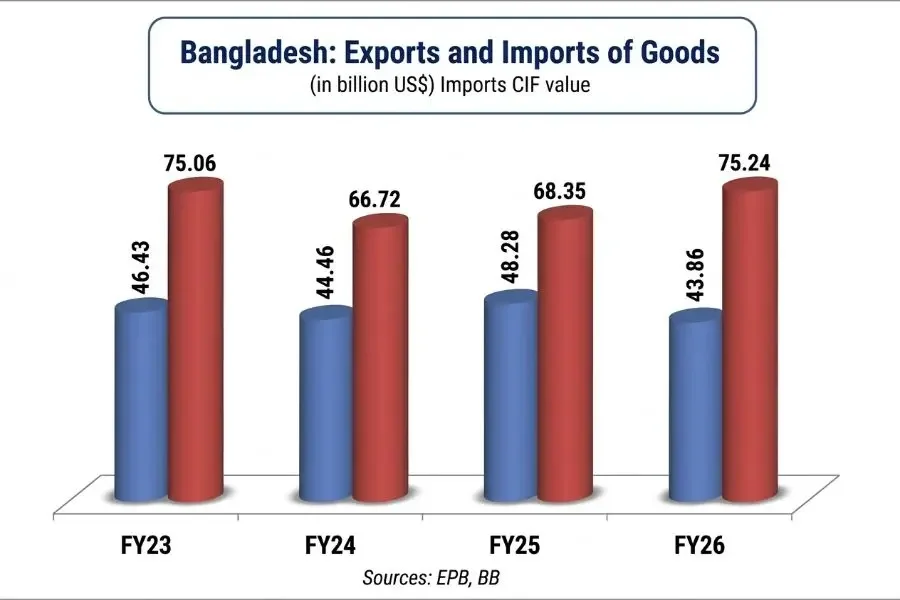
Bangladesh has also intensified its efforts to negotiate an FTA with the European Union (EU), considering it the most important trade deal to maintain its competitive edge in the post-graduation era after 2029. The EU is the largest market for Bangladeshi products, as exports to the bloc crossed $20 billion in FY26, which constituted more than two-fifths of the country's total annual exports. Bangladesh has enjoyed duty-free, quota-free market access under the Everything But Arms (EBA) scheme. The benefit will continue for three more years after Bangladesh strips off its LDC tag, meaning market access will not end until 2032. The three-year extension of the graduation deadline thus provides a breathing space for Bangladesh to negotiate the FTA. The government rightly set a five-year deadline to complete negotiations and strike a beneficial deal. However, it is a tough task.
India recently concluded negotiations to sign the FTA with the EU by the end of the year so it can come into force early next year. The negotiation took almost two decades to complete. Begnning in 2007, the bilateral trade talks stalled in 2013 amid disagreements over market access, tariffs, and other issues. Negotiations later restarted in June 2022 and advanced rapidly, with both sides declaring the talks concluded and moving to sign the deal formally. Through the deal, India has secured preferential access for over 97 per cent of EU tariff lines, covering 99.5 per cent of Indian exports by value. Textiles, apparel, leather, footwear, gems and jewellery, sports goods and selected marine products are among the sectors to gain from the deal with reduced or eliminated tariffs.
The India-EU FTA poses a big challenge to Bangladesh's clothing exports, as Indian products will enjoy almost similar market access from next year. If Bangladesh cannot complete the FTA negotiations by 2032, it will face higher tariffs when entering the EU market from 2033. Five years is not a long period to negotiate a win-win deal for Bangladesh, and there is a chance the country may agree to a highly compromised pact to retain its largest market. Thus, the FTA could be quite expensive in the long run.
In reply to a question in parliament, the commerce minister added that FTA negotiations with Malaysia and Turkey are also on the five-year programme list. Signing an FTA with Malaysia is a decade-long initiative, though there has been no headway in this regard. Currently, Malaysia is Bangladesh's seventh-largest source of imports, with Bangladesh importing $2.30 billion in FY25. The move to strike an FTA with Turkey is a new initiative, as Bangladesh expressed interest by sending a formal proposal in April this year. The two countries have set a target to increase bilateral trade to $2 billion soon.
With Indonesia, Bangladesh also started talks to reach a preferential trade agreement (PTA). However, negotiations have stalled since 2023 over market access for Bangladeshi textiles and clothing. An ice-breaker is now expected, as both sides recently hinted at converting the PTA talks into CEPA talks. Indonesia is Bangladesh's third-largest source of imports, after China and India.
Bilateral FTA negotiations with Singapore, the fourth-largest source of imports, have already advanced, and the government expects to complete the negotiations by the end of next year. Meanwhile, New Zealand has expressed interest in becoming an FTA partner of Bangladesh.
An important question may be asked in this connection. Malaysia, Indonesia, Singapore, and New Zealand are all RCEP members. As Bangladesh is trying to join RCEP, is there any necessity to negotiate separately with these countries? The answer is yes: bilateral FTAs can be a building block for joining a mega-regional trade bloc. Separate negotiations with these countries will give Bangladesh experience in dealing with various conditions. This will help strengthen negotiating capacity for more complex deals like RCEP. Moreover, under a high-tariff regime, it is difficult for Bangladesh to join RCEP, where significant tariff cuts are a primary condition.
RCEP member countries must eliminate tariffs for 65 per cent of their imported product lines within 10 years and up to 90 per cent within 20 years after the deal entered into force in 2023. RCEP, however, provides special provisions for LDC members (Cambodia, Myanmar, and Lao PDR). These countries are allowed tariff-free imports of 30 per cent of products from member countries in the first 10 years and 80 per cent in 15 years. Although the relaxation also applies to Bangladesh, it may not be effective, as the country must leave the LDC club by the end of 2029. Moreover, averseness to cut tariff rates is a key barrier to negotiate an FTA for Bangladesh.
Commerce Minister's five-year plan also includes FTA negotiations with Mauritius and Nigeria and PTA negotiations with Sri Lanka and Nepal. He is also trying to move ahead with full implementation of the PTA with Bhutan, Bangladesh's first such deal. However, he has yet to say anything about the CEPA deal with India, and the reason is understandable.
The global trade landscape has been changing fast and also becoming more complex by the day. The conditions for negotiating an FTA five years ago may no longer apply today. Bangladesh has to face reality if it wants to push for an FTA and remain competitive in the near future.


